 YardMate

ZZ Plant
Zamioculcas zamiifolia
Easy · Beginner friendlyAbout ZZ Plant
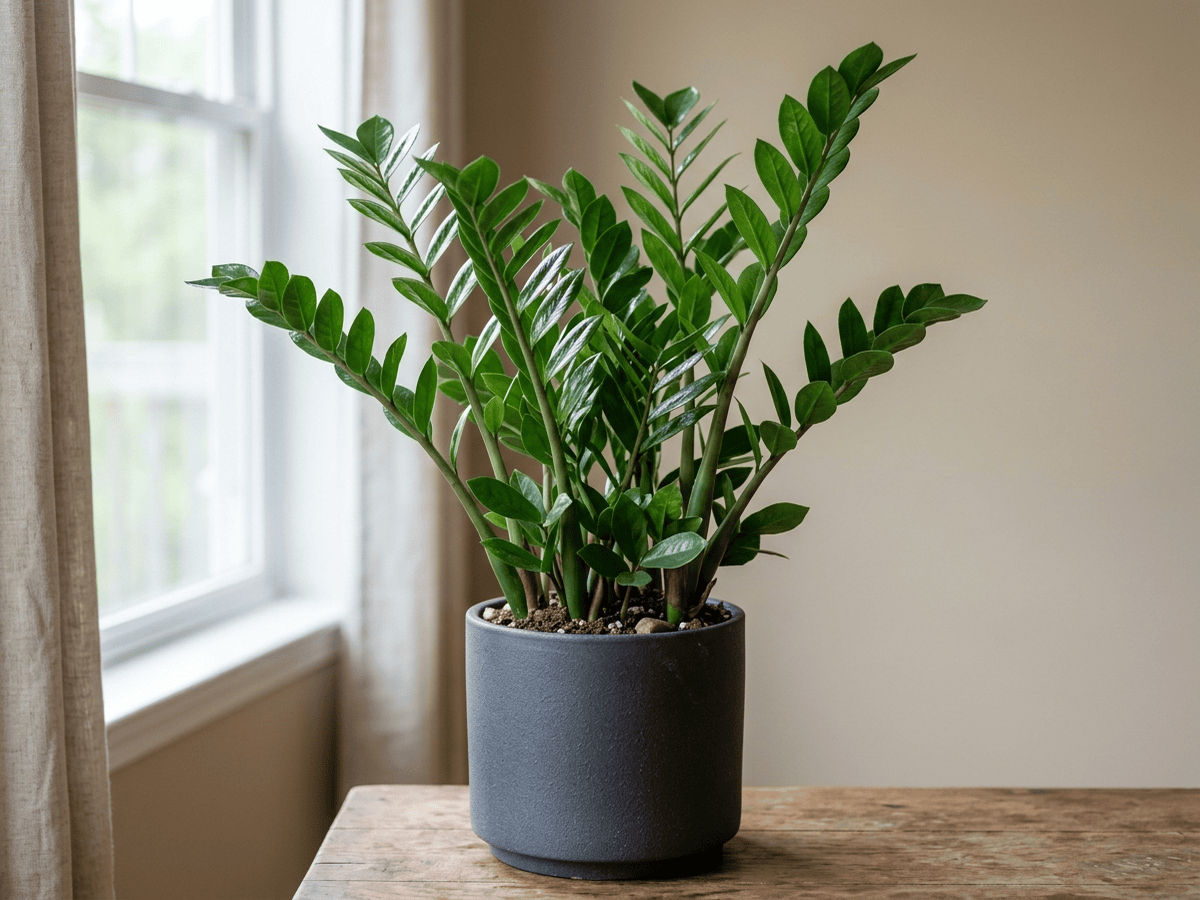
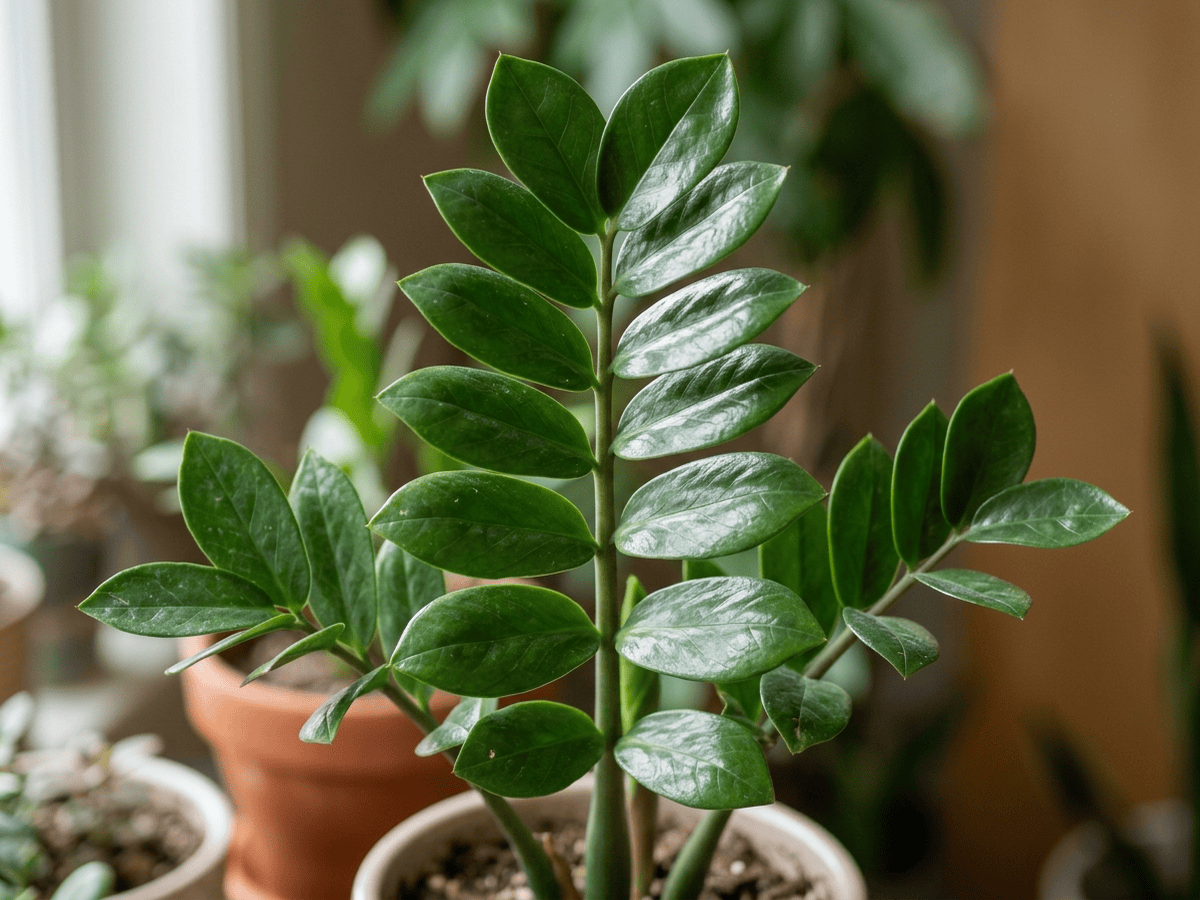
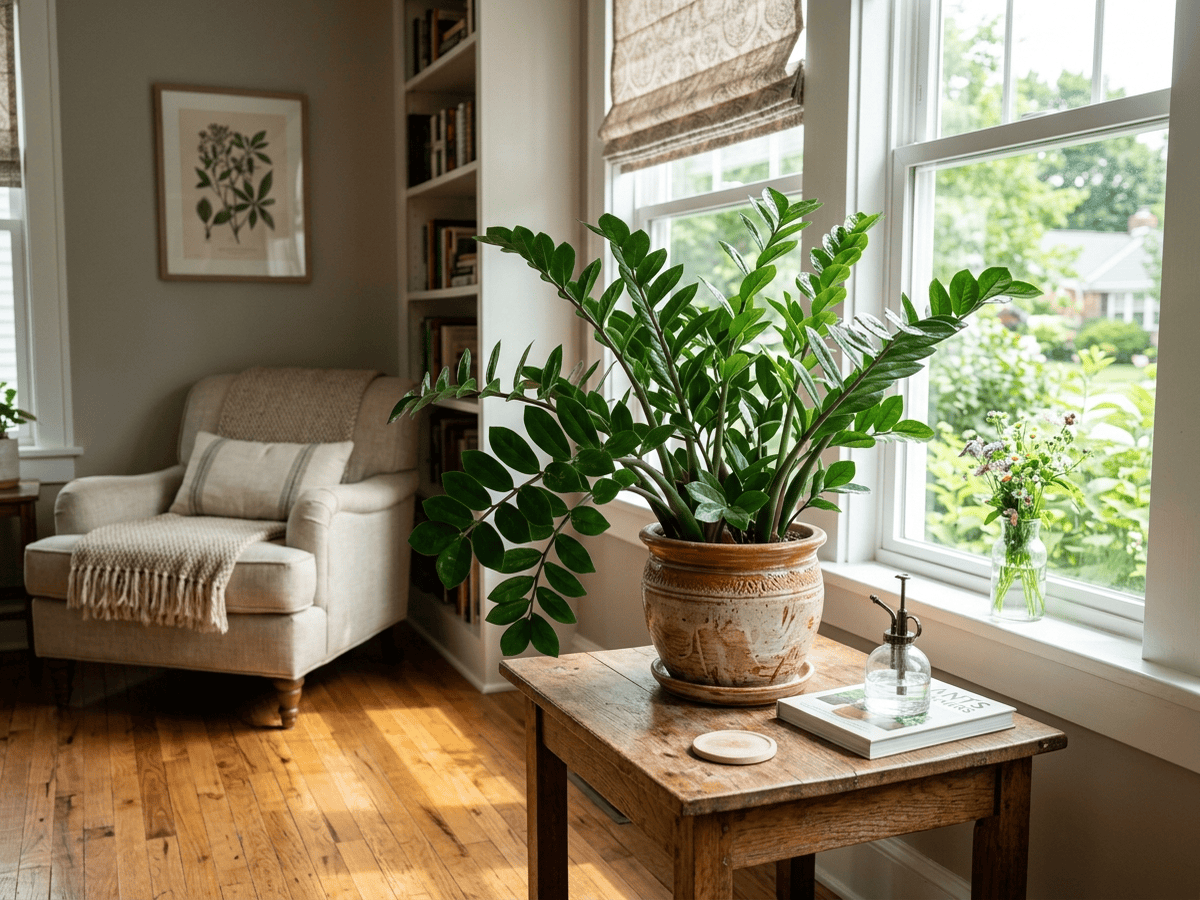
The ZZ Plant is native to the drought-prone grasslands of eastern Africa, from Kenya to South Africa. Its glossy, waxy leaflets on gracefully arching stems look almost artificial in their perfection. Beneath the soil, thick rhizomes store water like a camel's hump, letting it survive months of neglect. It's one of the most tolerant houseplants for low light and erratic watering, making it perfect for offices and dim corners.
- Air-purifying
- Low-maintenance
- Drought-tolerant
- Shade-tolerant
How to care for ZZ Plant
Watering
- Springevery 14 days
- Summerevery 10 days
- Fallevery 21 days
- Winterevery 30 days
Soil · Chunky & airy
- Top dressingBark chips10%
- Main mixBark + potting soil + perlite 1:1:170%
- DrainageLECA20%
Chunky pieces hold air pockets open so thick roots don't suffocate.
FERTILIZER
Balanced Feed 14-14-14
An even feed covers all three needs at once, keeping leaves, roots and blooms moving together with nothing pushed out of balance.
- Nitrogen · Leaves
- Phosphorus · Roots + Blooms
- Potassium · Strength
- Springevery 60 days
- Summerevery 60 days
At a Glance
- NativeAfrica
- Height2–3 ft (0.6–0.9 m)
- Spread2–3 ft (0.6–0.9 m)
- Flower colorCream, Green
- Foliage colorGreen
- SoilLoamy, Well-drained
- LocationsIndoor
Bloom time
BLOOM CYCLE
Rarely flowers indoors; produces a small green spadix partly hidden among lower leaves on mature plants
Fragrance
NO FRAGRANCE
Rarely flowers indoors; not fragrant.
Toxicity
Humans Slight · Pets Slight
insoluble calcium oxalate crystals (raphides)
Slight
- Leaf
- Stem
- Sap
- Contact
- Ingestion
EXPOSURE Touching leaves, stems, and sap. Eating leaves, stems, and sap.
EFFECT Oral and skin irritation from sap, burning of lips and mouth, mild GI upset.
NOTE Rumors of extreme or carcinogenic toxicity that circulated online in the 2010s are not supported by evidence; ZZ shares the same mild oxalate toxicity as other aroids.
Slight
- Leaf
- Stem
- Ingestion
EXPOSURE Eating leaves and stems.
EFFECT Oral irritation, drooling, vomiting and per general aroid toxicity.
NOTE Rumors of extreme or carcinogenic toxicity that circulated online in the 2010s are not supported by evidence; ZZ shares the same mild oxalate toxicity as other aroids.
Slight
- Leaf
- Stem
- Ingestion
EXPOSURE Eating leaves and stems.
EFFECT Oral irritation, drooling, vomiting and per general aroid toxicity.
NOTE Rumors of extreme or carcinogenic toxicity that circulated online in the 2010s are not supported by evidence; ZZ shares the same mild oxalate toxicity as other aroids.
Educational information, not medical or veterinary advice. If exposure is suspected, contact a doctor or veterinarian.
DISTRIBUTION


- Native
- Africa
History
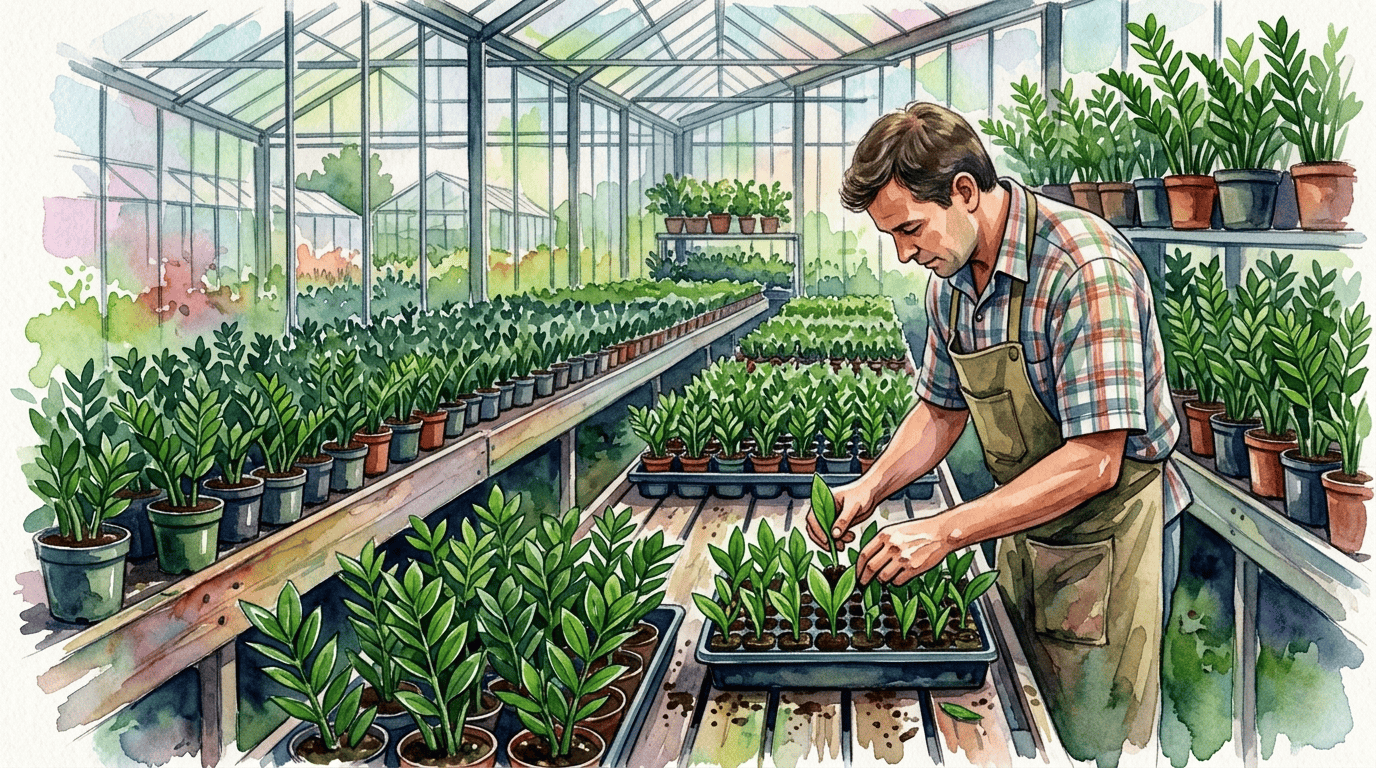
Zamioculcas zamiifolia is native to the dry grasslands and rocky forests of eastern Africa, from Kenya south through Tanzania to Zanzibar and Mozambique, where it survives long dry seasons by storing water in thick rhizomes. Botanists described it in 1829, but it remained an obscure specimen plant for over 150 years. In 1996, Dutch nurseries — primarily in the De Kwakel greenhouse cluster — began mass propagating it from leaf cuttings and rhizome divisions, and within a decade it had become one of the world's most shipped houseplants.
Its success is built on an almost unique combination of traits: extreme drought tolerance, deep shade tolerance, glossy leaves that reflect fluorescent light, and slow steady growth. It has become emblematic of low-maintenance corporate landscaping.
Though known to botanists since 1829, the ZZ Plant was virtually unknown in cultivation until Dutch nurseries in Nairobi began mass-propagating it in the mid-1990s.
Symbolism & meaning
What It Symbolizes
The Zanzibar Gem can symbolize steadfastness, surviving extreme neglect, low light and irregular watering with an almost stoic glossy-leafed dignity. Another layer is prosperity, for in Chinese culture it is sometimes called the 'fortune tree', its rounded waxy leaves read as small coins or symbols of accumulating good luck. In the modern office and apartment, zamioculcas is the unwavering green companion, a houseplant whose meaning marries quiet loyalty to a hopeful note of incoming abundance.
- Steadfastness — survives extreme neglect, symbolizing unwavering loyalty
- Prosperity — called 'fortune tree' in Chinese culture
Where the Name Comes From
'Zamioculcas' because its leaves resemble those of the cycad genus Zamia. 'Zamiifolia' literally means 'Zamia-leaved.'
Uses & Fun Facts
- Glossy waxy leaflets on arching stems for low-light interiors
- Drought-proof rhizomatous houseplant tolerating months of neglect
Related plants
Plants with similar care
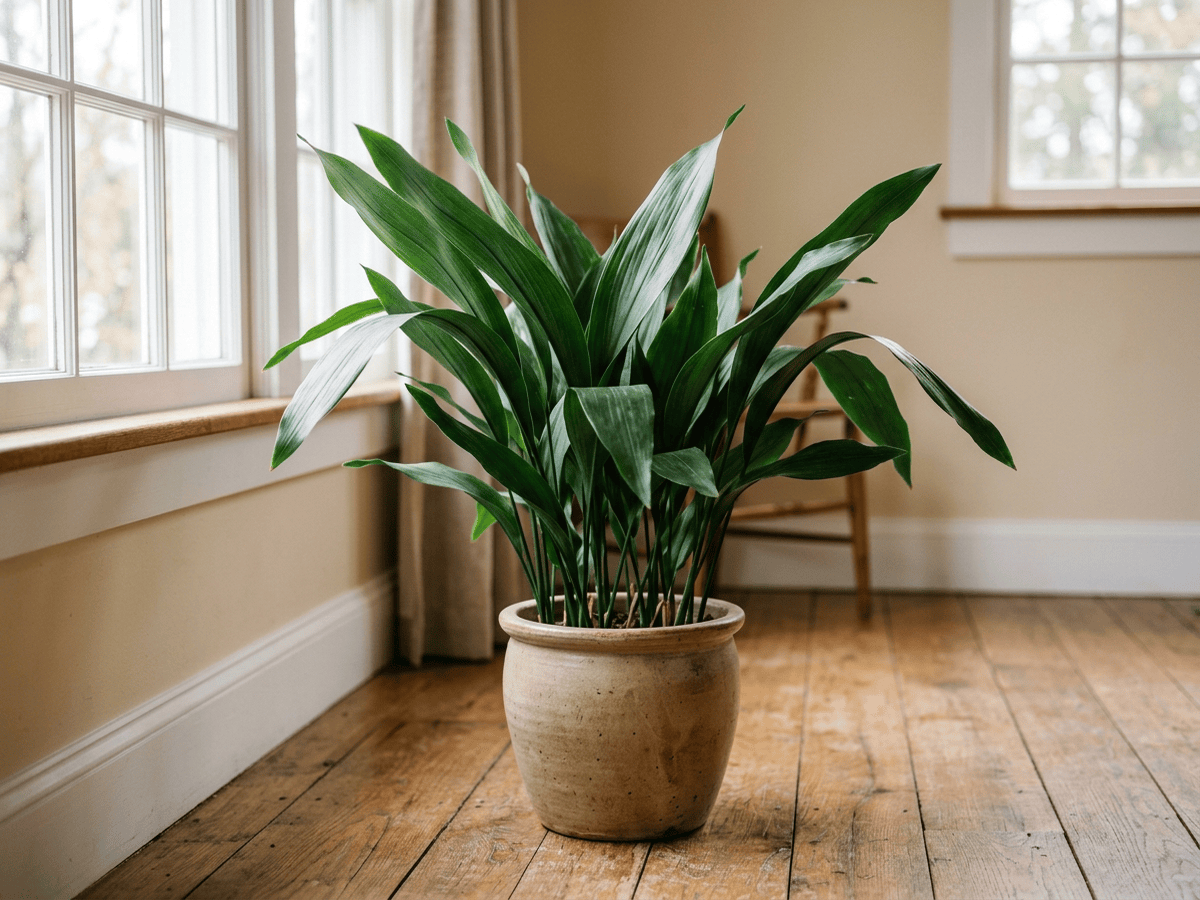 Cast-Iron PlantAspidistra elatior
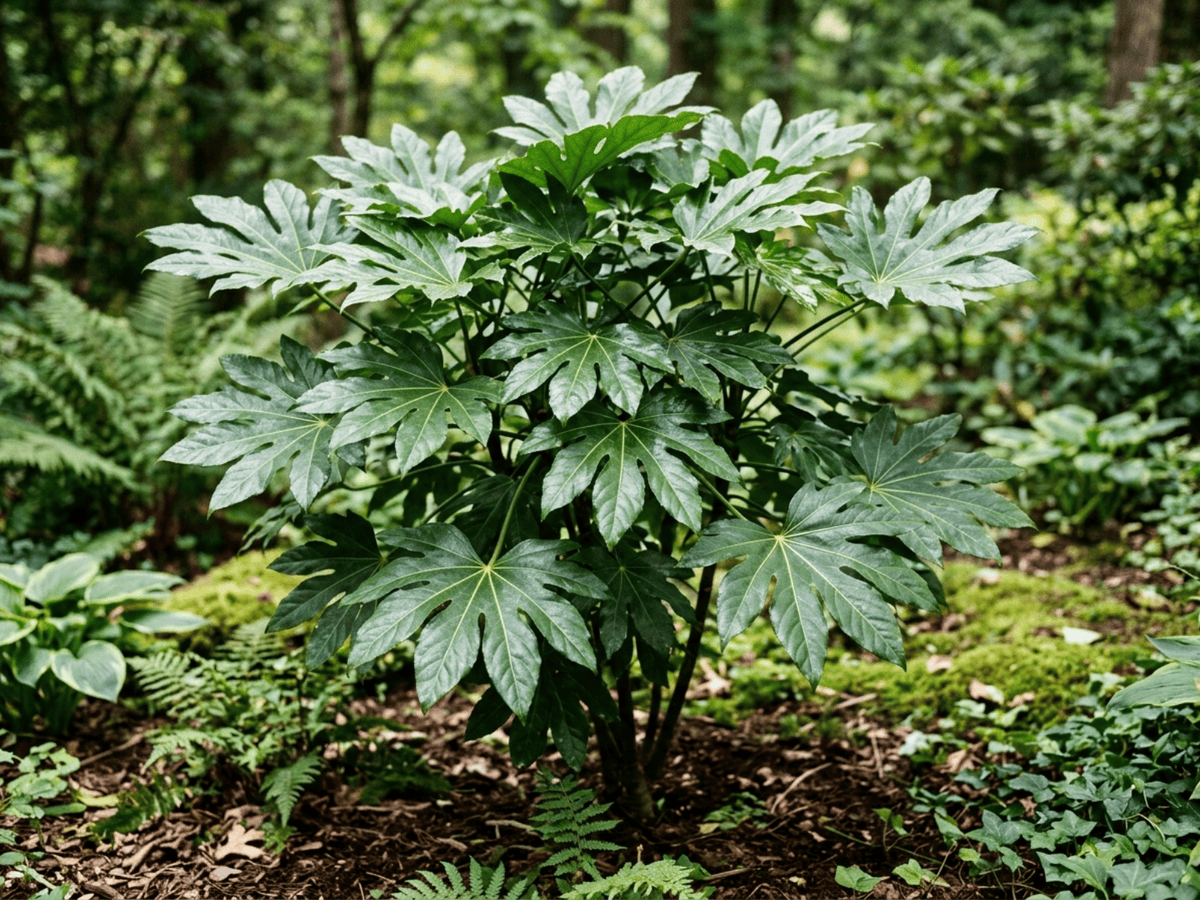 Japanese AraliaFatsia japonica
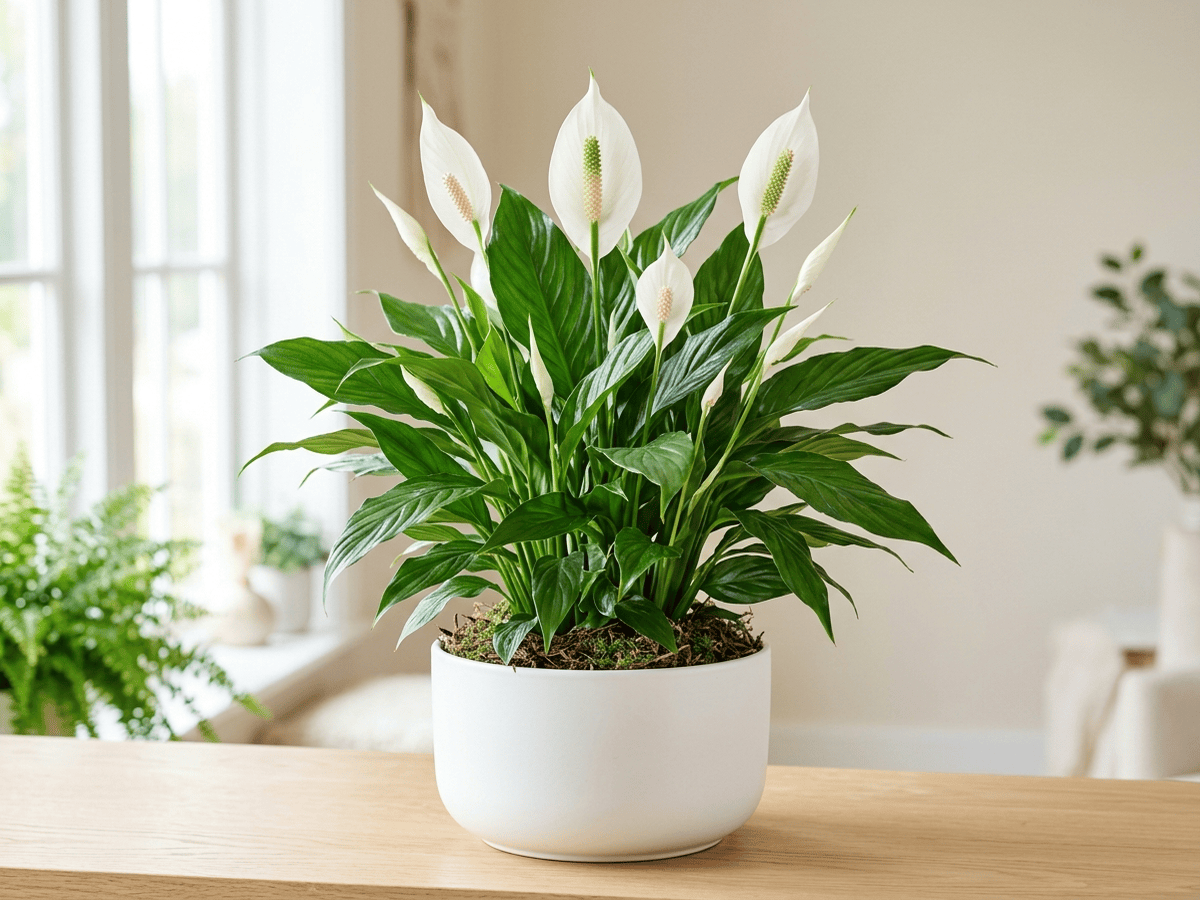 Peace LilySpathiphyllum wallisii
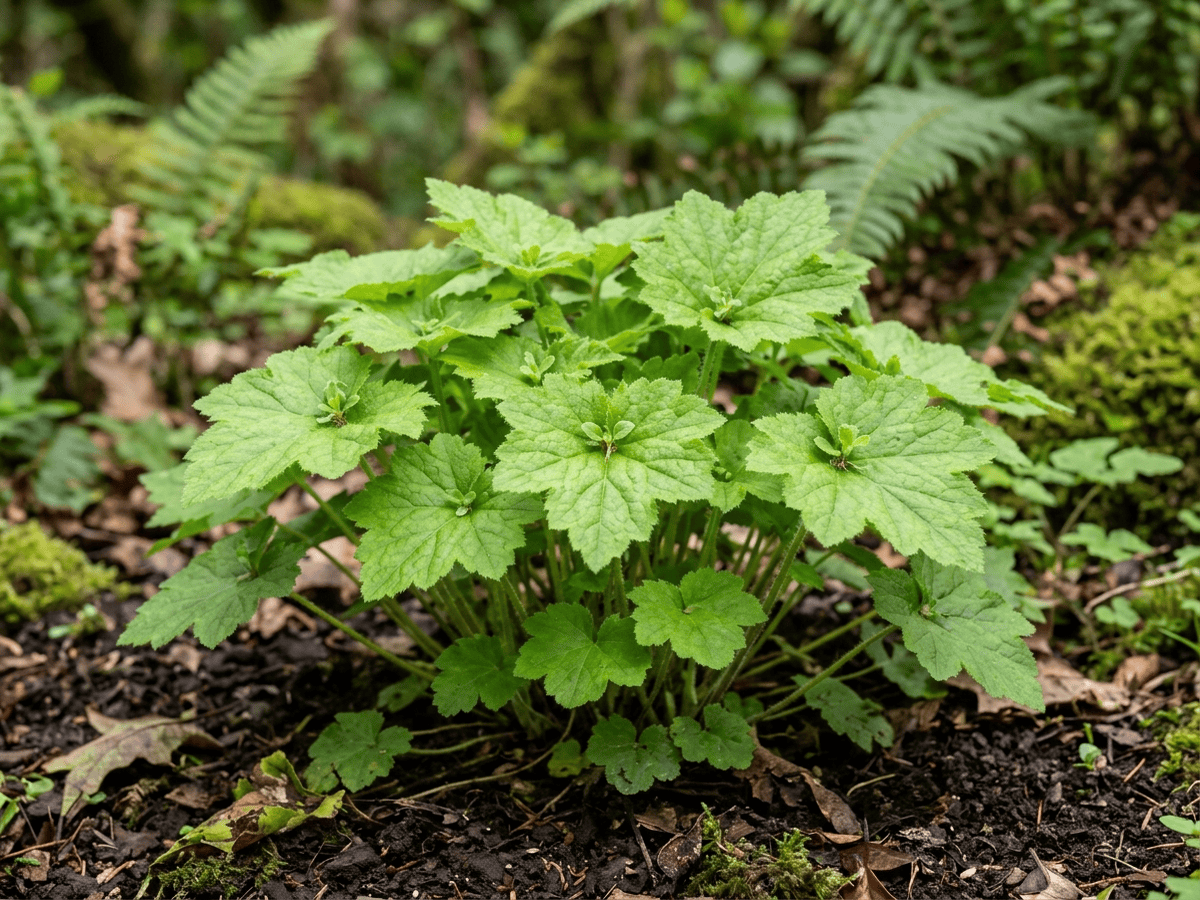 Youth-On-AgeTolmiea menziesii
Frequently asked questions
How often should I water ZZ Plant?
In summer, water about every 10 days; in winter, about every 30 days. Adjust for heat, pot size and drainage.
How much light does ZZ Plant need?
Full shade: <2 hrs direct. Watch the leaves — scorching or stretching means the light needs adjusting.
Is ZZ Plant toxic to cats or dogs?
Pets Slight (Dogs Slight · Cats Slight) Educational information, not medical or veterinary advice. If exposure is suspected, contact a doctor or veterinarian.
Is ZZ Plant easy to grow?
Yes — it is considered an easy, beginner-friendly plant.
Can ZZ Plant be grown indoors?
Yes, it adapts well to indoor growing given the right light.
YardMate
Identify any plant in seconds
Snap a photo — YardMate names the plant, diagnoses problems, and reminds you when to water.
Download on the App Store