 YardMate

Black Aeonium
Aeonium arboreum 'Zwartkop'
Easy · Beginner friendlyAbout Black Aeonium
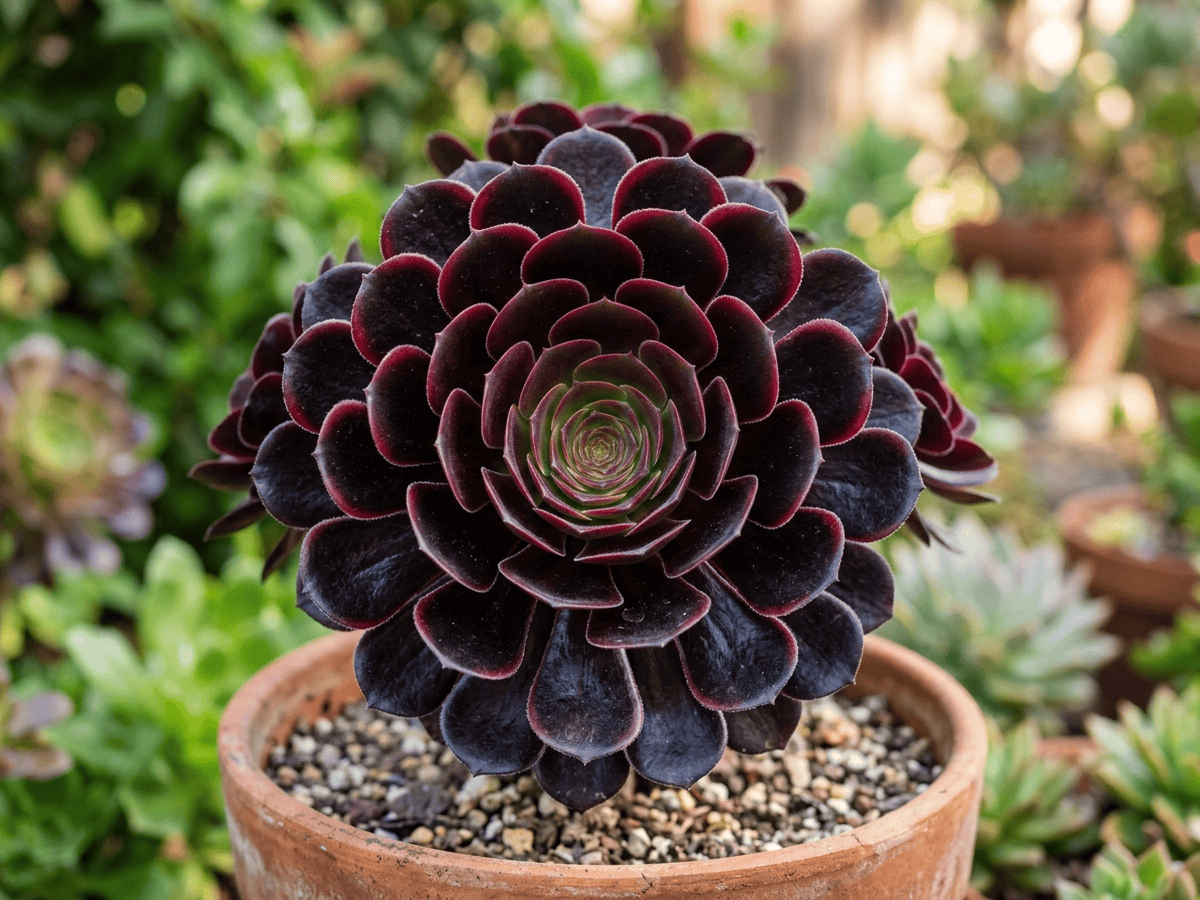
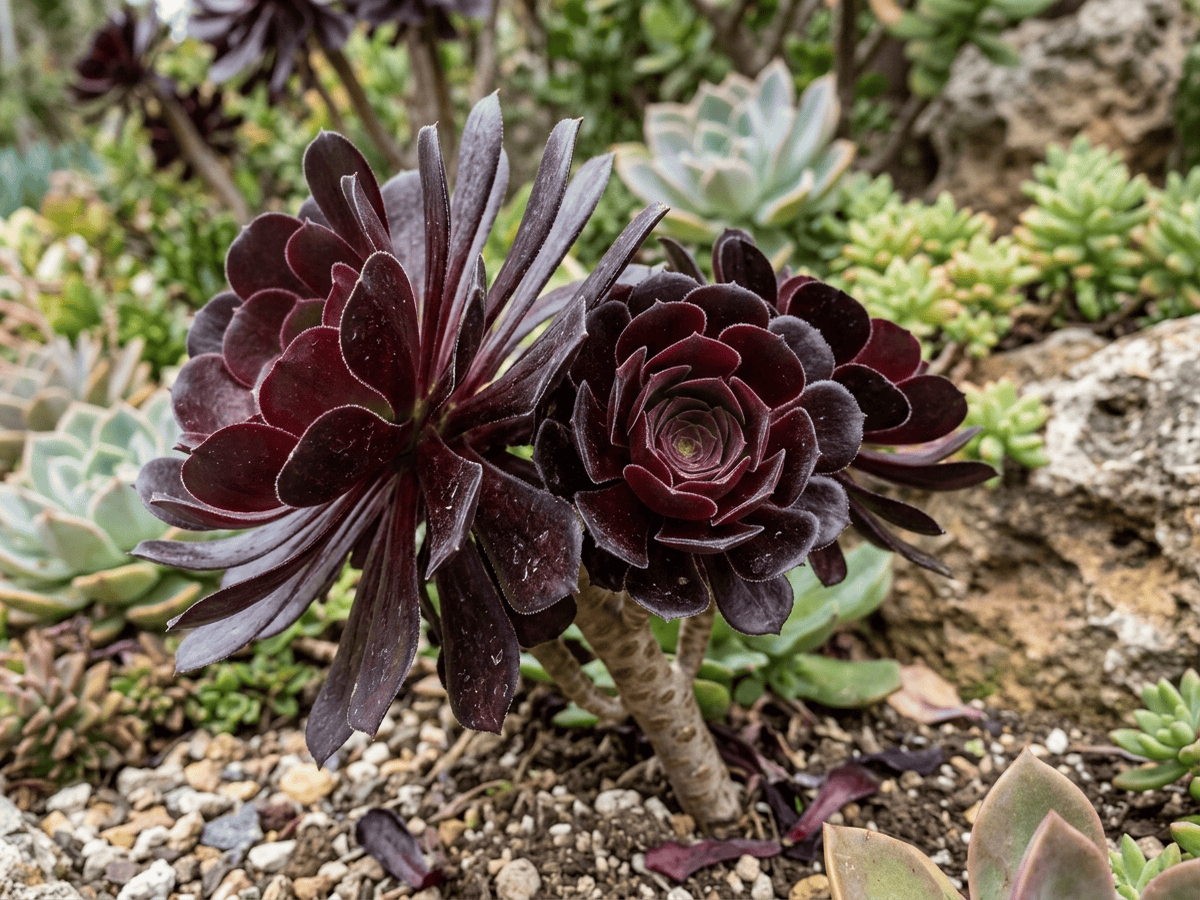
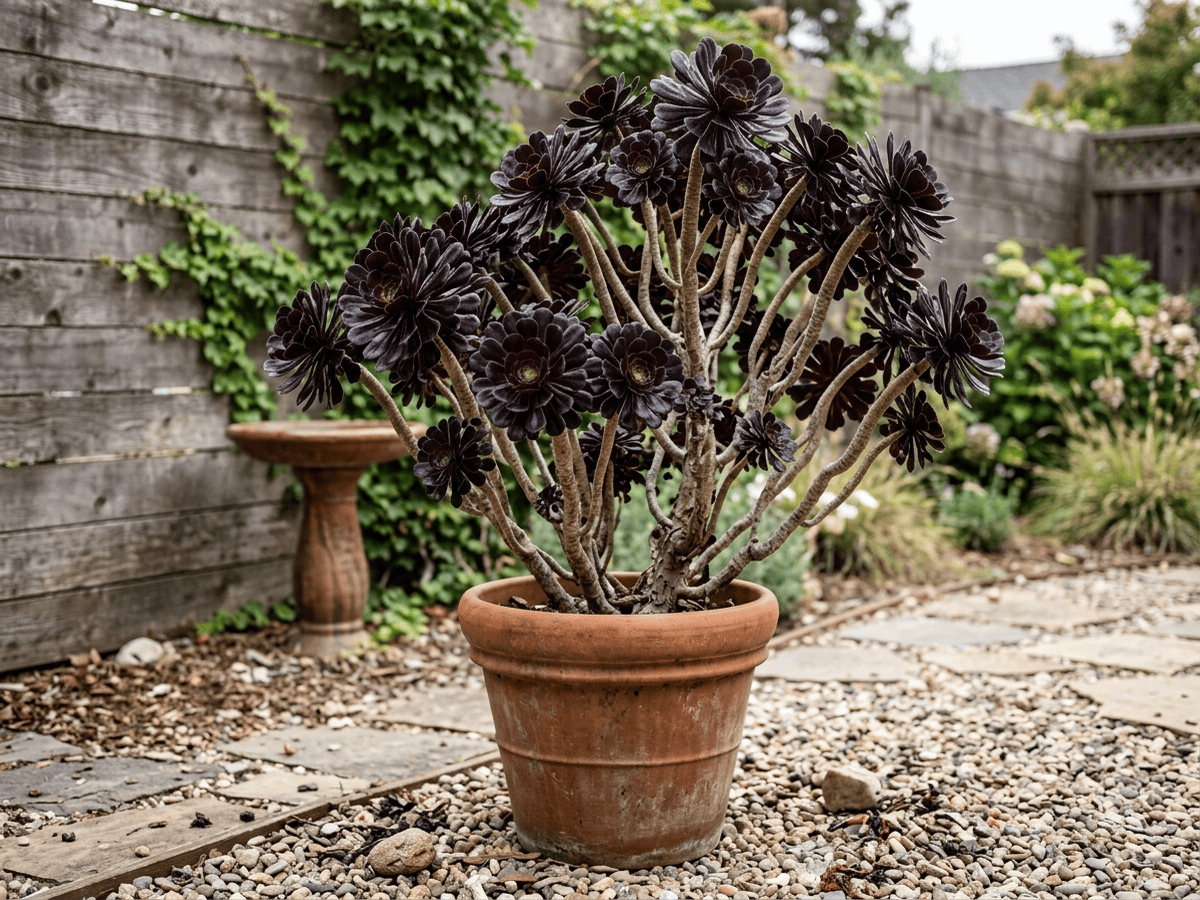
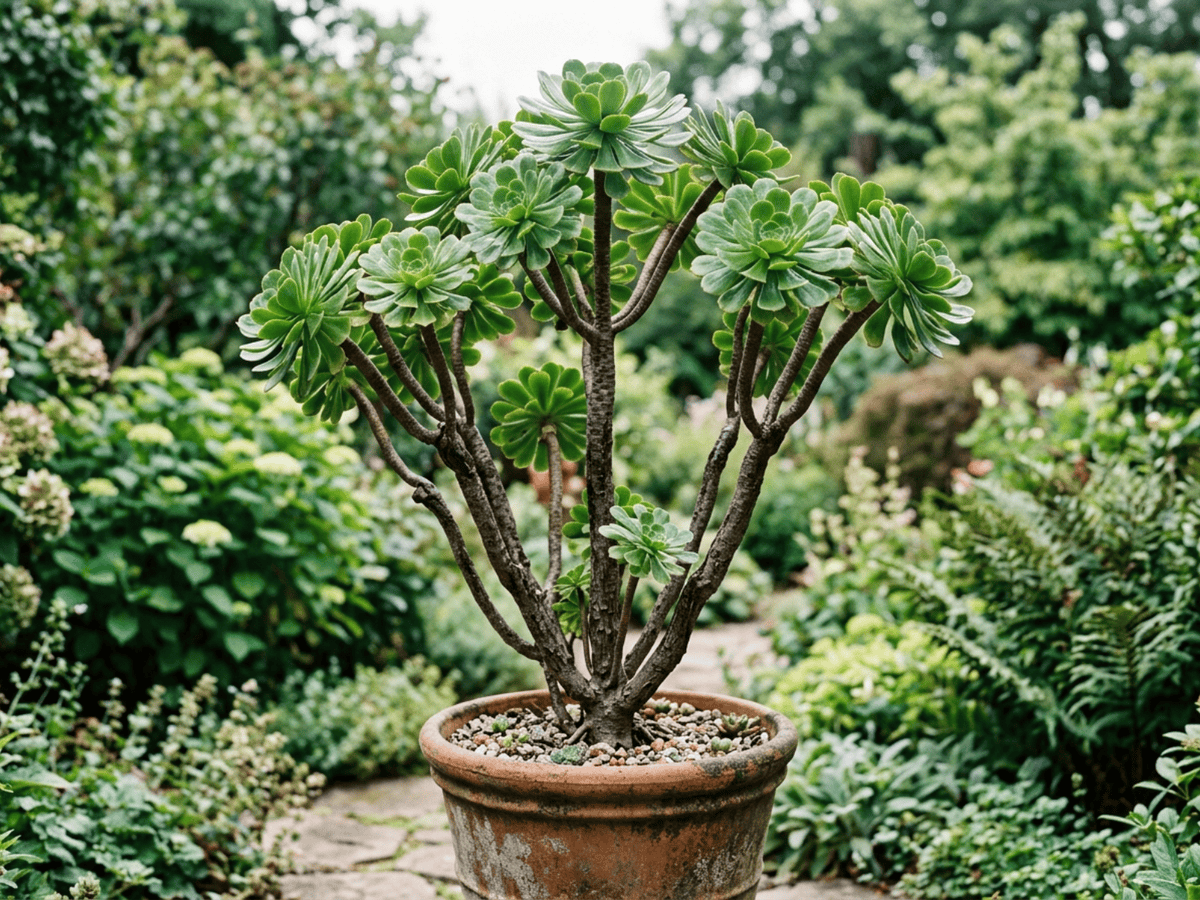
Aeonium arboreum 'Zwartkop' is the near-black form of tree aeonium, a striking succulent subshrub from the Canary Islands. Its rosettes of glossy deep-purple-to-black leaves sit atop woody stems that branch with age into architectural, candelabra-like shapes. In full sun the foliage deepens to almost jet black; in shade it reverts to dark green.
Grown outdoors year-round in USDA zones 9-11 and as a prized container plant elsewhere, 'Zwartkop' thrives with minimal water, excellent drainage, and bright light. Mature plants produce tall conical panicles of vivid yellow star-shaped flowers in late winter — a stunning contrast to the black foliage. The rosette that flowers will die after seeding (monocarpic), but branched specimens keep many rosettes going.
Ned Kelly introduced the cultivar in Australia in the 1980s after a sport selection, and it quickly became the defining dark-foliage succulent of modern garden design. Easy to propagate from stem cuttings.
- Drought-tolerant
- Architectural
How to care for Black Aeonium
Watering
- Springevery 10 days
- Summerevery 21 days
- Fallevery 14 days
- Winterevery 21 days
Soil · Fast-draining
- Main mixSand + pumice + soil 1:1:150%
- DrainagePumice / gravel50%
Keep grit at half the mix or more — this soil is meant to dry out fast.
FERTILIZER
Cactus & Succulent Feed 2-7-7
Hold the nitrogen back and growth stays compact instead of soft and stretched. Phosphorus and potassium carry the roots and the flowering.
- Nitrogen · Leaves
- Phosphorus · Roots + Blooms
- Potassium · Strength
- Springevery 30 days
- Fallevery 30 days
At a Glance
- Height3–5 ft (0.9–1.5 m)
- Spread2–3 ft (0.6–0.9 m)
- Flower colorYellow
- Foliage colorPurple, Dark-green
- SoilSandy, Well-drained
- LocationsYard · Indoor · Balcony
Bloom time
BLOOM CYCLE
Peak bloom
Dec–Feb
Yellow panicles appear on 3-5 year rosettes in late winter; rosette dies after.
Fragrance
NO FRAGRANCE
No notable fragrance.
Toxicity
Humans Slight
Unknown toxic principle
Slight
- Sap
- Contact
EXPOSURE Touching sap.
EFFECT Mild skin irritation in sensitive individuals from sap.
NOTE Documented concern for humans: Mild skin irritation in sensitive individuals from sap.
Not reported
EXPOSURE No exposure route is reported.
EFFECT Not listed as toxic.
NOTE No toxicity is reported for dogs in this catalog; this is not evidence that the plant is edible or harmless.
Not reported
EXPOSURE No exposure route is reported.
EFFECT Not listed as toxic.
NOTE No toxicity is reported for cats in this catalog; this is not evidence that the plant is edible or harmless.
Educational information, not medical or veterinary advice. If exposure is suspected, contact a doctor or veterinarian.
DISTRIBUTION


- Native
- Introduced
History
Aeonium arboreum 'Zwartkop' ('black head' in Dutch) is a dark-foliage sport of the green wild-type Aeonium arboreum native to the Canary Islands. The cultivar was selected and stabilized in the late 20th century — exact origin disputed but widely credited to Australian and Dutch horticulturists — and entered commerce in the 1980s. Its ability to hold near-black coloration in full sun made it the defining dark-foliage succulent of the 1990s-2010s contemporary garden design wave pioneered by figures like Piet Oudolf and Thomas Hobbs.
Now ubiquitous in Mediterranean-climate modern gardens and worldwide as a container specimen. Monocarpic rosettes produce tall yellow panicles at maturity before dying; branched specimens continue through remaining rosettes.
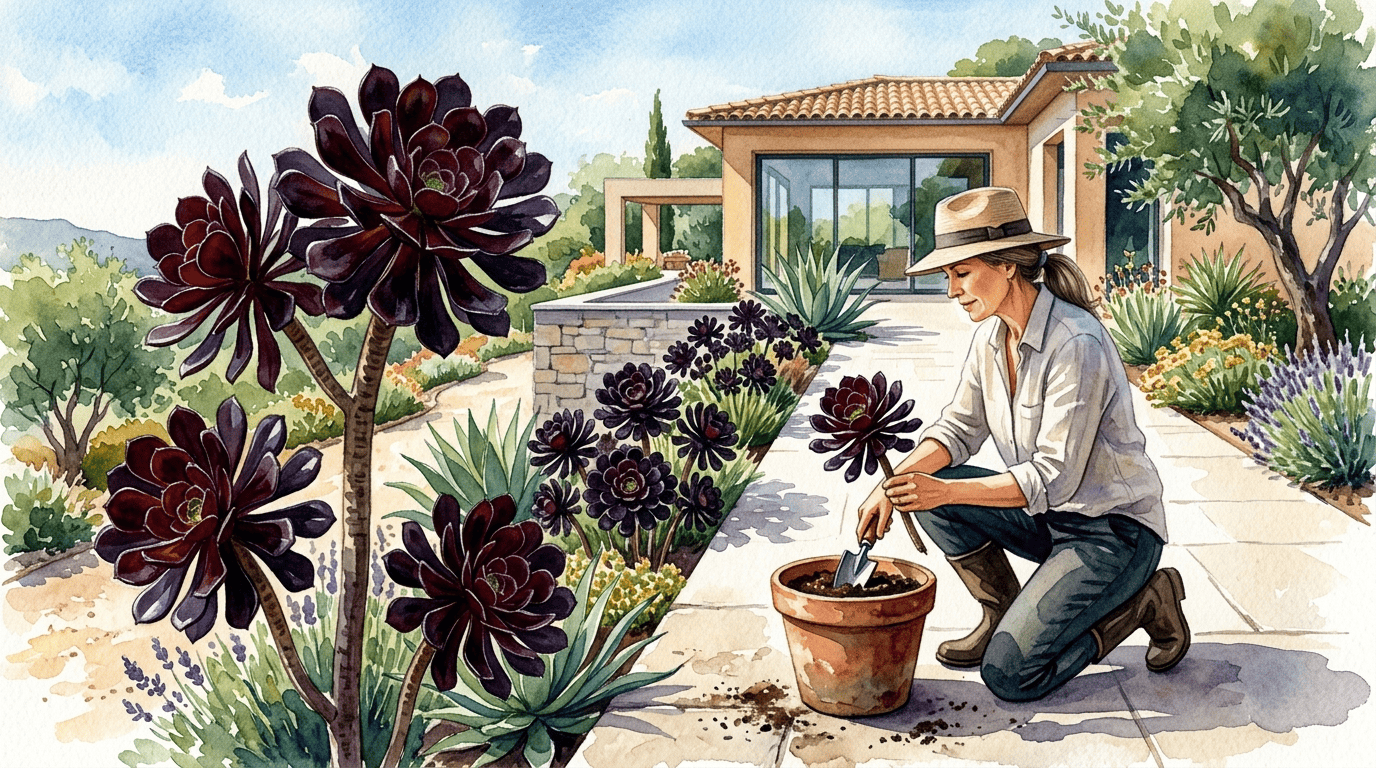
Propagates readily from stem cuttings taken in autumn. Selected in the 1980s as a dark sport of green Aeonium arboreum, 'Zwartkop' (Dutch for 'black head') was popularized by plantsman Nicky Heenan and Australian breeders.
Symbolism & meaning
What It Symbolizes
Black Aeonium 'Zwartkop' wears mystery in its near-black rosettes, foliage so deep it seems to swallow light and invite contemplation. Yet beneath the gothic glamour lies remarkable endurance — once established, it thrives on drought and neglect, asking little while offering striking presence. It is a plant for those who find beauty in shadow and strength in restraint.
- Mystery — Near-black foliage evokes intrigue and contemplation
- Endurance — Thrives on drought and neglect once established
Where the Name Comes From
Aeonium from Greek 'aionios' (everlasting); 'Zwartkop' is Dutch for 'black head,' describing the dark rosette.
Uses & Fun Facts
- Black rosettes prized in Mediterranean patio container plantings
- Dramatic dark succulent rosettes as bold focal accent
- Striking near-black foliage contrasts silver and chartreuse plants
Related plants
More Aeonium plants
Plants with similar care
 Chinese AbeliaAbelia chinensis
 Fragrant AbeliaAbelia mosanensis
 Large-Flowered AbeliaAbelia uniflora
 Glossy AbeliaAbelia x grandiflora
Frequently asked questions
How often should I water Black Aeonium?
In summer, water about every 21 days; in winter, about every 21 days. Adjust for heat, pot size and drainage.
How much light does Black Aeonium need?
Full sun: 6+ hrs direct. Watch the leaves — scorching or stretching means the light needs adjusting.
Is Black Aeonium toxic to cats or dogs?
Pets Not reported (Dogs Not reported · Cats Not reported) Educational information, not medical or veterinary advice. If exposure is suspected, contact a doctor or veterinarian.
Is Black Aeonium easy to grow?
Yes — it is considered an easy, beginner-friendly plant.
Can Black Aeonium be grown indoors?
Yes, it adapts well to indoor growing given the right light.
When does Black Aeonium bloom?
It typically blooms Dec–Feb in the Northern Hemisphere.
YardMate
Identify any plant in seconds
Snap a photo — YardMate names the plant, diagnoses problems, and reminds you when to water.
Download on the App Store