 YardMate


Yellow Buckeye
Aesculus flava
Easy · Beginner friendlyAbout Yellow Buckeye
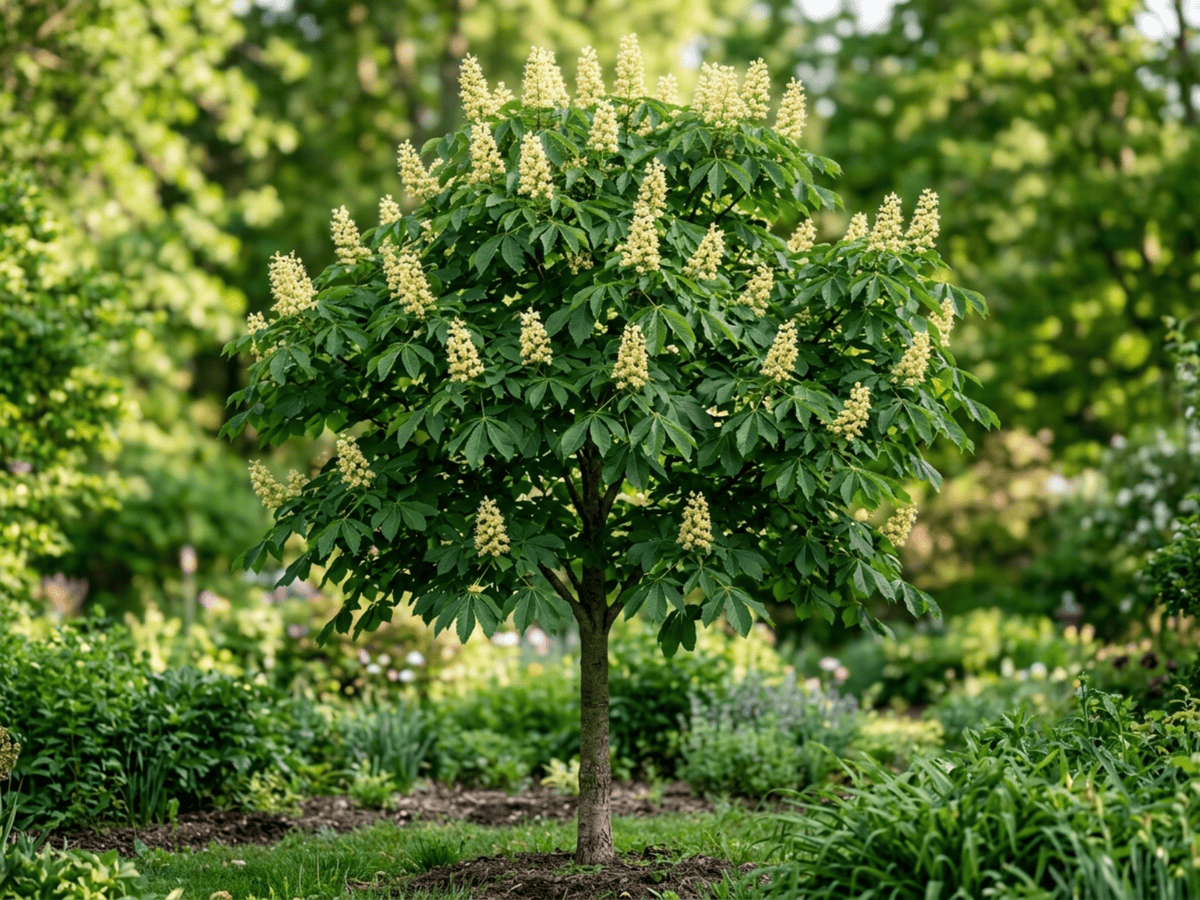
Yellow Buckeye is the largest American buckeye, a majestic tree of the Appalachian forests reaching 60-90 feet tall with panicles of soft yellow flowers in late spring and pumpkin-orange fall color. Unlike other Aesculus species, it resists leaf blotch and scorch, maintaining clean foliage all season. Hardy in USDA zones 4-8 and an excellent shade tree for larger American landscapes, particularly in the East and Midwest.
- Disease-resistant
- Fall-color
- Native
- Pollinator-friendly
How to care for Yellow Buckeye
Watering
- Springevery 7 days
- Summerevery 5 days
- Fallevery 10 days
- Winterpause watering
Soil · Well-draining
- Top dressingPine bark mulch10%
- Main mixPotting soil + perlite 2:170%
- DrainageLECA / gravel20%
Never skip the drainage layer — standing water is the top cause of root rot.
FERTILIZER
Balanced Feed 14-14-14
An even feed covers all three needs at once, keeping leaves, roots and blooms moving together with nothing pushed out of balance.
- Nitrogen · Leaves
- Phosphorus · Roots + Blooms
- Potassium · Strength
- Springevery 60 days
- Summerevery 60 days
At a Glance
- NativeNorth America
- Height50–80 ft (15.2–24.4 m)
- Spread30–50 ft (9.1–15.2 m)
- Flower colorYellow
- Foliage colorGreen, Bronze
- Fruit colorBrown
- SoilRich, Loamy, Well-drained
- LocationsYard
Bloom time
BLOOM CYCLE
Peak bloom
May
Soft yellow panicles May
Fragrance
LIGHT FRAGRANCE
The flowers have a mild scent.
Toxicity
Humans Moderate · Pets Moderate
aesculin, aescin, and saponins
Moderate
- Seed
- Leaf
- Ingestion
EXPOSURE Eating seeds and leaves.
EFFECT Nausea, vomiting, and weakness.
NOTE Documented concern for humans: Nausea, vomiting, and weakness.
Moderate
- All
- Ingestion
EXPOSURE Eating any part of the plant.
EFFECT Vomiting, diarrhea, and tremors.
NOTE ASPCA lists Aesculus as toxic to pets.
Moderate
- All
- Ingestion
EXPOSURE Eating any part of the plant.
EFFECT Vomiting, diarrhea, and tremors.
NOTE ASPCA lists Aesculus as toxic to pets.
Educational information, not medical or veterinary advice. If exposure is suspected, contact a doctor or veterinarian.
DISTRIBUTION


- Native
- Introduced
- North America
History
Aesculus flava (formerly A. octandra) grows in rich cove forests of the southern Appalachians, with its best development in North Carolina and Tennessee. Scottish-English botanist William Aiton, director of Kew Gardens, formally described it in 1789 in Hortus Kewensis. Unlike most buckeyes which stay moderate-sized, mature specimens reach 70-90 feet and can exceed 100 feet in ideal conditions, making it among the largest Aesculus species worldwide.
Its soft yellow 4-6 inch upright panicles appear in May, less showy than red buckeye but more restrained. The species shows notably better resistance to powdery mildew and leaf blotch than A. hippocastanum (horse chestnut), which plagues other buckeyes in humid summers. Yellow autumn color is among the best in the genus.
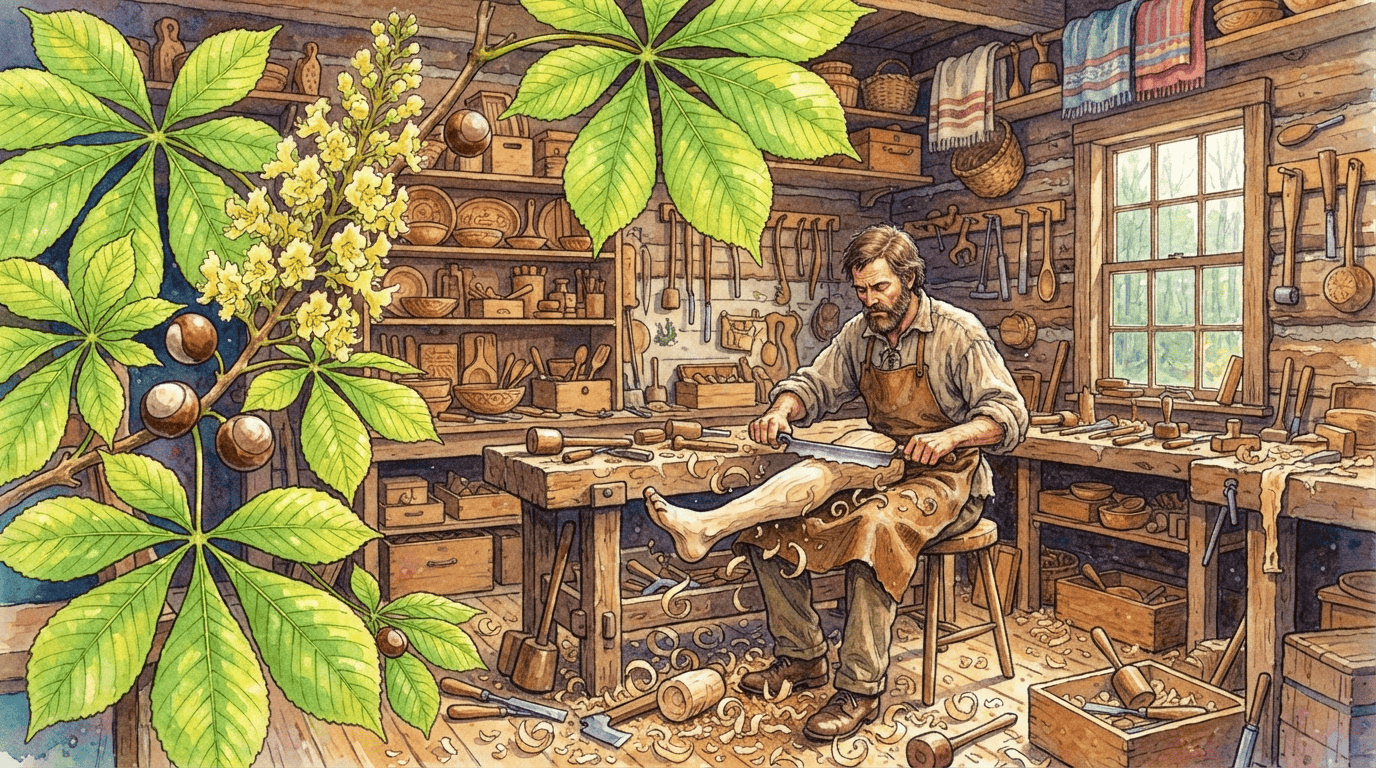
Early settlers used the soft wood for artificial limbs. Native throughout the southern Appalachians and Ohio Valley. The largest Aesculus native to North America. The lustrous wood is easily worked and has been used traditionally for boxes, utensils, and prosthetic limbs. A signature canopy tree of Appalachian cove hardwood forests, often reaching remarkable size in rich mountain soils.
Symbolism & meaning
What It Symbolizes
The Yellow Buckeye stands as a noble cornerstone of the Appalachian forest, its straight trunk and broad crown lending dignity to mountain coves. Nobility runs through its scale and the clean architecture of its palmate leaves, while its heritage anchors entire ecosystems of wildflowers and songbirds. To stand beneath one in May, candles aglow with cream blossoms, is to feel the calm authority of an old American woodland.
- Nobility — majestic scale and clean beauty
- Heritage — Appalachian forest cornerstone
Where the Name Comes From
'Flava' means 'yellow' in Latin, referring to flower color.
Uses & Fun Facts
- Yellow panicles feed bees and hummingbirds in spring
- Tall native canopy planted as lawn shade tree
- Brilliant orange fall color stands out in native landscapes
Related plants
More Aesculus plants
Plants with similar care
 Chinese AbeliaAbelia chinensis
 Fragrant AbeliaAbelia mosanensis
 Large-Flowered AbeliaAbelia uniflora
 Glossy AbeliaAbelia x grandiflora
Frequently asked questions
How often should I water Yellow Buckeye?
Water about every 7 days during the growing season, and always let excess water drain away.
How much light does Yellow Buckeye need?
Full sun: 6+ hrs direct. Watch the leaves — scorching or stretching means the light needs adjusting.
Is Yellow Buckeye toxic to cats or dogs?
Pets Moderate (Dogs Moderate · Cats Moderate) Educational information, not medical or veterinary advice. If exposure is suspected, contact a doctor or veterinarian.
Is Yellow Buckeye easy to grow?
Yes — it is considered an easy, beginner-friendly plant.
When does Yellow Buckeye bloom?
It typically blooms May in the Northern Hemisphere.
YardMate
Identify any plant in seconds
Snap a photo — YardMate names the plant, diagnoses problems, and reminds you when to water.
Download on the App Store