 YardMate
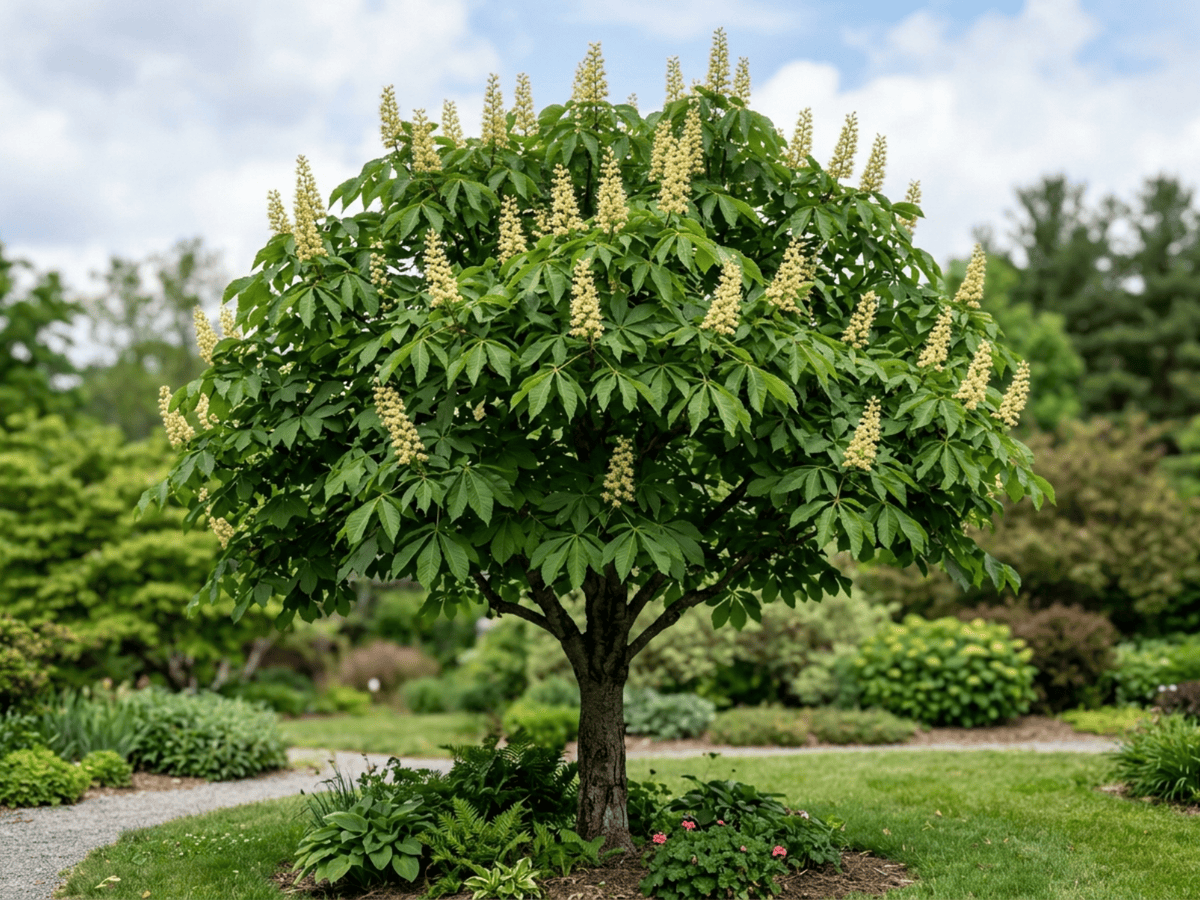


Ohio Buckeye
Aesculus glabra
Easy · Beginner friendlyAbout Ohio Buckeye
Ohio Buckeye is a medium-sized native American tree of the Midwest and Central Plains, growing 25-50 feet tall with palmately compound leaves, panicles of yellow-green flowers in late spring, and spiny capsules releasing shiny mahogany-brown seeds (buckeyes) in fall. The state tree of Ohio and beloved for its cultural significance, it offers excellent orange-red fall color. Hardy in USDA zones 3-7, it is a traditional symbol of American Midwest heritage.
- Fall-color
- Native
- Pollinator-friendly
How to care for Ohio Buckeye
Watering
- Springevery 7 days
- Summerevery 5 days
- Fallevery 10 days
- Winterpause watering
Soil · Well-draining
- Top dressingPine bark mulch10%
- Main mixPotting soil + perlite 2:170%
- DrainageLECA / gravel20%
Never skip the drainage layer — standing water is the top cause of root rot.
FERTILIZER
Balanced Feed 14-14-14
An even feed covers all three needs at once, keeping leaves, roots and blooms moving together with nothing pushed out of balance.
- Nitrogen · Leaves
- Phosphorus · Roots + Blooms
- Potassium · Strength
- Springevery 60 days
- Summerevery 60 days
At a Glance
- NativeNorth America
- Height20–40 ft (6.1–12.2 m)
- Spread20–40 ft (6.1–12.2 m)
- Flower colorYellow
- Foliage colorGreen, Bronze
- Fruit colorBrown
- SoilLoamy, Well-drained, Moisture-retentive
- LocationsYard
Bloom time
BLOOM CYCLE
Peak bloom
Apr–May
Yellow-green panicles April to May
Fragrance
LIGHT FRAGRANCE
The foliage has a fetid when crushed scent.
Toxicity
Humans Moderate · Pets Moderate
aesculin, aescin, and saponins
Moderate
- Seed
- Leaf
- Shoot
- Ingestion
EXPOSURE Eating seeds, leaves, and shoot.
EFFECT Nausea, vomiting, weakness, and paralysis.
NOTE Documented concern for humans: Nausea, vomiting, weakness, and paralysis.
Moderate
- All
- Ingestion
EXPOSURE Eating any part of the plant.
EFFECT Vomiting, diarrhea, and tremors.
NOTE ASPCA lists Aesculus as toxic to pets. Historical Indigenous use required careful leaching.
Moderate
- All
- Ingestion
EXPOSURE Eating any part of the plant.
EFFECT Vomiting, diarrhea, and tremors.
NOTE ASPCA lists Aesculus as toxic to pets. Historical Indigenous use required careful leaching.
Educational information, not medical or veterinary advice. If exposure is suspected, contact a doctor or veterinarian.
DISTRIBUTION


- Native
- Introduced
- North America
History
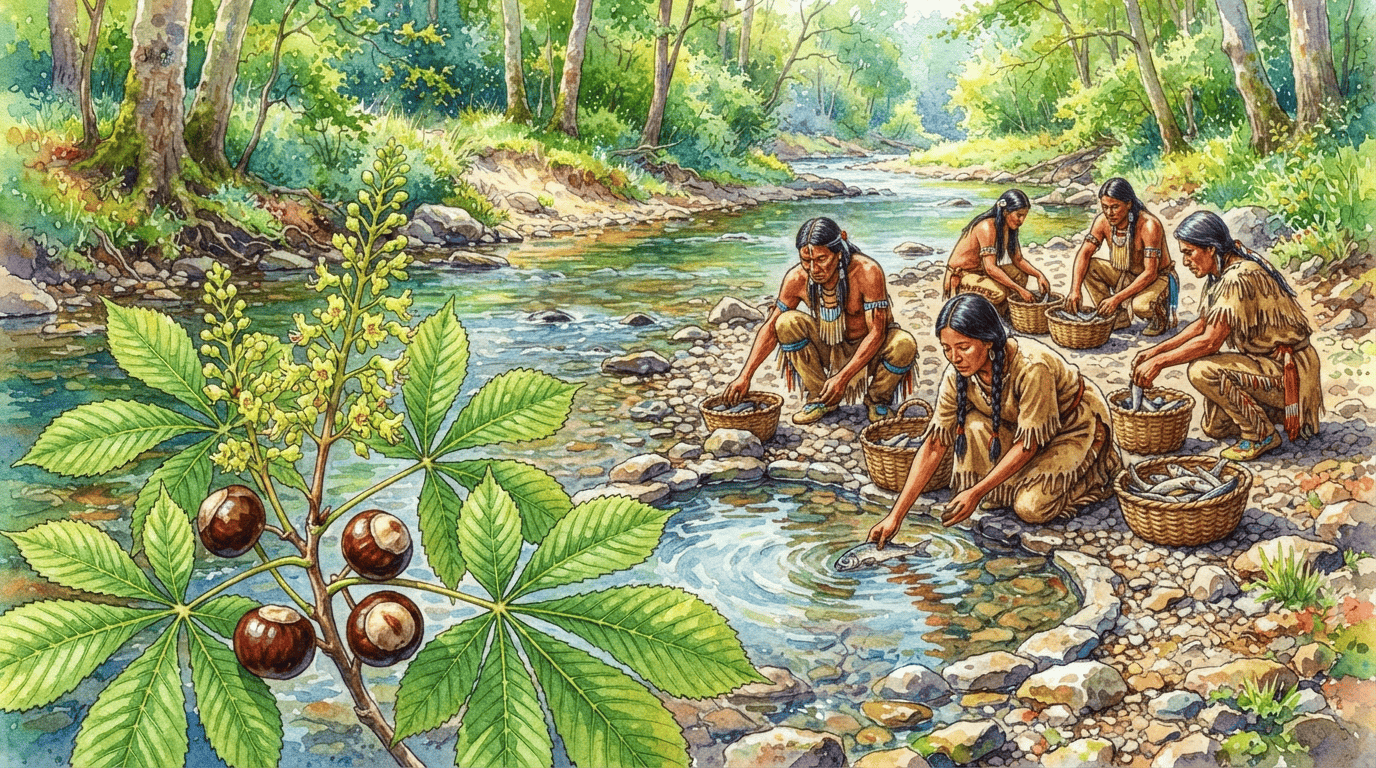
Aesculus glabra ranges across the central United States from Pennsylvania west to Kansas and south to Tennessee and Alabama. German botanist Carl Ludwig Willdenow formally described it in 1809. Common names Ohio buckeye and American buckeye reference both its core range and the nut's resemblance to a deer's eye (buck-eye).
It became the state tree of Ohio in 1953, and The Ohio State University athletic teams and mascot carry the name. Indigenous peoples including the Shawnee and Iroquois ground the toxic seeds and mixed them with flour or water to stun fish for harvest—the toxins broke down during processing, making the grain safe to eat after leaching. The species has distinct yellow-green panicles in late April, uncommon among trees, and good orange autumn color.
Leaf scorch in hot dry summers limits its southern garden use. Native Americans traditionally carried the seeds (buckeyes) as lucky charms—a tradition continued today among Ohioans. The Cherokee soaked mashed seeds in streams to stun fish. The 'Buckeye State' nickname reflects the tree's deep cultural importance in the American Midwest.
Symbolism & meaning
What It Symbolizes
The Ohio Buckeye is luck made tangible — a glossy mahogany seed slipped into a pocket as a charm against misfortune, a folk tradition still alive across the American Midwest. As Ohio's state tree it carries deep heritage, lending it name to the state's people and university teams. To gift a buckeye is an old, plainspoken gesture: I wish you fortune, and a piece of home to carry with you.
- Luck — buckeyes carried as traditional good luck charms
- Heritage — iconic symbol of the American Midwest
Where the Name Comes From
The name Ohio Buckeye describes glossy seeds that resemble a deer's eye. 'Aesculus' is a Roman name for an oak with edible acorns; 'glabra' means 'smooth', referring to the leaves.
Uses & Fun Facts
- Mid-sized canopy tree casting cool shade over Midwest yards
- State tree of Ohio carried as folk good-luck charm
- Yellow-green spring panicles feed early-emerging native bees
- Palmate foliage turns brilliant orange in autumn landscapes
Related plants
More Aesculus plants

Plants with similar care
 Chinese AbeliaAbelia chinensis
 Fragrant AbeliaAbelia mosanensis
 Large-Flowered AbeliaAbelia uniflora
 Glossy AbeliaAbelia x grandiflora
Frequently asked questions
How often should I water Ohio Buckeye?
Water about every 7 days during the growing season, and always let excess water drain away.
How much light does Ohio Buckeye need?
Full sun: 6+ hrs direct. Watch the leaves — scorching or stretching means the light needs adjusting.
Is Ohio Buckeye toxic to cats or dogs?
Pets Moderate (Dogs Moderate · Cats Moderate) Educational information, not medical or veterinary advice. If exposure is suspected, contact a doctor or veterinarian.
Is Ohio Buckeye easy to grow?
Yes — it is considered an easy, beginner-friendly plant.
When does Ohio Buckeye bloom?
It typically blooms Apr–May in the Northern Hemisphere.
YardMate
Identify any plant in seconds
Snap a photo — YardMate names the plant, diagnoses problems, and reminds you when to water.
Download on the App Store