 YardMate


Tree-Of-Heaven
Ailanthus altissima
Easy · Beginner friendlyAbout Tree-Of-Heaven
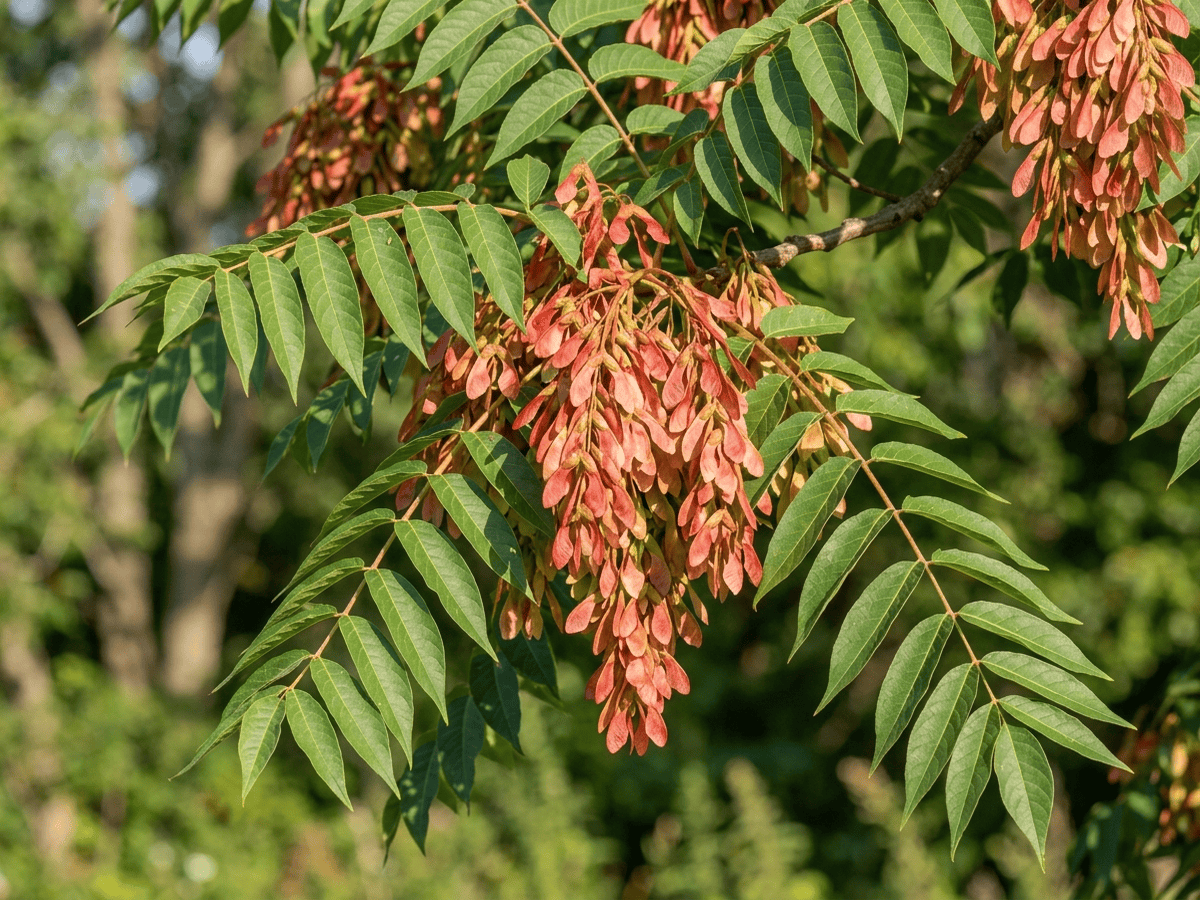
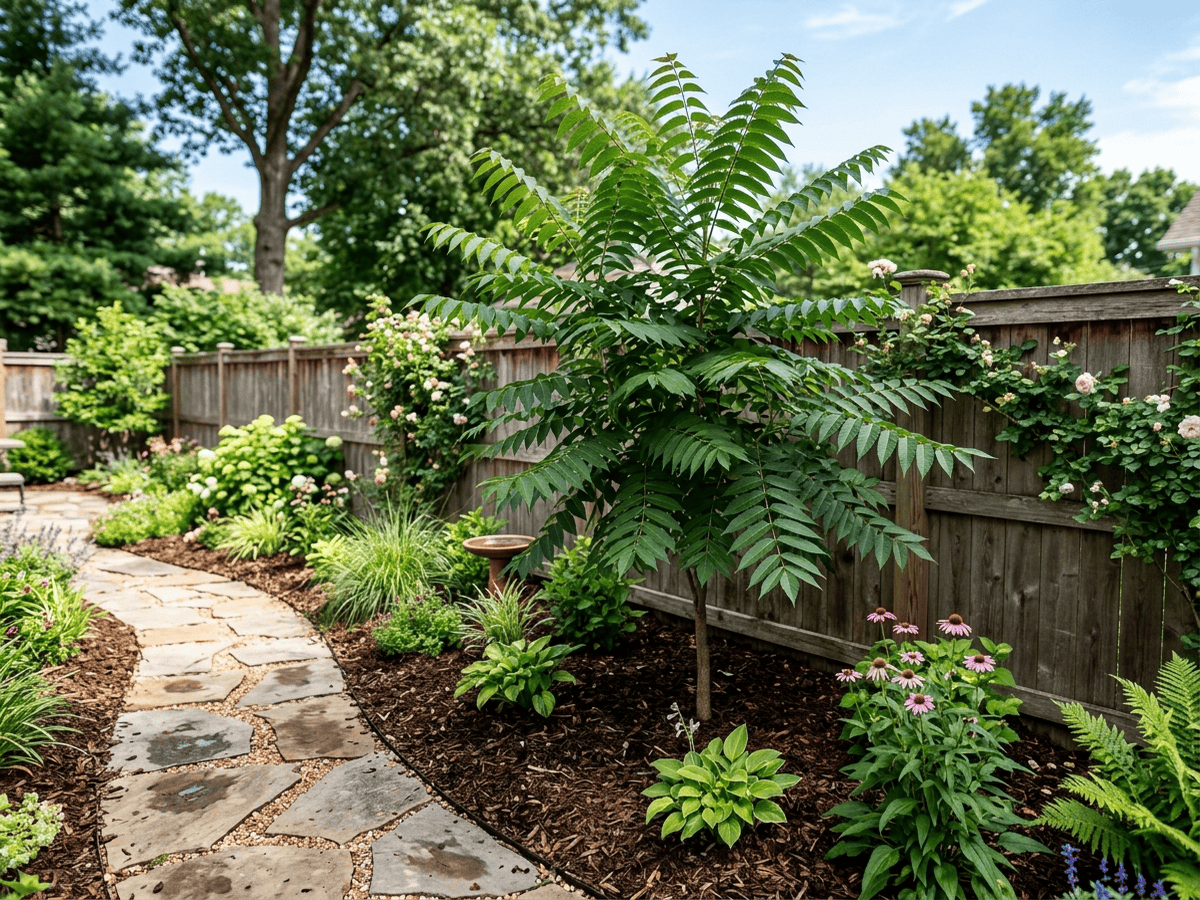
Tree of Heaven is a rapidly growing Chinese deciduous tree introduced to US cities in the 1700s and now one of the most damaging invasive trees in North America. Growing 3 to 6 feet per year to heights of 60 to 80 feet with pinnate leaves and clusters of yellow-green flowers, it releases allelopathic toxins suppressing native plants and sprouts aggressively from root fragments. Listed as invasive in nearly every US state and the preferred host of invasive Spotted Lanternfly.
- Fast-growing
How to care for Tree-Of-Heaven
Watering
- Springevery 14 days
- Summerevery 10 days
- Fallevery 14 days
- Winterevery 30 days
Soil · Well-draining
- Top dressingPine bark mulch10%
- Main mixPotting soil + perlite 2:170%
- DrainageLECA / gravel20%
Never skip the drainage layer — standing water is the top cause of root rot.
FERTILIZER
This plant needs little to no feeding.
At a Glance
- NativeEast Asia
- Height50–80 ft (15.2–24.4 m)
- Spread30–50 ft (9.1–15.2 m)
- Flower colorYellow, Green
- Foliage colorGreen
- Fruit colorBrown
- SoilWell-drained, Loamy
- LocationsYard
Fragrance
STRONG FRAGRANCE
Male flowers smell rank and unpleasant.
Toxicity
Humans Slight · Pets Slight
ailanthone and quassinoids
Slight
- Leaf
- Sap
- Contact
EXPOSURE Touching leaves and sap.
EFFECT Contact dermatitis and myocarditis from high exposures.
NOTE Sap can irritate skin; allelopathic to many plants.
Slight
- Leaf
- Bark
- Ingestion
EXPOSURE Eating leaves and bark.
EFFECT Gastrointestinal upset.
NOTE Sap can irritate skin; allelopathic to many plants.
Slight
- Leaf
- Bark
- Ingestion
EXPOSURE Eating leaves and bark.
EFFECT Gastrointestinal upset.
NOTE Sap can irritate skin; allelopathic to many plants.
Educational information, not medical or veterinary advice. If exposure is suspected, contact a doctor or veterinarian.
DISTRIBUTION

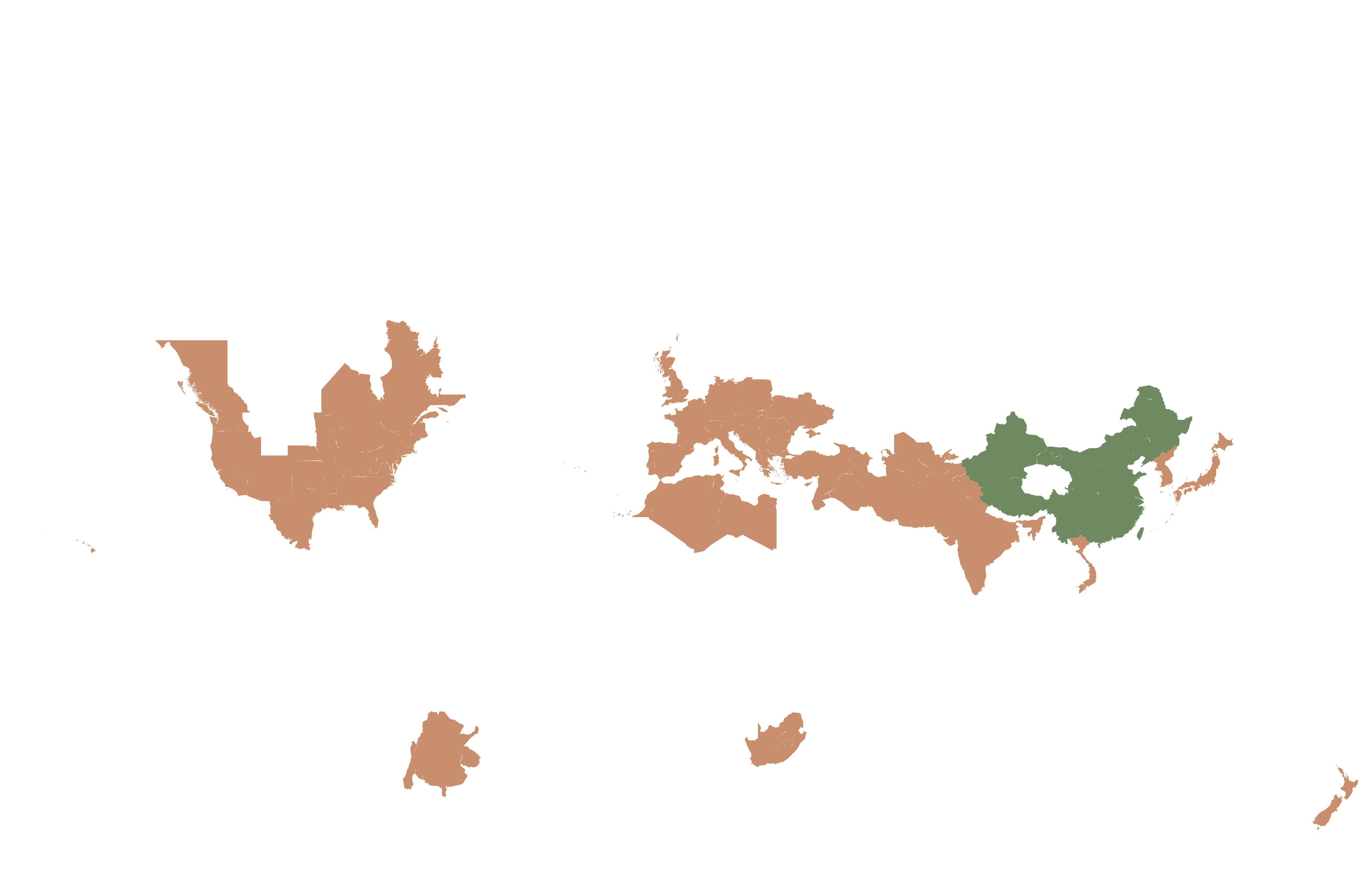
- Native
- Introduced
- East Asia
History
Ailanthus altissima, tree of heaven, is a deciduous tree native to central and northern China and Taiwan. French Jesuit missionary Pierre d'Incarville sent seeds to Paris in 1751, and English botanist Mark Catesby's network distributed them onward; the tree reached America in 1784 via Philadelphia horticulturist William Hamilton. Its rapid growth, urban tolerance, and striking pinnate foliage made it immensely popular in Victorian cities, but its weedy habits, rank-smelling male flowers, and aggressive root suckering soon reversed its reputation.
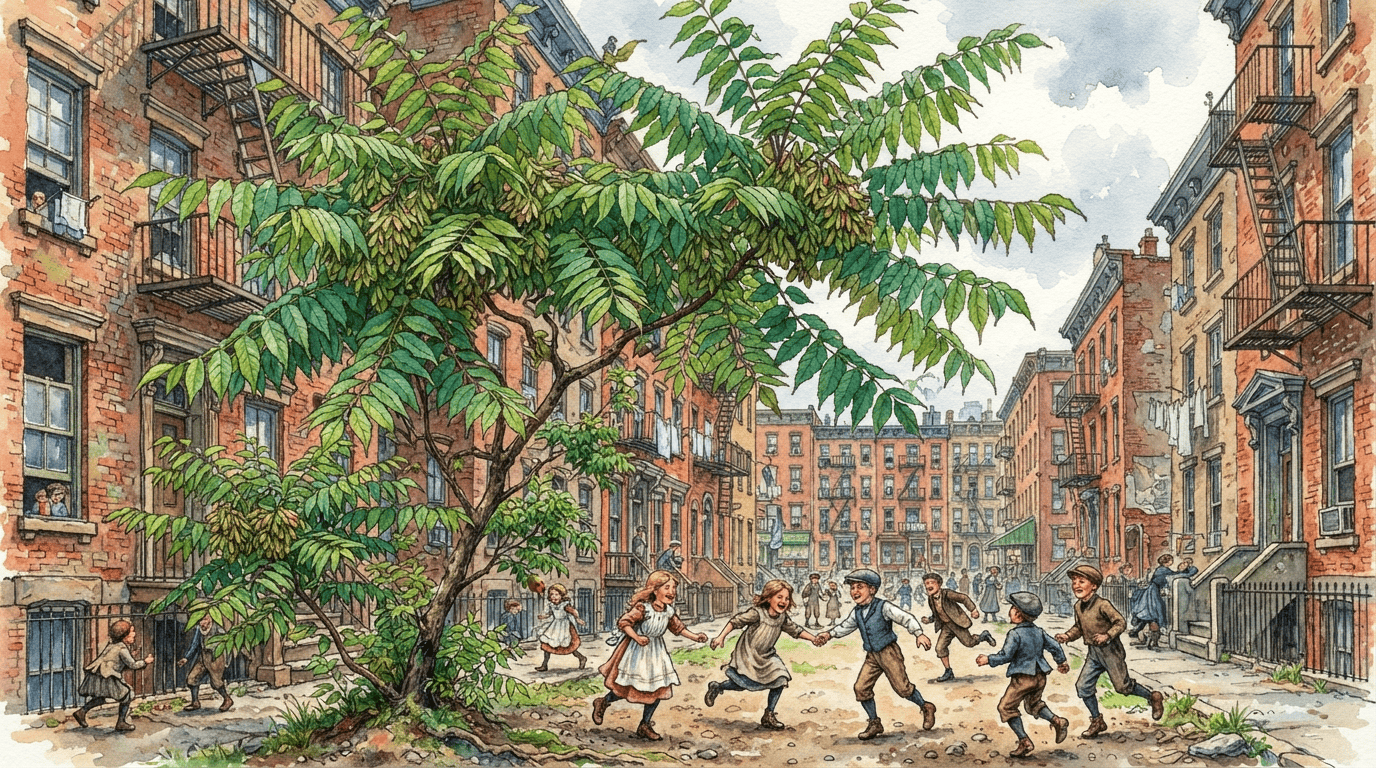
Betty Smith's 1943 novel A Tree Grows in Brooklyn immortalized its urban resilience. The tree is now a listed invasive across Europe and North America, releasing allelopathic ailanthone from roots and bark that inhibits competing species.
It is also the primary host of the invasive spotted lanternfly. Native to China, Tree of Heaven was introduced to American gardens in 1784 by a Pennsylvania plantsman and spread through Chinese immigrants during the Gold Rush. Now listed invasive in nearly every US state, it is the primary host of Spotted Lanternfly (first found in Pennsylvania 2014) compounding its already severe ecological and economic damage.
Symbolism & meaning
What It Symbolizes
Tree-of-Heaven wears a misnamed menace: christened for its skyward reach, it has become an ecological nightmare across much of North America. Its wood is brittle, its sap rank, and it serves as the primary host of the invasive Spotted Lanternfly that devastates orchards and vineyards. To know this tree is to learn how a poetic name can mask serious harm — a cautionary figure in the modern landscape.
- Misnamed menace — called Tree of Heaven but now ecological nightmare
- Lanternfly host — primary host of invasive Spotted Lanternfly
Where the Name Comes From
'Ailanthus' from Indonesian 'ailanto' meaning tree of heaven for the tall stature; 'altissima' from Latin means tallest.
Related plants
Plants with similar care
 Chinese AbeliaAbelia chinensis
 Fragrant AbeliaAbelia mosanensis
 Large-Flowered AbeliaAbelia uniflora
 Glossy AbeliaAbelia x grandiflora
Frequently asked questions
How often should I water Tree-Of-Heaven?
In summer, water about every 10 days; in winter, about every 30 days. Adjust for heat, pot size and drainage.
How much light does Tree-Of-Heaven need?
Full sun: 6+ hrs direct. Watch the leaves — scorching or stretching means the light needs adjusting.
Is Tree-Of-Heaven toxic to cats or dogs?
Pets Slight (Dogs Slight · Cats Slight) Educational information, not medical or veterinary advice. If exposure is suspected, contact a doctor or veterinarian.
Is Tree-Of-Heaven easy to grow?
Yes — it is considered an easy, beginner-friendly plant.
YardMate
Identify any plant in seconds
Snap a photo — YardMate names the plant, diagnoses problems, and reminds you when to water.
Download on the App Store