 YardMate

Persian Silk Tree
Albizia julibrissin
Easy · Beginner friendlyAbout Persian Silk Tree
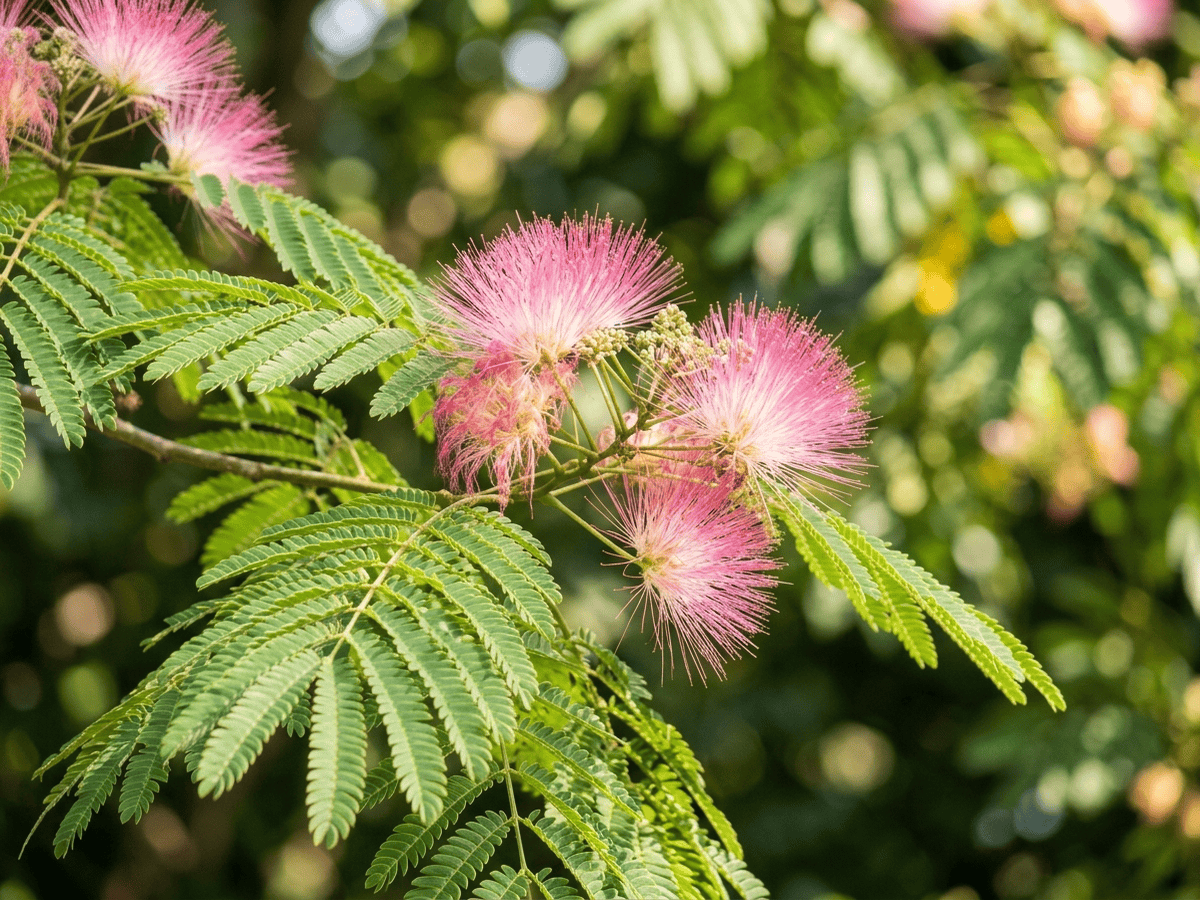
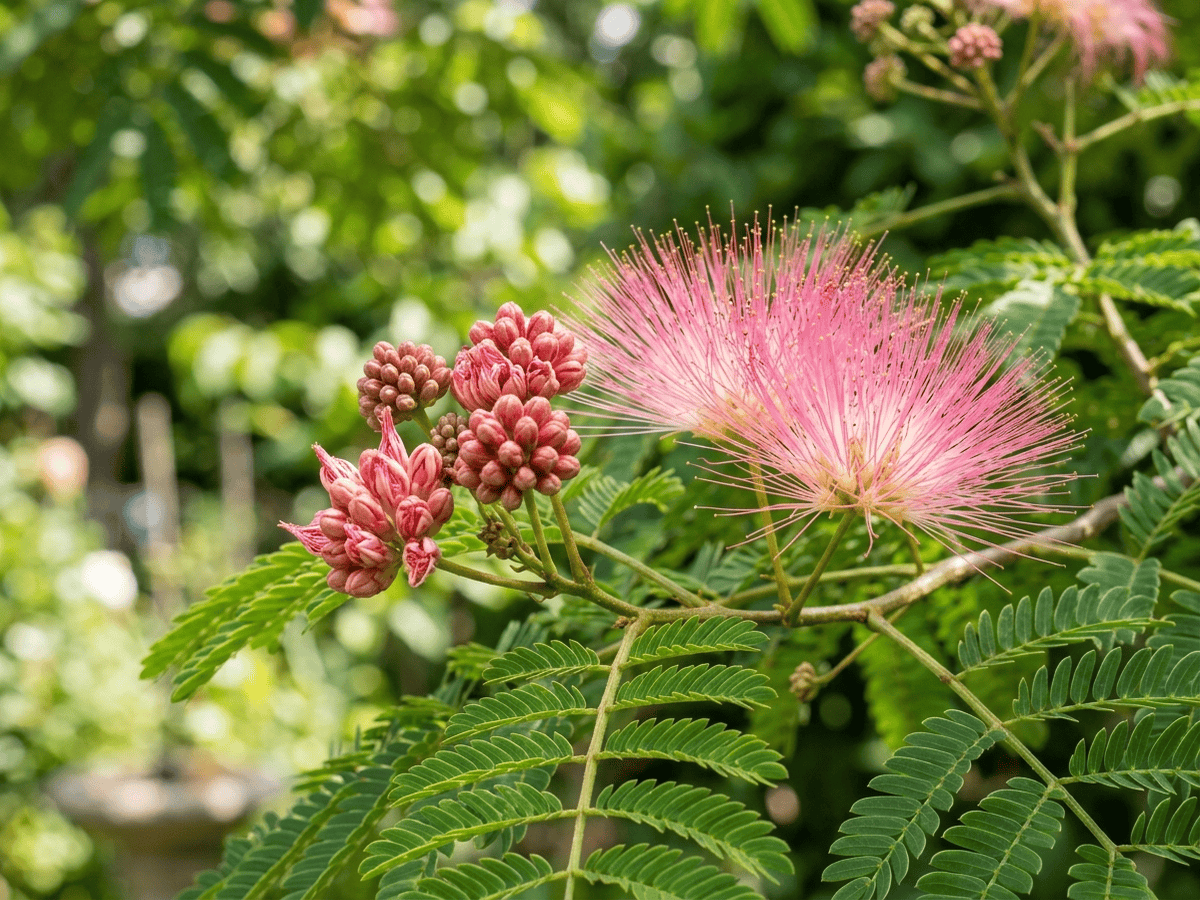
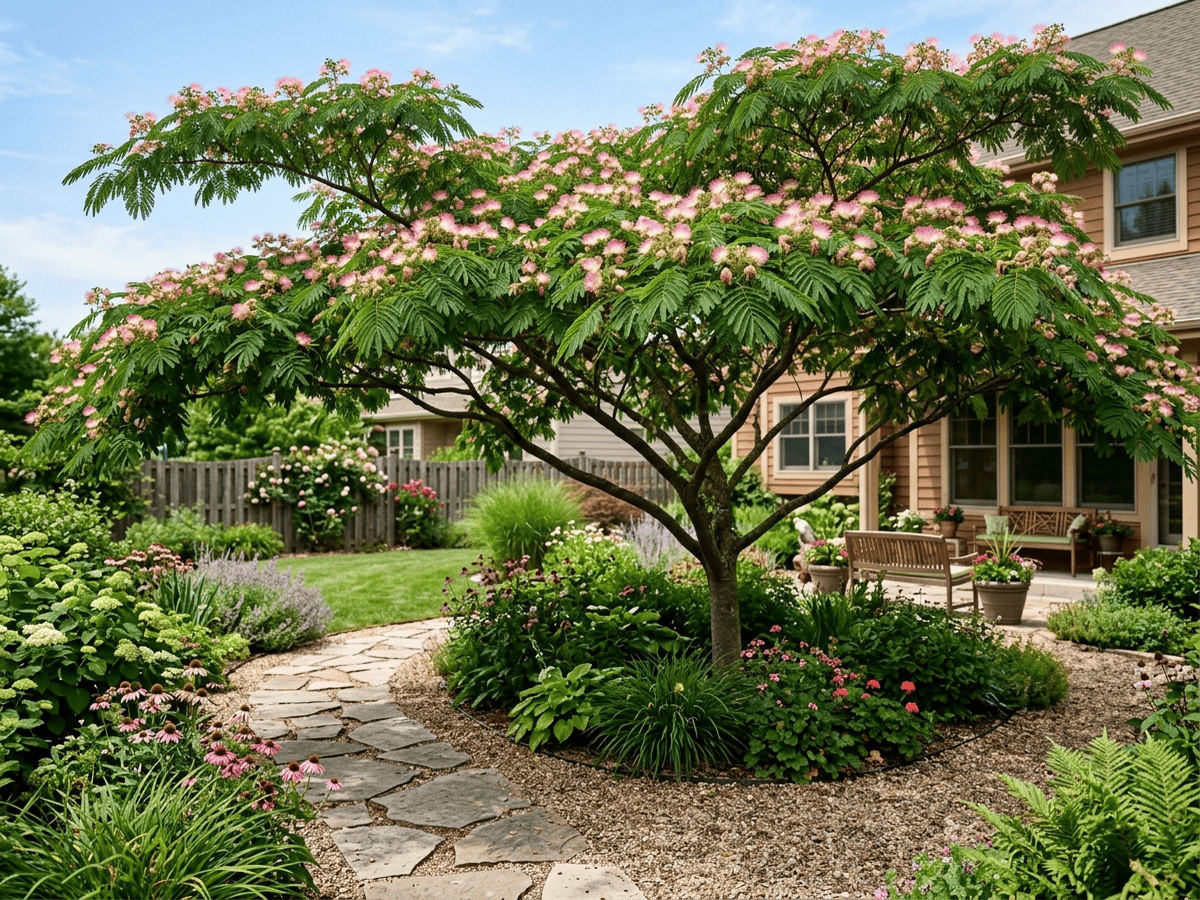
Mimosa or Silk Tree is a West Asian deciduous ornamental tree introduced to the US in the 1740s and now widely naturalized and invasive across the southeastern and mid-Atlantic US. Growing 20 to 40 feet tall with fern-like bipinnate leaves and distinctive pink powder-puff flowers in summer, it produces long flat bean-like seedpods that persist through winter. Listed invasive in many southeastern states, spreads aggressively along roadsides and disturbed forest edges.
- Fast-growing
How to care for Persian Silk Tree
Watering
- Springevery 14 days
- Summerevery 10 days
- Fallevery 14 days
- Winterevery 30 days
Soil · Well-draining
- Top dressingPine bark mulch10%
- Main mixPotting soil + perlite 2:170%
- DrainageLECA / gravel20%
Never skip the drainage layer — standing water is the top cause of root rot.
FERTILIZER
- Springevery 45 days
At a Glance
- NativeEast Asia
- Height20–40 ft (6.1–12.2 m)
- Spread20–50 ft (6.1–15.2 m)
- Flower colorPink
- Foliage colorGreen
- SoilLoamy, Well-drained
- LocationsYard
Bloom time
BLOOM CYCLE
Peak bloom
Jun–Aug
Pink powder-puff flowers fragrant in summer
Fragrance
STRONG FRAGRANCE
The flowers have a sweet, vanilla-like evening fragrance.
Toxicity
Humans Slight · Pets Moderate
unidentified neurotoxic alkaloid
Slight
- Seed
- Ingestion
EXPOSURE Eating seeds.
EFFECT Mild stomach upset.
NOTE Seeds contain a poorly-characterised neurotoxin; pods dangerous to grazing livestock.
Moderate
- Seed
- Pod
- Ingestion
EXPOSURE Eating seeds and pod.
EFFECT Lethargy, incoordination, and respiratory distress.
NOTE Seeds contain a poorly-characterised neurotoxin; pods dangerous to grazing livestock.
Moderate
- Seed
- Pod
- Ingestion
EXPOSURE Eating seeds and pod.
EFFECT Lethargy and incoordination.
NOTE Seeds contain a poorly-characterised neurotoxin; pods dangerous to grazing livestock.
Educational information, not medical or veterinary advice. If exposure is suspected, contact a doctor or veterinarian.
DISTRIBUTION

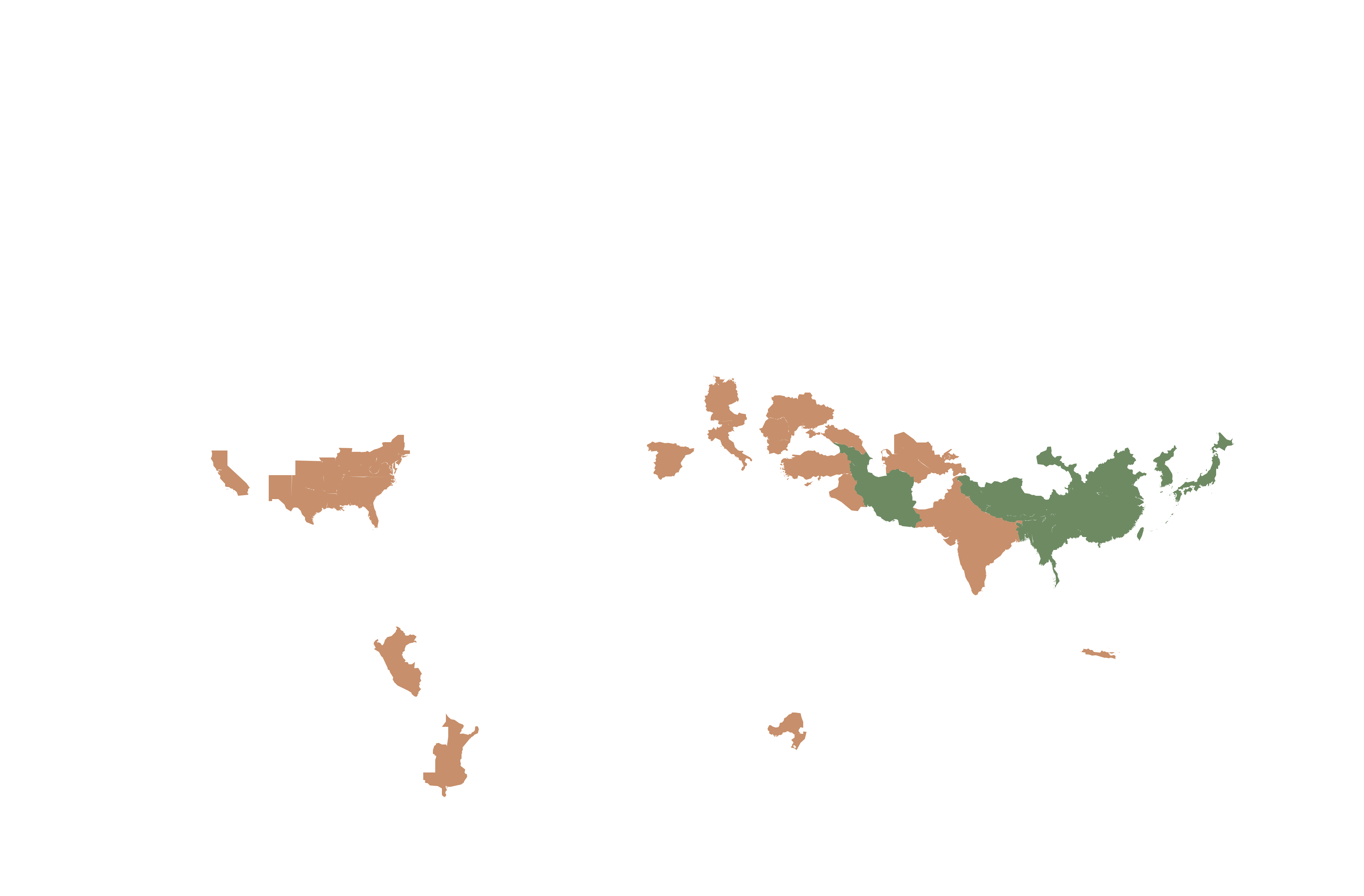
- Native
- Introduced
- East Asia
History
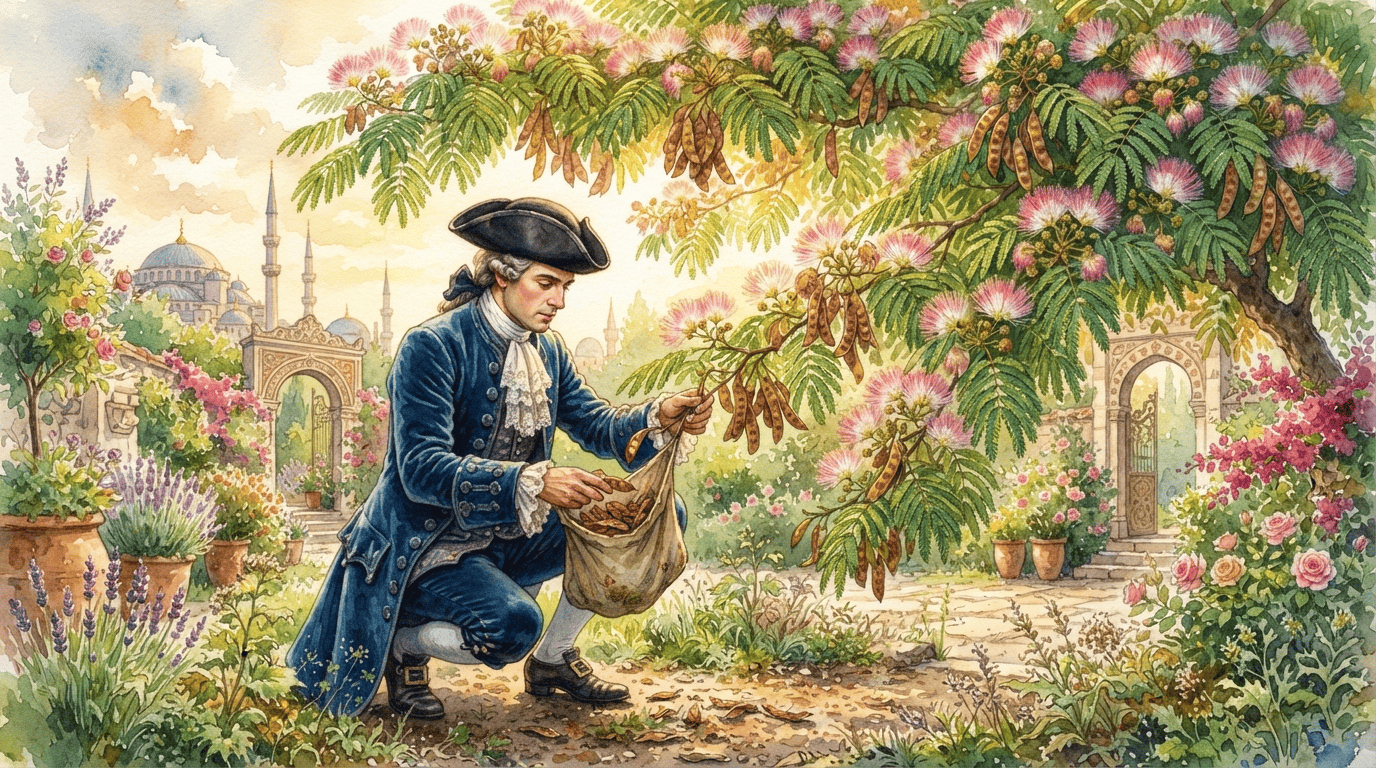
Albizia julibrissin, mimosa or silk tree (not to be confused with true mimosa), is a deciduous legume tree native from Iran through central Asia to Korea and Japan. Italian nobleman Filippo degli Albizzi collected seeds in Constantinople in 1749, giving the genus its name, though the plant had reached French gardens earlier. The French botanist André Michaux brought it to his Charleston, South Carolina garden in 1785, and by 1800 it was established in southern US horticulture.
The tree's bipinnate feathery leaves fold together at dusk, and its pink puffball flowers release a strong vanilla fragrance that attracts hummingbirds and hawk moths. Seeds remain viable for decades, and the species has naturalized widely through the southeastern United States where it is now considered invasive in several states.
Native from Iran to China and Korea, Mimosa was introduced to America in the 1740s by André Michaux and widely planted as a charming ornamental shade tree. Now listed invasive across the South and mid-Atlantic, it spreads into roadsides and forest edges, its fern-like foliage and pink flowers masking significant ecological damage.
Symbolism & meaning
What It Symbolizes
The Persian silk tree wears its name in every feathery pink blossom, which the old Persian word celebrates as silk. Yet beneath that delicate beauty lies a silky deception — the tree spreads aggressively across the American South, its seeds crowding native woodlands. Few plants illustrate so vividly that loveliness and invasiveness can grow on the same branch, and that what charms the eye does not always serve the land.
- Silky deception — delicate beauty, aggressive spread
- Persian silk — name from Persian 'silk flower'
Where the Name Comes From
'Albizia' honors Filippo Albizzi, 18th-century Italian naturalist; 'julibrissin' from Persian 'gul-i-abrisham' meaning silk flower.
Uses & Fun Facts
- Pink powder-puff summer flowers on fern-like bipinnate canopy
- Nectar-rich blooms attract hummingbirds and butterflies in southern gardens
- Wide flat-topped canopy casts dappled shade over patios
Related plants
Plants with similar care
 Chinese AbeliaAbelia chinensis
 Fragrant AbeliaAbelia mosanensis
 Large-Flowered AbeliaAbelia uniflora
 Glossy AbeliaAbelia x grandiflora
Frequently asked questions
How often should I water Persian Silk Tree?
In summer, water about every 10 days; in winter, about every 30 days. Adjust for heat, pot size and drainage.
How much light does Persian Silk Tree need?
Full sun: 6+ hrs direct. Watch the leaves — scorching or stretching means the light needs adjusting.
Is Persian Silk Tree toxic to cats or dogs?
Pets Moderate (Dogs Moderate · Cats Moderate) Educational information, not medical or veterinary advice. If exposure is suspected, contact a doctor or veterinarian.
Is Persian Silk Tree easy to grow?
Yes — it is considered an easy, beginner-friendly plant.
When does Persian Silk Tree bloom?
It typically blooms Jun–Aug in the Northern Hemisphere.
YardMate
Identify any plant in seconds
Snap a photo — YardMate names the plant, diagnoses problems, and reminds you when to water.
Download on the App Store