 YardMate


Hollyhock
Alcea rosea
Easy · Beginner friendlyAbout Hollyhock
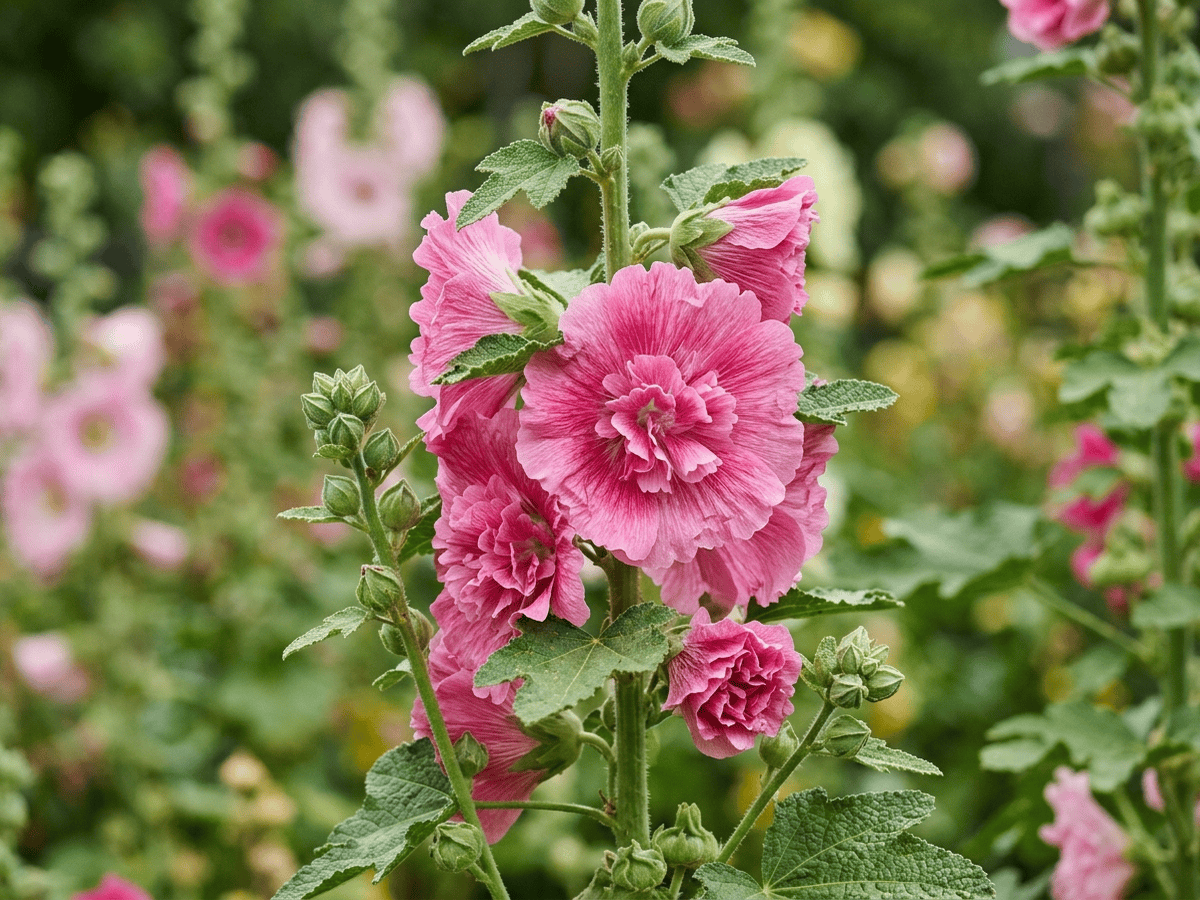
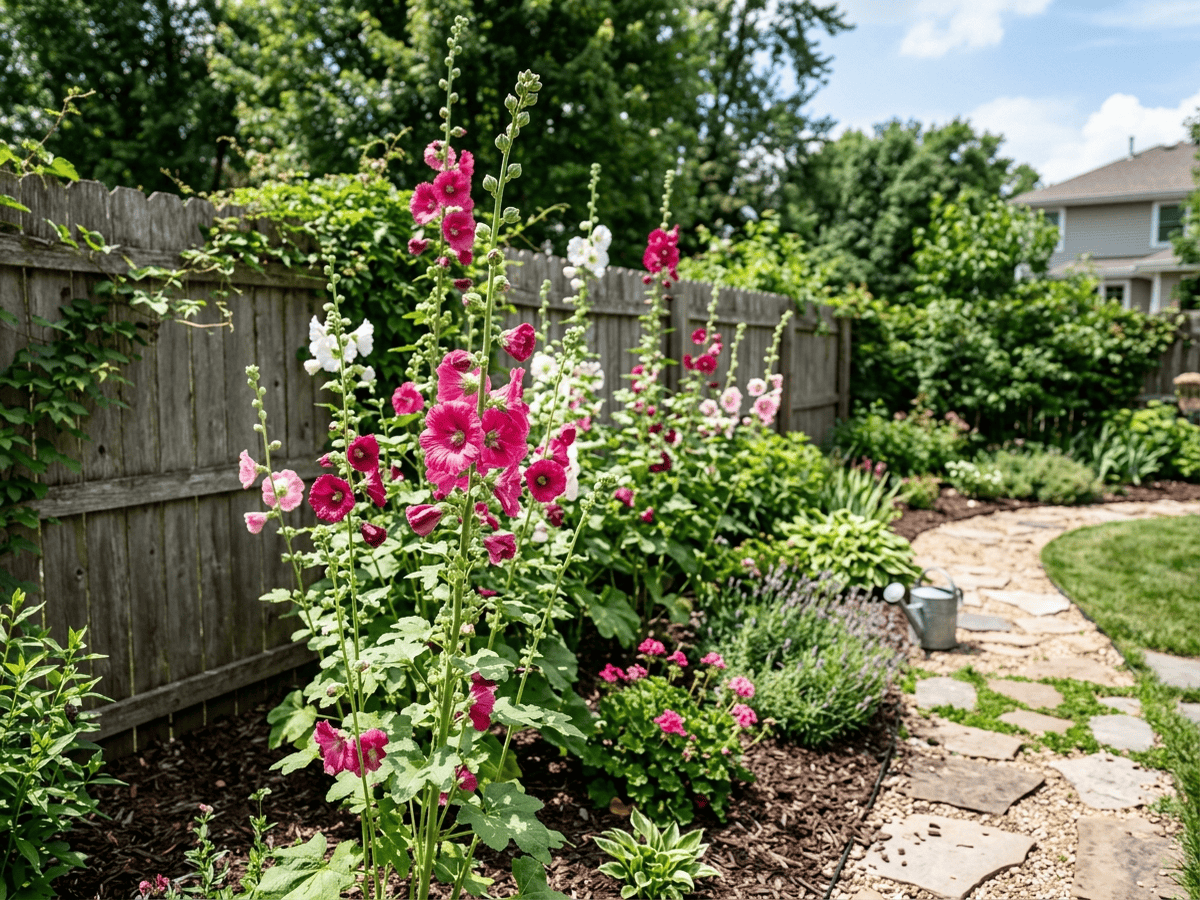
Alcea rosea, the hollyhock, is the quintessential cottage garden flower — towering spires of funnel-shaped flowers in pink, red, white, yellow, purple, and near-black rising 2–3 meters against walls and fences. Native to China (not the Middle East as once thought), it has been grown in European gardens since at least the 15th century. Technically a short-lived perennial, it is often grown as a biennial. Single flowers are best for pollinators; double forms like 'Chater's Double' are more showy. Hollyhock rust is a persistent problem, but the plant is worth the trouble.
- Pollinator-friendly
- Cut-flower
- Architectural
- Long-blooming
How to care for Hollyhock
Watering
- Springevery 7 days
- Summerevery 5 days
- Fallevery 10 days
- Winterevery 21 days
Soil · Well-draining
- Top dressingPine bark mulch10%
- Main mixPotting soil + perlite 2:170%
- DrainageLECA / gravel20%
Never skip the drainage layer — standing water is the top cause of root rot.
FERTILIZER
Balanced Feed 14-14-14
An even feed covers all three needs at once, keeping leaves, roots and blooms moving together with nothing pushed out of balance.
- Nitrogen · Leaves
- Phosphorus · Roots + Blooms
- Potassium · Strength
- Springevery 30 days
- Summerevery 30 days
At a Glance
- NativeEast Asia
- Height5–8 ft (1.5–2.4 m)
- Spread1–2 ft (0.3–0.6 m)
- Flower colorPink, Red, Yellow, White
- Foliage colorGreen
- Fruit colorGreen
- SoilLoamy, Well-drained, Rich
- LocationsYard
Bloom time
BLOOM CYCLE
Peak bloom
Jun–Aug
Towering spires against walls; self-seeds; single flowers better for pollinators
Fragrance
LIGHT FRAGRANCE
The flowers have a mild scent.
Toxicity
Humans Safe · Pets Safe
None reported
Safe
EXPOSURE No exposure route is reported.
EFFECT Flowers edible and traditional use in Middle Eastern and Chinese herbal medicine.
NOTE Listed as non-toxic for humans; avoid eating ornamental plants unless confirmed edible.
Safe
EXPOSURE No exposure route is reported.
EFFECT Not listed as toxic.
NOTE Listed as non-toxic for dogs; avoid eating ornamental plants unless confirmed edible.
Safe
EXPOSURE No exposure route is reported.
EFFECT Not listed as toxic.
NOTE Listed as non-toxic for cats; avoid eating ornamental plants unless confirmed edible.
Educational information, not medical or veterinary advice. If exposure is suspected, contact a doctor or veterinarian.
DISTRIBUTION

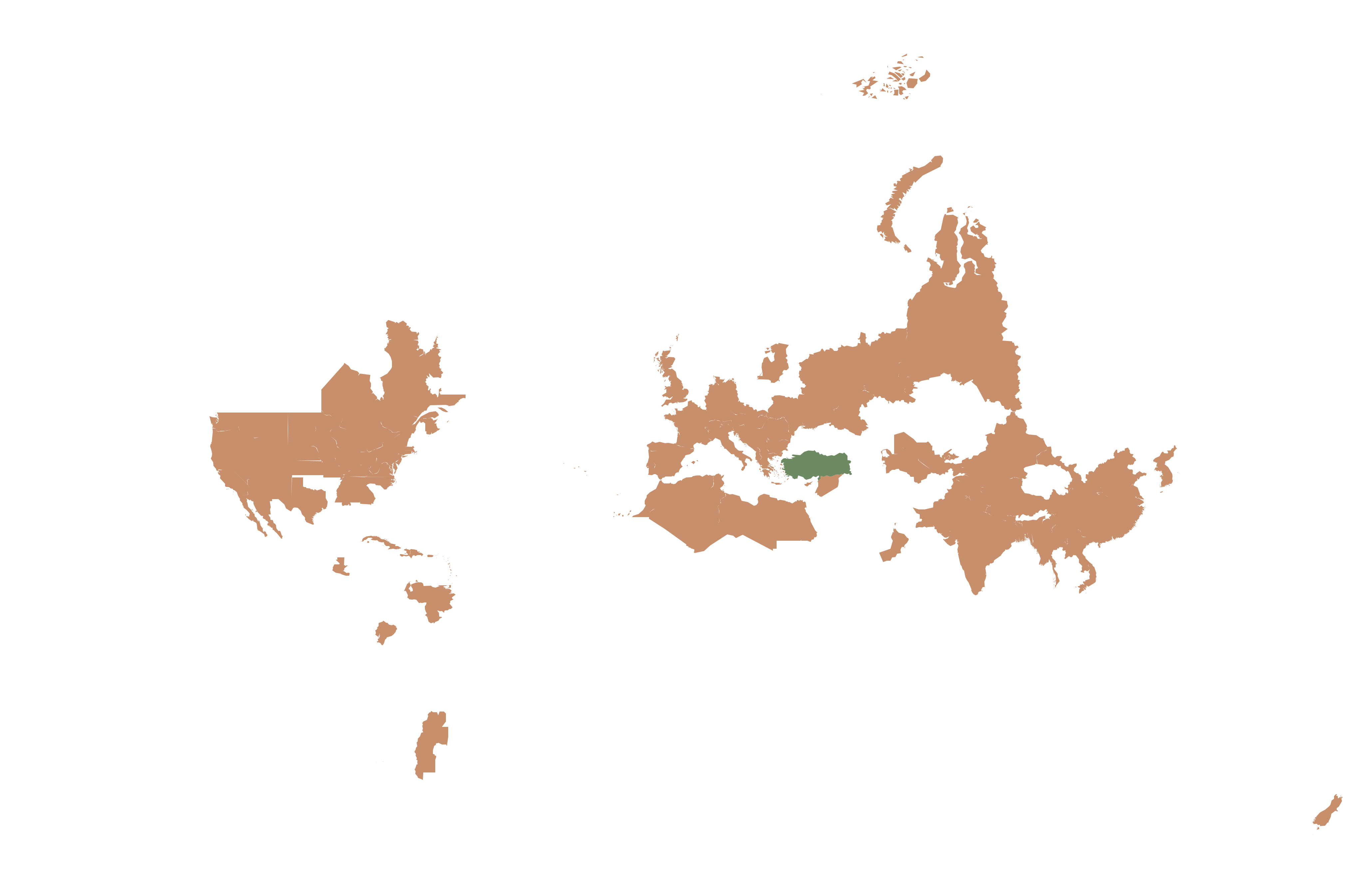
- Native
- Introduced
- East Asia
History

Alcea rosea, long known as Althaea rosea, is probably native to southwestern China, where it was cultivated for centuries as Sichuan mallow. The plant likely traveled west through Central Asia and the Middle East before or around the Crusades, which may explain the English name hollyhock, often interpreted as holy land plus mallow. By John Gerard's 1597 herbal it was already a garden plant in England, and by the 19th century it had become one of the defining flowers of European and American cottage gardens.
Its tall spires appear in Impressionist paintings, village postcards, and farmhouse memories because it turns a wall or fence into a vertical flower border. Rust disease nearly ruined its popularity after arriving in Europe in 1873, but resistant strains and fig-leaved forms restored it.
Victorian children made dolls from its flowers and buds, Thomas Jefferson grew it at Monticello, and dark petals were once used for blue-violet dye.
Symbolism & meaning
What It Symbolizes
The Hollyhock raises tall spires of bloom toward the sky, embodying ambition in its purest cottage-garden form. From medieval English doorways to Victorian back lanes, these towering stalks have represented the human drive to grow beyond boundaries, to reach beyond the fence. To plant a hollyhock is to wish aspiration upon a household, the steady upward climb from soil to summer sky.
- Ambition — Its tall, sky-reaching spires represent aspiration and the drive to grow beyond boundaries
Where the Name Comes From
Alcea is an old Greek name for mallows; 'rosea' means rose-colored.
Uses & Fun Facts
- Hollyhock petals tint old-fashioned dyes, teas, and garden crafts
Related plants
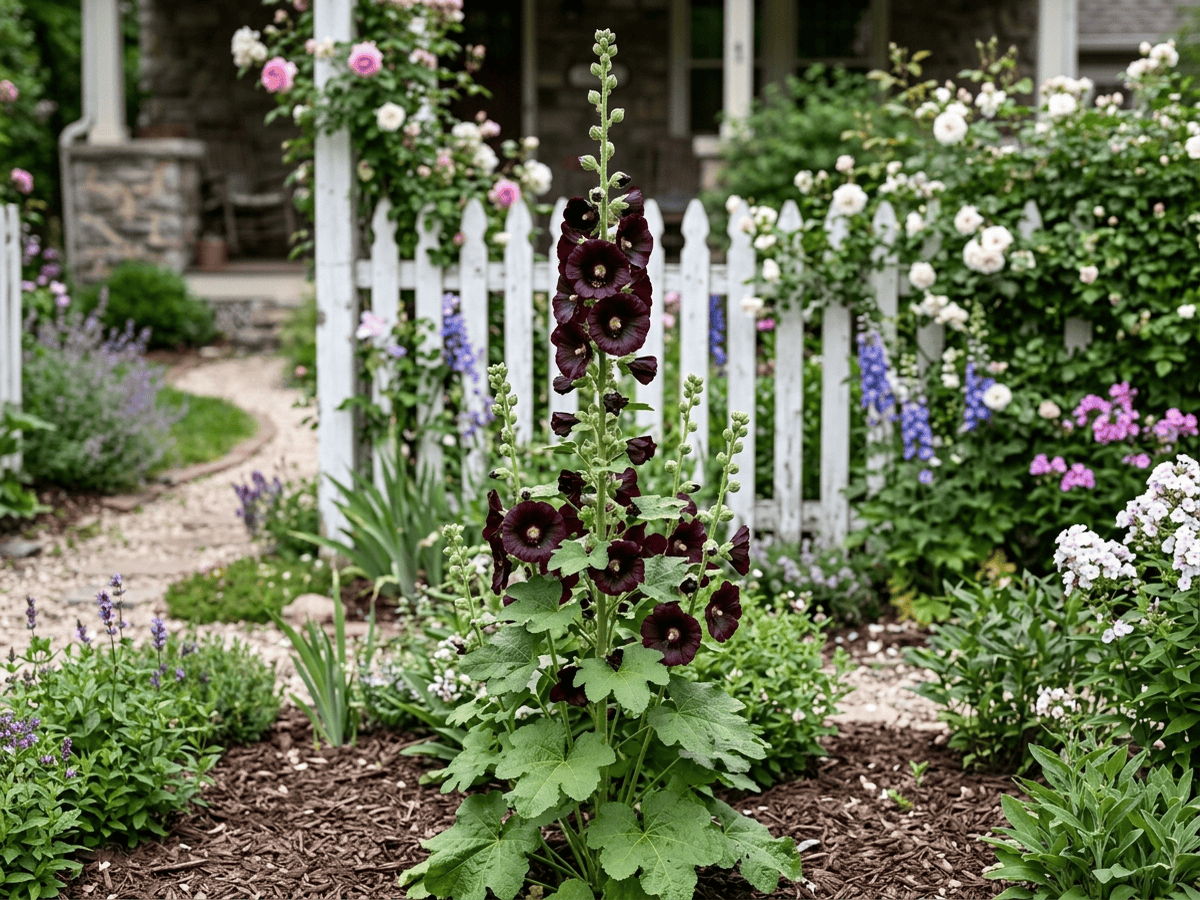
More Alcea plants
Plants with similar care
 Chinese AbeliaAbelia chinensis
 Fragrant AbeliaAbelia mosanensis
 Large-Flowered AbeliaAbelia uniflora
 Glossy AbeliaAbelia x grandiflora
Frequently asked questions
How often should I water Hollyhock?
In summer, water about every 5 days; in winter, about every 21 days. Adjust for heat, pot size and drainage.
How much light does Hollyhock need?
Full sun: 6+ hrs direct. Watch the leaves — scorching or stretching means the light needs adjusting.
Is Hollyhock toxic to cats or dogs?
Pets Safe (Dogs Safe · Cats Safe) Educational information, not medical or veterinary advice. If exposure is suspected, contact a doctor or veterinarian.
Is Hollyhock easy to grow?
Yes — it is considered an easy, beginner-friendly plant.
When does Hollyhock bloom?
It typically blooms Jun–Aug in the Northern Hemisphere.
YardMate
Identify any plant in seconds
Snap a photo — YardMate names the plant, diagnoses problems, and reminds you when to water.
Download on the App Store