 YardMate

Giant Ragweed
Ambrosia trifida
Easy · Beginner friendlyAbout Giant Ragweed
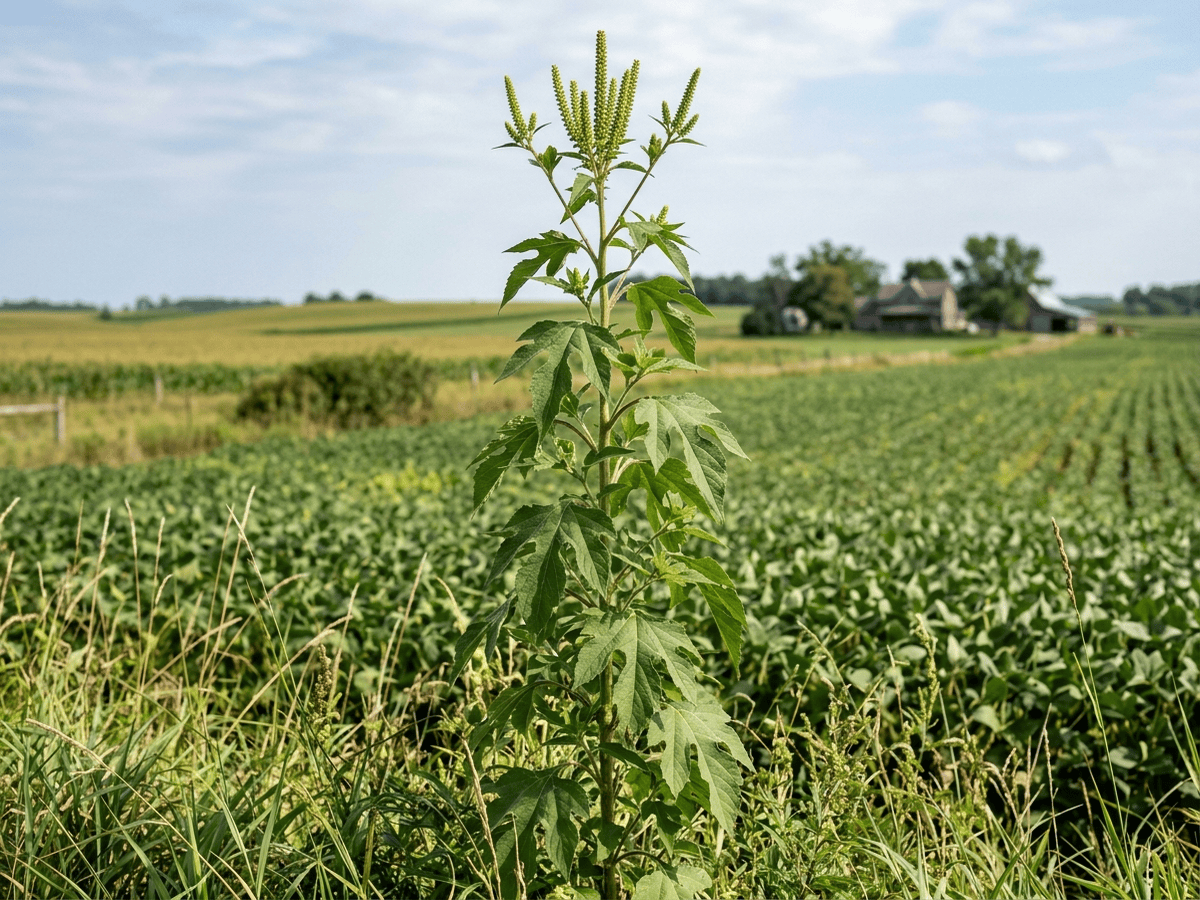
Giant Ragweed is a North American native annual that towers 6 to 17 feet tall with large three-lobed leaves, one of the tallest weeds in the US and a major fall allergy trigger. Producing enormous quantities of wind-borne pollen from terminal spikes in late summer, it dominates riverbanks, floodplains, fencerows, and no-till cropland. Glyphosate-resistant biotypes have made it one of the most challenging agricultural weeds in the Corn Belt.
- Native
How to care for Giant Ragweed
Watering
- Springevery 10 days
- Summerevery 7 days
- Fallevery 14 days
- Winterpause watering
Soil · Well-draining
- Top dressingPine bark mulch10%
- Main mixPotting soil + perlite 2:170%
- DrainageLECA / gravel20%
Never skip the drainage layer — standing water is the top cause of root rot.
FERTILIZER
This plant needs little to no feeding.
At a Glance
- NativeNorth America
- Height6–12 ft (1.8–3.7 m)
- Spread2–4 ft (0.6–1.2 m)
- Flower colorGreen, Yellow
- Foliage colorGreen
- SoilLoamy, Moisture-retentive
- LocationsYard
Bloom time
BLOOM CYCLE
Peak bloom
Aug–Oct
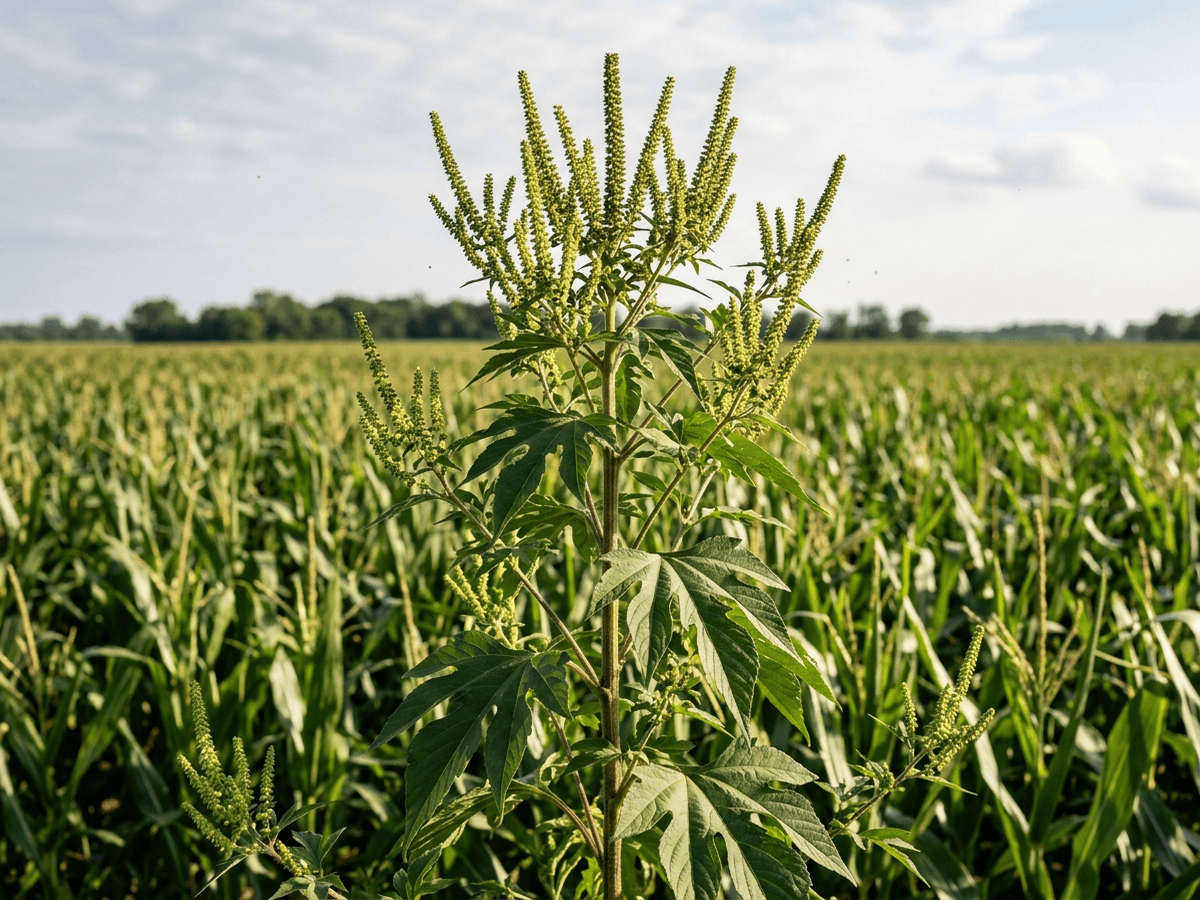
Tall flower spikes August to October produce abundant allergenic pollen
Toxicity
Humans Slight
sesquiterpene lactones and allergenic pollen proteins
Slight
- Leaf
- Flower
- Contact
- Inhalation
EXPOSURE Touching leaves and flowers. Inhaling leaves and flowers.
EFFECT Contact dermatitis, allergic rhinitis, and asthma.
NOTE Pollen is a major aeroallergen.
Unknown
EXPOSURE Unspecified plant material.
EFFECT Toxic effects are not specified.
NOTE Toxicity for dogs is not well documented; use caution until verified.
Unknown
EXPOSURE Unspecified plant material.
EFFECT Toxic effects are not specified.
NOTE Toxicity for cats is not well documented; use caution until verified.
Educational information, not medical or veterinary advice. If exposure is suspected, contact a doctor or veterinarian.
DISTRIBUTION

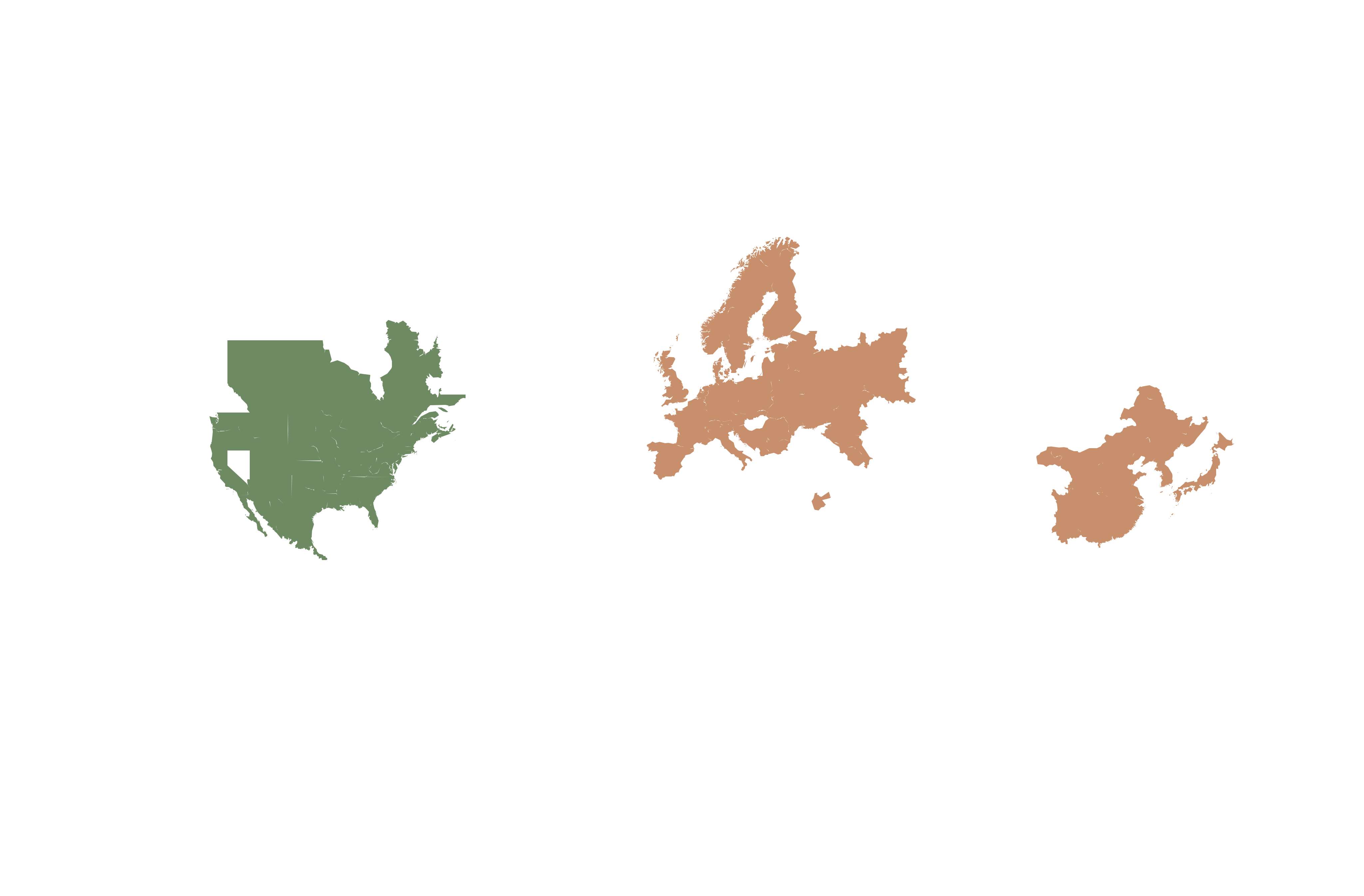
- Native
- Introduced
- North America
History
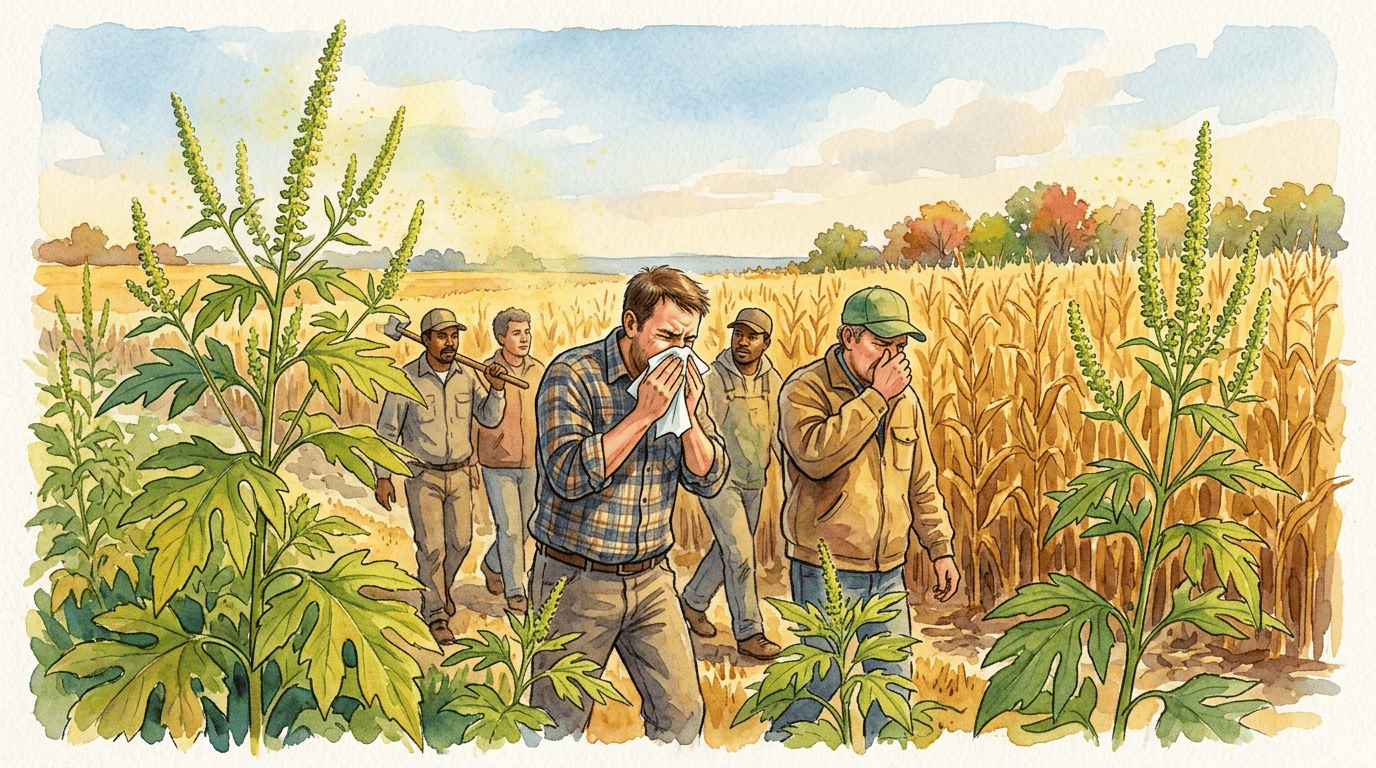
Ambrosia trifida, giant ragweed, is a robust annual composite native to river valleys and floodplain forests of central and eastern North America. Archaeological remains from the Eastern Agricultural Complex show that Indigenous peoples cultivated an enlarged-seeded form of the species for several thousand years before maize agriculture replaced it around 1000 CE. The wild plant survived as a weed of rich bottomland soils and expanded dramatically with modern row-crop agriculture, becoming one of the most troublesome weeds of corn and soybean fields in the Midwest.
Populations resistant to glyphosate and ALS-inhibiting herbicides are now widespread. Its wind-pollinated flowers produce abundant allergenic pollen in late summer, and the plant is a major cause of autumn hay fever across its range.
Modern row-crop agriculture and no-till farming have transformed it into one of the most damaging and allergenic weeds across the US Corn Belt, with glyphosate resistance now widespread.
Symbolism & meaning
What It Symbolizes
Giant ragweed is, ecologically speaking, an oversized nuisance — a towering weed reaching seventeen feet, the tallest of its kin and the most prolific producer of allergenic pollen. Each autumn it releases enormous clouds of pollen that travel for miles, triggering hay fever across whole regions. There is no romance in this story, only the sober observation that some plants succeed by sheer overwhelming scale, at considerable cost to human comfort.
- Towering nuisance — can reach 17 feet, tallest ragweed
- Pollen giant — produces enormous pollen loads in fall
Where the Name Comes From
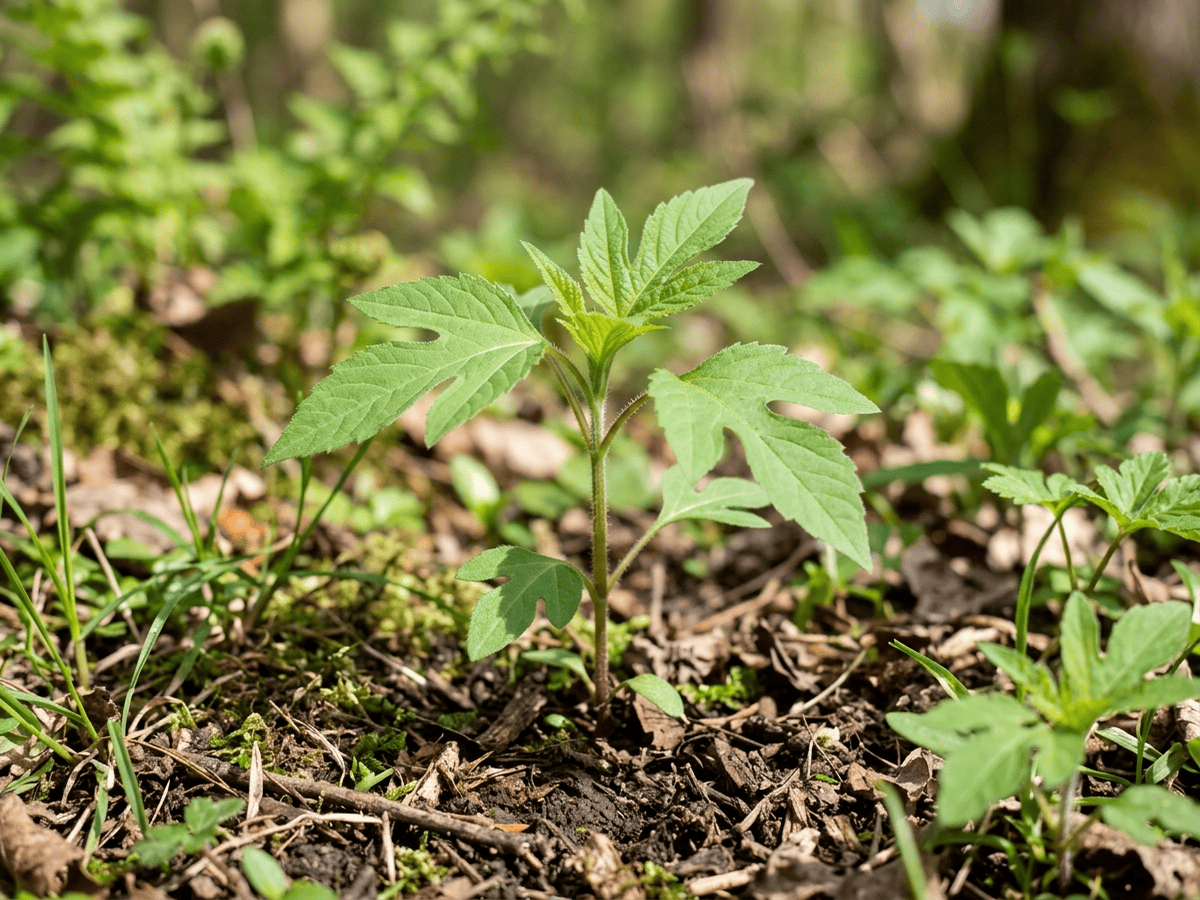
'trifida' from Latin means three-parted, for the characteristic three-lobed leaves.
Related plants
More Ambrosia plants

Plants with similar care
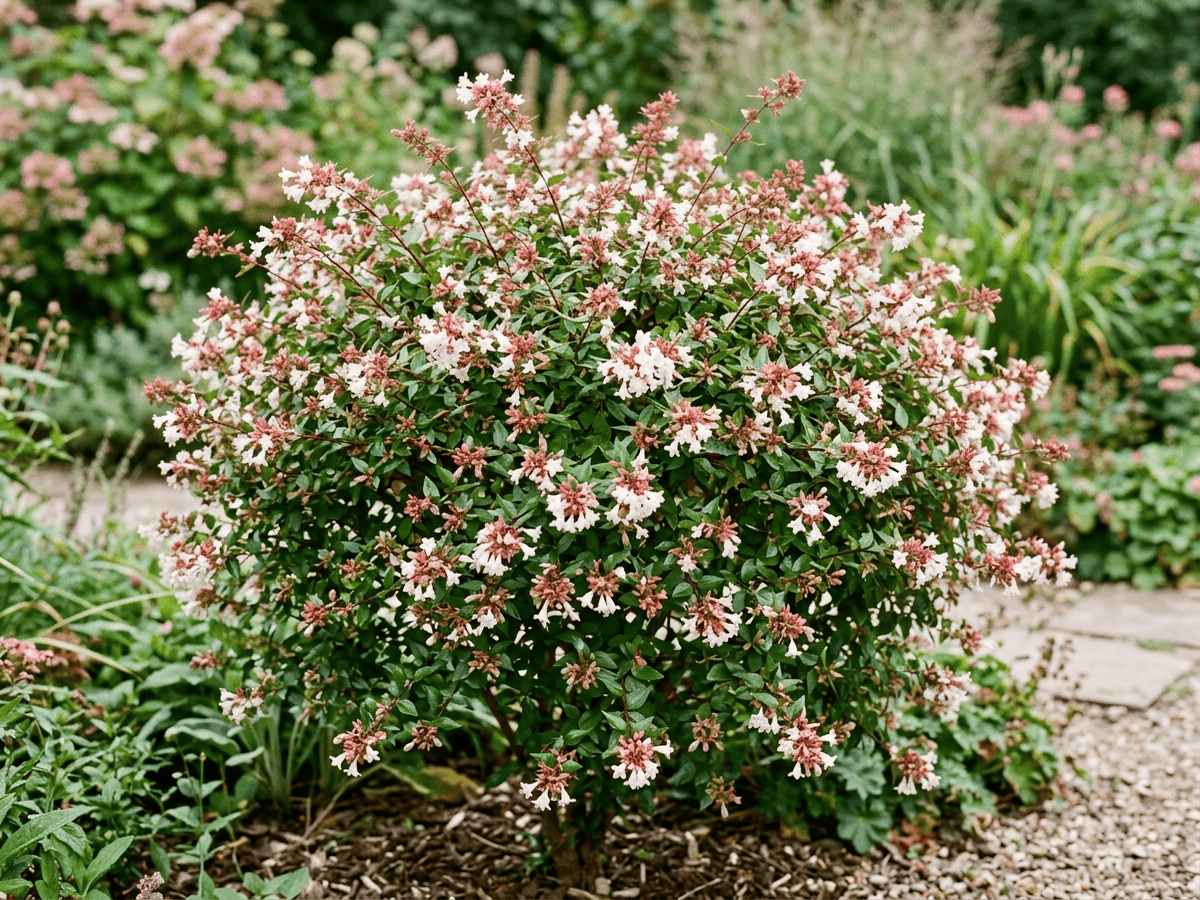 Chinese AbeliaAbelia chinensis
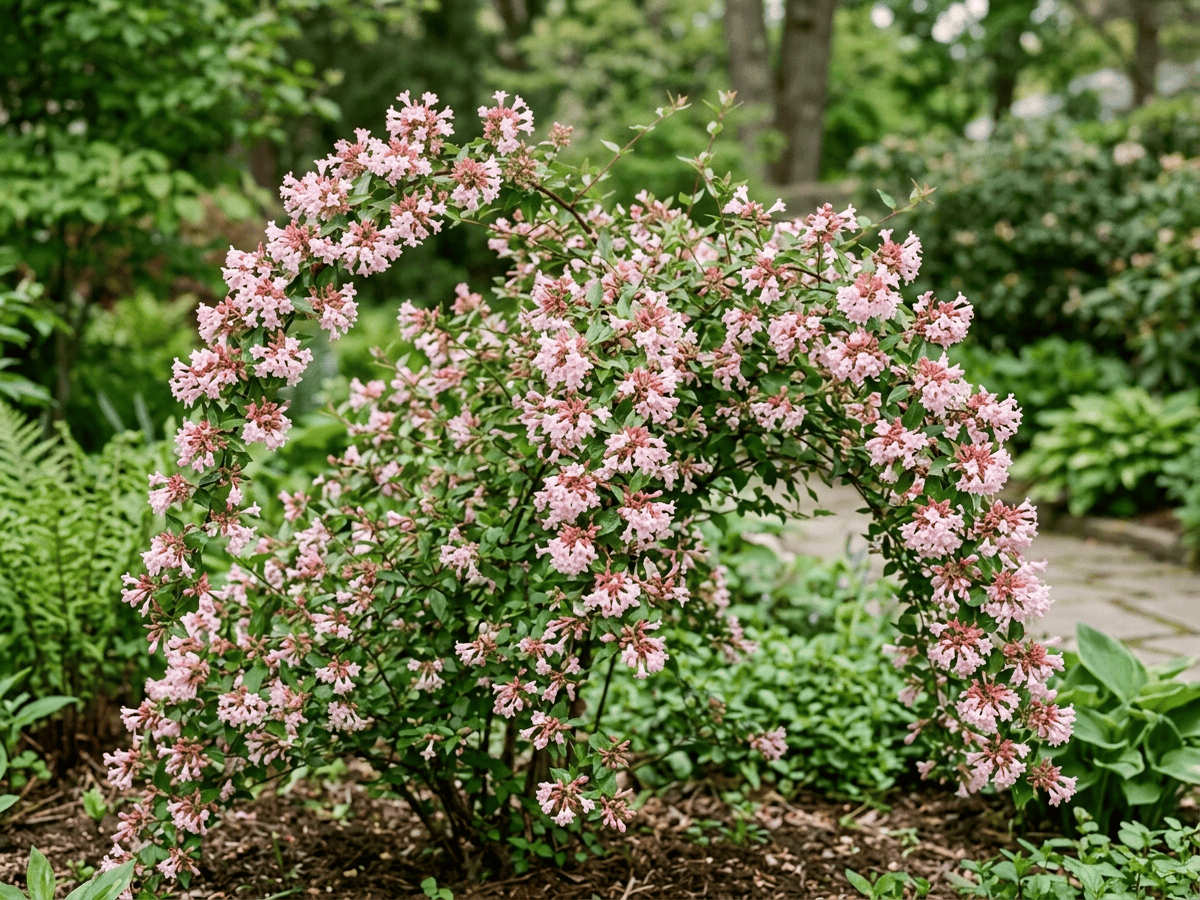 Fragrant AbeliaAbelia mosanensis
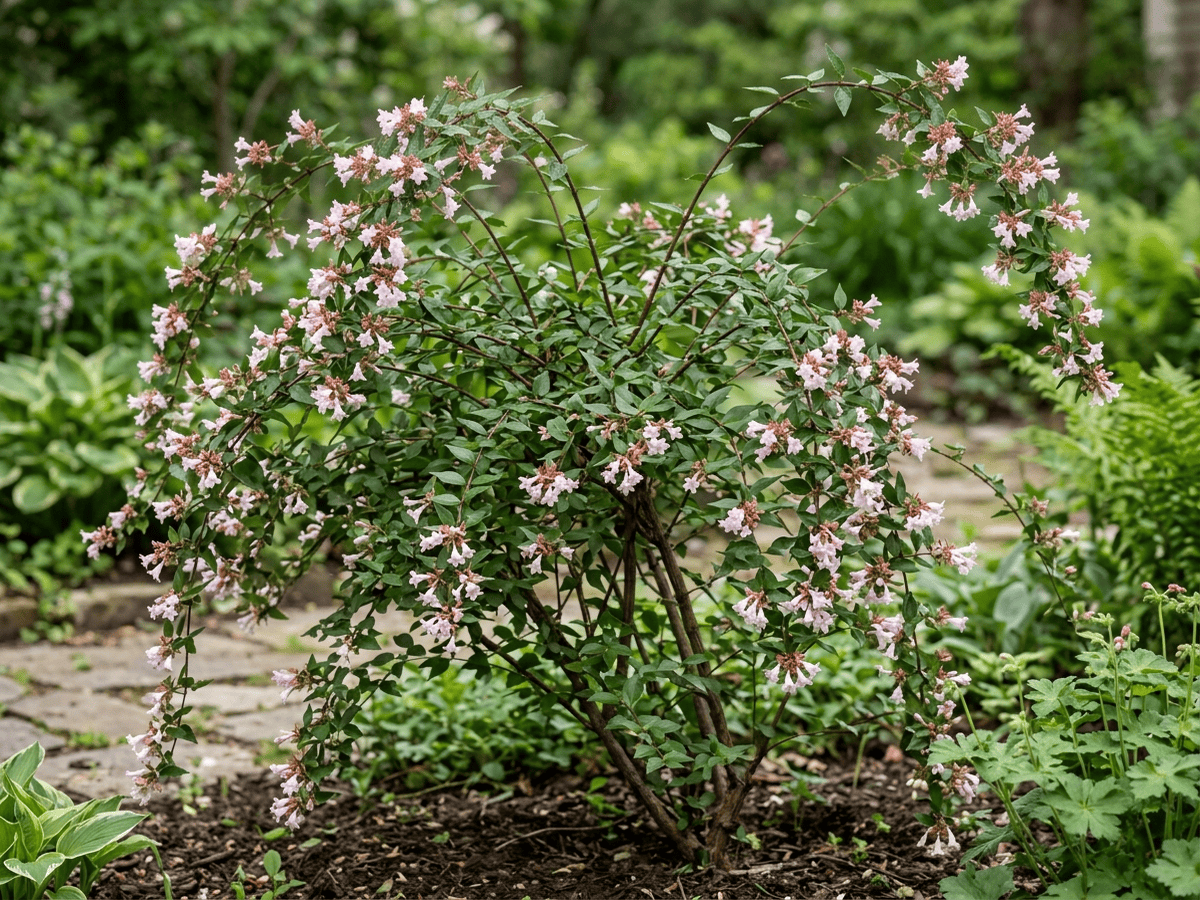 Large-Flowered AbeliaAbelia uniflora
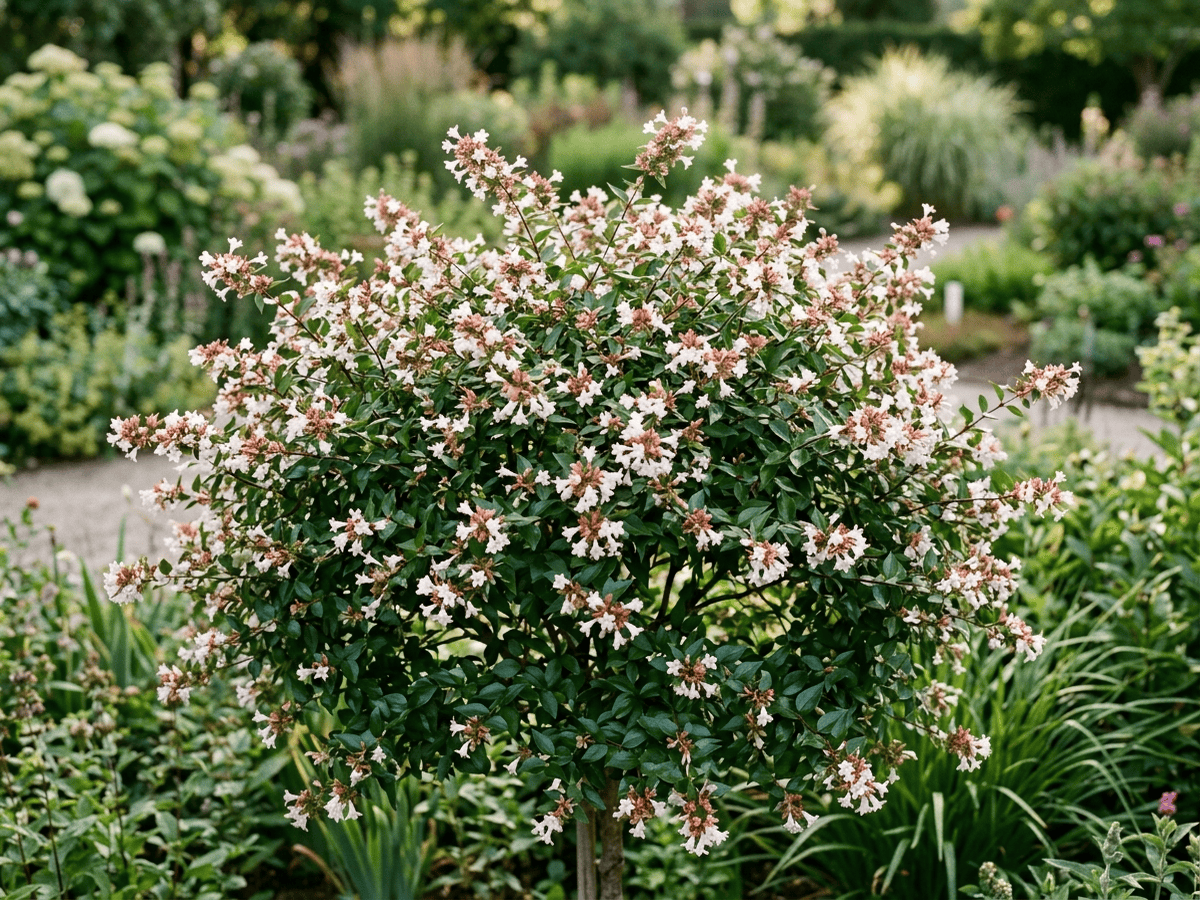 Glossy AbeliaAbelia x grandiflora
Frequently asked questions
How often should I water Giant Ragweed?
Water about every 10 days during the growing season, and always let excess water drain away.
How much light does Giant Ragweed need?
Full sun: 6+ hrs direct. Watch the leaves — scorching or stretching means the light needs adjusting.
Is Giant Ragweed toxic to cats or dogs?
Pets Unknown (Dogs Unknown · Cats Unknown) Educational information, not medical or veterinary advice. If exposure is suspected, contact a doctor or veterinarian.
Is Giant Ragweed easy to grow?
Yes — it is considered an easy, beginner-friendly plant.
When does Giant Ragweed bloom?
It typically blooms Aug–Oct in the Northern Hemisphere.
YardMate
Identify any plant in seconds
Snap a photo — YardMate names the plant, diagnoses problems, and reminds you when to water.
Download on the App Store