 YardMate

Eastern Bluestar
Amsonia tabernaemontana
Easy · Beginner friendlyAbout Eastern Bluestar
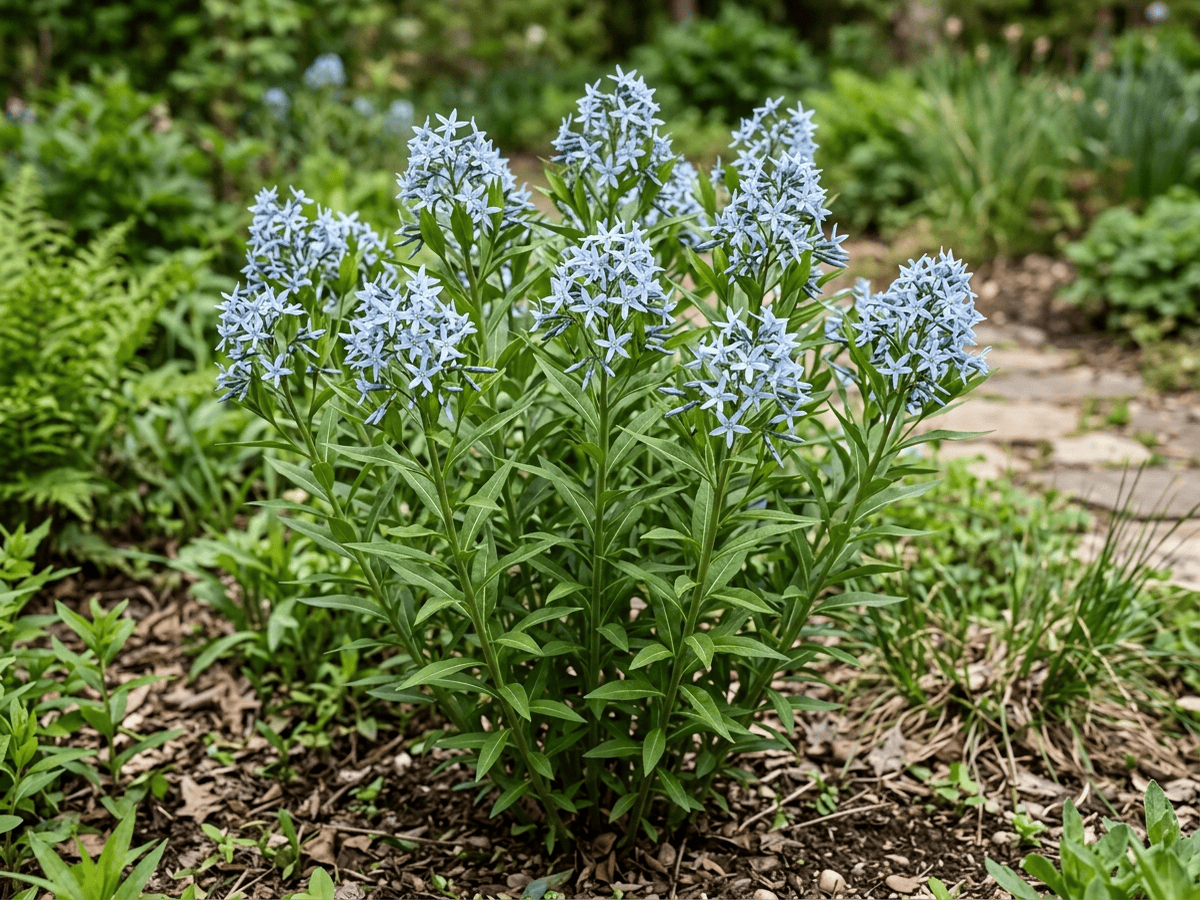
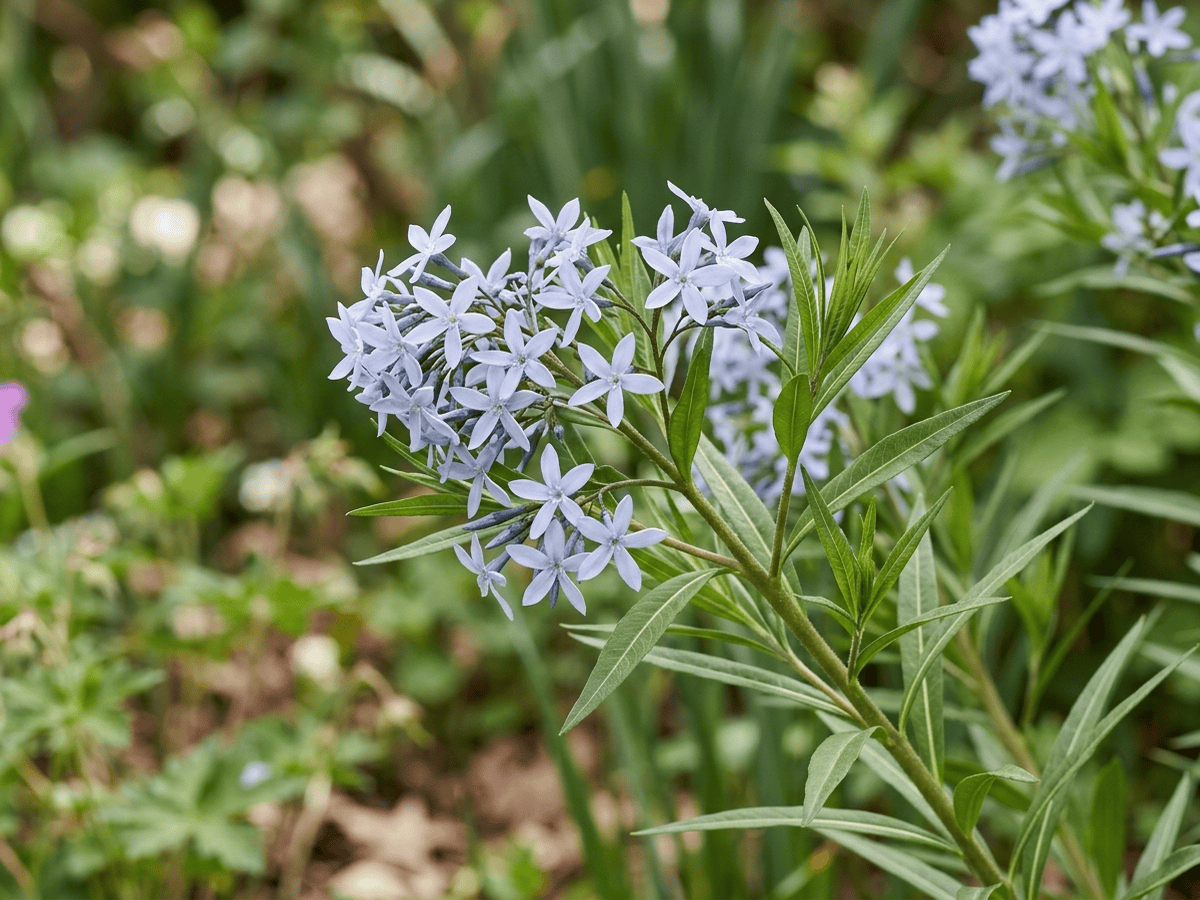
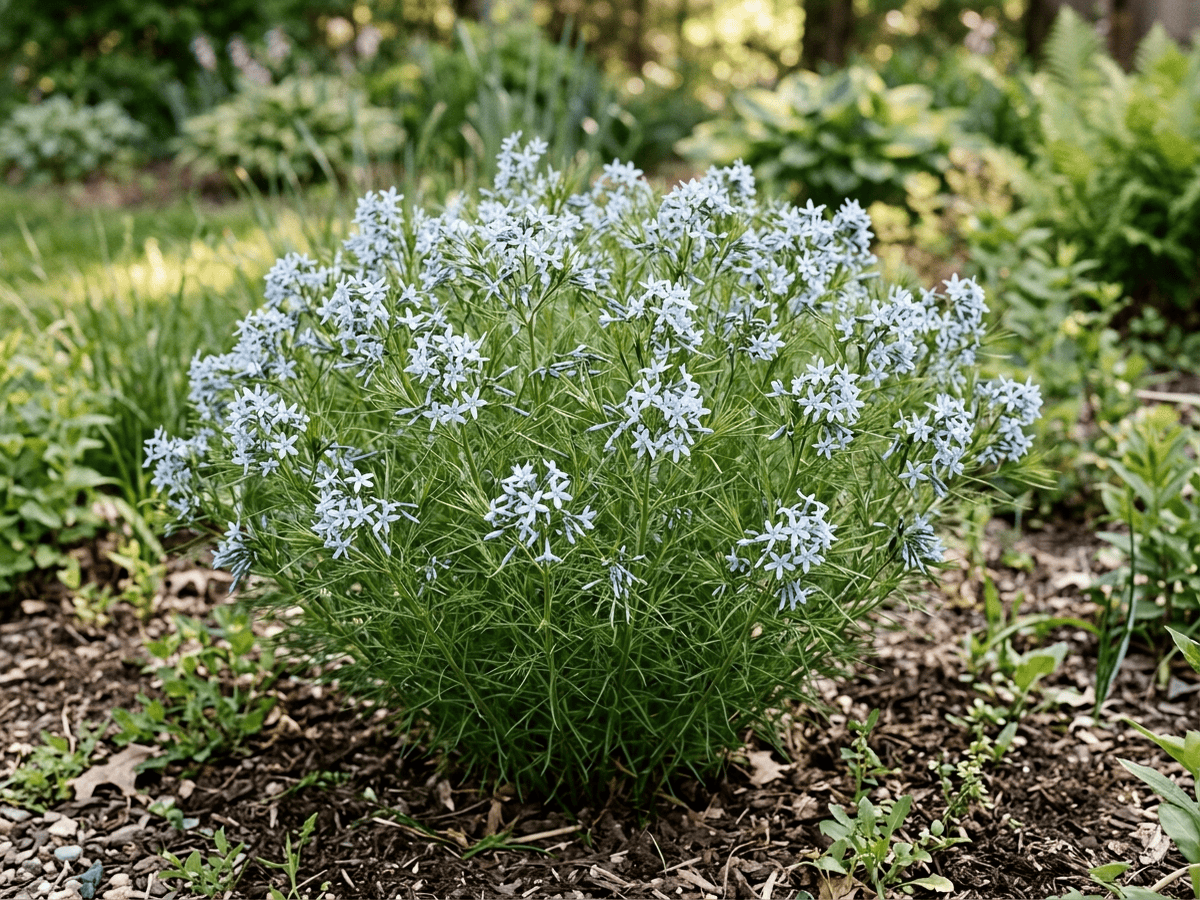
Eastern Bluestar is an eastern US native perennial producing terminal clusters of small steel-blue star-shaped flowers in late spring above willowy foliage. Growing 2 to 3 feet tall and wide, it blooms in May and June and offers brilliant golden-yellow fall foliage. A heritage native plant winning American gardener recognition as a trouble-free pollinator perennial with multi-season interest.
- Deer-resistant
- Fall-color
- Native
- Pollinator-friendly
How to care for Eastern Bluestar
Watering
- Springevery 5 days
- Summerevery 3 days
- Fallevery 7 days
- Winterevery 14 days
Soil · Well-draining
- Top dressingPine bark mulch10%
- Main mixPotting soil + perlite 2:170%
- DrainageLECA / gravel20%
Never skip the drainage layer — standing water is the top cause of root rot.
FERTILIZER
Balanced Feed 14-14-14
An even feed covers all three needs at once, keeping leaves, roots and blooms moving together with nothing pushed out of balance.
- Nitrogen · Leaves
- Phosphorus · Roots + Blooms
- Potassium · Strength
- Springevery 45 days
- Summerevery 60 days
At a Glance
- NativeNorth America
- Height2–3 ft (0.6–0.9 m)
- Spread2–3 ft (0.6–0.9 m)
- Flower colorBlue, Purple
- Foliage colorGreen, Yellow
- SoilLoamy, Well-drained, Moisture-retentive
- LocationsYard
Bloom time
BLOOM CYCLE
Peak bloom
May–Jun
Steel-blue star clusters in May-June, golden fall foliage
Toxicity
Humans Slight · Pets Slight
indole alkaloids and cardiac glycosides (trace)
Slight
- Stem
- Leaf
- Contact
EXPOSURE Touching stems and leaves.
EFFECT Skin irritation from milky sap in sensitive people.
NOTE Documented concern for humans: Skin irritation from milky sap in sensitive people.
Slight
- All
- Ingestion
EXPOSURE Eating any part of the plant.
EFFECT Vomiting and drooling.
NOTE Not on ASPCA toxic list, but milky sap contains alkaloids; generally avoided by deer and grazers.
Slight
- All
- Ingestion
EXPOSURE Eating any part of the plant.
EFFECT Vomiting and drooling.
NOTE Not on ASPCA toxic list, but milky sap contains alkaloids; generally avoided by deer and grazers.
Educational information, not medical or veterinary advice. If exposure is suspected, contact a doctor or veterinarian.
DISTRIBUTION


- Native
- Introduced
- North America
History
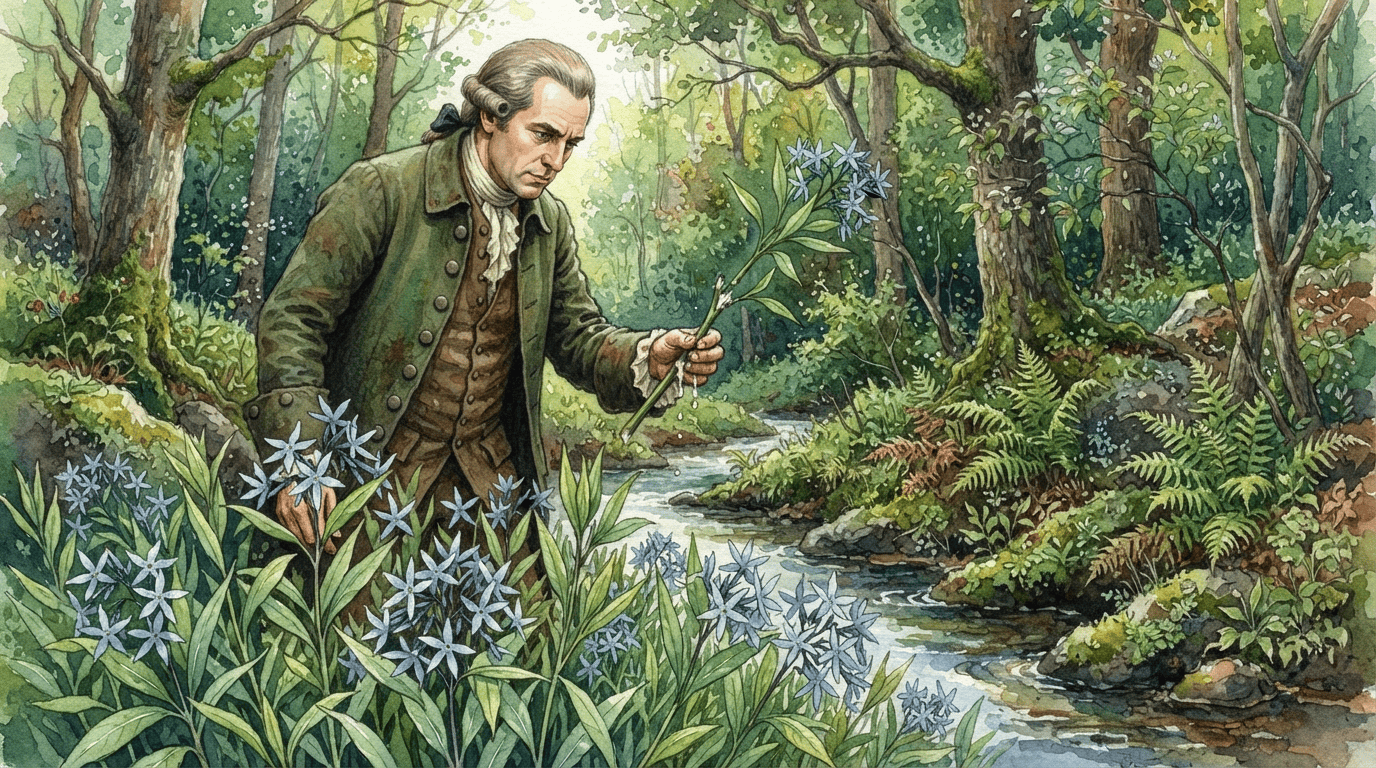
Amsonia tabernaemontana grows in moist woodlands, streambanks, and meadow edges across the eastern and central United States. Thomas Walter described it in Flora Caroliniana (1788), naming the genus for John Amson, a Virginia physician, and commemorating Jakob Theodor von Bergzabern (Latinized Tabernaemontanus), a 16th-century German herbalist. Indigenous peoples made minor medicinal use of the milky-sapped roots, though it was never widely relied upon.
The plant was grown in American gardens from the early 1800s and reached England by 1812. Its horticultural popularity surged after the Perennial Plant Association named its cousin A. hubrichtii 2011 Perennial of the Year. Cultivars of A. tabernaemontana include 'Storm Cloud' and the variety salicifolia with willow-shaped leaves. Native from New Jersey to Texas. Gained mainstream American garden popularity after winning Perennial Plant Association attention, valued for reliability and multi-season ornamental value.
Symbolism & meaning
What It Symbolizes
Eastern Bluestar is dependable hope, its steel-blue stars opening on cue each early summer for decades in the same patch of garden. Then comes its second act — foliage turning a luminous golden autumn, lighting the border long after most perennials have given up. It is the friend who shows up twice a year exactly when needed, and never asks much in return.
- Dependable hope — steel blue stars of early summer
- Golden autumn — foliage turns bright gold in fall
Where the Name Comes From
'Eastern bluestar' describes the plant's native range in eastern North America and its pale blue, star-shaped flowers. Amsonia honors 18th-century Virginia physician Dr. John Amson; tabernaemontana honors the German herbalist Jakob Theodor Tabernaemontanus.
Uses & Fun Facts
- Steel-blue spring stars above willowy foliage and golden fall color
- Late-spring blooms feed early native bees and butterflies
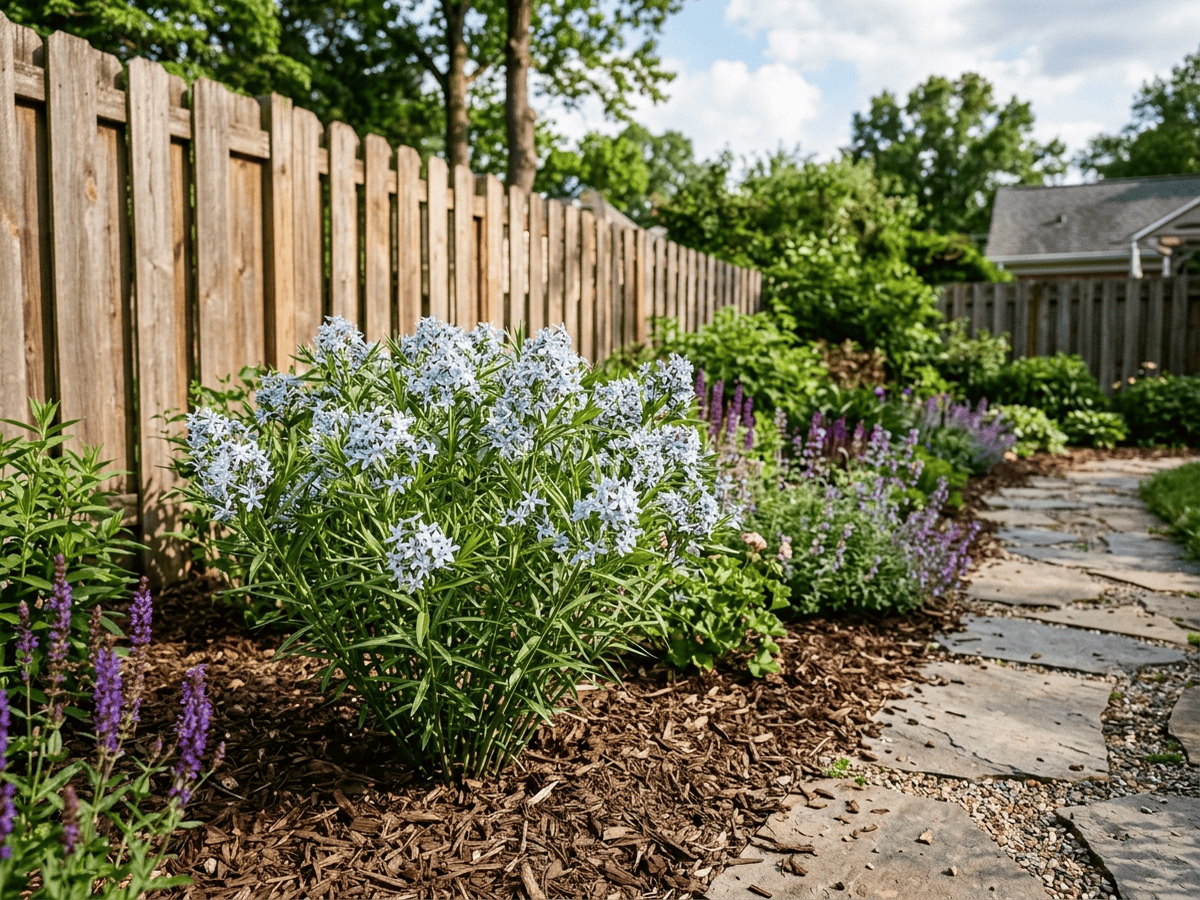
- Bushy clumps work as soft focal accents in cottage borders
Related plants
More Amsonia plants
Plants with similar care
 Chinese AbeliaAbelia chinensis
 Fragrant AbeliaAbelia mosanensis
 Large-Flowered AbeliaAbelia uniflora
 Glossy AbeliaAbelia x grandiflora
Frequently asked questions
How often should I water Eastern Bluestar?
In summer, water about every 3 days; in winter, about every 14 days. Adjust for heat, pot size and drainage.
How much light does Eastern Bluestar need?
Full sun: 6+ hrs direct. Watch the leaves — scorching or stretching means the light needs adjusting.
Is Eastern Bluestar toxic to cats or dogs?
Pets Slight (Dogs Slight · Cats Slight) Educational information, not medical or veterinary advice. If exposure is suspected, contact a doctor or veterinarian.
Is Eastern Bluestar easy to grow?
Yes — it is considered an easy, beginner-friendly plant.
When does Eastern Bluestar bloom?
It typically blooms May–Jun in the Northern Hemisphere.
YardMate
Identify any plant in seconds
Snap a photo — YardMate names the plant, diagnoses problems, and reminds you when to water.
Download on the App Store