 YardMate
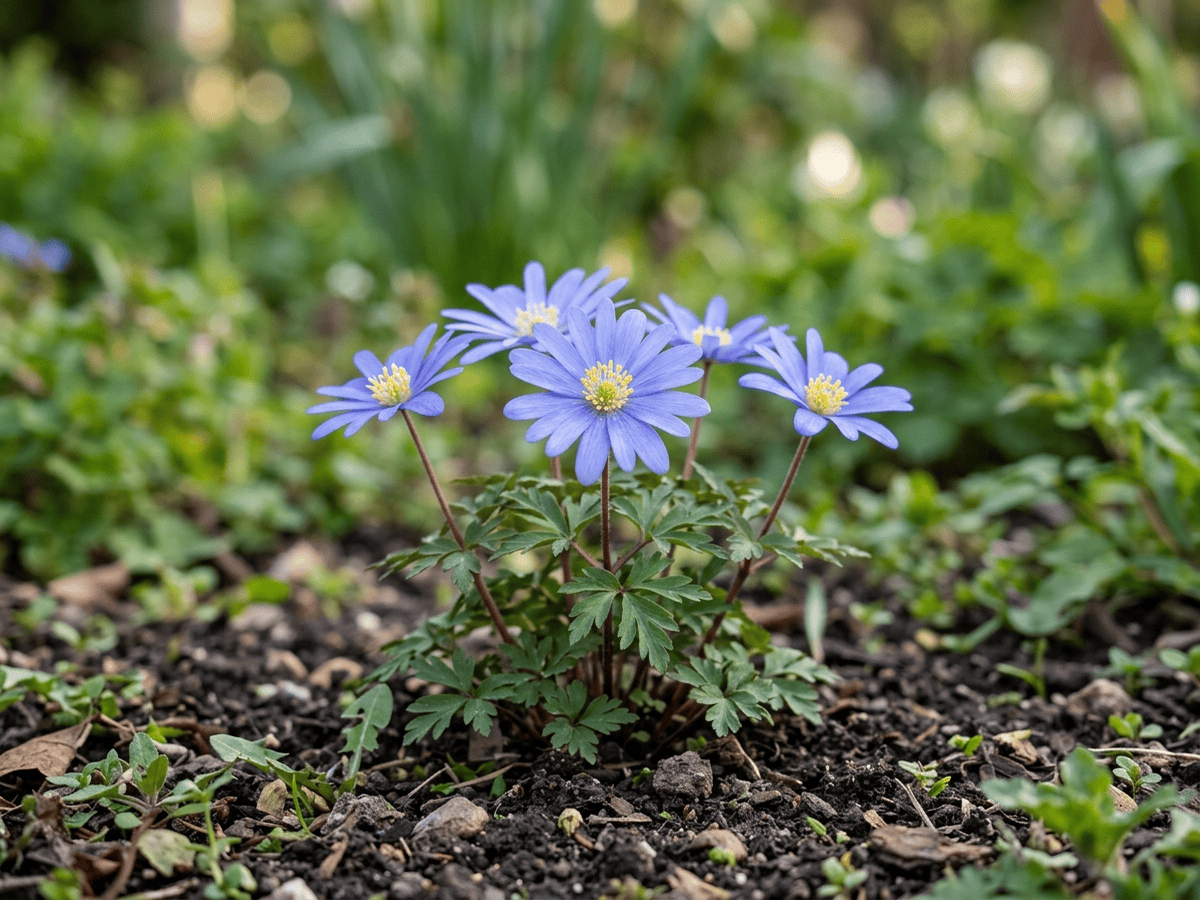


Greek Anemone
Anemone blanda
Easy · Beginner friendlyAbout Greek Anemone
Grecian Windflower is a Mediterranean tuberous perennial hardy in USDA zones 5-9, producing low mounds of divided dark green leaves topped with daisy-like blue, pink, or white flowers in early to mid-spring. Growing only 4 to 6 inches tall, the tubers naturalize freely into drifts in rock gardens, lawns, and beneath deciduous shrubs. A beloved early-spring naturalizing bulb widely available at American bulb retailers each fall.
- Deer-resistant
How to care for Greek Anemone
Watering
- Springevery 5 days
- Summerpause watering
- Fallevery 10 days
- Winterevery 14 days
Soil · Well-draining
- Main mixLoam + coarse sand 3:175%
- DrainageGravel25%
Sharp drainage matters most — bulbs rot in wet soil while dormant.
FERTILIZER
Balanced Feed 14-14-14
An even feed covers all three needs at once, keeping leaves, roots and blooms moving together with nothing pushed out of balance.
- Nitrogen · Leaves
- Phosphorus · Roots + Blooms
- Potassium · Strength
- Fallevery 60 days
At a Glance
- NativeEurope, Mediterranean, Western Asia
- Height0.3–0.5 ft (0.1–0.2 m)
- Spread0.3–0.5 ft (0.1–0.2 m)
- Flower colorBlue, Pink, White
- Foliage colorGreen
- SoilLoamy, Well-drained, Neutral
- LocationsYard
Bloom time
BLOOM CYCLE
Peak bloom
Mar–Apr
Daisy-like flowers carpet ground in early to mid-spring
Toxicity
Humans Moderate · Pets Moderate
protoanemonin and ranunculin
Moderate
- All
- Contact
- Ingestion
EXPOSURE Touching any part of the plant. Eating any part of the plant.
EFFECT Skin irritation and gI upset.
NOTE Fresh plant contains protoanemonin; irritating to skin and mouth.
Moderate
- All
- Ingestion
EXPOSURE Eating any part of the plant.
EFFECT Vomiting, drooling, and tremors.
NOTE Fresh plant contains protoanemonin; irritating to skin and mouth.
Moderate
- All
- Ingestion
EXPOSURE Eating any part of the plant.
EFFECT Vomiting, drooling, and tremors.
NOTE Fresh plant contains protoanemonin; irritating to skin and mouth.
Educational information, not medical or veterinary advice. If exposure is suspected, contact a doctor or veterinarian.
DISTRIBUTION


- Native
- Introduced
- Europe
- Mediterranean
- Western Asia
History

Anemone blanda grows on open mountain slopes and scrubland across the Balkans, Greece, Cyprus, Lebanon, and Turkey. The Austrian-Hungarian botanists Heinrich Wilhelm Schott and Theodor Kotschy described it in 1854. The epithet blanda means 'mild' or 'pleasant', contrasting with the harsher-named A. coronaria.
Unlike the mainly white-flowered A. nemorosa, it offers a broad palette of clear blue, pink, or white daisy-like blooms on 10-15 cm stems in early spring. Dutch bulb exporters championed it from the 1920s onward as a hardy, naturalizing mass-planting bulb; the cultivars 'White Splendour' (pre-1963) and 'Blue Shades' are the most widely sold.
It received the RHS Award of Garden Merit. Modern contemporary designers use it for sweeping drifts under magnolias and cherry trees. Native to southeastern Europe, Turkey, and the Caucasus, introduced to American gardens in the 1800s and massively popularized in the mid-20th century as a naturalizing bulb.
Symbolism & meaning
What It Symbolizes
The Greek Anemone opens with the first warm days of spring, and so it has come to mean expectation, the small, almost held breath of a garden coming back to itself. Modest in a single bloom, it multiplies year after year into magical drifts of blue, pink and white, embodying a gentle charm that rewards patience. In the language of flowers, it is the quiet promise that winter does end, and that beauty arrives in companies, not alone.
- Expectation — opens in the first warm spring days
- Gentle charm — modest but multiplies into magical drifts
Where the Name Comes From
The name Greek Anemone points to Greece or the eastern Mediterranean. 'blanda' from Latin means charming or mild, for the delicate flower form and gentle habit.
Uses & Fun Facts
- Daisy-like blue flowers naturalize beneath deciduous shrubs
- Low spring carpet for rock gardens and woodland edges
Related plants
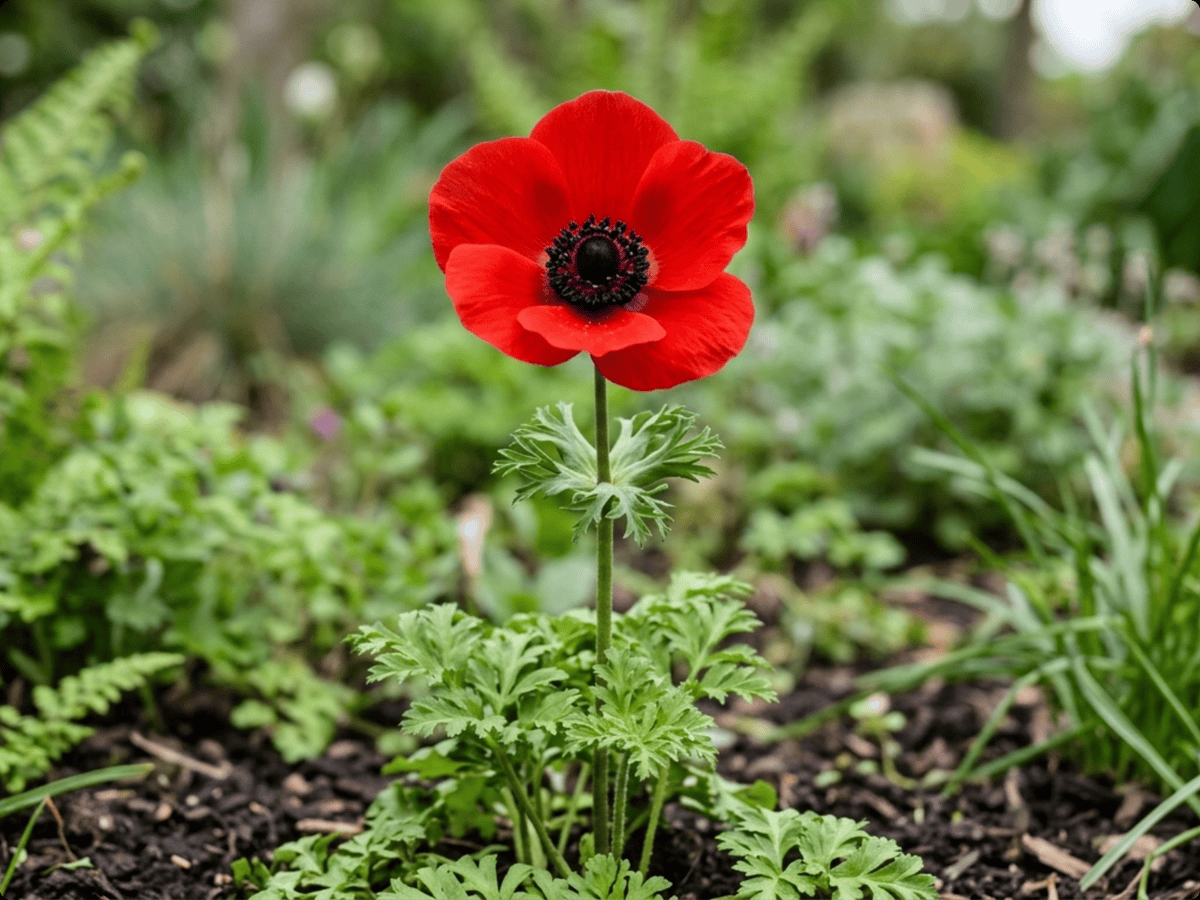
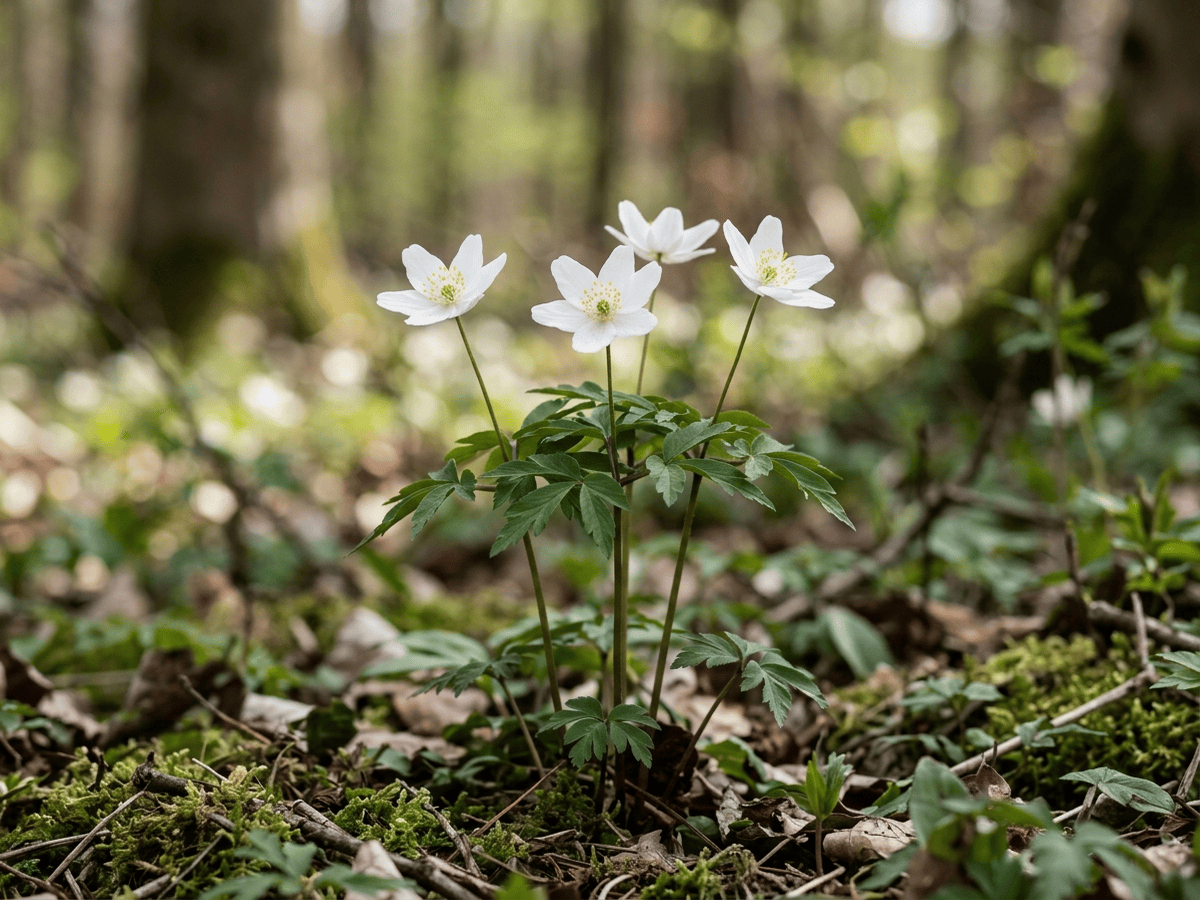
More Anemone plants
Plants with similar care
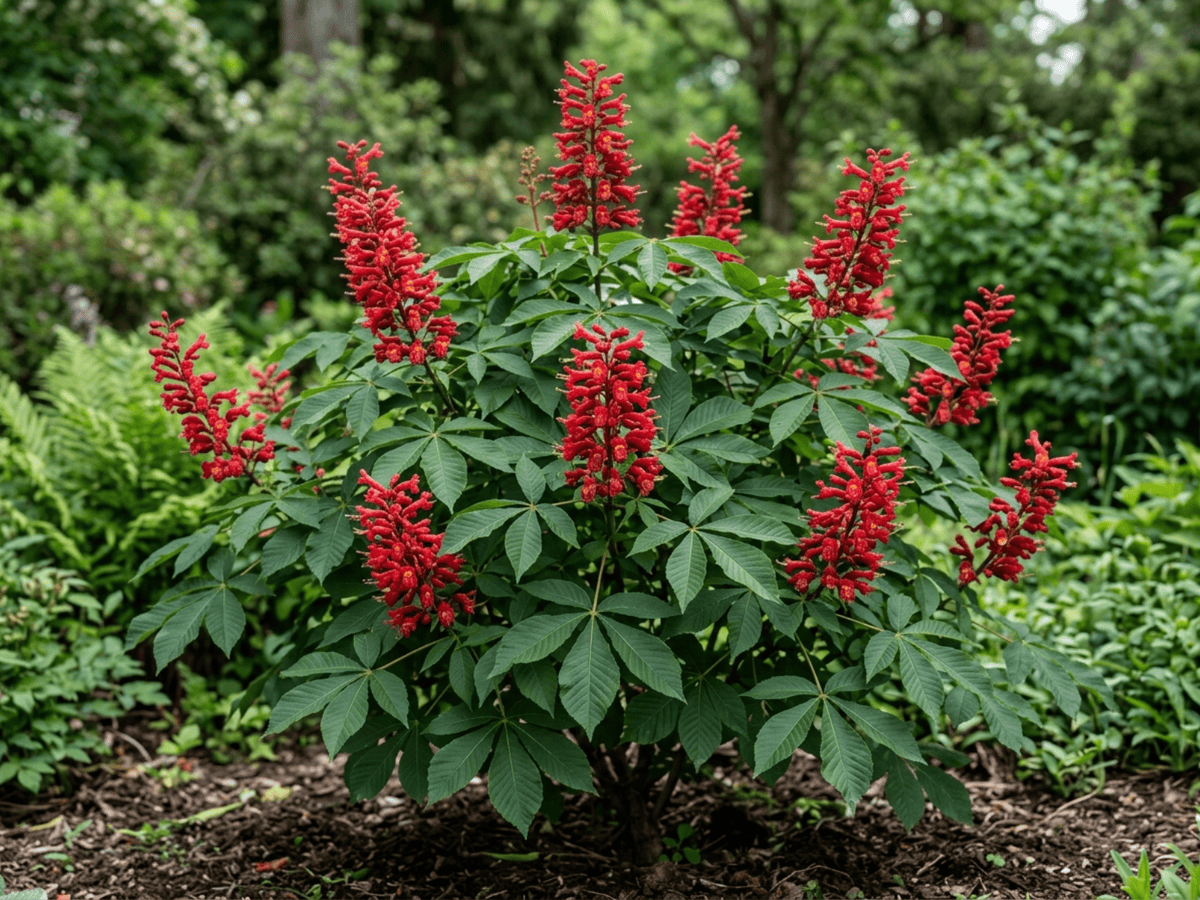 Red BuckeyeAesculus pavia
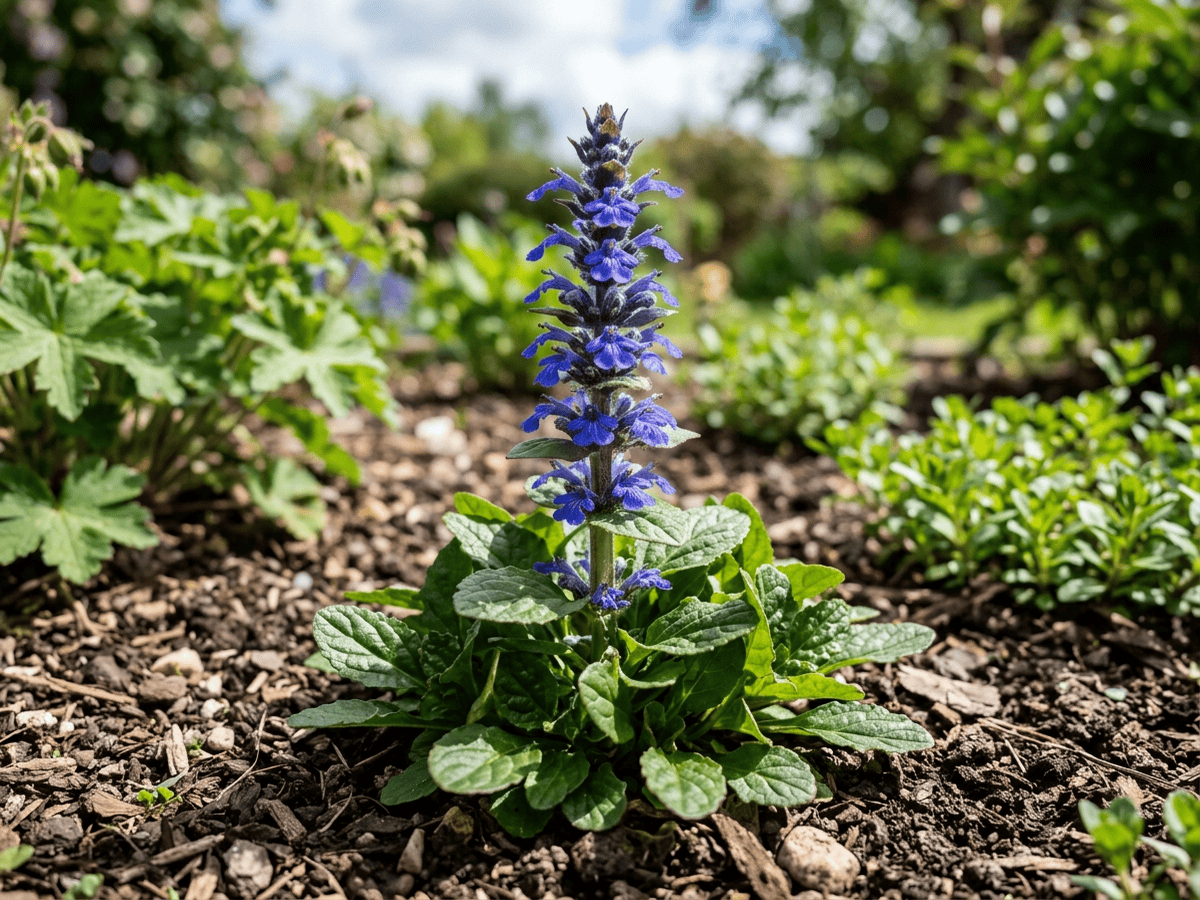 Blue BugleAjuga genevensis
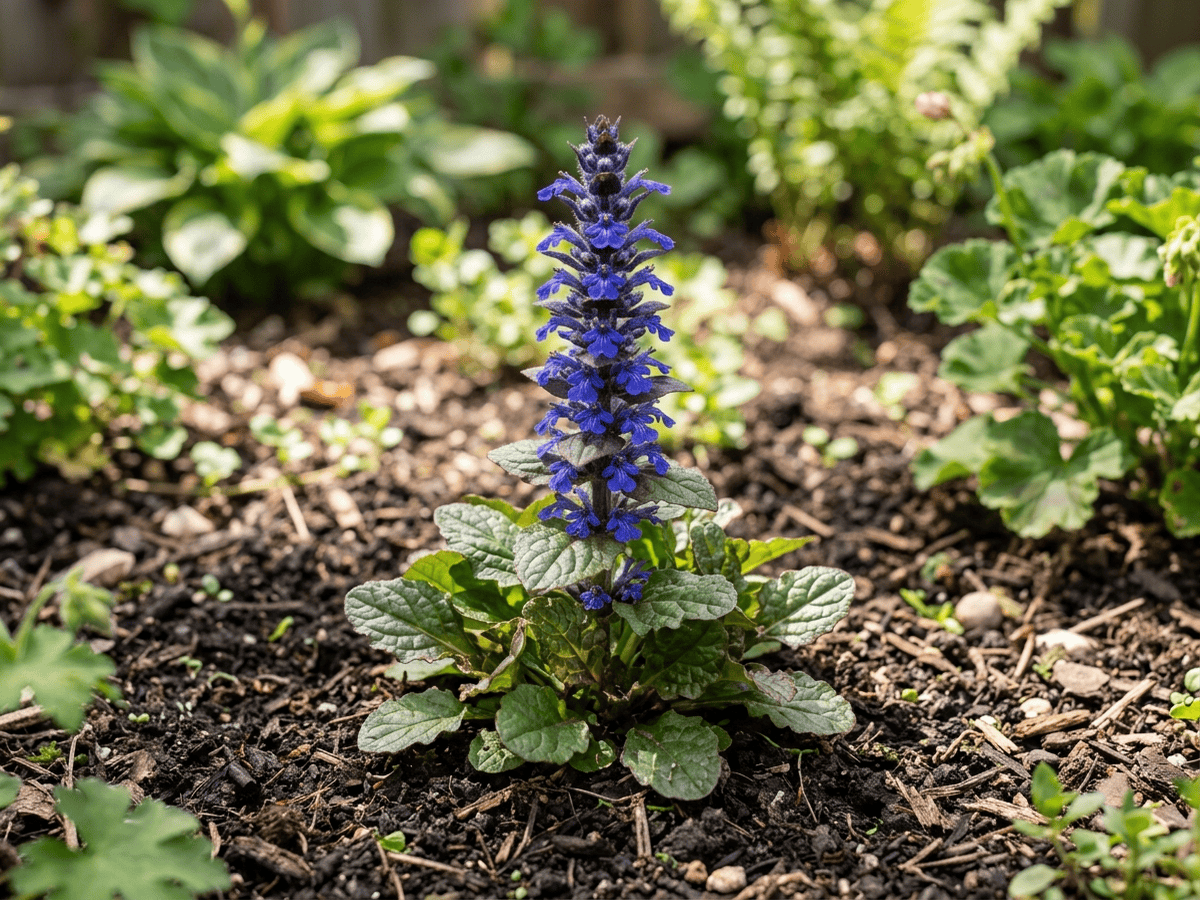 Pyramidal BugleAjuga pyramidalis
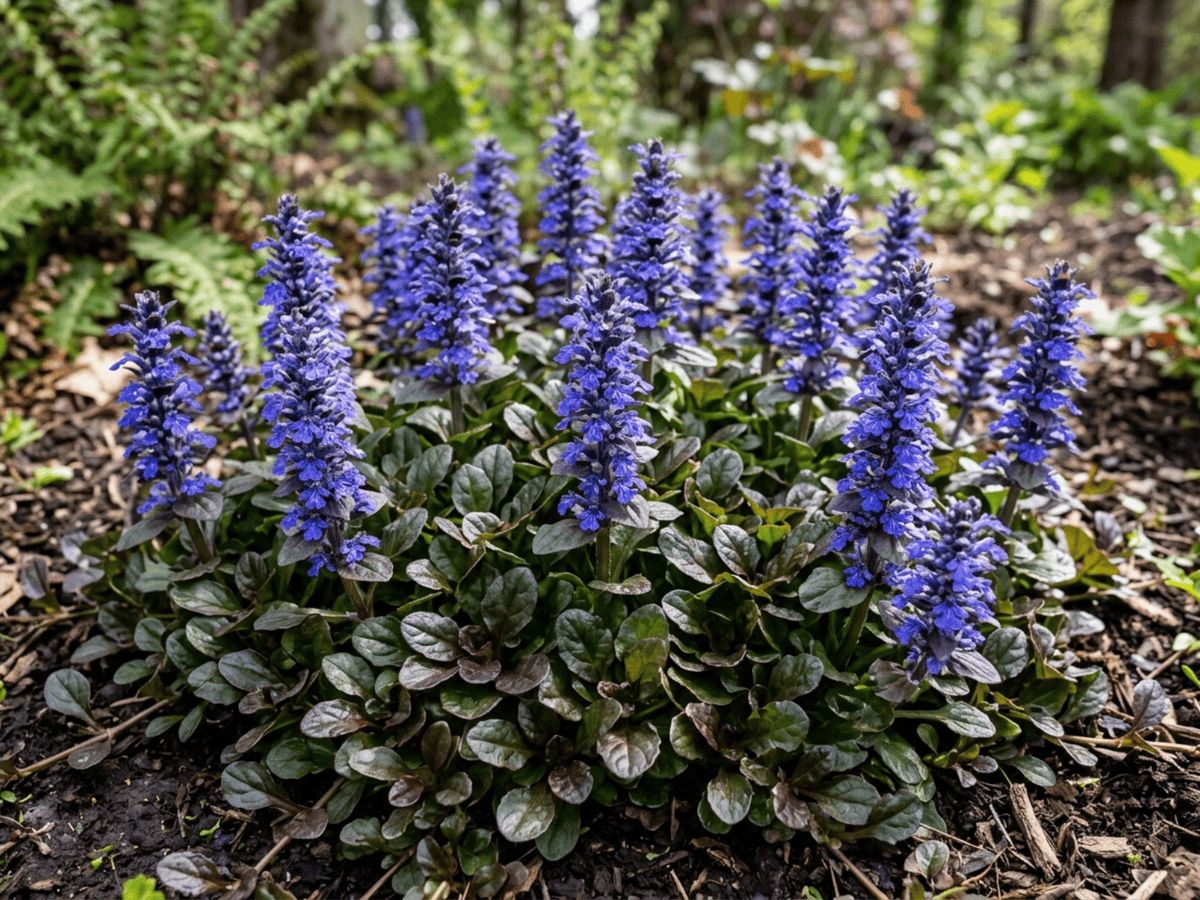 Carpet BugleAjuga reptans
Frequently asked questions
How often should I water Greek Anemone?
Water about every 5 days during the growing season, and always let excess water drain away.
How much light does Greek Anemone need?
Part shade: 2–4 hrs direct. Watch the leaves — scorching or stretching means the light needs adjusting.
Is Greek Anemone toxic to cats or dogs?
Pets Moderate (Dogs Moderate · Cats Moderate) Educational information, not medical or veterinary advice. If exposure is suspected, contact a doctor or veterinarian.
Is Greek Anemone easy to grow?
Yes — it is considered an easy, beginner-friendly plant.
When does Greek Anemone bloom?
It typically blooms Mar–Apr in the Northern Hemisphere.
YardMate
Identify any plant in seconds
Snap a photo — YardMate names the plant, diagnoses problems, and reminds you when to water.
Download on the App Store