 YardMate


Beautiful Bougainvillea
Bougainvillea spectabilis
Medium · Some experienceAbout Beautiful Bougainvillea
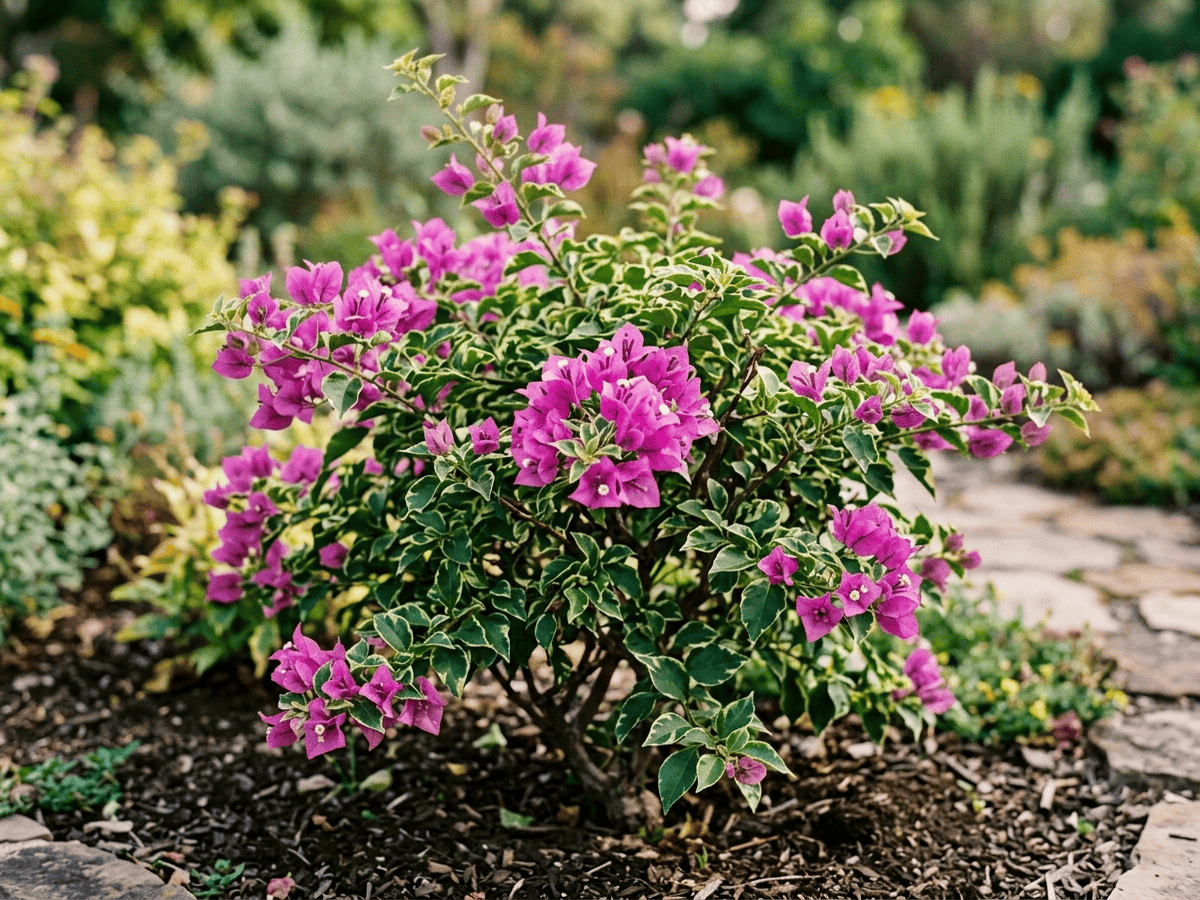
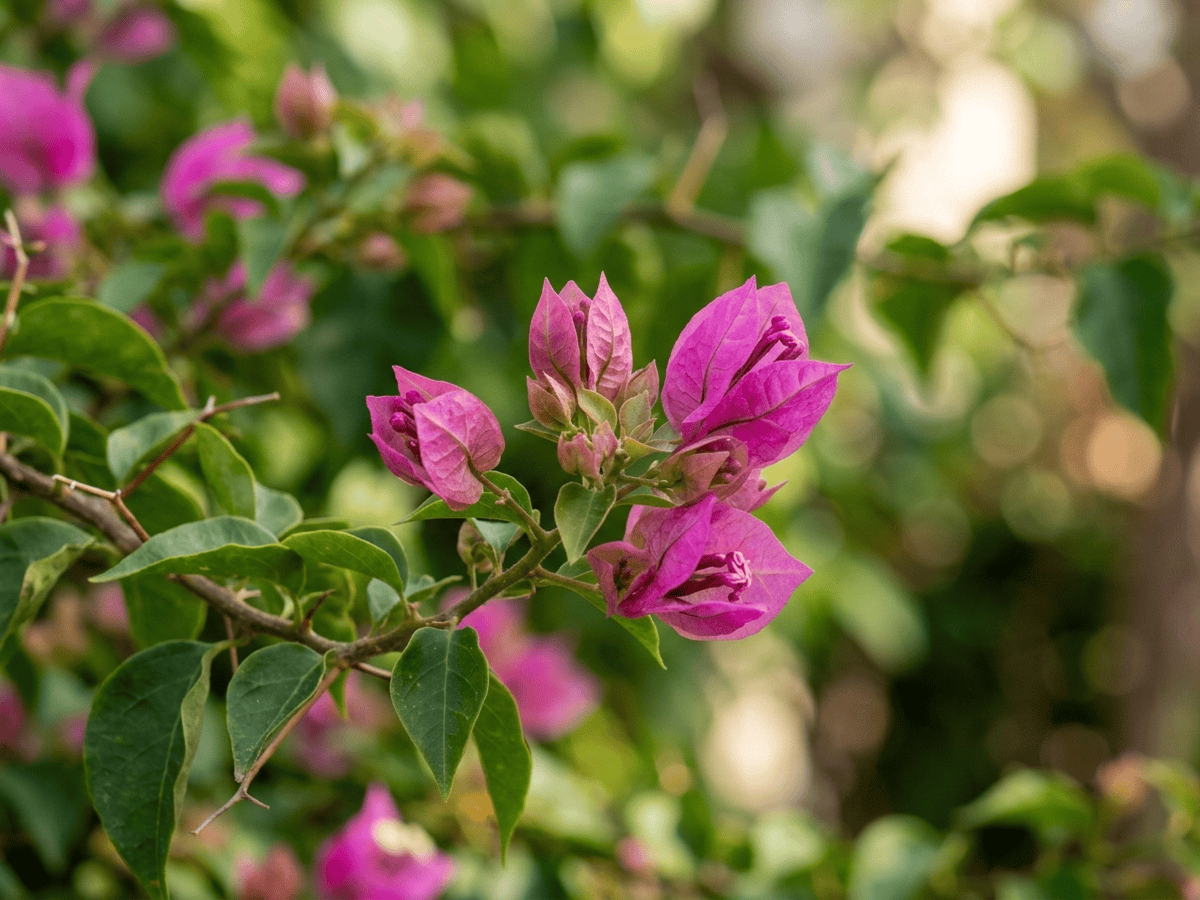
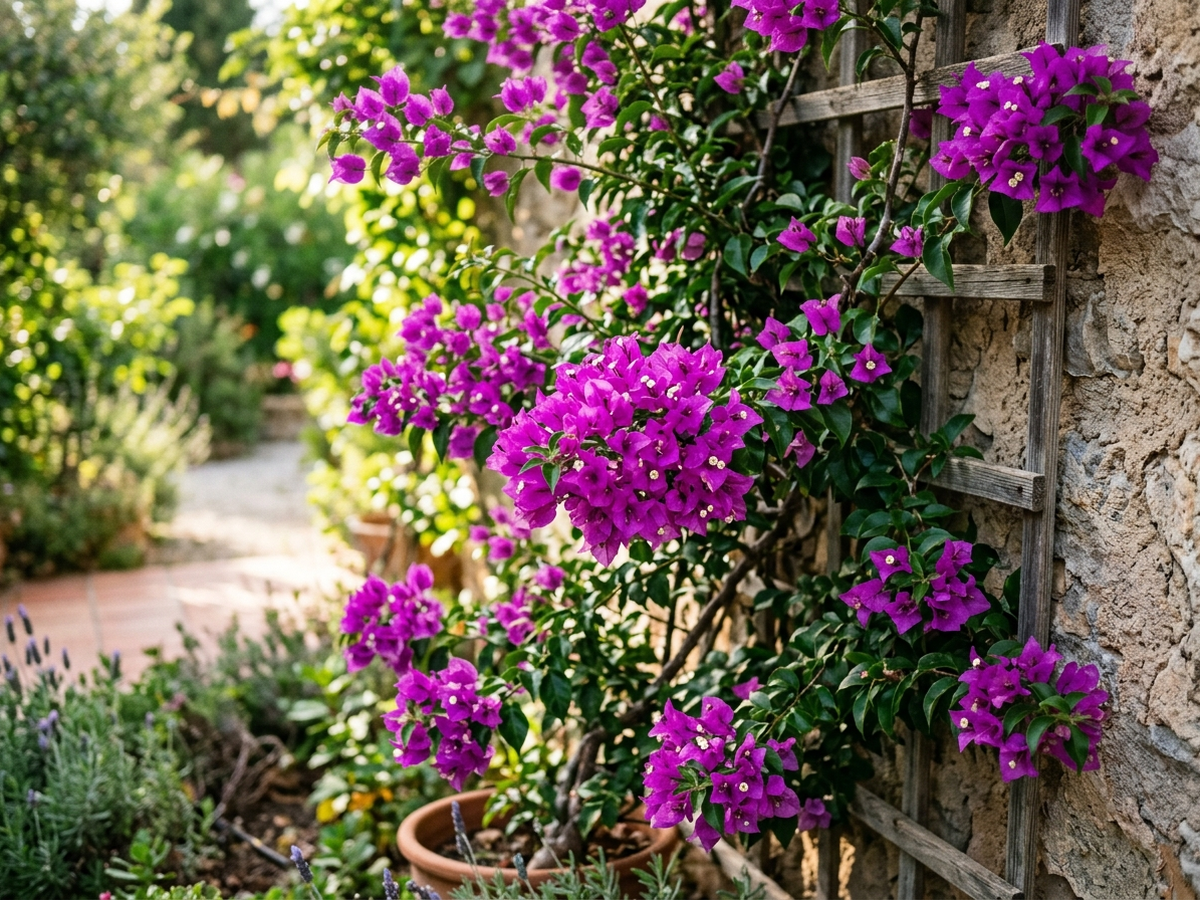
Bougainvillea spectabilis is a vigorous, thorny, tropical climbing shrub famous for its overwhelming displays of vibrant color — the 'flowers' are actually papery bracts surrounding tiny white true flowers. Colors include magenta, purple, red, orange, pink, white, and multicolors. Native to Brazil, it thrives in hot, dry conditions and poor soil, blooming most profusely when slightly stressed. Vines can cover entire buildings in tropical regions. It requires full sun and warm temperatures; frost kills it. In containers, restricting root space encourages heavier blooming.
- Drought-tolerant
- Climbing
- Tropical
How to care for Beautiful Bougainvillea
Watering
- Springevery 10 days
- Summerevery 7 days
- Fallevery 14 days
- Winterevery 21 days
Soil · Well-draining
- Top dressingPine bark mulch10%
- Main mixPotting soil + perlite 2:170%
- DrainageLECA / gravel20%
Never skip the drainage layer — standing water is the top cause of root rot.
FERTILIZER
Bloom Booster 10-52-10
A phosphorus-forward feed fuels abundant blooms, with just enough nitrogen and potassium to keep foliage and roots steady.
- Nitrogen · Leaves
- Phosphorus · Roots + Blooms
- Potassium · Strength
- Springevery 30 days
- Summerevery 30 days
At a Glance
- NativeSouth America
- Height15–40 ft (4.6–12.2 m)
- Spread10–20 ft (3–6.1 m)
- Flower colorPurple, Pink, Red, Orange
- Foliage colorGreen, Variegated
- SoilLoamy, Well-drained, Sandy
- LocationsBalcony · Yard
Bloom time
BLOOM CYCLE
Peak bloom
Jan–Dec
Papery bracts, not petals; stress (drought, root restriction) triggers heavier blooming
Fragrance
NO FRAGRANCE
No notable fragrance.
Toxicity
Humans Slight · Pets Slight
Unknown toxic principle
Slight
- Stem
- Sap
- Contact
EXPOSURE Touching stems and sap.
EFFECT Thorns cause mechanical injury and can introduce dermatitis and sap mildly irritating.
NOTE Documented concern for humans: Thorns cause mechanical injury and can introduce dermatitis and sap mildly irritating.
Slight
- All
- Ingestion
EXPOSURE Eating any part of the plant.
EFFECT Mild GI upset and mechanical injury from thorns.
NOTE ASPCA lists Bougainvillea as non-toxic; primary hazard is thorn injury.
Slight
- All
- Ingestion
EXPOSURE Eating any part of the plant.
EFFECT Mild GI upset.
NOTE ASPCA lists Bougainvillea as non-toxic; primary hazard is thorn injury.
Educational information, not medical or veterinary advice. If exposure is suspected, contact a doctor or veterinarian.
DISTRIBUTION


- Native
- Introduced
- South America
History
Bougainvillea spectabilis is native to the coastal forests of Brazil, Peru, and Argentina. It was collected during Louis-Antoine de Bougainville's 1766-1769 French circumnavigation by the expedition's naturalist Philibert Commerson, and named by him for his captain. Historical evidence strongly suggests the actual field discovery was made by Jeanne Baret, Commerson's housekeeper and common-law partner, who had signed aboard disguised as his male valet to evade the French Navy's ban on women — making her the first woman to sail around the world.
The plant spread through 19th-century European greenhouse culture and became iconic in Mediterranean North Africa, southern Europe, and later in California, Florida, Arizona, and throughout the tropics. The colorful "flowers" are actually papery bracts surrounding inconspicuous true flowers.
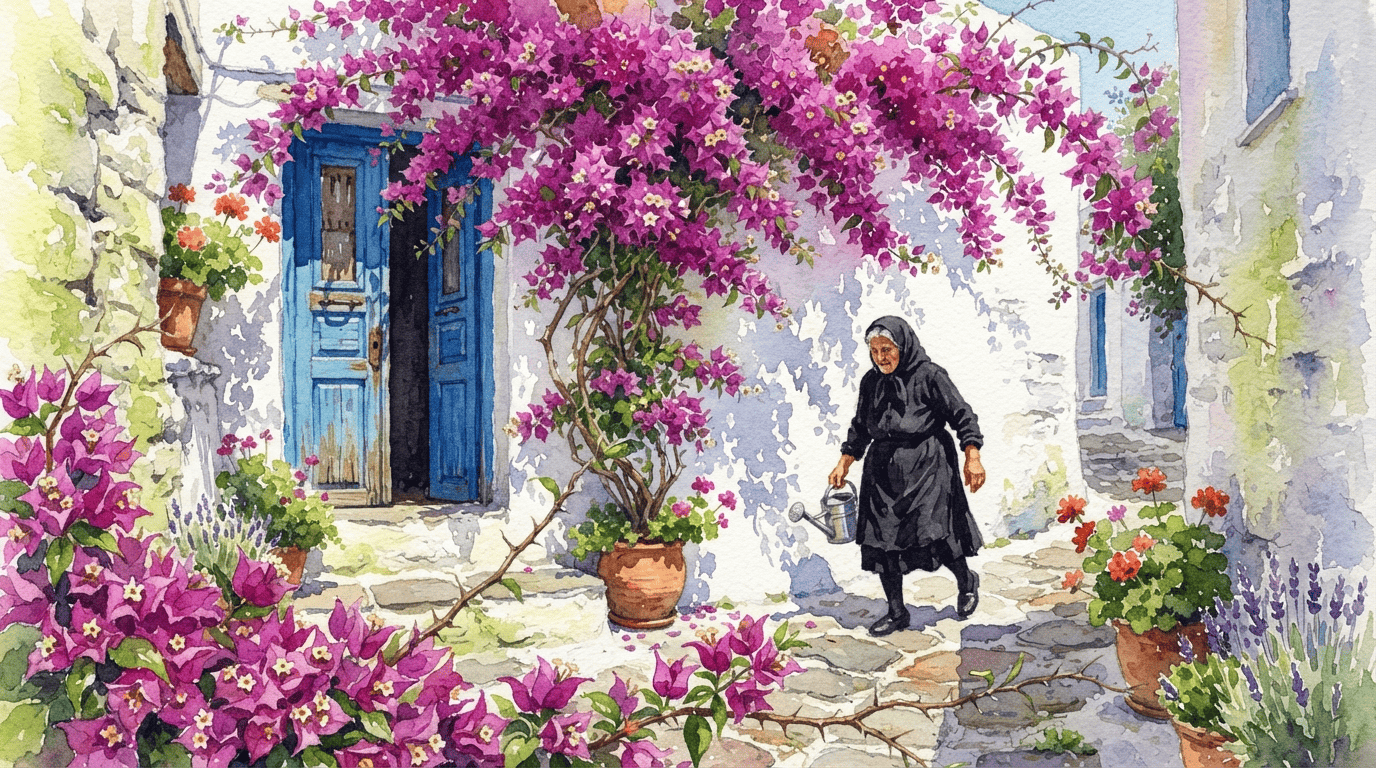
Bougainvillea was discovered in 1768 during Louis Antoine de Bougainville's circumnavigation of the globe — the expedition's botanist, Philibert Commerçon, collected specimens in Rio de Janeiro (though his assistant, Jeanne Baret, disguised as a man, likely did the actual collecting — making her the first woman to circumnavigate the world). In the Mediterranean, bougainvillea cascading over white walls became the defining image of Greece, Spain, and southern Italy. The city of Shenzhen, China has planted millions, making bougainvillea its official flower.
Symbolism & meaning
What It Symbolizes
Beautiful Bougainvillea drapes whole walls in saturated magenta and crimson, and so its meaning is passion in its most unbridled form, an emotion impossible to overlook. There is nothing demure about a flowering bougainvillea: it announces itself at the scale of the building it covers, all enthusiasm and hot color. In Mediterranean and tropical courtyards, it has become the chosen flower of those who believe that beauty, when it arrives, deserves to arrive without apology.
- Passion — Its overwhelming, saturated color represents intense emotion and unbridled enthusiasm
Where the Name Comes From
Bougainvillea honors Louis Antoine de Bougainville (1729–1811), French admiral and explorer. Spectabilis means 'spectacular.'
Uses & Fun Facts
- Thorny vines trained as colorful security screens
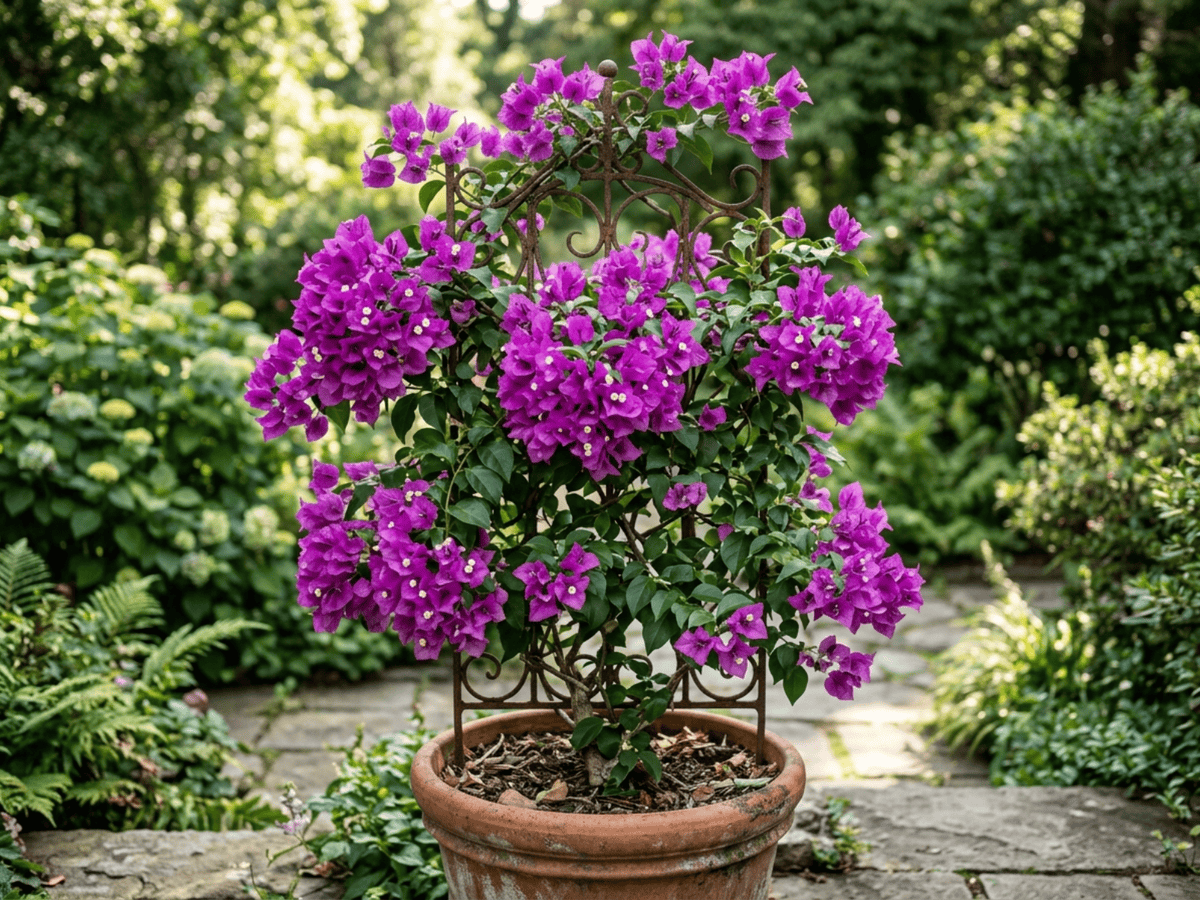
- Patio pots overflow with magenta papery bracts
- Sprawling stems trained on warm walls and pergolas
- Brilliant bract display dominates subtropical courtyards
Related plants
More Bougainvillea plants
Plants with similar care
 Mexican AbeliaAbelia floribunda
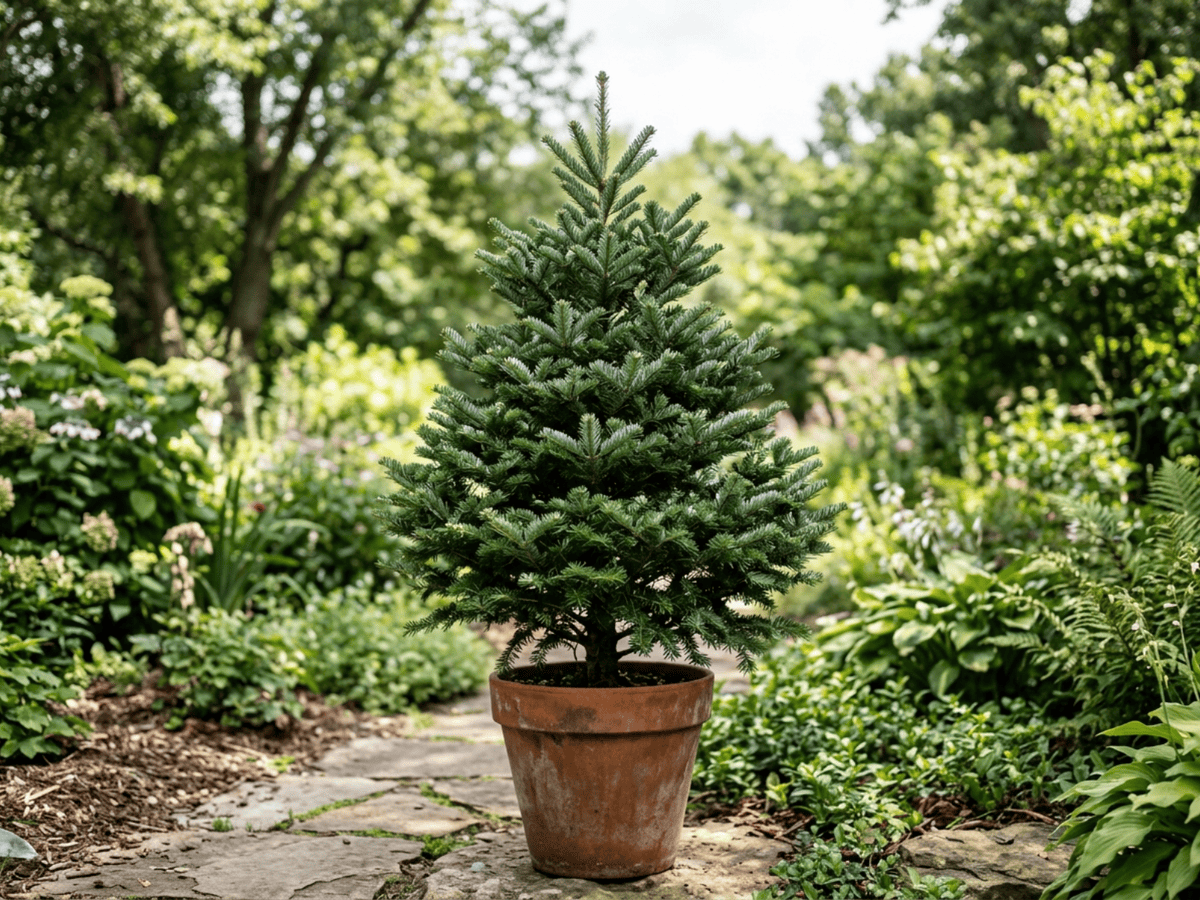 Fraser FirAbies fraseri
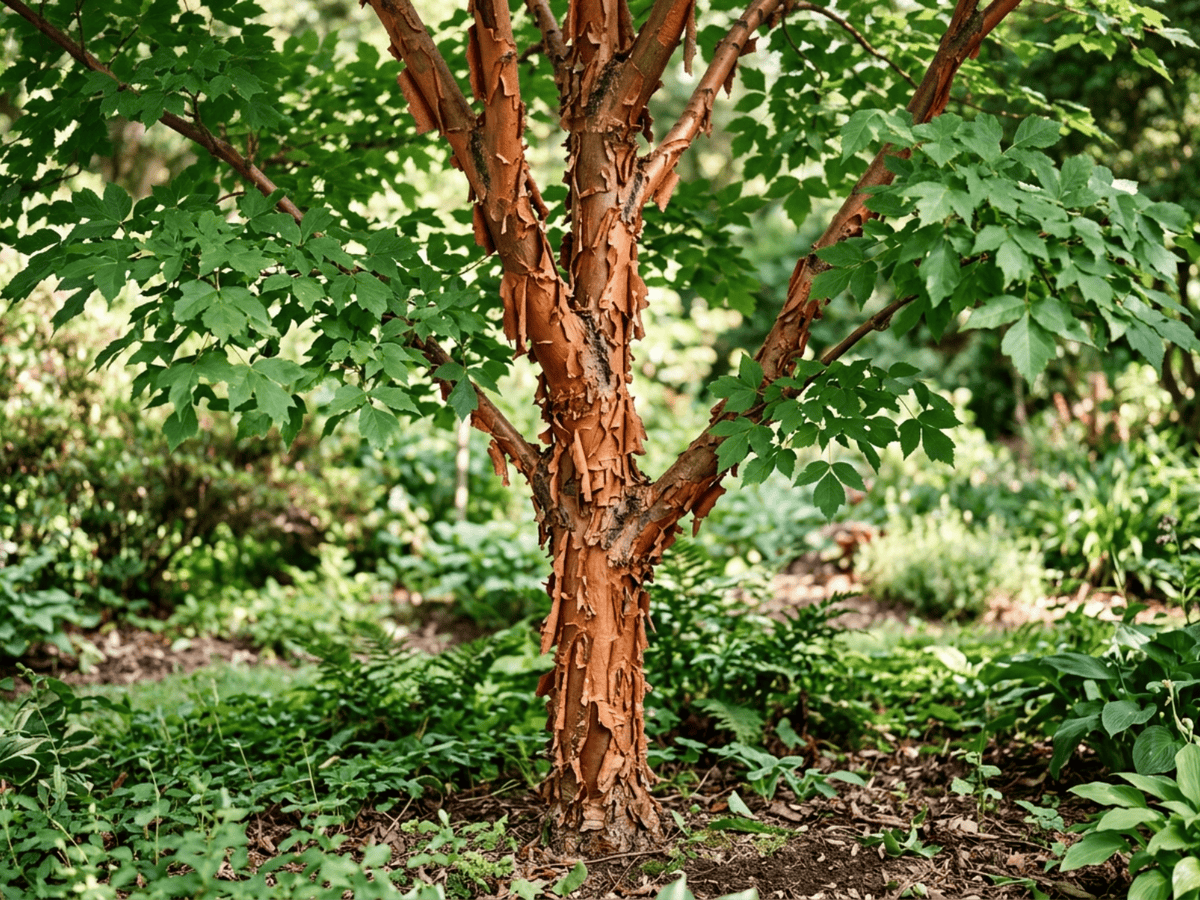 Paperbark MapleAcer griseum
 Sugar MapleAcer saccharum
Frequently asked questions
How often should I water Beautiful Bougainvillea?
In summer, water about every 7 days; in winter, about every 21 days. Adjust for heat, pot size and drainage.
How much light does Beautiful Bougainvillea need?
Full sun: 6+ hrs direct. Watch the leaves — scorching or stretching means the light needs adjusting.
Is Beautiful Bougainvillea toxic to cats or dogs?
Pets Slight (Dogs Slight · Cats Slight) Educational information, not medical or veterinary advice. If exposure is suspected, contact a doctor or veterinarian.
Is Beautiful Bougainvillea easy to grow?
It is moderately demanding: a good choice once you have a little experience.
When does Beautiful Bougainvillea bloom?
It typically blooms Jan–Dec in the Northern Hemisphere.
YardMate
Identify any plant in seconds
Snap a photo — YardMate names the plant, diagnoses problems, and reminds you when to water.
Download on the App Store