 YardMate

Seaside Petunia
Calibrachoa parviflora
Easy · Beginner friendlyAbout Seaside Petunia
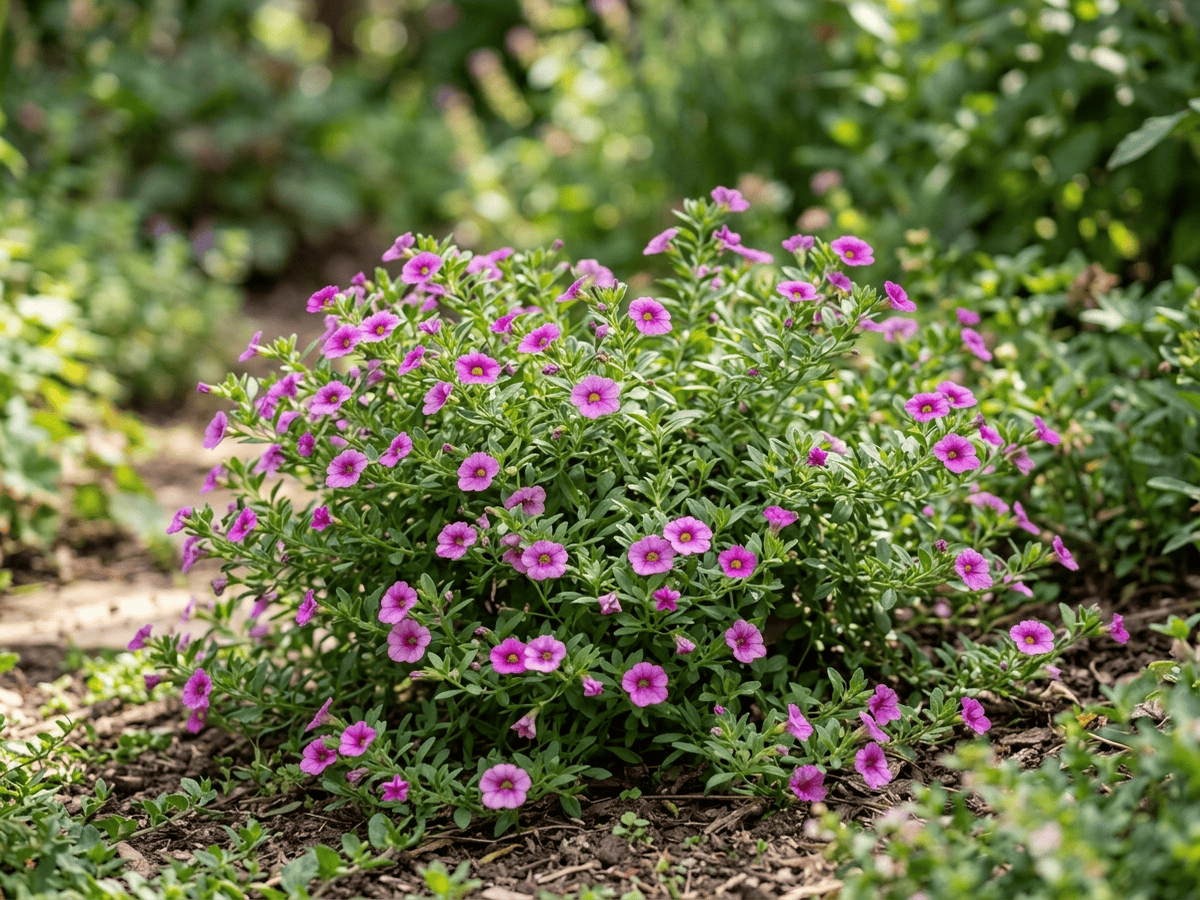
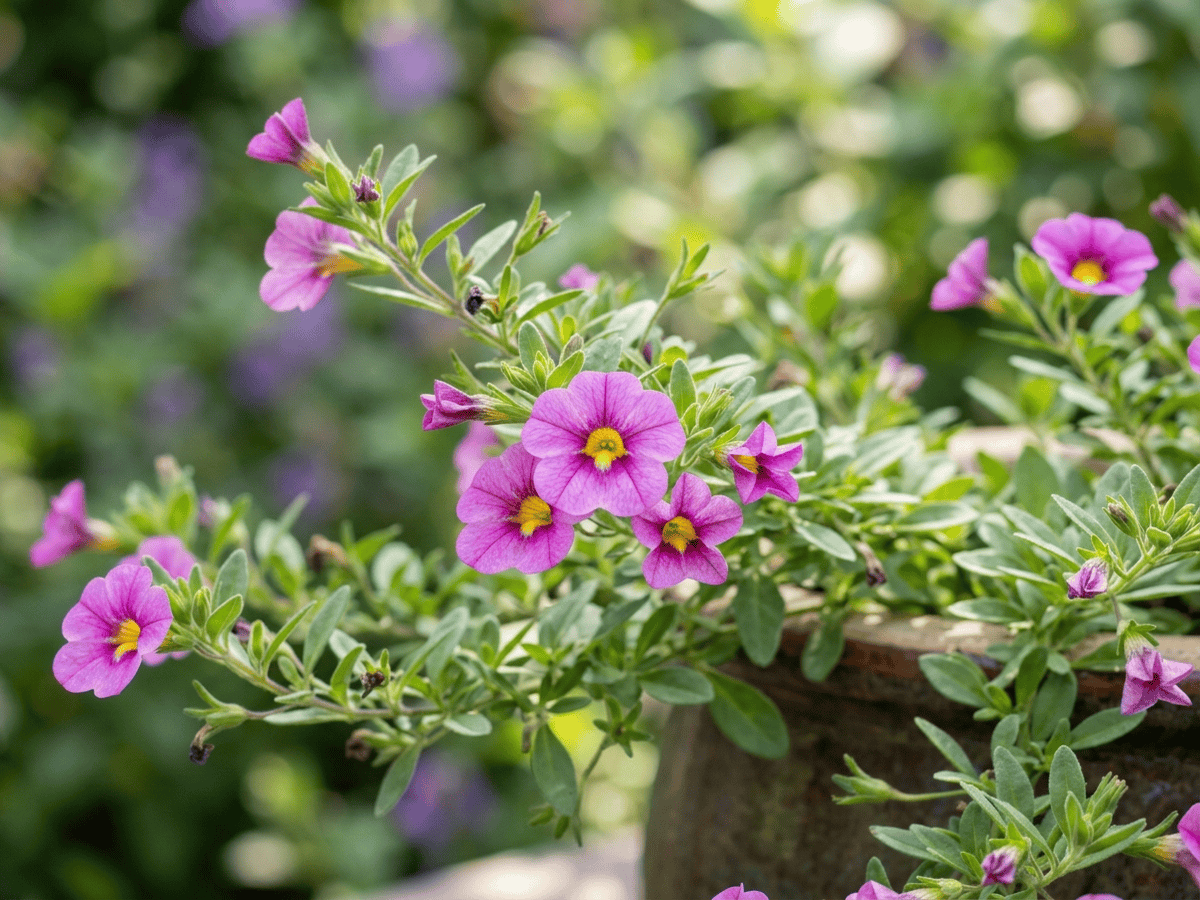
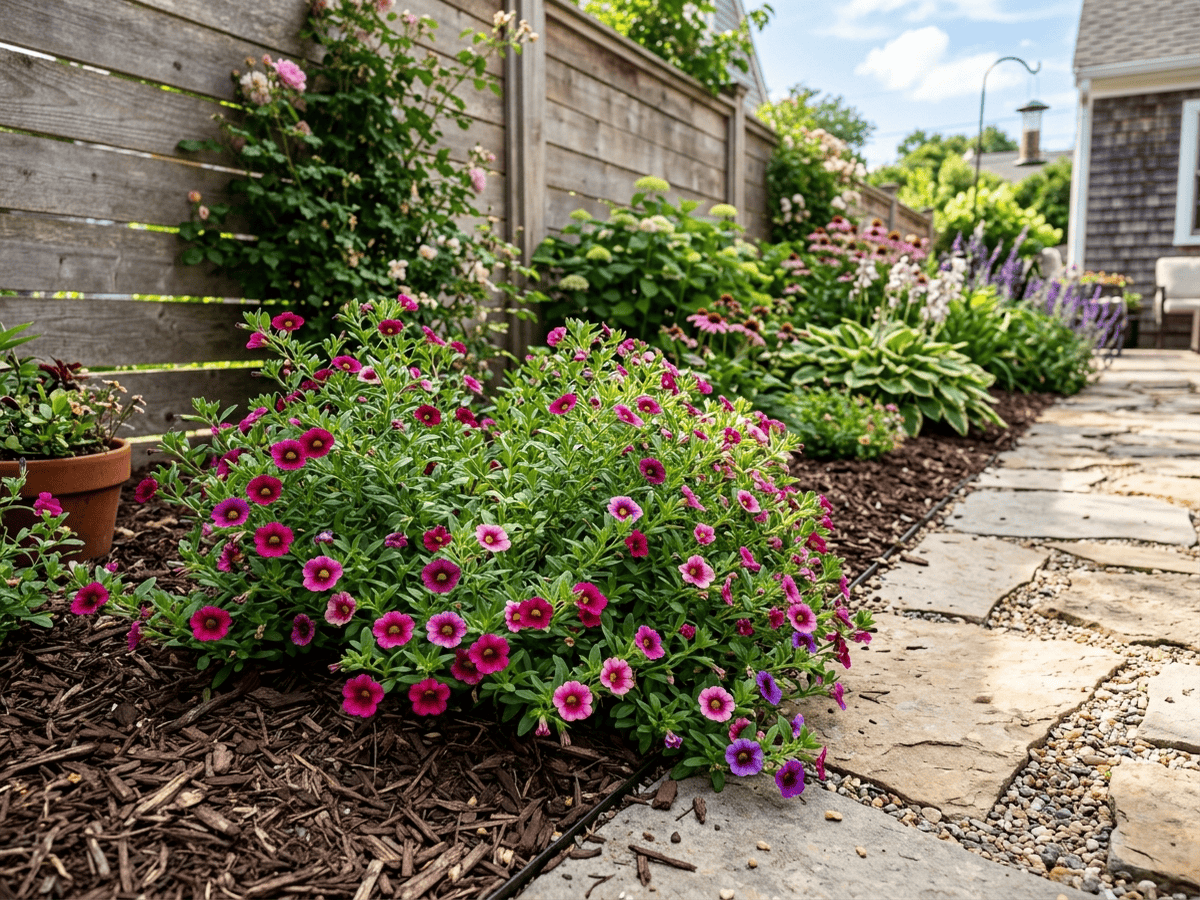
Wild Petunia or Seaside Petunia is the wild South American parent of modern Million Bells hybrids, native to subtropical grasslands and coastal areas from Texas through Argentina. Growing as a low sprawling annual or short-lived perennial 4 to 8 inches tall, it produces small purple to pink trumpet flowers on trailing stems. Rarely sold commercially but significant as a breeding parent and occasional naturalized wildflower in the southern US.
- Drought-tolerant
- Heat-tolerant
- Pollinator-friendly
How to care for Seaside Petunia
Watering
- Springevery 3 days
- Summerevery 2 days
- Fallevery 5 days
- Winterevery 7 days
Soil · Well-draining
- Top dressingPine bark mulch10%
- Main mixPotting soil + perlite 2:170%
- DrainageLECA / gravel20%
Never skip the drainage layer — standing water is the top cause of root rot.
FERTILIZER
Balanced Feed 14-14-14
An even feed covers all three needs at once, keeping leaves, roots and blooms moving together with nothing pushed out of balance.
- Nitrogen · Leaves
- Phosphorus · Roots + Blooms
- Potassium · Strength
- Springevery 14 days
- Summerevery 14 days
- Fallevery 30 days
At a Glance
- NativeNorth America, Central America, South America
- Height0.5–1 ft (0.2–0.3 m)
- Spread1–2 ft (0.3–0.6 m)
- Flower colorPurple, Pink
- Foliage colorGreen
- SoilLoamy, Well-drained
- LocationsYard · Balcony
Bloom time
BLOOM CYCLE
Peak bloom
Jun–Nov
Small purple trumpet flowers summer to fall
Toxicity
Toxicity unknown
None reported
Unknown
EXPOSURE Unspecified plant material.
EFFECT Toxic effects are not specified.
NOTE Toxicity for humans is not well documented; use caution until verified.
Unknown
EXPOSURE Unspecified plant material.
EFFECT Toxic effects are not specified.
NOTE Toxicity for dogs is not well documented; use caution until verified.
Unknown
EXPOSURE Unspecified plant material.
EFFECT Toxic effects are not specified.
NOTE Toxicity for cats is not well documented; use caution until verified.
Educational information, not medical or veterinary advice. If exposure is suspected, contact a doctor or veterinarian.
DISTRIBUTION


- Native
- Introduced
- North America
- Central America
- South America
History
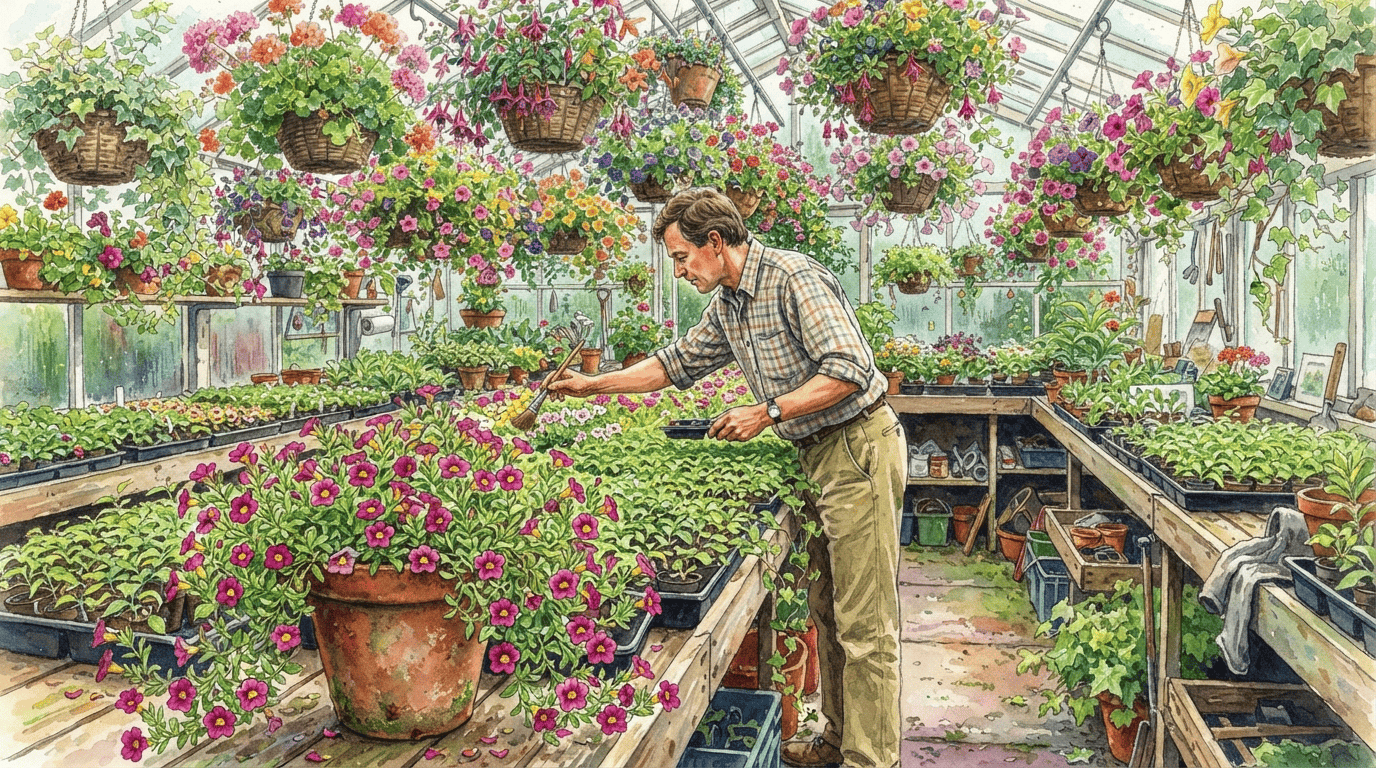
Calibrachoa parviflora, the seaside petunia or small-flowered calibrachoa, is an herbaceous annual to short-lived perennial native to a broad range of the Americas from the southern United States and West Indies through Central and South America. Spanish botanist Antonio José Cavanilles first described it in 1791 as Petunia parviflora, and it was later transferred to Calibrachoa in 1989 by Wijsman and de Jong based on chromosome number and other traits. The plant produces low creeping stems and small magenta to purple tubular-lobed flowers with yellow throats in the warm season.
Along with a few other wild Calibrachoa species it formed the breeding foundation for modern trailing hybrids marketed as Million Bells and Superbells since 1992. The ancestral wild species behind all modern Million Bells cultivars.
First described in 1825, it occasionally naturalizes in disturbed coastal sites from south Texas to the Gulf Coast, offering a glimpse of the modest wild ancestor of today's spectacular hybrids.
Symbolism & meaning
What It Symbolizes
Seaside Petunia carries wild heritage in every small bloom — it is the ancestral parent of the hybrid Calibrachoa now spilling from countless summer baskets. Yet in its truest form it is a creature of resilience, thriving in poor coastal soils where ornamental cousins would quickly decline. A reminder of where the cultivated world's brightest colors actually come from.
- Wild origin — ancestral parent of hybrid Calibrachoa
- Resilience — thrives in poor coastal soils
Where the Name Comes From
The name Seaside Petunia points to coastal habitats. 'parviflora' from Latin means small-flowered, referring to the modest bloom size versus cultivated relatives.
Uses & Fun Facts
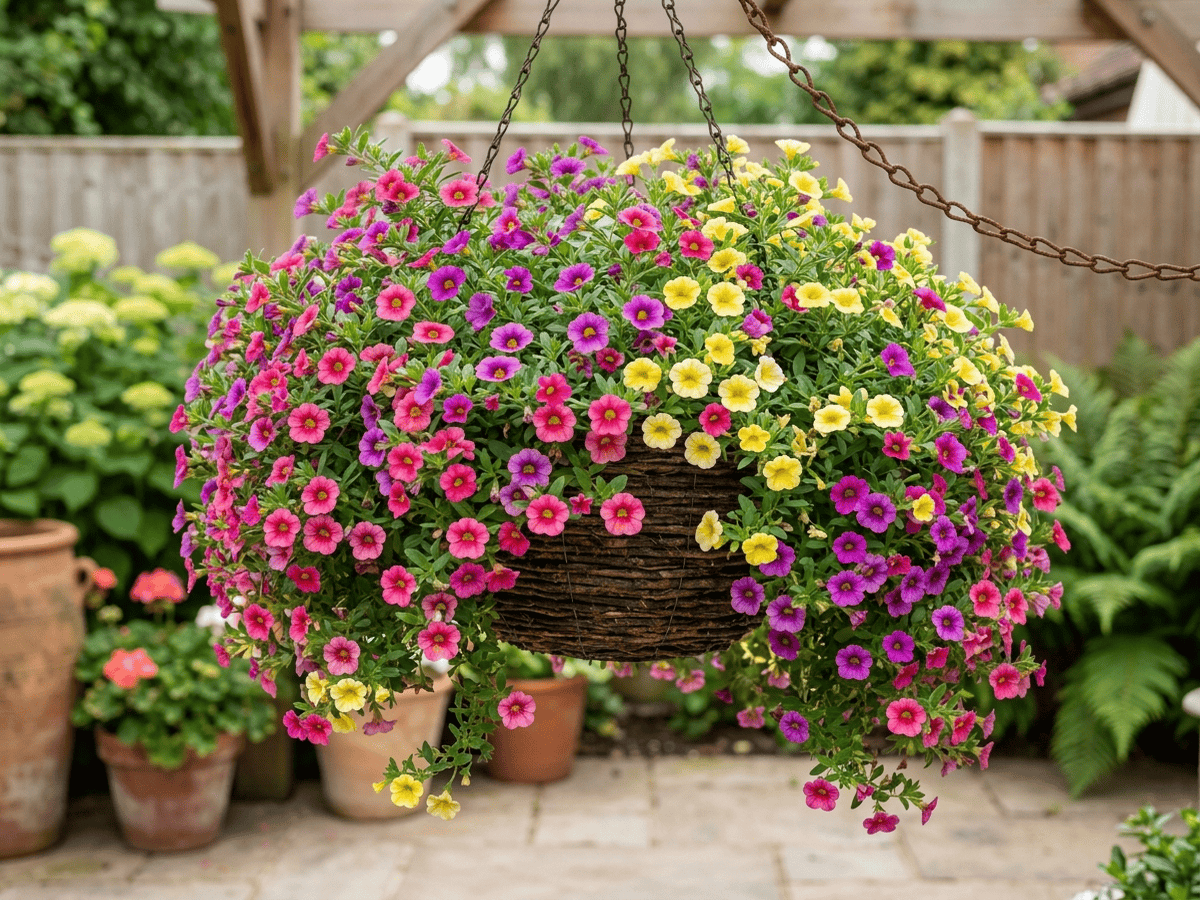
- Trailing million-bells smother hanging baskets all summer
- Tiny petunia-like flowers attract hummingbirds and bees
- Compact mounding annual for window boxes and mixed pots
Related plants
More Calibrachoa plants
Plants with similar care
 Chinese AbeliaAbelia chinensis
 Fragrant AbeliaAbelia mosanensis
 Large-Flowered AbeliaAbelia uniflora
 Glossy AbeliaAbelia x grandiflora
Frequently asked questions
How often should I water Seaside Petunia?
In summer, water about every 2 days; in winter, about every 7 days. Adjust for heat, pot size and drainage.
How much light does Seaside Petunia need?
Full sun: 6+ hrs direct. Watch the leaves — scorching or stretching means the light needs adjusting.
Is Seaside Petunia toxic to cats or dogs?
Pets Unknown (Dogs Unknown · Cats Unknown) Educational information, not medical or veterinary advice. If exposure is suspected, contact a doctor or veterinarian.
Is Seaside Petunia easy to grow?
Yes — it is considered an easy, beginner-friendly plant.
When does Seaside Petunia bloom?
It typically blooms Jun–Nov in the Northern Hemisphere.
YardMate
Identify any plant in seconds
Snap a photo — YardMate names the plant, diagnoses problems, and reminds you when to water.
Download on the App Store