 YardMate


Million Bells
Calibrachoa x hybrida
Easy · Beginner friendlyAbout Million Bells
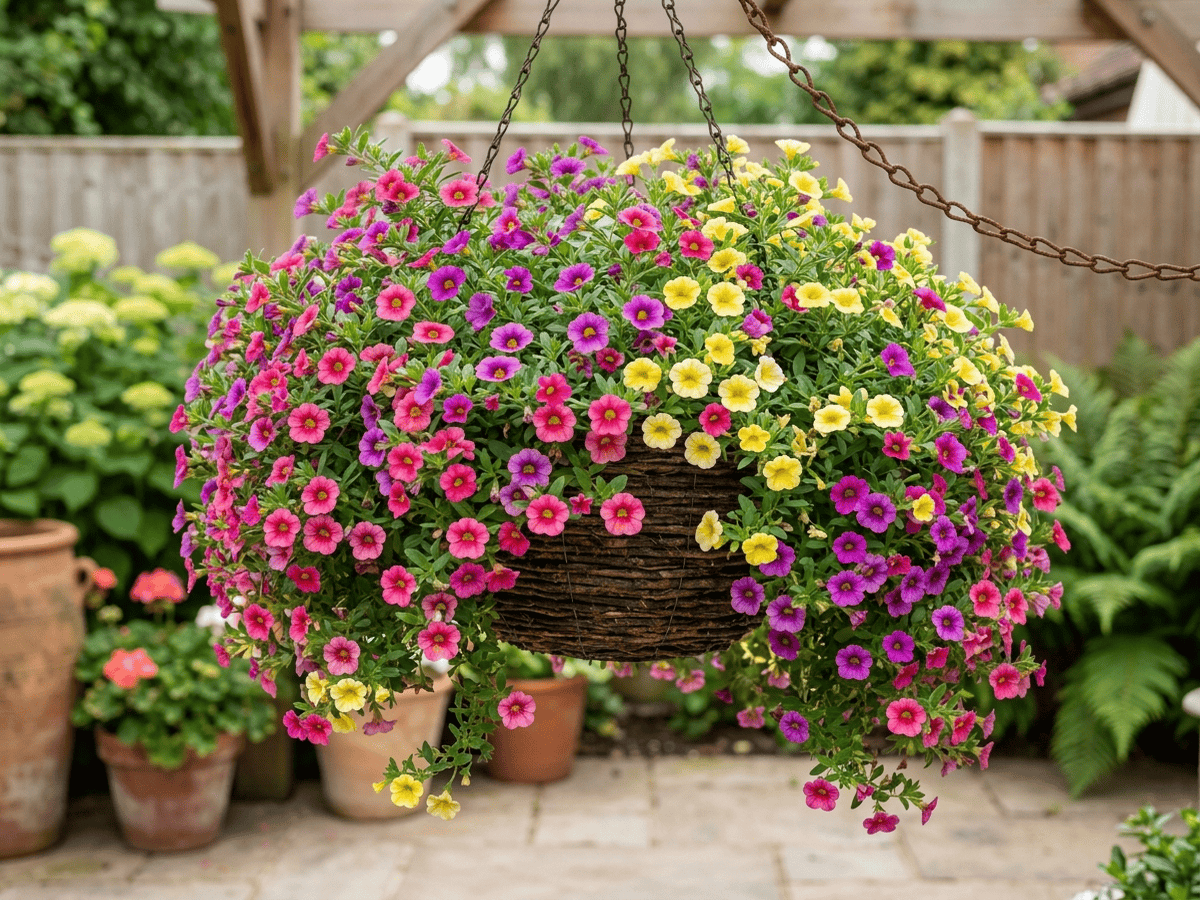
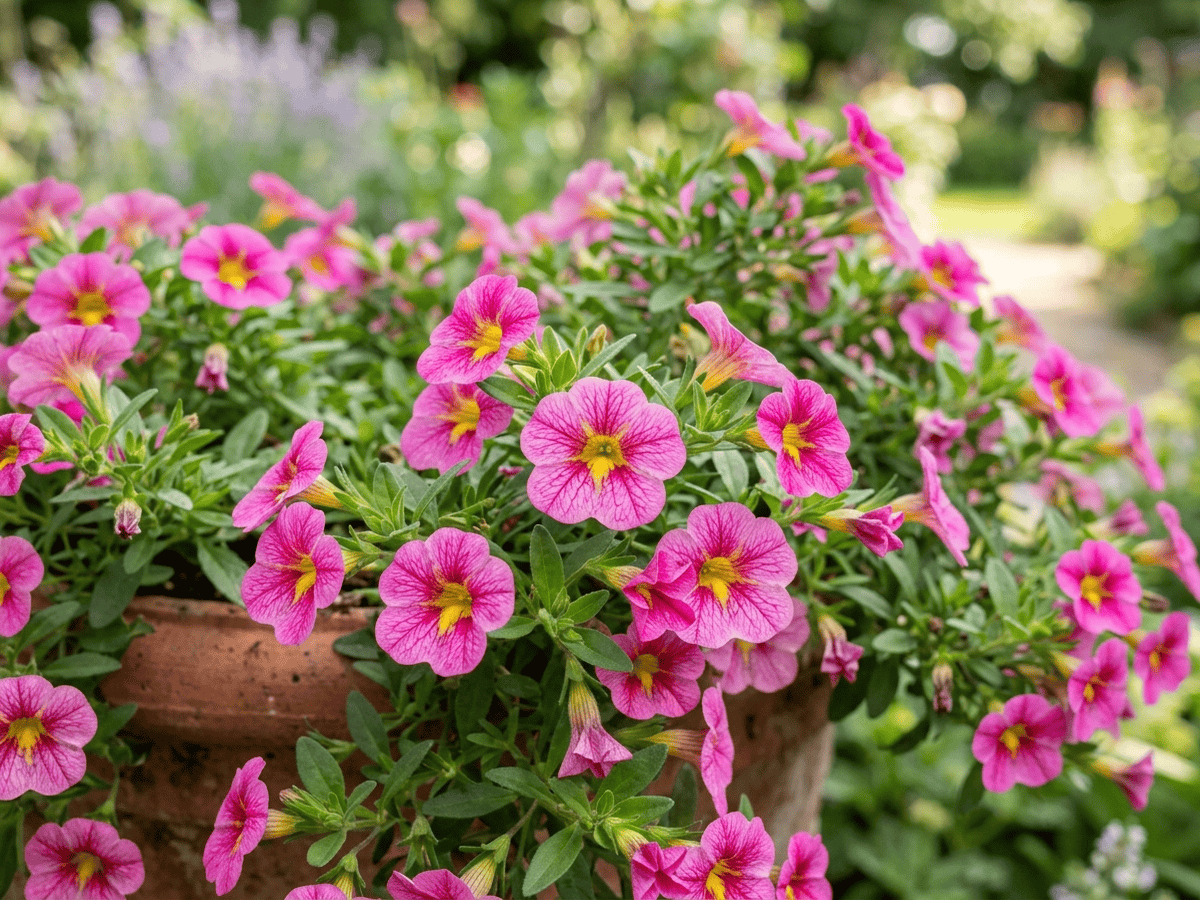
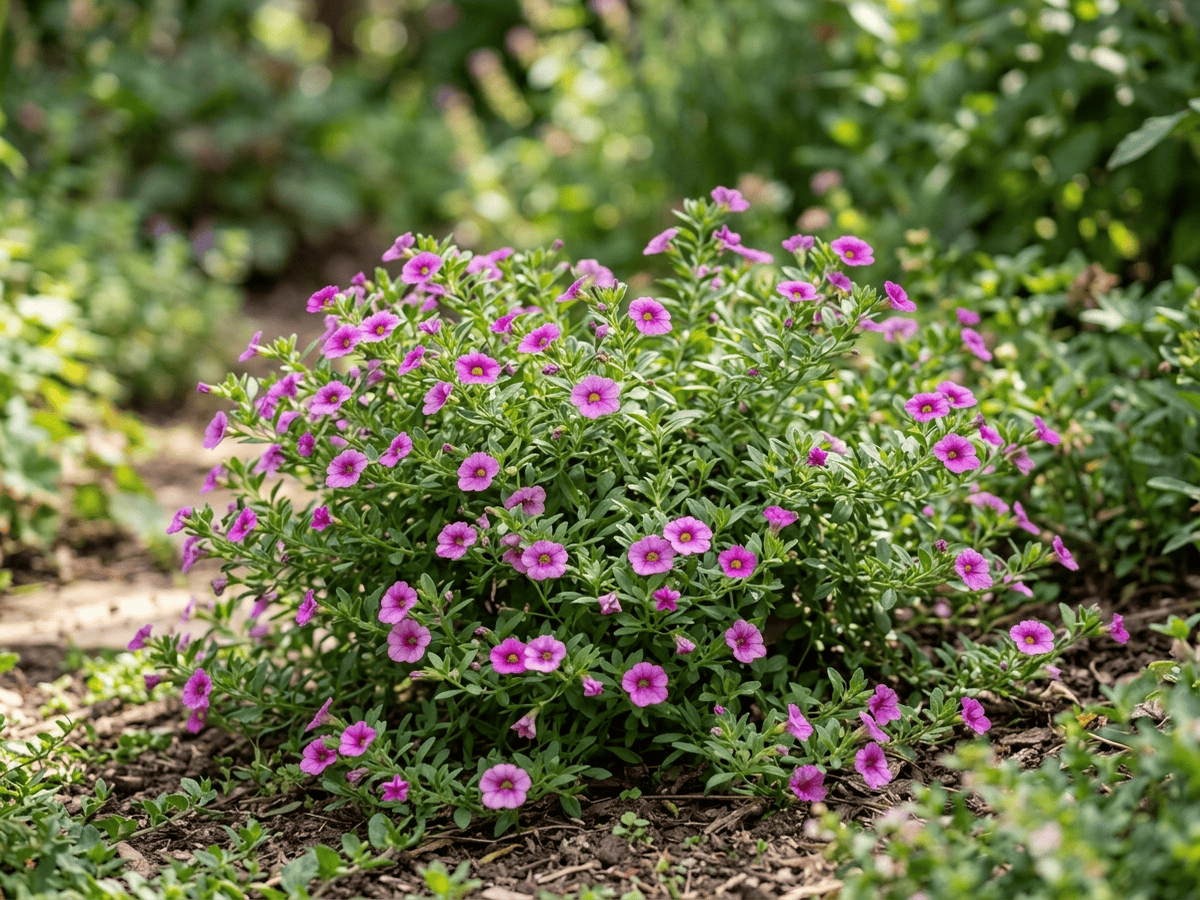
Million Bells is a trailing tender perennial grown as an annual throughout the US, beloved for its prolific small petunia-like flowers covering mounded plants from spring through frost. Reaching 6 to 12 inches tall and spreading 12 to 24 inches, it blooms non-stop in colors from hot pink and yellow to deep purple and bicolors. Self-cleaning flowers require no deadheading, making it a top choice for hanging baskets, window boxes, and mixed containers across American gardens.
- Heat-tolerant
- Container-friendly
- Long-blooming
- Pollinator-friendly
How to care for Million Bells
Watering
- Springevery 3 days
- Summerevery 2 days
- Fallevery 5 days
- Winterevery 7 days
Soil · Well-draining
- Top dressingPine bark mulch10%
- Main mixPotting soil + perlite 2:170%
- DrainageLECA / gravel20%
Never skip the drainage layer — standing water is the top cause of root rot.
FERTILIZER
Balanced Feed 14-14-14
An even feed covers all three needs at once, keeping leaves, roots and blooms moving together with nothing pushed out of balance.
- Nitrogen · Leaves
- Phosphorus · Roots + Blooms
- Potassium · Strength
- Springevery 14 days
- Summerevery 14 days
- Fallevery 30 days
At a Glance
- NativeSouth America
- Height0.5–1 ft (0.2–0.3 m)
- Spread1–2 ft (0.3–0.6 m)
- Flower colorPink, Purple, Red, Yellow
- Foliage colorGreen
- SoilWell-drained, Loamy
- LocationsBalcony · Yard
Bloom time
BLOOM CYCLE
Peak bloom
Mar–Nov
Thousands of mini trumpet flowers spring through frost
Toxicity
Toxicity unknown
None reported
Unknown
EXPOSURE Unspecified plant material.
EFFECT Toxic effects are not specified.
NOTE Toxicity for humans is not well documented; use caution until verified.
Unknown
EXPOSURE Unspecified plant material.
EFFECT Toxic effects are not specified.
NOTE Toxicity for dogs is not well documented; use caution until verified.
Unknown
EXPOSURE Unspecified plant material.
EFFECT Toxic effects are not specified.
NOTE Toxicity for cats is not well documented; use caution until verified.
Educational information, not medical or veterinary advice. If exposure is suspected, contact a doctor or veterinarian.
DISTRIBUTION


- Native
- South America
History

Calibrachoa x hybrida is a group of garden hybrids derived primarily from South American species including Calibrachoa parviflora, C. caesia, and others. The genus was once sunk into Petunia but modern molecular work restored it; the hybrids resemble miniature trailing petunias. Japanese firm Suntory Flowers introduced the first commercial series as Million Bells in 1992, igniting a revolution in container and hanging basket horticulture as growers realized the plants bloomed continuously without deadheading.
Subsequent series including Superbells from Proven Winners, MiniFamous from Selecta, and Cabaret, alongside countless improvements, have made calibrachoa one of the top-selling annual bedding and container crops in North America and Europe. Breeding has expanded color range from the original pink through nearly every hue including yellow, black, and bicolors.
Developed by Japanese breeder Suntory in the 1990s as a petunia relative with smaller flowers and better weather resistance. The Million Bells and Superbells series transformed American container gardening by the early 2000s, now a summer-staple at every US garden center.
Symbolism & meaning
What It Symbolizes
Calibrachoa is endless joy in miniature, spilling thousands of trumpet-shaped blooms from spring through frost without a true pause. Its abundance feels almost extravagant — a single basket can carry more flowers than the eye can count. To grow it is to live with steady, generous cheer at eye level all season, a small daily reassurance that beauty need not be rationed.
- Endless joy — non-stop blooming from spring to frost
- Abundance — thousands of flowers per plant
Where the Name Comes From
'Calibrachoa' honors Mexican botanist Antonio de la Cal y Bracho (1766-1833); species is a hybrid of South American parents.
Uses & Fun Facts
- Trailing million-bells fill hanging baskets and window boxes
- Continuous blooms attract bees and hummingbirds all summer
Related plants
More Calibrachoa plants
Plants with similar care
 Chinese AbeliaAbelia chinensis
 Fragrant AbeliaAbelia mosanensis
 Large-Flowered AbeliaAbelia uniflora
 Glossy AbeliaAbelia x grandiflora
Frequently asked questions
How often should I water Million Bells?
In summer, water about every 2 days; in winter, about every 7 days. Adjust for heat, pot size and drainage.
How much light does Million Bells need?
Full sun: 6+ hrs direct. Watch the leaves — scorching or stretching means the light needs adjusting.
Is Million Bells toxic to cats or dogs?
Pets Unknown (Dogs Unknown · Cats Unknown) Educational information, not medical or veterinary advice. If exposure is suspected, contact a doctor or veterinarian.
Is Million Bells easy to grow?
Yes — it is considered an easy, beginner-friendly plant.
When does Million Bells bloom?
It typically blooms Mar–Nov in the Northern Hemisphere.
YardMate
Identify any plant in seconds
Snap a photo — YardMate names the plant, diagnoses problems, and reminds you when to water.
Download on the App Store