 YardMate
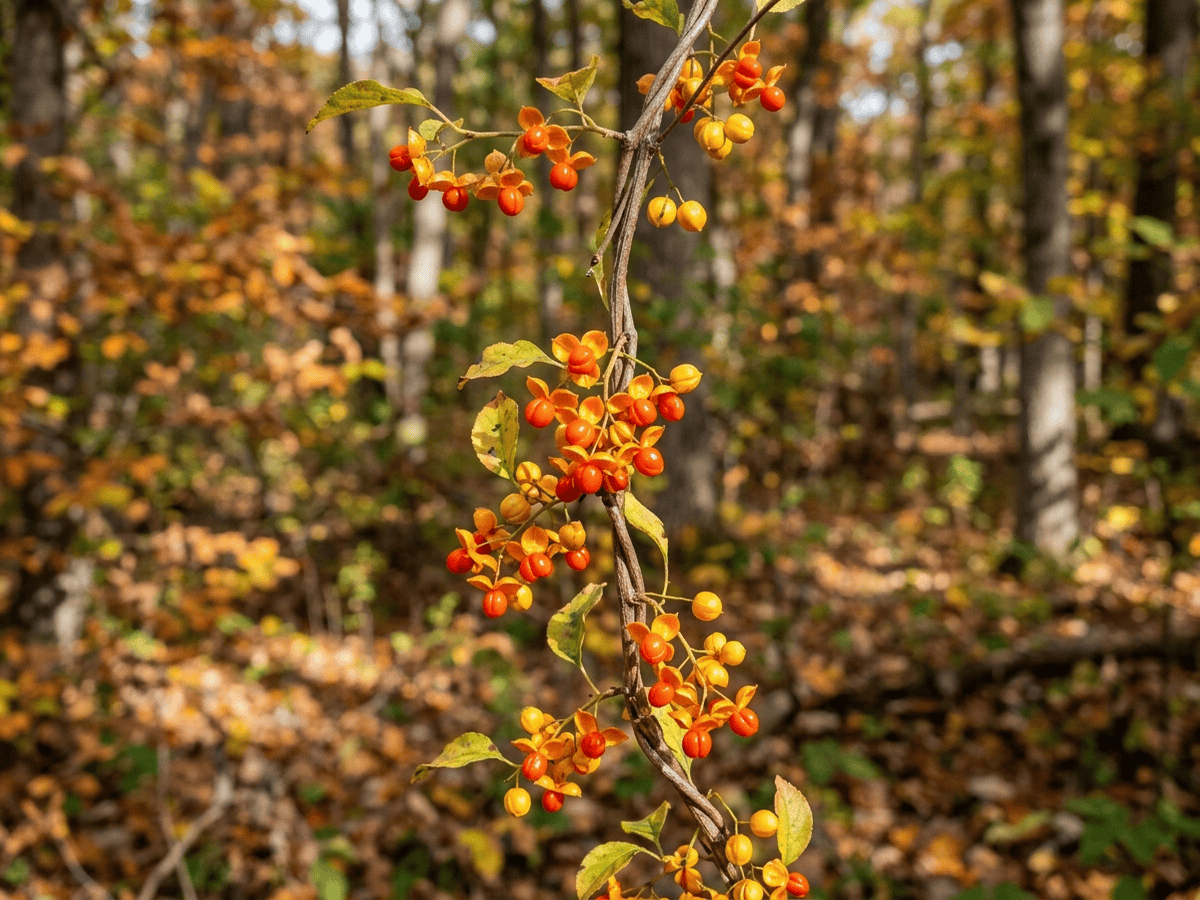
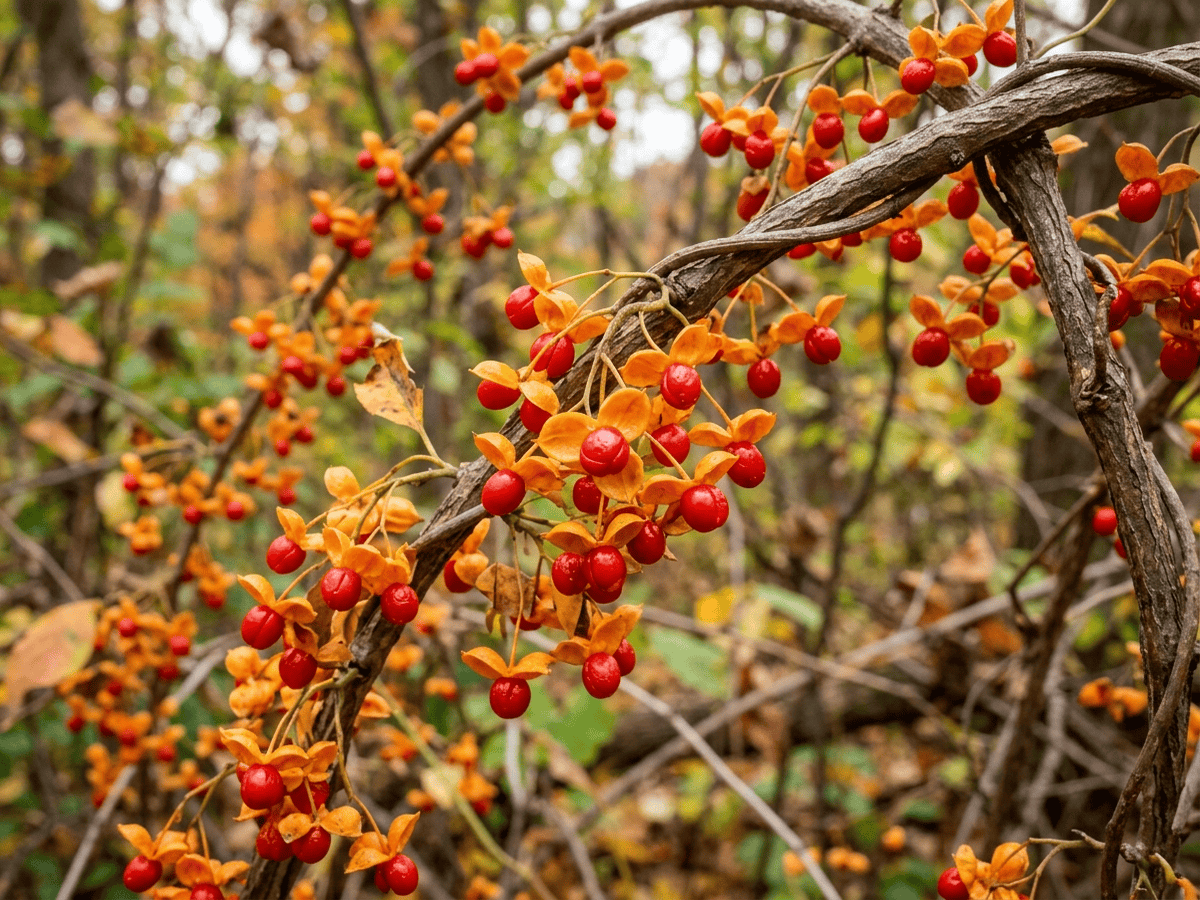

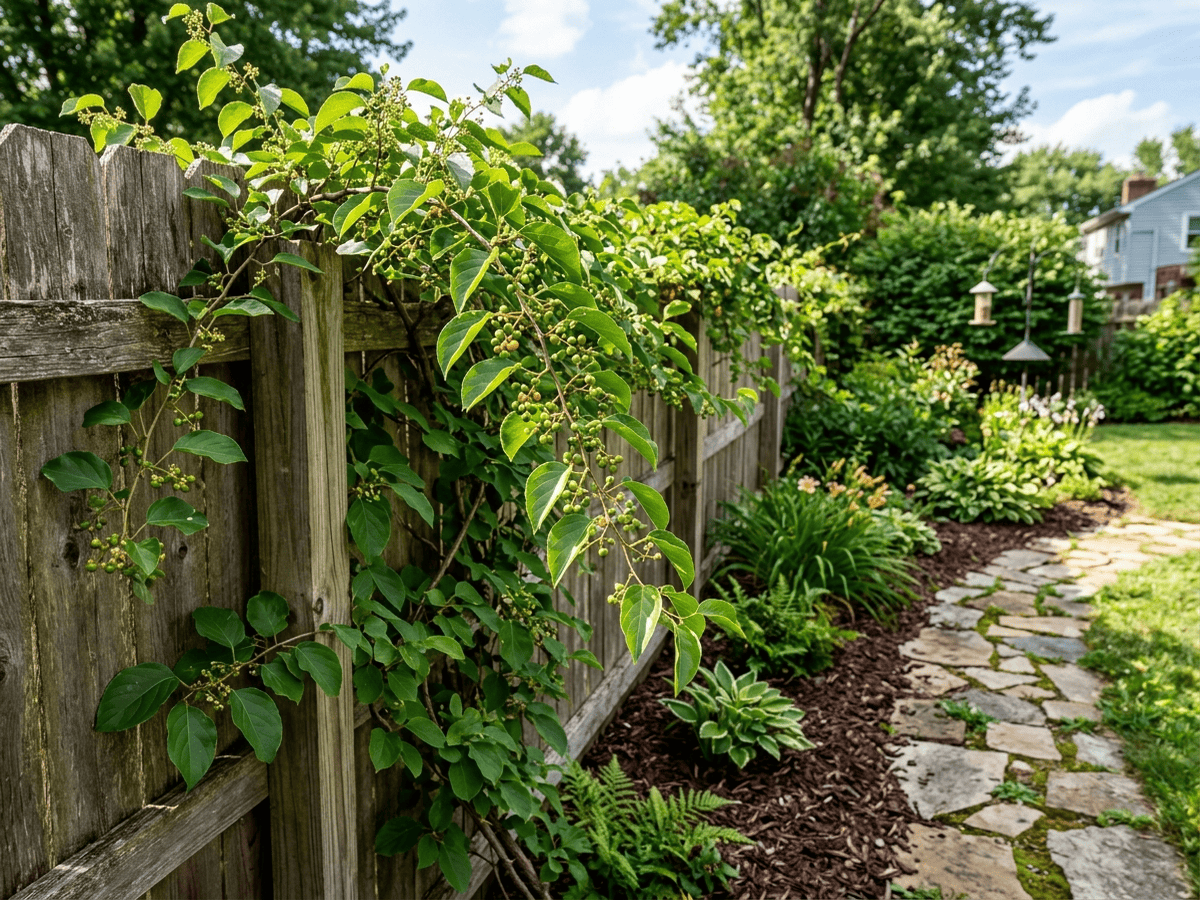
Asian Bittersweet
Celastrus orbiculatus
Easy · Beginner friendlyAbout Asian Bittersweet
Oriental Bittersweet is an East Asian twining deciduous vine introduced to US gardens in the 1860s and now one of the most destructive invasive plants in the eastern US. Growing 60 feet long and girdling even mature trees with twining woody stems, it produces showy yellow-and-red fruits popular for fall arrangements that birds spread widely. Listed as noxious in many states and rapidly hybridizing with the declining native American Bittersweet.
- Climbing
How to care for Asian Bittersweet
Watering
- Springevery 14 days
- Summerevery 10 days
- Fallevery 14 days
- Winterevery 30 days
Soil · Well-draining
- Top dressingPine bark mulch10%
- Main mixPotting soil + perlite 2:170%
- DrainageLECA / gravel20%
Never skip the drainage layer — standing water is the top cause of root rot.
FERTILIZER
This plant needs little to no feeding.
At a Glance
- NativeEast Asia
- Height30–60 ft (9.1–18.3 m)
- Spread15–25 ft (4.6–7.6 m)
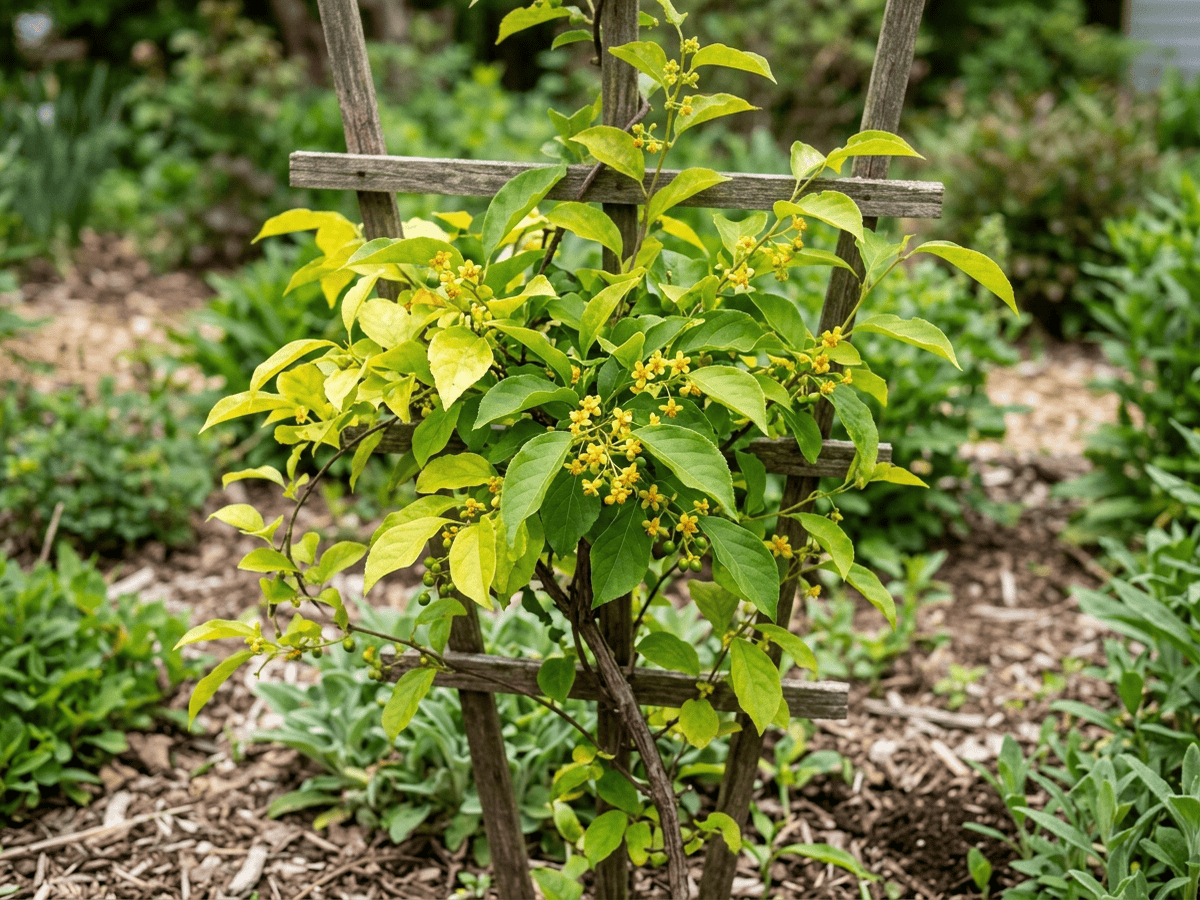
- Foliage colorGreen, Yellow
- Fruit colorRed, Yellow
- SoilWell-drained, Loamy, Neutral
- LocationsYard
Fragrance
LIGHT FRAGRANCE
The flowers have a light sweet scent.
Toxicity
Humans Moderate · Pets Moderate
celastrol and sesquiterpene alkaloids
Moderate
- Fruit
- Seed
- Ingestion
EXPOSURE Eating fruit and seeds.
EFFECT Vomiting and diarrhea.
NOTE Fruits and seeds cause gastrointestinal upset; not highly toxic.
Moderate
- Fruit
- Seed
- Ingestion
EXPOSURE Eating fruit and seeds.
EFFECT Vomiting and diarrhea.
NOTE Fruits and seeds cause gastrointestinal upset; not highly toxic.
Moderate
- Fruit
- Seed
- Ingestion
EXPOSURE Eating fruit and seeds.
EFFECT Vomiting and diarrhea.
NOTE Fruits and seeds cause gastrointestinal upset; not highly toxic.
Educational information, not medical or veterinary advice. If exposure is suspected, contact a doctor or veterinarian.
DISTRIBUTION

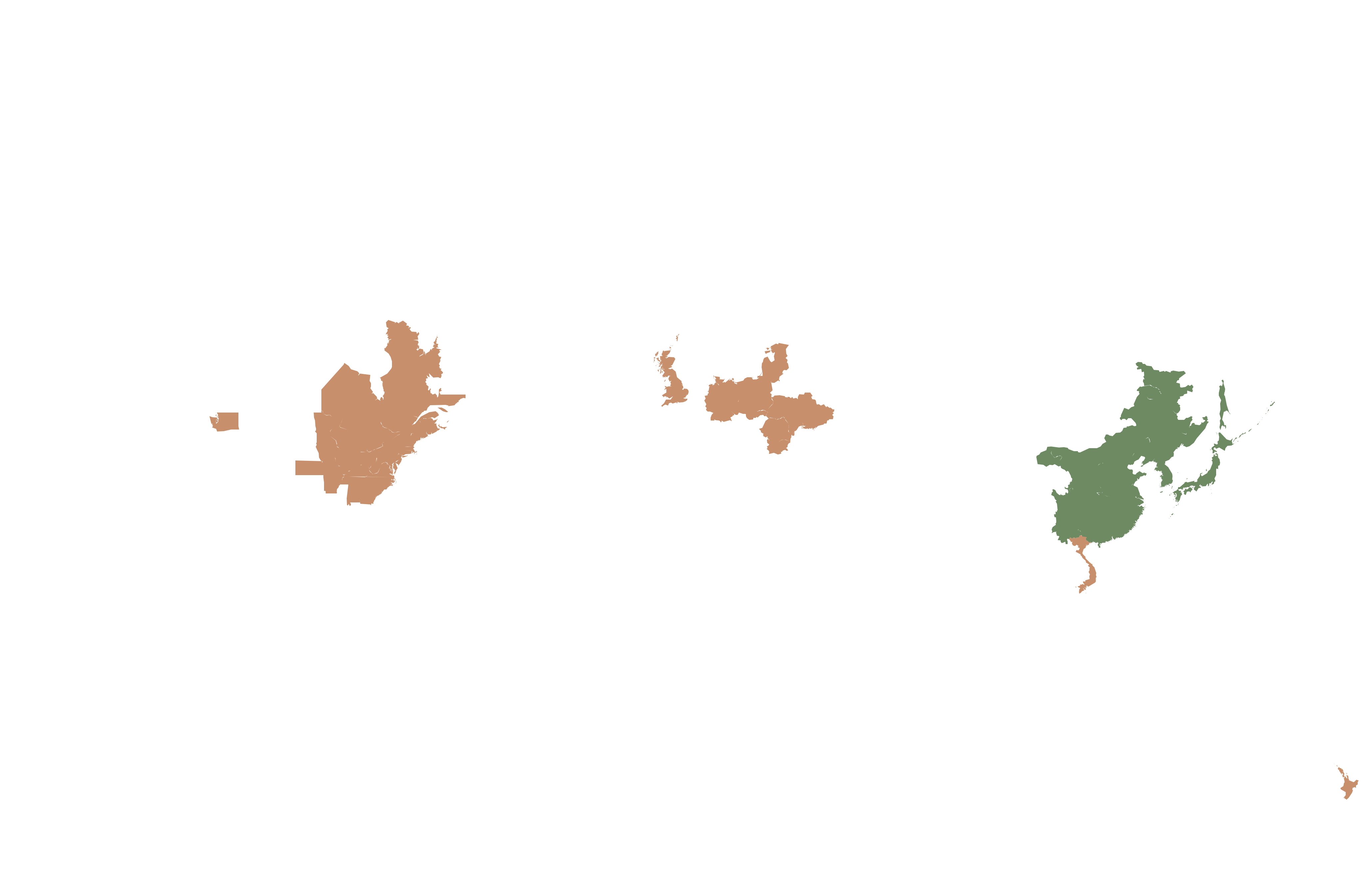
- Native
- Introduced
- East Asia
History
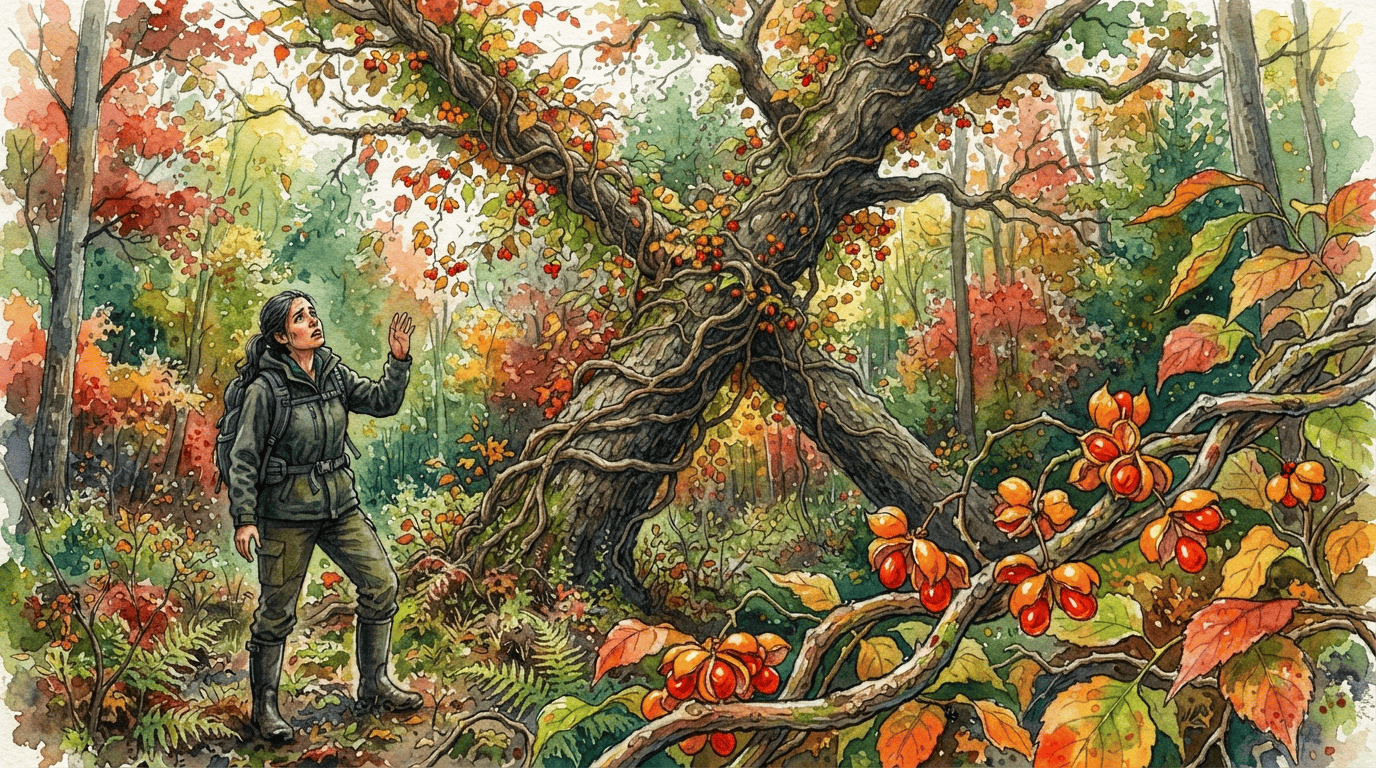
Celastrus orbiculatus, oriental or Asiatic bittersweet, is a dioecious woody vine native to China, Japan, and Korea. American horticulturists introduced the species in 1860 for its spectacular autumn display of orange capsules that split to reveal scarlet arils, and it remained a popular wreath and garden plant well into the twentieth century. Birds spread the seeds widely, and the vines climb deciduous trees to twenty meters, girdling trunks and bringing down mature canopy specimens under their weight.
Worse, the species readily hybridizes with the native Celastrus scandens, and genetic studies show many remaining eastern populations of the native are now introgressed or fully replaced by Asian genes. Most northeastern US states now list the species as invasive and prohibit sale.
Native to China, Korea, and Japan, Oriental Bittersweet was introduced to American gardens in the 1860s and escaped cultivation in the early 1900s. Now dominant across eastern US forests from New England to the Carolinas, it strangles and topples mature trees and hybridizes with the native American Bittersweet, threatening that species with genetic extinction.
Symbolism & meaning
What It Symbolizes
Asian Bittersweet is the Beautiful destroyer — autumn vines hung with red-and-orange berries so pretty they were once cut for wreaths, even as the plant became a Tree strangler twisting through native forests. Its rope-like stems can topple mature oaks. Each bright berry tells the same hard story: ornament and devastation woven into one stem.
- Beautiful destroyer — stunning fall fruits, catastrophic invader
- Tree strangler — girdles and topples mature trees
Where the Name Comes From
The name Asian Bittersweet describes its sweet scent or flavor. 'Celastrus' from ancient Greek 'kelastron' for an evergreen tree; 'orbiculatus' from Latin means round, for the rounded leaves.
Related plants
More Celastrus plants
Plants with similar care
 Chinese AbeliaAbelia chinensis
 Fragrant AbeliaAbelia mosanensis
 Large-Flowered AbeliaAbelia uniflora
 Glossy AbeliaAbelia x grandiflora
Frequently asked questions
How often should I water Asian Bittersweet?
In summer, water about every 10 days; in winter, about every 30 days. Adjust for heat, pot size and drainage.
How much light does Asian Bittersweet need?
Full sun: 6+ hrs direct. Watch the leaves — scorching or stretching means the light needs adjusting.
Is Asian Bittersweet toxic to cats or dogs?
Pets Moderate (Dogs Moderate · Cats Moderate) Educational information, not medical or veterinary advice. If exposure is suspected, contact a doctor or veterinarian.
Is Asian Bittersweet easy to grow?
Yes — it is considered an easy, beginner-friendly plant.
YardMate
Identify any plant in seconds
Snap a photo — YardMate names the plant, diagnoses problems, and reminds you when to water.
Download on the App Store