 YardMate

American Bittersweet
Celastrus scandens
Easy · Beginner friendlyAbout American Bittersweet
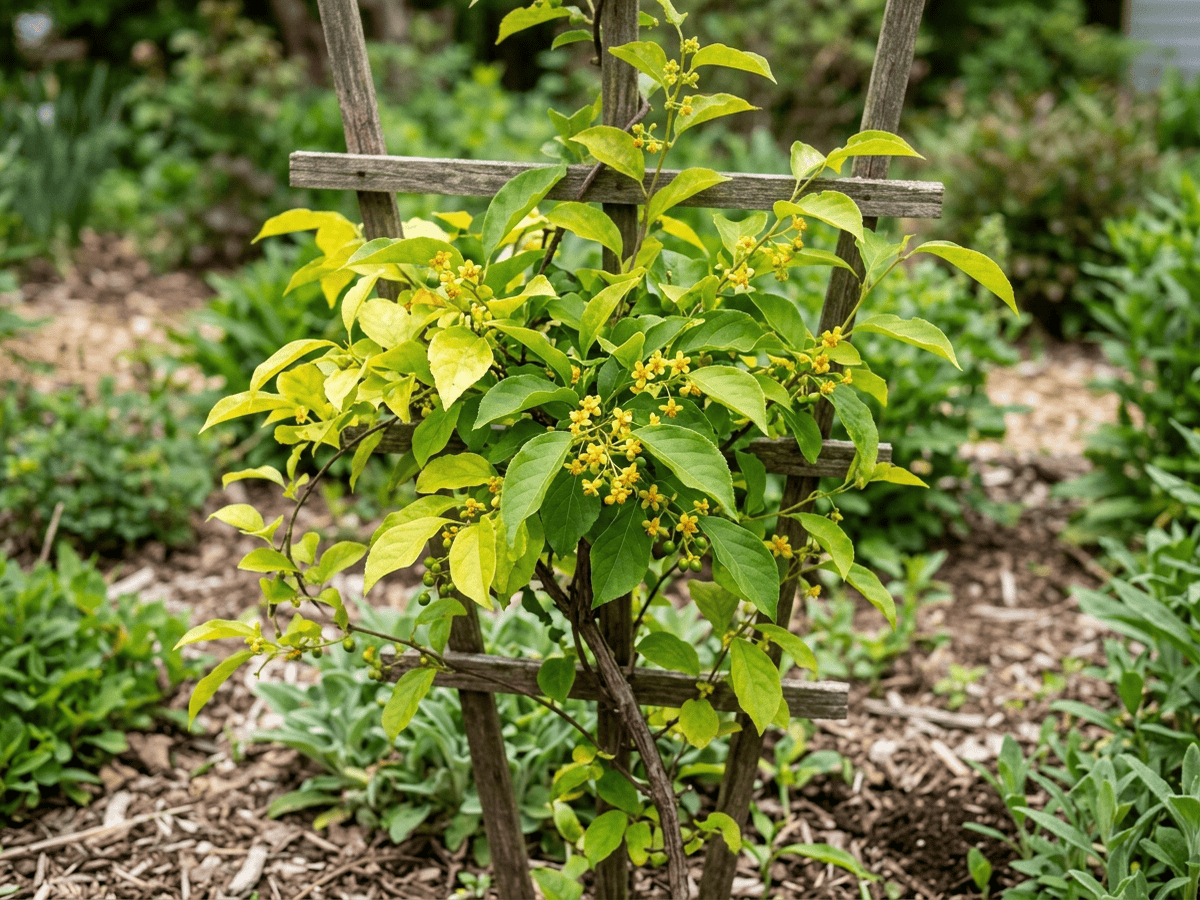
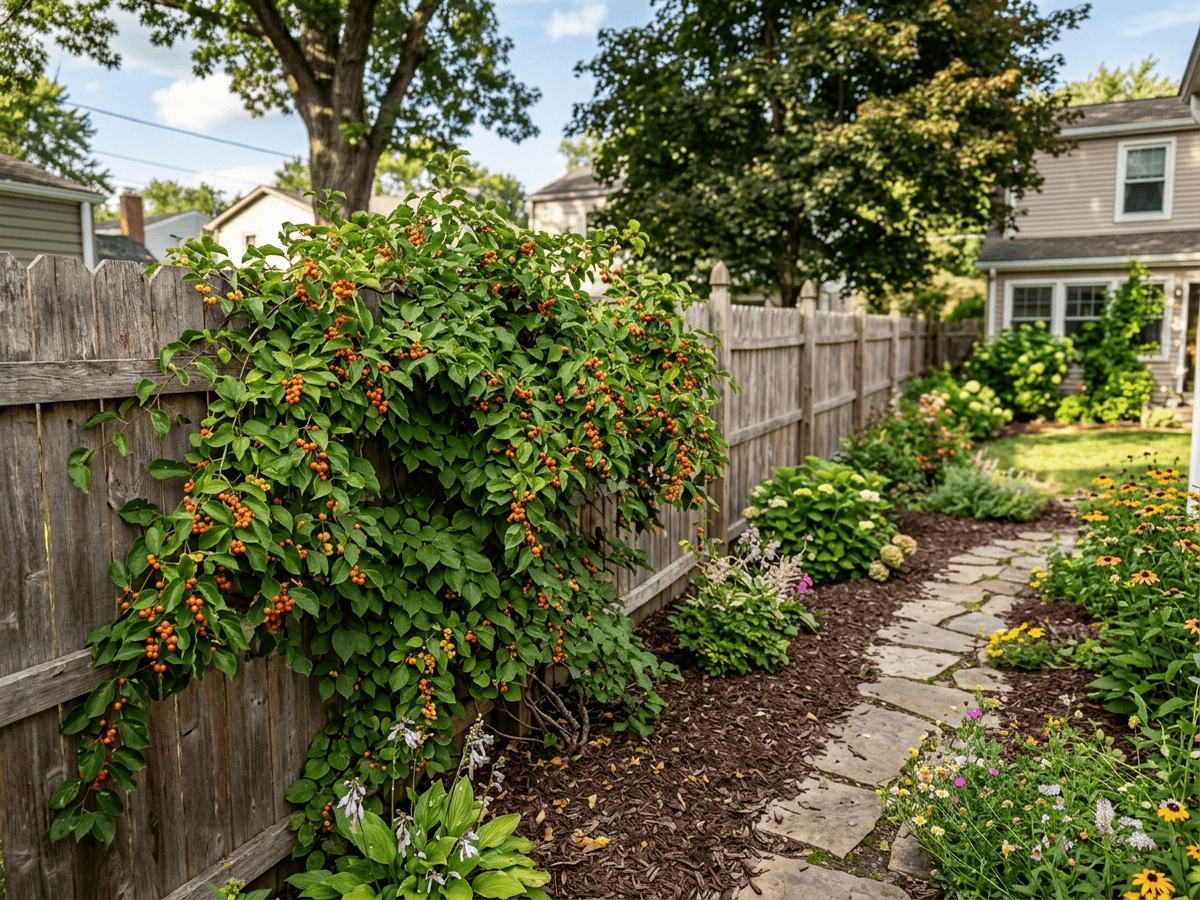
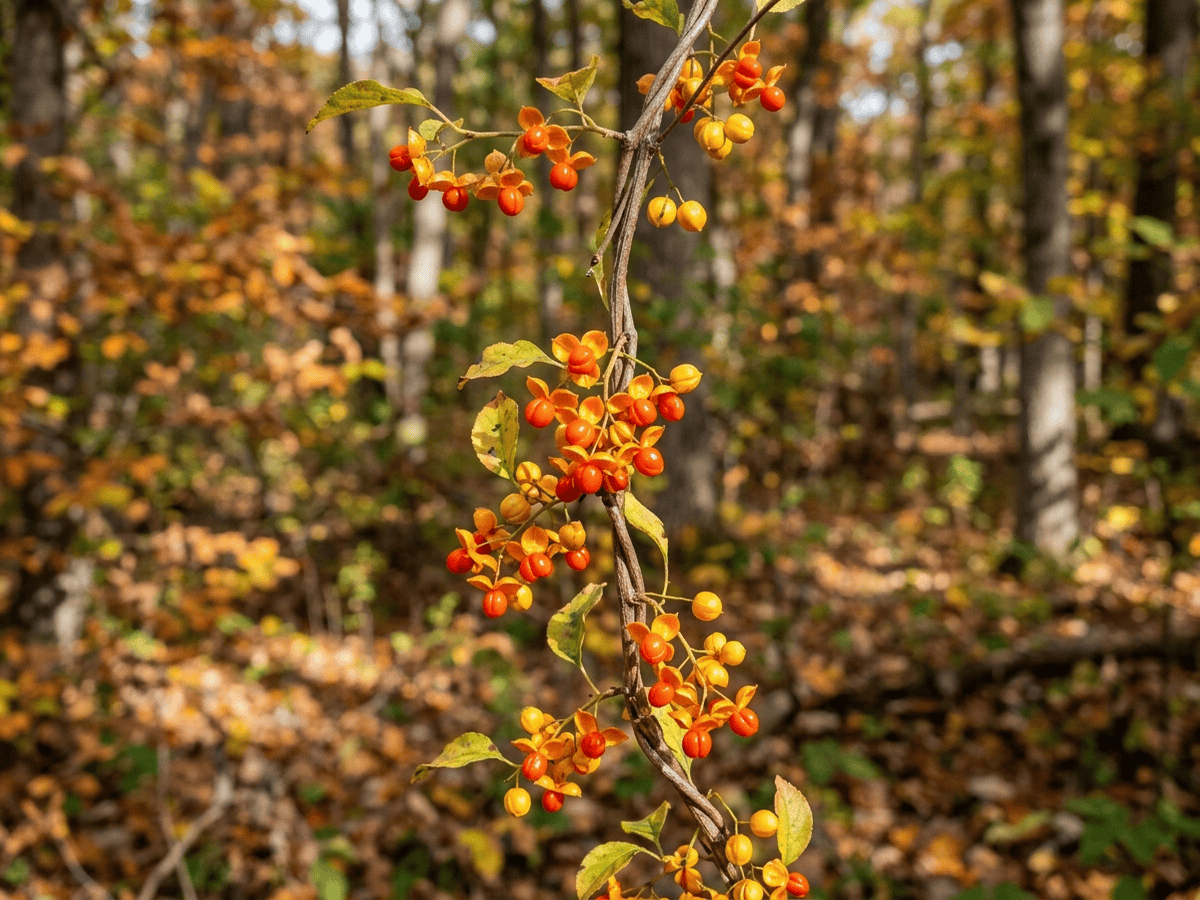
American Bittersweet is an eastern and central US native climbing vine reaching 15-25 feet, renowned for spectacular autumn fruit clusters where yellow-orange capsules split to reveal bright crimson berries inside. The fall fruiting branches are prized for dried arrangements and holiday wreaths. Requires both male and female plants for fruit. Declining in the wild due to hybridization with the invasive Asian bittersweet, so planting the true native is important.
- Climbing
- Native
- Wildlife-friendly
How to care for American Bittersweet
Watering
- Springevery 7 days
- Summerevery 5 days
- Fallevery 10 days
- Winterevery 21 days
Soil · Well-draining
- Top dressingPine bark mulch10%
- Main mixPotting soil + perlite 2:170%
- DrainageLECA / gravel20%
Never skip the drainage layer — standing water is the top cause of root rot.
FERTILIZER
- Springevery 30 days
At a Glance
- NativeNorth America
- Height15–25 ft (4.6–7.6 m)
- Spread6–10 ft (1.8–3 m)
- Flower colorGreen, Yellow, Cream
- Foliage colorGreen, Yellow
- Fruit colorRed, Orange
- SoilLoamy, Well-drained
- LocationsYard
Bloom time
BLOOM CYCLE
Peak bloom
May–Jun
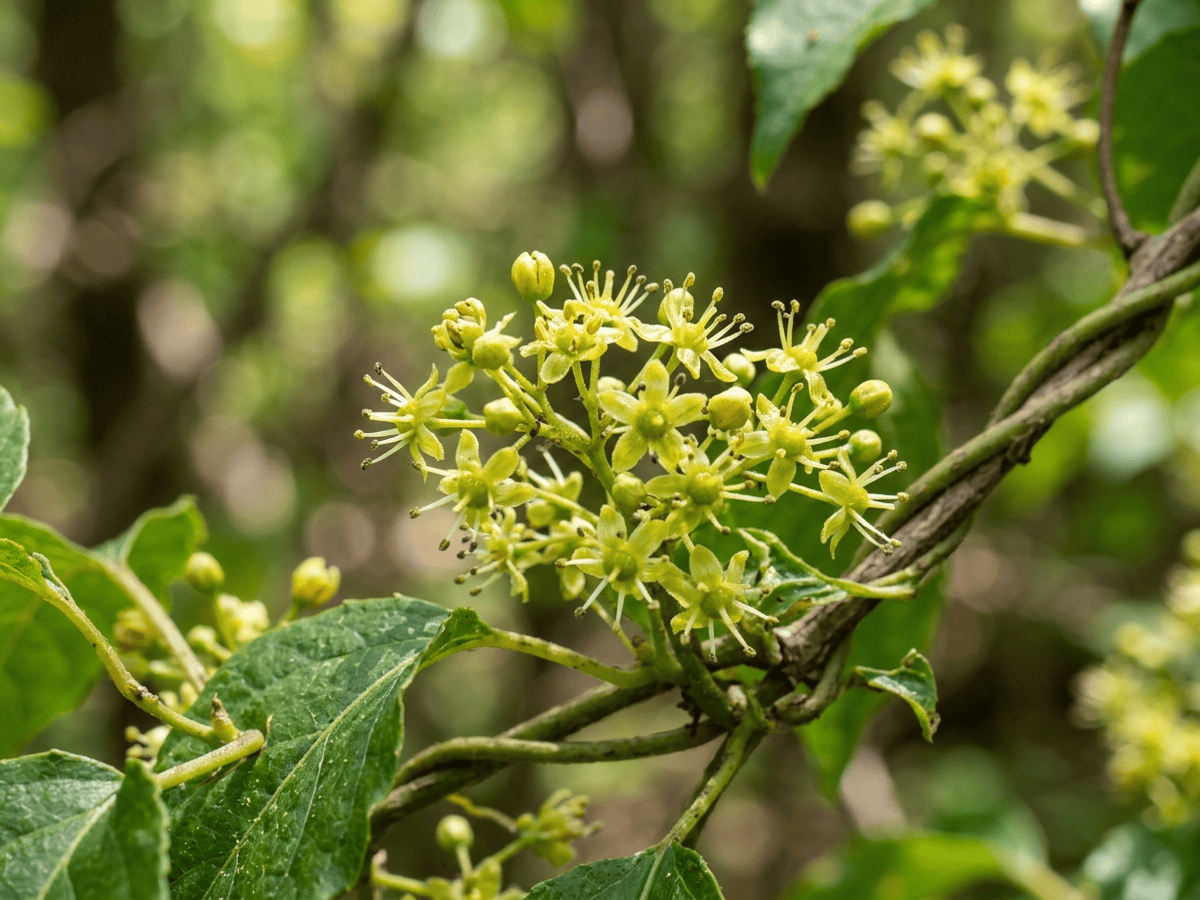
Small inconspicuous green flowers May to June
Toxicity
Humans Moderate · Pets Moderate
celastrol and sesquiterpene alkaloids
Moderate
- Fruit
- Leaf
- Bark
- Ingestion
EXPOSURE Eating fruit, leaves, and bark.
EFFECT Vomiting, diarrhea, weakness.
NOTE Bright berries tempting to children; all parts contain toxic alkaloids. Do not consume.
Moderate
- Fruit
- Leaf
- Ingestion
EXPOSURE Eating fruit and leaves.
EFFECT Vomiting, diarrhea, possible weakness.
NOTE Bright berries tempting to children; all parts contain toxic alkaloids. Do not consume.
Moderate
- Fruit
- Leaf
- Ingestion
EXPOSURE Eating fruit and leaves.
EFFECT Vomiting, diarrhea, possible weakness.
NOTE Bright berries tempting to children; all parts contain toxic alkaloids. Do not consume.
Educational information, not medical or veterinary advice. If exposure is suspected, contact a doctor or veterinarian.
DISTRIBUTION


- Native
- Introduced
- North America
History

Celastrus scandens is native to eastern and central North America from Quebec and New England west to Montana and south to New Mexico and Georgia, typically in woodland edges, thickets, and open forests. Linnaeus described the species in Species Plantarum (1753), the epithet scandens meaning climbing. In autumn the vine produces its signature display: orange papery capsules split open to expose glowing scarlet-to-vermillion arils surrounding the seeds, creating the iconic bittersweet look used in dried fall arrangements, wreaths, and Thanksgiving decor across North America.
Indigenous peoples including the Ojibwe and Menominee used root-bark preparations externally for skin conditions. Tragically, since the introduction of the Asian Celastrus orbiculatus in the 1860s as an ornamental, the native species has been devastated—C. orbiculatus is both more aggressive (now a serious invasive across the eastern US) and hybridizes with C. scandens, leading to genetic swamping. Distinguishing the two: C. scandens flowers and fruits only in terminal clusters; C. orbiculatus flowers from leaf axils along the stem.
A classic plant of early American autumn folklore. Native Americans used the bark medicinally. Traditional New England harvest wreaths featured bittersweet branches. Today conservation efforts focus on preserving the native species as it hybridizes with invasive C. orbiculatus.
Symbolism & meaning
What It Symbolizes
American Bittersweet is the truth-teller of the autumn woods, its capsules splitting open to reveal the scarlet seeds hidden inside all summer. As the harvest moves indoors, its twining stems become the signature wreath of American October, woven across barn doors and front porches. In its parting gesture, what was concealed is finally and gloriously displayed.
- Truth — what is hidden is revealed when capsules open
- Harvest — signature plant of American autumn
Where the Name Comes From
The name American Bittersweet describes its sweet scent or flavor. 'Celastrus' from Greek for an evergreen tree; 'scandens' means climbing.
Uses & Fun Facts
- Native vine trained on arbors and sturdy fence supports
- Orange capsules split to crimson berries for fall display
- Fruiting branches harvested for dried wreaths and arrangements
- Berries feed overwintering songbirds in eastern woodlands
Related plants
More Celastrus plants
Plants with similar care
 Chinese AbeliaAbelia chinensis
 Fragrant AbeliaAbelia mosanensis
 Large-Flowered AbeliaAbelia uniflora
 Glossy AbeliaAbelia x grandiflora
Frequently asked questions
How often should I water American Bittersweet?
In summer, water about every 5 days; in winter, about every 21 days. Adjust for heat, pot size and drainage.
How much light does American Bittersweet need?
Full sun: 6+ hrs direct. Watch the leaves — scorching or stretching means the light needs adjusting.
Is American Bittersweet toxic to cats or dogs?
Pets Moderate (Dogs Moderate · Cats Moderate) Educational information, not medical or veterinary advice. If exposure is suspected, contact a doctor or veterinarian.
Is American Bittersweet easy to grow?
Yes — it is considered an easy, beginner-friendly plant.
When does American Bittersweet bloom?
It typically blooms May–Jun in the Northern Hemisphere.
YardMate
Identify any plant in seconds
Snap a photo — YardMate names the plant, diagnoses problems, and reminds you when to water.
Download on the App Store