 YardMate
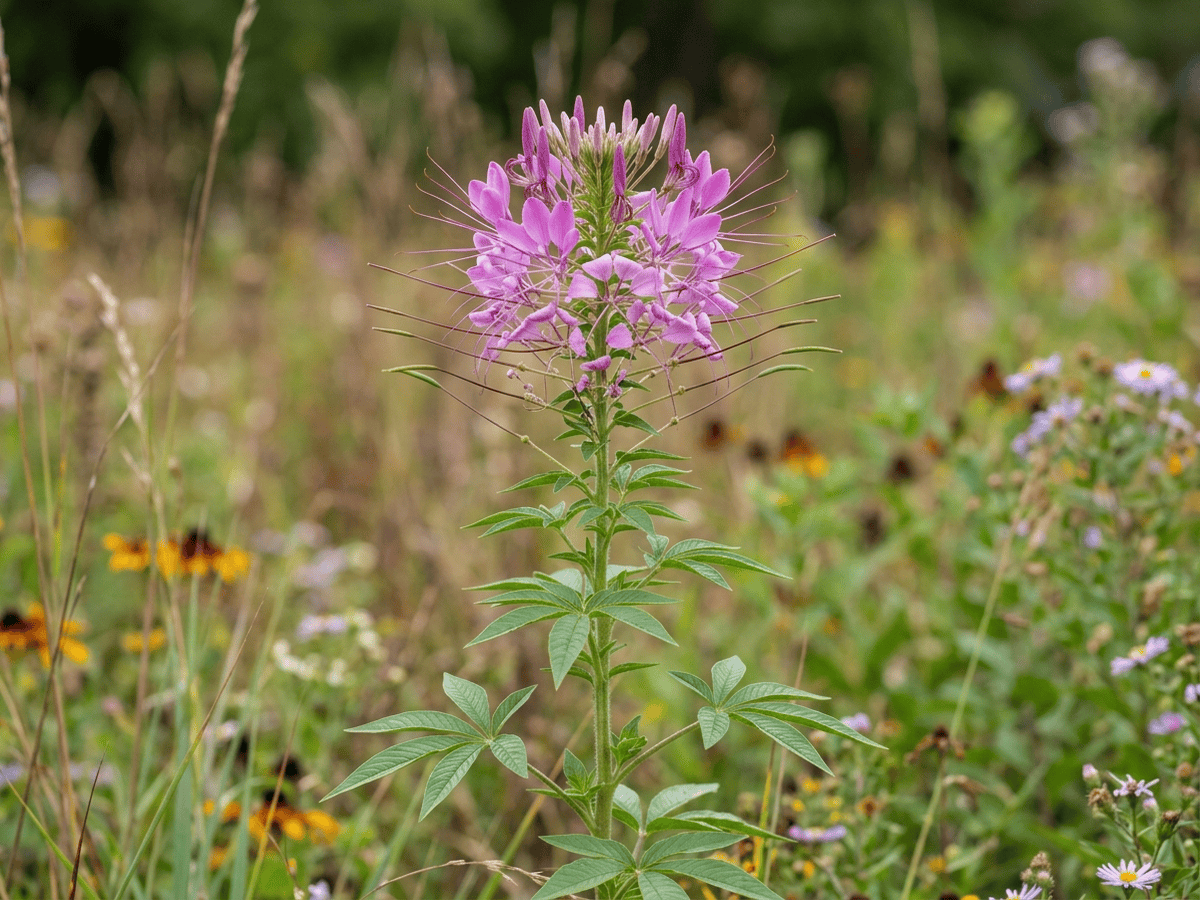
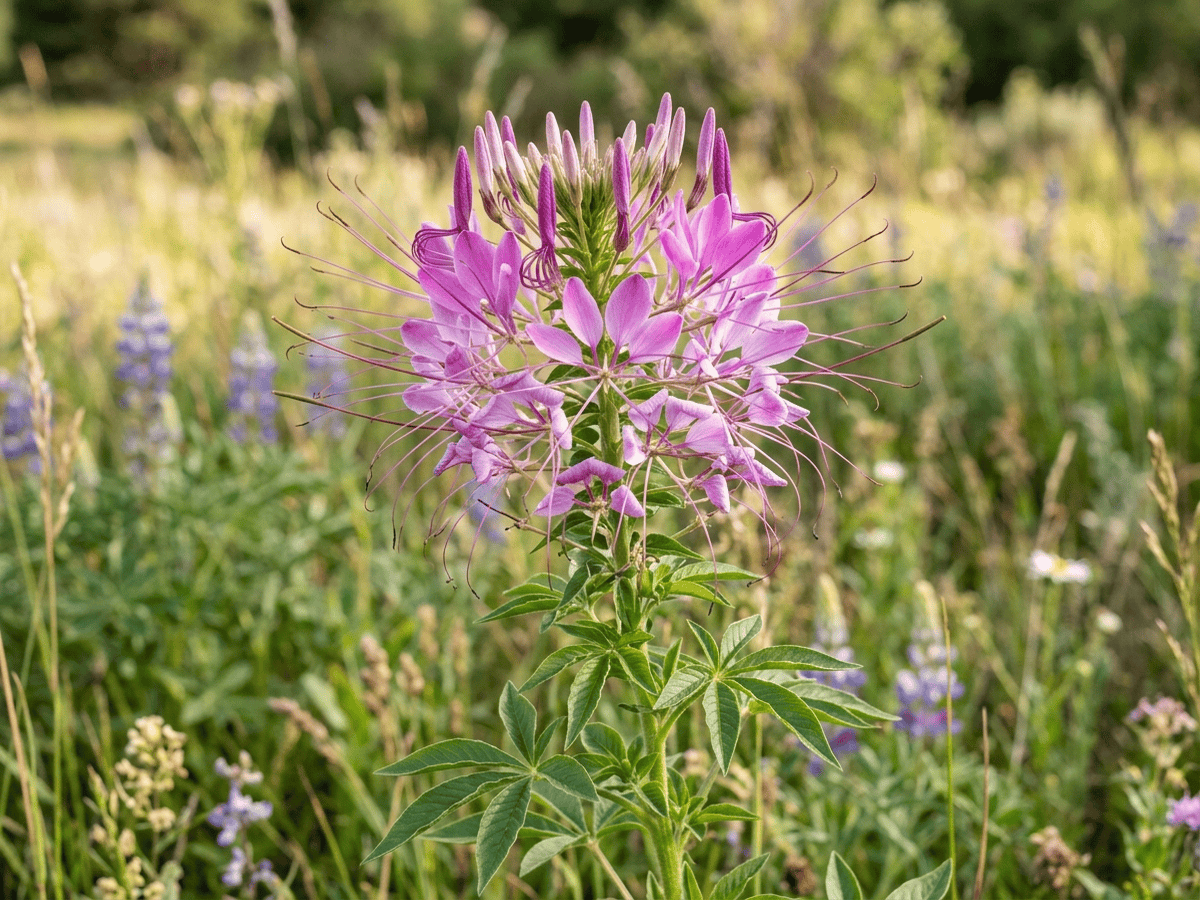


Rocky Mountain Beeplant
Cleome serrulata
Easy · Beginner friendlyAbout Rocky Mountain Beeplant
Rocky Mountain Bee Plant is a native annual wildflower of the North American plains and Rocky Mountain foothills, from Saskatchewan south through Texas and New Mexico. Growing 2 to 4 feet tall with three-part leaves, it produces pink to rose-purple spider-like flower clusters from late spring through fall. Culturally important to Pueblo peoples who harvest leaves for guaco, a traditional pottery paint pigment, and use flowers as a bee forage crop.
- Drought-tolerant
- Native
- Pollinator-friendly
How to care for Rocky Mountain Beeplant
Watering
- Springevery 7 days
- Summerevery 5 days
- Fallevery 10 days
- Winterpause watering
Soil · Well-draining
- Top dressingPine bark mulch10%
- Main mixPotting soil + perlite 2:170%
- DrainageLECA / gravel20%
Never skip the drainage layer — standing water is the top cause of root rot.
FERTILIZER
This plant needs little to no feeding.
At a Glance
- NativeNorth America
- Height2–5 ft (0.6–1.5 m)
- Spread1–2 ft (0.3–0.6 m)
- Flower colorPink, Purple
- Foliage colorGreen
- SoilSandy, Well-drained
- LocationsYard
Bloom time
BLOOM CYCLE
Peak bloom
Jun–Sep
Pink spider flowers June to September on plains natives
Fragrance
MODERATE FRAGRANCE
Foliage emits a pungent skunky odor.
Toxicity
No toxicity has been reported for this plant. Still, it is wise to keep pets from chewing on any houseplant.
Educational information, not medical or veterinary advice. If exposure is suspected, contact a doctor or veterinarian.
DISTRIBUTION


- Native
- Introduced
- North America
History
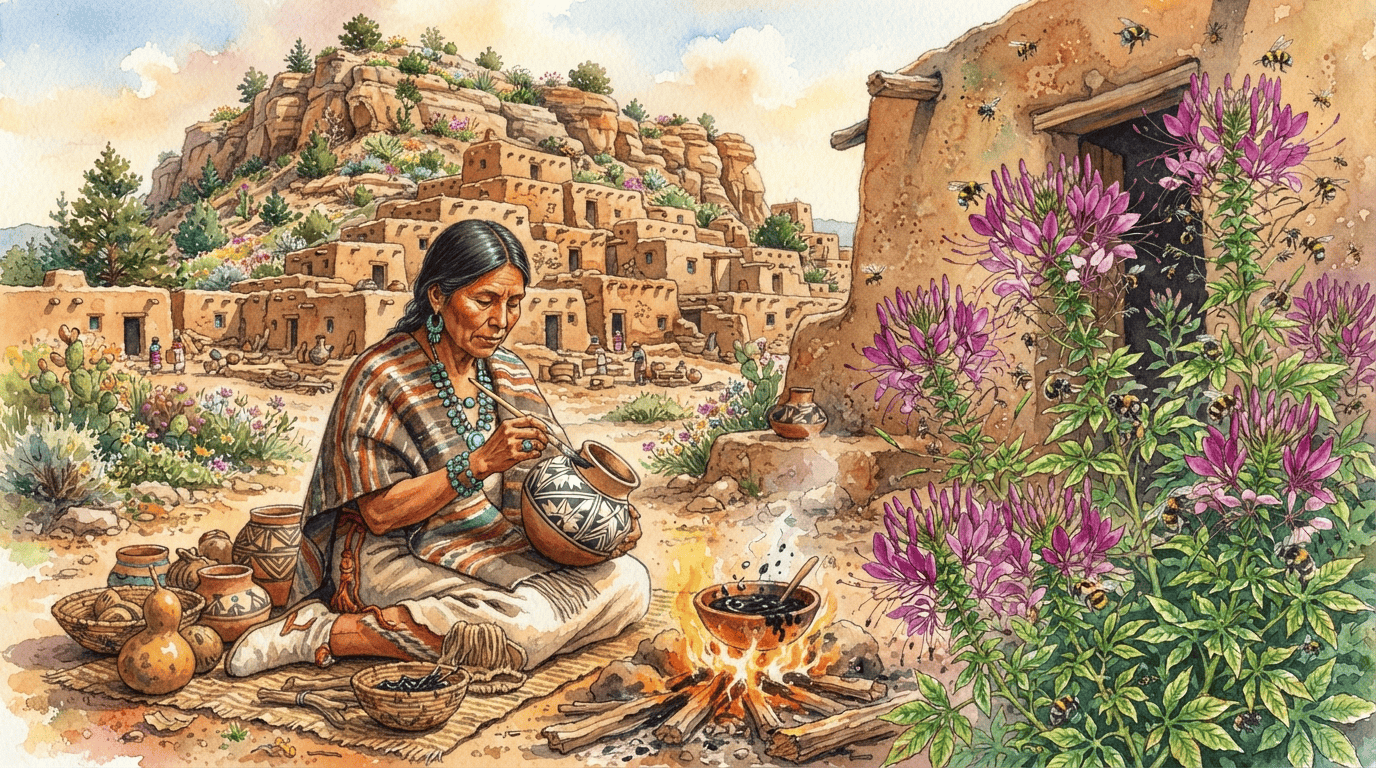
Cleome serrulata, the Rocky Mountain beeplant or stinking clover, is an erect annual native to the western and central United States and Canada, from Minnesota and Saskatchewan through the Great Plains and Rockies to Arizona and New Mexico. American botanist Frederick Traugott Pursh described it in 1813. Indigenous peoples including the Navajo, Hopi, Pueblo, and Lakota used young shoots as a cooked potherb, seeds ground for flour, and boiled-down plant juice as a black paint slip for pottery; the iconic black-on-white designs of Acoma, Zuni, and San Ildefonso pottery trace back in part to this pigment source.
The plant produces bright pink to purple spider-like flowers on tall stems from summer through frost and is a superior nectar source for native bees, from which the common name derives. A signature plant of North American Great Plains and Southwest grasslands.
Hopi, Zuni, and other Puebloan peoples have harvested leaves for over a thousand years to make guaco, a boiled-down black paint used to decorate pottery. Lewis and Clark documented it in 1804 as 'bee plant' for its extraordinary pollinator attraction.
Symbolism & meaning
What It Symbolizes
Rocky Mountain Beeplant is an ancestral bond between flower and people, its leaves cooked into the black paint that adorns thousand-year-old Puebloan pottery. Across high-desert summers it doubles as a champion native pollinator, feeding bees through brutal drought. In its lavender clouds, ancient art and prairie ecology share the same purple stem.
- Ancestral bond — thousand-year Puebloan pottery tradition
- Prairie bee — champion native pollinator plant
Where the Name Comes From
The name Rocky Mountain Beeplant points to the Rocky Mountains. 'serrulata' from Latin 'serrula' meaning small saw, for the finely toothed leaf margins.
Uses & Fun Facts
- Spider-like blooms swarmed by bees, butterflies, and hummingbirds
- Tall rose-purple flower clusters anchor prairie and pollinator strips
- Native annual self-sows across plains and Southwest meadows
Related plants
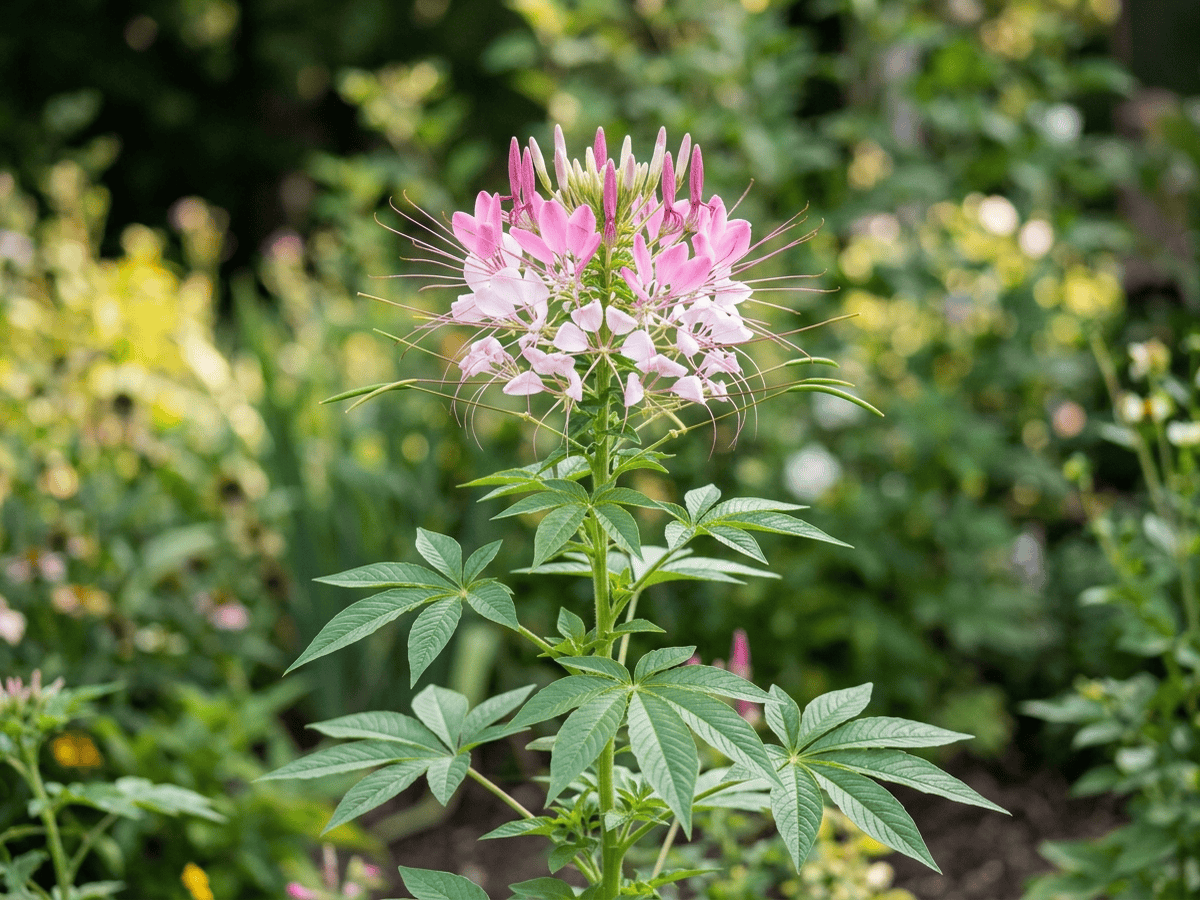
More Cleome plants
Plants with similar care
 Chinese AbeliaAbelia chinensis
 Fragrant AbeliaAbelia mosanensis
 Large-Flowered AbeliaAbelia uniflora
 Glossy AbeliaAbelia x grandiflora
Frequently asked questions
How often should I water Rocky Mountain Beeplant?
Water about every 7 days during the growing season, and always let excess water drain away.
How much light does Rocky Mountain Beeplant need?
Full sun: 6+ hrs direct. Watch the leaves — scorching or stretching means the light needs adjusting.
Is Rocky Mountain Beeplant toxic to cats or dogs?
No toxicity has been reported for this plant. Still, it is wise to keep pets from chewing on any houseplant. Educational information, not medical or veterinary advice. If exposure is suspected, contact a doctor or veterinarian.
Is Rocky Mountain Beeplant easy to grow?
Yes — it is considered an easy, beginner-friendly plant.
When does Rocky Mountain Beeplant bloom?
It typically blooms Jun–Sep in the Northern Hemisphere.
YardMate
Identify any plant in seconds
Snap a photo — YardMate names the plant, diagnoses problems, and reminds you when to water.
Download on the App Store