 YardMate
Forking Larkspur
Consolida regalis
Easy · Beginner friendlyAbout Forking Larkspur
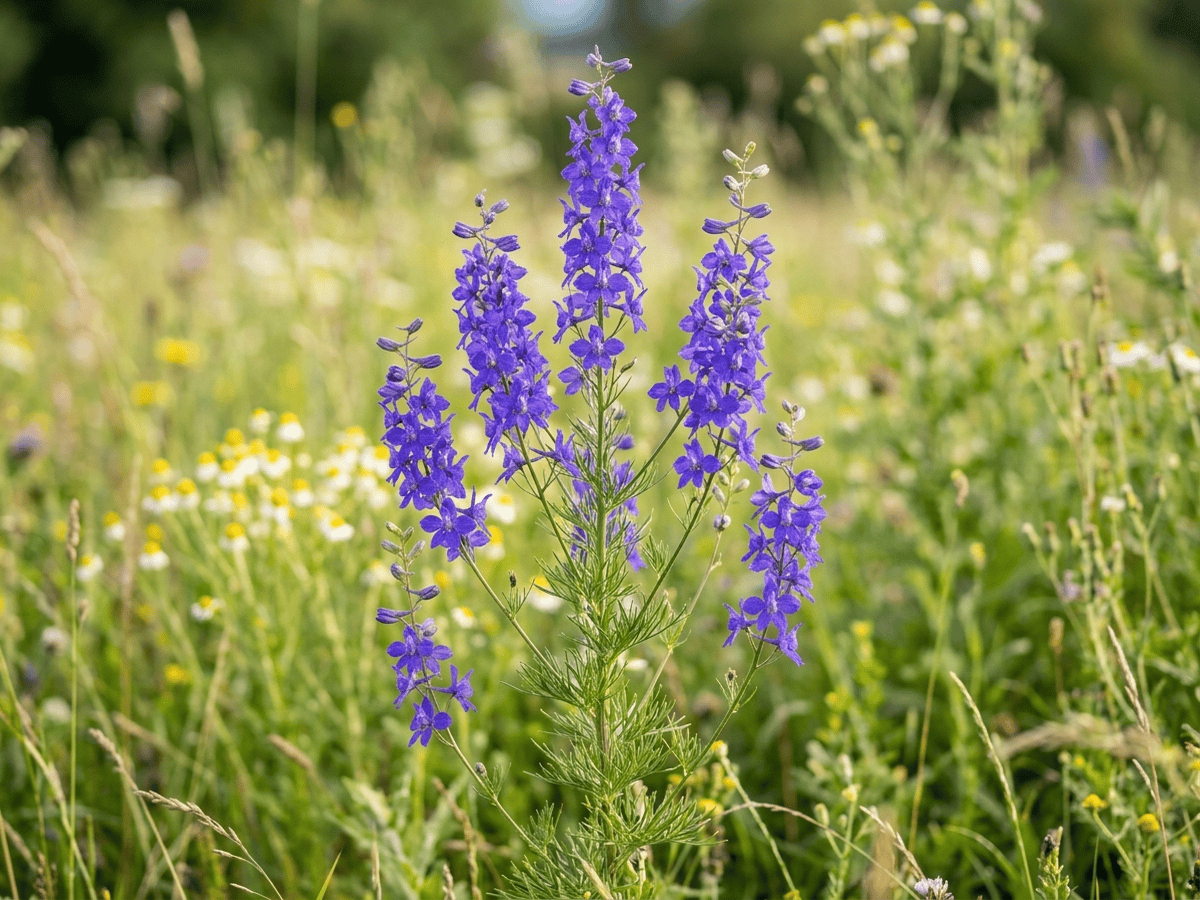
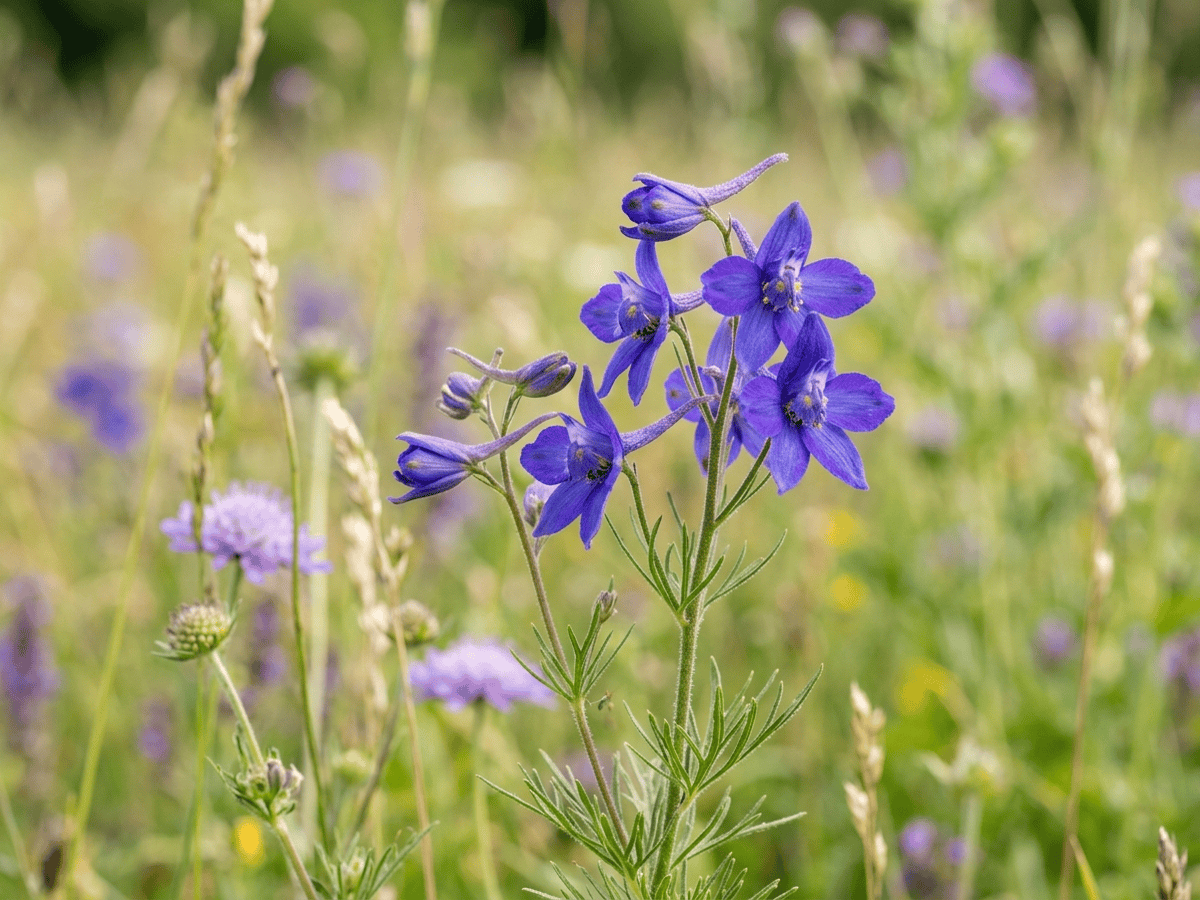
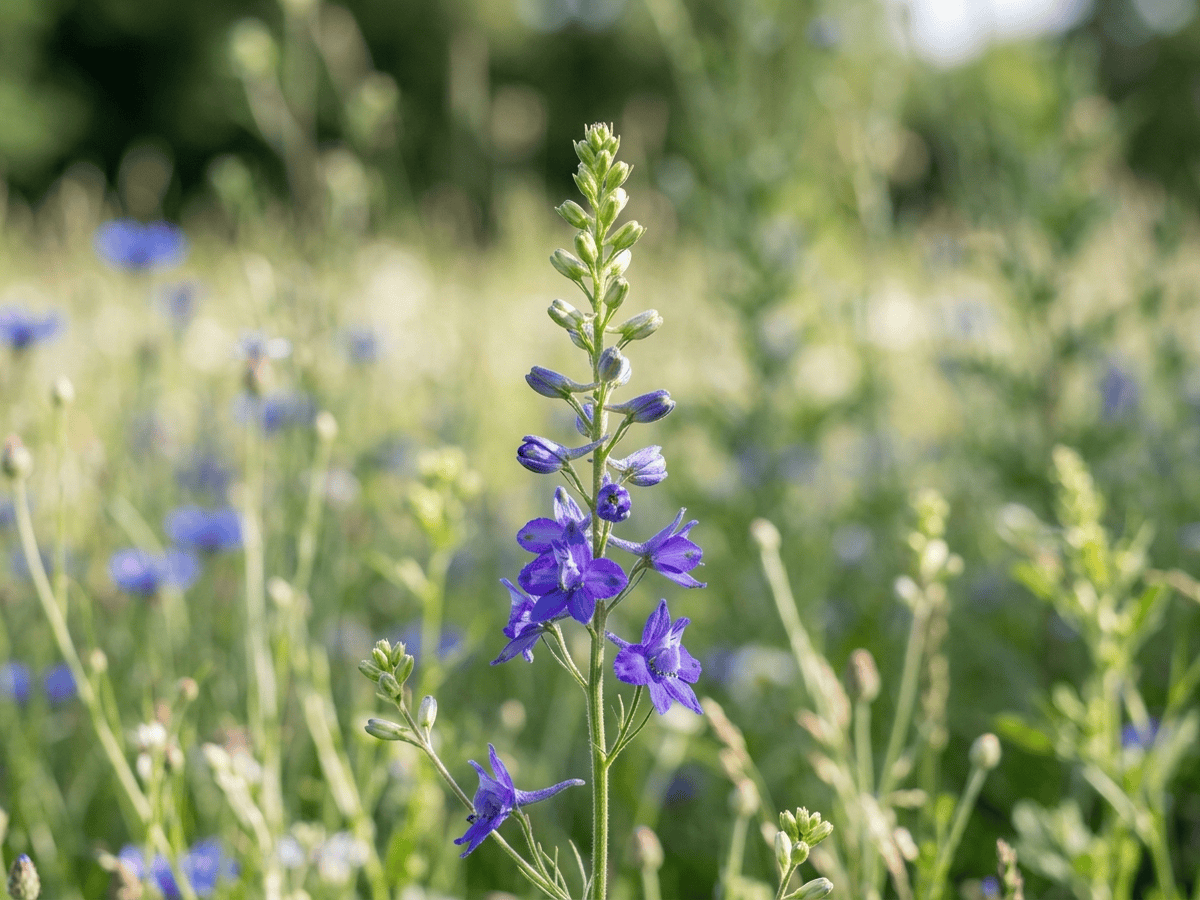
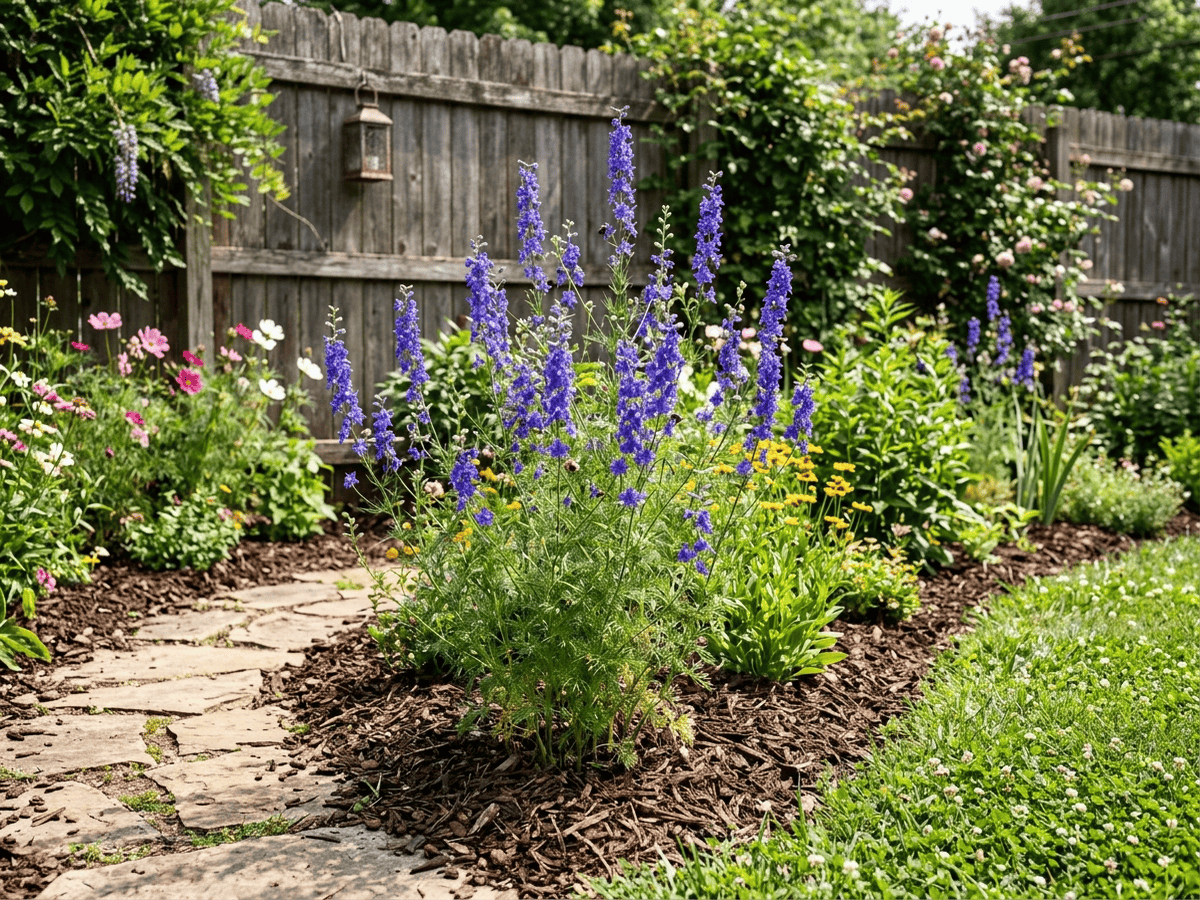
Forking Larkspur is a European annual related to delphinium, producing slender 18 to 36 inch spikes of violet-blue, purple, pink, or white spurred flowers in early summer. Self-sows reliably, making it a classic cottage-garden annual that returns year after year. Taller and earlier blooming than Consolida ajacis.
- Cut-flower
- Pollinator-friendly
How to care for Forking Larkspur
Watering
- Springevery 5 days
- Summerevery 4 days
- Fallevery 7 days
- Winterevery 10 days
Soil · Well-draining
- Top dressingPine bark mulch10%
- Main mixPotting soil + perlite 2:170%
- DrainageLECA / gravel20%
Never skip the drainage layer — standing water is the top cause of root rot.
FERTILIZER
Balanced Feed 14-14-14
An even feed covers all three needs at once, keeping leaves, roots and blooms moving together with nothing pushed out of balance.
- Nitrogen · Leaves
- Phosphorus · Roots + Blooms
- Potassium · Strength
- Springevery 30 days
- Fallevery 30 days
At a Glance
- NativeEurope, Africa, Western Asia
- Height1–3 ft (0.3–0.9 m)
- Spread0.5–1 ft (0.2–0.3 m)
- Flower colorBlue, Purple, Pink, White
- Foliage colorGreen
- SoilLoamy, Well-drained
- LocationsYard
Bloom time
BLOOM CYCLE
Peak bloom
May–Jul
Delphinium-like spikes May to July
Toxicity
Humans Toxic · Pets Toxic
diterpenoid alkaloids (delphinine, methyllycaconitine)
Toxic
- Leaf
- Seed
- Stem
- Ingestion
EXPOSURE Eating leaves, seeds, and stems.
EFFECT Diterpenoid alkaloids cause cardiac arrhythmia, paralysis, potentially fatal.
NOTE All Delphinium and Consolida species are highly toxic; common cause of livestock poisoning.
Toxic
- Leaf
- Seed
- Stem
- Ingestion
EXPOSURE Eating leaves, seeds, and stems.
EFFECT Delphinium-type alkaloids cause tremors, cardiac arrhythmia, possible death.
NOTE All Delphinium and Consolida species are highly toxic; common cause of livestock poisoning.
Toxic
- Leaf
- Seed
- Stem
- Ingestion
EXPOSURE Eating leaves, seeds, and stems.
EFFECT Delphinium-type alkaloids cause tremors, cardiac arrhythmia, possible death.
NOTE All Delphinium and Consolida species are highly toxic; common cause of livestock poisoning.
Educational information, not medical or veterinary advice. If exposure is suspected, contact a doctor or veterinarian.
DISTRIBUTION

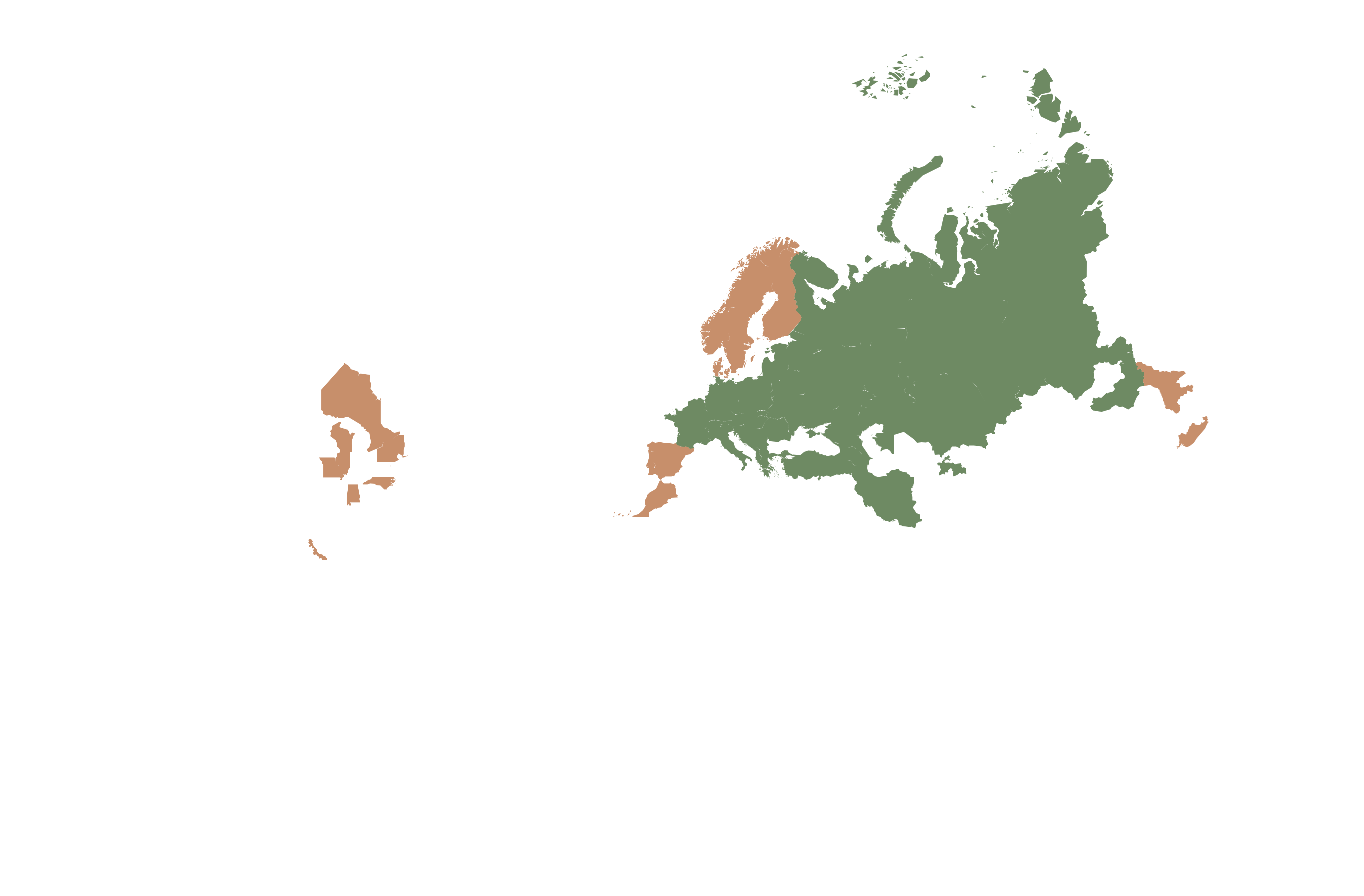
- Native
- Introduced
- Europe
- Africa
- Western Asia
History

Consolida regalis, commonly called forking larkspur or royal knight's-spur, is an annual herb native to Europe, North Africa, and western Asia. Swedish botanist Samuel Gray described the current name in 1821, reclassifying the species from the earlier Delphinium consolida of Linnaeus. For centuries the plant was a common cornfield weed across Europe, its spurred deep blue to violet flowers mingling with corn poppies, cornflowers, and corn marigolds.
Intensive herbicide use since the mid-20th century has made Consolida regalis rare in many European countries, spurring agri-environment seed mixes aimed at restoring cornfield flora. Garden cultivars have been selected for larger flowers and wider color range, though all Consolida species are poisonous to livestock and humans due to diterpenoid alkaloids.
Native to European and Western Asian grainfields where it was historically a common grain-field weed, introduced to American gardens by colonists in the 1700s.
Symbolism & meaning
What It Symbolizes
Forking Larkspur's flower meaning is swiftness, for the plant is quick to bloom from seed and quick to self-sow itself across a meadow garden. Its longer story is cottage heritage, the classic European grain-field flower that once threaded blue through wheat and rye before modern herbicides cleared the cornfields. In the language of old fields, consolida suggests a vanished agricultural world where weeds and crops once grew together in something like accidental beauty.
- Swiftness — quick to bloom and self-sow
- Cottage heritage — classic European grain-field flower
Where the Name Comes From
'Consolida' comes from Latin 'consolidare' meaning to make whole, an old herbal reference; 'regalis' means royal, for the spike flower form.
Uses & Fun Facts
- Slender blue larkspur spikes cut fresh or dried
- Spurred flowers attract bumblebees and long-tongued moths
Related plants
More Consolida plants

Plants with similar care
 Chinese AbeliaAbelia chinensis
 Fragrant AbeliaAbelia mosanensis
 Large-Flowered AbeliaAbelia uniflora
 Glossy AbeliaAbelia x grandiflora
Frequently asked questions
How often should I water Forking Larkspur?
In summer, water about every 4 days; in winter, about every 10 days. Adjust for heat, pot size and drainage.
How much light does Forking Larkspur need?
Full sun: 6+ hrs direct. Watch the leaves — scorching or stretching means the light needs adjusting.
Is Forking Larkspur toxic to cats or dogs?
Pets Toxic (Dogs Toxic · Cats Toxic) Educational information, not medical or veterinary advice. If exposure is suspected, contact a doctor or veterinarian.
Is Forking Larkspur easy to grow?
Yes — it is considered an easy, beginner-friendly plant.
When does Forking Larkspur bloom?
It typically blooms May–Jul in the Northern Hemisphere.
YardMate
Identify any plant in seconds
Snap a photo — YardMate names the plant, diagnoses problems, and reminds you when to water.
Download on the App Store