 YardMate


Doubtful Knight's-Spur
Consolida ajacis
Easy · Beginner friendlyAbout Doubtful Knight's-Spur
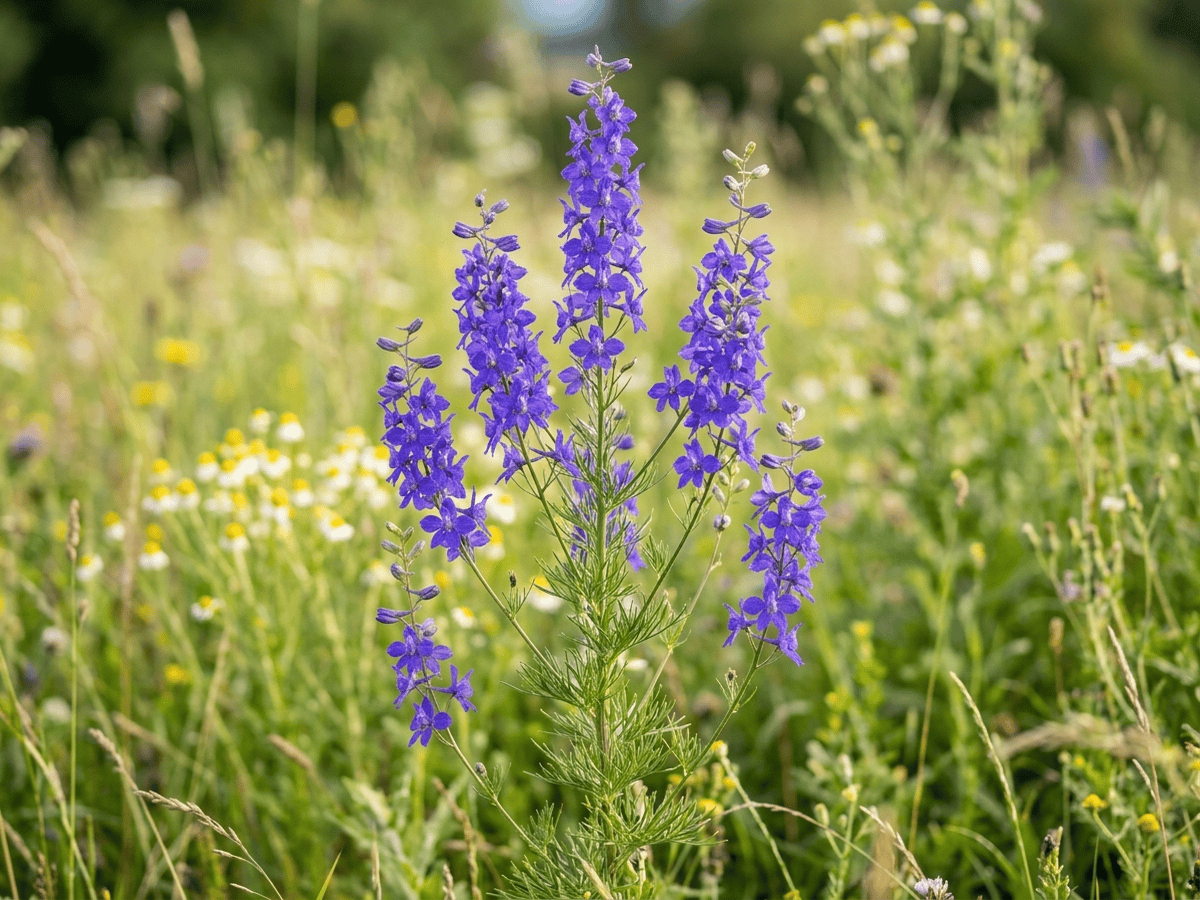
Consolida ajacis, the larkspur or rocket larkspur, is an elegant annual native to the Mediterranean region, closely related to delphiniums but easier to grow from seed. It produces tall spires of spurred flowers in vivid shades of blue, purple, pink, and white that reach 60 to 120 cm tall, adding vertical drama to summer gardens. The deeply divided, fern-like foliage provides a fine-textured backdrop to the flower spikes. Larkspur is one of the finest cut flowers for fresh arrangements, and its blooms also dry exceptionally well, retaining color for months. The plant prefers cool growing conditions and is best sown directly in fall or very early spring in mild climates, as it dislikes heat and humidity. It makes an excellent successor to spring bulbs, filling the garden with color from late spring through midsummer. Larkspur self-sows reliably in congenial climates, creating casual drifts of color year after year. All parts of the plant are toxic, containing diterpene alkaloids similar to those in Aconitum (monkshood).
- Cut-flower
How to care for Doubtful Knight's-Spur
Watering
- Springevery 5 days
- Summerevery 4 days
- Fallevery 10 days
- Winterpause watering
Soil · Well-draining
- Top dressingPine bark mulch10%
- Main mixPotting soil + perlite 2:170%
- DrainageLECA / gravel20%
Never skip the drainage layer — standing water is the top cause of root rot.
FERTILIZER
Balanced Feed 14-14-14
An even feed covers all three needs at once, keeping leaves, roots and blooms moving together with nothing pushed out of balance.
- Nitrogen · Leaves
- Phosphorus · Roots + Blooms
- Potassium · Strength
This plant needs little to no feeding.
At a Glance
- NativeMediterranean, Western Asia
- Height2–4 ft (0.6–1.2 m)
- Spread1–2 ft (0.3–0.6 m)
- Flower colorBlue, Purple, Pink, White
- Foliage colorGreen
- SoilLoamy, Well-drained, Alkaline
- LocationsYard · Indoor · Balcony
Bloom time
BLOOM CYCLE
Peak bloom
Mar, Apr, May, Sep, Oct, Nov
Sow in fall for spring bloom in mild climates; thin seedlings to 15-20 cm spacing for strong stems
Fragrance
NO FRAGRANCE
No notable fragrance.
Toxicity
Humans Toxic · Pets Toxic
methyllycaconitine, lycoctonine, and ajacine
Toxic
- All
- Ingestion
EXPOSURE Eating any part of the plant.
EFFECT Diterpenoid alkaloid toxicity: muscle weakness, respiratory paralysis, cardiac effects.
NOTE Documented concern for humans: Diterpenoid alkaloid toxicity: muscle weakness, respiratory paralysis, cardiac effects.
Toxic
- All
- Ingestion
EXPOSURE Eating any part of the plant.
EFFECT Weakness, respiratory depression, cardiac arrhythmia.
NOTE ASPCA lists larkspur (including Consolida/Delphinium) as toxic to dogs, cats, and horses. Major cattle-poisoning issue on western US rangeland.
Toxic
- All
- Ingestion
EXPOSURE Eating any part of the plant.
EFFECT Same as dogs.
NOTE ASPCA lists larkspur (including Consolida/Delphinium) as toxic to dogs, cats, and horses. Major cattle-poisoning issue on western US rangeland.
Educational information, not medical or veterinary advice. If exposure is suspected, contact a doctor or veterinarian.
DISTRIBUTION

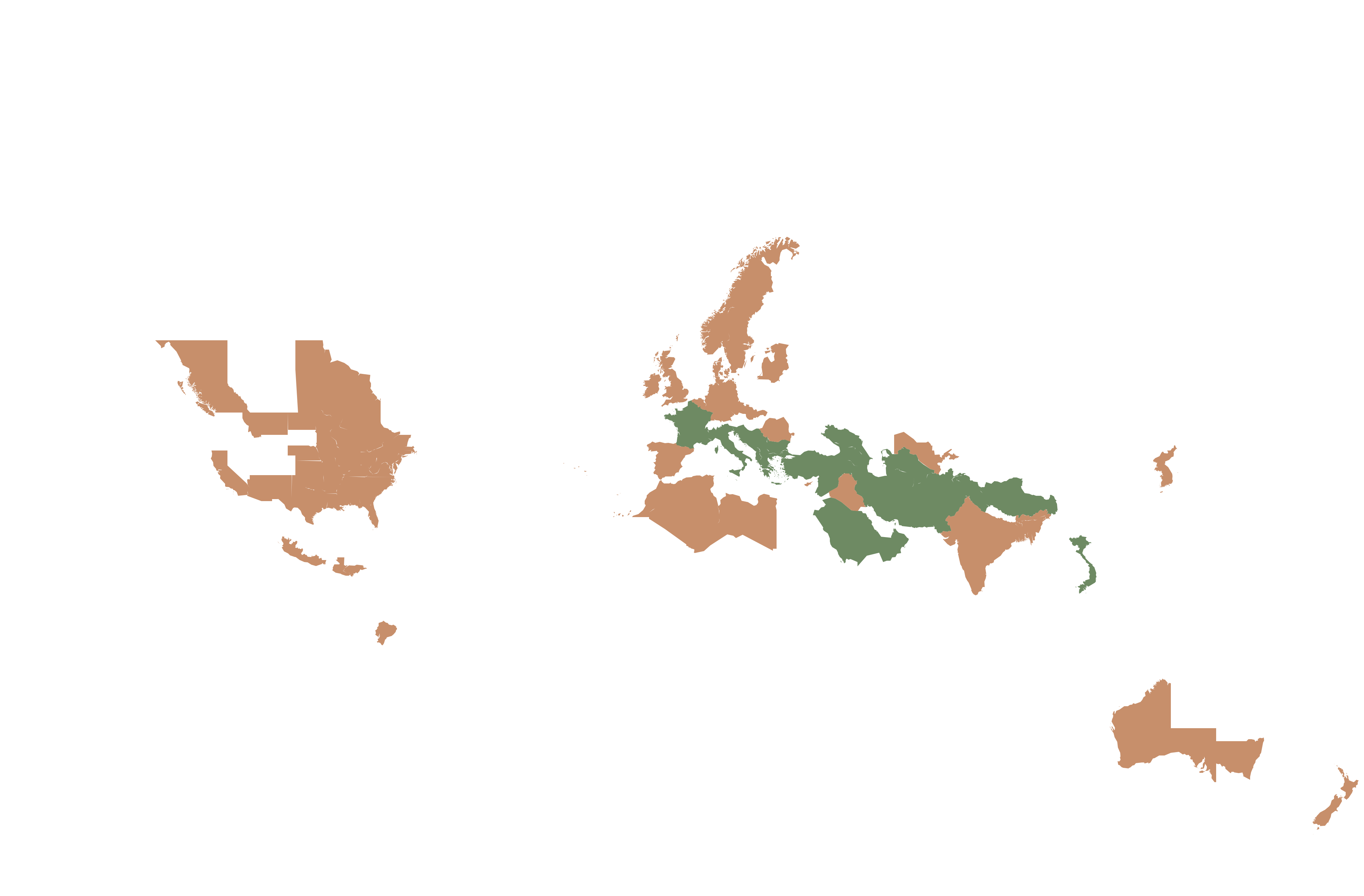
- Native
- Introduced
- Mediterranean
- Western Asia
History

Consolida ajacis (in some classifications Delphinium ajacis) is native to the Mediterranean basin and southwest Asia. It is an annual close relative of the perennial larkspurs (Delphinium) and was formerly placed in that genus before being moved to Consolida based on morphological differences; some taxonomic authorities still treat it as Delphinium. It produces upright branched 60-90 cm flower spikes densely covered with spurred two-lipped flowers typically in blue, violet, pink, and white, blooming from late spring through early summer. The species is one of the classic cottage garden, cutting garden, and cutting-flower industry annuals, grown from seed either autumn-sown (for larger plants and earlier flowering) or spring-sown in colder climates.
Like all members of the larkspur/delphinium tribe, it contains highly toxic diterpenoid alkaloids (methyllycaconitine, lycoctonine, and related compounds) in all parts, which affect the neuromuscular junction and can cause rapid death in grazing livestock — particularly cattle, which are unusually susceptible. Tall larkspur poisoning is one of the largest cattle-loss causes on mountain spring range in the western United States. The name "ajacis" refers to the Greek hero Ajax — in the myth, when Ajax killed himself over grief about the Trojan War, his blood turned to the larkspur flower, whose markings supposedly spell AIA (the first letters of his name in Greek).
The name 'larkspur' comes from the flower's long, backward-pointing spur, which was thought to resemble the claw of a lark. In Greek mythology, the flower was said to have sprung from the blood of Ajax after his death in the Trojan War — the markings on the petals were read as the letters 'AI,' the Greek cry of mourning, giving the species name 'ajacis.' For centuries, European herbalists used larkspur tinctures externally to treat head lice and scabies, though internal use was recognized as dangerous. The Victorians adored it as a garden and cut flower, and it became a symbol of an open heart and ardent attachment in the language of flowers. Today it remains indispensable in the cut flower industry.
Symbolism & meaning
What It Symbolizes
Doubtful Knight's-Spur is lightness on a stem, its airy spurred florets rising like little notes on a staff of green. In Victorian floriography it was the open heart, an emblem of ardent attachment freely given. To grow larkspur in the cottage border is to plant a flower that confesses easily and laughs while doing it.
- Lightness — The airy, spurred flowers evoke a carefree spirit and levity
- Open heart — Victorian symbol of ardent attachment and willingness to love freely
Where the Name Comes From
Consolida comes from Latin 'consolidare' (to make whole), reflecting old wound lore. Ajacis honors the Greek hero Ajax from the Trojan War.
Uses & Fun Facts
- Tall spurred spires star in cottage and cutting gardens
- Vivid blue, purple, pink spikes evoke easy-grown delphiniums
- Stems dry well for everlasting wreaths and arrangements
Related plants
More Consolida plants
Plants with similar care
 Chinese AbeliaAbelia chinensis
 Fragrant AbeliaAbelia mosanensis
 Large-Flowered AbeliaAbelia uniflora
 Glossy AbeliaAbelia x grandiflora
Frequently asked questions
How often should I water Doubtful Knight's-Spur?
Water about every 5 days during the growing season, and always let excess water drain away.
How much light does Doubtful Knight's-Spur need?
Full sun: 6+ hrs direct. Watch the leaves — scorching or stretching means the light needs adjusting.
Is Doubtful Knight's-Spur toxic to cats or dogs?
Pets Toxic (Dogs Toxic · Cats Toxic) Educational information, not medical or veterinary advice. If exposure is suspected, contact a doctor or veterinarian.
Is Doubtful Knight's-Spur easy to grow?
Yes — it is considered an easy, beginner-friendly plant.
Can Doubtful Knight's-Spur be grown indoors?
Yes, it adapts well to indoor growing given the right light.
When does Doubtful Knight's-Spur bloom?
It typically blooms Mar, Apr, May, Sep, Oct, Nov in the Northern Hemisphere.
YardMate
Identify any plant in seconds
Snap a photo — YardMate names the plant, diagnoses problems, and reminds you when to water.
Download on the App Store