 YardMate



Yellow Cosmos
Cosmos sulphureus
Easy · Beginner friendlyAbout Yellow Cosmos
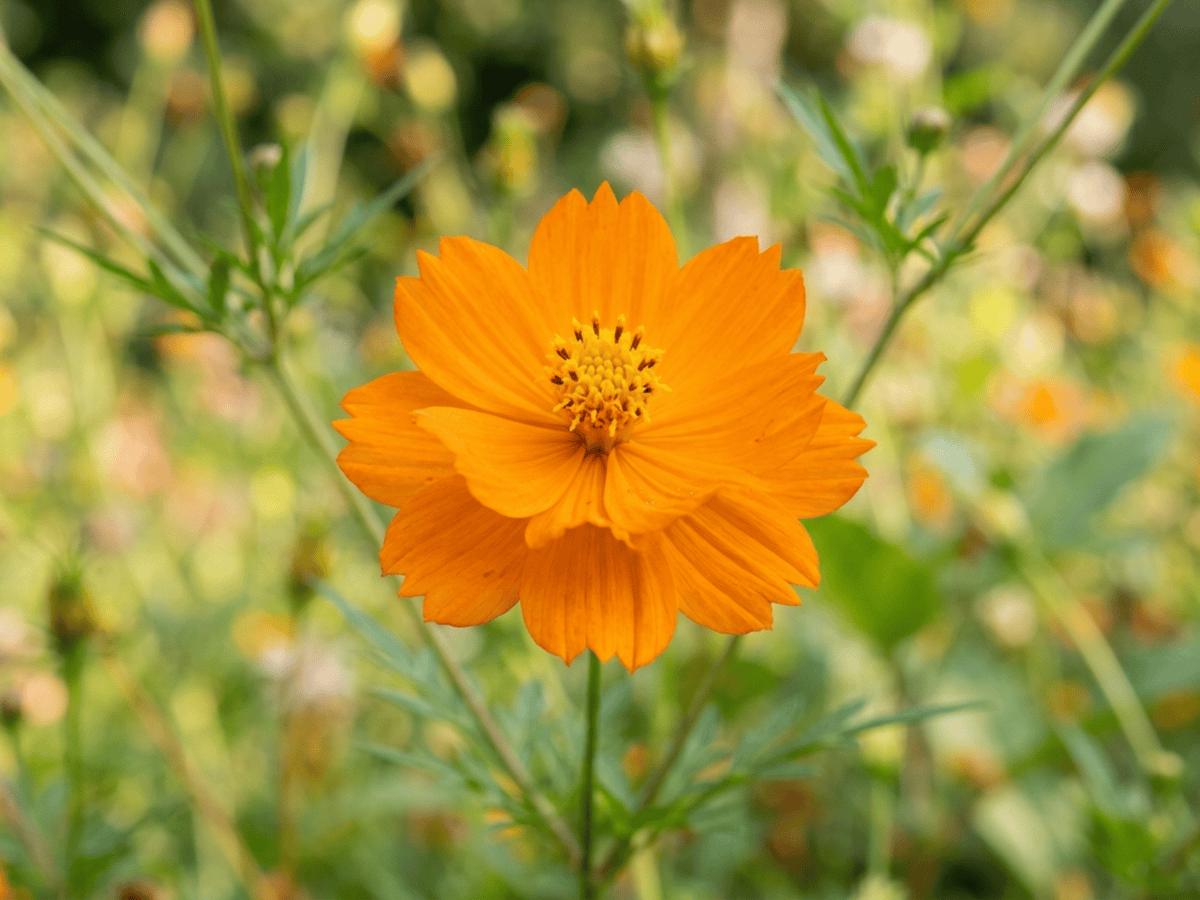
Sulphur Cosmos is a warm-season annual from Mexico and Central America bearing fiery orange, yellow, and scarlet daisy-like blooms on wiry stems 2–4 feet tall. Heat- and drought-tolerant once established, it thrives through the hottest summers across the American South, Midwest, and West. Unlike its pink cousin Cosmos bipinnatus, C. sulphureus has coarser, pinnate foliage and hotter flower tones. A magnet for butterflies and native bees, it self-seeds readily and brings long-lasting color from midsummer until first frost.
- Cut-flower
- Heat-tolerant
- Drought-tolerant
- Pollinator-friendly
How to care for Yellow Cosmos
Watering
- Springevery 5 days
- Summerevery 4 days
- Fallevery 10 days
- Winterpause watering
Soil · Well-draining
- Top dressingPine bark mulch10%
- Main mixPotting soil + perlite 2:170%
- DrainageLECA / gravel20%
Never skip the drainage layer — standing water is the top cause of root rot.
FERTILIZER
This plant needs little to no feeding.
At a Glance
- NativeNorth America, Central America
- Height2–6 ft (0.6–1.8 m)
- Spread1–2 ft (0.3–0.6 m)
- Flower colorOrange, Yellow, Red
- Foliage colorGreen
- SoilLoamy, Well-drained, Sandy
- LocationsYard · Balcony
Bloom time
BLOOM CYCLE
Peak bloom
Jul–Nov
Orange and yellow daisies midsummer to frost
Fragrance
NO FRAGRANCE
No notable fragrance.
Toxicity
No toxicity has been reported for this plant. Still, it is wise to keep pets from chewing on any houseplant.
Educational information, not medical or veterinary advice. If exposure is suspected, contact a doctor or veterinarian.
DISTRIBUTION


- Native
- Introduced
- North America
- Central America
History

Cosmos sulphureus is native to the highlands of Mexico and Central America (as far south as Guatemala and Honduras), where it grows in disturbed ground, agricultural edges, and open grassland. From there it has been spread globally as a garden annual since the 18th century and has naturalized extensively across tropical and subtropical regions of Africa, the Indian subcontinent, Southeast Asia, and parts of the American South. In many parts of sub-Saharan Africa, South Asia, and Southeast Asia it is now one of the most familiar roadside wildflowers despite not being native — a striking example of anthropogenic plant distribution. The plant is an erect annual 60-120 cm tall with finely-dissected pinnate leaves (less feathery than C. bipinnatus) and bright orange-red to yellow-orange daisy-form flowers 3-6 cm across on slender stems from mid-summer through autumn.
The intensely pigmented petals produce a strong yellow-orange dye that is widely used in traditional Asian textile craft — particularly in Korean "gujeolcho" and Japanese "kosumosu" natural dyeing — as a source of yellow-to-orange textile coloration. Horticultural breeding has produced smaller compact cultivars ("Crest," "Sunny," "Ladybird," "Cosmic" series) more suited to container and bedding use than the tall wild species. Attracts butterflies, bees, and birds (goldfinches eat the seeds).
Self-seeds freely in favorable conditions. Brought to Europe from Mexico in the 18th century by Spanish explorers, sulphur cosmos reached American gardens by the late 1800s. It became a staple of Southern and Texas summer gardens due to its exceptional heat tolerance. The seeds were widely distributed by the USDA for roadside beautification in the mid-20th century, and it remains a favorite for pollinator strips and butterfly gardens today.
Symbolism & meaning
What It Symbolizes
Yellow Cosmos radiates joy from every sunburst flower, a reliable summer cheer for borders that need warmth without fuss. Its Greek name kosmos means order — a nod to the symmetrical eight-petaled geometry that early botanists found pleasing in a plant otherwise wild and unruly. It is summer arranged into a small, perfect circle, repeated across an entire bed.
- Joy — radiates warmth and summer cheer
- Order — symmetrical petals represent natural harmony
Where the Name Comes From
From Greek 'kosmos' (harmony, order) for the symmetrical flower; 'sulphureus' refers to the sulfur-yellow blooms.
Uses & Fun Facts
- Wiry-stemmed orange daisies fill summer cutting bouquets
- Heat-loving blooms attract bees and butterflies through autumn
- Drought-tolerant annual for meadow-style sunny plantings
Related plants
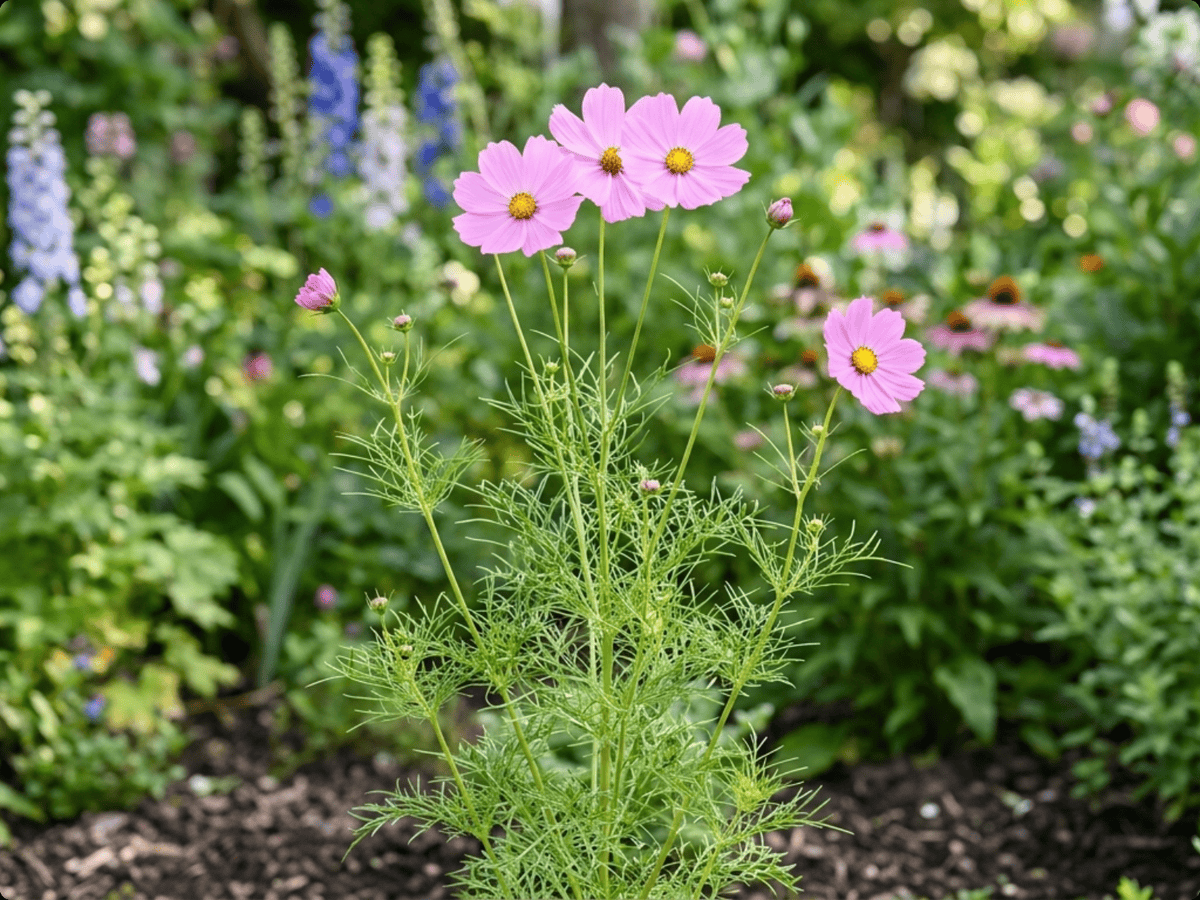
More Cosmos plants
Plants with similar care
 Chinese AbeliaAbelia chinensis
 Fragrant AbeliaAbelia mosanensis
 Large-Flowered AbeliaAbelia uniflora
 Glossy AbeliaAbelia x grandiflora
Frequently asked questions
How often should I water Yellow Cosmos?
Water about every 5 days during the growing season, and always let excess water drain away.
How much light does Yellow Cosmos need?
Full sun: 6+ hrs direct. Watch the leaves — scorching or stretching means the light needs adjusting.
Is Yellow Cosmos toxic to cats or dogs?
No toxicity has been reported for this plant. Still, it is wise to keep pets from chewing on any houseplant. Educational information, not medical or veterinary advice. If exposure is suspected, contact a doctor or veterinarian.
Is Yellow Cosmos easy to grow?
Yes — it is considered an easy, beginner-friendly plant.
When does Yellow Cosmos bloom?
It typically blooms Jul–Nov in the Northern Hemisphere.
YardMate
Identify any plant in seconds
Snap a photo — YardMate names the plant, diagnoses problems, and reminds you when to water.
Download on the App Store