 YardMate

Bear's Paw
Cotyledon tomentosa
Hard · Experienced growersAbout Bear's Paw
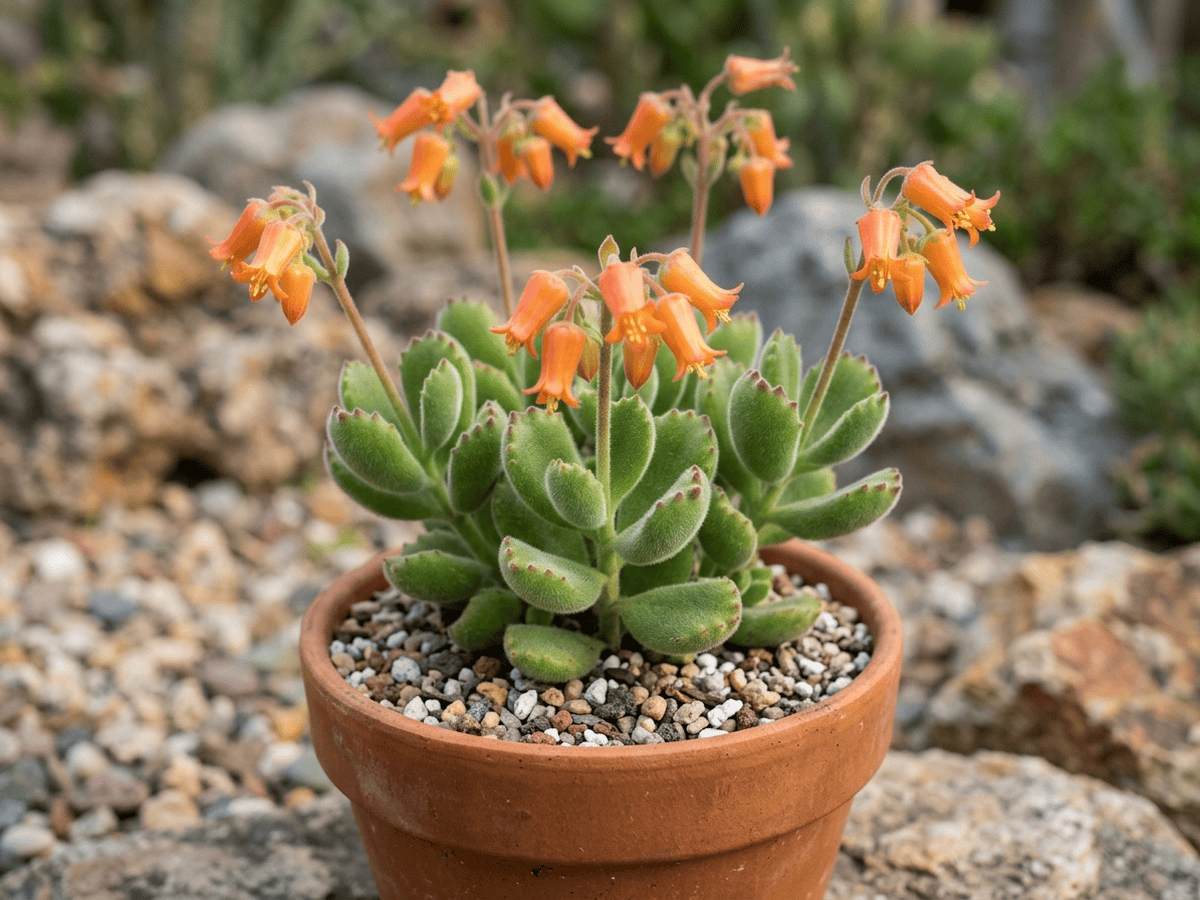
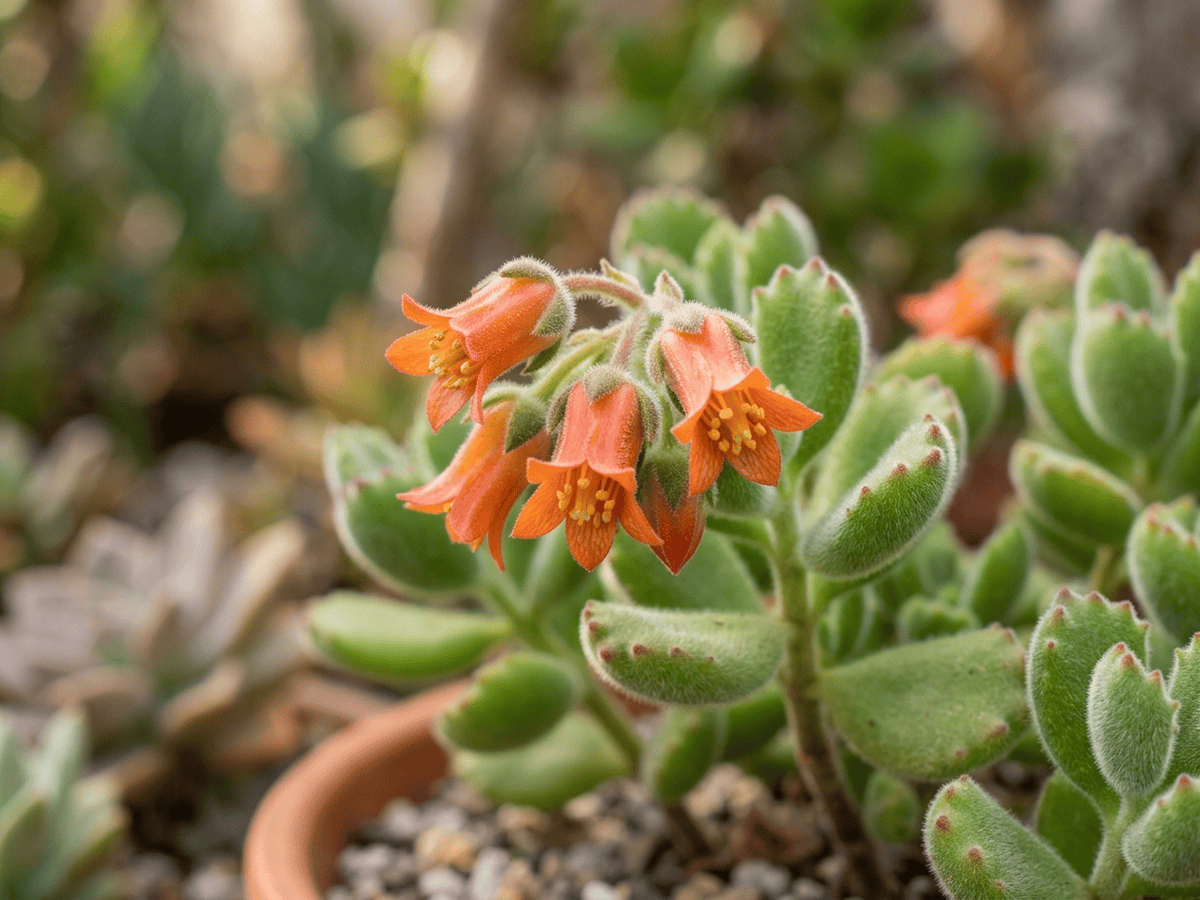
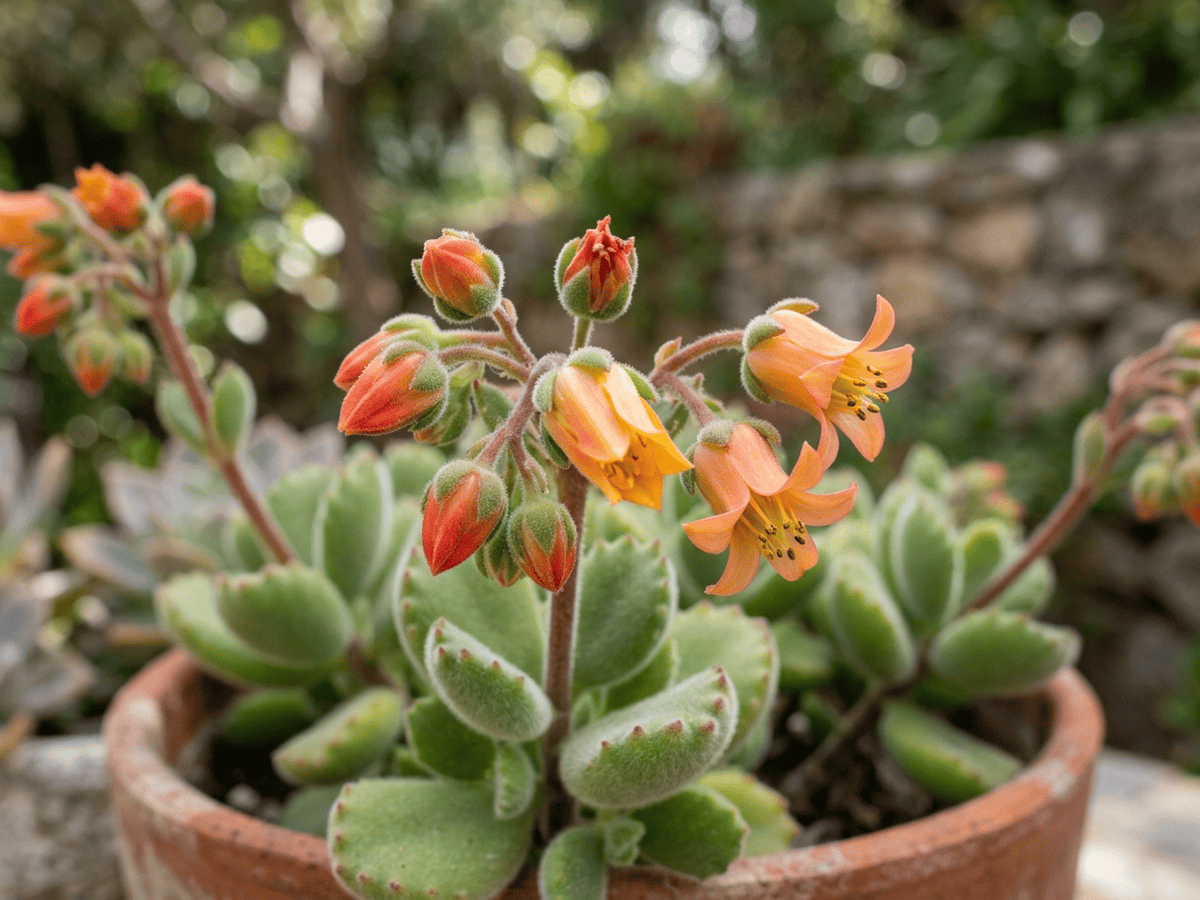
The Bear's Paw (Cotyledon tomentosa) is a compact, shrubby succulent native to the semi-arid slopes of South Africa's Cape provinces. Its thick, felted green leaves are softly furred and rimmed with reddish-brown teeth, giving each leaf the look of a small clawed paw print. Slow-growing and low-maintenance, the Bear's Paw forms neat, branching, rosette-topped stems that stay compact in a pot, making it a favorite windowsill succulent. In late winter and spring, tall flowering stems rise above the foliage bearing clusters of pendant, bell-shaped orange-red flowers that draw sunbirds and bees.
- Drought-tolerant
- Slow-growing
- Compact
- Container-friendly
- Evergreen
- Pollinator-friendly
How to care for Bear's Paw
Watering
- Springevery 10 days
- Summerevery 5 days
- Fallevery 15 days
- Winterevery 30 days
Soil · Fast-draining
- Main mixSand + pumice + soil 1:1:150%
- DrainagePumice / gravel50%
Keep grit at half the mix or more — this soil is meant to dry out fast.
FERTILIZER
Cactus & Succulent Feed 2-7-7
Hold the nitrogen back and growth stays compact instead of soft and stretched. Phosphorus and potassium carry the roots and the flowering.
- Nitrogen · Leaves
- Phosphorus · Roots + Blooms
- Potassium · Strength
- Springevery 30 days
- Summerevery 30 days
- Fallevery 30 days
At a Glance
- NativeSouth Africa
- Height1–2 ft (0.3–0.6 m)
- Spread1–3 ft (0.3–0.9 m)
- Flower colorOrange, Red
- Foliage colorGreen
- Fruit colorRed
- SoilWell-drained, Sandy
- LocationsYard · Patio · Indoor
Bloom time
BLOOM CYCLE
Peak bloom
May–Jun
This plant blooms in spring, with vibrant flowers that attract many hummingbirds.
Toxicity
Toxicity unknown
None reported
Unknown
EXPOSURE No exposure route is reported.
EFFECT No toxic effect is reported.
NOTE Toxicity for humans is not well documented; use caution until verified.
Unknown
EXPOSURE No exposure route is reported.
EFFECT No toxic effect is reported.
NOTE Toxicity for dogs is not well documented; use caution until verified.
Unknown
EXPOSURE No exposure route is reported.
EFFECT No toxic effect is reported.
NOTE Toxicity for cats is not well documented; use caution until verified.
Educational information, not medical or veterinary advice. If exposure is suspected, contact a doctor or veterinarian.
DISTRIBUTION


- Native
- South Africa
History
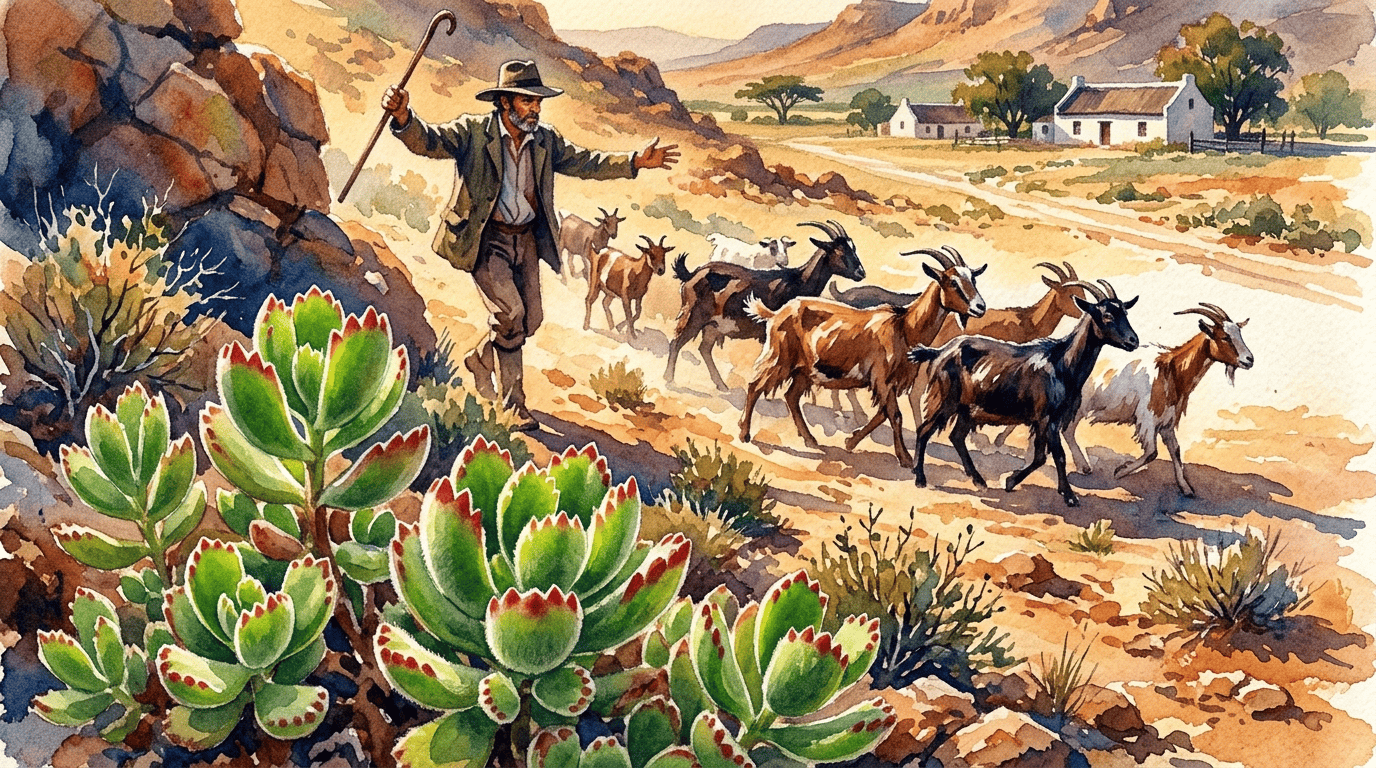
Long before the Bear's Paw became a fixture of succulent collections worldwide, it grew quietly on the rocky, sun-baked slopes of South Africa's Cape provinces, one of many fleshy-leaved plants adapted to the region's long dry seasons. European botanists collecting in the Cape during the 18th and 19th centuries were struck by the plant's thick, felted leaves and their toothed tips, a texture unlike almost anything else in the succulent flora of the time; the species name tomentosa, Latin for densely hairy, was chosen to describe exactly this. Cape farmers who grazed goats and sheep near these slopes learned to watch their herds carefully, since Cotyledon species, the Bear's Paw among them, contain bitter cardiac glycosides responsible for krimpsiekte, or shrinking disease, a wasting illness that periodically struck Karoo livestock. That same toxicity, ironically, helped the plant survive being browsed into oblivion, letting dense, healthy stands persist for early collectors to document. By the twentieth century, the Bear's Paw had left the Cape behind, propagated in botanical gardens and nurseries across Europe and North America, prized less for danger than for charm: its felted, claw-tipped leaves made it an instant favorite among windowsill succulent growers, who still trade cuttings today.
Symbolism & meaning
What It Symbolizes
In succulent-growing circles, the Bear's Paw has come to symbolize quiet resilience: a plant that survives harsh, rocky ground by turning its defenses inward, storing water and toxins rather than growing showy or fast. Its claw-shaped leaf tips are often read as a small emblem of protective strength, a reminder that toughness can wear a soft, furry disguise.
- Protective Strength — The clawed, toughened leaf tips evoke a small paw ready to defend, symbolizing quiet resilience under harsh conditions.
- Endurance — Thriving on thin, rocky Cape soils through long dry seasons, the plant represents steady survival rather than showy growth.
Where the Name Comes From
The genus name Cotyledon comes from the Greek kotyledon, a cup-shaped hollow, referring to the concave leaf bases of some species in the group. The species epithet tomentosa is Latin for densely woolly or hairy, describing the fine felt covering the leaves, a texture that also inspired the common name Bear's Paw.
Uses & Fun Facts
- Grown for its fuzzy, claw-tipped leaves as a striking accent succulent on windowsills, patios, and in rock gardens.
- Its tubular orange-red spring flowers attract sunbirds and bees in its native South African range.
Related plants
More Cotyledon plants
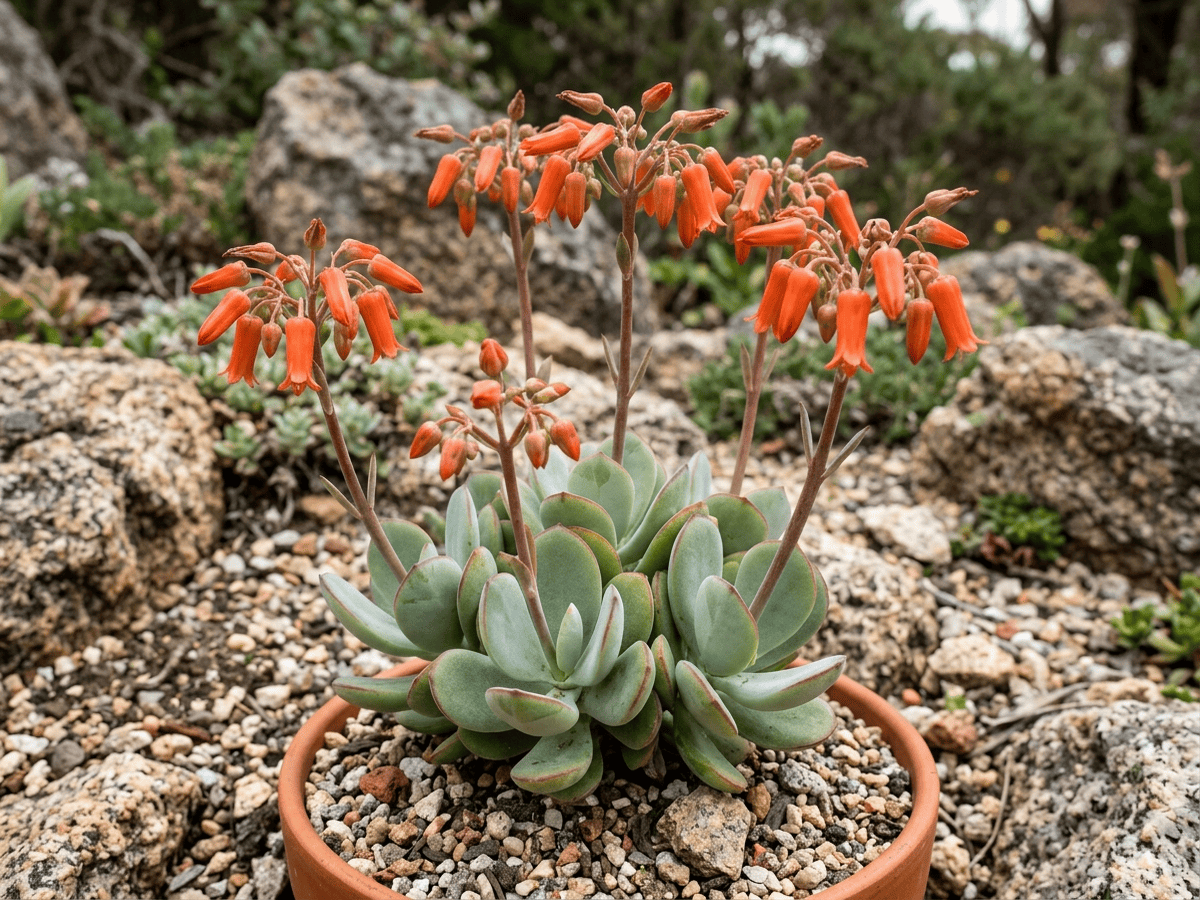
Plants with similar care
 Pink Sand VerbenaAbronia umbellata
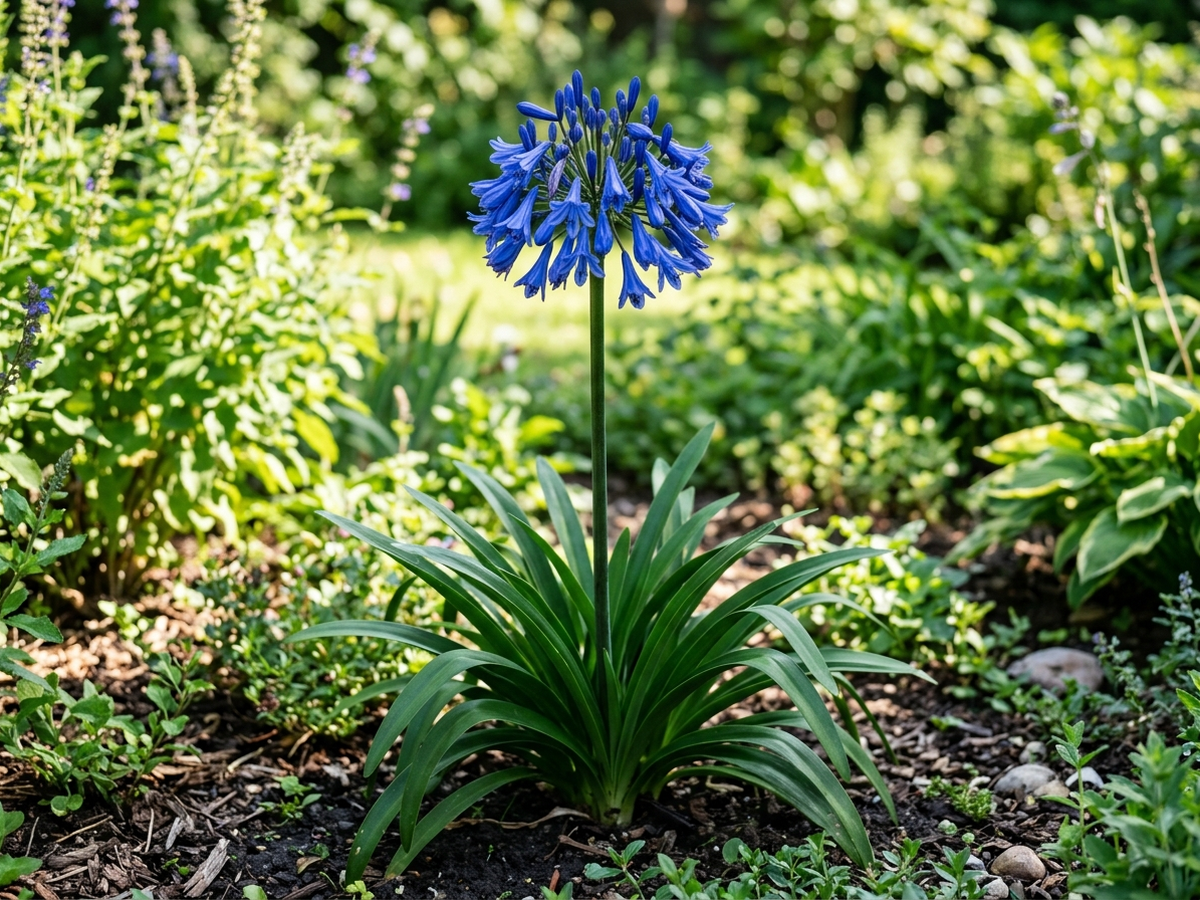 Drooping AgapanthusAgapanthus inapertus
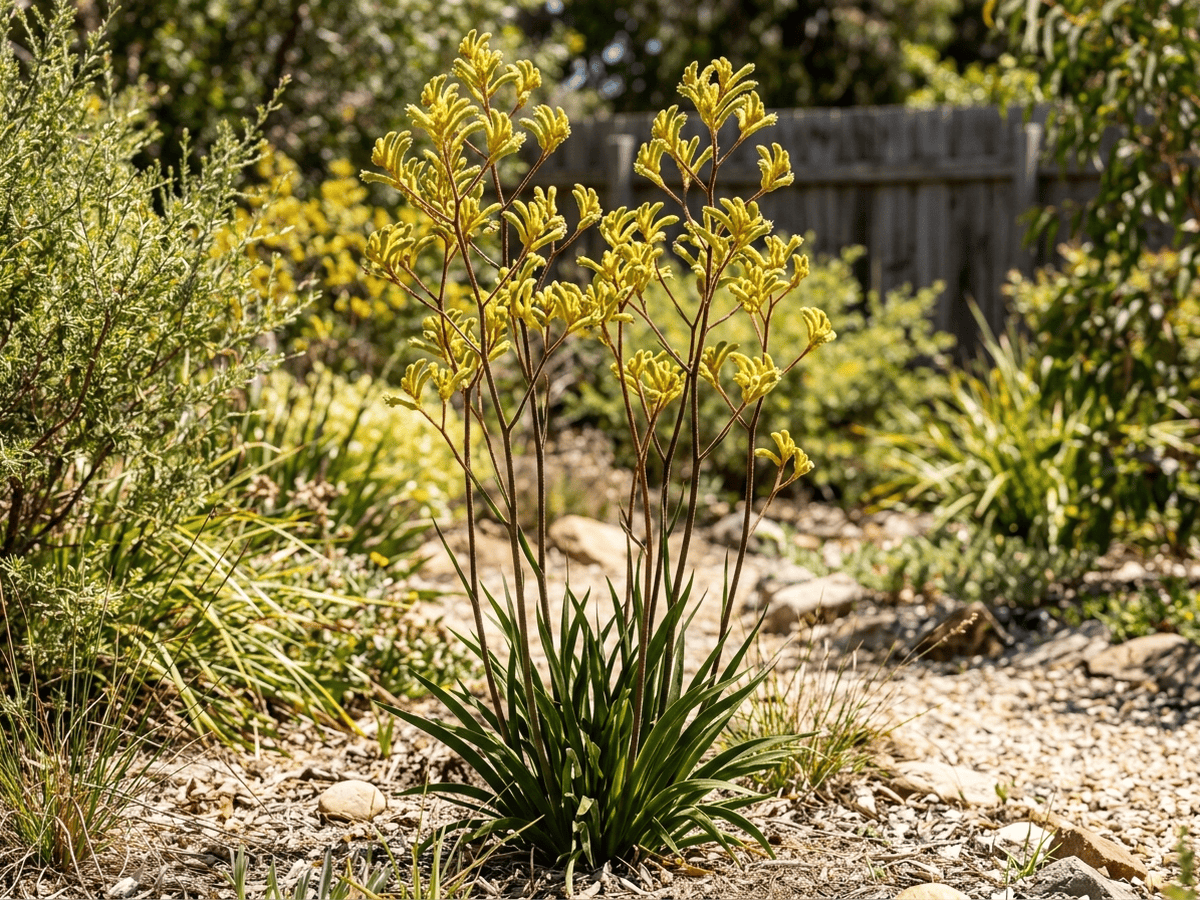 Tall Kangaroo PawAnigozanthos flavidus
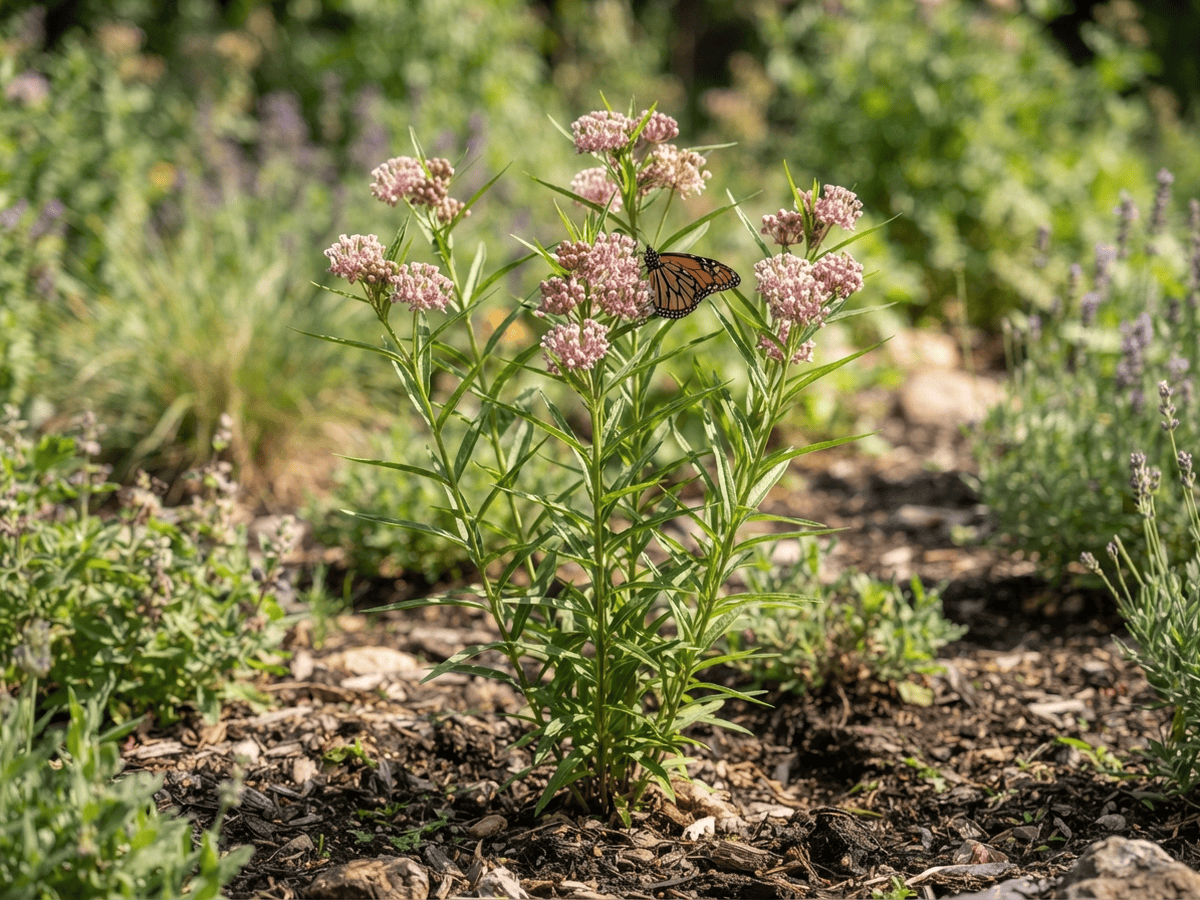 Narrowleaf MilkweedAsclepias fascicularis
Frequently asked questions
How often should I water Bear's Paw?
In summer, water about every 5 days; in winter, about every 30 days. Adjust for heat, pot size and drainage.
How much light does Bear's Paw need?
Full sun: 6+ hrs direct. Watch the leaves — scorching or stretching means the light needs adjusting.
Is Bear's Paw toxic to cats or dogs?
Pets Unknown (Dogs Unknown · Cats Unknown) Educational information, not medical or veterinary advice. If exposure is suspected, contact a doctor or veterinarian.
Is Bear's Paw easy to grow?
It is considered challenging and rewards experienced growers.
Can Bear's Paw be grown indoors?
Yes, it adapts well to indoor growing given the right light.
When does Bear's Paw bloom?
It typically blooms May–Jun in the Northern Hemisphere.
YardMate
Identify any plant in seconds
Snap a photo — YardMate names the plant, diagnoses problems, and reminds you when to water.
Download on the App Store