 YardMate


Wheeler Sotol
Dasylirion wheeleri
Easy · Beginner friendlyAbout Wheeler Sotol
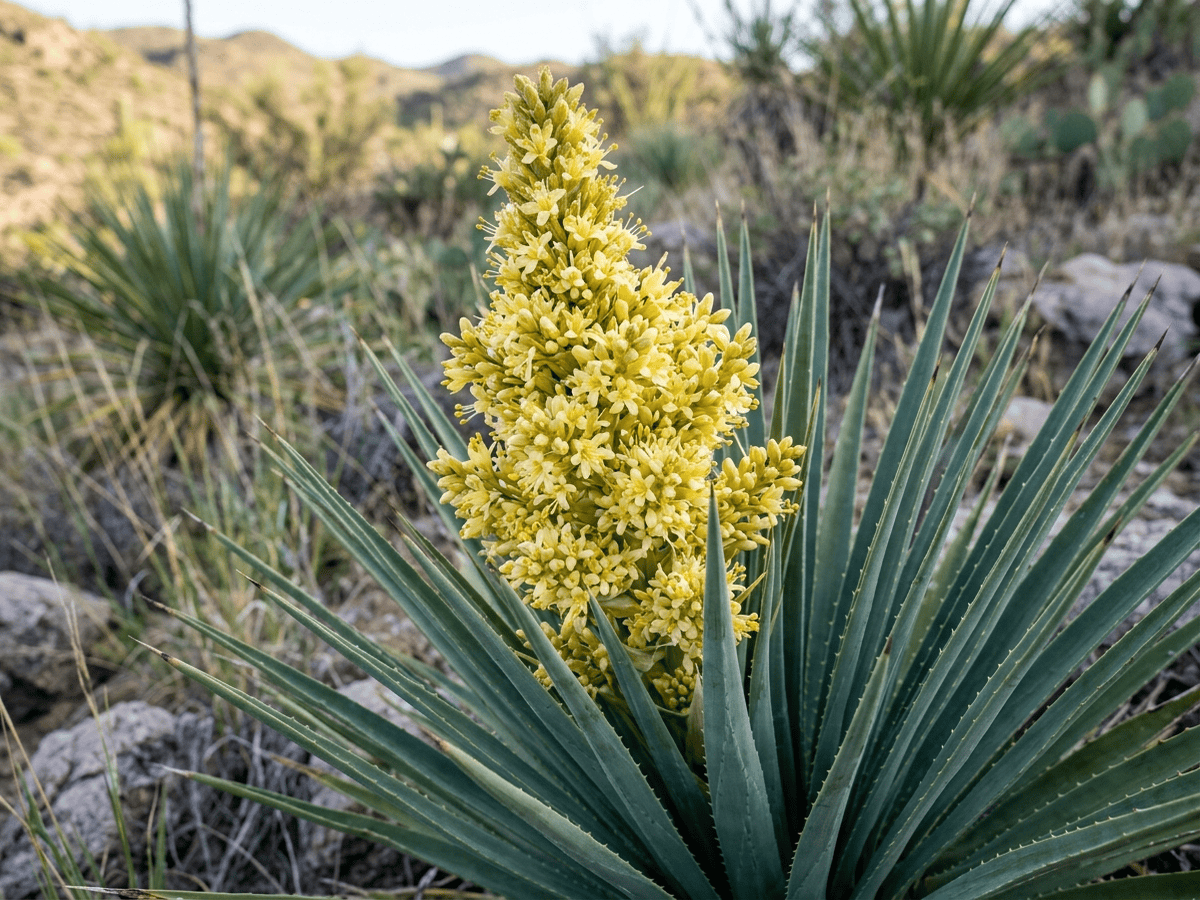
Desert Spoon is a dramatic rosette-forming plant from the Chihuahuan Desert of northern Mexico and the American Southwest, named for the spoon-shaped bases of its harvested leaves. It forms a dense, spherical fountain of hundreds of narrow, blue-gray leaves — each edged with tiny hooked teeth — radiating from a central growing point. Mature plants develop a short trunk and can reach four feet tall with a spread of four feet across. In late spring, a spectacular flower stalk shoots up to fifteen feet tall, bearing thousands of tiny cream-colored flowers that attract a frenzy of pollinators. It is dioecious, meaning individual plants are either male or female. Extremely drought-tolerant and cold-hardy down to about ten degrees Fahrenheit, it is one of the toughest architectural plants for arid landscapes. Native Americans used almost every part of the plant — leaves for weaving baskets, the stalk heart for food, and fermented sap for the spirit sotol, which predates tequila.
- Drought-tolerant
- Cold-hardy
- Architectural
- Native
How to care for Wheeler Sotol
Watering
- Springevery 21 days
- Summerevery 14 days
- Fallevery 30 days
- Winterevery 60 days
Soil · Fast-draining
- Main mixSand + pumice + soil 1:1:150%
- DrainagePumice / gravel50%
Keep grit at half the mix or more — this soil is meant to dry out fast.
FERTILIZER
Balanced Feed 14-14-14
An even feed covers all three needs at once, keeping leaves, roots and blooms moving together with nothing pushed out of balance.
- Nitrogen · Leaves
- Phosphorus · Roots + Blooms
- Potassium · Strength
- Springevery 60 days
- Summerevery 60 days
At a Glance
- NativeNorth America
- Height3–5 ft (0.9–1.5 m)
- Spread4–6 ft (1.2–1.8 m)
- Flower colorCream, Yellow
- Foliage colorBlue-green, Green
- SoilSandy, Well-drained
- LocationsYard
Bloom time
BLOOM CYCLE
Peak bloom
Mar–May
Towering 12-15 ft cream flower spike in late spring; dioecious — needs both sexes for seed
Fragrance
NO FRAGRANCE
No notable fragrance.
Toxicity
Humans Slight · Pets Slight
saponins
Slight
- Leaf
- Contact
EXPOSURE Touching leaves.
EFFECT Mechanical injury from serrated leaf margins and processed heart is edible and used in spirits.
NOTE Primary hazard is leaf-margin mechanical injury; chemical toxicity low.
Slight
- All
- Ingestion
EXPOSURE Eating any part of the plant.
EFFECT Mild GI upset possible.
NOTE Primary hazard is leaf-margin mechanical injury; chemical toxicity low.
Slight
- All
- Ingestion
EXPOSURE Eating any part of the plant.
EFFECT Mild GI upset possible.
NOTE Primary hazard is leaf-margin mechanical injury; chemical toxicity low.
Educational information, not medical or veterinary advice. If exposure is suspected, contact a doctor or veterinarian.
DISTRIBUTION


- Native
- North America
History

Dasylirion wheeleri is native to arid slopes of Arizona, New Mexico, Chihuahua, and Sonora. It was described in 1878 and named for geologist George Wheeler, leader of an 1870s US survey of the American Southwest. Indigenous Apache and O'odham peoples cultivated and harvested sotol for millennia, using the fibrous leaves for baskets, mats, and rope, and roasting the hearts for food.
In northern Mexico (Chihuahua, Coahuila, Durango), roasted and fermented sotol hearts produce the regional liquor also called sotol, formally designated a denomination-of-origin spirit of Mexico in 2002 — distinct from but parallel to tequila and mezcal. In southern Arizona and New Mexico, the related "bacanora" tradition of fermented agave-sotol spirits persists in regional craft distilling. As a landscape plant, its spherical fountain of narrow serrated blue-green leaves is a signature of xeriscape gardens in Tucson, Phoenix, and El Paso.
Dasylirion wheeleri was described by Samuel Watson in 1879 and named after Lieutenant George Wheeler, who led geographical surveys of the American West. Indigenous peoples of the Chihuahuan Desert have used it for millennia — the Rarámuri (Tarahumuri) people fermented and distilled the stalk heart to make sotol, a spirit now gaining international recognition alongside mezcal and tequila. The spoon-shaped leaf bases were used as scoops and were the inspiration for its common name.
Symbolism & meaning
What It Symbolizes
Wheeler Sotol makes visible independence, a self-reliant desert survivor whose silvered fountain of leaves carries the frontier spirit of the Chihuahuan borderlands. Its heritage runs deep through Indigenous cultures who used its fibers, hearts, and stalks for food, drink, and craft. It marks the dignity of plants that ask nothing of human care yet have been honored by human hands for centuries, a quiet pillar of desert life.
- Independence — self-reliant desert survivor embodying frontier spirit
- Heritage — deep ties to indigenous cultures and traditional craftsmanship
Where the Name Comes From
'Dasylirion' from Greek 'dasys' (thick, hairy) and 'lirion' (lily), meaning 'shaggy lily.' 'Wheeleri' honors Lt. George Wheeler of the US Army geographical surveys.
Uses & Fun Facts
- Leaf bases harvested for sotol spirits, fibers for crafts
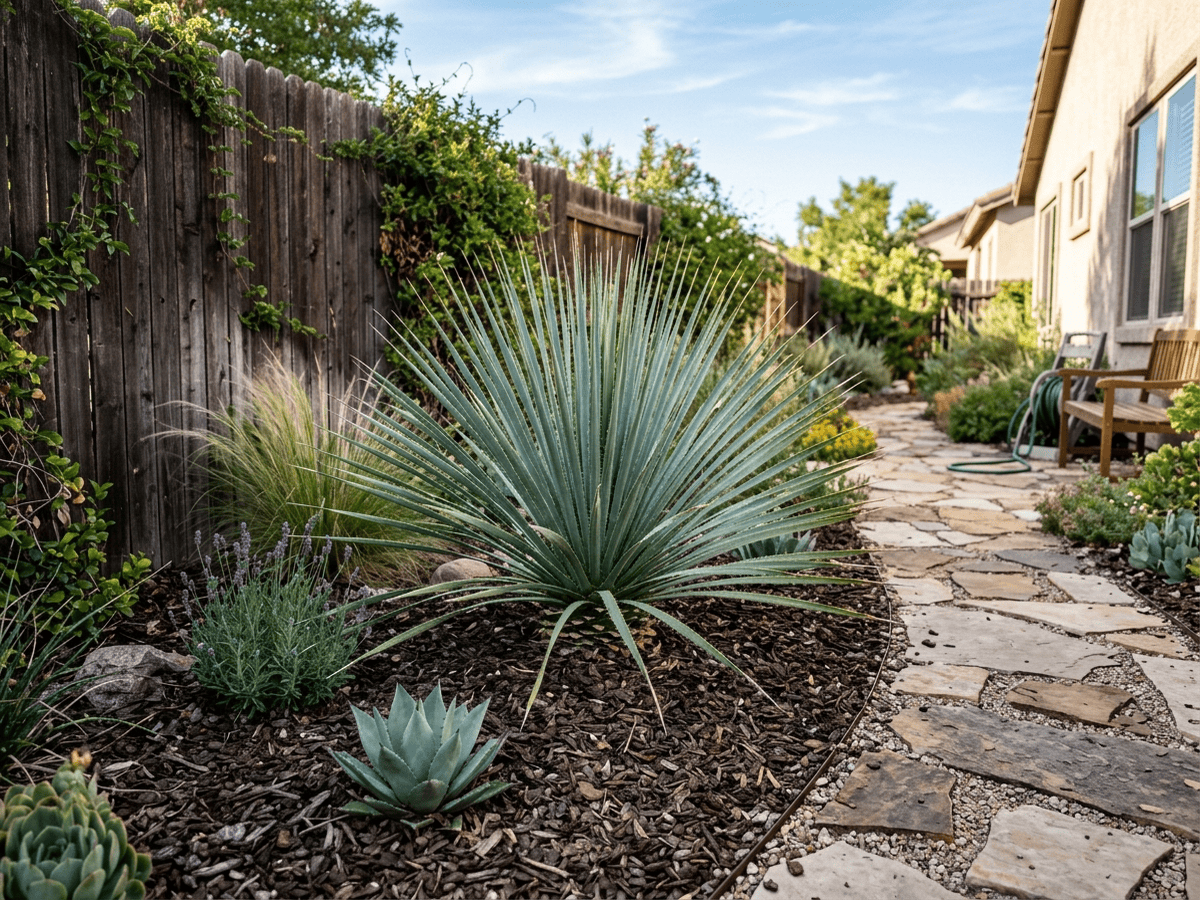
- Spherical fountain of blue-gray leaves anchors xeric gardens
- Architectural Southwest native rosette for desert landscapes
Related plants
Plants with similar care
 Chinese AbeliaAbelia chinensis
 Fragrant AbeliaAbelia mosanensis
 Large-Flowered AbeliaAbelia uniflora
 Glossy AbeliaAbelia x grandiflora
Frequently asked questions
How often should I water Wheeler Sotol?
In summer, water about every 14 days; in winter, about every 60 days. Adjust for heat, pot size and drainage.
How much light does Wheeler Sotol need?
Full sun: 6+ hrs direct. Watch the leaves — scorching or stretching means the light needs adjusting.
Is Wheeler Sotol toxic to cats or dogs?
Pets Slight (Dogs Slight · Cats Slight) Educational information, not medical or veterinary advice. If exposure is suspected, contact a doctor or veterinarian.
Is Wheeler Sotol easy to grow?
Yes — it is considered an easy, beginner-friendly plant.
When does Wheeler Sotol bloom?
It typically blooms Mar–May in the Northern Hemisphere.
YardMate
Identify any plant in seconds
Snap a photo — YardMate names the plant, diagnoses problems, and reminds you when to water.
Download on the App Store