 YardMate
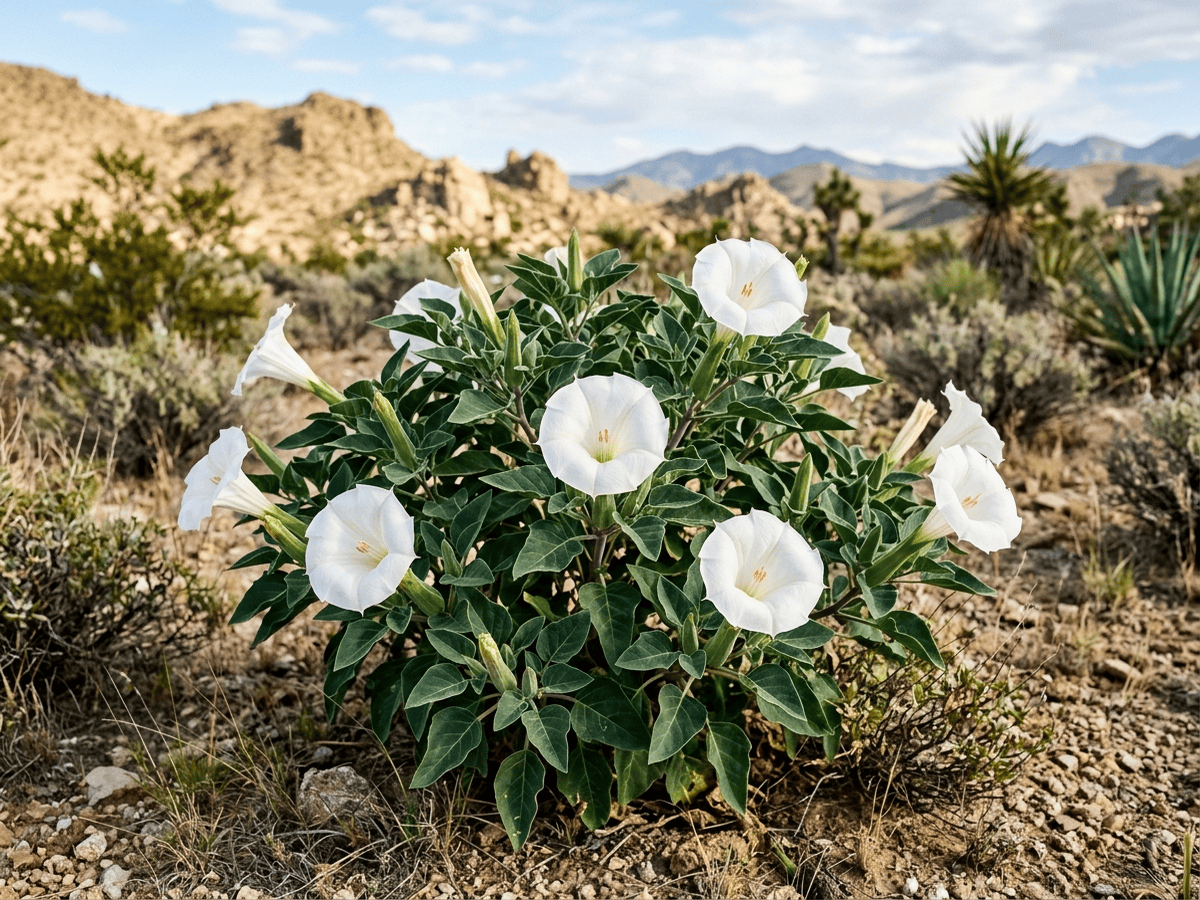


Sacred Datura
Datura wrightii
Easy · Beginner friendlyAbout Sacred Datura
Sacred Datura or Jimsonweed is a US Southwest native perennial with large trumpet-shaped white night-blooming flowers and extreme psychoactive toxicity. Growing 2 to 5 feet tall and sprawling 3 to 8 feet wide with velvety gray-green leaves, it produces 6 to 8 inch fragrant white trumpets that open at dusk and spiny walnut-sized seedpods. A beautiful but dangerous weed of roadsides, pastures, and overgrazed land across the Southwest.
- Drought-tolerant
- Native
How to care for Sacred Datura
Watering
- Springevery 10 days
- Summerevery 7 days
- Fallevery 14 days
- Winterevery 30 days
Soil · Well-draining
- Top dressingPine bark mulch10%
- Main mixPotting soil + perlite 2:170%
- DrainageLECA / gravel20%
Never skip the drainage layer — standing water is the top cause of root rot.
FERTILIZER
- Springevery 30 days
- Summerevery 45 days
At a Glance
- NativeNorth America
- Height3–5 ft (0.9–1.5 m)
- Spread4–6 ft (1.2–1.8 m)
- Flower colorWhite
- Foliage colorGreen
- SoilSandy, Well-drained
- LocationsYard
Bloom time
BLOOM CYCLE
Peak bloom
Jun–Nov
Huge white trumpets open at dusk, fragrant summer to fall
Fragrance
STRONG FRAGRANCE
Sweet, heavy nocturnal perfume attracting hawk moths.
Toxicity
Humans Toxic · Pets Toxic
scopolamine, hyoscyamine, and atropine
Toxic
- All
- Ingestion
- Contact
EXPOSURE Eating any part of the plant. Touching any part of the plant.
EFFECT Hallucinations, delirium, rapid heartbeat, dilated pupils, seizures, and coma.
NOTE All parts highly toxic; handle carefully and keep away from children and pets.
Toxic
- All
- Ingestion
EXPOSURE Eating any part of the plant.
EFFECT Agitation, dilated pupils, tachycardia, and seizures.
NOTE All parts highly toxic; handle carefully and keep away from children and pets.
Toxic
- All
- Ingestion
EXPOSURE Eating any part of the plant.
EFFECT Agitation, dilated pupils, tachycardia, and seizures.
NOTE All parts highly toxic; handle carefully and keep away from children and pets.
Educational information, not medical or veterinary advice. If exposure is suspected, contact a doctor or veterinarian.
DISTRIBUTION


- Native
- Introduced
- North America
History
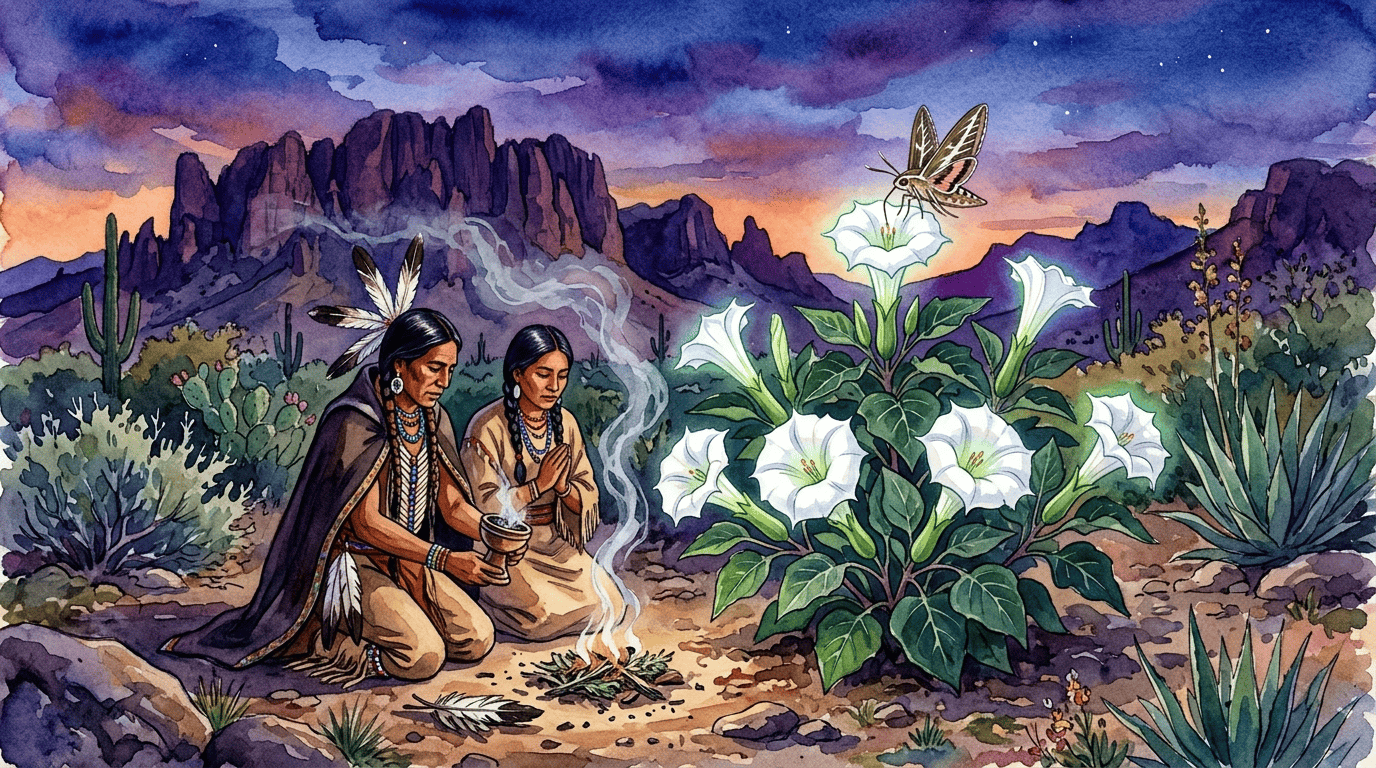
Datura wrightii, commonly called sacred datura or jimsonweed, is a stout perennial in the nightshade family native to the southwestern United States and northern Mexico. Indigenous peoples including the Chumash and Zuni used the plant in carefully controlled ceremonial and medicinal contexts, valuing its powerful tropane alkaloids. European botanists documented the species in the nineteenth century and gardeners soon adopted it for moon gardens, where its ten-centimeter white trumpets unfurl at dusk and release a sweet, heavy fragrance that draws hawk moth pollinators.
Modern horticulture treats the species with respect: every part contains scopolamine, hyoscyamine, and atropine, which cause severe poisoning if ingested. Today it is grown ornamentally in dry, sunny gardens across the warm temperate world and studied pharmacologically.
Native to the US Southwest and Mexico, Sacred Datura has been a ceremonial plant of Puebloan, Navajo, and other Indigenous peoples for centuries, used in tightly controlled ritual contexts. Now a dangerous weed of overgrazed rangelands, causing regular poisonings of curious teenagers and livestock across the American Southwest.
Symbolism & meaning
What It Symbolizes
Sacred Datura is beautiful danger: enormous fragrant white trumpets unfurl at dusk, calling hawkmoths and intoxicating the desert air. To Puebloan cultures it is a ceremonial plant — a moon trumpet whose powerful alkaloids carry both vision and risk in equal measure. Its meaning is the old recognition that some plants are sacred precisely because they are not safe.
- Sacred danger — ceremonial plant of Puebloan cultures
- Moon trumpet — huge fragrant white flowers open at dusk
Where the Name Comes From
'Datura' from Sanskrit 'dhattura' the ancient name; 'wrightii' honors Charles Wright (1811-1885), American botanist who collected in Texas and the Southwest.
Uses & Fun Facts
- Large white trumpets release strong night fragrance
- Sacred ceremonial plant in Southwestern Indigenous traditions
- Night blooms pollinated by hawkmoths in desert gardens
Related plants
More Datura plants
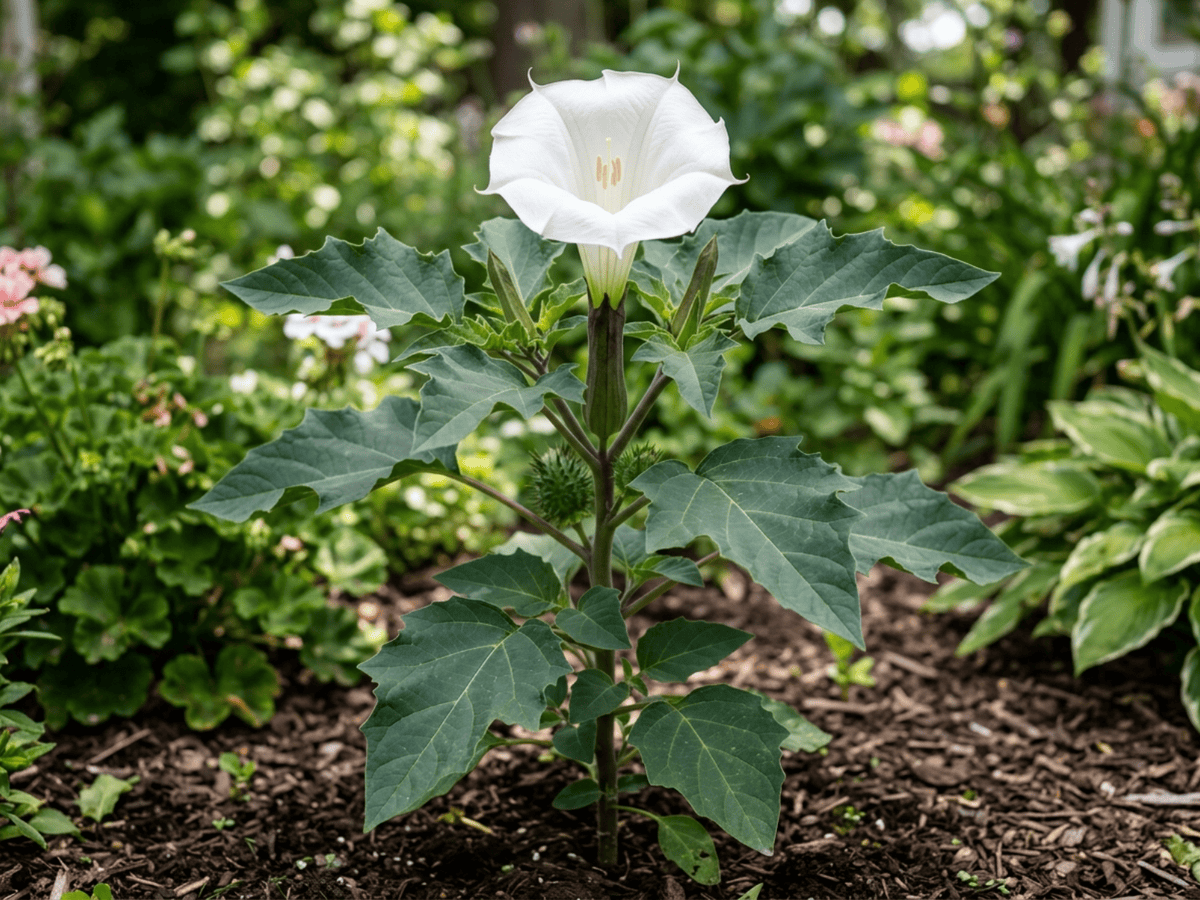
Plants with similar care
 Chinese AbeliaAbelia chinensis
 Fragrant AbeliaAbelia mosanensis
 Large-Flowered AbeliaAbelia uniflora
 Glossy AbeliaAbelia x grandiflora
Frequently asked questions
How often should I water Sacred Datura?
In summer, water about every 7 days; in winter, about every 30 days. Adjust for heat, pot size and drainage.
How much light does Sacred Datura need?
Full sun: 6+ hrs direct. Watch the leaves — scorching or stretching means the light needs adjusting.
Is Sacred Datura toxic to cats or dogs?
Pets Toxic (Dogs Toxic · Cats Toxic) Educational information, not medical or veterinary advice. If exposure is suspected, contact a doctor or veterinarian.
Is Sacred Datura easy to grow?
Yes — it is considered an easy, beginner-friendly plant.
When does Sacred Datura bloom?
It typically blooms Jun–Nov in the Northern Hemisphere.
YardMate
Identify any plant in seconds
Snap a photo — YardMate names the plant, diagnoses problems, and reminds you when to water.
Download on the App Store