 YardMate
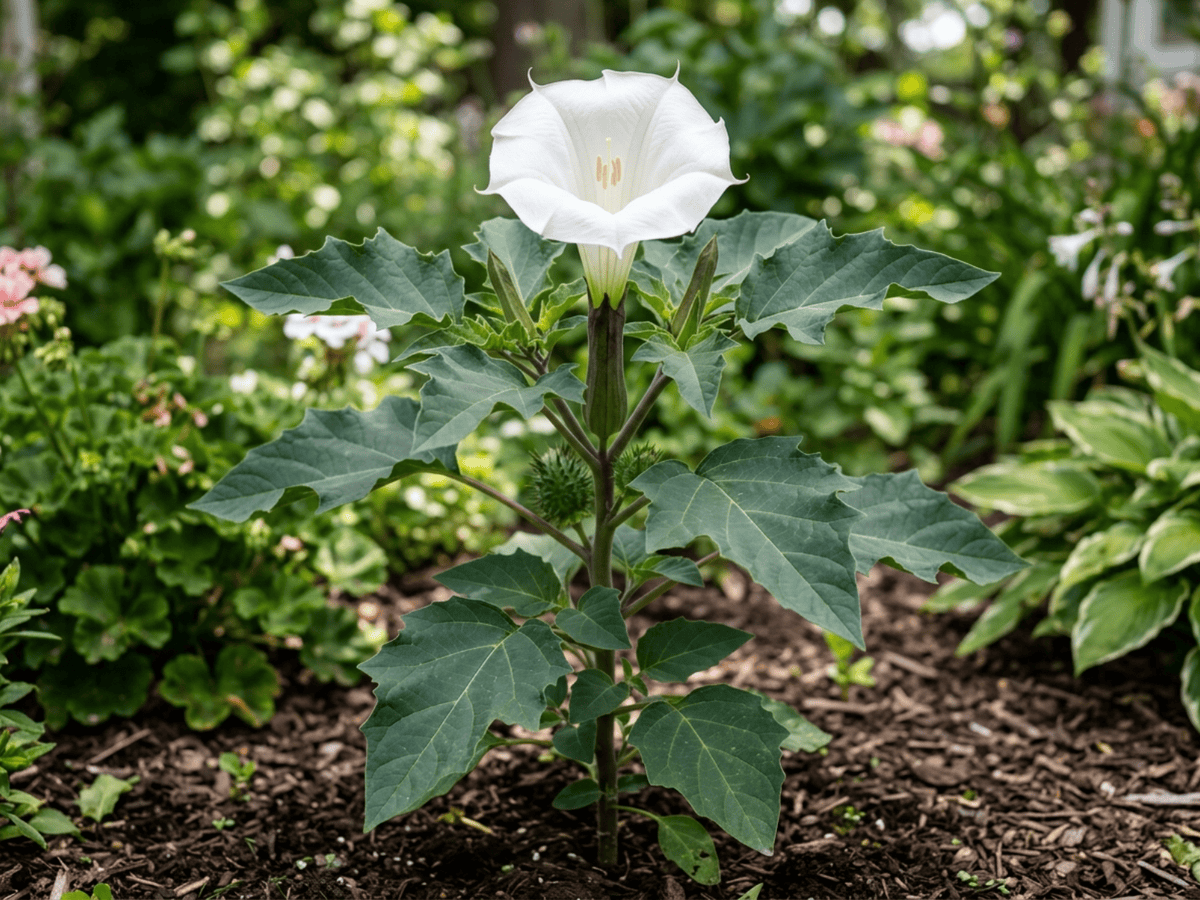


Jimsonweed
Datura stramonium
Easy · Beginner friendlyAbout Jimsonweed
Jimsonweed, also called Thorn Apple or Devil's Snare, is a notorious annual weed found worldwide, believed to have originated in Mexico or Central Asia. It grows 2 to 5 feet tall with coarse, irregularly toothed leaves that emit a foul odor when crushed. The plant produces striking trumpet-shaped white or purple flowers, 3 to 4 inches long, that open in the evening and attract hawk moths. These are followed by distinctive spiny seed capsules resembling medieval maces, each containing hundreds of small black seeds. Every part of the plant is extremely poisonous, containing tropane alkaloids — scopolamine, hyoscyamine, and atropine — that cause severe hallucinations, hyperthermia, rapid heartbeat, seizures, and death. Despite its toxicity, the plant has a long history in traditional medicine and shamanic rituals across many cultures. It colonizes disturbed ground, roadsides, and agricultural fields with aggressive self-seeding. The name 'Jimsonweed' derives from Jamestown, Virginia, where British soldiers were famously poisoned by it in 1676.
- Drought-tolerant
- Fragrant
- Fast-growing
- Medicinal
How to care for Jimsonweed
Watering
- Springevery 5 days
- Summerevery 4 days
- Fallevery 7 days
- Winterpause watering
Soil · Well-draining
- Top dressingPine bark mulch10%
- Main mixPotting soil + perlite 2:170%
- DrainageLECA / gravel20%
Never skip the drainage layer — standing water is the top cause of root rot.
FERTILIZER
This plant needs little to no feeding.
At a Glance
- NativeCentral America
- Height2–4 ft (0.6–1.2 m)
- Spread2–3 ft (0.6–0.9 m)
- Flower colorWhite, Purple
- Foliage colorGreen
- SoilLoamy, Well-drained
- LocationsYard
Bloom time
BLOOM CYCLE
Peak bloom
Jun–Aug
White or purple trumpets open in the evening; followed by spiny seed pods
Fragrance
MODERATE FRAGRANCE
Evening-opening flowers have a slightly sickly-sweet scent.
Toxicity
Humans Severe · Pets Severe
scopolamine, hyoscyamine, and atropine
Severe
- All
- Ingestion
- Inhalation
EXPOSURE Eating any part of the plant. Inhaling any part of the plant.
EFFECT Severe tropane alkaloid poisoning: delirium, hallucinations, tachycardia, hyperthermia, seizures, death. Therapeutic-to-lethal dose range is narrow.
NOTE Documented concern for humans: Severe tropane alkaloid poisoning: delirium, hallucinations, tachycardia, hyperthermia, seizures, death. Therapeutic-to-lethal dose range is narrow.
Severe
- All
- Ingestion
EXPOSURE Eating any part of the plant.
EFFECT Agitation, hyperthermia, seizures, death possible.
NOTE ASPCA lists Datura as toxic to dogs, cats, and horses. Extremely dangerous to humans; multiple recreational-use deaths documented.
Severe
- All
- Ingestion
EXPOSURE Eating any part of the plant.
EFFECT Same as dogs.
NOTE ASPCA lists Datura as toxic to dogs, cats, and horses. Extremely dangerous to humans; multiple recreational-use deaths documented.
Educational information, not medical or veterinary advice. If exposure is suspected, contact a doctor or veterinarian.
DISTRIBUTION


- Native
- Introduced
- Central America
History
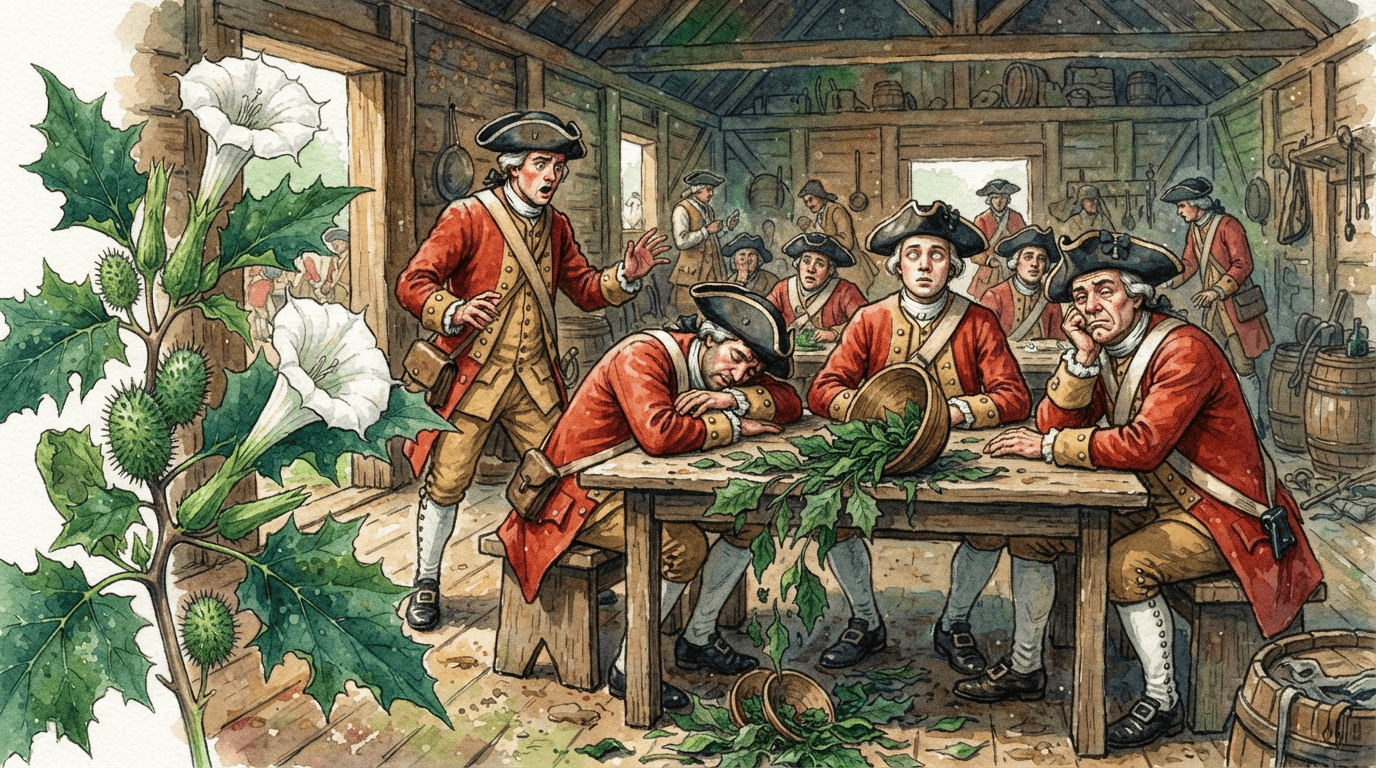
Datura stramonium — known as jimsonweed, thornapple, or devil's trumpet — is likely native to Central America (Mexico, Central American highlands), though it has naturalized so thoroughly across temperate and tropical regions worldwide that its original range is debated. The common name "jimsonweed" is a corruption of "Jamestown weed" and derives from a famous 1676 incident: British soldiers sent to Jamestown, Virginia to suppress Bacon's Rebellion were given a salad containing D. stramonium leaves and, according to eyewitness Robert Beverley's 1705 history, "turned natural fools" for eleven days before recovering — the incident anchored the species' reputation in English-speaking North America. All parts of the plant contain high concentrations of tropane alkaloids — scopolamine, hyoscyamine, atropine — making it one of the most dangerously poisonous common weeds of temperate and warm-temperate regions.
It has a long history of ritual and medicinal use in Mesoamerican and Mississippian North American indigenous societies, in ancient Indian Ayurveda (where it is dedicated to Shiva and called "dhatura"), and in European witchcraft tradition (it was likely one of the ingredients in "witches' flying ointments"). Modern recreational use is extremely dangerous — the therapeutic-to-toxic window is narrow and unpredictable, and multiple deaths and permanent psychosis cases have been documented.
Datura stramonium gained infamy during Bacon's Rebellion in 1676, when British soldiers in Jamestown, Virginia ate the plant in a salad and suffered days of delirious hallucination — hence 'Jamestown Weed,' shortened to Jimsonweed. The plant has been used in shamanic rituals by Native American peoples, Hindu sadhus, and traditional African healers for millennia. In modern medicine, its alkaloids atropine and scopolamine became critical pharmaceutical compounds — atropine is still used to dilate pupils and treat nerve agent poisoning.
Symbolism & meaning
What It Symbolizes
Jimsonweed wears caution like a white trumpet. The flowers are ghostly and magnificent, the seed capsules armored, the whole plant charged with folklore, accident, and altered states. Its symbolism is the border between wonder and risk: beauty that refuses to be made harmless.
- Caution — the deadly beauty serves as a warning against reckless temptation
- Illusion — the hallucinogenic properties represent the deceptive nature of appearances
Where the Name Comes From
'Datura' likely derives from the Hindi 'dhatura,' the traditional name for the plant in India. 'Stramonium' may come from Greek 'strychnos' (nightshade) or the Tatar word for the plant.
Uses & Fun Facts
- Historically used in pharmaceuticals; toxic and unsafe for home use
- Featured in folklore and ritual traditions across many cultures
Related plants
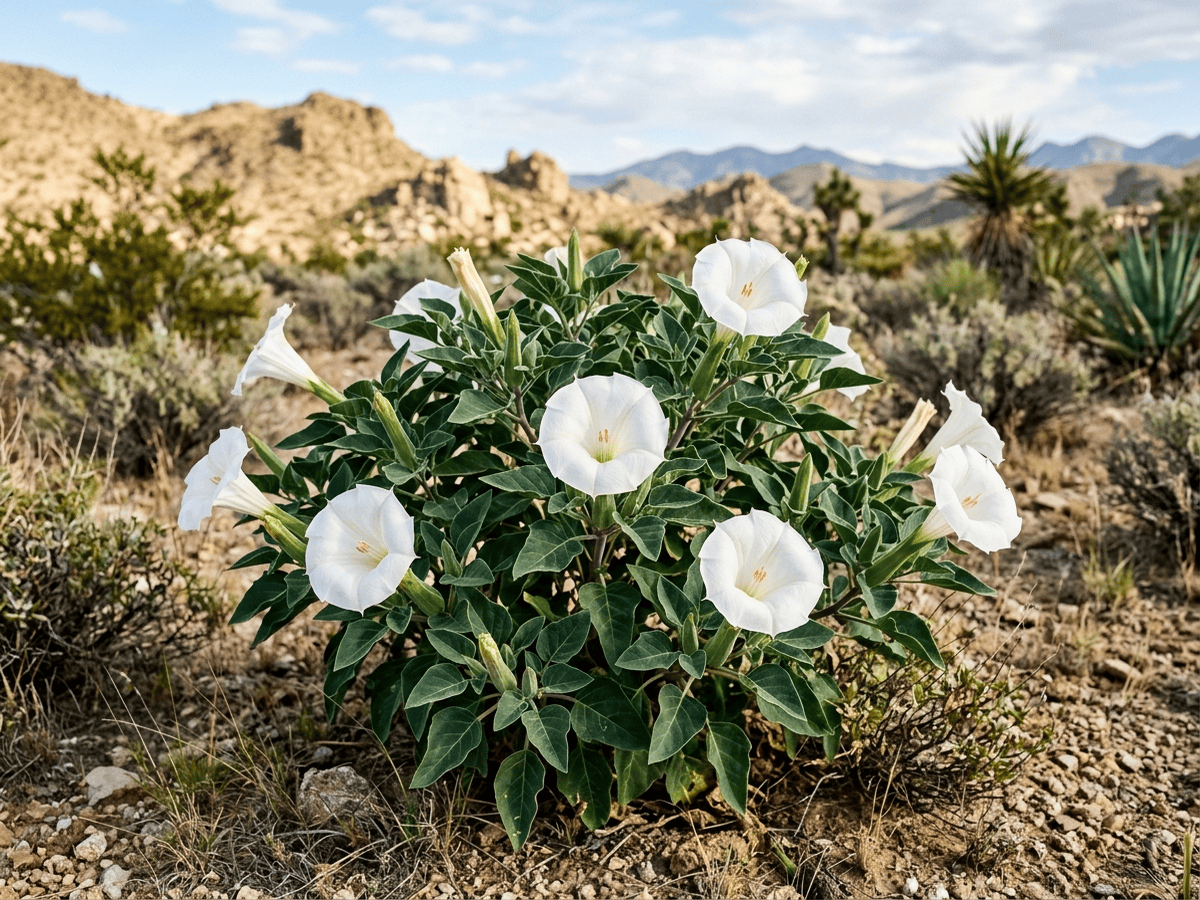
More Datura plants
Plants with similar care
 Chinese AbeliaAbelia chinensis
 Fragrant AbeliaAbelia mosanensis
 Large-Flowered AbeliaAbelia uniflora
 Glossy AbeliaAbelia x grandiflora
Frequently asked questions
How often should I water Jimsonweed?
Water about every 5 days during the growing season, and always let excess water drain away.
How much light does Jimsonweed need?
Full sun: 6+ hrs direct. Watch the leaves — scorching or stretching means the light needs adjusting.
Is Jimsonweed toxic to cats or dogs?
Pets Severe (Dogs Severe · Cats Severe) Educational information, not medical or veterinary advice. If exposure is suspected, contact a doctor or veterinarian.
Is Jimsonweed easy to grow?
Yes — it is considered an easy, beginner-friendly plant.
When does Jimsonweed bloom?
It typically blooms Jun–Aug in the Northern Hemisphere.
YardMate
Identify any plant in seconds
Snap a photo — YardMate names the plant, diagnoses problems, and reminds you when to water.
Download on the App Store