 YardMate



Pink Trailing Iceplant
Delosperma cooperi
Easy · Beginner friendlyAbout Pink Trailing Iceplant
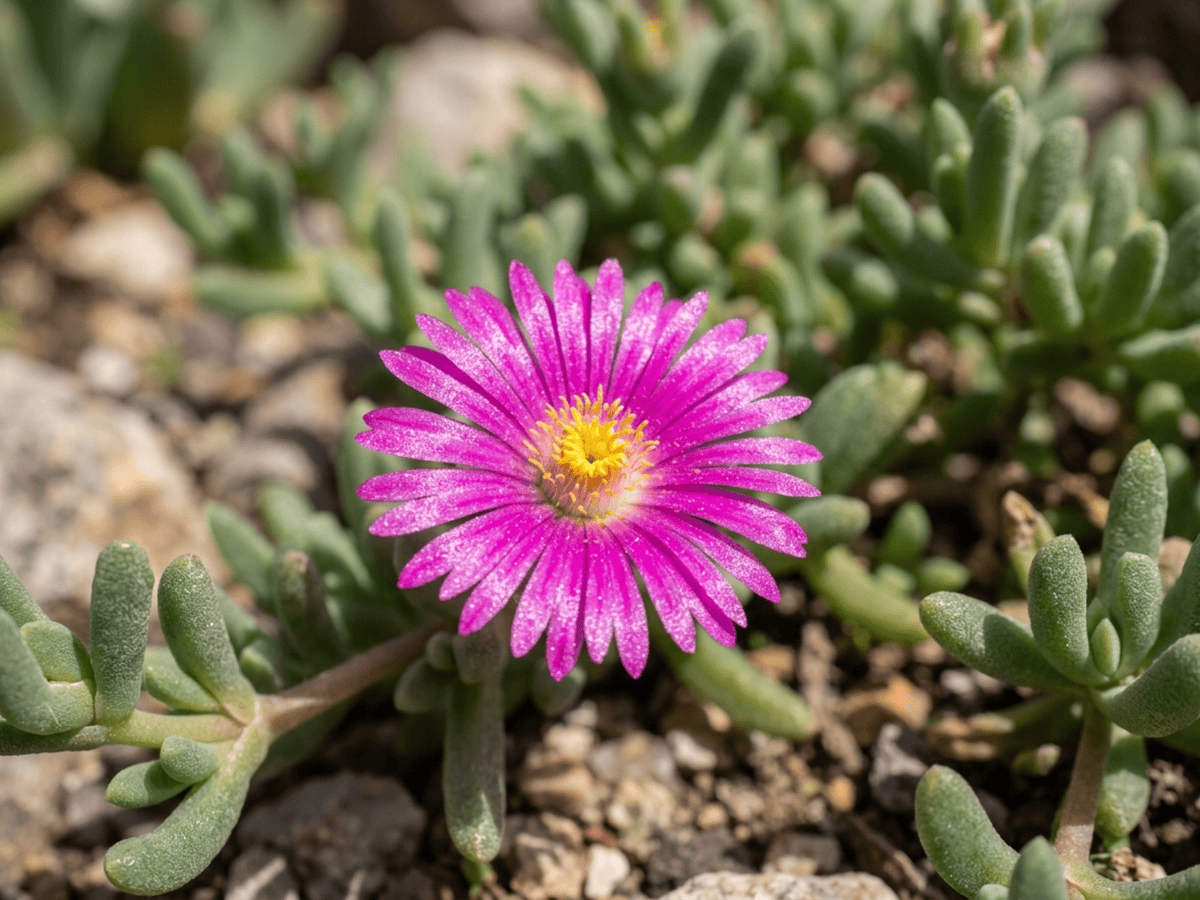
Delosperma cooperi, the trailing ice plant or hardy ice plant, is a mat-forming succulent groundcover native to South Africa. It produces a dazzling carpet of vivid magenta-pink daisy-like flowers throughout summer, each bloom glistening with tiny crystalline cells that sparkle in sunlight like ice — giving the plant its common name. The fleshy cylindrical leaves are evergreen in mild climates and provide good winter texture. Growing just 10–15 centimeters tall, it spreads to form wide mats that tolerate extreme heat, drought, and poor rocky soil. It is one of the few ice plants reliably hardy in temperate climates, surviving temperatures down to minus 20 degrees Celsius. The plant demands excellent drainage and full sun; it rots quickly in wet winter conditions. It is widely used in xeriscaping, coastal gardens, and as a lawn alternative in arid regions.
- Drought-tolerant
- Groundcover
- Long-blooming
How to care for Pink Trailing Iceplant
Watering
- Springevery 10 days
- Summerevery 7 days
- Fallevery 14 days
- Winterevery 30 days
Soil · Fast-draining
- Main mixSand + pumice + soil 1:1:150%
- DrainagePumice / gravel50%
Keep grit at half the mix or more — this soil is meant to dry out fast.
FERTILIZER
- Springevery 60 days
- Summerevery 60 days
At a Glance
- NativeAfrica
- Height0.3–0.5 ft (0.1–0.2 m)
- Spread1–2 ft (0.3–0.6 m)
- Flower colorPurple, Pink, Red, Orange
- Foliage colorGreen, Blue-green
- SoilSandy, Well-drained
- LocationsYard
Bloom time
BLOOM CYCLE
Peak bloom
Jun–Aug
Vivid magenta-pink flowers all summer; needs full sun to bloom well
Fragrance
NO FRAGRANCE
No notable fragrance.
Toxicity
No toxicity has been reported for this plant. Still, it is wise to keep pets from chewing on any houseplant.
Educational information, not medical or veterinary advice. If exposure is suspected, contact a doctor or veterinarian.
DISTRIBUTION


- Native
- Introduced
- Africa
History
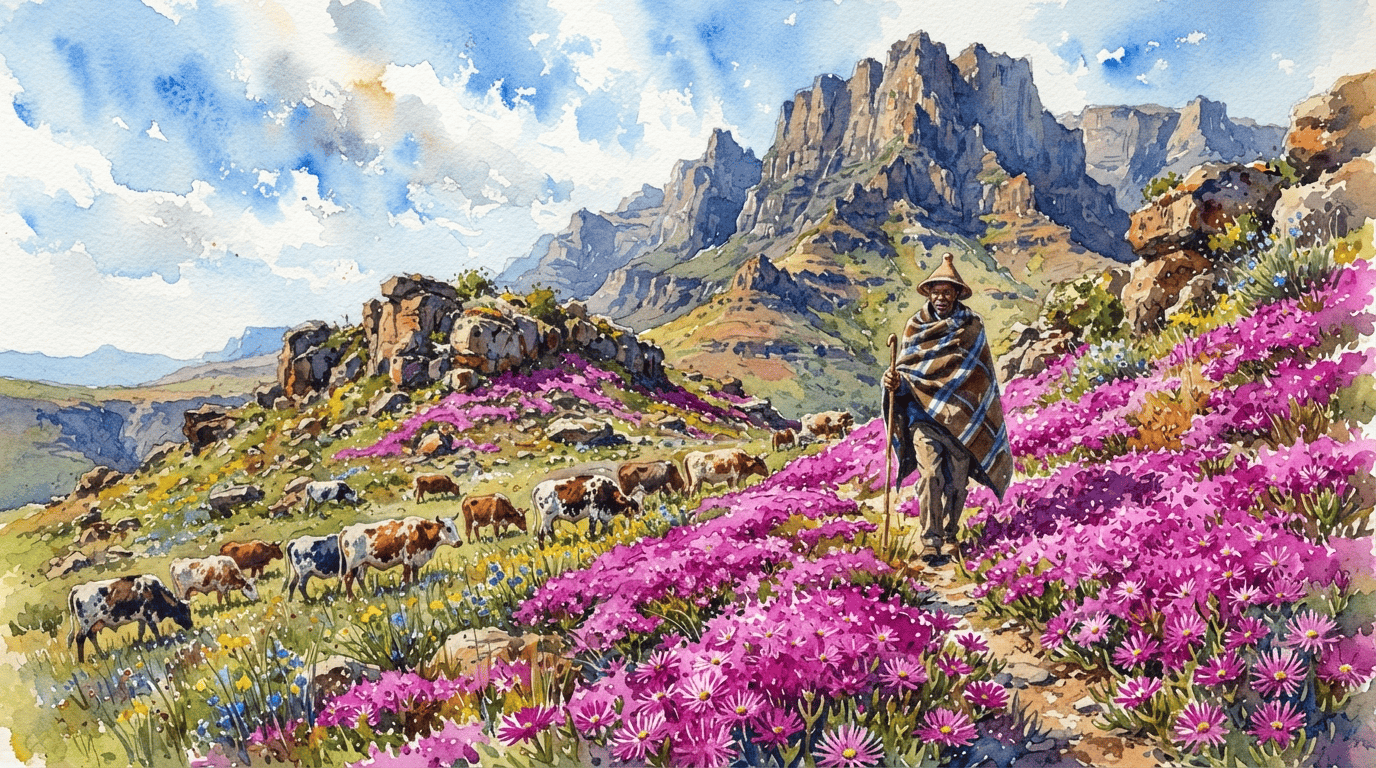
Delosperma cooperi is native to the grasslands of the Drakensberg Mountains of eastern South Africa and Lesotho, at elevations from 1,400 to 2,500 meters where summer monsoon rains alternate with dry, cold, frosty winters — an unusual niche for the mostly tropical-to-warm-desert Aizoaceae family. Its cold-hardy adaptation to high-elevation South African winters (tolerating sustained temperatures below -15°C) makes it one of the very few succulents reliably hardy to USDA Zone 5, which has driven its enormous 21st-century popularity in western US rock gardens, parkway plantings, rooftop gardens, and low-water landscape designs. The brilliant magenta-purple summer-to-fall flowers open in sunshine and close at night and in overcast weather, covering the plant in a dense carpet. The name "ice plant" derives from the shimmering crystalline papillae on the leaves of several related genera (particularly Mesembryanthemum), though Delosperma itself lacks the prominent crystals.
Plant Select (the Denver Botanic Gardens / Colorado State University program) played a major role in introducing and popularizing several Delosperma species and cultivars to the US intermountain West from the 1990s-2010s. Cultivars include "Fire Spinner," "Jewel of Desert" series, and "Table Mountain." Named after Thomas Cooper, a 19th-century English botanist who collected plants in South Africa.
The Delosperma genus belongs to the Aizoaceae family, which includes many ice plants from southern Africa's arid regions. The crystalline bladder cells on the leaves evolved to reflect intense African sunlight and reduce water loss. Hardy ice plant gained popularity in Western gardens during the water-conservation movement of the 2000s, becoming a poster plant for xeriscaping. In its native habitat, it colonizes rocky outcrops in the Drakensberg mountains at elevations above 2,000 meters.
Symbolism & meaning
What It Symbolizes
Pink Trailing Iceplant radiates light from succulent mats, its glittering crystalline petals shimmering like jewels under hard sun. Tough enough for rooftops and rock walls, it expresses resilience as much as radiance, holding fast where heat and drought defeat softer plants. In each daisy-like flower lies a small lesson: brilliance is often the gift of survival.
- Radiance — its sparkling crystalline flowers shimmer like jewels in sunlight
- Resilience — thrives in extreme heat and drought, embodying tough beauty
Where the Name Comes From
The name Pink Trailing Iceplant describes its trailing stems. Delosperma from Greek 'delos' (visible) and 'sperma' (seed), as the seeds are not covered by a membrane. Cooperi honors botanist Thomas Cooper.
Uses & Fun Facts
- Mat-forming succulent carpets dry slopes and green roofs
- Magenta-pink daisy flowers sparkle through hot summer months
- Blooms attract bees in coastal and xeric plantings
Related plants
Plants with similar care
 Chinese AbeliaAbelia chinensis
 Fragrant AbeliaAbelia mosanensis
 Large-Flowered AbeliaAbelia uniflora
 Glossy AbeliaAbelia x grandiflora
Frequently asked questions
How often should I water Pink Trailing Iceplant?
In summer, water about every 7 days; in winter, about every 30 days. Adjust for heat, pot size and drainage.
How much light does Pink Trailing Iceplant need?
Full sun: 6+ hrs direct. Watch the leaves — scorching or stretching means the light needs adjusting.
Is Pink Trailing Iceplant toxic to cats or dogs?
No toxicity has been reported for this plant. Still, it is wise to keep pets from chewing on any houseplant. Educational information, not medical or veterinary advice. If exposure is suspected, contact a doctor or veterinarian.
Is Pink Trailing Iceplant easy to grow?
Yes — it is considered an easy, beginner-friendly plant.
When does Pink Trailing Iceplant bloom?
It typically blooms Jun–Aug in the Northern Hemisphere.
YardMate
Identify any plant in seconds
Snap a photo — YardMate names the plant, diagnoses problems, and reminds you when to water.
Download on the App Store