 YardMate

Bleeding Heart
Dicentra spectabilis
Easy · Beginner friendlyAbout Bleeding Heart
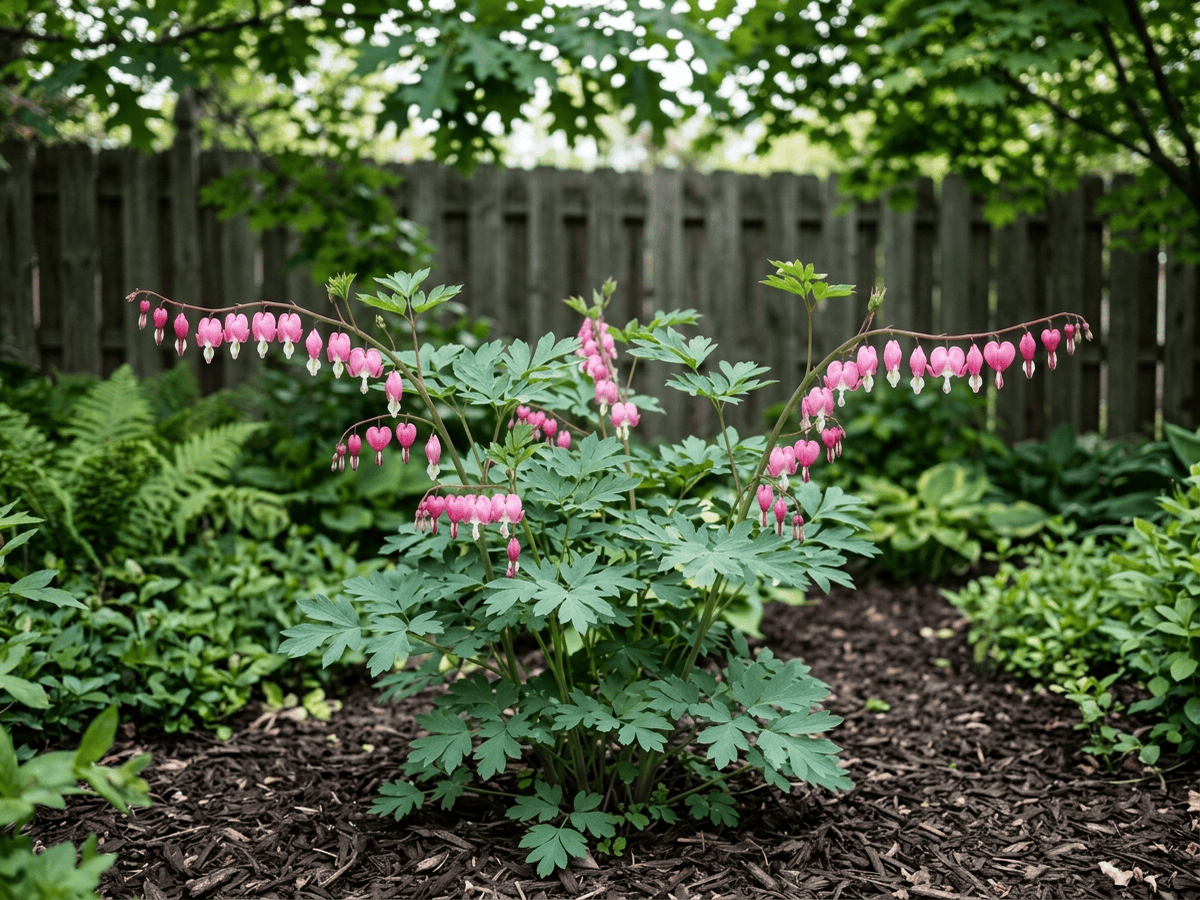
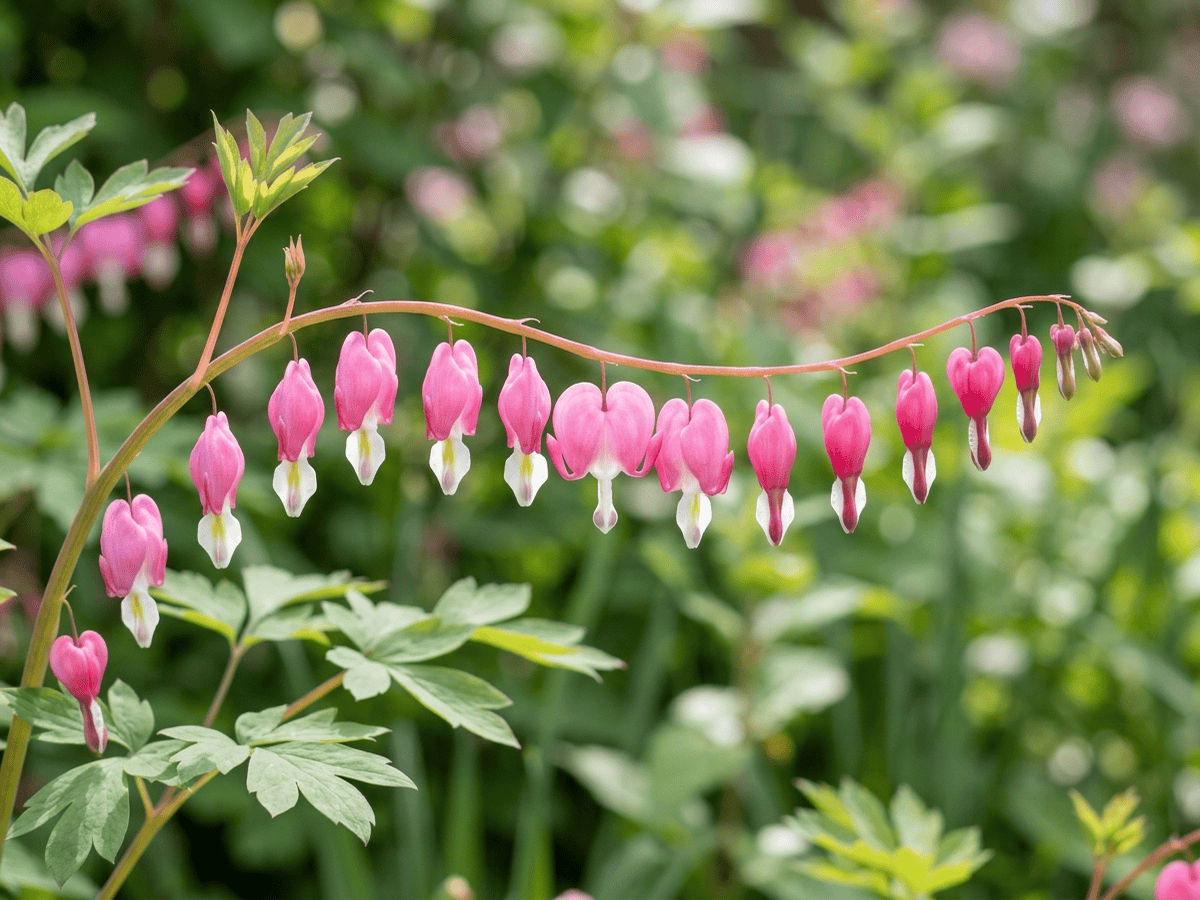
Dicentra spectabilis (syn. Lamprocapnos spectabilis), bleeding heart, is a spring-blooming perennial native to Siberia, northern China, Korea, and Japan. Its 60-90 cm arching stems carry rows of distinctive heart-shaped pink-and-white pendant flowers with a protruding 'tear drop,' creating one of the most recognizable silhouettes in the spring garden.
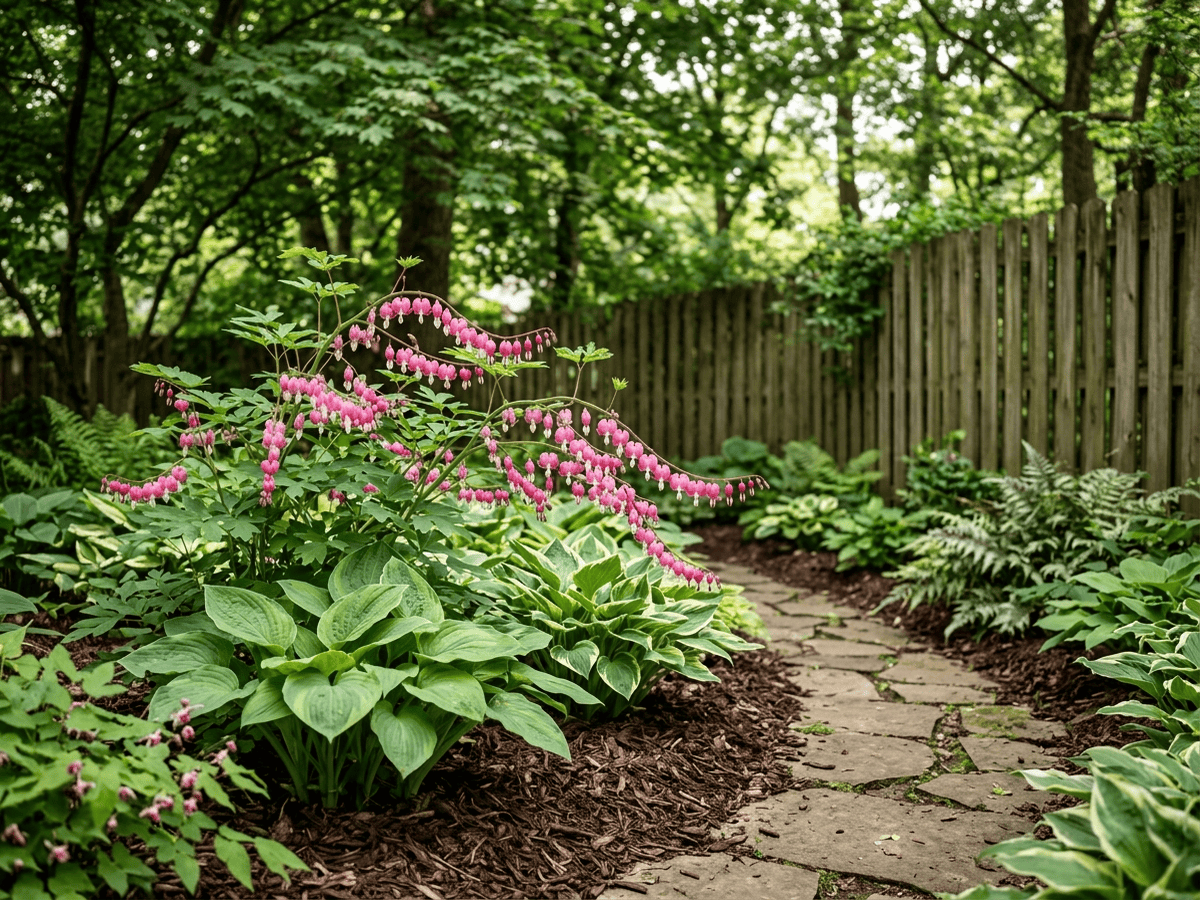
Bleeding heart thrives in cool, moist, partially shaded conditions. Plants emerge in mid-spring, bloom for 4-6 weeks, then go summer-dormant in most climates — foliage yellows and disappears until next spring. Companion plants that fill the gap (hostas, ferns, astilbes) are standard cottage-garden practice.
Robert Fortune introduced the species to European horticulture in 1846 from the Shanghai region, and it became one of the defining cottage-garden perennials of the Victorian era. The white form 'Alba' and the golden-leaved 'Gold Heart' are popular variants.
- Shade-tolerant
How to care for Bleeding Heart
Watering
- Springevery 5 days
- Summerevery 7 days
- Fallevery 14 days
- Winterevery 30 days
Soil · Well-draining
- Top dressingPine bark mulch10%
- Main mixPotting soil + perlite 2:170%
- DrainageLECA / gravel20%
Never skip the drainage layer — standing water is the top cause of root rot.
FERTILIZER
Balanced Feed 14-14-14
An even feed covers all three needs at once, keeping leaves, roots and blooms moving together with nothing pushed out of balance.
- Nitrogen · Leaves
- Phosphorus · Roots + Blooms
- Potassium · Strength
- Springevery 30 days
At a Glance
- NativeEast Asia
- Height2–3 ft (0.6–0.9 m)
- Spread1.5–2.5 ft (0.5–0.8 m)
- Flower colorPink, White
- Foliage colorGreen, Blue-green, Yellow
- SoilLoamy, Moisture-retentive, Rich
- LocationsYard
Bloom time
BLOOM CYCLE
Peak bloom
Apr–Jun
Pink heart-shaped pendant flowers arch along stems in mid-to-late spring.
Fragrance
NO FRAGRANCE
Not fragrant.
Toxicity
Humans Moderate · Pets Moderate
isoquinoline alkaloids and protopine
Moderate
- All
- Ingestion
- Contact
EXPOSURE Eating any part of the plant. Touching any part of the plant.
EFFECT Skin irritation and vomiting if ingested in quantity.
NOTE Documented concern for humans: Skin irritation and vomiting if ingested in quantity.
Moderate
- Root
- Leaf
- Ingestion
EXPOSURE Eating roots and leaves.
EFFECT Tremors, seizures, staggering, and vomiting.
NOTE ASPCA lists Dicentra species as toxic to dogs, cats, and horses. Can cause neurological signs in pets.
Moderate
- Root
- Leaf
- Ingestion
EXPOSURE Eating roots and leaves.
EFFECT Tremors, seizures, staggering, and vomiting.
NOTE ASPCA lists Dicentra species as toxic to dogs, cats, and horses. Can cause neurological signs in pets.
Educational information, not medical or veterinary advice. If exposure is suspected, contact a doctor or veterinarian.
DISTRIBUTION

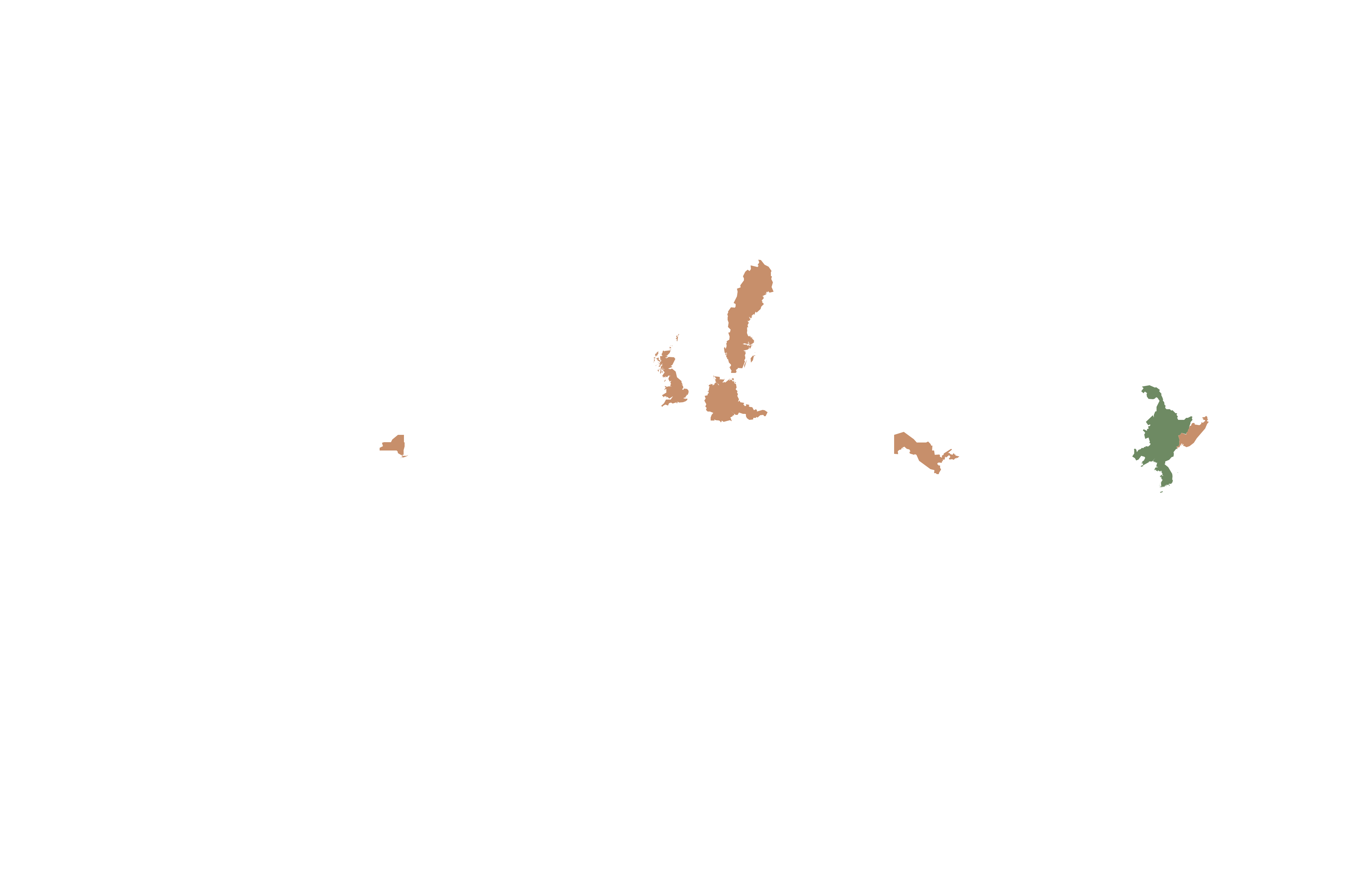
- Native
- Introduced
- East Asia
History

Dicentra spectabilis (recently reclassified as Lamprocapnos spectabilis by molecular systematics, though horticulture retains the old name) is native to Siberia, Heilongjiang, Liaoning, and other northern parts of China, Korea, and northern Japan. Scottish plant hunter Robert Fortune introduced the species to European horticulture in 1846, collecting live plants from the Shanghai region for the Horticultural Society of London. It caused an immediate sensation — the Gardeners' Chronicle wrote in 1847 that it was 'the most beautiful hardy plant recently introduced.'
It became one of the most universally grown cottage-garden perennials of the Victorian era and remains so today. The arching 60-90 cm stems carry 10-20 heart-shaped flowers in a double row, each flower 2-3 cm long with pink outer petals, white inner petals, and a small white 'drop' emerging from the bottom.
The pure white form 'Alba' and the golden-leaved 'Gold Heart' (Hadspen Gardens, 1997) are popular variants. Plants go summer-dormant in most climates — a trait to plan around with later-emerging companions.
Symbolism & meaning
What It Symbolizes
Bleeding Heart hangs its perfect pink lockets in a row along arching stems, the very shape of undying love. In the Victorian language of flowers it meant tender emotion and faithful compassion, and it still arrives in late spring like a quiet declaration. It is the old garden's reminder that the heart, even pierced, even drooping, keeps making the same shape over and over again.
- Undying Love — The heart shape symbolizes love that endures
- Compassion — Victorian flower language of tender emotion
Where the Name Comes From
The name Bleeding Heart describes heart-shaped flowers with a droplet-like tip. Dicentra from Greek 'di' (two) + 'kentron' (spur), referring to the two outer spurs; 'spectabilis' means spectacular.
Uses & Fun Facts
- Pink heart-shaped pendants arch over ferny spring shade beds
- Arching stems of dangling hearts treasured in spring vases
Related plants
More Dicentra plants

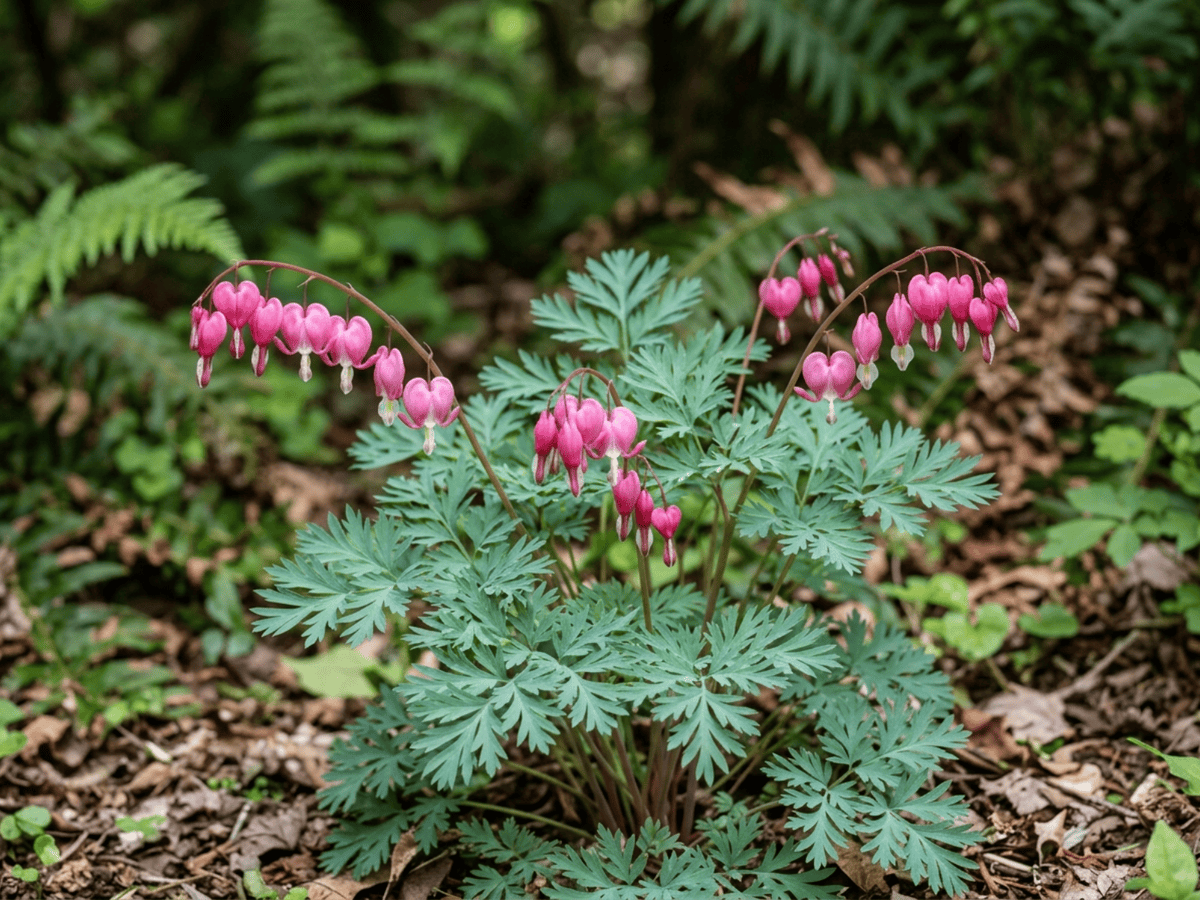
Plants with similar care
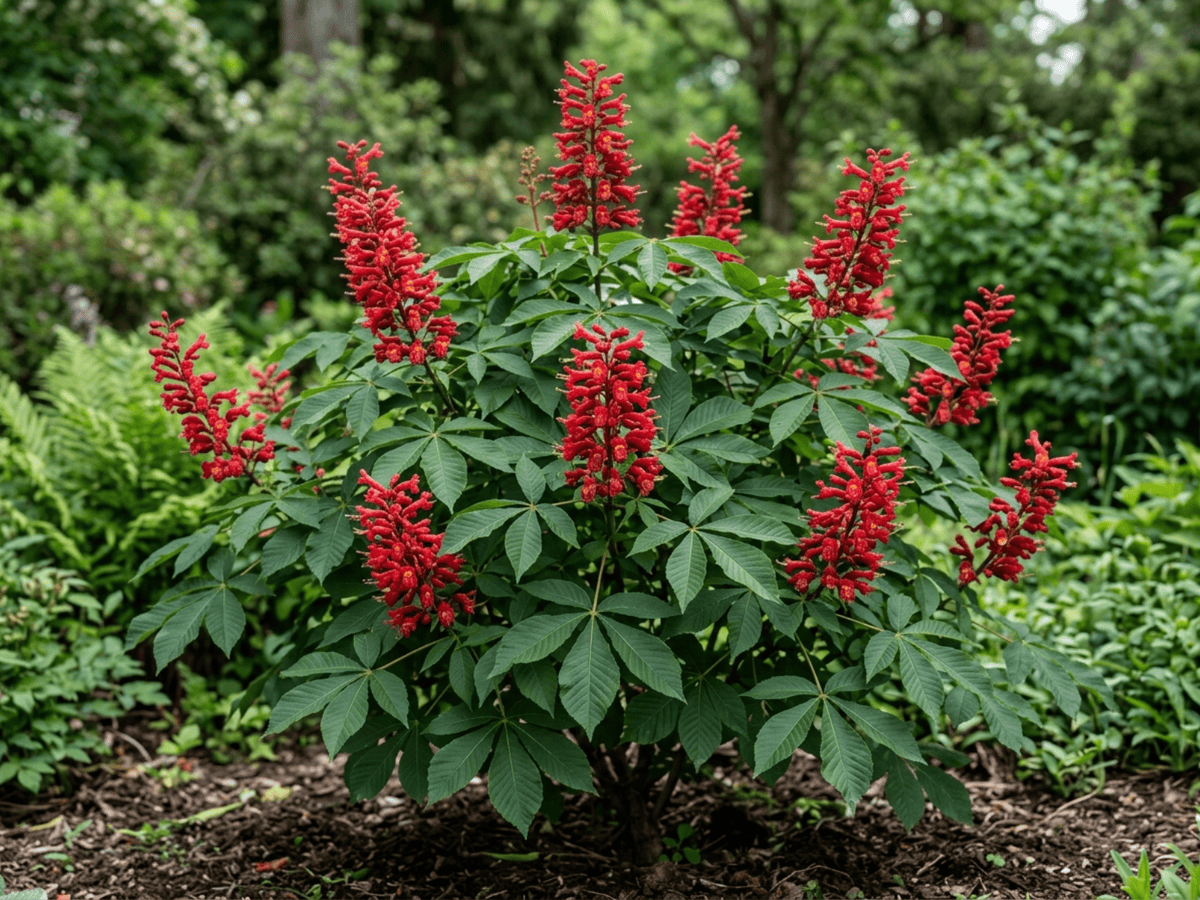 Red BuckeyeAesculus pavia
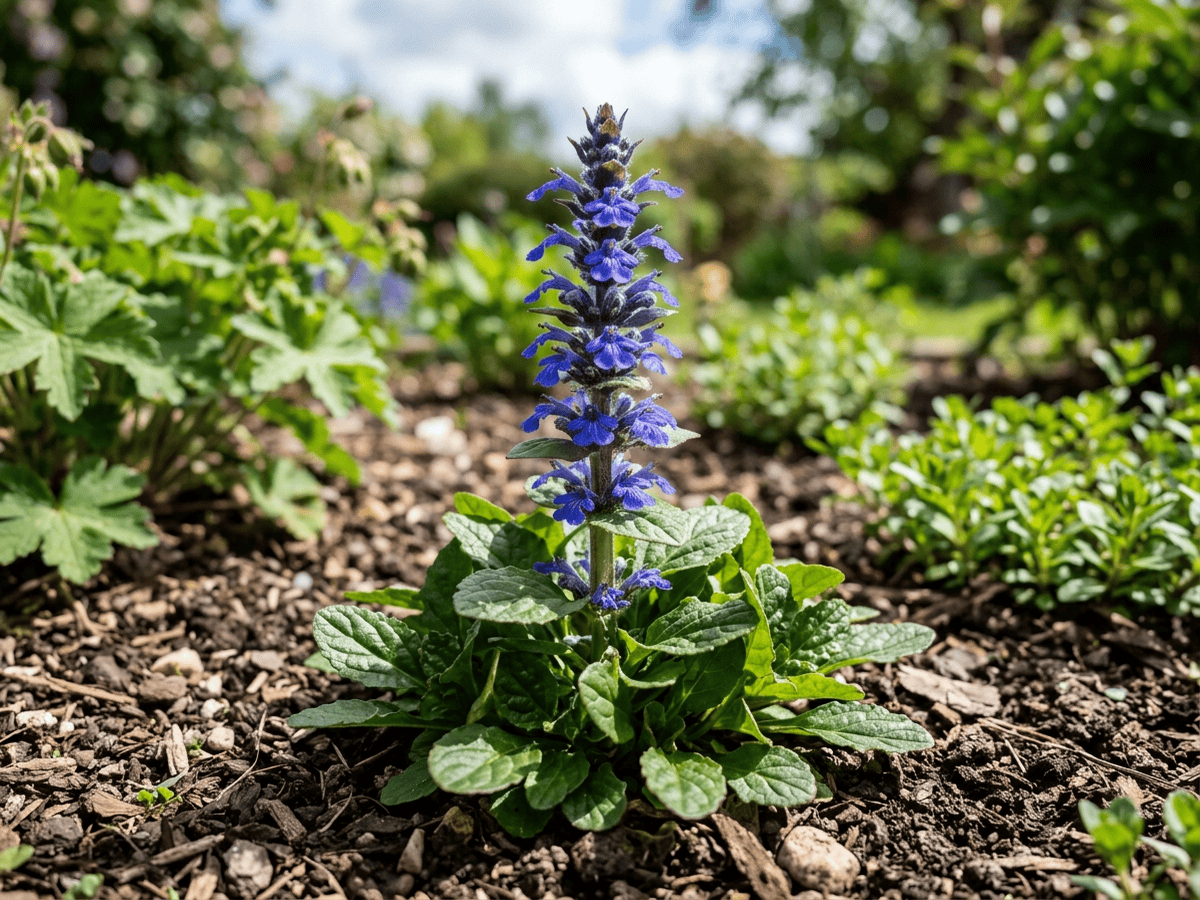 Blue BugleAjuga genevensis
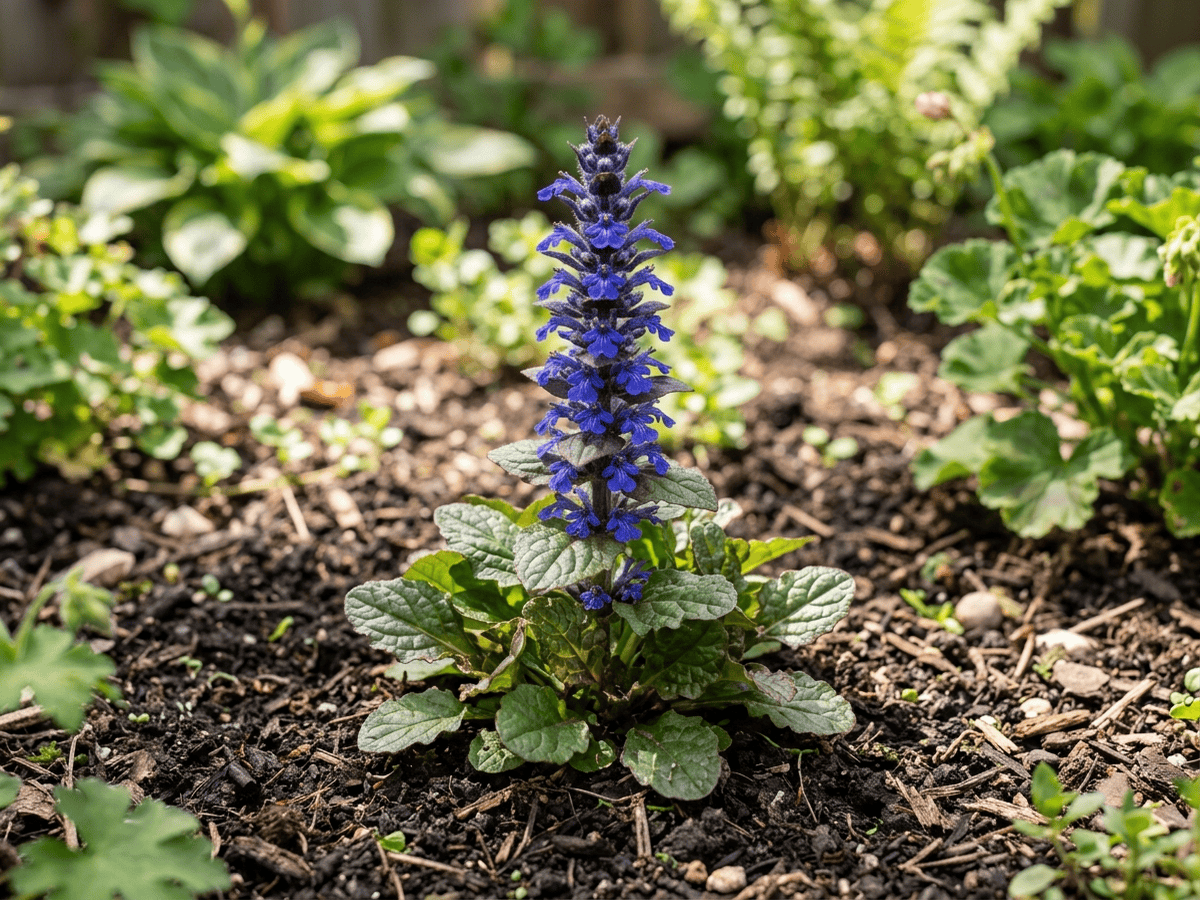 Pyramidal BugleAjuga pyramidalis
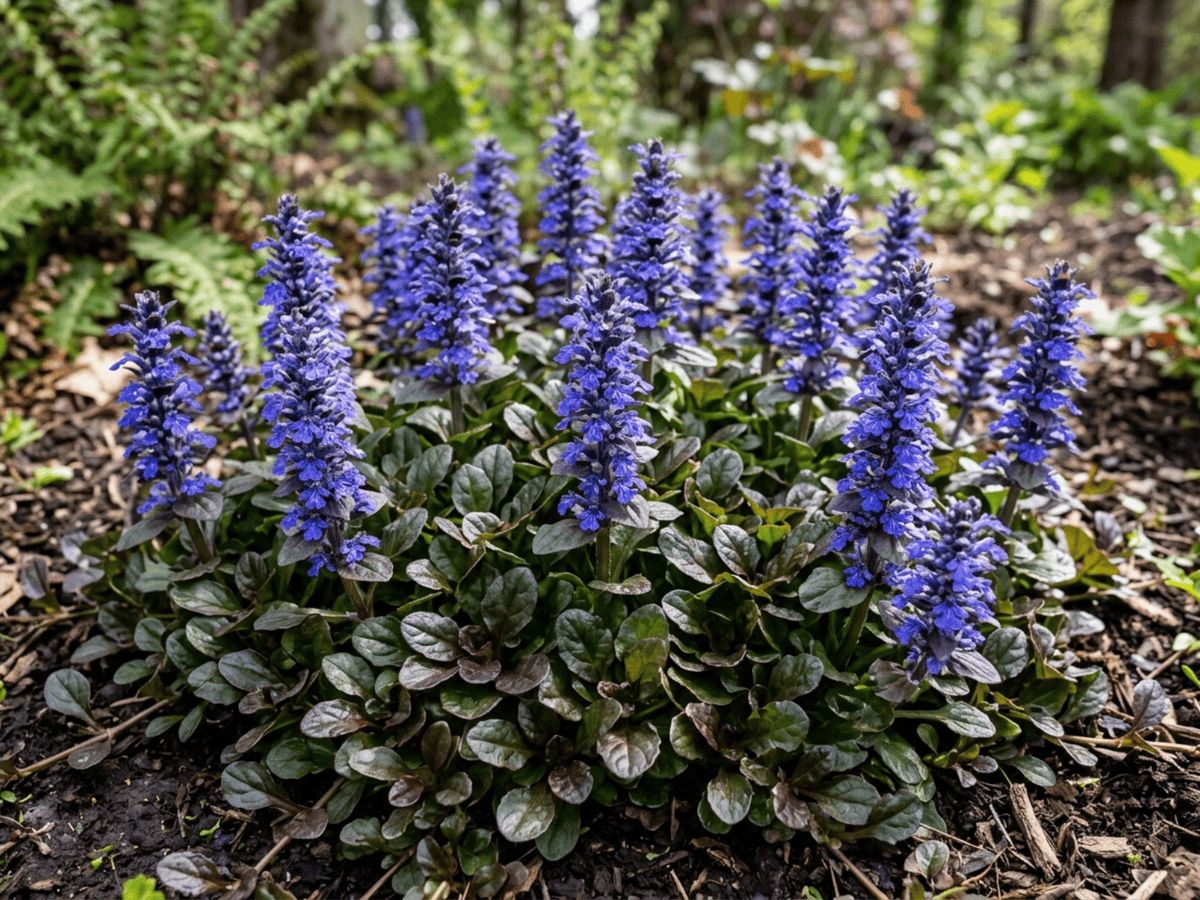 Carpet BugleAjuga reptans
Frequently asked questions
How often should I water Bleeding Heart?
In summer, water about every 7 days; in winter, about every 30 days. Adjust for heat, pot size and drainage.
How much light does Bleeding Heart need?
Part shade: 2–4 hrs direct. Watch the leaves — scorching or stretching means the light needs adjusting.
Is Bleeding Heart toxic to cats or dogs?
Pets Moderate (Dogs Moderate · Cats Moderate) Educational information, not medical or veterinary advice. If exposure is suspected, contact a doctor or veterinarian.
Is Bleeding Heart easy to grow?
Yes — it is considered an easy, beginner-friendly plant.
When does Bleeding Heart bloom?
It typically blooms Apr–Jun in the Northern Hemisphere.
YardMate
Identify any plant in seconds
Snap a photo — YardMate names the plant, diagnoses problems, and reminds you when to water.
Download on the App Store