 YardMate
Venus flytrap
Dionaea muscipula
Hard · Experienced growersAbout Venus flytrap
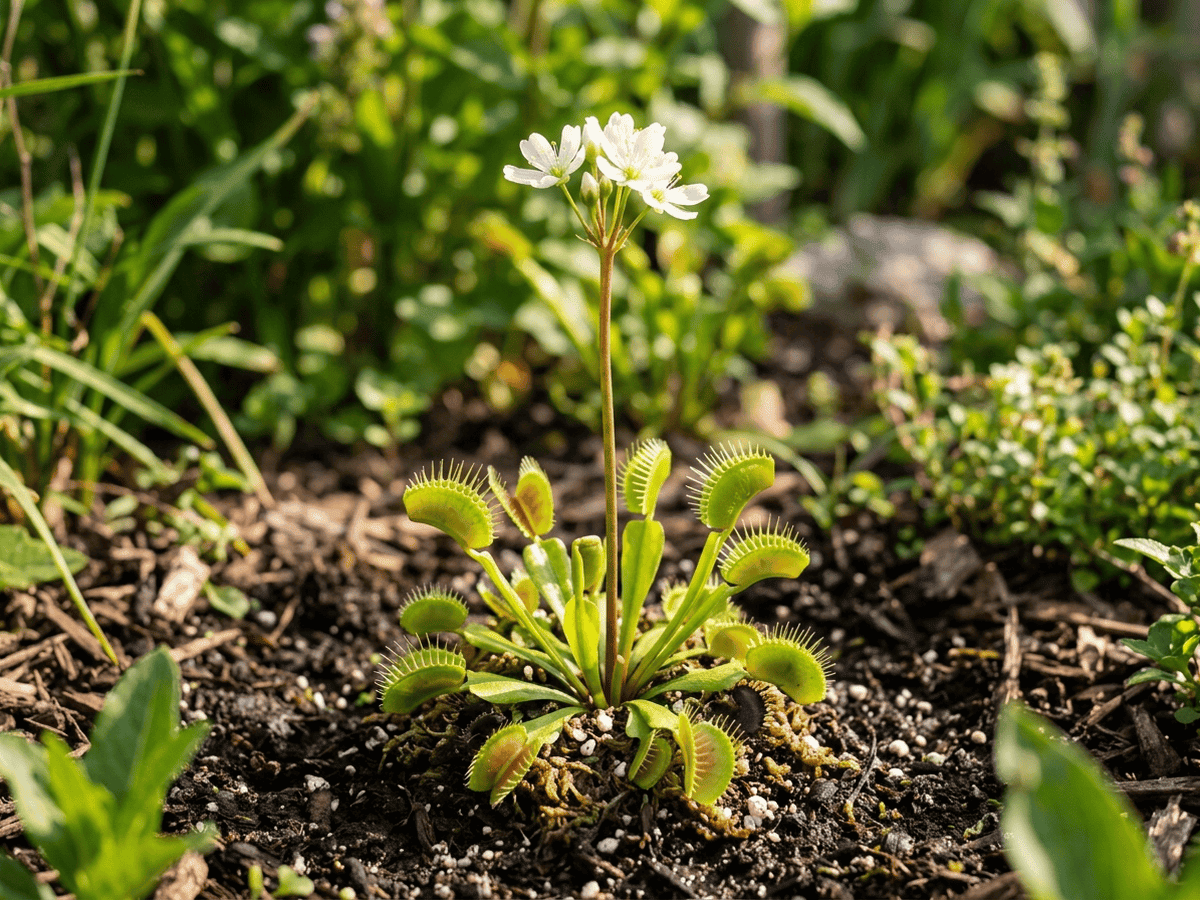
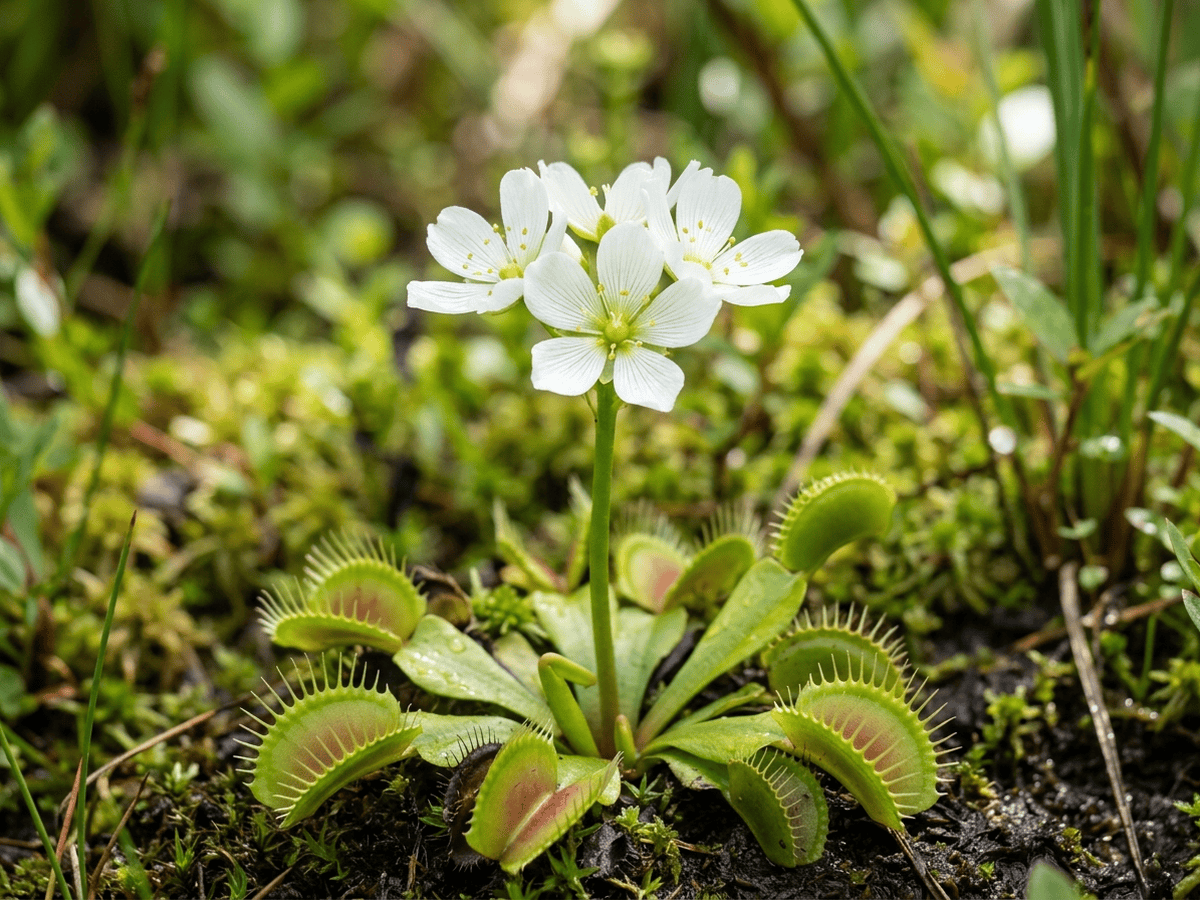
The Venus flytrap is one of the world's few truly carnivorous plants, native to a narrow strip of subtropical wetland along the Carolina coast. Its hinged, jaw-like leaves carry trigger hairs that snap shut in a fraction of a second when an insect brushes them twice within twenty seconds, sealing the prey inside to be slowly dissolved by digestive enzymes. This trap evolved as a survival strategy in the boggy, nitrogen-poor soils of its native habitat, where captured insects supply nutrients the ground cannot. Compact and low-growing, it forms a rosette of traps around a stalk of small white flowers, prized by collectors worldwide.
- Compact
- Slow-growing
- Container-friendly
- Pollinator-friendly
How to care for Venus flytrap
Watering
- Springevery 7 days
- Summerevery 7 days
- Fallpause watering
- Winterpause watering
Soil · Lean & wet
- Single layerPeat + coarse sand 1:1100%
Never fertilize; water only with rain or distilled water.
FERTILIZER
This plant needs little to no feeding.
At a Glance
- NativeNorth America
- Height1 ft (0.3 m)
- Spread1 ft (0.3 m)
- Flower colorWhite
- Foliage colorGreen
- SoilMoist, Well-drained, Acidic
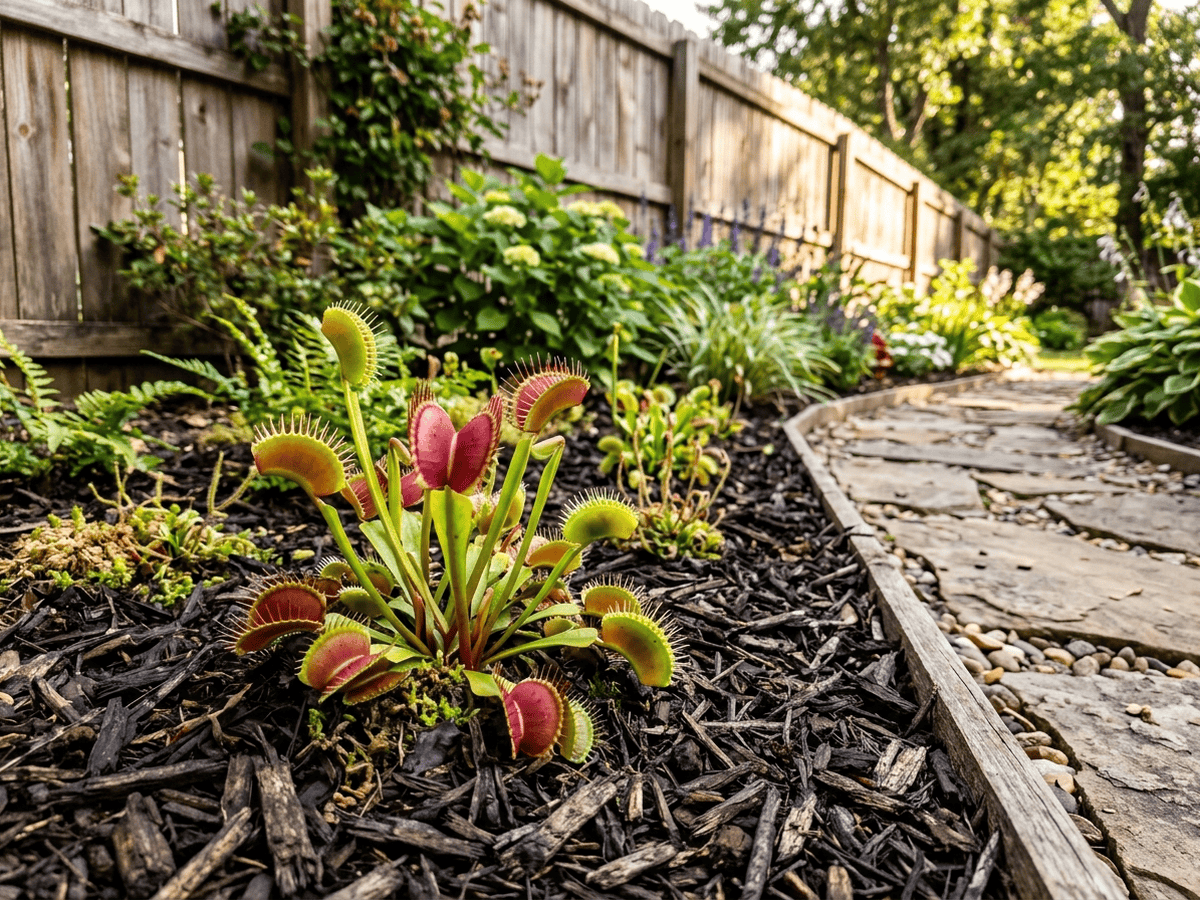
- LocationsYard · Greenhouse
Bloom time
BLOOM CYCLE
Peak bloom
May–Jun
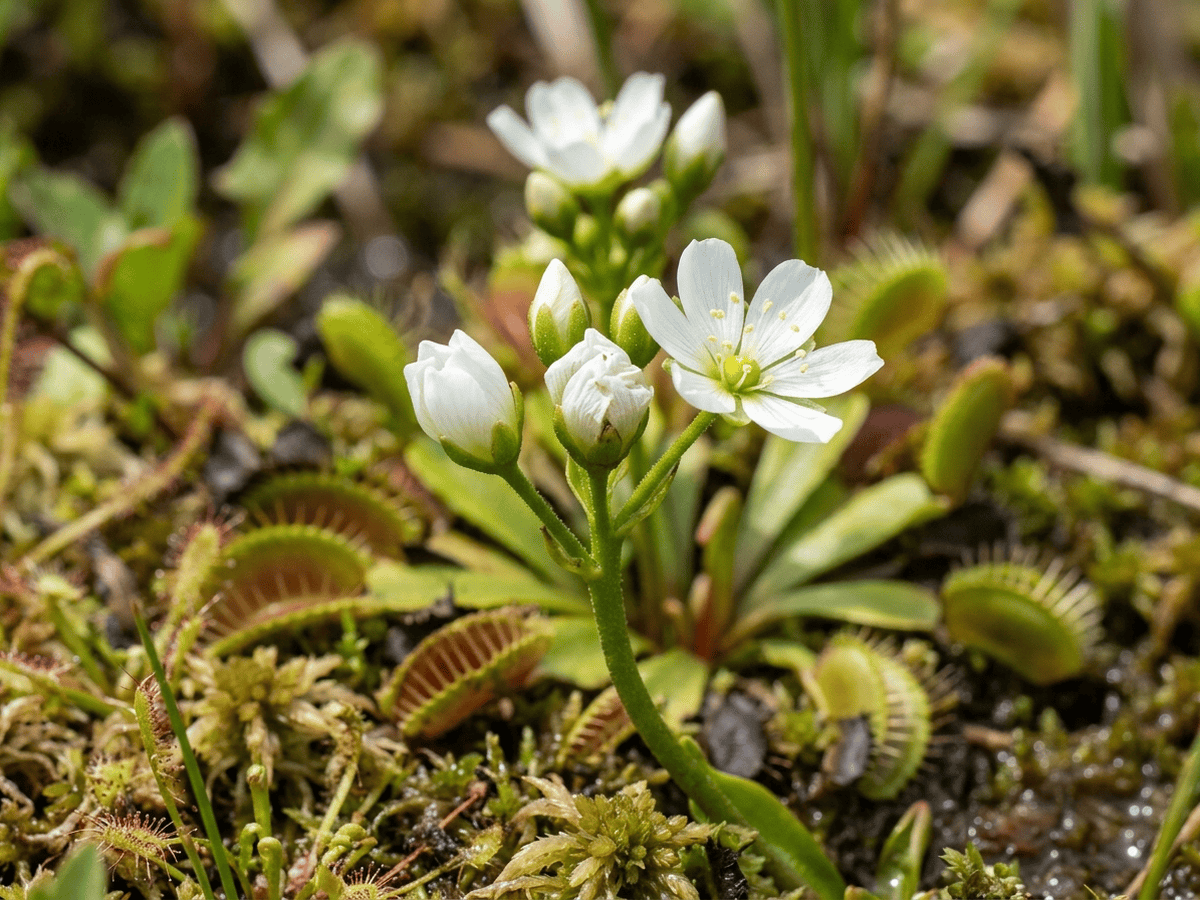
The flowers of this plant bloom between May and June, attracting insects.
Fragrance
LIGHT FRAGRANCE
The small white flowers give off a faint, sweet scent to draw in pollinators, distinct from the traps below, which use visual lures and nectar rather than fragrance to attract crawling prey.
Toxicity
Pets Safe
None reported
Not reported
EXPOSURE No exposure route is reported.
EFFECT No toxic effect is reported.
NOTE No toxicity is reported for humans in this catalog; this is not evidence that the plant is edible or harmless.
Safe
EXPOSURE No exposure route is reported.
EFFECT No toxic effect is reported.
NOTE Authoritative sources report this plant as non-toxic to dogs; this is not evidence that the plant is edible.
Safe
EXPOSURE No exposure route is reported.
EFFECT No toxic effect is reported.
NOTE Authoritative sources report this plant as non-toxic to cats; this is not evidence that the plant is edible.
Educational information, not medical or veterinary advice. If exposure is suspected, contact a doctor or veterinarian.
DISTRIBUTION


- Native
- Introduced
- North America
History
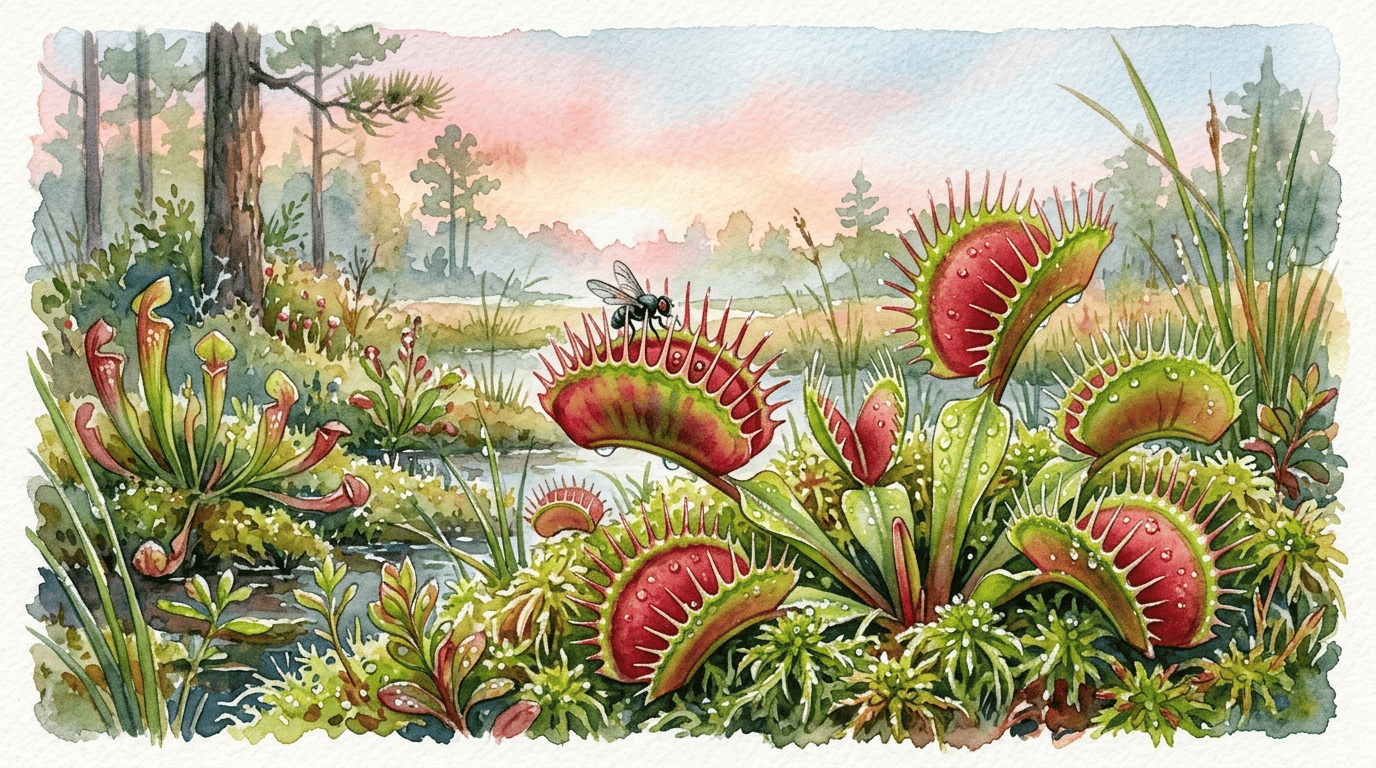
The Venus flytrap's entire wild range is astonishingly small: a ring of pine savannas and bogs within roughly a hundred miles of Wilmington, North Carolina, and nowhere else on Earth. Europeans first learned of it in 1759, when Arthur Dobbs, the colonial governor of North Carolina, wrote to botanist Peter Collinson in London describing a plant whose leaves closed 'like a spring trap' on any insect that touched them, calling it 'the great wonder of the vegetable kingdom.' In 1768 botanist John Ellis sent a description to Carl Linnaeus, coining the genus name Dionaea after Dione, mother of Venus in Greek myth, while the common name paid tribute to the goddess of love herself. No plant captured Charles Darwin's imagination quite like it. In the early 1870s, working in the greenhouse at his home, Down House, he spent months hand-feeding flytraps with meat and egg white, timing how quickly the traps closed and testing what triggered them versus what they ignored. His experiments filled much of his 1875 book Insectivorous Plants, and in a letter to a friend he called it 'one of the most wonderful plants in the world.' Darwin's observations helped establish that the trap was a true digestive organ, not merely a mechanical curiosity, and his fascination did much to popularize carnivorous plants among Victorian collectors. That popularity has since become a threat: wild Venus flytraps are now vulnerable, squeezed by habitat loss and, in North Carolina, by poachers who dig up plants to sell illegally, a crime serious enough that the state classified flytrap theft as a felony in 2014.
Symbolism & meaning
What It Symbolizes
Because it lures, seduces, and then consumes, the Venus flytrap has long stood as a symbol of dangerous or deceptive beauty, its seemingly innocent surface concealing sudden, decisive action beneath. Victorian audiences were fascinated by this contradiction between its delicate white flowers and predatory leaves, and it remains a popular emblem of resilience and adaptability, a small plant that turned scarcity into an evolutionary advantage.
- Deceptive allure — The trap's delicate white flowers and innocent green leaves conceal a sudden, decisive strike, making the plant a lasting emblem of beauty that hides danger beneath the surface.
Where the Name Comes From
The genus name Dionaea derives from Dione, mother of Aphrodite/Venus in Greek mythology, while the common name Venus flytrap directly honors the goddess of love, a nod to the trap's alluring yet lethal appeal to insects; the species name muscipula is Latin for 'mousetrap.'
Uses & Fun Facts
- A dramatic novelty plant grown indoors or in bog gardens for its snapping traps and low rosette form.
- Its small white flowers are held on a tall stalk well above the traps, attracting bees and other pollinators while keeping them safely out of reach of the leaves below.
Related plants
Plants with similar care
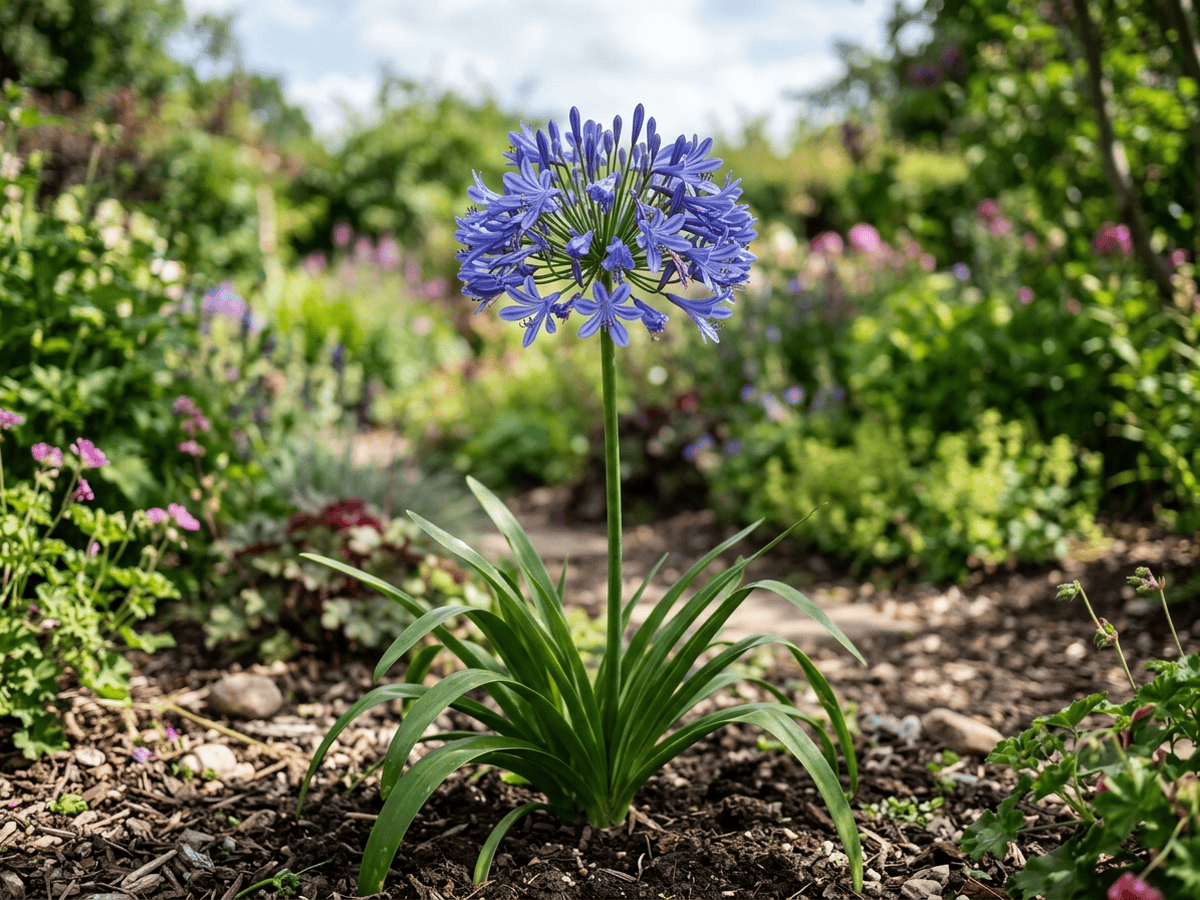 African LilyAgapanthus africanus
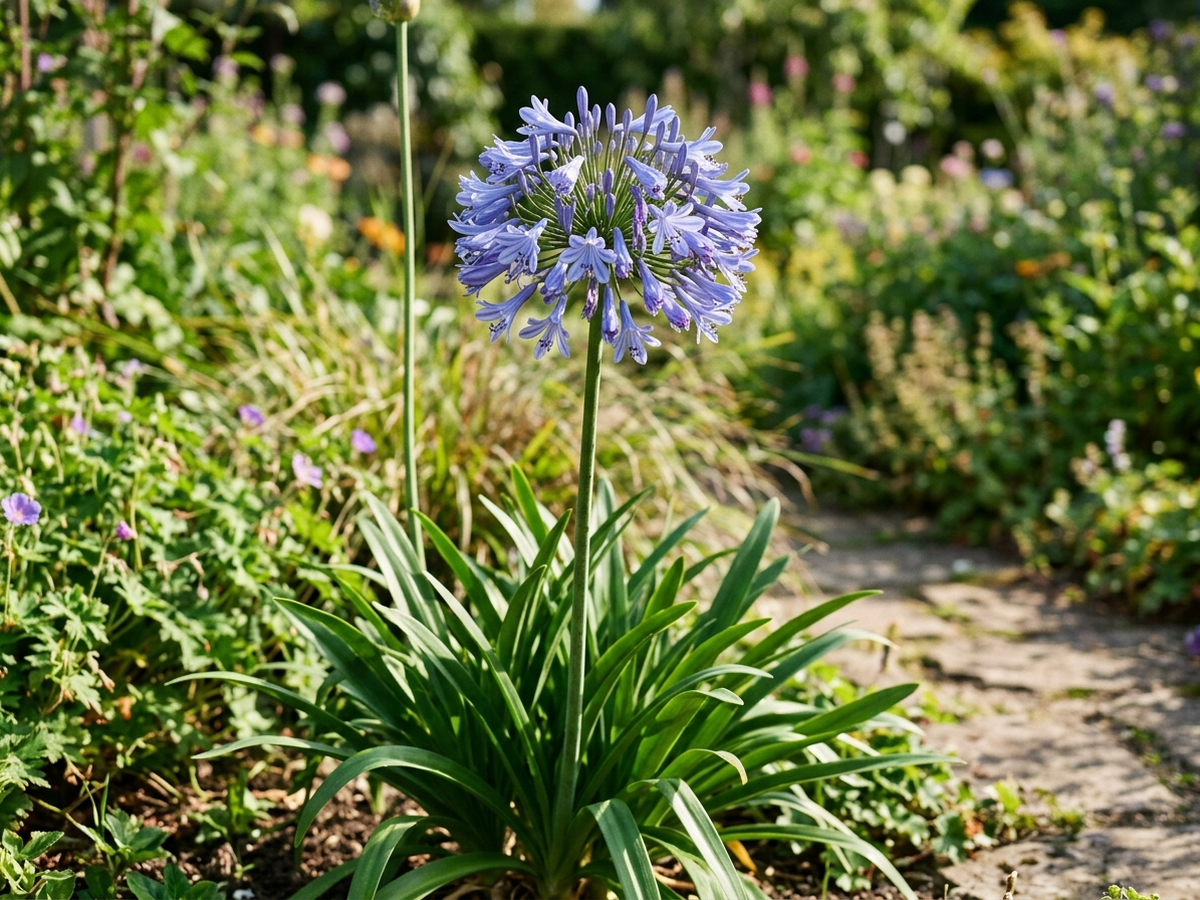 Bell AgapanthusAgapanthus campanulatus
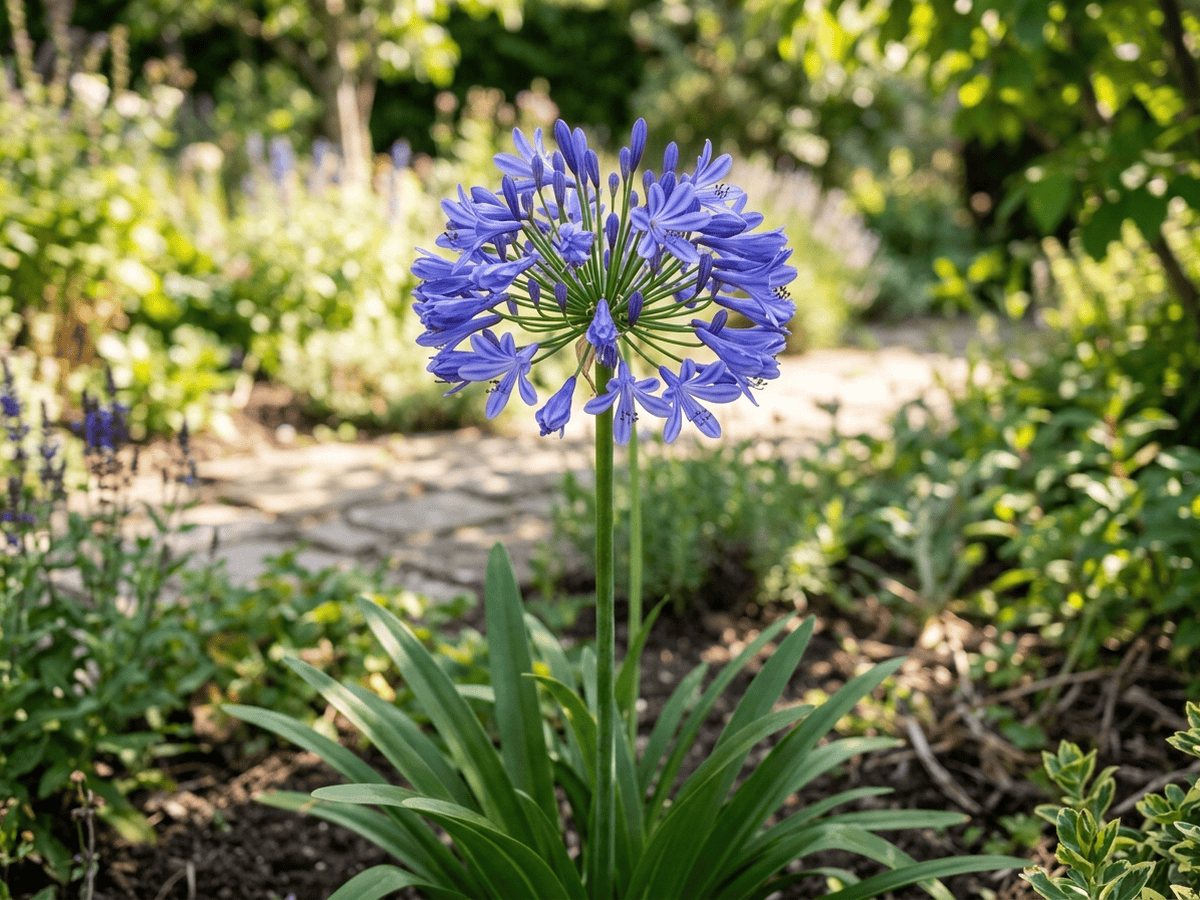 Common AgapanthusAgapanthus praecox
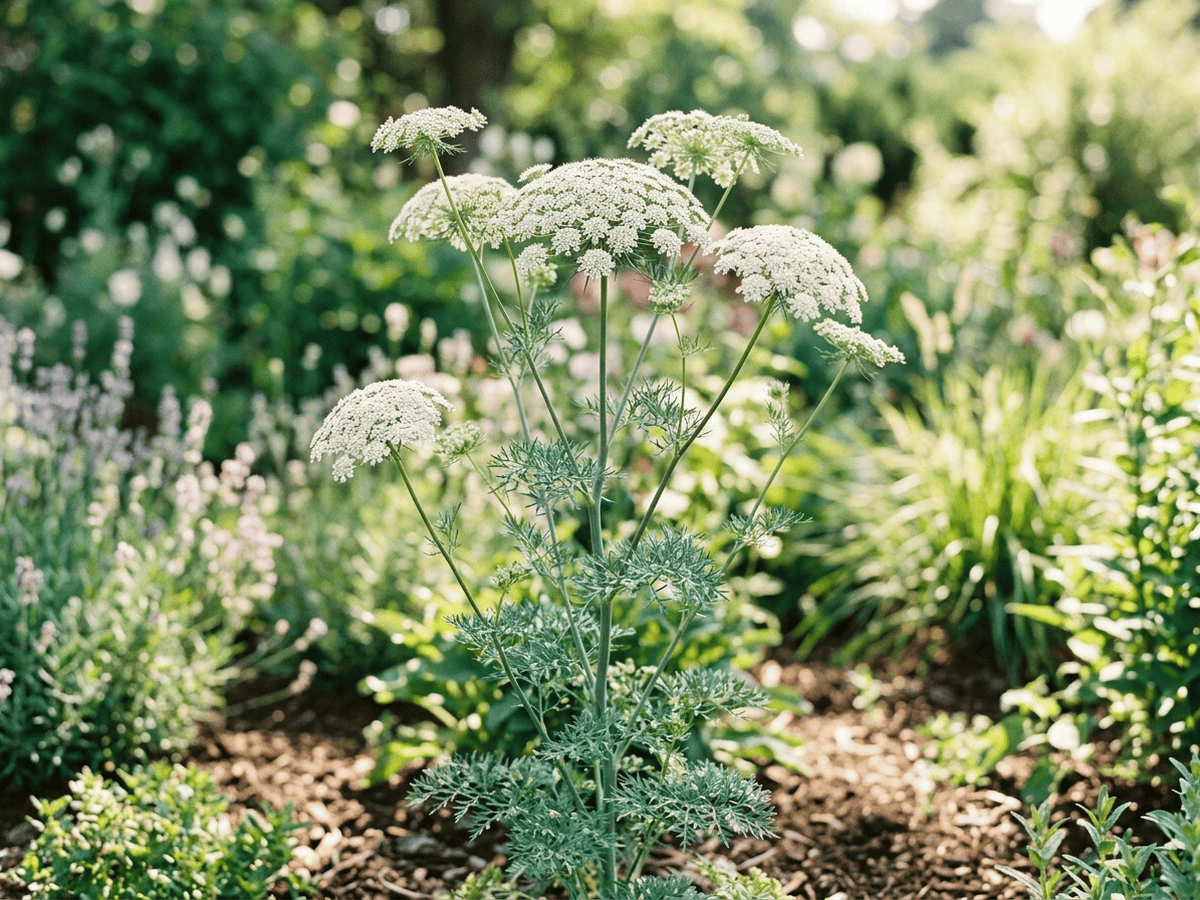 False Queen Anne's LaceAmmi majus glaucifolium
Frequently asked questions
How often should I water Venus flytrap?
Water about every 7 days during the growing season, and always let excess water drain away.
How much light does Venus flytrap need?
Part sun: 4–6 hrs direct. Watch the leaves — scorching or stretching means the light needs adjusting.
Is Venus flytrap toxic to cats or dogs?
Pets Safe (Dogs Safe · Cats Safe) Educational information, not medical or veterinary advice. If exposure is suspected, contact a doctor or veterinarian.
Is Venus flytrap easy to grow?
It is considered challenging and rewards experienced growers.
When does Venus flytrap bloom?
It typically blooms May–Jun in the Northern Hemisphere.
YardMate
Identify any plant in seconds
Snap a photo — YardMate names the plant, diagnoses problems, and reminds you when to water.
Download on the App Store