 YardMate
Skyflower
Duranta erecta
Hard · Experienced growersAbout Skyflower
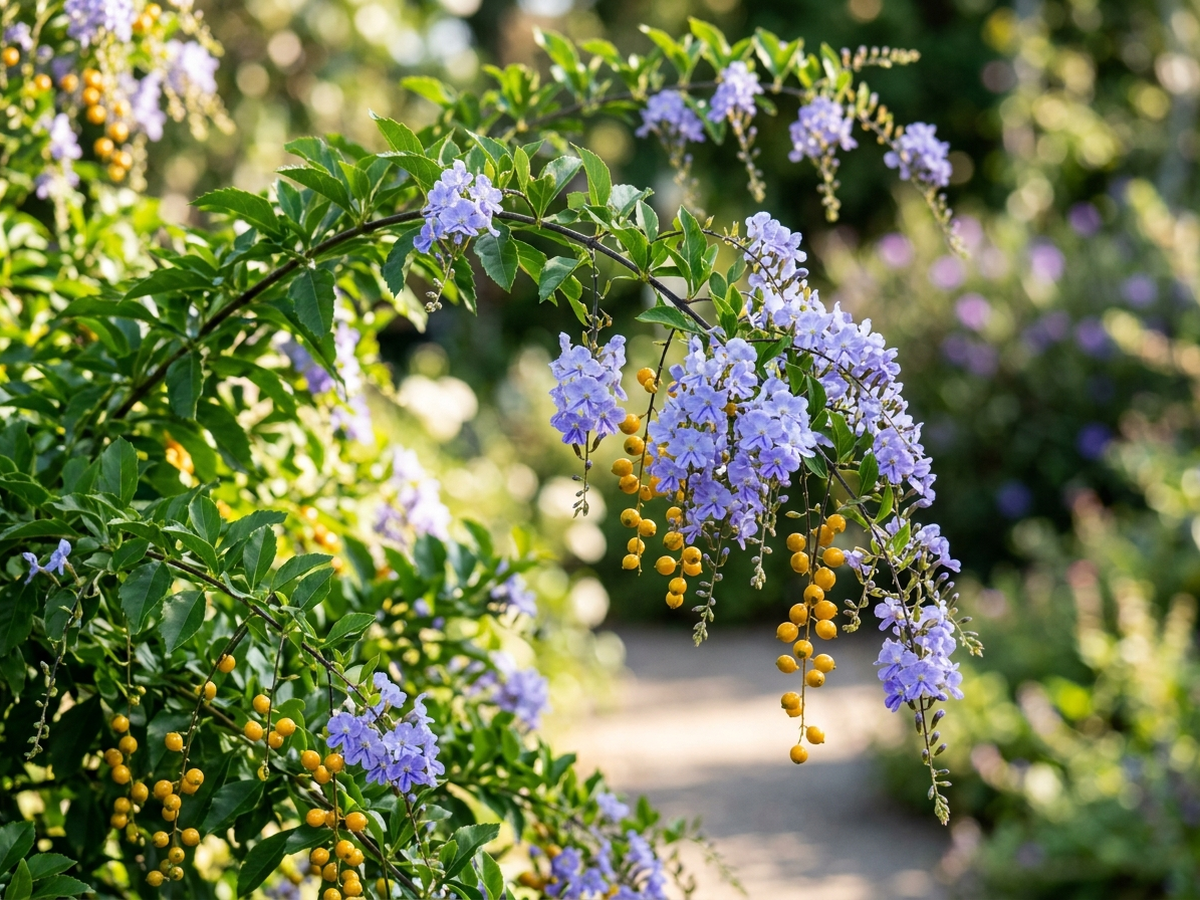
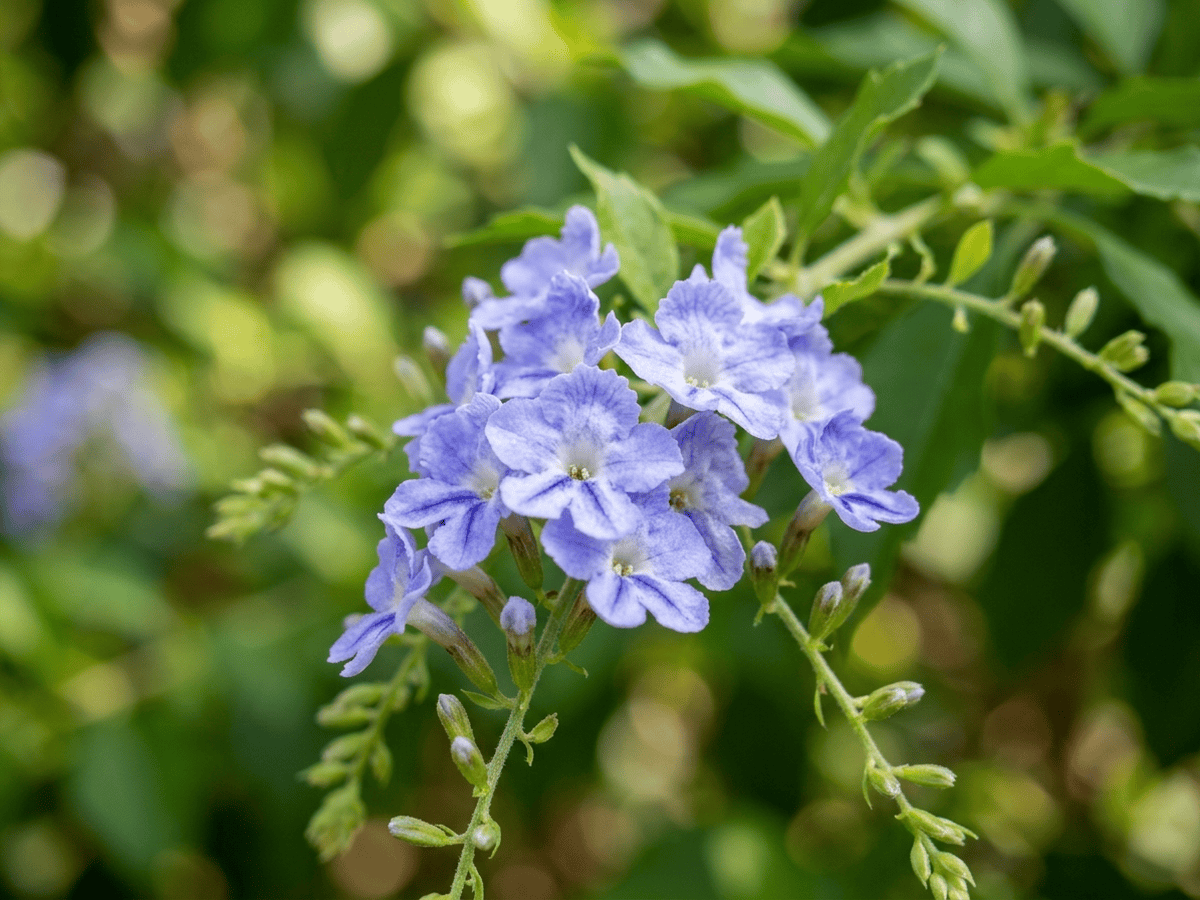
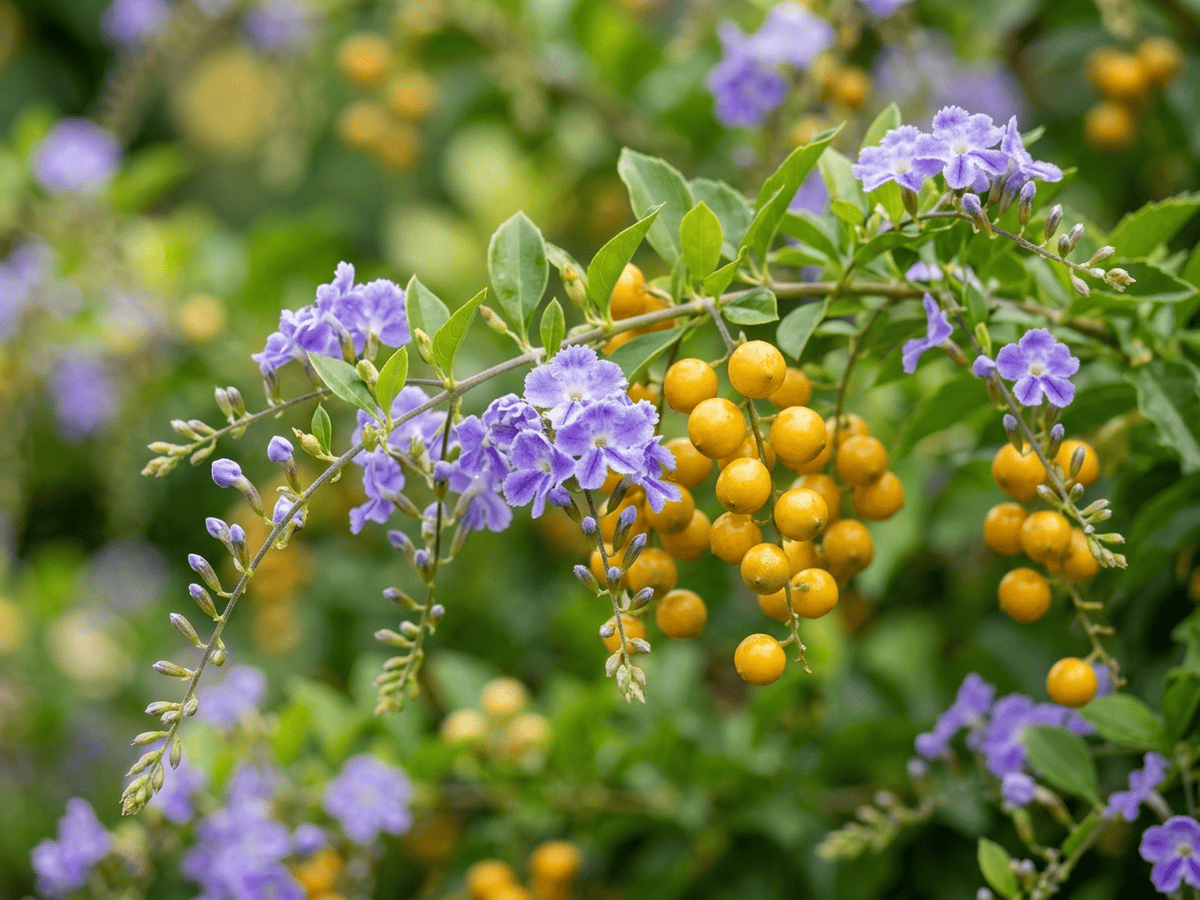
Duranta erecta, the Skyflower, is a fast-growing tropical shrub native to the Americas, beloved for cascading clusters of small lilac-blue tubular flowers that bloom nearly year-round in warm climates. Arching branches carry oval, sometimes toothed leaves, and after flowering produce glossy golden-yellow berry clusters that attract birds and wildlife. A powerhouse of color, it serves equally as a hedge, specimen, or container plant in tropical and subtropical gardens. The berries are toxic to children and pets and should be treated with caution.
- Fragrant
- Fast-growing
- Showy-fruit
- Pollinator-friendly
- Evergreen
How to care for Skyflower
Watering
- Springevery 7 days
- Summerevery 5 days
- Fallevery 14 days
- Winterevery 30 days
Soil · Well-draining
- Top dressingPine bark mulch10%
- Main mixPotting soil + perlite 2:170%
- DrainageLECA / gravel20%
Never skip the drainage layer — standing water is the top cause of root rot.
FERTILIZER
Bloom Booster 10-52-10
A phosphorus-forward feed fuels abundant blooms, with just enough nitrogen and potassium to keep foliage and roots steady.
- Nitrogen · Leaves
- Phosphorus · Roots + Blooms
- Potassium · Strength
- Springevery 30 days
- Summerevery 30 days
- Fallevery 30 days
At a Glance
- NativeSouth America
- Height3–6 ft (0.9–1.8 m)
- Spread3–5 ft (0.9–1.5 m)
- Flower colorBlue, Yellow
- Foliage colorGreen
- Fruit colorYellow, Orange
- SoilWell-drained, Moist
- LocationsYard · Balcony
Bloom time
BLOOM CYCLE
Peak bloom
Jun–Nov
Produces clusters of small, tubular flowers in summer and early fall.
Fragrance
LIGHT FRAGRANCE
Delicate sweet fragrance from the small tubular lavender flowers.
Toxicity
Humans Moderate · Pets Moderate
saponins, durantoside, and alkaloids
Moderate
- Berry
- Fruit
- Ingestion
EXPOSURE Eating berries and fruit.
EFFECT Nausea, vomiting, drowsiness, fever, and convulsions.
NOTE Berries are toxic to children, dogs, and cats; ingestion can cause vomiting, drowsiness, and in large quantities, convulsions.
Moderate
- Berry
- Fruit
- Ingestion
EXPOSURE Eating berries and fruit.
EFFECT Vomiting, diarrhea, drowsiness, and seizures.
NOTE Berries are toxic to children, dogs, and cats; ingestion can cause vomiting, drowsiness, and in large quantities, convulsions.
Moderate
- Berry
- Fruit
- Ingestion
EXPOSURE Eating berries and fruit.
EFFECT Vomiting, diarrhea, and drowsiness.
NOTE Berries are toxic to children, dogs, and cats; ingestion can cause vomiting, drowsiness, and in large quantities, convulsions.
Educational information, not medical or veterinary advice. If exposure is suspected, contact a doctor or veterinarian.
DISTRIBUTION

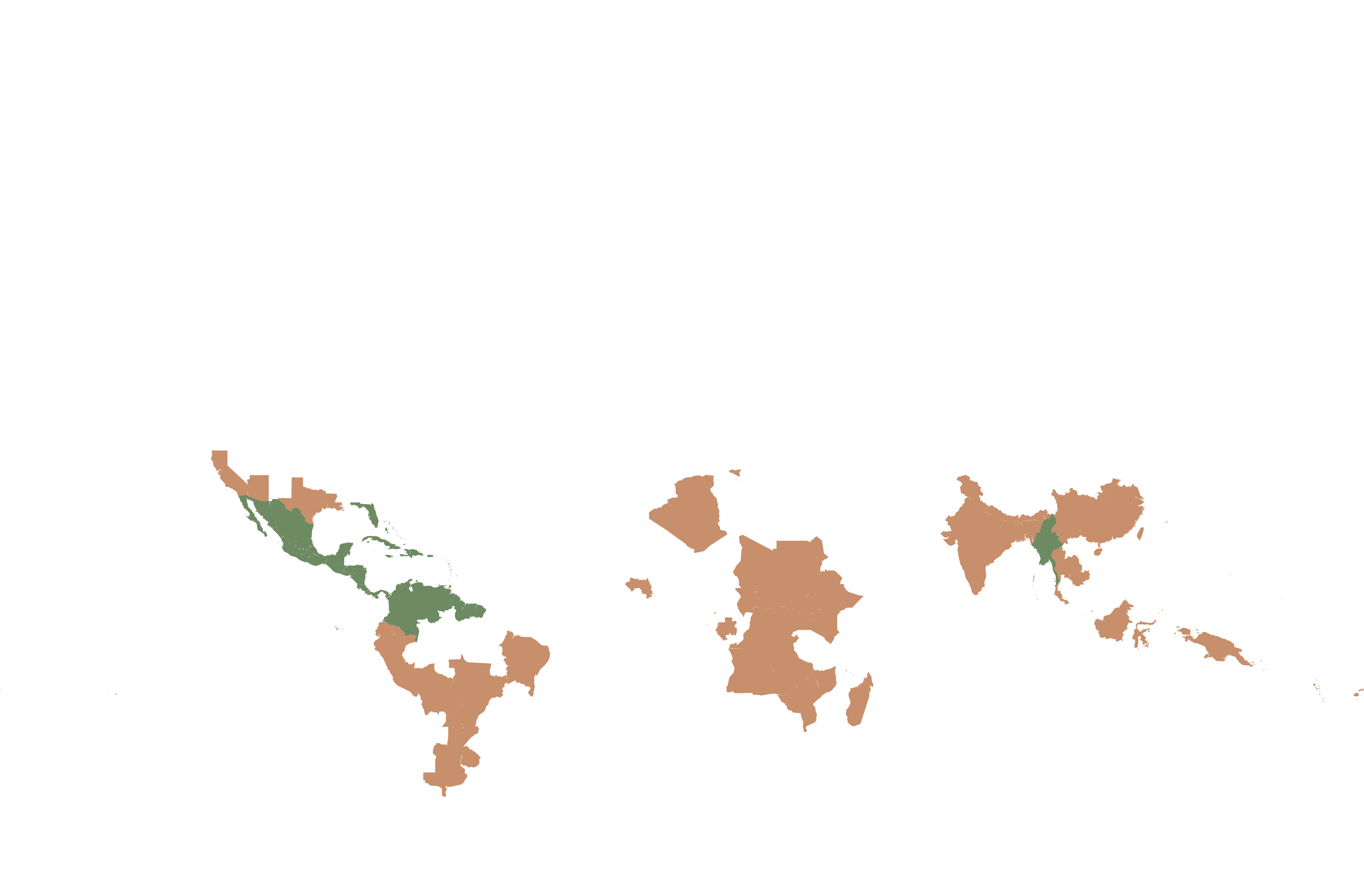
- Native
- Introduced
- South America
History
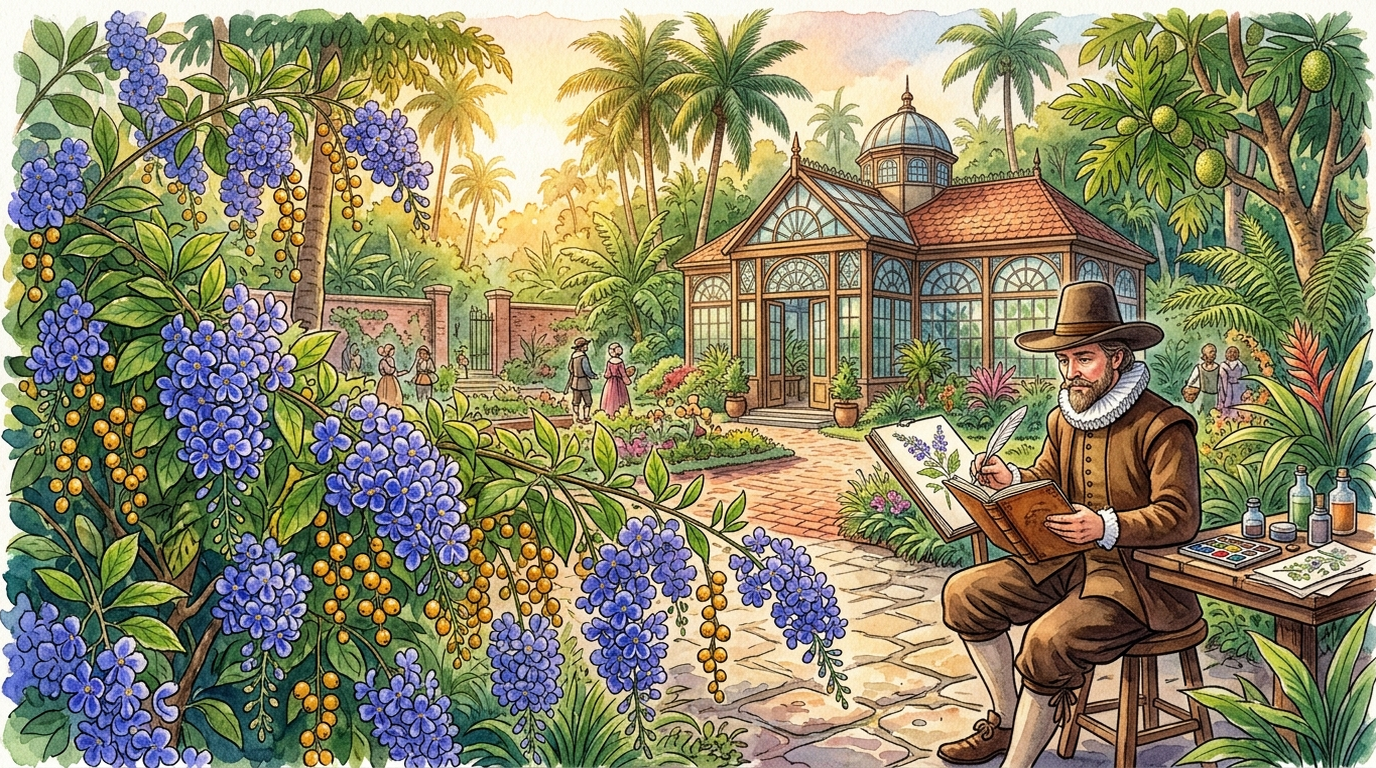
Duranta erecta is native to the tropical forests and coastal areas of Mexico, Central America, South America, and the Caribbean, where it grows as a large shrub or small tree. Indigenous communities across its range used the leaves and roots in traditional remedies and the berries were recognized early on as toxic—causing vomiting and convulsions when ingested in quantity.
The genus was named in honor of Castore Durante (1529–1590), an Italian botanist and physician who served as physician to Pope Sixtus V and wrote one of the most influential herbals of his time, Herbario Nuovo (1585). The species entered European botanical collections in the 17th and 18th centuries through the expanding trade networks of colonial powers.
British, Dutch, and Portuguese colonial botanists brought Duranta erecta to tropical and subtropical gardens in Asia, Africa, and Australia, where it adapted readily to warm climates and became a popular hedge and garden plant. In India, it became known as 'nilakanta' or 'golden dewdrop' and was planted widely in public parks and temple gardens.
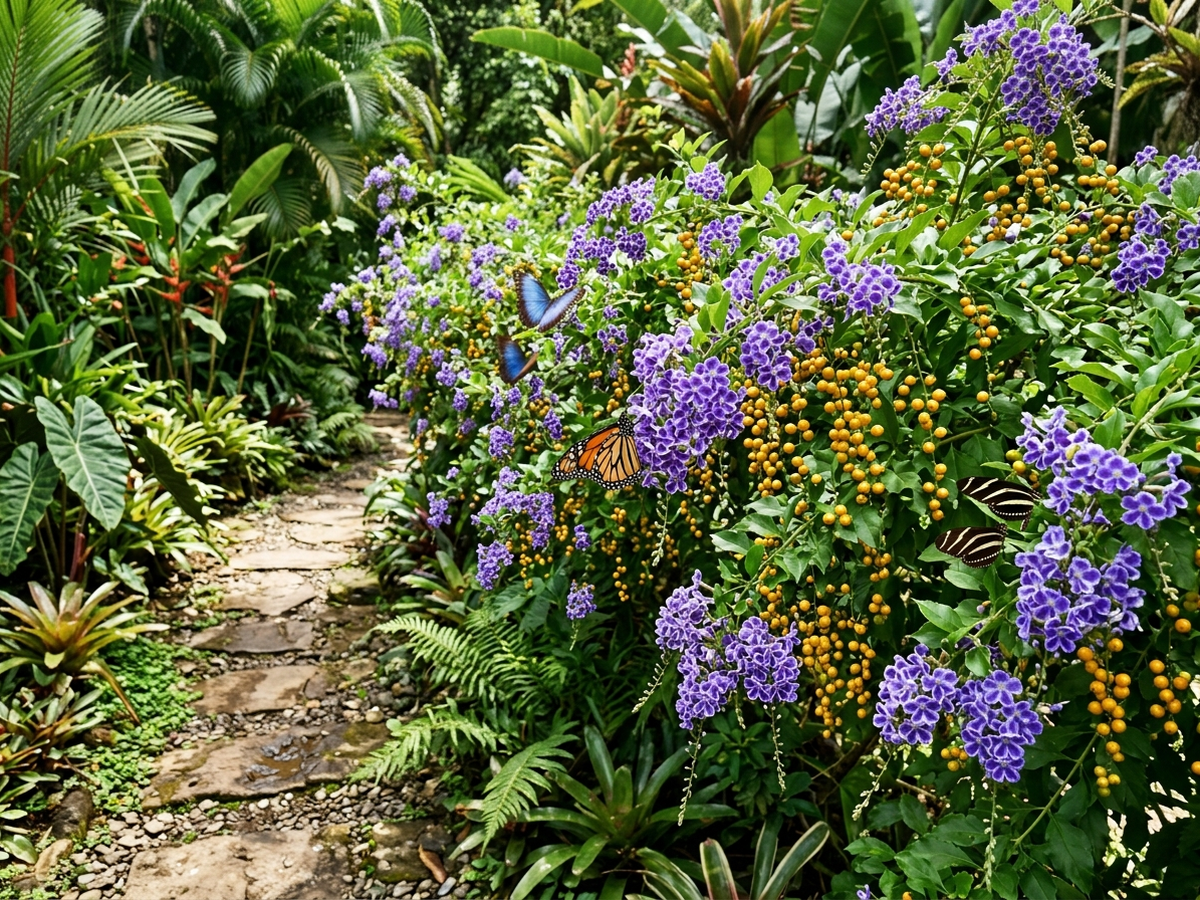
By the 20th century, horticulturalists had developed numerous cultivars including the white-flowered 'Alba,' the gold-variegated 'Aurea,' and the darker 'Cuban Gold.' Today it ranks among the most widely cultivated tropical shrubs worldwide, prized for its near-continuous bloom, vibrant fruit display, and ability to attract butterflies and hummingbirds.
Symbolism & meaning
What It Symbolizes
In tropical gardens from India to Brazil, the Skyflower is a symbol of effortless abundance—its arching branches simultaneously laden with sky-blue blossoms above and golden berry clusters below, as if the plant refuses to choose between flower and fruit. This dual exuberance made it a favorite in public parks and dooryard gardens worldwide, a joyful shrub that never seems to rest.
- abundance — Its near-continuous cascade of sky-blue blooms and golden fruit clusters represent overflowing generosity and vitality.
- cheerfulness — Vibrant purple-blue flowers above golden berries create a year-round spectacle that lifts the spirit in any tropical garden.
Where the Name Comes From
The genus Duranta honors Castore Durante (1529–1590), Italian botanist and papal physician whose herbal Herbario Nuovo was highly influential in 16th-century European botany. The species epithet erecta means 'upright' in Latin, describing the plant's growth habit.
Uses & Fun Facts
- Cascading clusters of sky-blue flowers and golden berries make it a prized garden specimen
- Golden berry clusters attract birds; flowers attract butterflies and hummingbirds
- Tubular flowers are a rich nectar source for butterflies and bees
- Light sweet fragrance from the lavender flower clusters
Related plants
Plants with similar care
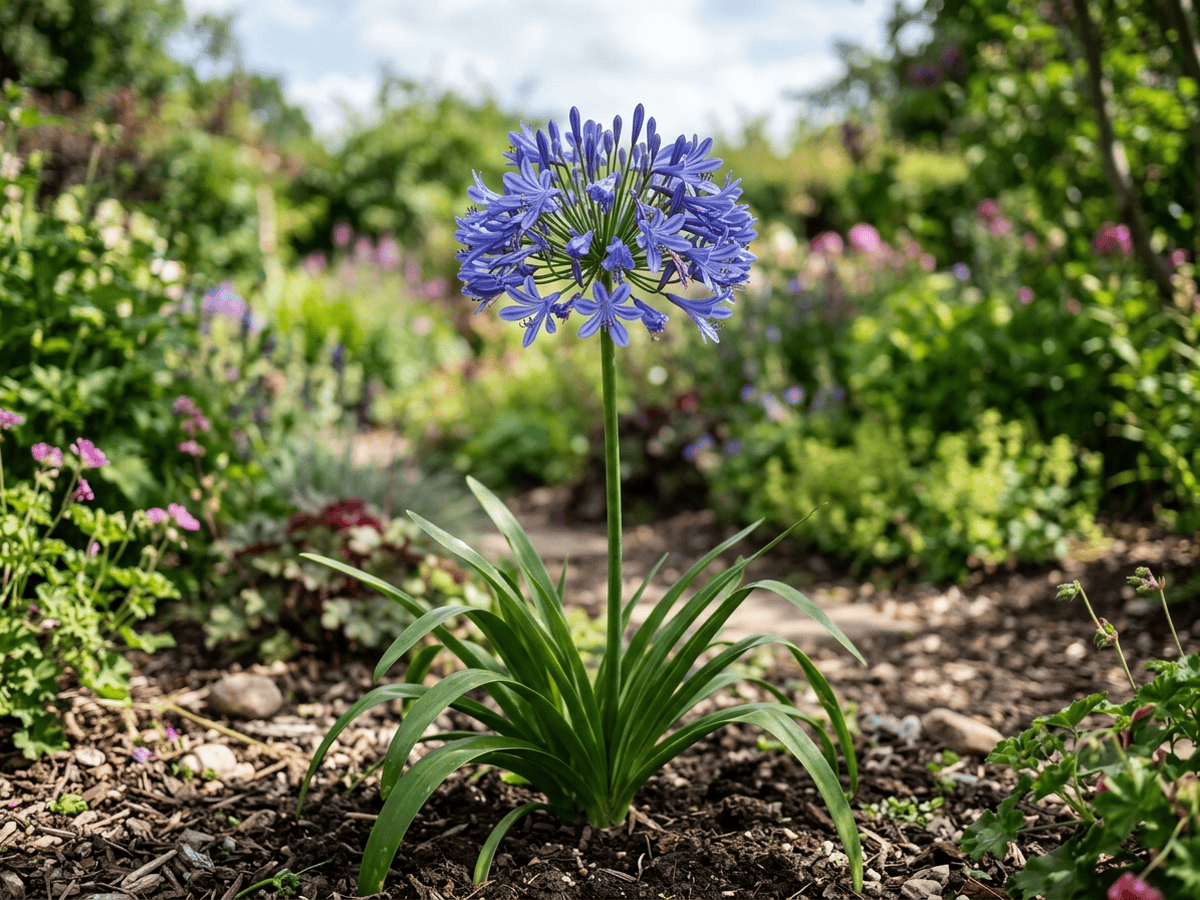 African LilyAgapanthus africanus
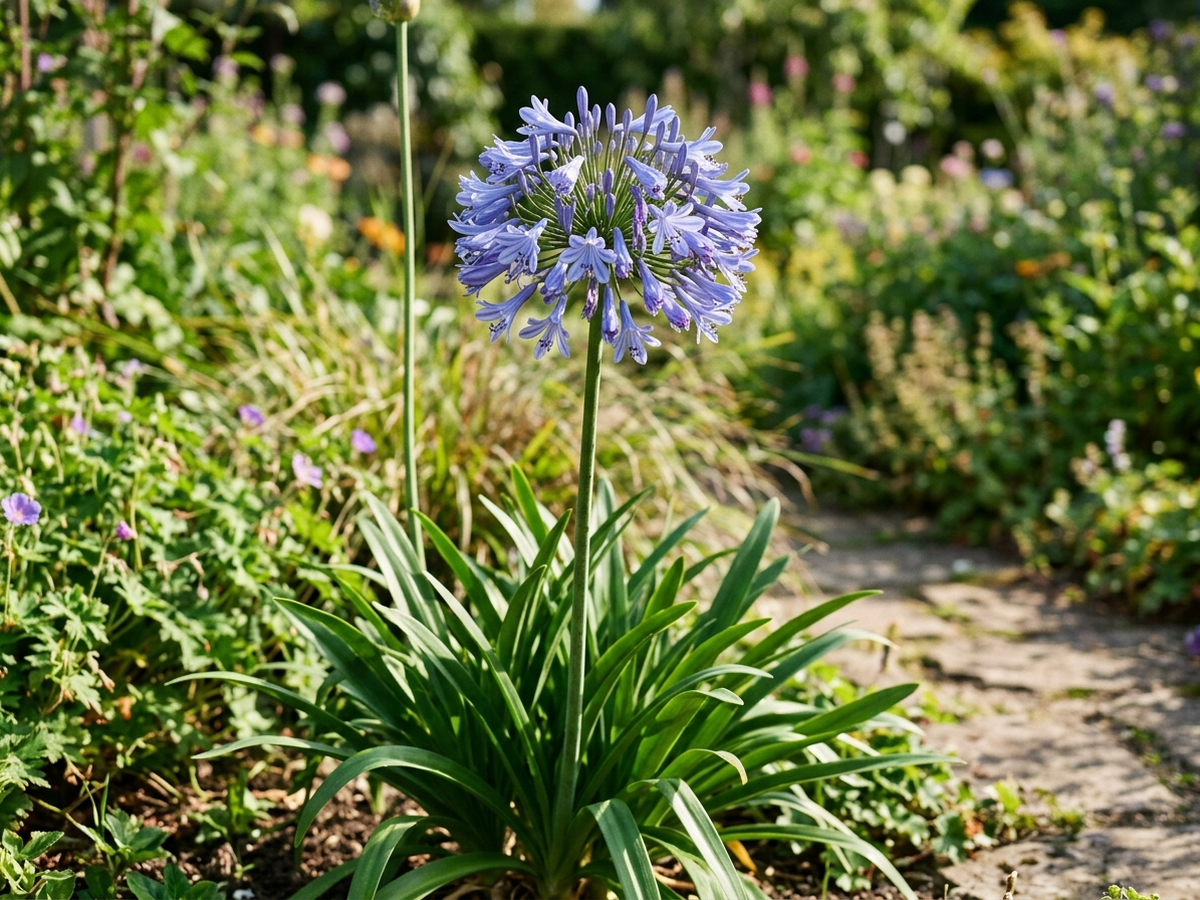 Bell AgapanthusAgapanthus campanulatus
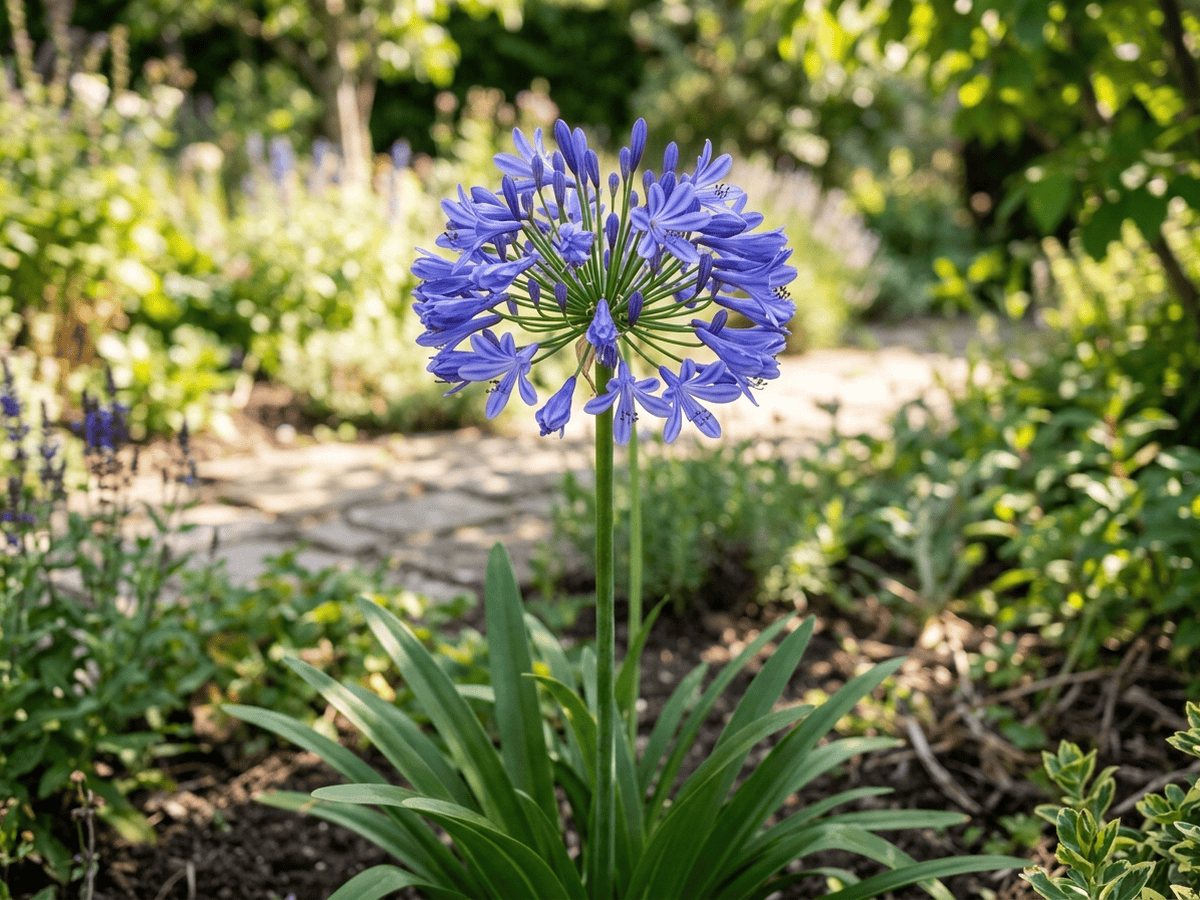 Common AgapanthusAgapanthus praecox
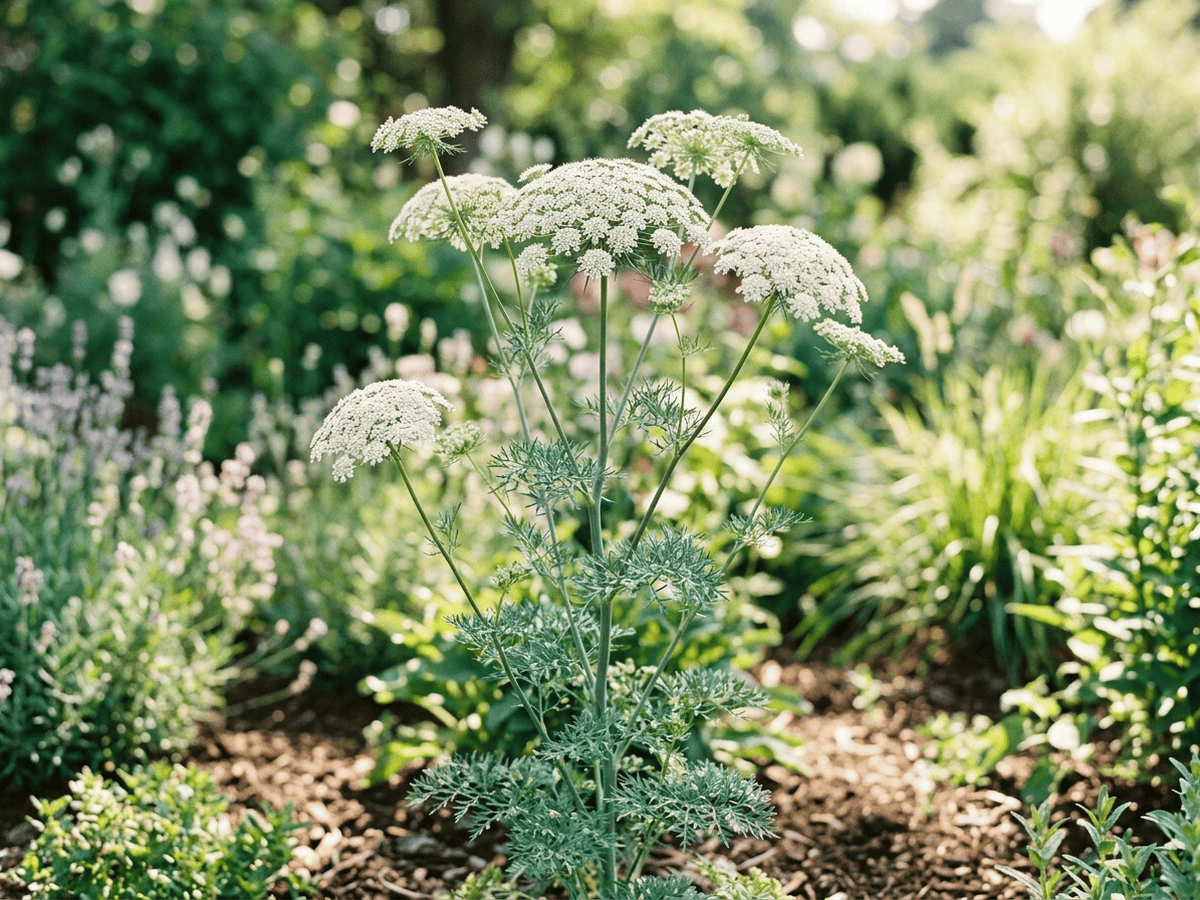 False Queen Anne's LaceAmmi majus glaucifolium
Frequently asked questions
How often should I water Skyflower?
In summer, water about every 5 days; in winter, about every 30 days. Adjust for heat, pot size and drainage.
How much light does Skyflower need?
Part sun: 4–6 hrs direct. Watch the leaves — scorching or stretching means the light needs adjusting.
Is Skyflower toxic to cats or dogs?
Pets Moderate (Dogs Moderate · Cats Moderate) Educational information, not medical or veterinary advice. If exposure is suspected, contact a doctor or veterinarian.
Is Skyflower easy to grow?
It is considered challenging and rewards experienced growers.
When does Skyflower bloom?
It typically blooms Jun–Nov in the Northern Hemisphere.
YardMate
Identify any plant in seconds
Snap a photo — YardMate names the plant, diagnoses problems, and reminds you when to water.
Download on the App Store