 YardMate
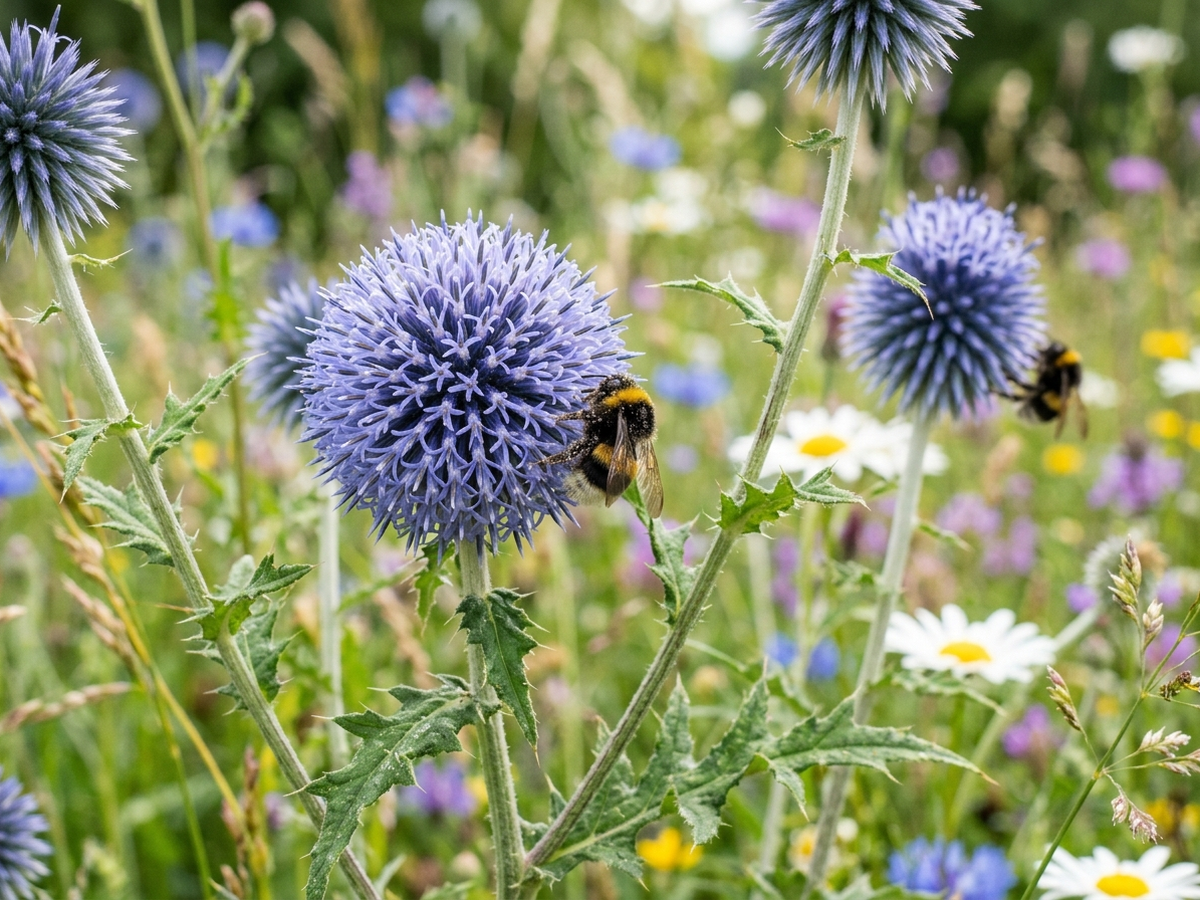


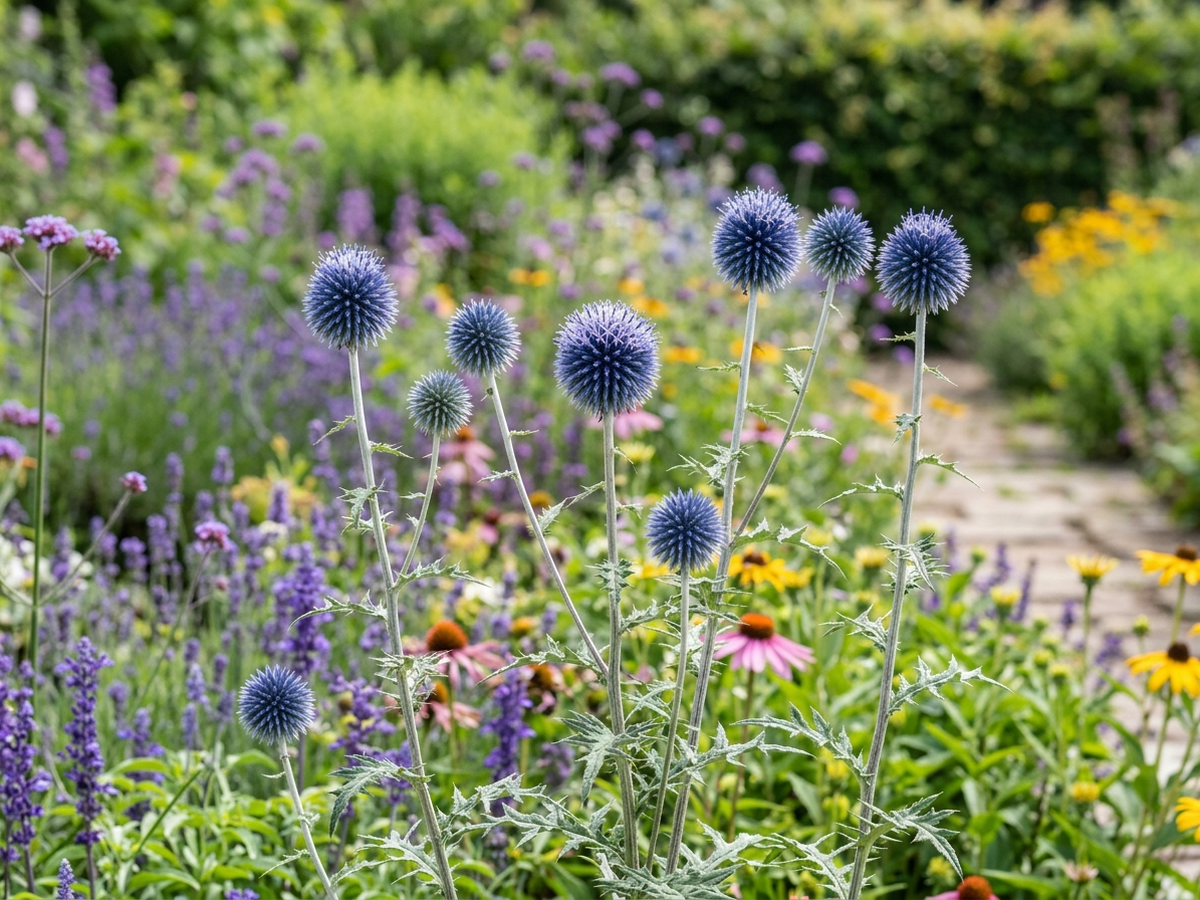
Blue Globe-thistle
Echinops bannaticus
Hard · Experienced growersAbout Blue Globe-thistle
Echinops bannaticus, the Blue Globe-thistle, is a striking perennial native to the Banat region of southeastern Europe. It produces perfectly spherical, metallic steel-blue flower heads on tall branching stems from June through August. The bold architectural blooms, each composed of dozens of tiny star-shaped florets, create dramatic focal points in borders and naturalistic plantings. Exceptional drought tolerance and cold hardiness to zone 3 make it one of the most reliable ornamental thistles for temperate gardens.
- Pollinator-friendly
- Drought-tolerant
- Cold-hardy
- Long-blooming
How to care for Blue Globe-thistle
Watering
- Springevery 15 days
- Summerevery 10 days
- Fallevery 20 days
- Winterpause watering
Soil · Well-draining
- Top dressingPine bark mulch10%
- Main mixPotting soil + perlite 2:170%
- DrainageLECA / gravel20%
Never skip the drainage layer — standing water is the top cause of root rot.
FERTILIZER
Balanced Feed 14-14-14
An even feed covers all three needs at once, keeping leaves, roots and blooms moving together with nothing pushed out of balance.
- Nitrogen · Leaves
- Phosphorus · Roots + Blooms
- Potassium · Strength
- Springevery 30 days
At a Glance
- NativeEurope, Asia
- Height2–3 ft (0.6–0.9 m)
- Spread1–2 ft (0.3–0.6 m)
- Flower colorBlue
- Foliage colorGreen
- SoilWell-drained, Loamy
- LocationsYard · Balcony
Bloom time
BLOOM CYCLE
Peak bloom
Jun–Aug
Produces striking blue spherical flowers from late spring to summer.
Toxicity
Pets Safe
None reported
Not reported
EXPOSURE No exposure route is reported.
EFFECT No toxic effect is reported.
NOTE No toxicity is reported for humans in this catalog; this is not evidence that the plant is edible or harmless.
Safe
EXPOSURE No exposure route is reported.
EFFECT No toxic effect is reported.
NOTE Authoritative sources report this plant as non-toxic to dogs; this is not evidence that the plant is edible.
Safe
EXPOSURE No exposure route is reported.
EFFECT No toxic effect is reported.
NOTE Authoritative sources report this plant as non-toxic to cats; this is not evidence that the plant is edible.
Educational information, not medical or veterinary advice. If exposure is suspected, contact a doctor or veterinarian.
DISTRIBUTION


- Native
- Introduced
- Europe
- Asia
History
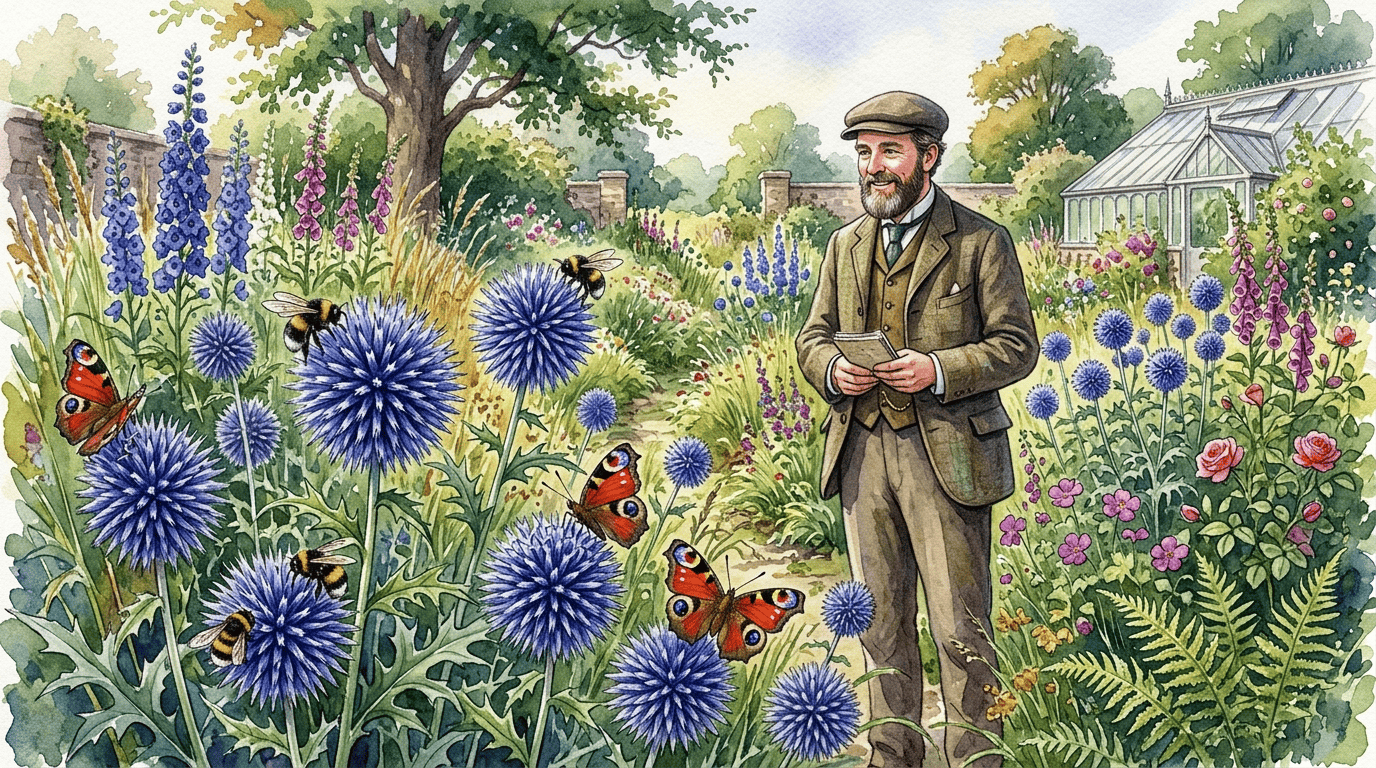
Echinops bannaticus takes its species name from the Banat, a historical region now shared by Romania, Serbia, and Hungary, where the plant grows wild in open meadows, rocky slopes, and woodland margins. The genus name Echinops derives from the Greek echinos (hedgehog) and ops (resemblance), an apt description for the prickly spherical flower heads that bristle with tiny star-shaped florets.
Globe-thistles were cultivated in European gardens from at least the 17th century, when bold architectural plants were fashionable. But it was the 19th-century 'wild garden' movement, championed by Irish gardener William Robinson in his influential 1870 book The Wild Garden, that elevated Echinops to a centerpiece of naturalistic planting design. Robinson praised globe-thistles as ideal plants for the naturalistic garden—an approach that anticipated the meadow and prairie-style plantings of the 21st century by over a century.
The metallic blue-violet flower heads attract bumblebees, solitary bees, and butterflies in great numbers. The dried heads, which hold their spherical shape and blue color for months, are prized by florists and craft enthusiasts worldwide. Cold-hardy to USDA Zone 3 and tolerant of drought, poor soils, and general neglect, the Blue Globe-thistle remains a cornerstone of the low-maintenance perennial border.
Symbolism & meaning
What It Symbolizes
The globe-thistle's perfectly spherical flower head—each one composed of hundreds of tiny star-shaped florets—has been interpreted as a symbol of the cosmos and the collective: the many becoming one. Its deep metallic blue has associated it with wisdom and calm in European floral traditions. In the garden, it stands as an architectural anchor, commanding attention and drawing crowds of bees without effort.
- Uniqueness — The perfectly spherical flower head stands alone among garden flowers—nothing quite like it
- Resilience — Thrives in drought and poor soils, returning year after year without attention
- Unity — Each globe is composed of hundreds of tiny florets—strength and beauty through collective wholeness
Where the Name Comes From
From Greek echinos (hedgehog) and ops (resemblance), describing the prickly spherical flower heads. The species epithet bannaticus refers to the Banat, a historical region in southeastern Europe (present-day Romania, Serbia, and Hungary) where this species grows wild.
Uses & Fun Facts
- Architectural spherical blue flower heads create dramatic focal points in borders
- Attracts bumblebees, solitary bees, and butterflies in large numbers
- Dried flower heads retain spherical shape and deep blue color for months
Related plants
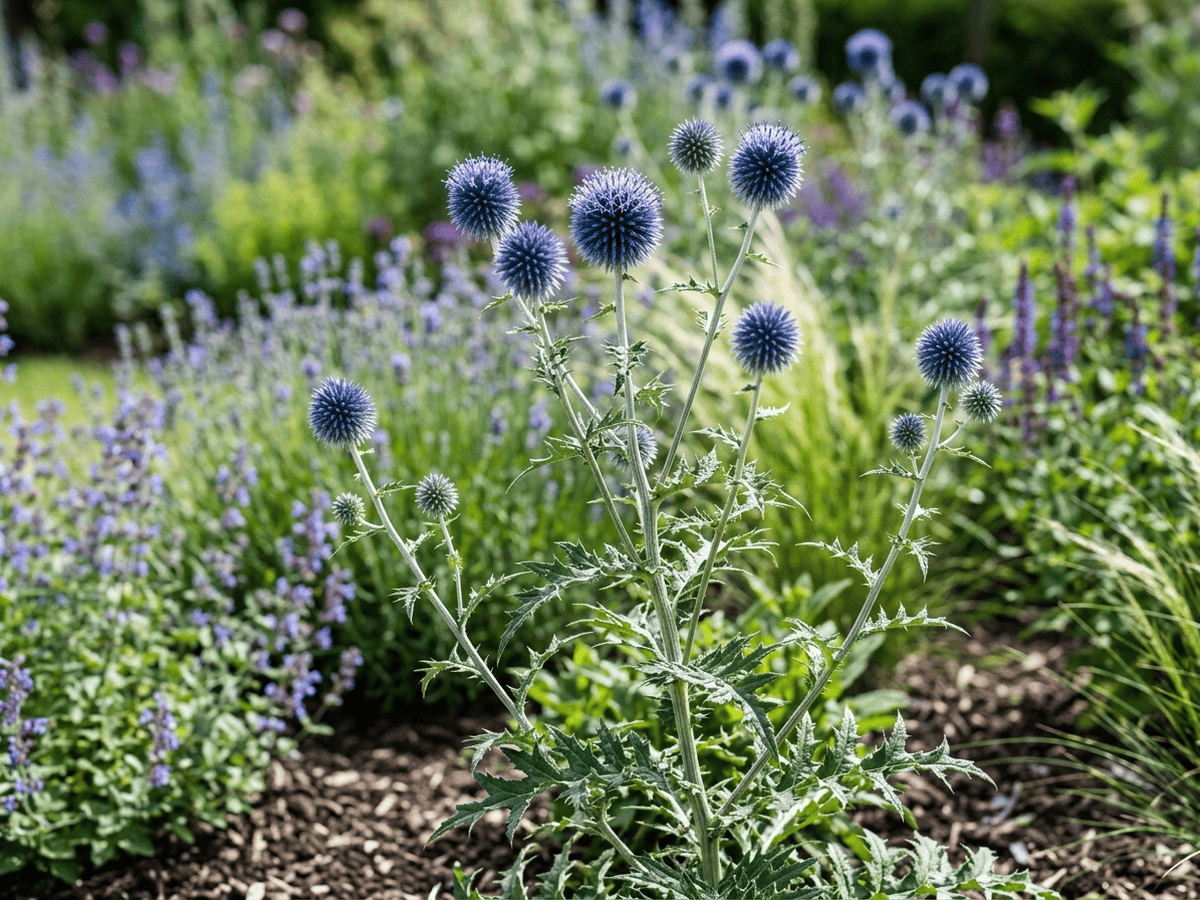
More Echinops plants
Plants with similar care
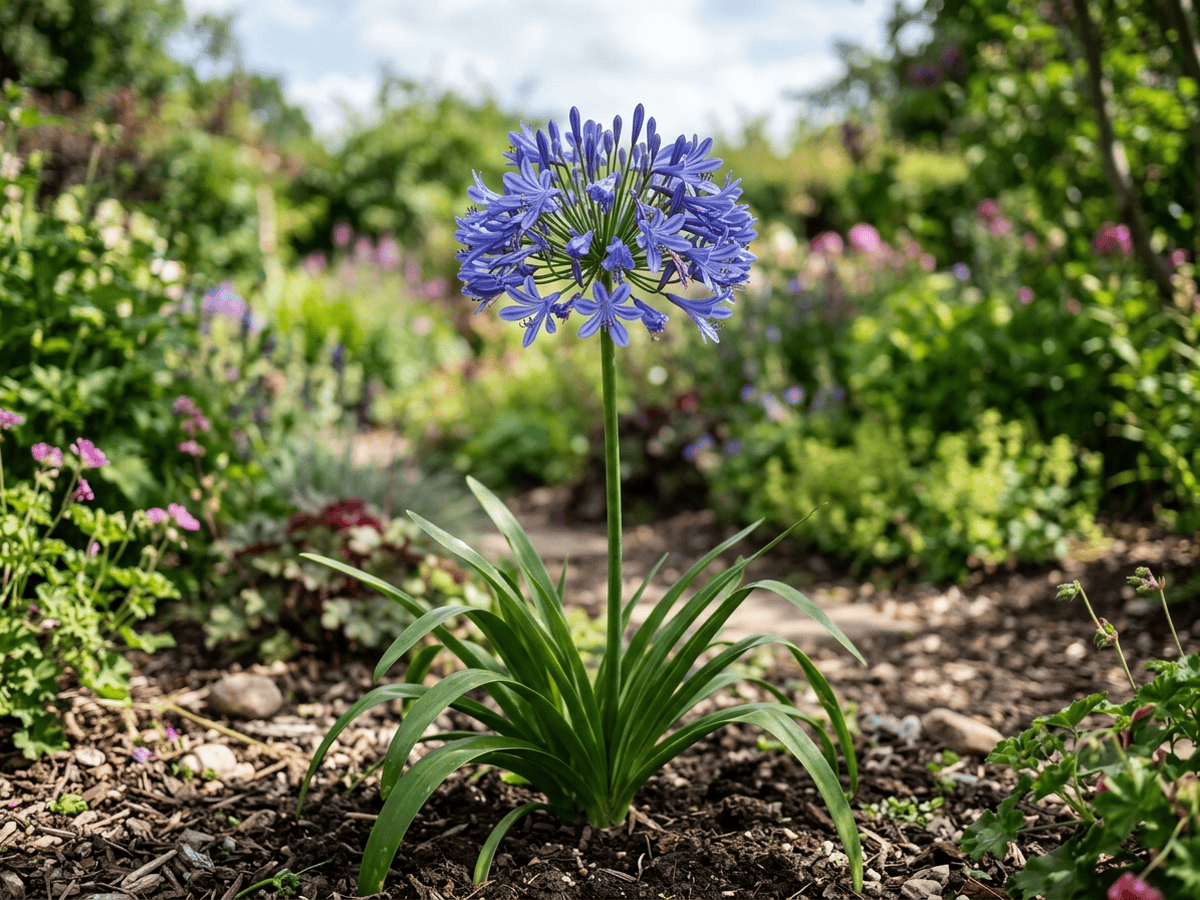 African LilyAgapanthus africanus
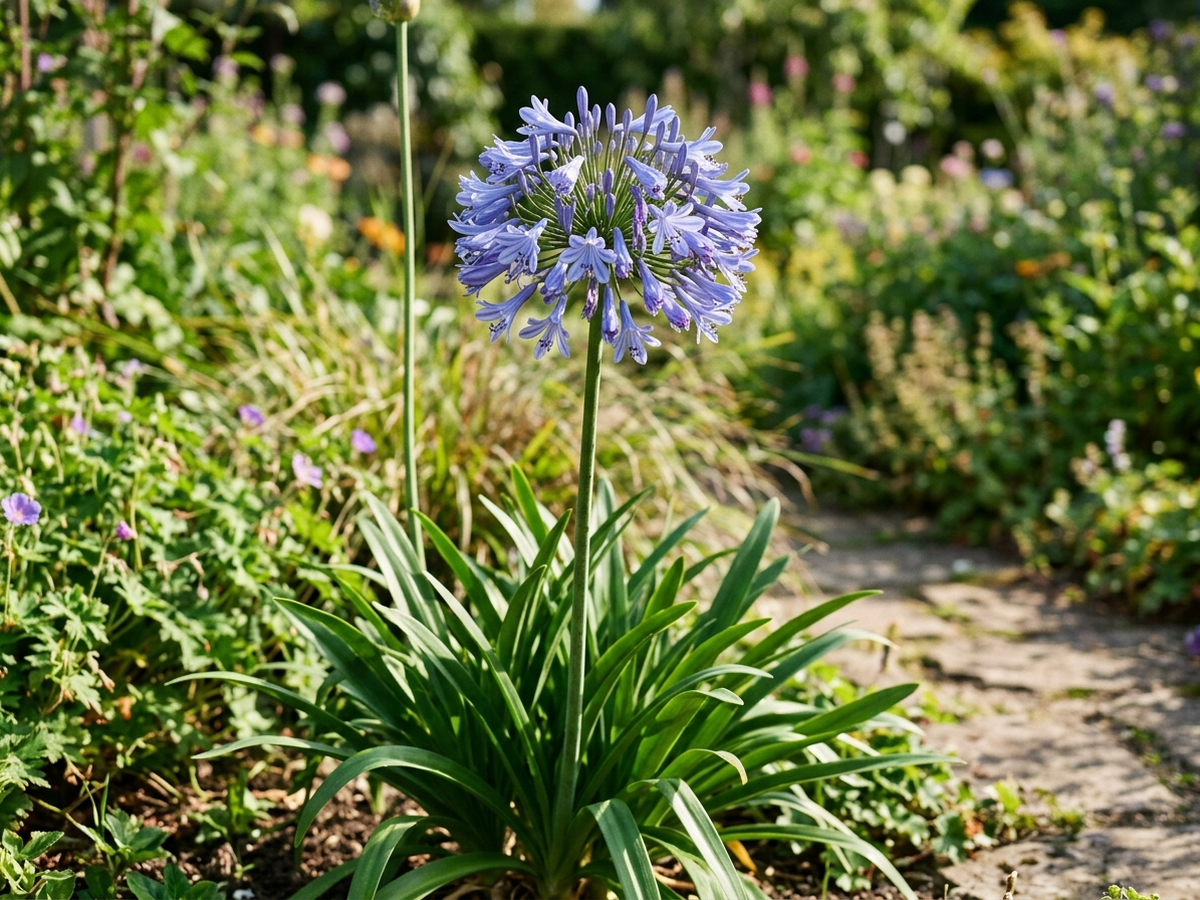 Bell AgapanthusAgapanthus campanulatus
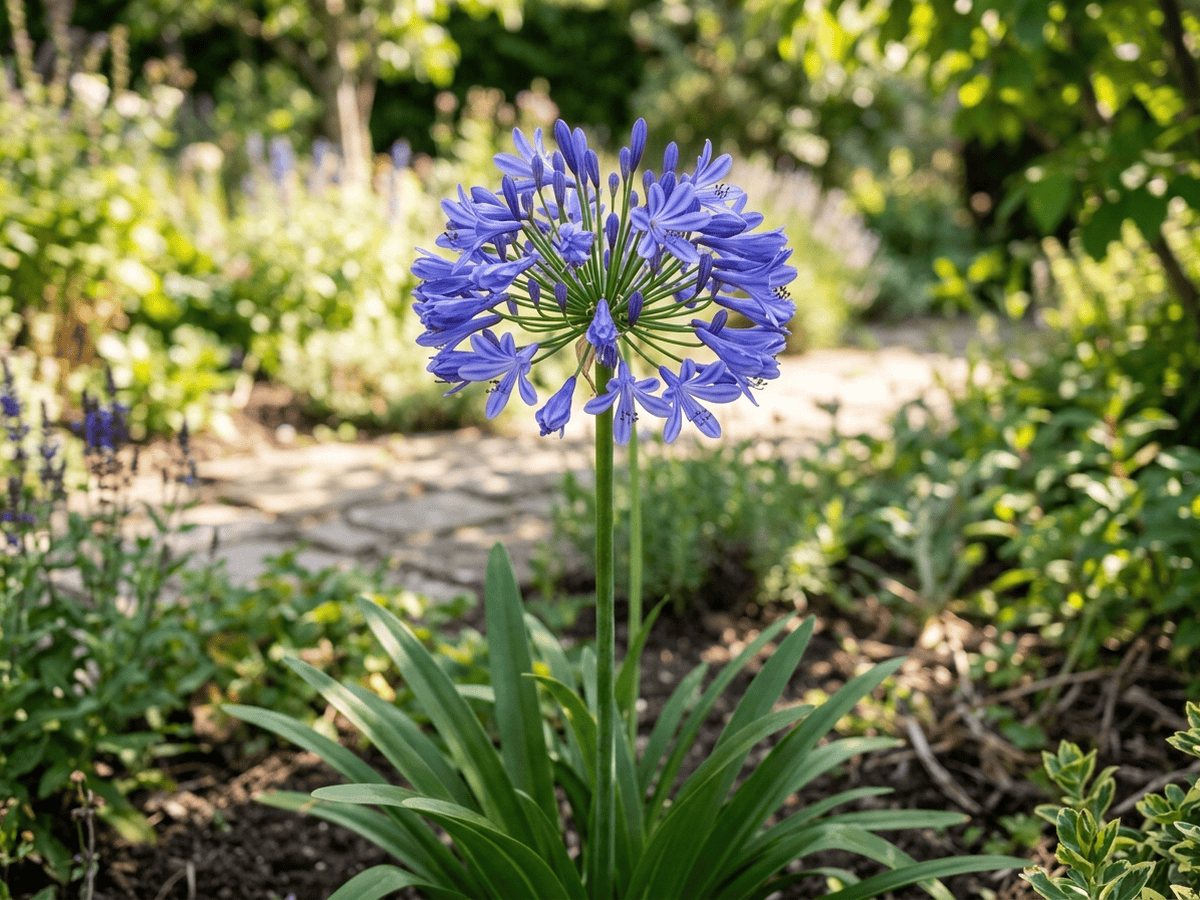 Common AgapanthusAgapanthus praecox
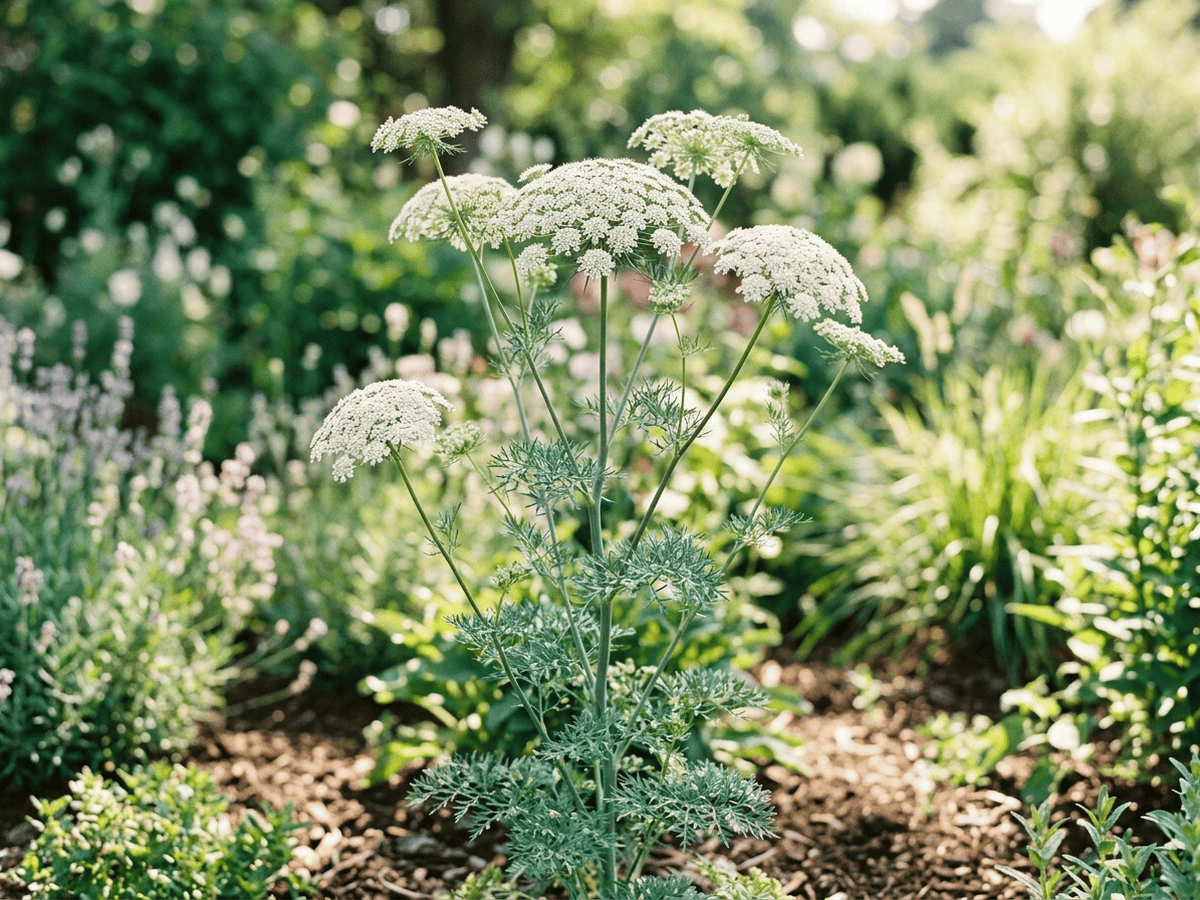 False Queen Anne's LaceAmmi majus glaucifolium
Frequently asked questions
How often should I water Blue Globe-thistle?
Water about every 15 days during the growing season, and always let excess water drain away.
How much light does Blue Globe-thistle need?
Part sun: 4–6 hrs direct. Watch the leaves — scorching or stretching means the light needs adjusting.
Is Blue Globe-thistle toxic to cats or dogs?
Pets Safe (Dogs Safe · Cats Safe) Educational information, not medical or veterinary advice. If exposure is suspected, contact a doctor or veterinarian.
Is Blue Globe-thistle easy to grow?
It is considered challenging and rewards experienced growers.
When does Blue Globe-thistle bloom?
It typically blooms Jun–Aug in the Northern Hemisphere.
YardMate
Identify any plant in seconds
Snap a photo — YardMate names the plant, diagnoses problems, and reminds you when to water.
Download on the App Store