 YardMate


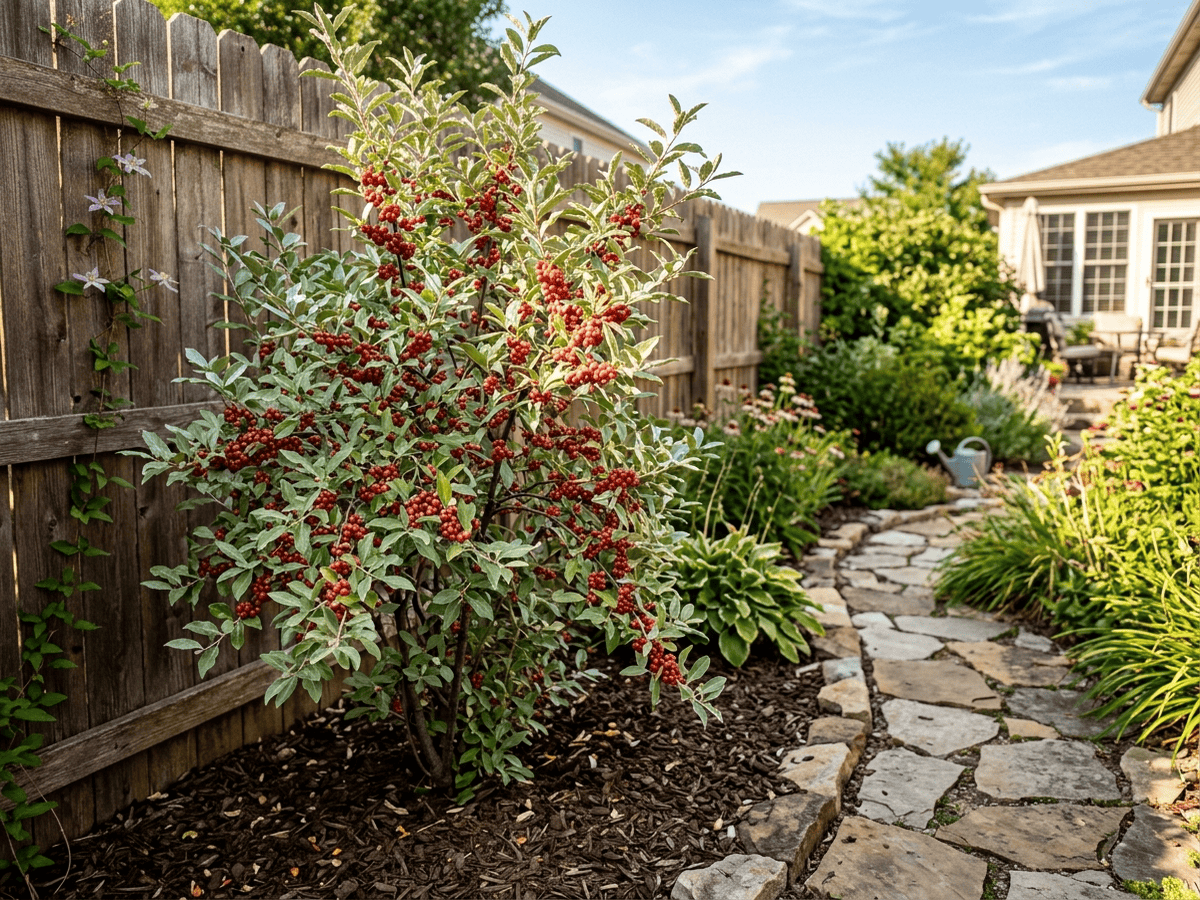
Autumn Olive
Elaeagnus umbellata
Easy · Beginner friendlyAbout Autumn Olive
Autumn Olive is a Chinese and Japanese deciduous shrub introduced to the US in the 1830s and now a top invasive plant across eastern and midwestern states. Growing 10 to 20 feet tall with silvery-scaled leaves and fragrant small yellow flowers in spring, it produces small red berries dusted silver that are widely dispersed by birds. Listed invasive in most eastern states with massive impact on native forests and meadows.
- Fragrant
How to care for Autumn Olive
Watering
- Springevery 14 days
- Summerevery 10 days
- Fallevery 14 days
- Winterevery 30 days
Soil · Well-draining
- Top dressingPine bark mulch10%
- Main mixPotting soil + perlite 2:170%
- DrainageLECA / gravel20%
Never skip the drainage layer — standing water is the top cause of root rot.
FERTILIZER
This plant needs little to no feeding.
At a Glance
- NativeEast Asia
- Height12–18 ft (3.7–5.5 m)
- Spread12–18 ft (3.7–5.5 m)
- Flower colorYellow, Cream
- Foliage colorGreen, Silver
- Fruit colorRed
- SoilLoamy, Well-drained
- LocationsYard
Bloom time
BLOOM CYCLE
Peak bloom
Mar–May
Small fragrant yellow flowers late spring
Fragrance
STRONG FRAGRANCE
The flowers have a sweet, jasmine-like fragrance.
Toxicity
No toxicity has been reported for this plant. Still, it is wise to keep pets from chewing on any houseplant.
Educational information, not medical or veterinary advice. If exposure is suspected, contact a doctor or veterinarian.
DISTRIBUTION

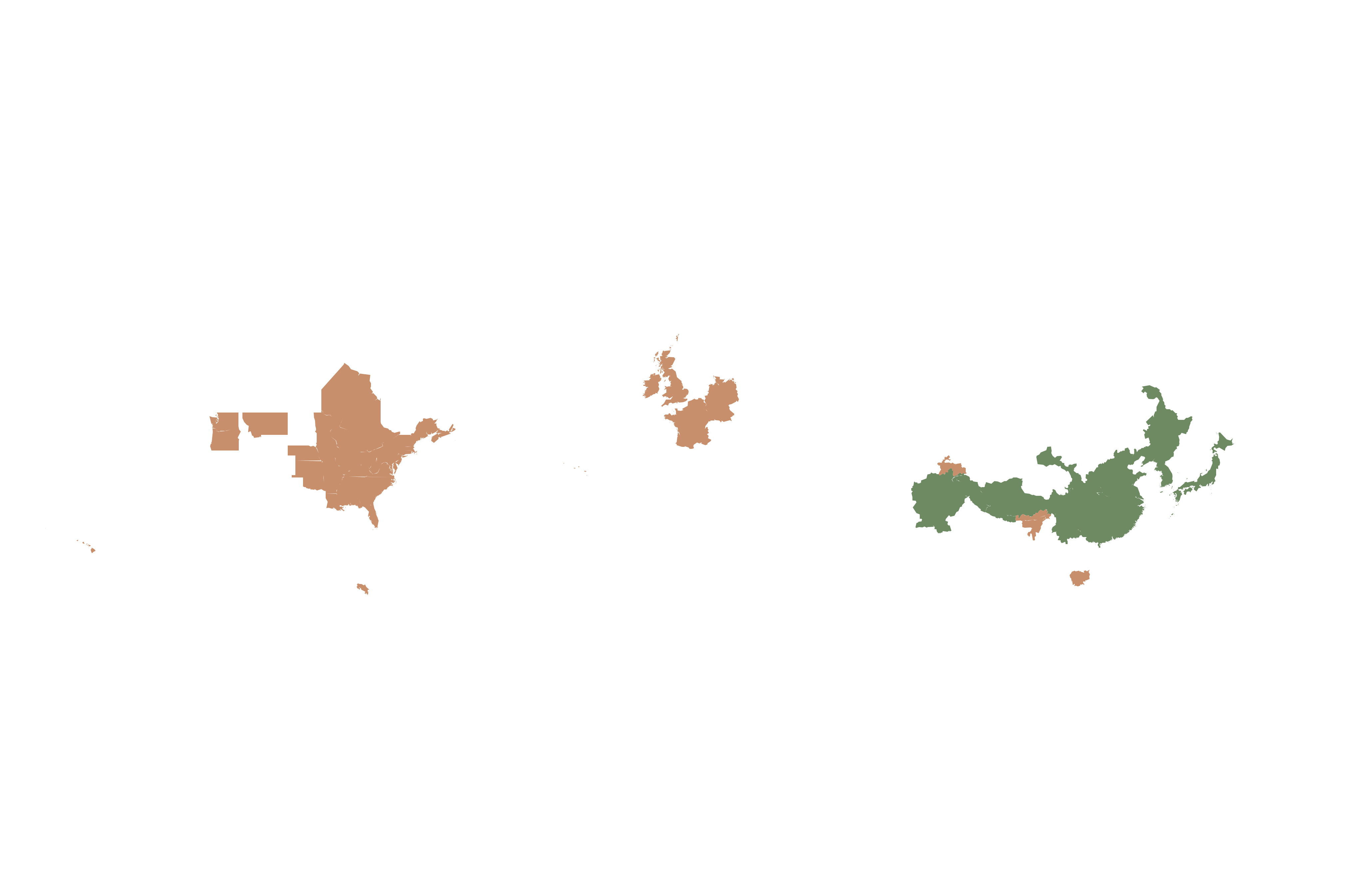
- Native
- Introduced
- East Asia
History
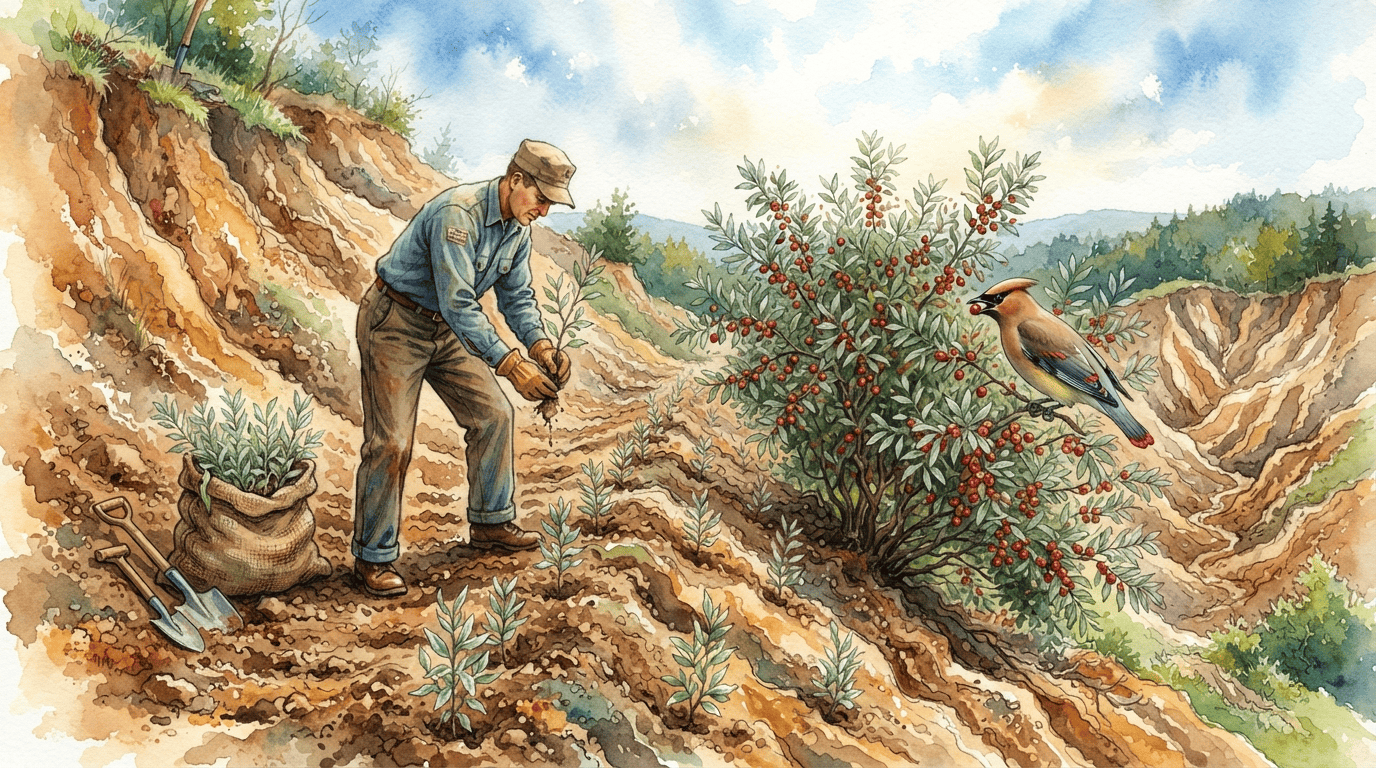
Elaeagnus umbellata, autumn olive, is a deciduous shrub native to China, Korea, and Japan with silvery scurfy leaves and pale yellow fragrant flowers. First introduced to American horticulture in 1830, the species was championed after 1940 by the US Soil Conservation Service and state wildlife agencies as a cover shrub for degraded land, with millions of seedlings distributed to landowners through the 1980s. Birds, especially American robins and cedar waxwings, eat the speckled red berries and disperse seeds widely, and autumn olive now dominates old fields, strip-mine reclamations, and forest edges across the eastern United States.
The plant fixes atmospheric nitrogen through root nodules, raising soil fertility in ways that favour further invasion by nitrogen-loving weeds. The berries are edible and rich in lycopene.
Symbolism & meaning
What It Symbolizes
Autumn Olive is the sweet invader — its tasty silver-spotted berries spread eagerly by the very birds it feeds, carrying it across whole landscapes. Once promoted by the USDA as a wildlife planting and erosion-control miracle, it now stands as a cautionary tale about good intentions in conservation. Its meaning is bittersweet: real ecological consequences from a plant that simply did exactly what it was sold to do.
- Sweet invader — tasty berries spread by birds widely
- USDA mistake — promoted for decades, now a top invasive
Where the Name Comes From
'Elaeagnus' from Greek 'elaia-agnos' possibly meaning olive-willow or sacred olive; 'umbellata' from Latin means with umbels.
Uses & Fun Facts
- Tart red autumn berries rich in lycopene used in jams
- Tiny cream flowers release powerful sweet scent in late spring
Related plants
Plants with similar care
 Chinese AbeliaAbelia chinensis
 Fragrant AbeliaAbelia mosanensis
 Large-Flowered AbeliaAbelia uniflora
 Glossy AbeliaAbelia x grandiflora
Frequently asked questions
How often should I water Autumn Olive?
In summer, water about every 10 days; in winter, about every 30 days. Adjust for heat, pot size and drainage.
How much light does Autumn Olive need?
Full sun: 6+ hrs direct. Watch the leaves — scorching or stretching means the light needs adjusting.
Is Autumn Olive toxic to cats or dogs?
No toxicity has been reported for this plant. Still, it is wise to keep pets from chewing on any houseplant. Educational information, not medical or veterinary advice. If exposure is suspected, contact a doctor or veterinarian.
Is Autumn Olive easy to grow?
Yes — it is considered an easy, beginner-friendly plant.
When does Autumn Olive bloom?
It typically blooms Mar–May in the Northern Hemisphere.
YardMate
Identify any plant in seconds
Snap a photo — YardMate names the plant, diagnoses problems, and reminds you when to water.
Download on the App Store