 YardMate


Goose Grass
Eleusine indica
Easy · Beginner friendlyAbout Goose Grass
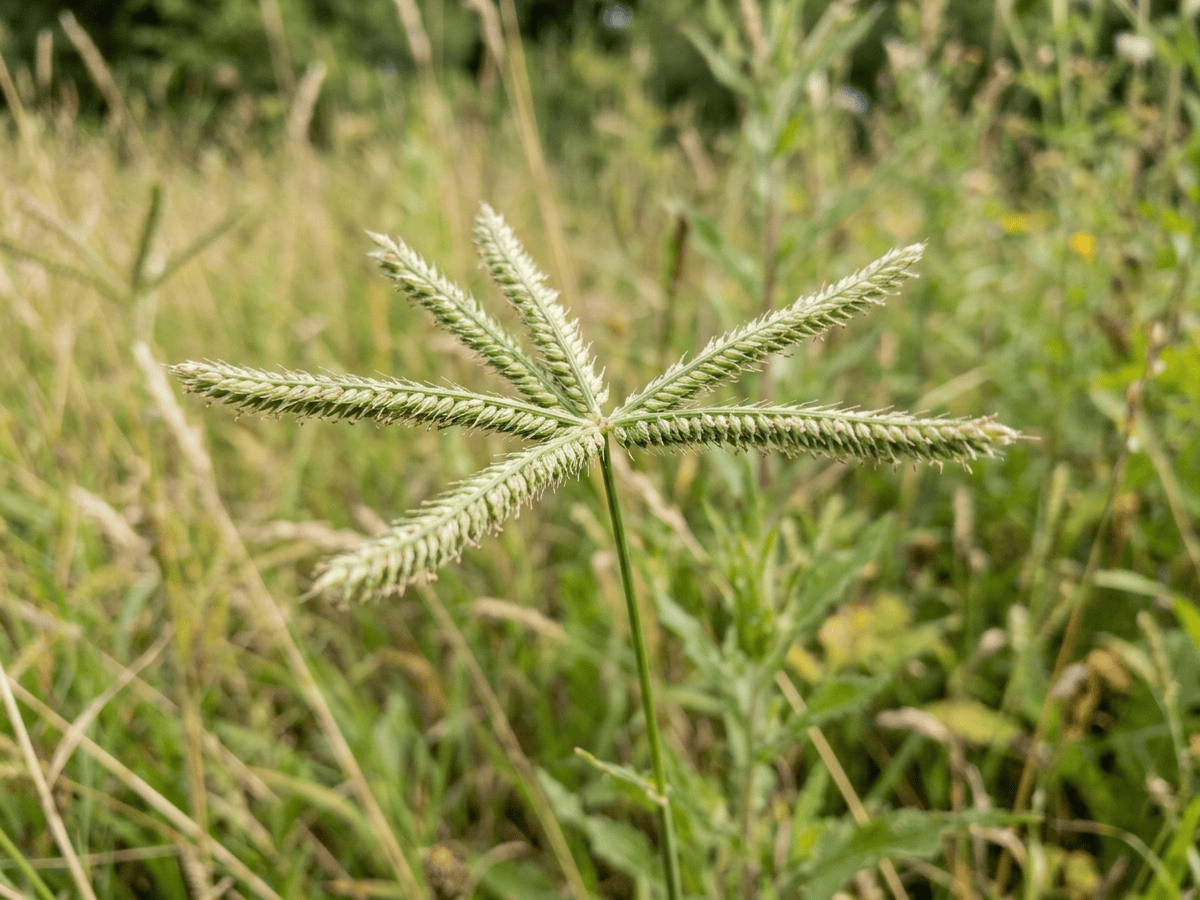
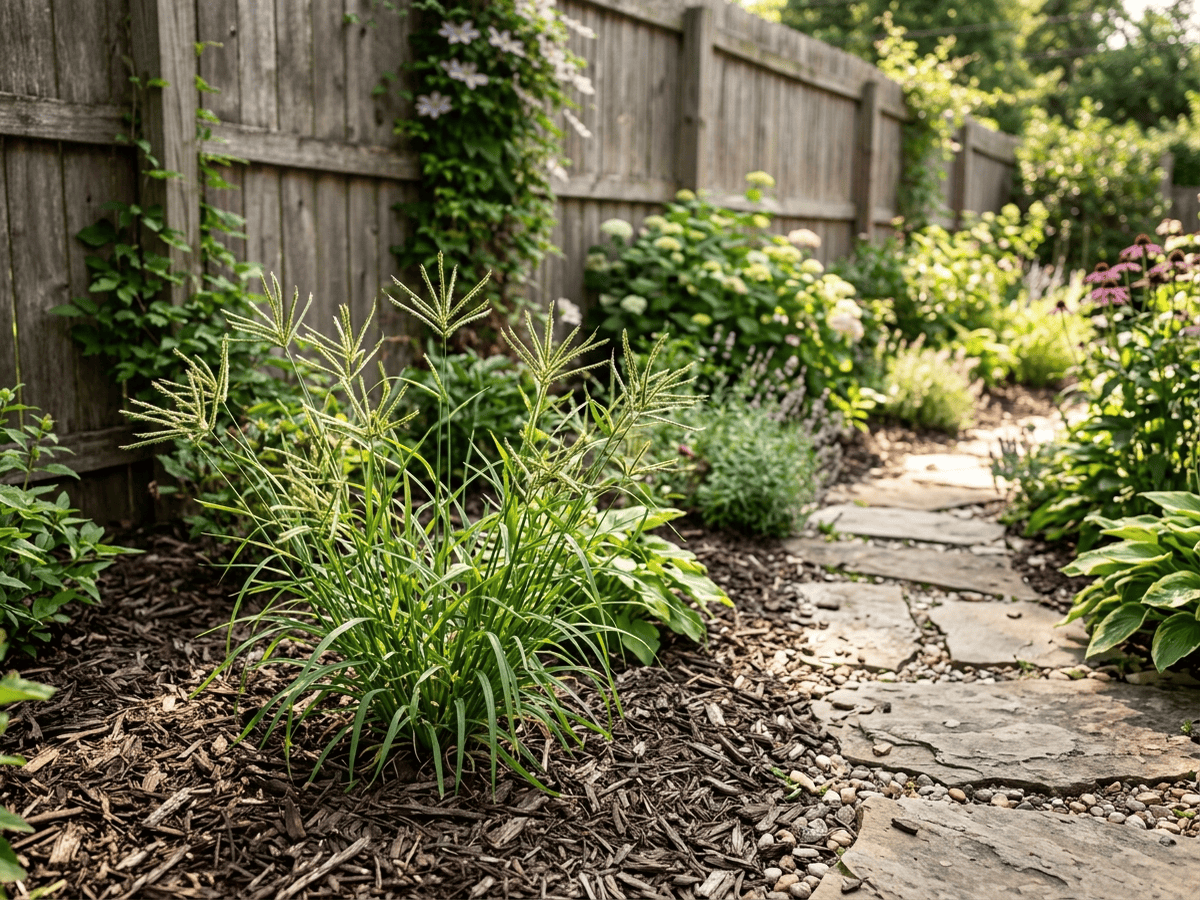
Goosegrass or Wiregrass is a tough tropical and subtropical annual grass native to Africa and Asia, naturalized throughout the warm US. Forms distinctive flat rosettes of silvery-green flattened stems radiating from a central crown with strong wiry finger-like seed heads. Specializes in compacted soil where nothing else grows, invading driveways, pavement cracks, high-traffic lawn areas, and athletic fields.
- Heat-tolerant
How to care for Goose Grass
Watering
- Springevery 14 days
- Summerevery 7 days
- Fallevery 14 days
- Winterpause watering
Soil · Well-draining
- Top dressingPine bark mulch10%
- Main mixPotting soil + perlite 2:170%
- DrainageLECA / gravel20%
Never skip the drainage layer — standing water is the top cause of root rot.
FERTILIZER
This plant needs little to no feeding.
At a Glance
- NativeAfrica, South Asia
- Height0.5–2 ft (0.2–0.6 m)
- Spread0.5–1.5 ft (0.2–0.5 m)
- Flower colorGreen
- Foliage colorGreen
- Fruit colorGreen, Brown
- SoilLoamy, Well-drained
- LocationsYard
Bloom time
BLOOM CYCLE
Peak bloom
Jun–Nov
Finger-like seed heads in flat radiating clusters summer through fall
Toxicity
No toxicity has been reported for this plant. Still, it is wise to keep pets from chewing on any houseplant.
Educational information, not medical or veterinary advice. If exposure is suspected, contact a doctor or veterinarian.
DISTRIBUTION

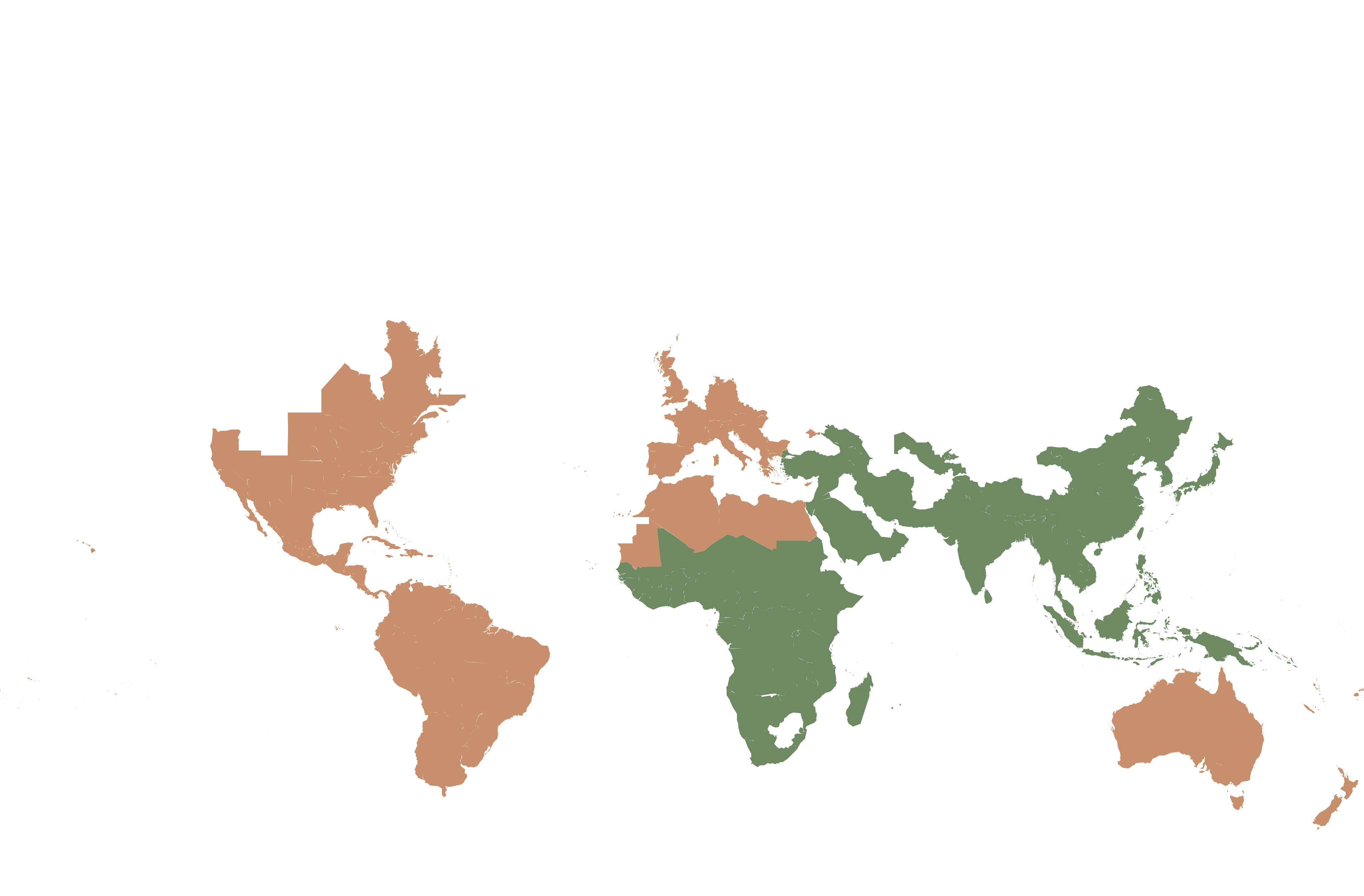
- Native
- Introduced
- Africa
- South Asia
History
Eleusine indica has an uncertain native range spanning tropical Africa, India, and Southeast Asia, and has spread globally as a warm-season annual. Linnaeus described it as Cynosurus indicus in 1753, and Gaertner transferred it to Eleusine in 1788. It is related to the African cultivated cereal finger millet (E. coracana).
Goosegrass grows from compacted soil like cracks in driveways and patios, where its prostrate growth habit and tough silica-reinforced leaves help it survive foot traffic and dry conditions that kill other weeds. It is one of the most troublesome summer lawn weeds in the southern US and a major herbicide-resistance hotspot: populations resistant to glyphosate, paraquat, and dinitroaniline herbicides have been documented in Malaysia, the Americas, and Southeast Asia, making it a model for studying weed-herbicide coevolution.
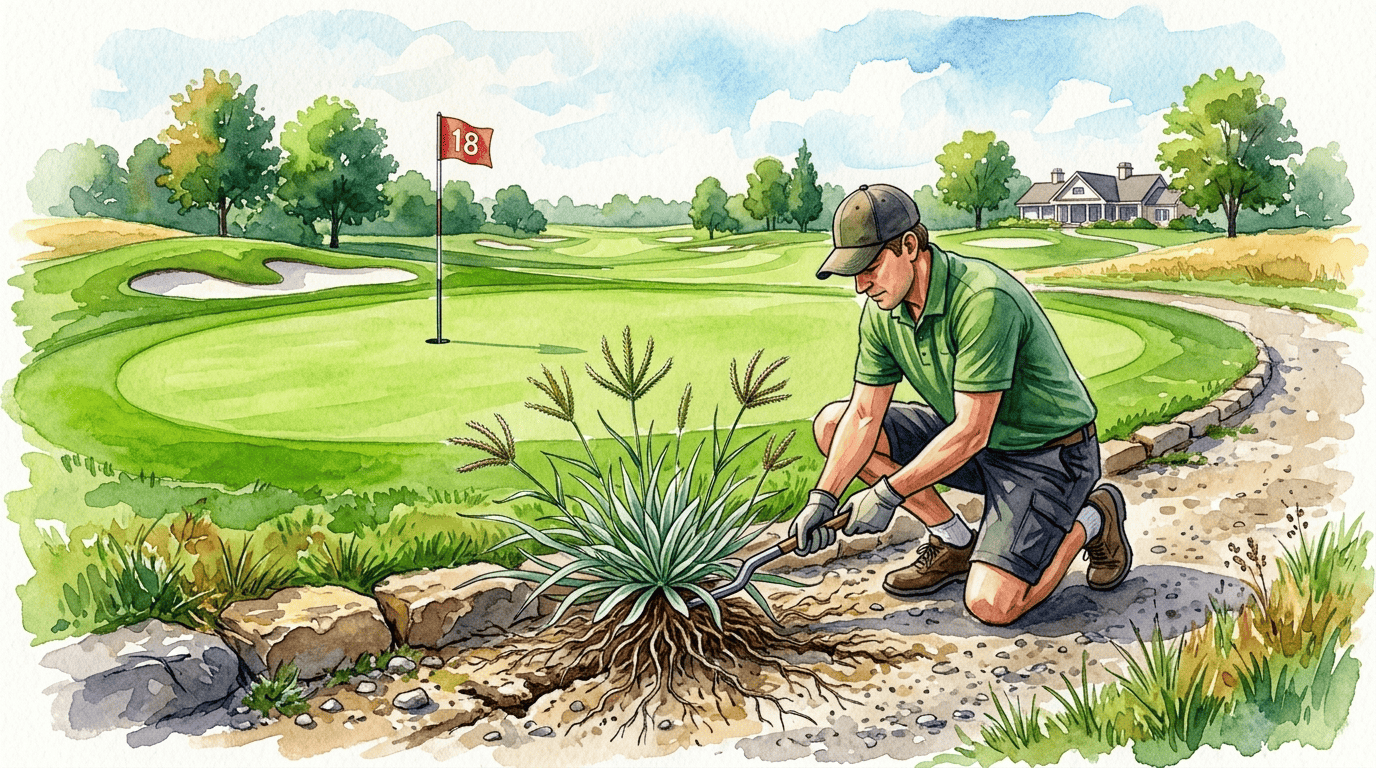
Native to Africa and tropical Asia, spread worldwide with human agriculture. Now one of the top agricultural weeds of the tropical and subtropical world. A major problem on American golf courses, athletic fields, and compacted driveways where its deep fibrous roots defeat most hand-pulling.
Symbolism & meaning
What It Symbolizes
Goose Grass is a tough survivor, specializing in the cracked, compacted soils of pavement edges and parking lot margins where finer grasses fail. Its flattened stems are fibrous and wire-tough, earning it the old folk name 'wire grass.' A weed, certainly, but also a quiet ecological observation about which plants actually inherit our paved-over corners.
- Tough survivor — specializes in compacted pavement-edge soil
- Wire grass — fibrous flattened stems tough as wire
Where the Name Comes From
The name Goose Grass describes its grasslike foliage. 'Eleusine' named for Eleusis in ancient Greece where grain goddess Demeter was worshipped; 'indica' means of India, though the true native range is Africa.
Related plants
Plants with similar care
 Chinese AbeliaAbelia chinensis
 Fragrant AbeliaAbelia mosanensis
 Large-Flowered AbeliaAbelia uniflora
 Glossy AbeliaAbelia x grandiflora
Frequently asked questions
How often should I water Goose Grass?
Water about every 14 days during the growing season, and always let excess water drain away.
How much light does Goose Grass need?
Full sun: 6+ hrs direct. Watch the leaves — scorching or stretching means the light needs adjusting.
Is Goose Grass toxic to cats or dogs?
No toxicity has been reported for this plant. Still, it is wise to keep pets from chewing on any houseplant. Educational information, not medical or veterinary advice. If exposure is suspected, contact a doctor or veterinarian.
Is Goose Grass easy to grow?
Yes — it is considered an easy, beginner-friendly plant.
When does Goose Grass bloom?
It typically blooms Jun–Nov in the Northern Hemisphere.
YardMate
Identify any plant in seconds
Snap a photo — YardMate names the plant, diagnoses problems, and reminds you when to water.
Download on the App Store