 YardMate

Golden Pothos
Epipremnum aureum
Easy · Beginner friendlyAbout Golden Pothos
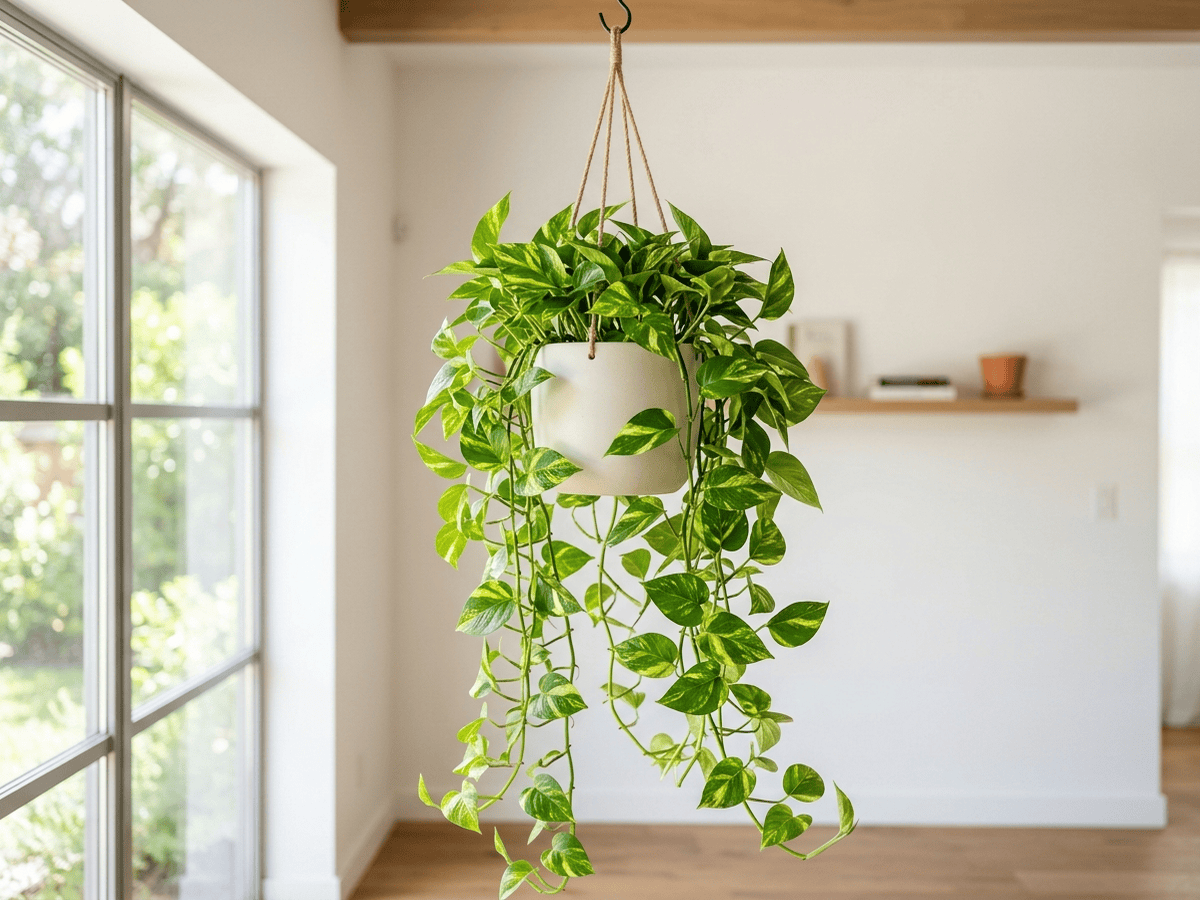
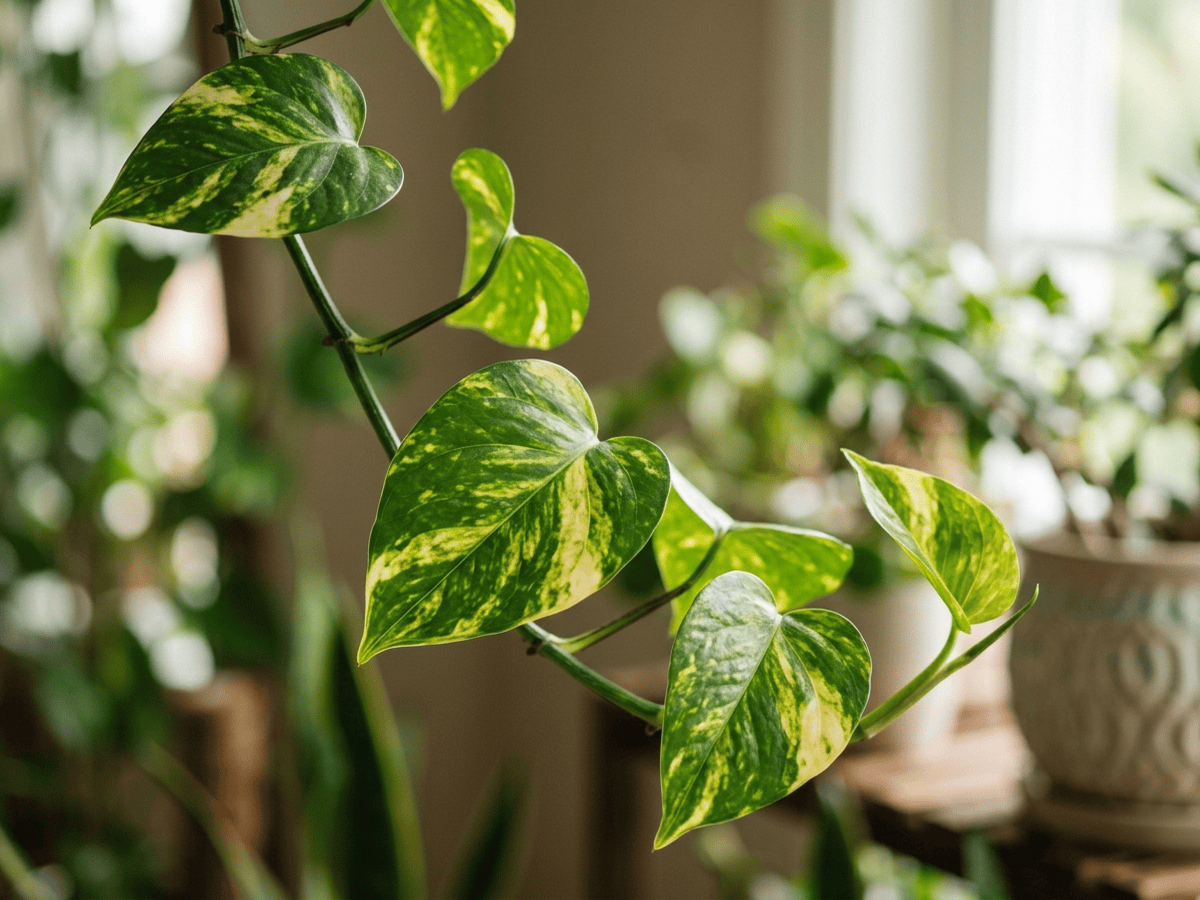
Golden Pothos is one of the hardiest and most forgiving houseplants, native to the Solomon Islands in the South Pacific. Its heart-shaped leaves with golden variegation cascade beautifully from hanging baskets or climb walls with aerial roots. Renowned for its NASA-validated air-purifying ability, it filters formaldehyde, benzene, and xylene. It thrives in almost any light condition and bounces back quickly from neglect, earning it the nickname 'Devil's Ivy' because it's nearly impossible to kill.
- Air-purifying
- Low-maintenance
- Climbing
How to care for Golden Pothos
Watering
- Springevery 7 days
- Summerevery 5 days
- Fallevery 10 days
- Winterevery 14 days
Soil · Chunky & airy
- Top dressingBark chips10%
- Main mixBark + potting soil + perlite 1:1:170%
- DrainageLECA20%
Chunky pieces hold air pockets open so thick roots don't suffocate.
FERTILIZER
Balanced Feed 14-14-14
An even feed covers all three needs at once, keeping leaves, roots and blooms moving together with nothing pushed out of balance.
- Nitrogen · Leaves
- Phosphorus · Roots + Blooms
- Potassium · Strength
- Springevery 30 days
- Summerevery 30 days
- Fallevery 60 days
At a Glance
- NativePacific Islands
- Height3–6 ft (0.9–1.8 m)
- Spread2–3 ft (0.6–0.9 m)
- Flower colorCream, Green
- Foliage colorGreen, Yellow, Variegated
- SoilLoamy, Well-drained, Rich
- LocationsIndoor · Balcony
Bloom time
BLOOM CYCLE
Peak bloom
Jun–Aug
Rarely flowers in cultivation; produces a pale spathe and spadix only on mature climbing specimens
Fragrance
NO FRAGRANCE
Flowers are rarely produced in cultivation and are not notably fragrant.
Toxicity
Humans Slight · Pets Slight
insoluble calcium oxalate crystals (raphides)
Slight
- Leaf
- Stem
- Sap
- Contact
- Ingestion
EXPOSURE Touching leaves, stems, and sap. Eating leaves, stems, and sap.
EFFECT Oral burning, lip and tongue swelling, drooling and skin may develop mild dermatitis from sap.
NOTE Toxicity is generally mild but can be alarming in cats and small dogs due to oral swelling.
Slight
- Leaf
- Stem
- Ingestion
EXPOSURE Eating leaves and stems.
EFFECT Oral irritation, pain and swelling of mouth, tongue and lips, excessive drooling, vomiting, difficulty swallowing and per ASPCA.
NOTE Toxicity is generally mild but can be alarming in cats and small dogs due to oral swelling.
Slight
- Leaf
- Stem
- Ingestion
EXPOSURE Eating leaves and stems.
EFFECT Oral irritation, intense burning and swelling, excessive drooling, vomiting, difficulty swallowing and per ASPCA.
NOTE Toxicity is generally mild but can be alarming in cats and small dogs due to oral swelling.
Educational information, not medical or veterinary advice. If exposure is suspected, contact a doctor or veterinarian.
DISTRIBUTION


- Native
- Introduced
- Pacific Islands
History

Golden Pothos was originally collected from the Solomon Islands in the South Pacific and entered Western horticulture in the early 20th century, though it was shuffled between several genera — Pothos, Scindapsus, Rhaphidophora — before settling as Epipremnum aureum in the 1960s. Its reputation as a near-indestructible houseplant made it a staple of mid-century offices and dorm rooms. NASA's 1989 Clean Air Study gave it a second life by ranking it among the best plants for filtering formaldehyde, benzene, and xylene.
In Chinese, Vietnamese, and Indian households it is widely called the 'Money Plant' and believed to attract financial luck when placed in the southeast of a home. In the wild its juvenile heart-shaped leaves give way to enormous fenestrated adult leaves over three feet across.
In its native Solomon Islands, the vine can grow leaves over 3 feet wide — a stark contrast to the modest indoor form most people know.
Symbolism & meaning
What It Symbolizes
Golden Pothos is perseverance in green, thriving in dim hallways, forgotten cubicles, and dry apartments where almost nothing else will grow. Across Asia it is widely known as the Money Plant, believed to attract prosperity to the homes that keep it. Few houseplants combine such determined survival with such generous symbolism — a vine that quietly promises both endurance and slow, accumulating wealth.
- Perseverance — thrives against all odds, symbolizing determination
- Prosperity — known as Money Plant, believed to attract wealth
Where the Name Comes From
'Epipremnum' means 'upon a trunk' in Greek, describing its climbing habit. 'Aureum' is Latin for golden, referring to its yellow-variegated leaves.
Uses & Fun Facts
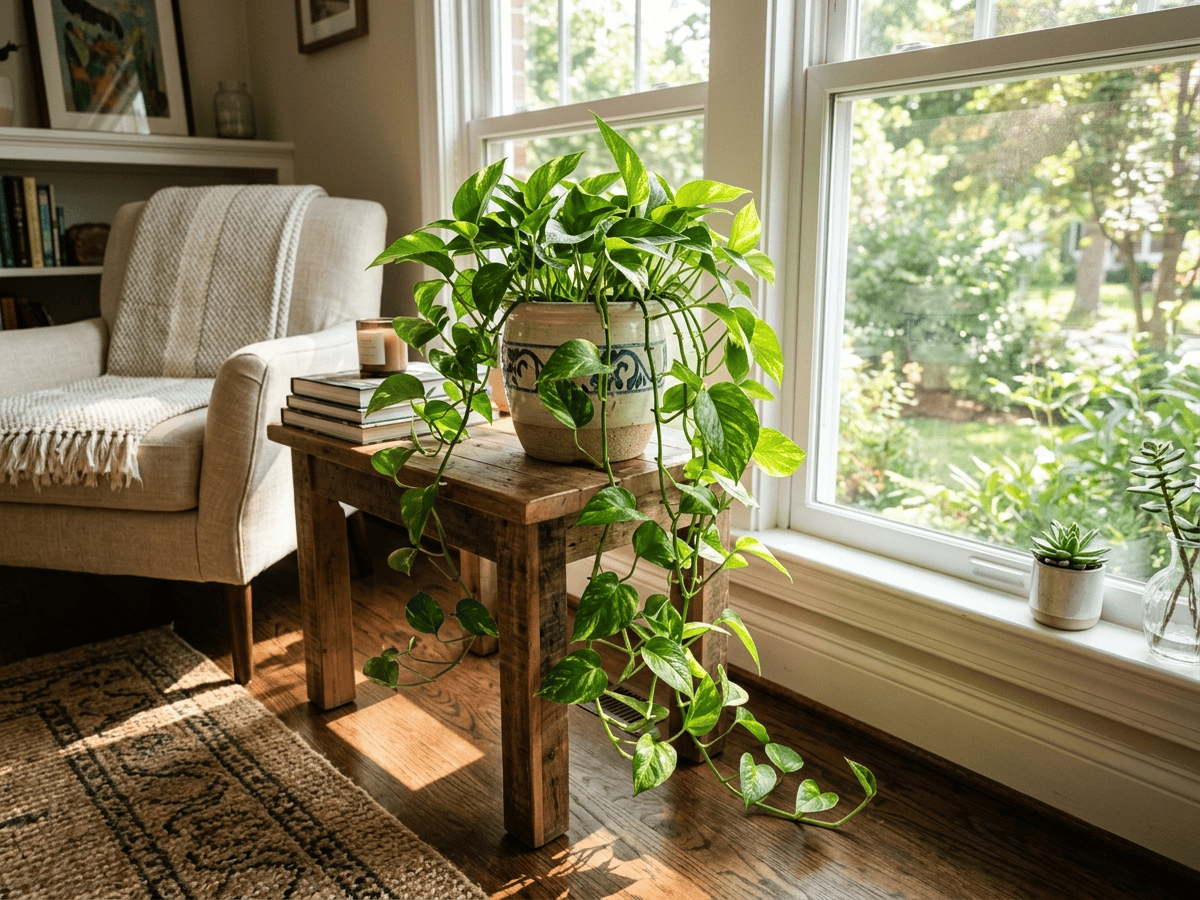
- Trailing vines soften shelves, hanging baskets, and bright indoor corners
- Vines climb moss poles or trail from shelves in bright indoor rooms
Related plants
More Epipremnum plants

Plants with similar care
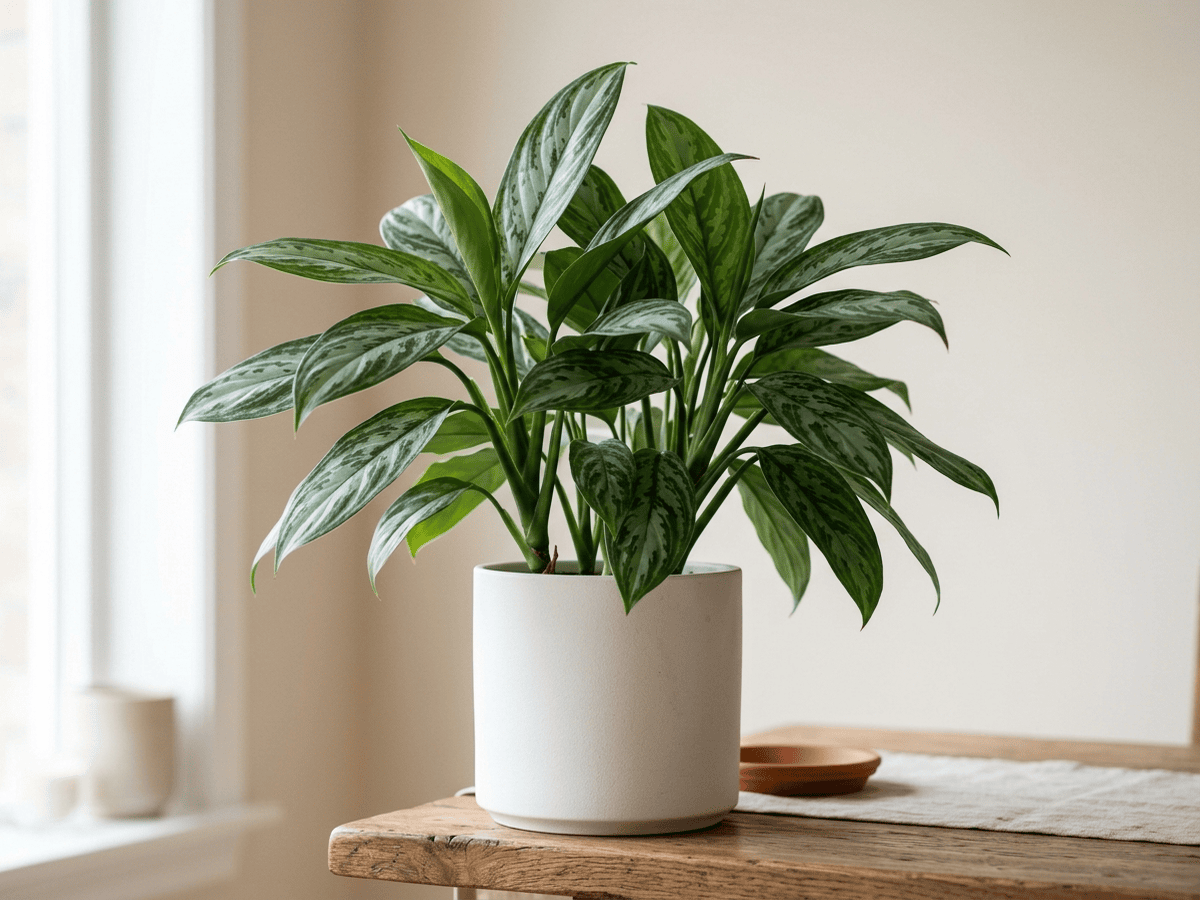 Philippine EvergreenAglaonema commutatum
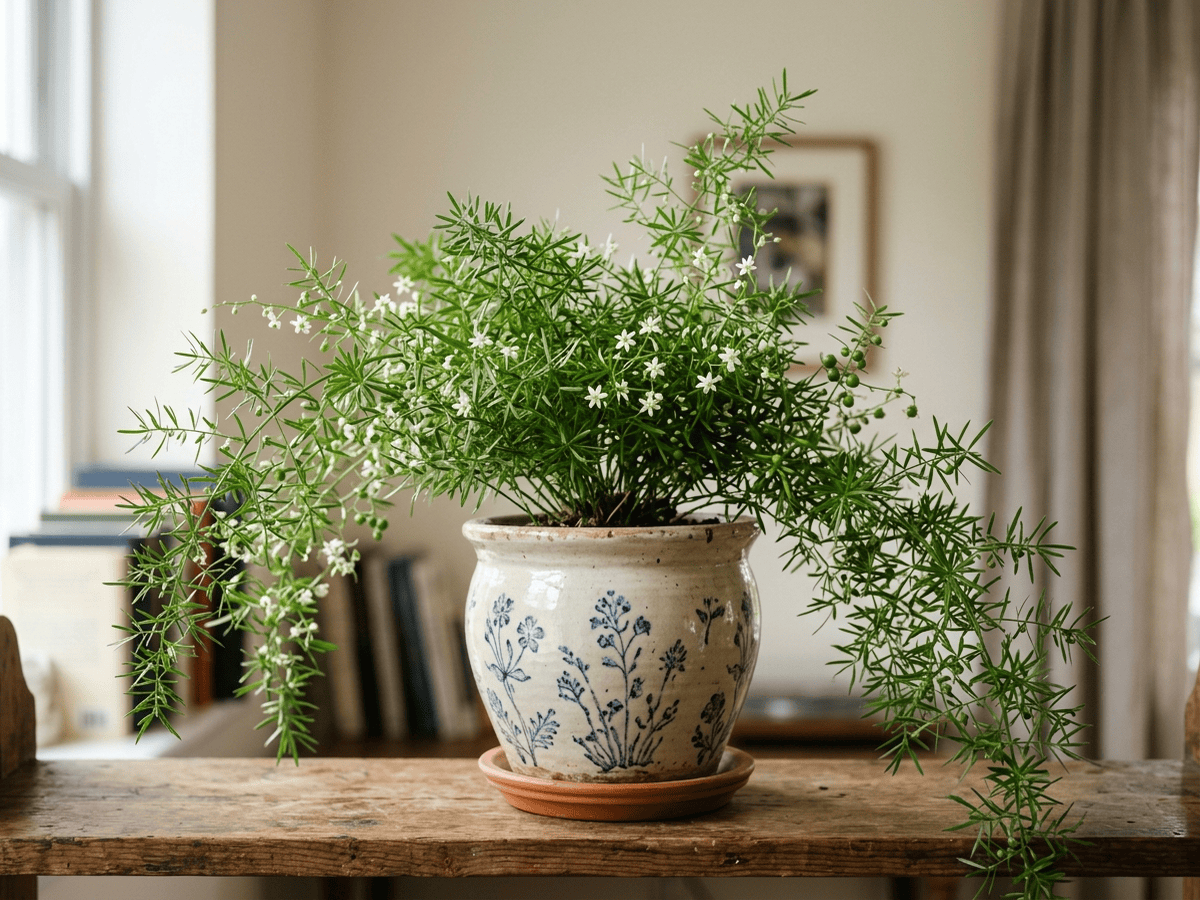 Sprenger's AsparagusAsparagus densiflorus
 Entire-Leaf False Goat’s BeardAstilbe simplicifolia
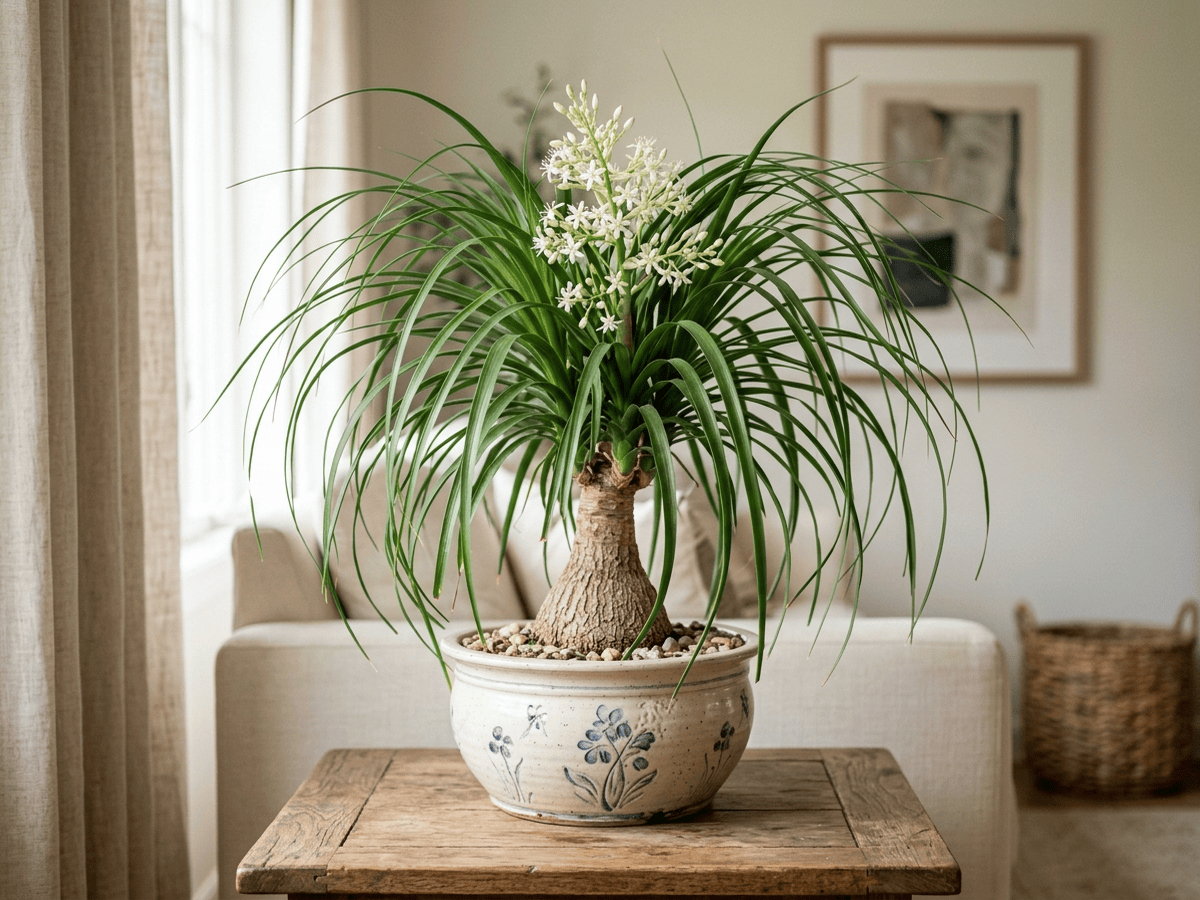 Ponytail PalmBeaucarnea recurvata
Frequently asked questions
How often should I water Golden Pothos?
In summer, water about every 5 days; in winter, about every 14 days. Adjust for heat, pot size and drainage.
How much light does Golden Pothos need?
Part shade: 2–4 hrs direct. Watch the leaves — scorching or stretching means the light needs adjusting.
Is Golden Pothos toxic to cats or dogs?
Pets Slight (Dogs Slight · Cats Slight) Educational information, not medical or veterinary advice. If exposure is suspected, contact a doctor or veterinarian.
Is Golden Pothos easy to grow?
Yes — it is considered an easy, beginner-friendly plant.
Can Golden Pothos be grown indoors?
Yes, it adapts well to indoor growing given the right light.
When does Golden Pothos bloom?
It typically blooms Jun–Aug in the Northern Hemisphere.
YardMate
Identify any plant in seconds
Snap a photo — YardMate names the plant, diagnoses problems, and reminds you when to water.
Download on the App Store