 YardMate


Santa Cruz Island Wild Buckwheat
Eriogonum arborescens
Easy · Beginner friendlyAbout Santa Cruz Island Wild Buckwheat
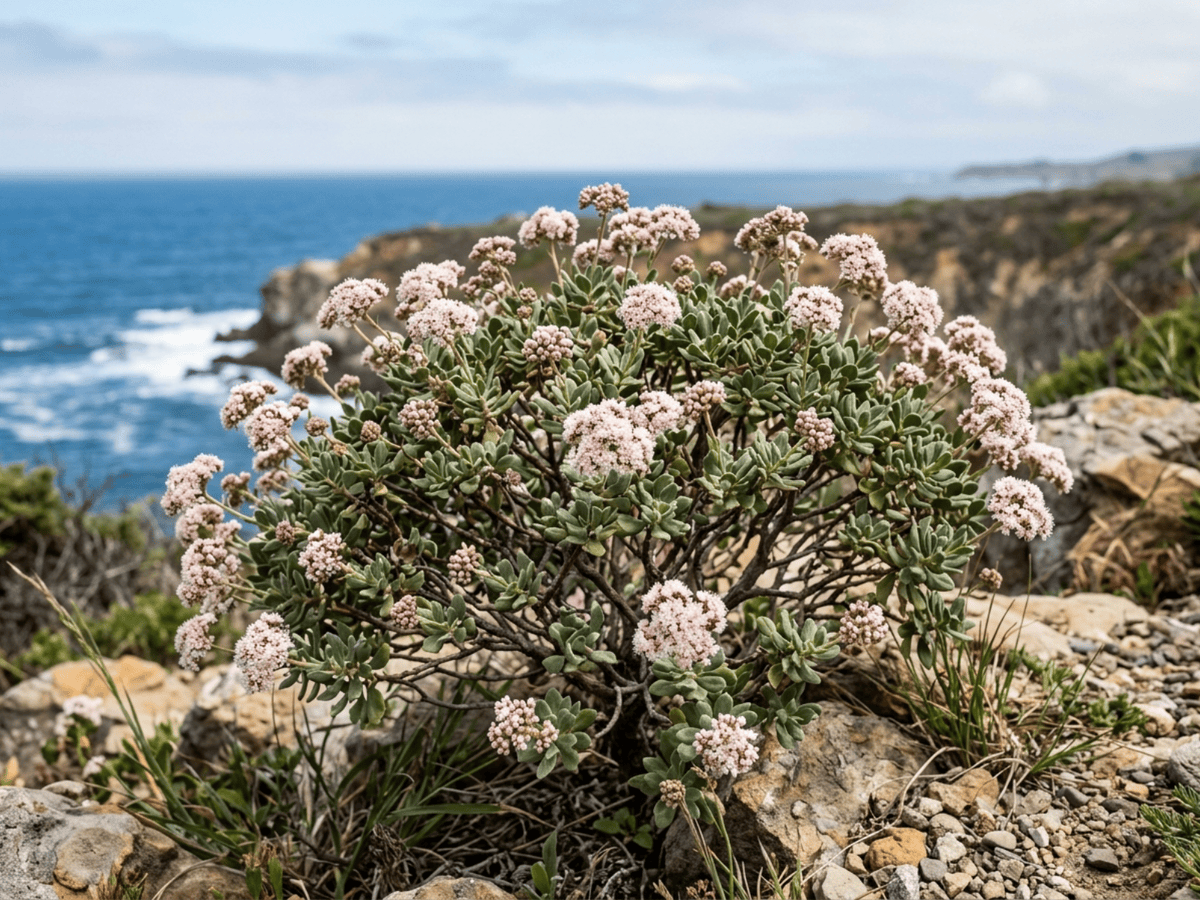
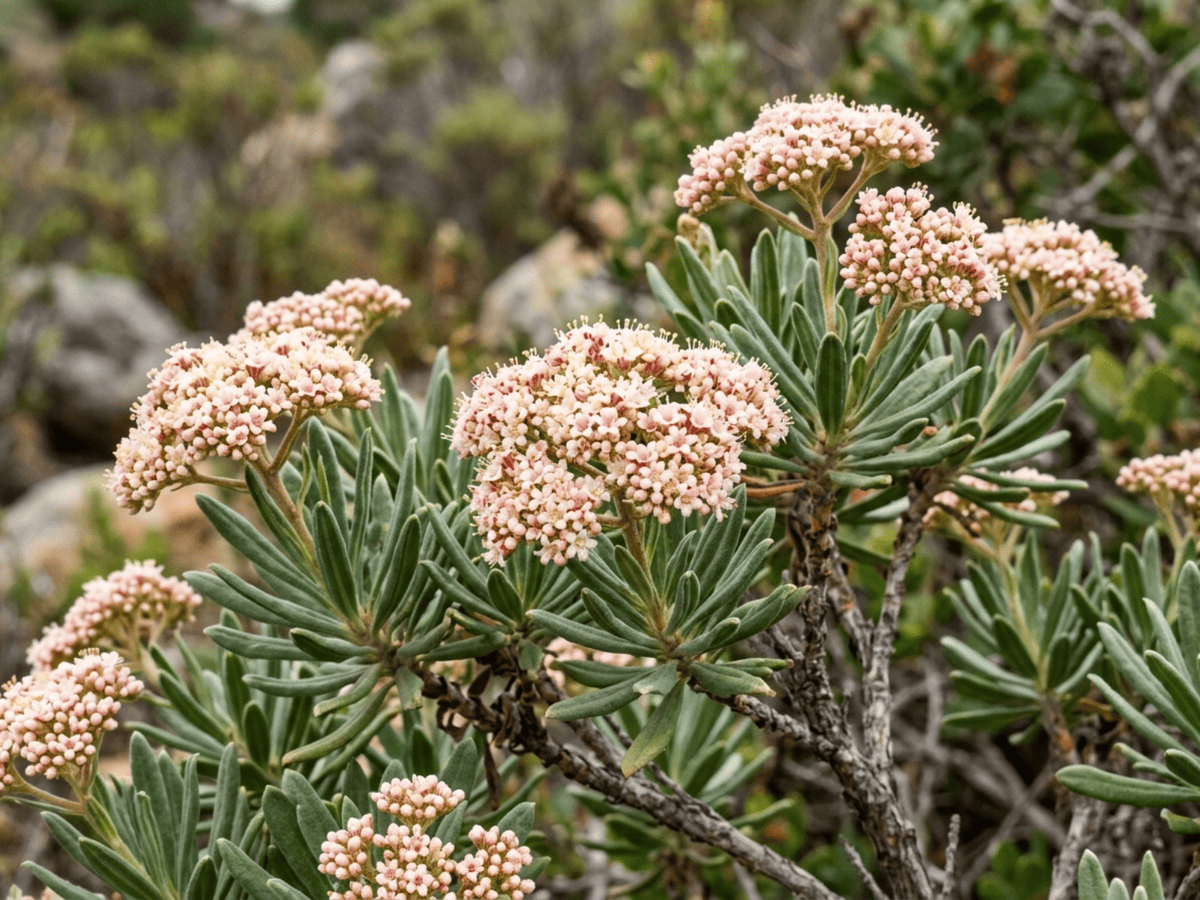
Santa Cruz Island Buckwheat is a California endemic shrub restricted to the Channel Islands, reaching 3-5 feet tall with a striking sculptural form. Dense rounded heads of tiny white-to-pink flowers bloom atop long stems and age beautifully to rusty brown. Its narrow gray-green leaves cluster at branch tips, creating a distinctive architectural silhouette. A superb specimen plant for drought-tolerant gardens, beloved for both its unusual form and extraordinary pollinator value.
- Drought-tolerant
- Architectural
- Evergreen
- Native
How to care for Santa Cruz Island Wild Buckwheat
Watering
- Springevery 14 days
- Summerevery 21 days
- Fallevery 30 days
- Winterpause watering
Soil · Well-draining
- Top dressingPine bark mulch10%
- Main mixPotting soil + perlite 2:170%
- DrainageLECA / gravel20%
Never skip the drainage layer — standing water is the top cause of root rot.
FERTILIZER
This plant needs little to no feeding.
At a Glance
- NativeNorth America
- Height3–5 ft (0.9–1.5 m)
- Spread4–6 ft (1.2–1.8 m)
- Flower colorWhite, Pink, Cream, Orange
- Foliage colorGreen
- SoilSandy, Well-drained
- LocationsYard
Bloom time
BLOOM CYCLE
Peak bloom
Jun–Sep
White to pink flower heads June to September
Fragrance
LIGHT FRAGRANCE
The flowers have a honey-like scent that attracts pollinators.
Toxicity
No toxicity has been reported for this plant. Still, it is wise to keep pets from chewing on any houseplant.
Educational information, not medical or veterinary advice. If exposure is suspected, contact a doctor or veterinarian.
DISTRIBUTION


- Native
- North America
History
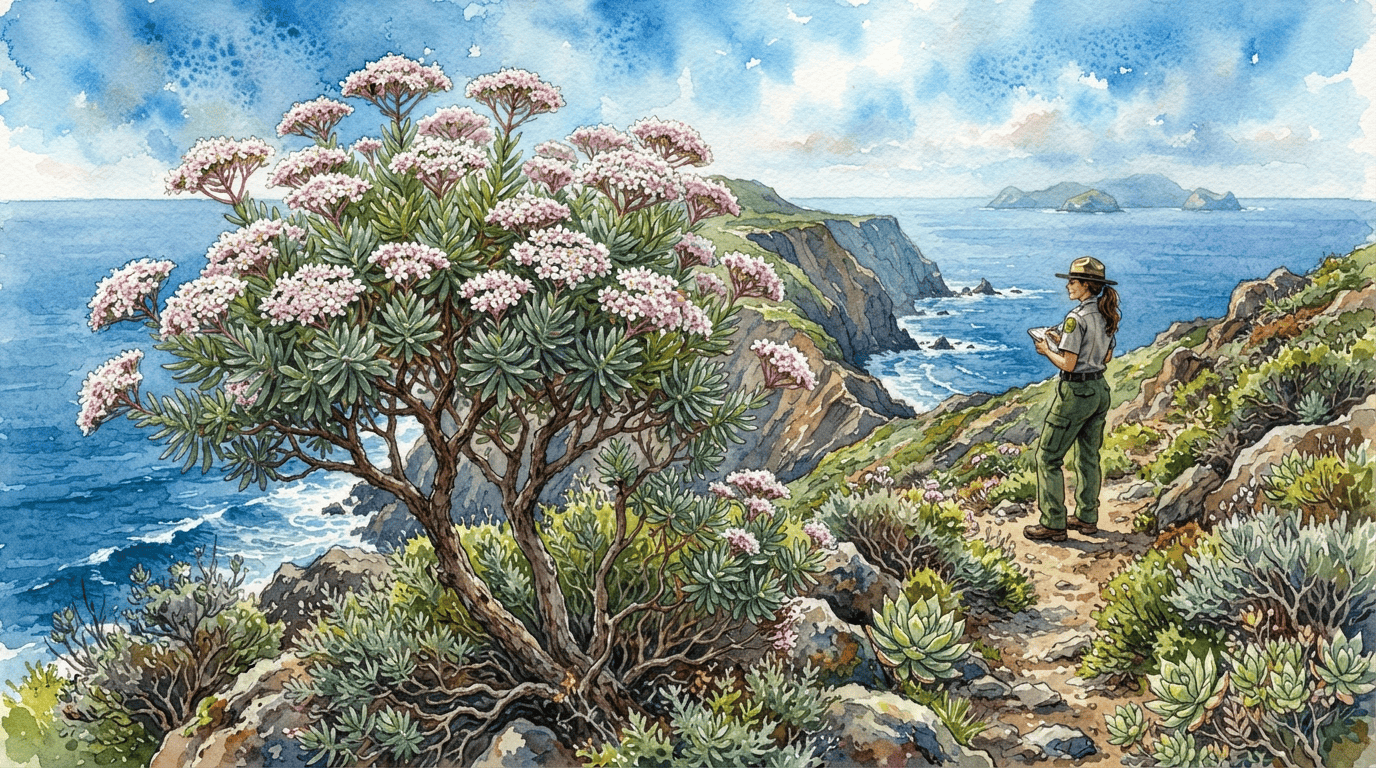
Eriogonum arborescens is native to only three of the California Channel Islands — Santa Cruz Island, Santa Rosa Island, and Anacapa Island — growing on coastal bluffs, canyon slopes, and island chaparral. This narrow island-endemic distribution (the species does not occur anywhere on the California mainland or on the other Channel Islands) gives it rare-plant status under California Native Plant Society Rare Plant Rank 4.2 (limited distribution). The Channel Islands have produced an unusually high diversity of island-endemic plants through millions of years of evolutionary isolation, and E. arborescens is one of the better-known of these endemics.
Unlike its mainland relative E. fasciculatum, which is a lower sprawling subshrub, E. arborescens develops a distinctive upright multi-trunked woody architecture 1-1.5 meters tall and often wider, with the trunks and main branches becoming clearly woody and tree-like in mature plants. The foliage is narrow gray-green in whorled clusters at branch tips, and from summer through late autumn it produces flat 10-15 cm clusters of small pink-tinged white flowers that fade to rust-brown and persist as attractive dried seed heads well into winter.
Despite being a narrow island endemic in the wild, the species is relatively easy to grow in Mediterranean-climate coastal California gardens and has become a popular California-native ornamental subshrub, valued for its tidier upright form compared to other Eriogonums and its long summer-to-autumn bloom season. The islands' long isolation from the mainland fostered unique island endemics like this species. Its populations were devastated by feral sheep and goats in the 19th and 20th centuries but are recovering as grazers have been removed from the islands.
Symbolism & meaning
What It Symbolizes
The Santa Cruz Island Wild Buckwheat is uniqueness on a sea cliff, a sculptural shrub found only on the wind-blasted Channel Islands of California. Its silver foliage and pink-cream flower clusters have become quiet emblems of conservation success, proof that island endemics can be preserved. To plant one inland is to keep a small chapter of fragile coastal botany alive.
- Uniqueness — rare island endemic with sculptural beauty
- Preservation — symbol of Channel Islands conservation success
Where the Name Comes From
'Arborescens' means 'becoming tree-like', referring to the upright woody form.
Uses & Fun Facts
- Sculptural California native shrub anchors coastal gravel gardens
- Domed white-pink flower heads feed native bees and butterflies
- Channel Islands endemic prized as architectural xeric focal point
Related plants
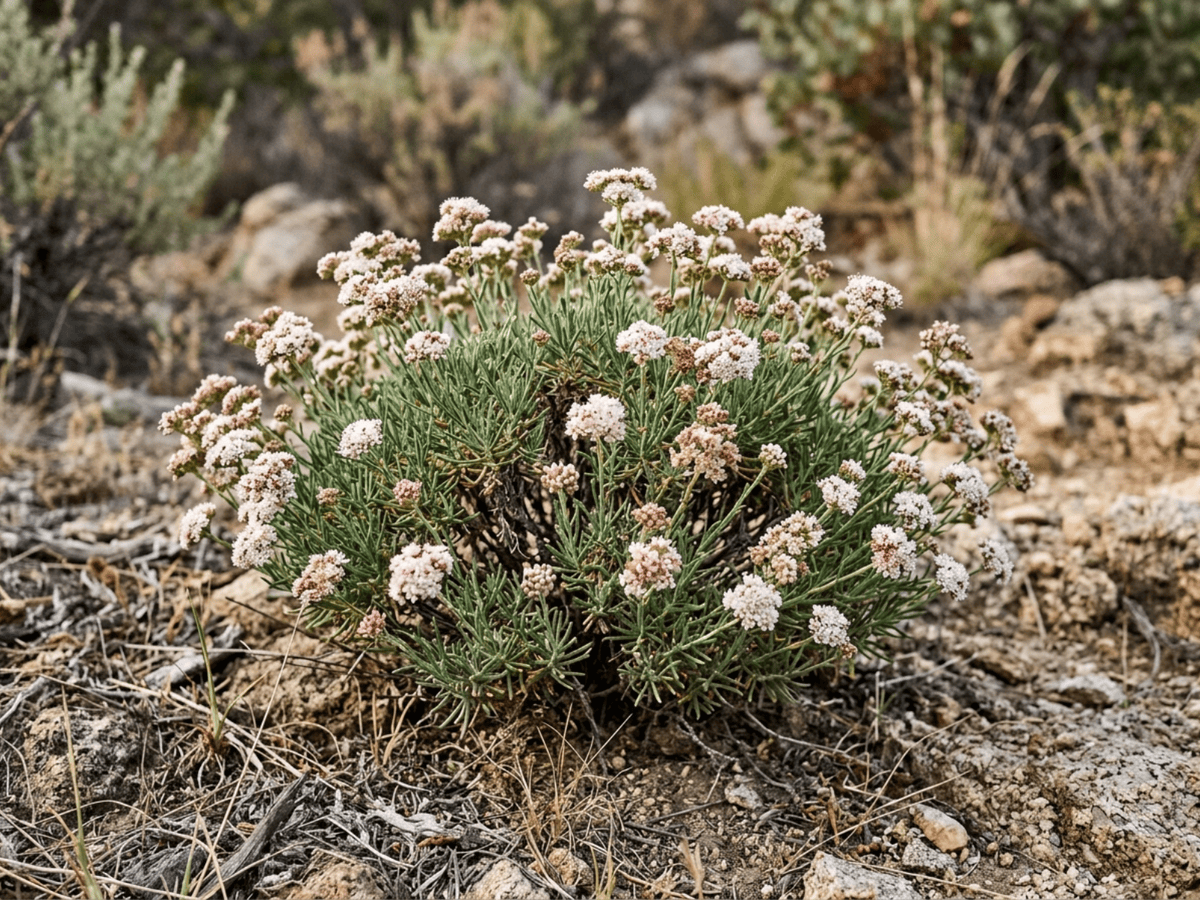
More Eriogonum plants
Plants with similar care
 Chinese AbeliaAbelia chinensis
 Fragrant AbeliaAbelia mosanensis
 Large-Flowered AbeliaAbelia uniflora
 Glossy AbeliaAbelia x grandiflora
Frequently asked questions
How often should I water Santa Cruz Island Wild Buckwheat?
Water about every 14 days during the growing season, and always let excess water drain away.
How much light does Santa Cruz Island Wild Buckwheat need?
Full sun: 6+ hrs direct. Watch the leaves — scorching or stretching means the light needs adjusting.
Is Santa Cruz Island Wild Buckwheat toxic to cats or dogs?
No toxicity has been reported for this plant. Still, it is wise to keep pets from chewing on any houseplant. Educational information, not medical or veterinary advice. If exposure is suspected, contact a doctor or veterinarian.
Is Santa Cruz Island Wild Buckwheat easy to grow?
Yes — it is considered an easy, beginner-friendly plant.
When does Santa Cruz Island Wild Buckwheat bloom?
It typically blooms Jun–Sep in the Northern Hemisphere.
YardMate
Identify any plant in seconds
Snap a photo — YardMate names the plant, diagnoses problems, and reminds you when to water.
Download on the App Store