 YardMate

Variegated Pineapple Lily
Eucomis bicolor
Easy · Beginner friendlyAbout Variegated Pineapple Lily
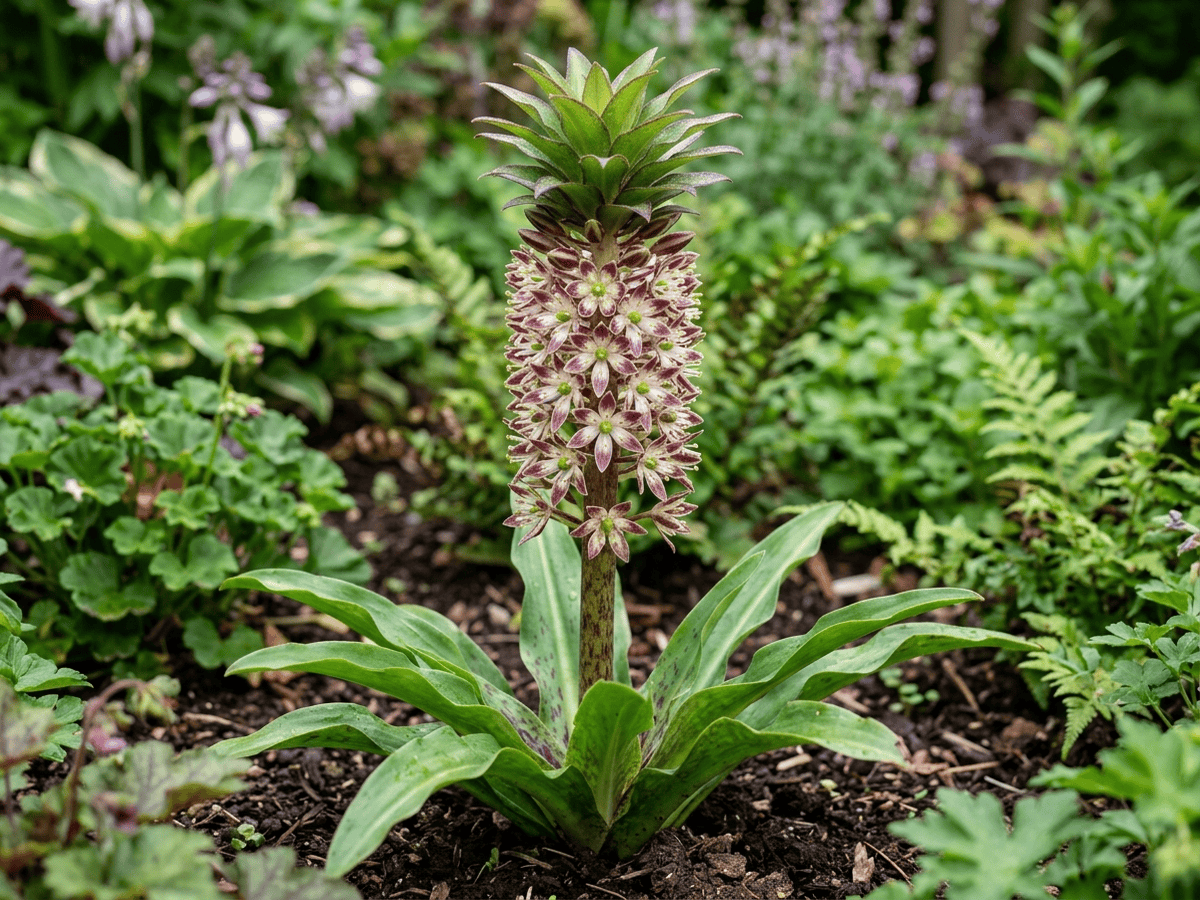
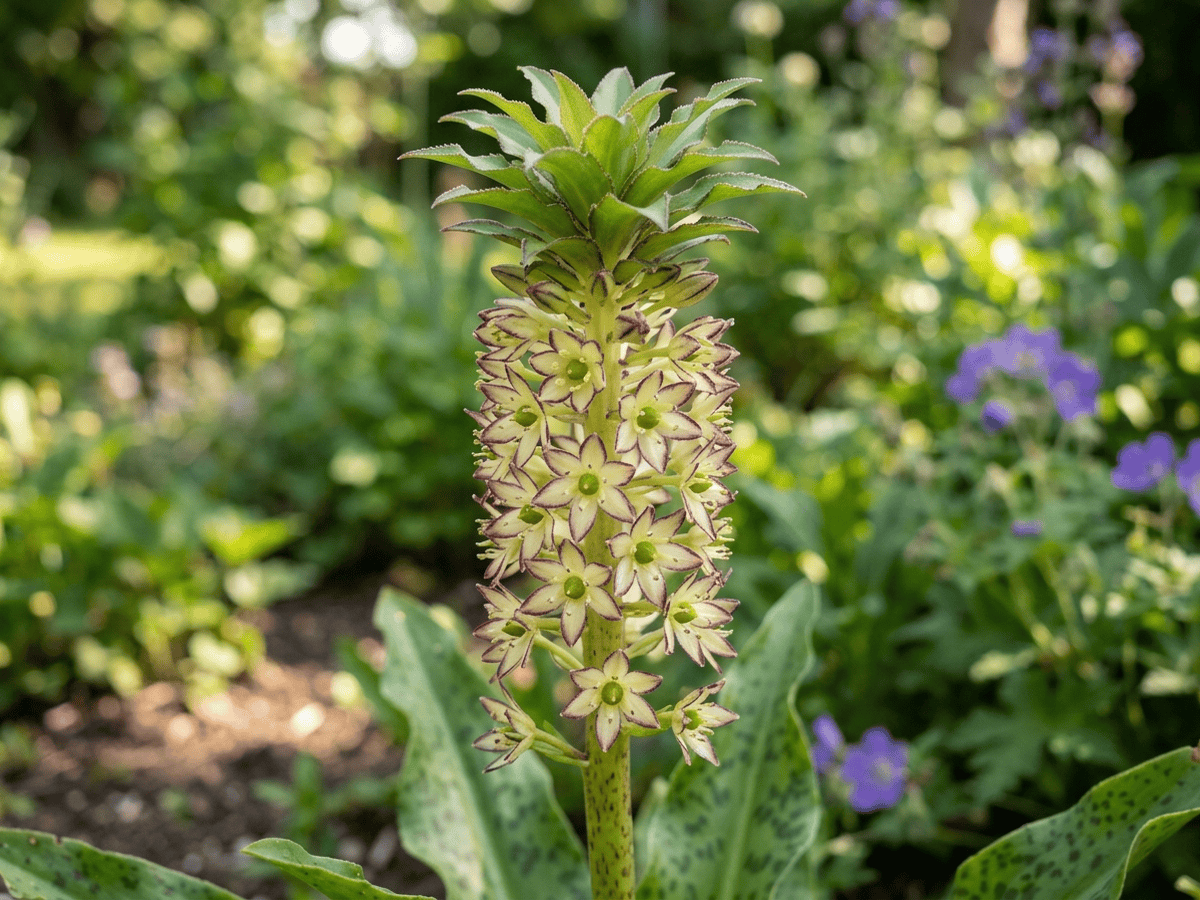
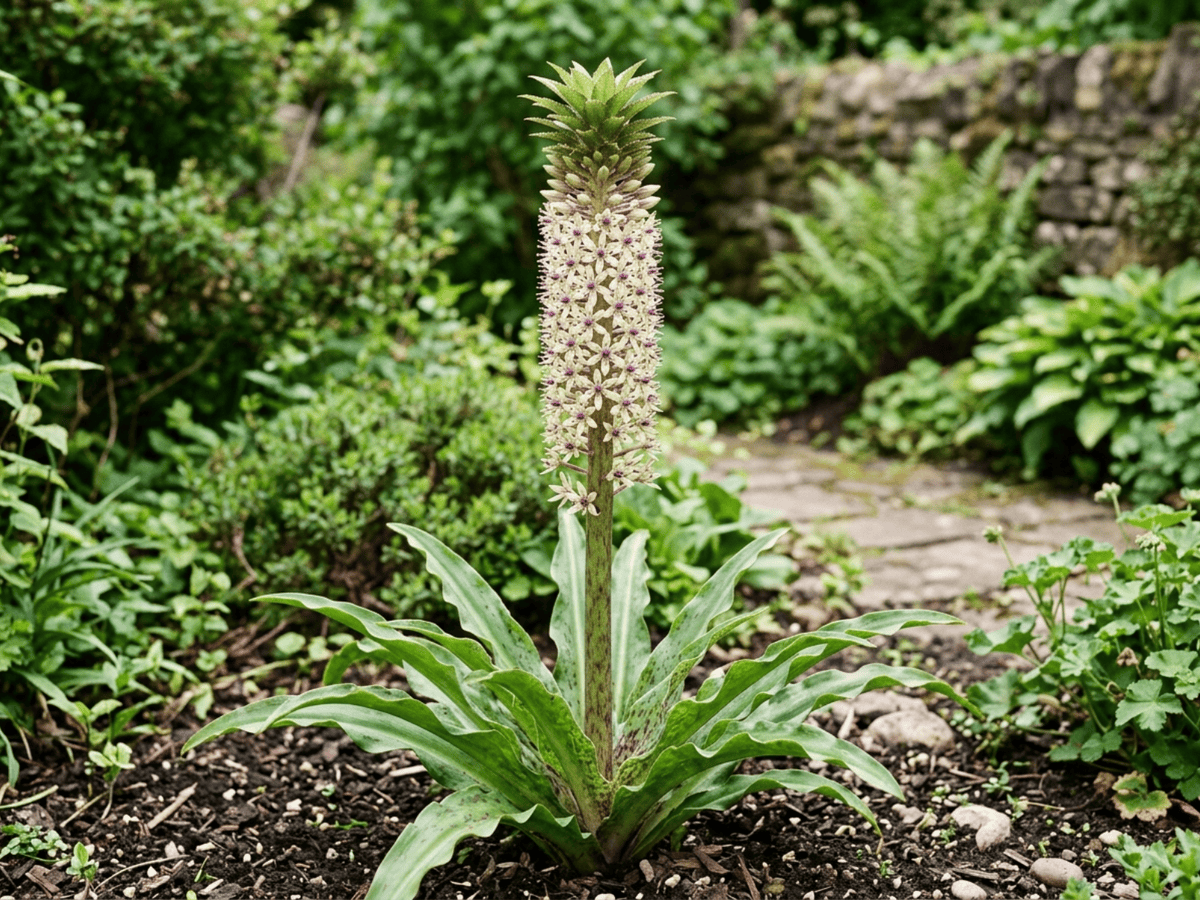
Pineapple Lily is a South African bulb hardy in USDA zones 7-10 and grown as a summer bulb elsewhere, producing distinctive fat spikes of small pale green flowers edged in purple, topped with a tuft of leafy bracts that give it the pineapple appearance. Growing 18 to 24 inches tall with broad strap leaves, it blooms in late summer into early fall. A dramatic architectural bulb for American summer containers, mixed borders, and tropical-style plantings.
- Deer-resistant
- Architectural
- Container-friendly
- Long-blooming
How to care for Variegated Pineapple Lily
Watering
- Springevery 5 days
- Summerevery 3 days
- Fallevery 10 days
- Winterpause watering
Soil · Well-draining
- Main mixLoam + coarse sand 3:175%
- DrainageGravel25%
Sharp drainage matters most — bulbs rot in wet soil while dormant.
FERTILIZER
Balanced Feed 14-14-14
An even feed covers all three needs at once, keeping leaves, roots and blooms moving together with nothing pushed out of balance.
- Nitrogen · Leaves
- Phosphorus · Roots + Blooms
- Potassium · Strength
- Springevery 30 days
- Summerevery 45 days
At a Glance
- NativeAfrica
- Height1–2 ft (0.3–0.6 m)
- Spread1–1.5 ft (0.3–0.5 m)
- Flower colorGreen, Cream, Purple
- Foliage colorGreen, Purple
- SoilLoamy, Well-drained, Rich
- LocationsYard · Balcony
Bloom time
BLOOM CYCLE
Peak bloom
Aug–Nov
Pineapple-shaped flower spikes in late summer to fall
Fragrance
LIGHT FRAGRANCE
The flowers have a very lightly musty-sweet scent.
Toxicity
Humans Moderate · Pets Moderate
cardiac glycosides and homoisoflavonoids
Moderate
- Bulb
- Ingestion
EXPOSURE Eating bulbs.
EFFECT Nausea, vomiting, and diarrhea.
NOTE Bulbs contain cardiac glycosides. Traditional topical medicinal use only.
Moderate
- Bulb
- Ingestion
EXPOSURE Eating bulbs.
EFFECT Vomiting and diarrhea.
NOTE Bulbs contain cardiac glycosides. Traditional topical medicinal use only.
Moderate
- Bulb
- Ingestion
EXPOSURE Eating bulbs.
EFFECT Vomiting and diarrhea.
NOTE Bulbs contain cardiac glycosides. Traditional topical medicinal use only.
Educational information, not medical or veterinary advice. If exposure is suspected, contact a doctor or veterinarian.
DISTRIBUTION


- Native
- Africa
History

Eucomis bicolor grows in moist grasslands and rocky meadows of the Drakensberg region of KwaZulu-Natal, the Free State, and Lesotho at elevations up to 2500 m. John Gilbert Baker described it in 1878 at Kew from cultivated material of South African origin. The genus name Eucomis comes from Greek eu-komē ('beautiful-haired'), alluding to the crown of leafy bracts atop each flower spike — the feature that gives the common name pineapple lily.
Zulu traditional medicine used the bulbs for wound treatment, though internally they are toxic. It reached European cultivation in the early 19th century, and its unusual flower form with purple-margined greenish-cream bells made it a Victorian novelty. 20th-century hybridization with E. comosa produced the dark-leaved 'Sparkling Burgundy' (2003) and Proven Winners's 'Leia' series.
Native to the mountains of Lesotho and eastern South Africa, introduced to European horticulture in the 1870s. Widely distributed to American gardeners by the 1990s after Dutch bulb growers began offering the tubers as summer-planted bulbs. The Sparkling Burgundy cultivar with dark foliage is a top modern variety.
Symbolism & meaning
What It Symbolizes
Pineapple Lily offers unique abundance — a stout flower spike topped, improbably, with a tuft of leaves that makes it look exactly like a small green pineapple. Its tropical drama brings architectural form to late-summer borders that have begun to flag. It is one of those plants whose first impression is a smile: nothing else in the bed looks quite this delightfully odd.
- Unique abundance — distinctive pineapple-shaped flower cluster
- Tropical drama — architectural form in summer gardens
Where the Name Comes From
The name Variegated Pineapple Lily describes its variegated leaves. 'Eucomis' from Greek 'eu-kome' meaning beautiful hair, for the leafy tuft atop the flower spike; 'bicolor' for the two-toned green and purple flower.
Uses & Fun Facts
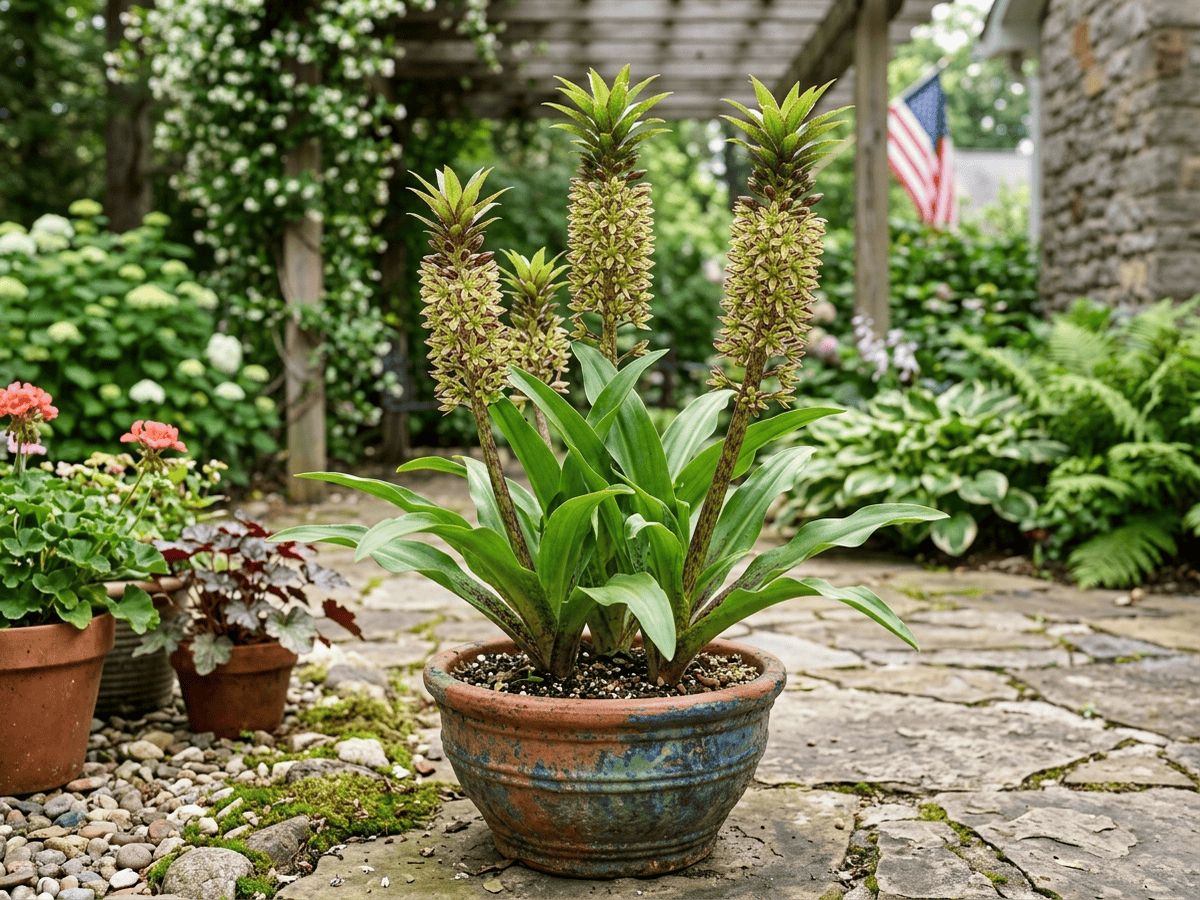
- Pineapple-topped spikes star in sunny patio container compositions
- Long-lasting tufted spikes work fresh and dried in arrangements
- Architectural summer bulb for tropical-style mixed borders
Related plants
More Eucomis plants
Plants with similar care
 Chinese AbeliaAbelia chinensis
 Fragrant AbeliaAbelia mosanensis
 Large-Flowered AbeliaAbelia uniflora
 Glossy AbeliaAbelia x grandiflora
Frequently asked questions
How often should I water Variegated Pineapple Lily?
Water about every 5 days during the growing season, and always let excess water drain away.
How much light does Variegated Pineapple Lily need?
Full sun: 6+ hrs direct. Watch the leaves — scorching or stretching means the light needs adjusting.
Is Variegated Pineapple Lily toxic to cats or dogs?
Pets Moderate (Dogs Moderate · Cats Moderate) Educational information, not medical or veterinary advice. If exposure is suspected, contact a doctor or veterinarian.
Is Variegated Pineapple Lily easy to grow?
Yes — it is considered an easy, beginner-friendly plant.
When does Variegated Pineapple Lily bloom?
It typically blooms Aug–Nov in the Northern Hemisphere.
YardMate
Identify any plant in seconds
Snap a photo — YardMate names the plant, diagnoses problems, and reminds you when to water.
Download on the App Store