 YardMate

Crown Pineapple Lily
Eucomis comosa
Easy · Beginner friendlyAbout Crown Pineapple Lily
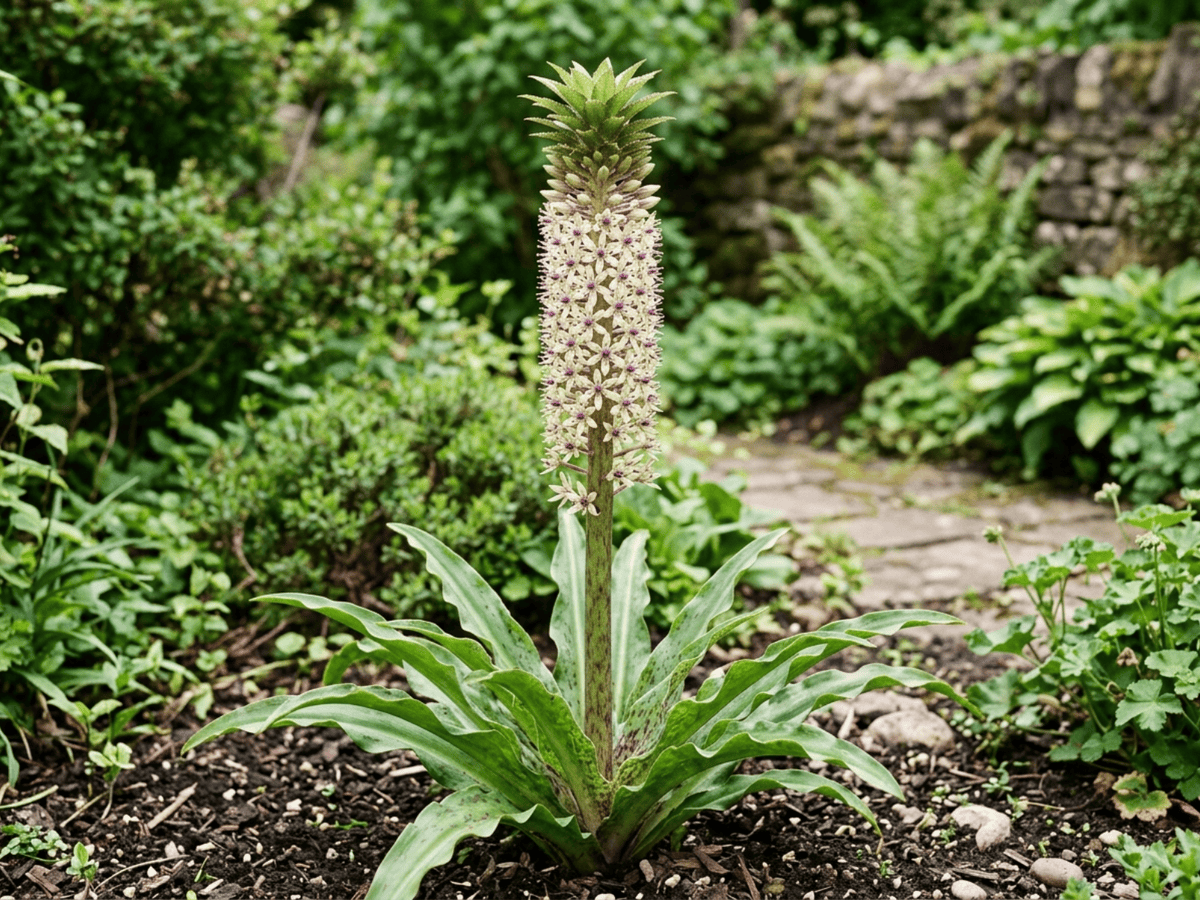
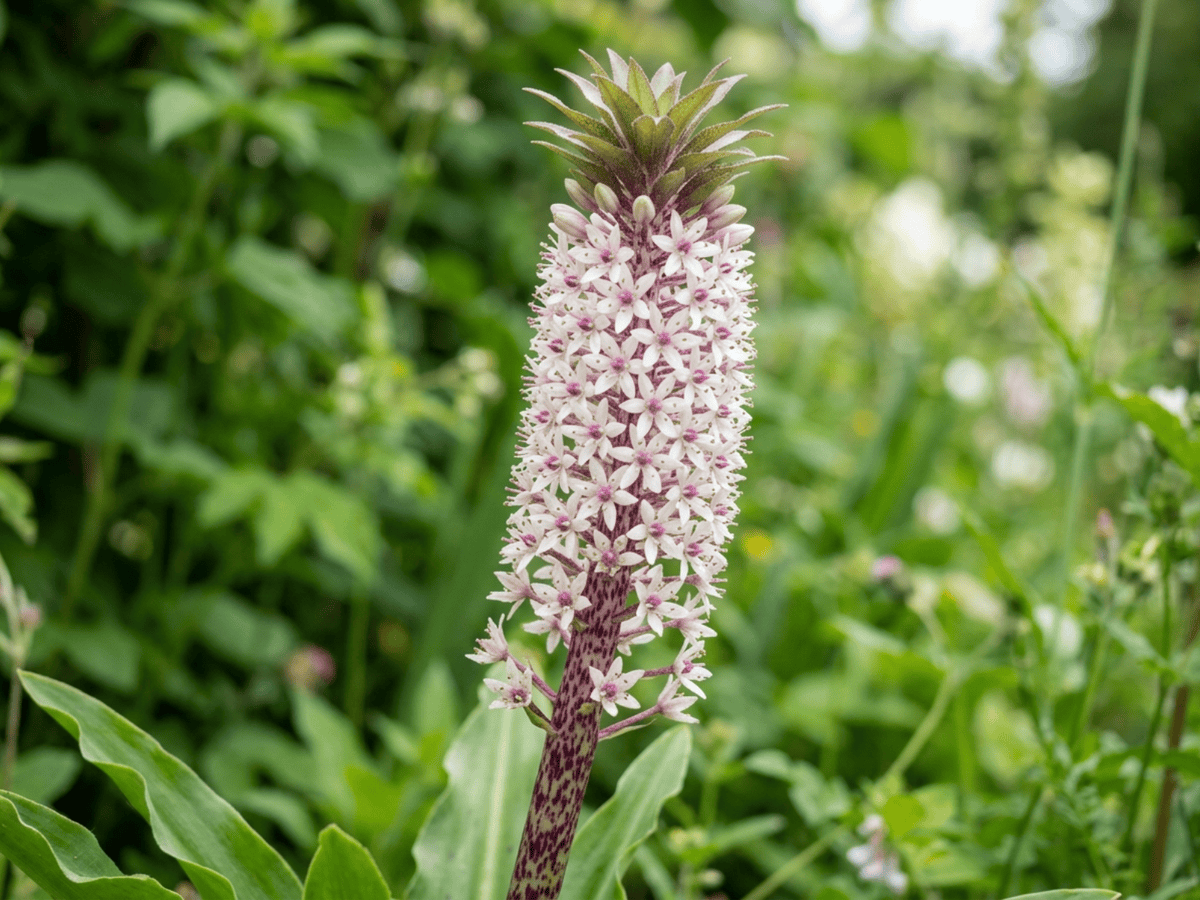
Pineapple Lily is a striking South African bulbous perennial producing thick flower spikes resembling pineapples—dense columns of greenish-white, pink, or purple flowers topped with a tuft of leafy bracts. Growing 18-30 inches tall with rosettes of broad strap-shaped leaves, it blooms in midsummer. Hardy in USDA zones 7-10 (marginal in zone 6 with winter mulch), it has become a trendy architectural specimen in American gardens.
- Cut-flower
- Architectural
- Pollinator-friendly
How to care for Crown Pineapple Lily
Watering
- Springevery 4 days
- Summerevery 3 days
- Fallevery 5 days
- Winterpause watering
Soil · Well-draining
- Main mixLoam + coarse sand 3:175%
- DrainageGravel25%
Sharp drainage matters most — bulbs rot in wet soil while dormant.
FERTILIZER
Balanced Feed 14-14-14
An even feed covers all three needs at once, keeping leaves, roots and blooms moving together with nothing pushed out of balance.
- Nitrogen · Leaves
- Phosphorus · Roots + Blooms
- Potassium · Strength
- Springevery 30 days
- Summerevery 30 days
At a Glance
- NativeAfrica
- Height1.5–2.5 ft (0.5–0.8 m)
- Spread1–1.5 ft (0.3–0.5 m)
- Flower colorCream, Green, Pink, Purple
- Foliage colorGreen, Purple, Red
- Fruit colorGreen, Purple
- SoilWell-drained, Loamy, Rich
- LocationsYard · Balcony
Bloom time
BLOOM CYCLE
Peak bloom
Jul–Aug
Pineapple-shaped flower spikes July to August
Fragrance
LIGHT FRAGRANCE
The flowers have a mild, sometimes unpleasant scent.
Toxicity
Humans Slight · Pets Moderate
homoisoflavonoids
Slight
- Bulb
- Ingestion
EXPOSURE Eating bulbs.
EFFECT Mild GI.
NOTE Documented concern for humans: Mild GI.
Moderate
- Bulb
- Ingestion
EXPOSURE Eating bulbs.
EFFECT Vomiting and diarrhea.
NOTE Bulbs contain mildly toxic compounds; not ASPCA-listed but caution advised.
Moderate
- Bulb
- Ingestion
EXPOSURE Eating bulbs.
EFFECT Vomiting and diarrhea.
NOTE Bulbs contain mildly toxic compounds; not ASPCA-listed but caution advised.
Educational information, not medical or veterinary advice. If exposure is suspected, contact a doctor or veterinarian.
DISTRIBUTION


- Native
- Africa
History

Eucomis comosa is native to grasslands of South Africa's KwaZulu-Natal and Eastern Cape provinces. Scottish-English botanist William Aiton, director of Kew Gardens, described it in 1789 in Hortus Kewensis. The genus name Eucomis comes from Greek eu (good, well) and kome (hair, foliage) referring to the unique crown of bracts atop each flower spike resembling a pineapple top.
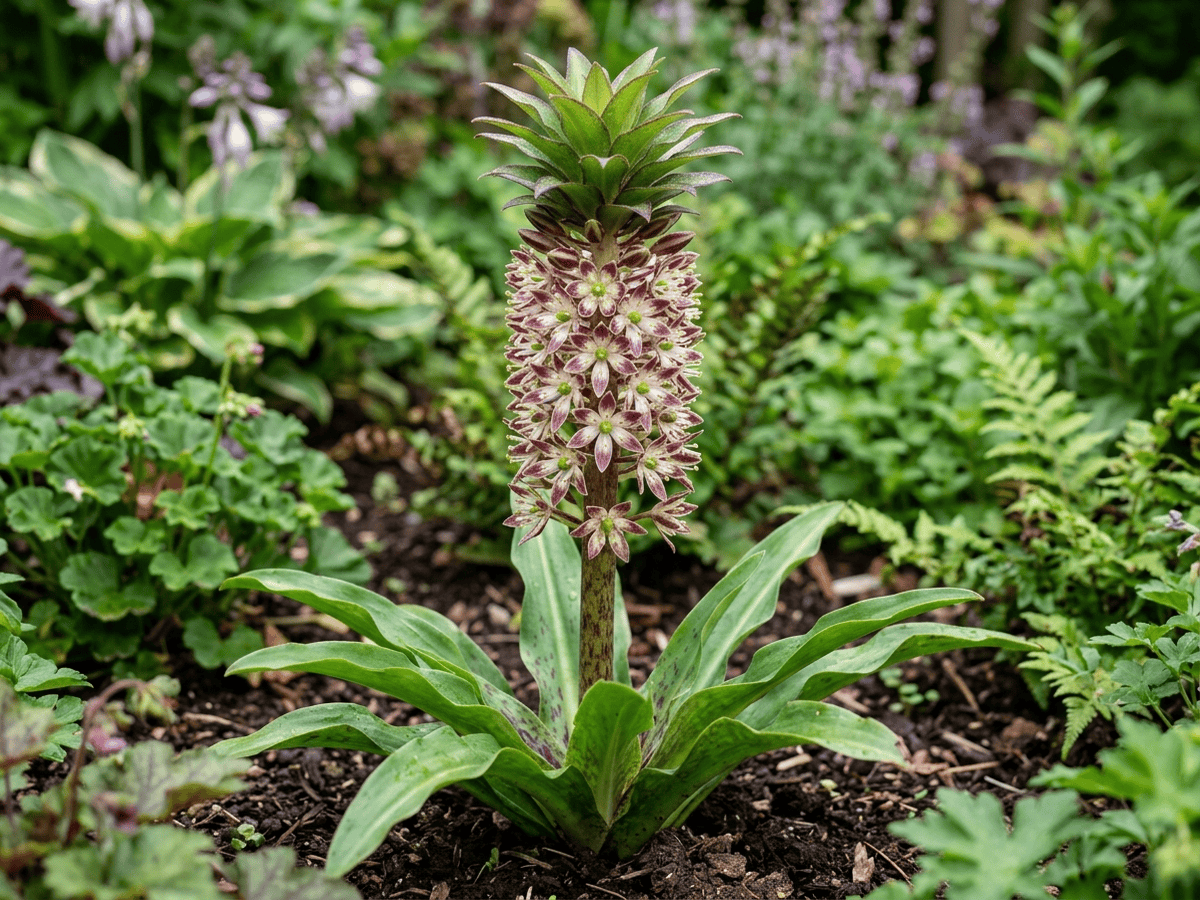
The cylindrical spike of 50-200 greenish-cream or pink star florets opens gradually over weeks. Despite its subtropical origin, it tolerates light frost and grows through zone 7 with protection, earning renewed popularity since the 1990s through purple-leaved cultivars like 'Sparkling Burgundy' and 'Oakhurst' bred by American and European plantsmen.
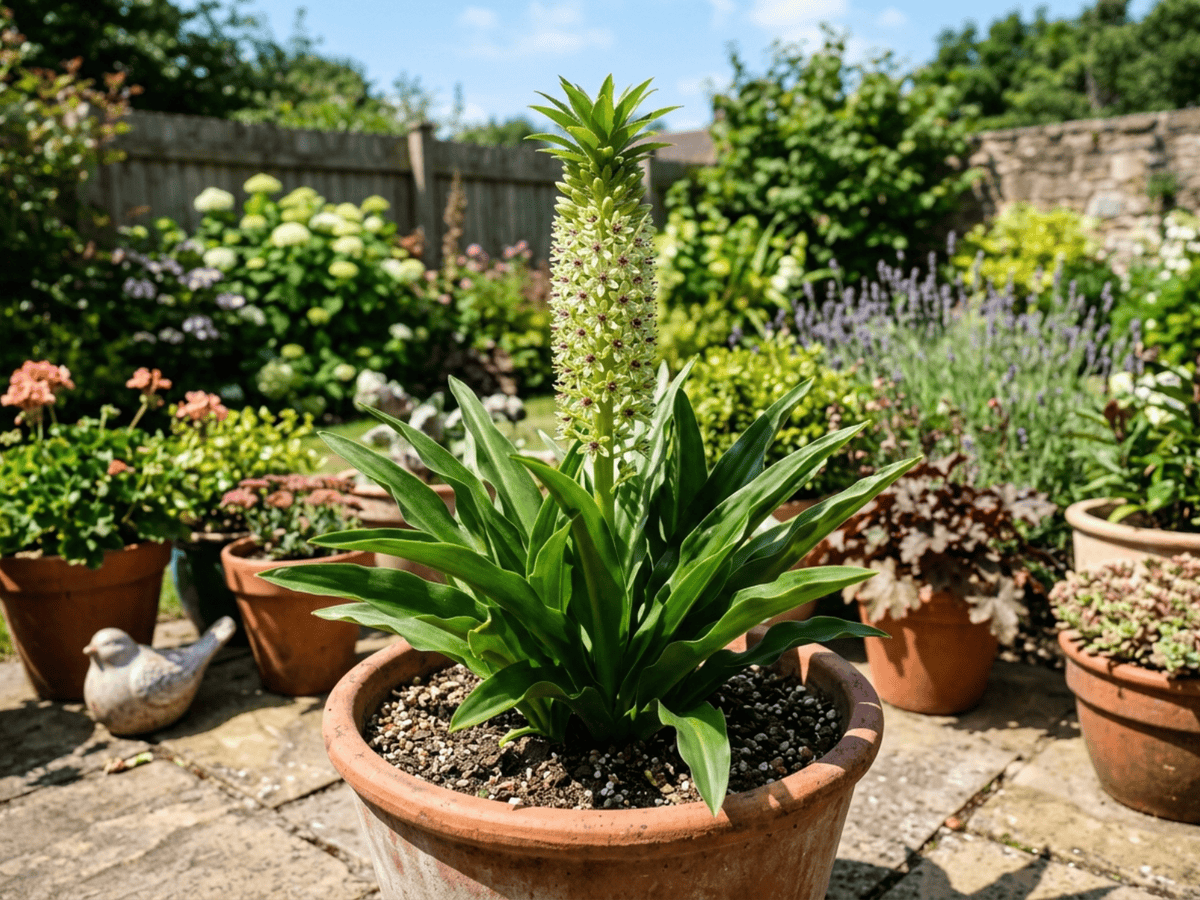
It is also grown as a potted specimen and cut flower. Introduced to Europe in 1778. The cultivar 'Sparkling Burgundy' with deep purple foliage and 'Oakhurst' with wine-colored leaves revolutionized perceptions of the genus in the 2000s, turning it from curiosity to garden star in American design.
Symbolism & meaning
What It Symbolizes
Crown Pineapple Lily wears Distinction openly — a tuft of leaves crowning a spike of star-shaped flowers, looking unmistakably like the fruit it is named for. Its Exoticism brings tropical flair to temperate borders, drawing the eye in mid-summer when many perennials slump. A flower that always looks faintly out of place, in the best way.
- Distinction — unique form stands out among summer perennials
- Exoticism — tropical flair for temperate gardens
Where the Name Comes From
The name Crown Pineapple Lily describes its lily-like flowers. 'Eucomis' from Greek 'eukomos' (beautiful-haired), referring to the topknot of leaves; 'comosa' means 'tufted'.
Uses & Fun Facts
- Pineapple-like flower spike tops strappy basal foliage
- Striking summer pot specimen for sunny patios
- Long-lasting unusual spikes for exotic arrangements
Related plants
More Eucomis plants
Plants with similar care
 Chinese AbeliaAbelia chinensis
 Fragrant AbeliaAbelia mosanensis
 Large-Flowered AbeliaAbelia uniflora
 Glossy AbeliaAbelia x grandiflora
Frequently asked questions
How often should I water Crown Pineapple Lily?
Water about every 4 days during the growing season, and always let excess water drain away.
How much light does Crown Pineapple Lily need?
Full sun: 6+ hrs direct. Watch the leaves — scorching or stretching means the light needs adjusting.
Is Crown Pineapple Lily toxic to cats or dogs?
Pets Moderate (Dogs Moderate · Cats Moderate) Educational information, not medical or veterinary advice. If exposure is suspected, contact a doctor or veterinarian.
Is Crown Pineapple Lily easy to grow?
Yes — it is considered an easy, beginner-friendly plant.
When does Crown Pineapple Lily bloom?
It typically blooms Jul–Aug in the Northern Hemisphere.
YardMate
Identify any plant in seconds
Snap a photo — YardMate names the plant, diagnoses problems, and reminds you when to water.
Download on the App Store