 YardMate

Pearl Bush
Exochorda racemosa
Easy · Beginner friendlyAbout Pearl Bush
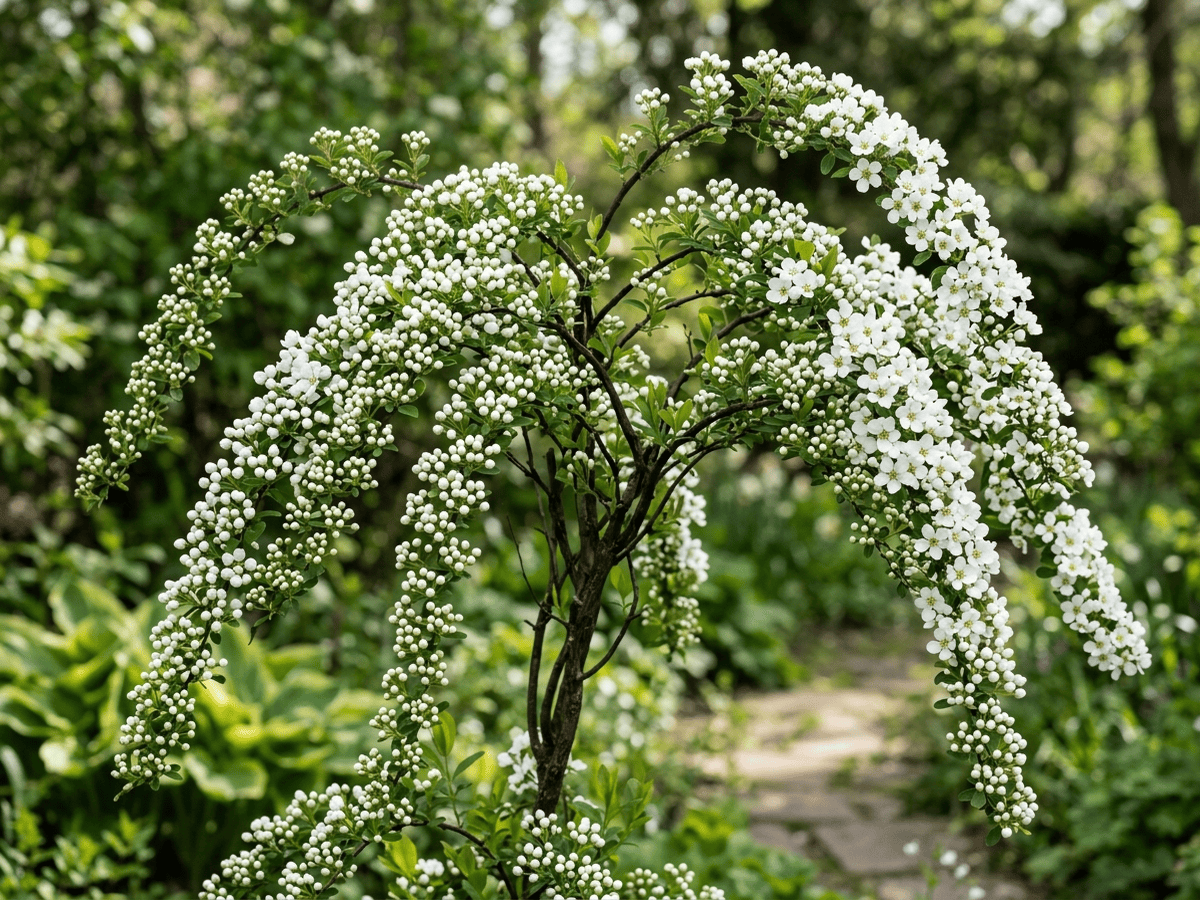
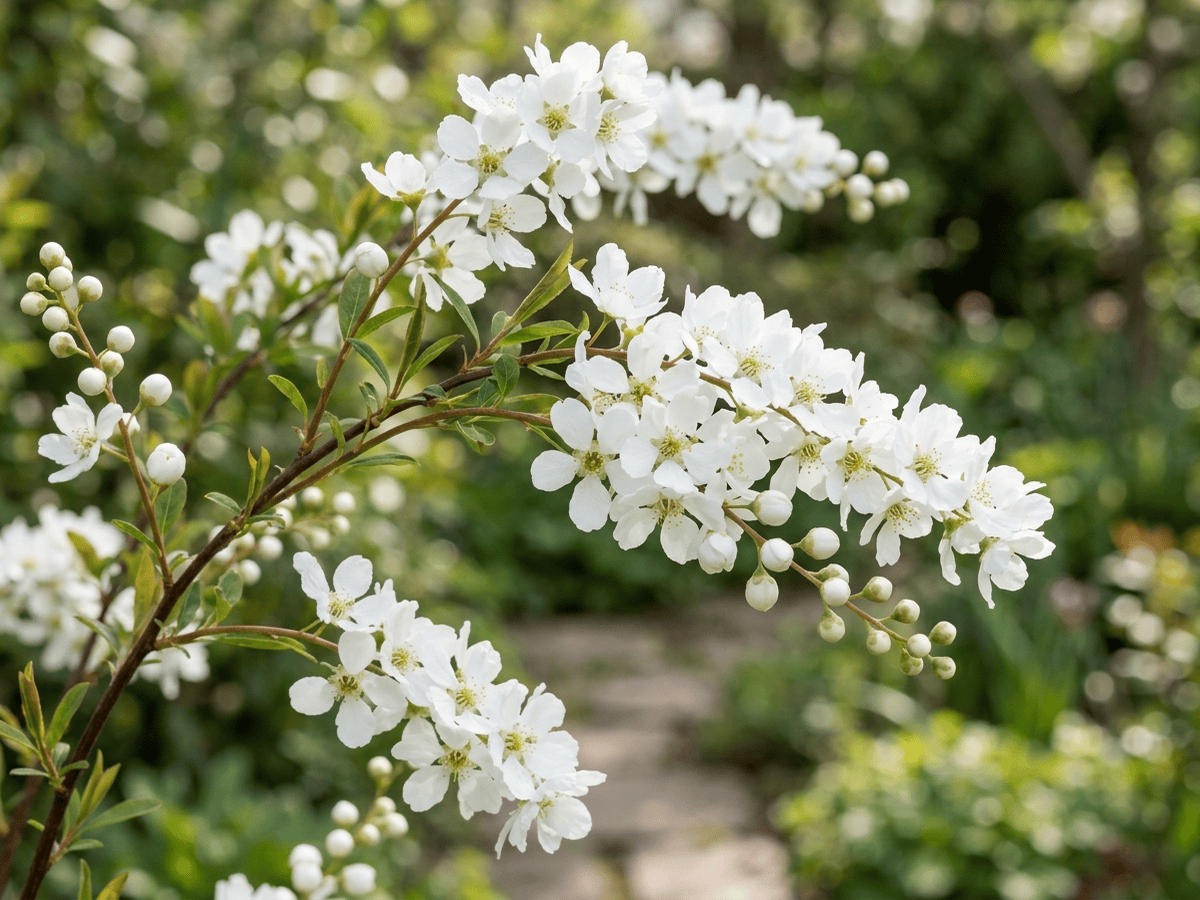
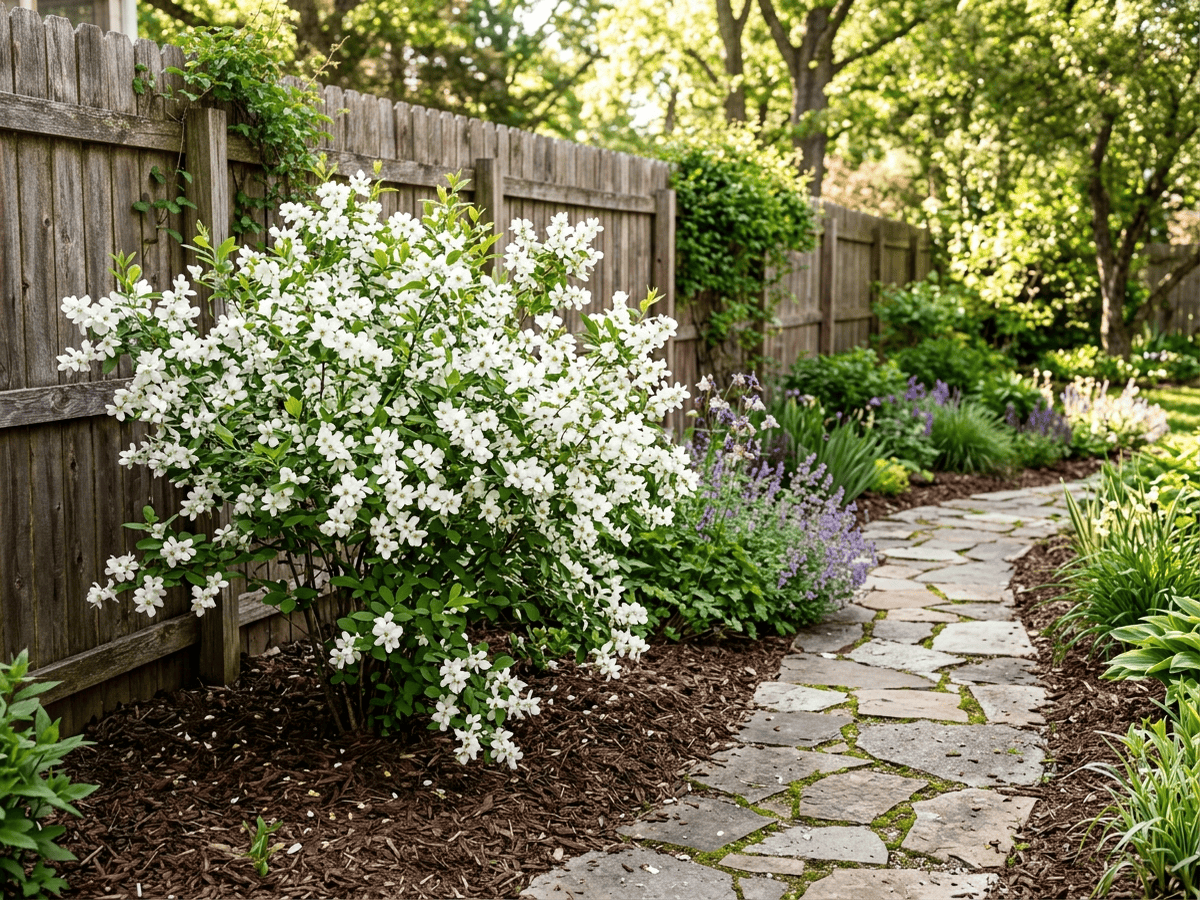
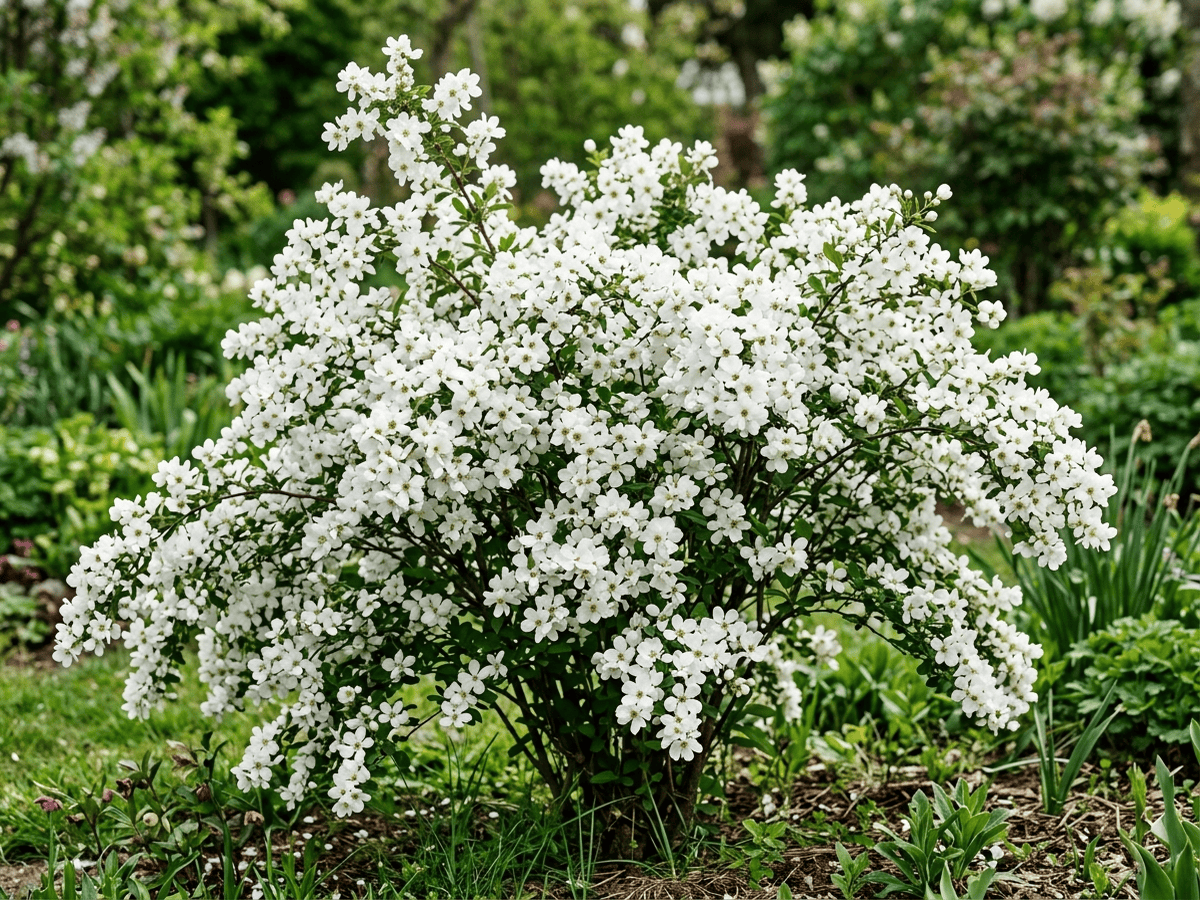
Pearlbush is an elegant deciduous shrub from eastern China, growing 10-15 feet tall with arching branches laden with racemes of pure white flowers in mid-spring. The round pearl-like buds are as ornamental as the open flowers, giving the shrub its common name. Each flower opens to a pristine five-petaled white bloom about an inch across. Though its bloom period is brief—about two weeks—the display is so spectacular that it has earned devoted followers among discerning American gardeners.
- Cold-hardy
How to care for Pearl Bush
Watering
- Springevery 7 days
- Summerevery 5 days
- Fallevery 10 days
- Winterevery 21 days
Soil · Rich & loamy
- Top dressingBark mulch15%
- Main mixRich loam + compost 3:170%
- DrainageGravel15%
Use fully finished compost — fresh compost burns roots.
FERTILIZER
Balanced Feed 14-14-14
An even feed covers all three needs at once, keeping leaves, roots and blooms moving together with nothing pushed out of balance.
- Nitrogen · Leaves
- Phosphorus · Roots + Blooms
- Potassium · Strength
- Springevery 30 days
At a Glance
- NativeEast Asia
- Height8–12 ft (2.4–3.7 m)
- Spread8–12 ft (2.4–3.7 m)
- Flower colorWhite
- Foliage colorGreen, Yellow
- SoilLoamy, Well-drained, Neutral
- LocationsYard
Bloom time
BLOOM CYCLE
Peak bloom
Apr–May
Pure white pearl-budded racemes April to May
Fragrance
LIGHT FRAGRANCE
The flowers have a mild sweet scent.
Toxicity
No toxicity has been reported for this plant. Still, it is wise to keep pets from chewing on any houseplant.
Educational information, not medical or veterinary advice. If exposure is suspected, contact a doctor or veterinarian.
DISTRIBUTION


- Native
- Introduced
- East Asia
History
Exochorda racemosa is native to central and eastern China, occurring naturally in Jiangsu, Henan, Anhui, Hubei, and Zhejiang provinces. The genus Exochorda was established by English botanist John Lindley in 1858 (though he initially placed this species in Amelanchier), the name meaning outside cord in reference to the fibrous strands connecting the ovules in the ovary—a distinctive feature of the genus. American taxonomist Alfred Rehder transferred the species to Exochorda in 1917.
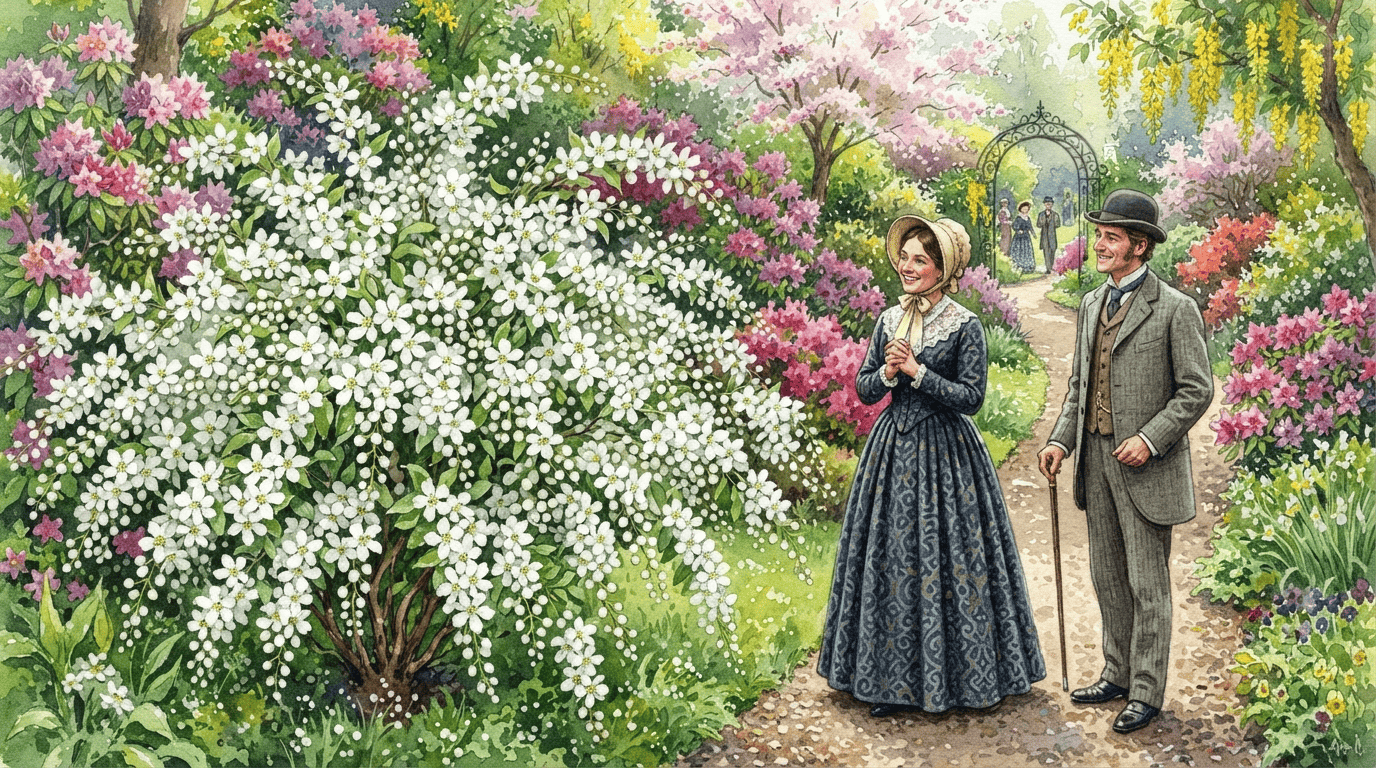
The shrub reaches 3-4 meters with arching branches that in late April and May bear upright racemes of perfectly round pearl-like buds that open to pure white five-petaled flowers 3-5 cm across. Robert Fortune introduced the species to Britain in 1849. The hybrid with the Central Asian E. korolkowii, E. x macrantha 'The Bride'—raised by Lemoine in France around 1938—is one of the most celebrated white-flowering shrubs in Western gardens, producing a foaming cascade of bloom in spring.
x macrantha), reaching only 4-5 feet, was bred at Hillier Nurseries in England and has become the most widely planted form. Fortune and other Victorian-era plant hunters brought it to Western attention. Despite its brief bloom, it creates one of the most memorable spring displays—a cascade of pearly white that stops passersby in their tracks.
Symbolism & meaning
What It Symbolizes
Pearl Bush carries purity in its pristine white flowers, opening from buds that look exactly like strings of pearls strung along arching branches. Its display is one of fleeting beauty, brief but unforgettable, lasting only days before petals drift down. It is often read as a flower of luminous moments, a bloom whose meaning is inseparable from its briefness, teaching that some beauty exists precisely to remind us to look now.
- Purity — pristine white flowers like strings of pearls
- Fleeting Beauty — brief but unforgettable spring display
Where the Name Comes From
'Exochorda' from Greek 'exo' (outside) and 'chorde' (cord), referring to fibers in the fruit; 'racemosa' means 'with racemes'.
Uses & Fun Facts
- Pearl-like buds open to pure white spring blooms
- Arching flowering branches cut for spring arrangements
- Graceful arching shrub as cold-climate focal point
Related plants
More Exochorda plants
Plants with similar care
 Chinese AbeliaAbelia chinensis
 Fragrant AbeliaAbelia mosanensis
 Large-Flowered AbeliaAbelia uniflora
 Glossy AbeliaAbelia x grandiflora
Frequently asked questions
How often should I water Pearl Bush?
In summer, water about every 5 days; in winter, about every 21 days. Adjust for heat, pot size and drainage.
How much light does Pearl Bush need?
Full sun: 6+ hrs direct. Watch the leaves — scorching or stretching means the light needs adjusting.
Is Pearl Bush toxic to cats or dogs?
No toxicity has been reported for this plant. Still, it is wise to keep pets from chewing on any houseplant. Educational information, not medical or veterinary advice. If exposure is suspected, contact a doctor or veterinarian.
Is Pearl Bush easy to grow?
Yes — it is considered an easy, beginner-friendly plant.
When does Pearl Bush bloom?
It typically blooms Apr–May in the Northern Hemisphere.
YardMate
Identify any plant in seconds
Snap a photo — YardMate names the plant, diagnoses problems, and reminds you when to water.
Download on the App Store