 YardMate


Forsythia
Forsythia x intermedia
Easy · Beginner friendlyAbout Forsythia
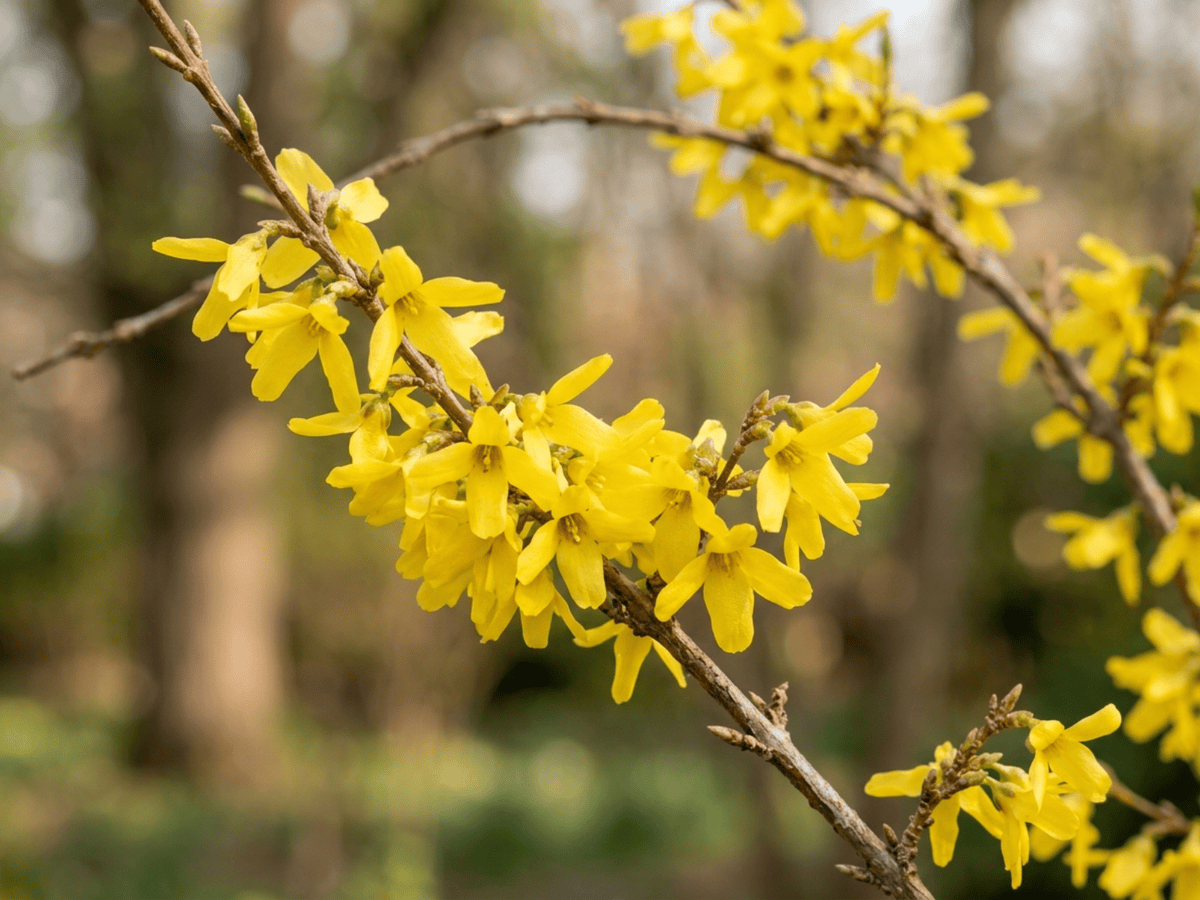
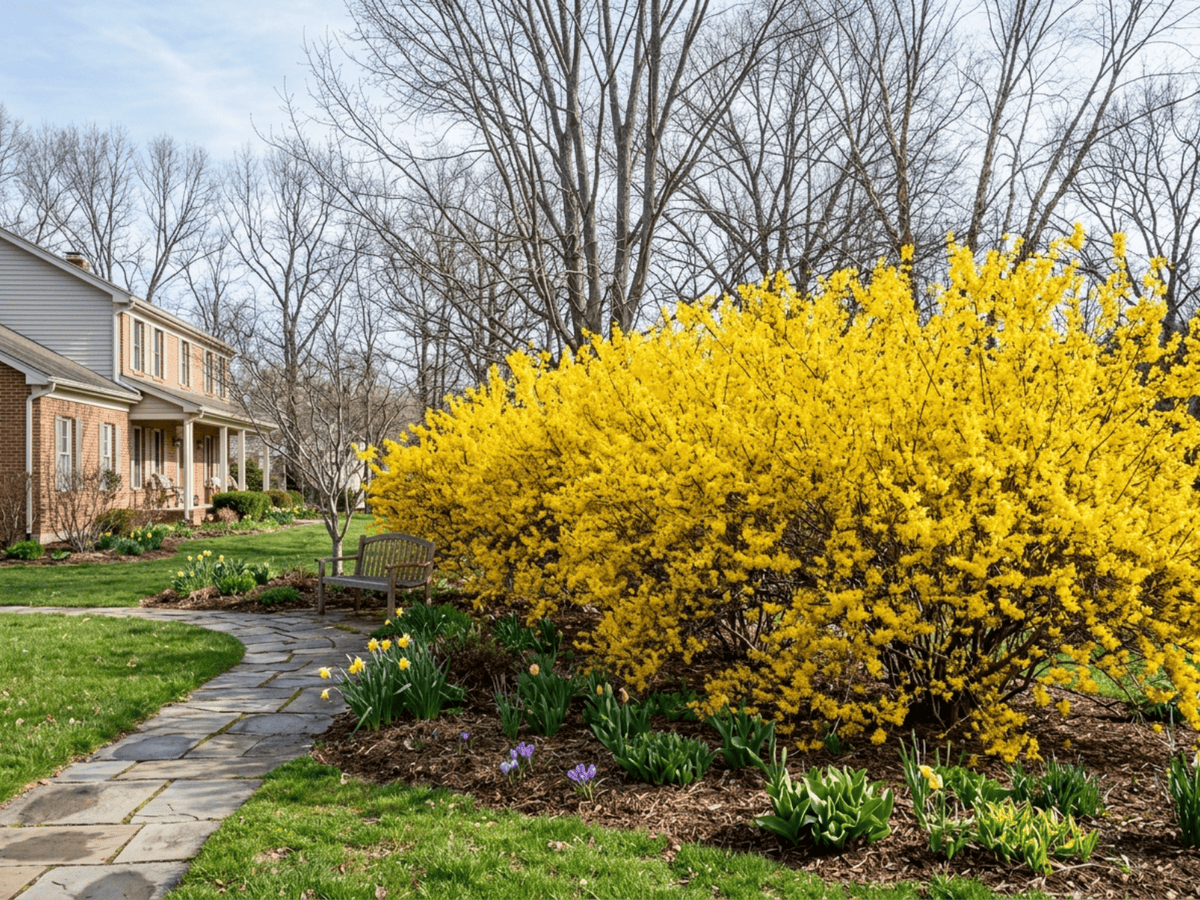
Forsythia x intermedia, the border forsythia, is a vigorous deciduous shrub that is among the most reliable harbingers of spring in temperate gardens. A hybrid between Forsythia suspensa and Forsythia viridissima, it grows 6 to 10 feet tall and wide with arching branches that become completely covered in bright golden-yellow flowers before the leaves emerge, creating a dazzling display. It is extremely easy to grow, tolerating poor soil, drought, pollution, and neglect. Forsythia blooms on old wood, so pruning should occur immediately after flowering — a common mistake is shearing in late summer or fall, which removes next year's flower buds. The shrub is fast-growing and can be used as an informal hedge, specimen, or screen. While it offers little interest after flowering, with plain green foliage and no notable fall color, the sheer exuberance of its spring bloom earns it a place in millions of gardens. It was first hybridized in Germany around 1885 and has since become one of the most widely planted ornamental shrubs in the Northern Hemisphere.
- Low-maintenance
- Drought-tolerant
- Fast-growing
How to care for Forsythia
Watering
- Springevery 5 days
- Summerevery 4 days
- Fallevery 10 days
- Winterevery 30 days
Soil · Rich & loamy
- Top dressingBark mulch15%
- Main mixRich loam + compost 3:170%
- DrainageGravel15%
Use fully finished compost — fresh compost burns roots.
FERTILIZER
Balanced Feed 14-14-14
An even feed covers all three needs at once, keeping leaves, roots and blooms moving together with nothing pushed out of balance.
- Nitrogen · Leaves
- Phosphorus · Roots + Blooms
- Potassium · Strength
- Springevery 45 days
At a Glance
- NativeEast Asia, Europe
- Height8–10 ft (2.4–3 m)
- Spread10–12 ft (3–3.7 m)
- Flower colorYellow
- Foliage colorGreen, Yellow, Purple
- SoilLoamy, Well-drained
- LocationsYard
Bloom time
BLOOM CYCLE
Peak bloom
Mar–Apr
Brilliant yellow flowers on bare branches in early spring; prune immediately after flowering since buds form on old wood — never shear in fall
Fragrance
NO FRAGRANCE
No notable fragrance.
Toxicity
No toxicity has been reported for this plant. Still, it is wise to keep pets from chewing on any houseplant.
Educational information, not medical or veterinary advice. If exposure is suspected, contact a doctor or veterinarian.
DISTRIBUTION


- Native
- East Asia
- Europe
History
Forsythia x intermedia originated at the Göttingen Botanical Garden in Germany around 1880 as a chance hybrid between Forsythia suspensa (introduced from China by Robert Fortune in 1845) and Forsythia viridissima (introduced from China by Fortune in 1844). The hybrid proved hardier, more vigorous, and more floriferous than either parent and rapidly replaced them in cultivation. The genus name Forsythia honors Scottish botanist William Forsyth (1737-1804), royal head gardener to King George III and a founding member of the Royal Horticultural Society.
The species' brilliant, early-spring yellow flowering on bare branches — typically in March or April in temperate gardens, before any leaves emerge — made it one of the earliest and most visible signs of spring across American and European horticulture through the 20th century. Common cultivars include "Lynwood Gold," "Spectabilis," "Arnold Dwarf," and the more compact "Gold Tide."
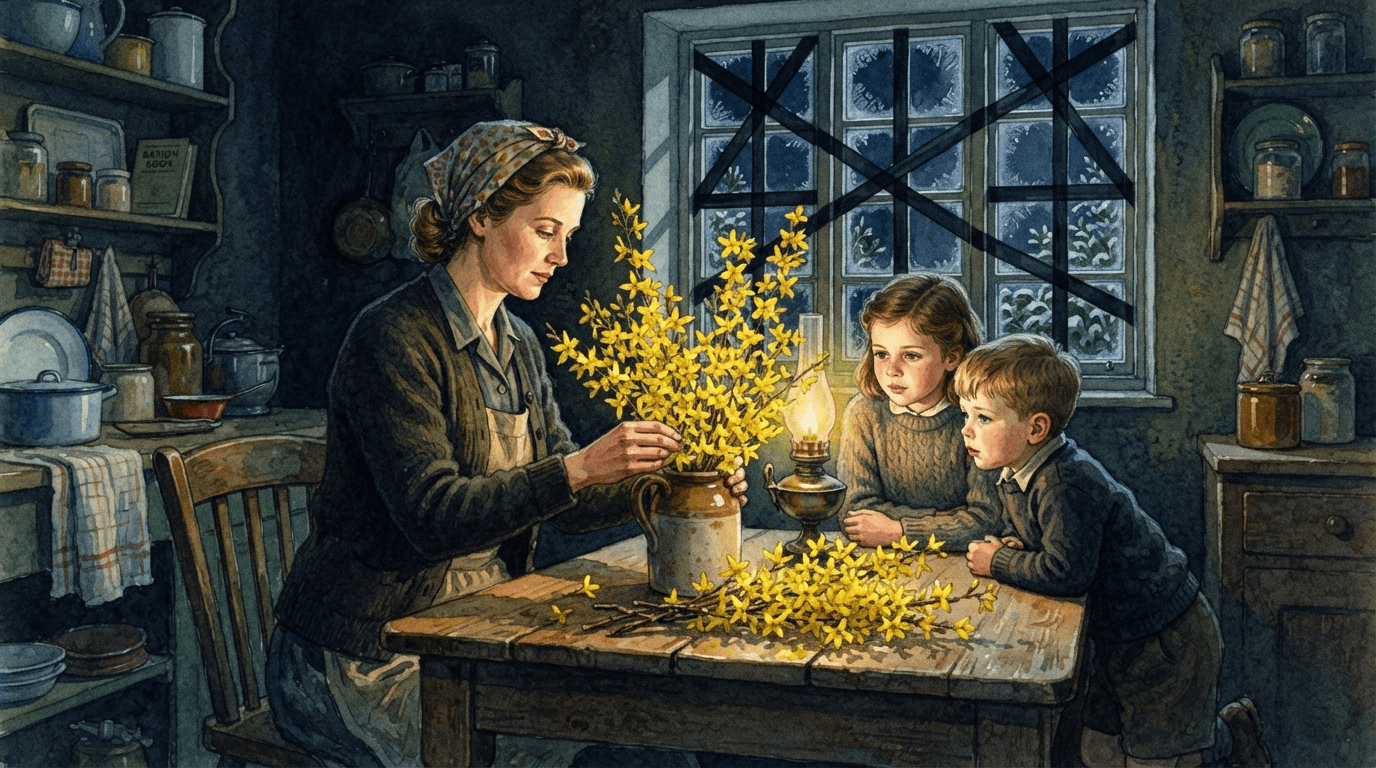
In traditional Chinese medicine, the fruits of the parent species F. During World War II, forsythia branches were forced indoors in winter as morale-boosting decorations when garden access was limited. suspensa ("lian qiao") are used as an herbal remedy for inflammation and infection.
Symbolism & meaning
What It Symbolizes
Forsythia is the very flower of anticipation — among the first shrubs to bloom, its golden cascades signal that spring is no longer a rumor but a fact. Paired with joy, the exuberant display almost overwhelms the bare landscape, pure happiness in flower form. To plant it is to keep a yellow lighthouse for the end of winter, a beacon of returning warmth.
- Anticipation — One of the first shrubs to bloom, representing eager anticipation of spring
- Joy — The exuberant golden display symbolizes pure happiness and optimism
Where the Name Comes From
'Forsythia' honors William Forsyth (1737–1804), Scottish botanist and superintendent of the Royal Gardens at Kensington. 'Intermedia' means 'intermediate', indicating its hybrid nature between two parent species.
Uses & Fun Facts
- Vigorous arching shrub forms cheerful informal flowering hedge
- Bare branches blaze yellow in earliest spring before leaves
- Branches forced indoors give bright yellow late-winter bloom
Related plants
Plants with similar care
 Chinese AbeliaAbelia chinensis
 Fragrant AbeliaAbelia mosanensis
 Large-Flowered AbeliaAbelia uniflora
 Glossy AbeliaAbelia x grandiflora
Frequently asked questions
How often should I water Forsythia?
In summer, water about every 4 days; in winter, about every 30 days. Adjust for heat, pot size and drainage.
How much light does Forsythia need?
Full sun: 6+ hrs direct. Watch the leaves — scorching or stretching means the light needs adjusting.
Is Forsythia toxic to cats or dogs?
No toxicity has been reported for this plant. Still, it is wise to keep pets from chewing on any houseplant. Educational information, not medical or veterinary advice. If exposure is suspected, contact a doctor or veterinarian.
Is Forsythia easy to grow?
Yes — it is considered an easy, beginner-friendly plant.
When does Forsythia bloom?
It typically blooms Mar–Apr in the Northern Hemisphere.
YardMate
Identify any plant in seconds
Snap a photo — YardMate names the plant, diagnoses problems, and reminds you when to water.
Download on the App Store