 YardMate


Coastal Witch-Alder
Fothergilla gardenii
Easy · Beginner friendlyAbout Coastal Witch-Alder
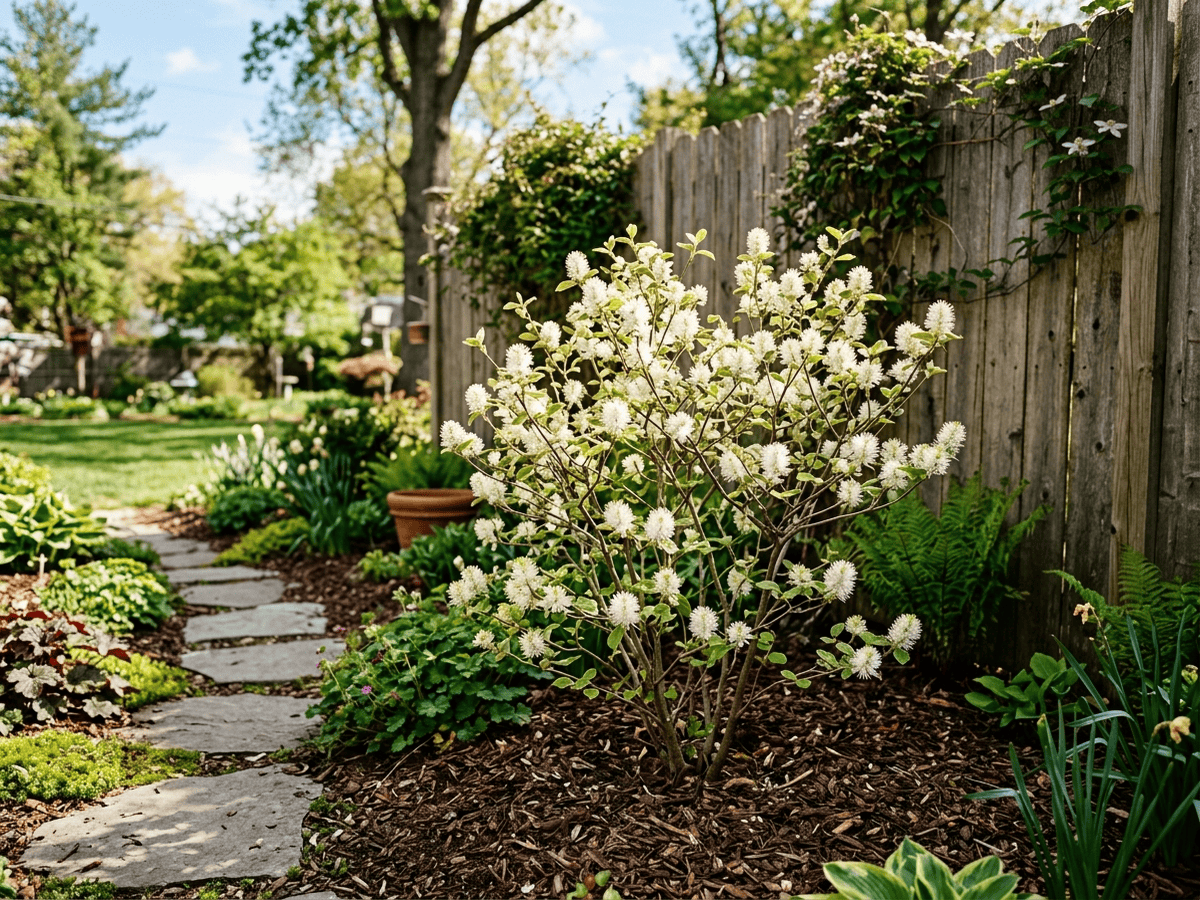
Dwarf Fothergilla is a compact deciduous native shrub of the southeastern US coastal plain, growing 2-3 feet tall with bottlebrush-like spikes of fragrant white flowers in early spring before the leaves emerge. The honey-scented flowers have no petals—the white display comes entirely from showy stamens. In autumn, the blue-green leaves transform into a kaleidoscope of yellow, orange, and scarlet, often with all colors present on a single leaf. A four-season gem native from Virginia to Alabama.
- Fragrant
- Deer-resistant
- Compact
- Fall-color
How to care for Coastal Witch-Alder
Watering
- Springevery 5 days
- Summerevery 3 days
- Fallevery 7 days
- Winterevery 14 days
Soil · Acidic · pH 4.5–6
- Top dressingPine needle mulch10%
- Main mixAcid-lover mix + peat 3:175%
- DrainageGravel15%
Never add lime or wood ash — it cancels out the acidity.
FERTILIZER
Acid-Loving Feed 4-3-4
One bag does both jobs. An acid feed carries the usual nitrogen, phosphorus and potassium, plus the sulfur and iron that keep the soil sour enough for the roots to take them up at all.
- Nitrogen · Leaves
- Phosphorus · Roots + Blooms
- Potassium · Strength
- Springevery 30 days
At a Glance
- NativeNorth America
- Height2–3 ft (0.6–0.9 m)
- Spread2–3 ft (0.6–0.9 m)
- Flower colorWhite
- Foliage colorGreen, Blue-green, Red, Bronze
- SoilLoamy, Moisture-retentive, Acidic
- LocationsYard
Bloom time
BLOOM CYCLE
Peak bloom
Apr
White bottlebrush flower spikes April; honey-scented
Fragrance
MODERATE FRAGRANCE
Sweet honey-like fragrance from bottlebrush flower spikes.
Toxicity
No toxicity has been reported for this plant. Still, it is wise to keep pets from chewing on any houseplant.
Educational information, not medical or veterinary advice. If exposure is suspected, contact a doctor or veterinarian.
DISTRIBUTION


- Native
- North America
History
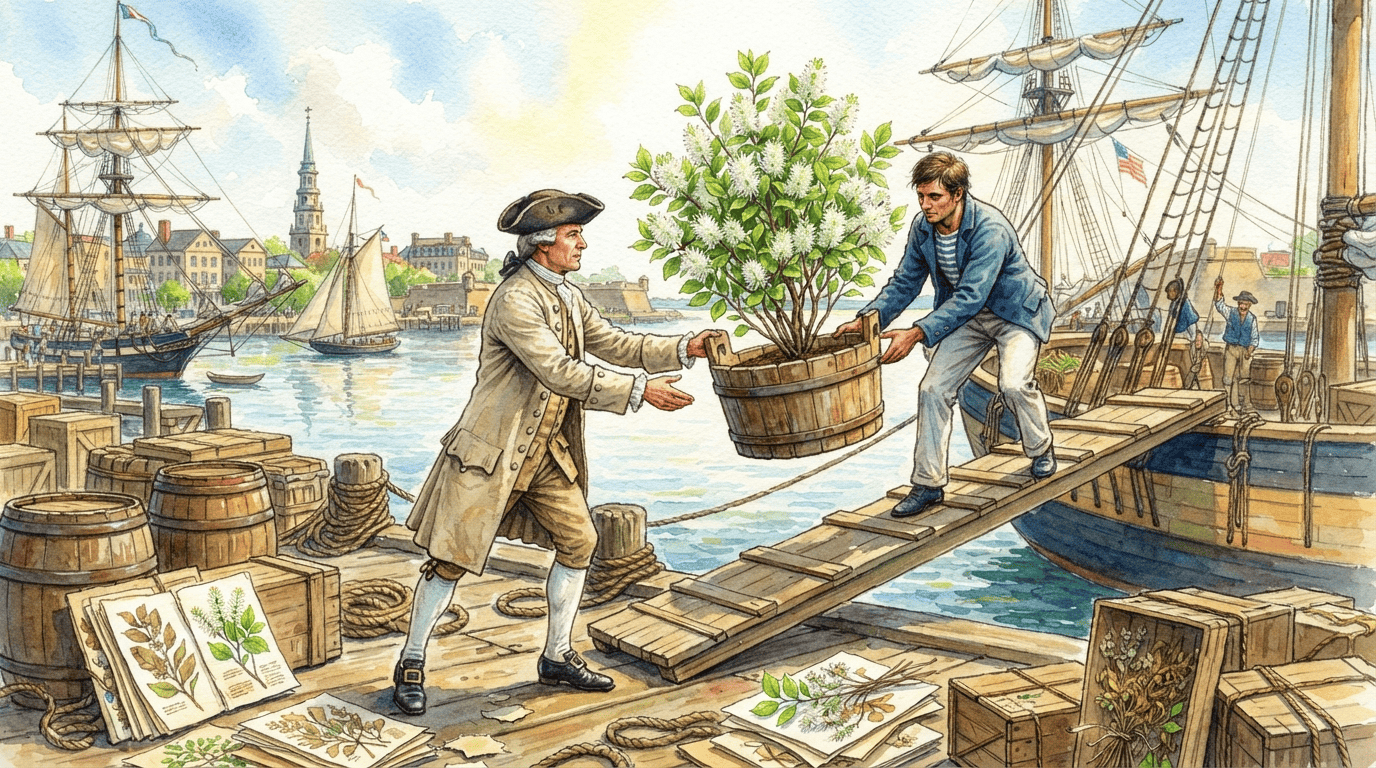
Fothergilla gardenii is native to the Atlantic and Gulf Coastal Plain of the southeastern United States from North Carolina south through Georgia and Florida and west to Alabama and Mississippi, typically in acidic pine flatwoods and shrub bogs. Linnaeus established the genus in 1774 to honor John Fothergill (1712-1780), the Quaker English physician and botanist who maintained one of the finest botanical collections in Europe at Upton in Essex. The species epithet gardenii honors Dr. Alexander Garden (1730-1791), a Scottish-American physician-naturalist in Charleston, South Carolina, who sent specimens to Linnaeus; the genus Gardenia is also named for him.
The dwarf fothergilla is a compact 0.6-1 meter shrub producing apetalous bottlebrush-like spikes of white stamen-dominated flowers in April before or with leaf emergence, followed by spectacular autumn foliage in combinations of scarlet, orange, yellow, and burgundy. Introduced to cultivation around 1765, it remained uncommon in gardens until its rediscovery by North American native-plant enthusiasts in the late 20th century.
'Mount Airy' (a probable F. x intermedia from Michael Dirr in 1993) is the most widely grown selection. The cultivar 'Mt. Airy' from the Mt. Airy Arboretum in Cincinnati is the gold standard, selected for its compact habit and blazing fall color. Related to witch hazels (Hamamelis) in the same family.
Symbolism & meaning
What It Symbolizes
Coastal Witch-Alder carries brilliance, its autumn foliage rivaling any plant on the continent for sheer color intensity, blazing through orange, scarlet, and burgundy on a single shrub. It is also a native heritage treasure of the southeastern coastal plain, a small shrub of disappearing wetland edges. It is often read as a flower of regional pride, a quiet native whose autumn is more spectacular than most exotics ever achieve.
- Brilliance — autumn foliage rivals any plant for color intensity
- Heritage — native treasure of the southeastern coastal plain
Where the Name Comes From
The name Coastal Witch-Alder points to coastal habitats. 'Fothergilla' honors Dr. John Fothergill, 18th-century London physician and plant patron; 'gardenii' honors Dr. Alexander Garden of Charleston.
Uses & Fun Facts
- Honey-scented bottlebrush flowers perfume early spring
- Brilliant red-orange-yellow autumn foliage lights up borders
- Early native blooms feed emerging bees
Related plants
More Fothergilla plants

Plants with similar care
 Chinese AbeliaAbelia chinensis
 Fragrant AbeliaAbelia mosanensis
 Large-Flowered AbeliaAbelia uniflora
 Glossy AbeliaAbelia x grandiflora
Frequently asked questions
How often should I water Coastal Witch-Alder?
In summer, water about every 3 days; in winter, about every 14 days. Adjust for heat, pot size and drainage.
How much light does Coastal Witch-Alder need?
Full sun: 6+ hrs direct. Watch the leaves — scorching or stretching means the light needs adjusting.
Is Coastal Witch-Alder toxic to cats or dogs?
No toxicity has been reported for this plant. Still, it is wise to keep pets from chewing on any houseplant. Educational information, not medical or veterinary advice. If exposure is suspected, contact a doctor or veterinarian.
Is Coastal Witch-Alder easy to grow?
Yes — it is considered an easy, beginner-friendly plant.
When does Coastal Witch-Alder bloom?
It typically blooms Apr in the Northern Hemisphere.
YardMate
Identify any plant in seconds
Snap a photo — YardMate names the plant, diagnoses problems, and reminds you when to water.
Download on the App Store