 YardMate

Goeppertia warszewiczii
Goeppertia warszewiczii
Medium · Some experienceAbout Goeppertia warszewiczii
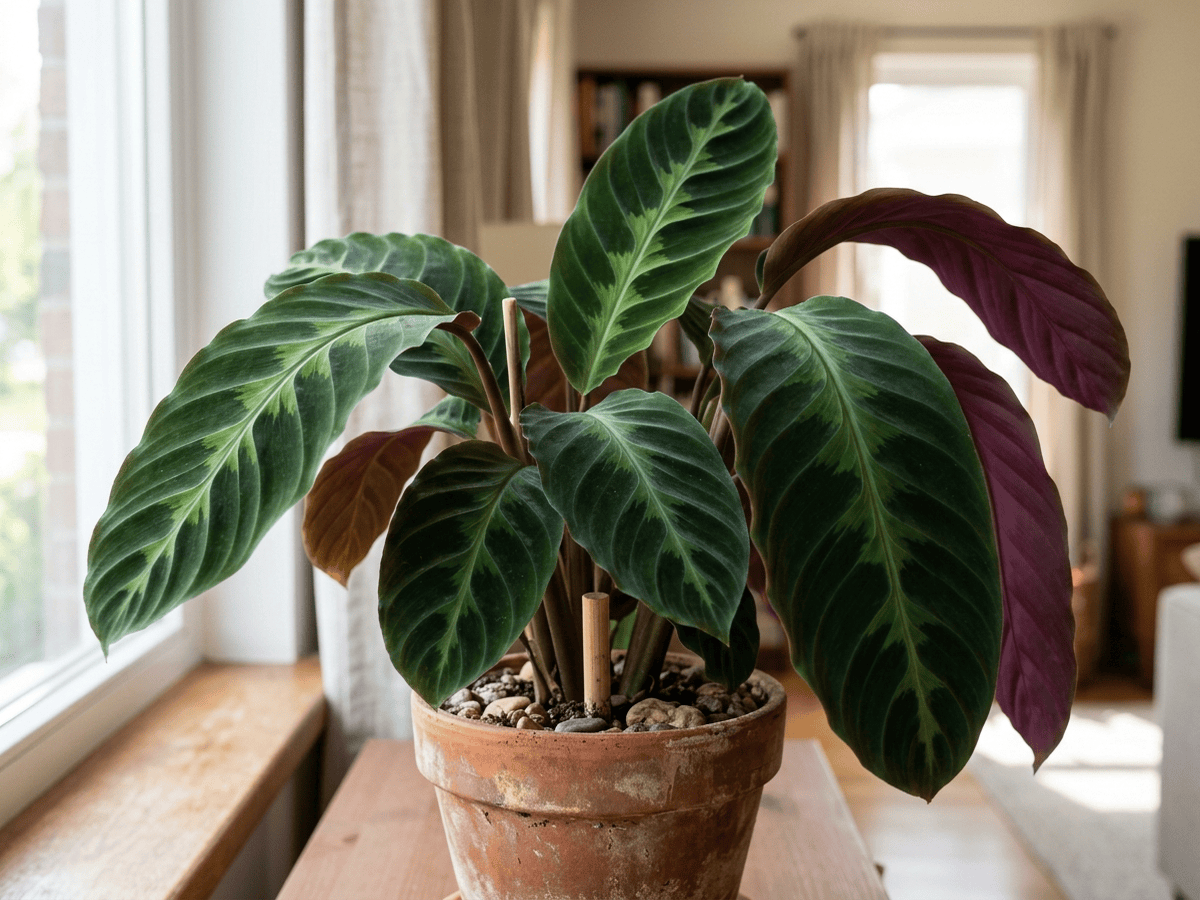
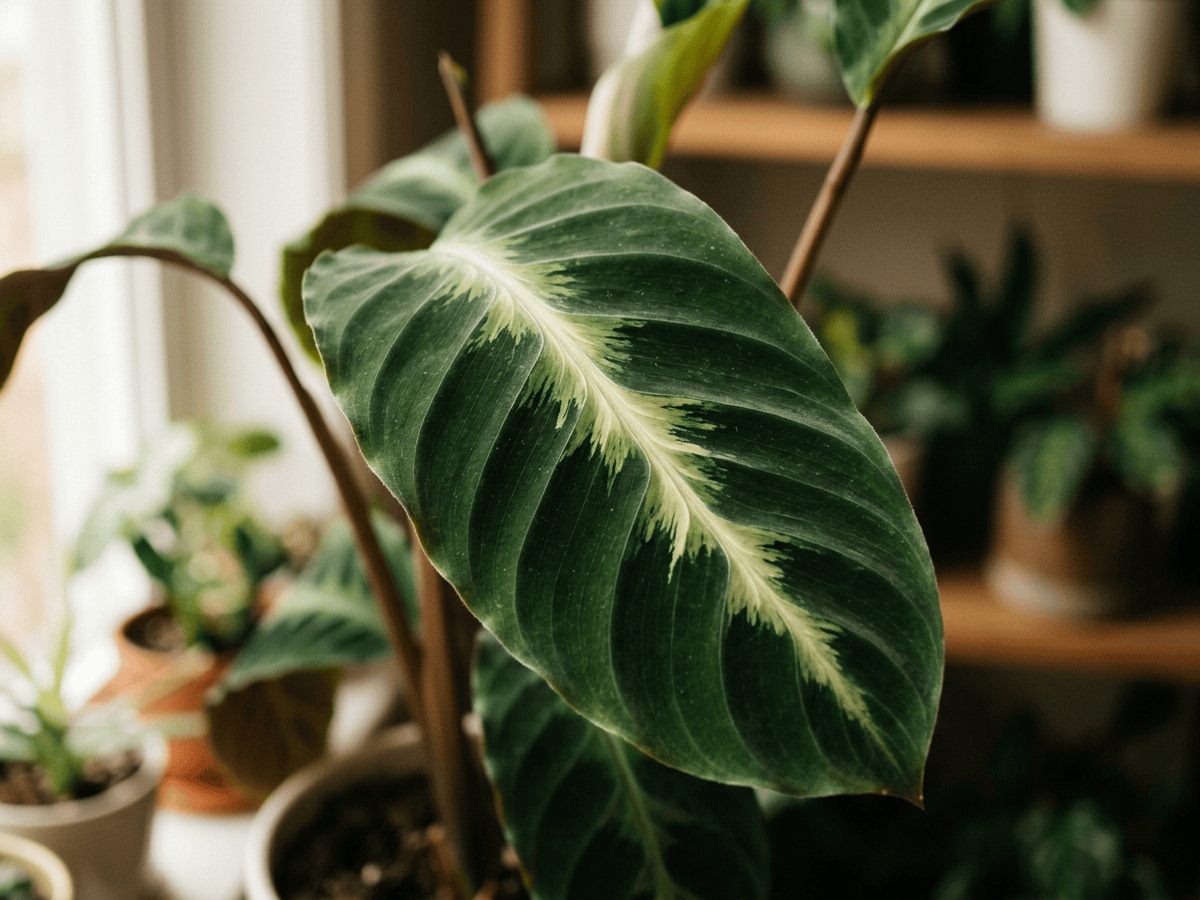
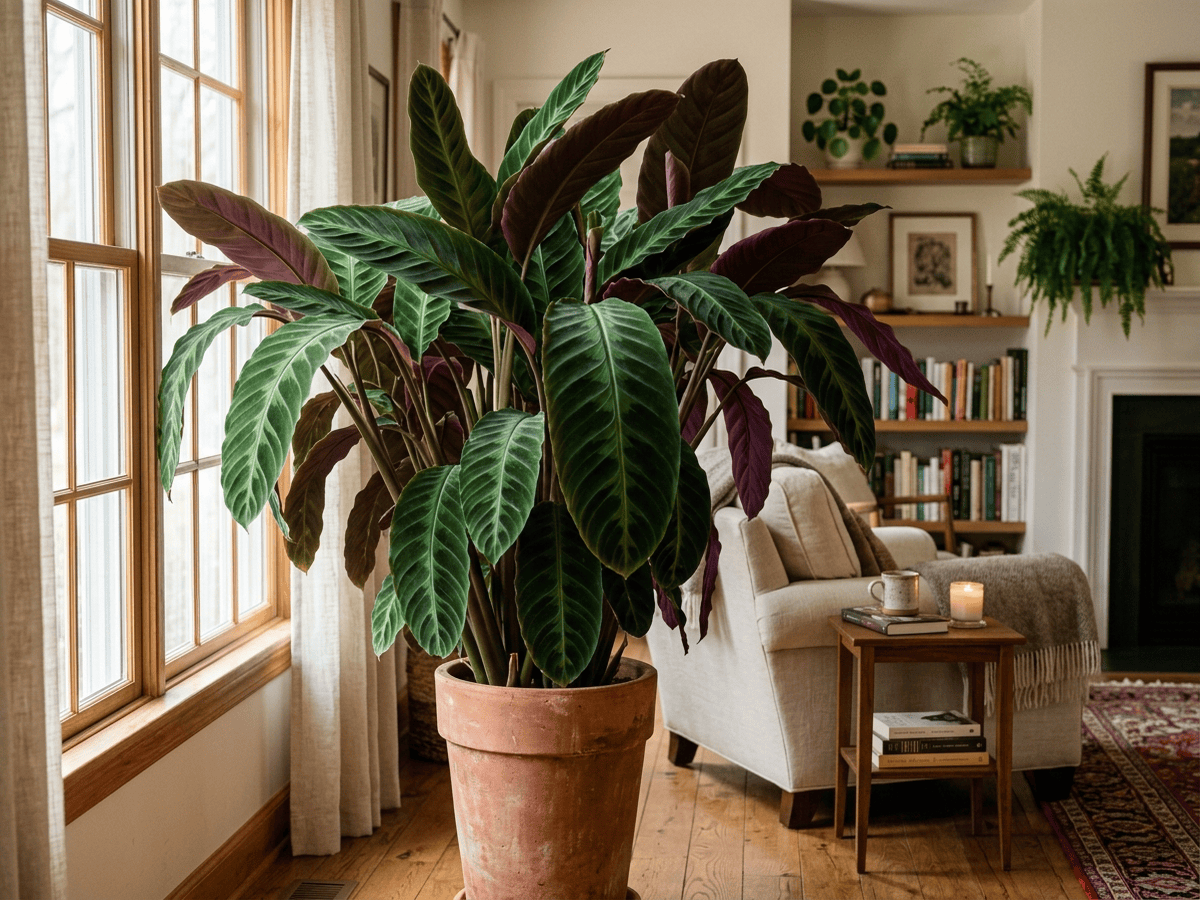
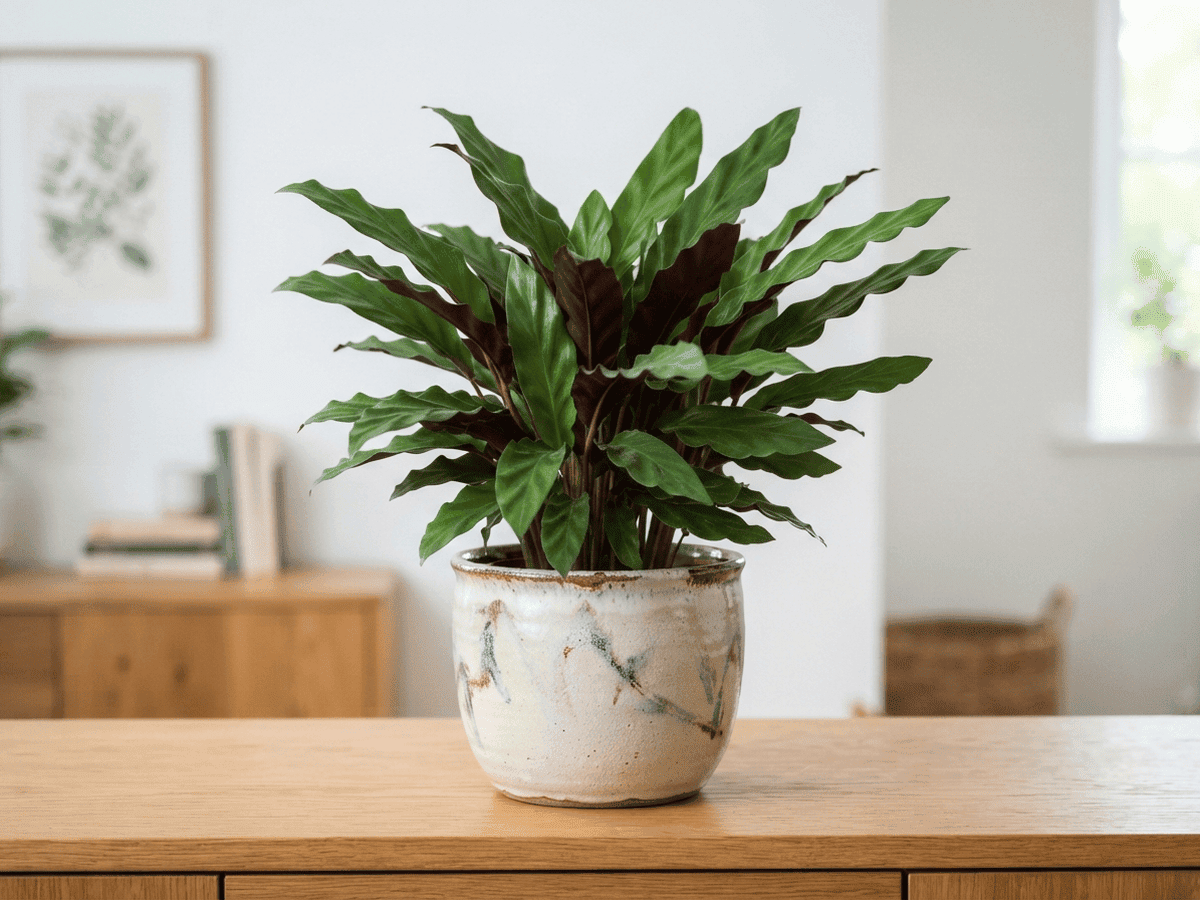
Velvet Calathea is a Central American rainforest perennial with broad velvety dark-green leaves marked with a feathered light-green midrib pattern and deep wine-red undersides. Reaching 24-36 inches, it is among the largest and most architectural plants in the Calathea-Goeppertia group. Mature plants produce showy white tubular flowers nestled among colorful pink-cream bracts—an unusual flowering trait among prayer plants. Demanding warmth and humidity, it rewards dedicated growers richly.
- Evergreen
How to care for Goeppertia warszewiczii
Watering
- Springevery 5 days
- Summerevery 5 days
- Fallevery 7 days
- Winterevery 10 days
Soil · Moisture-retentive
- Top dressingSphagnum moss10%
- Main mixPeat + coco coir 1:180%
- DrainagePerlite / gravel10%
Keep it evenly moist — but the drainage layer still matters.
FERTILIZER
Balanced Feed 14-14-14
An even feed covers all three needs at once, keeping leaves, roots and blooms moving together with nothing pushed out of balance.
- Nitrogen · Leaves
- Phosphorus · Roots + Blooms
- Potassium · Strength
- Springevery 30 days
- Summerevery 30 days
- Fallevery 60 days
At a Glance
- NativeCentral America
- Height2–3 ft (0.6–0.9 m)
- Spread1.5–2.5 ft (0.5–0.8 m)
- Flower colorCream, Yellow, White
- Foliage colorDark-green, Red
- SoilMoisture-retentive, Rich, Loamy
- LocationsIndoor
Bloom time
BLOOM CYCLE
Peak bloom
Jun–Aug
White tubular flowers among pink-cream bracts (mature plants)
Toxicity
Pets Safe
None reported
Not reported
EXPOSURE No exposure route is reported.
EFFECT No toxic effect is reported.
NOTE No human toxicity is reported in this catalog; avoid eating ornamental plants unless confirmed edible.
Safe
EXPOSURE No exposure route is reported.
EFFECT No toxic effect is reported.
NOTE Listed as non-toxic for dogs; avoid eating ornamental plants unless confirmed edible.
Safe
EXPOSURE No exposure route is reported.
EFFECT No toxic effect is reported.
NOTE Listed as non-toxic for cats; avoid eating ornamental plants unless confirmed edible.
Educational information, not medical or veterinary advice. If exposure is suspected, contact a doctor or veterinarian.
DISTRIBUTION


- Native
- Central America
History
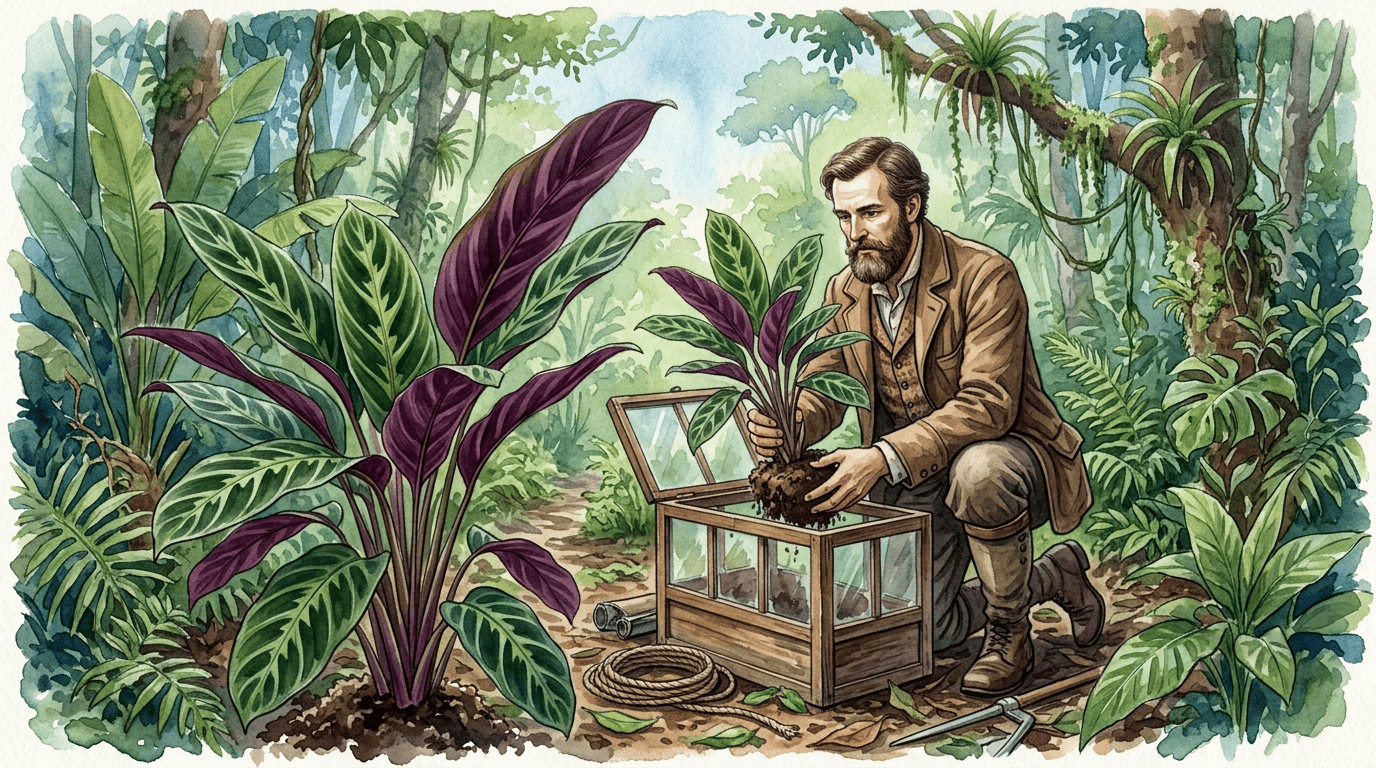
Goeppertia warszewiczii, commonly called Warszewicz's calathea or jungle velvet, is a clumping tropical foliage perennial in the prayer-plant family (Marantaceae) native to the Caribbean-slope rainforests of Nicaragua, Costa Rica, and Panama. Belgian horticulturist Louis Mathieu described it as Maranta warszewiczii in 1852, honoring the renowned Polish-Lithuanian plant collector Józef Warszewicz (1812-1866) who introduced many Central American ornamentals to European horticulture. Friedrich Körnicke transferred it to Calathea in 1862; the species moved with most of Calathea into the resurrected genus Goeppertia in the 2012 Borchsenius et al.
revision. Plants form erect 60-90 cm clumps with long-petioled elliptical leaves 20-35 cm long, velvety dark green on the upper surface with fishbone-pattern lighter-green central markings and purple-burgundy undersides.
Unlike many Calatheas, this species produces attractive inflorescences of showy cream-to-yellow papery bracts with small white flowers that last weeks. Long popular in Victorian-era European hothouse collections, it has resurged in modern American houseplant culture as collectors seek rare and showy prayer plants.
Symbolism & meaning
What It Symbolizes
Goeppertia warszewiczii makes visible Devotion — a calathea that rewards faithful, attentive care with rare velvet-textured blooms most growers never see. Its mystery lies in deep green foliage and blush pink bracts, half hidden among shadow. Each plant asks for steady humidity and patience, repaying both with a quiet, almost private kind of beauty.
- Devotion — rewards consistent care with rare blooms
- Mystery — deep velvety foliage and showy bracts
Where the Name Comes From
'Goeppertia' honors German botanist Heinrich Göppert; 'warszewiczii' honors Józef Warszewicz (1812-1866).
Uses & Fun Facts
- Velvety patterned leaves and creamy bracts star indoors
- Humidity-loving houseplant for warm shaded interiors
Related plants
More Goeppertia plants
Plants with similar care
 Aglaonema AroidAglaonema pictum
 Aglaonema rotundumAglaonema rotundum
 AlocasiaAlocasia polly
 Black Velvet AlocasiaAlocasia reginula
Frequently asked questions
How often should I water Goeppertia warszewiczii?
In summer, water about every 5 days; in winter, about every 10 days. Adjust for heat, pot size and drainage.
How much light does Goeppertia warszewiczii need?
Indirect: Filtered light. Watch the leaves — scorching or stretching means the light needs adjusting.
Is Goeppertia warszewiczii toxic to cats or dogs?
Pets Safe (Dogs Safe · Cats Safe) Educational information, not medical or veterinary advice. If exposure is suspected, contact a doctor or veterinarian.
Is Goeppertia warszewiczii easy to grow?
It is moderately demanding: a good choice once you have a little experience.
Can Goeppertia warszewiczii be grown indoors?
Yes, it adapts well to indoor growing given the right light.
When does Goeppertia warszewiczii bloom?
It typically blooms Jun–Aug in the Northern Hemisphere.
YardMate
Identify any plant in seconds
Snap a photo — YardMate names the plant, diagnoses problems, and reminds you when to water.
Download on the App Store