 YardMate


Aglaonema rotundum
Aglaonema rotundum
Medium · Some experienceAbout Aglaonema rotundum
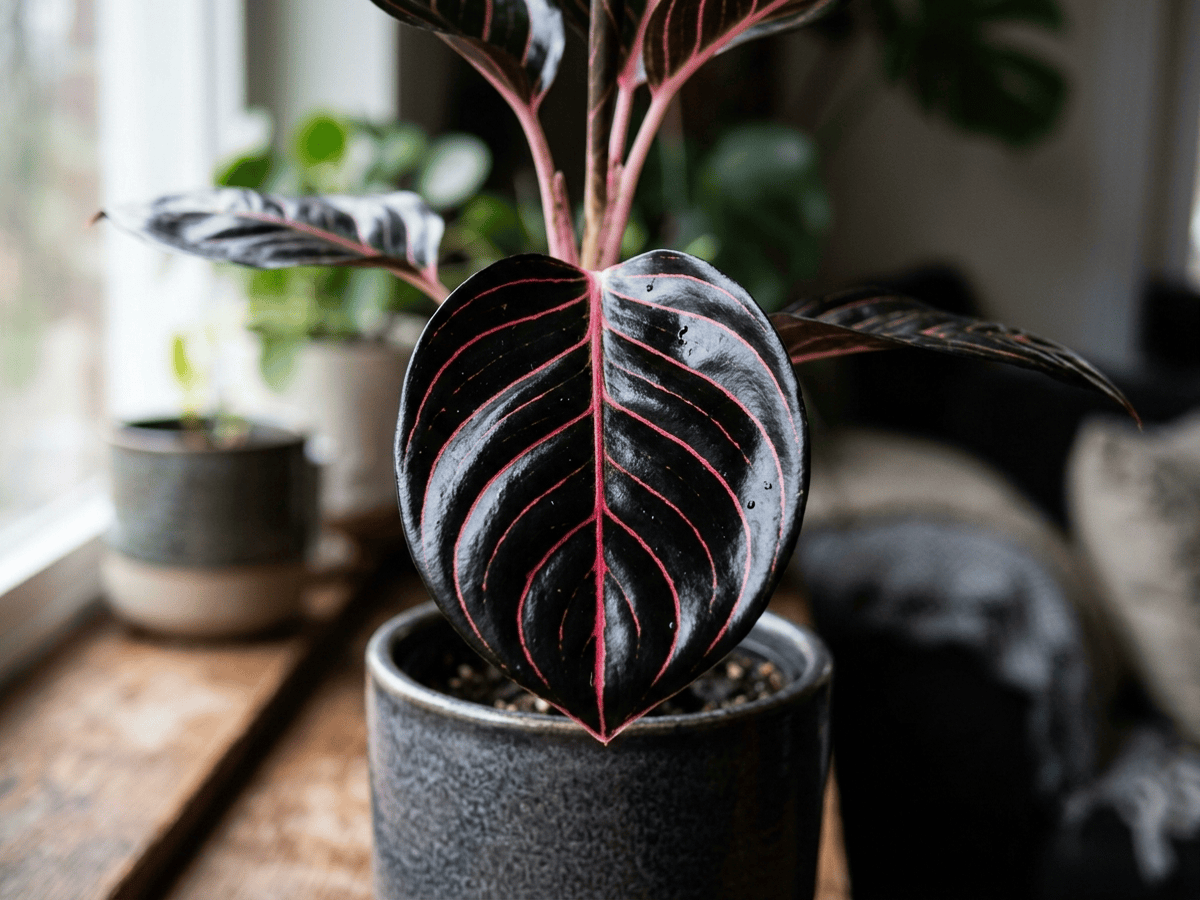
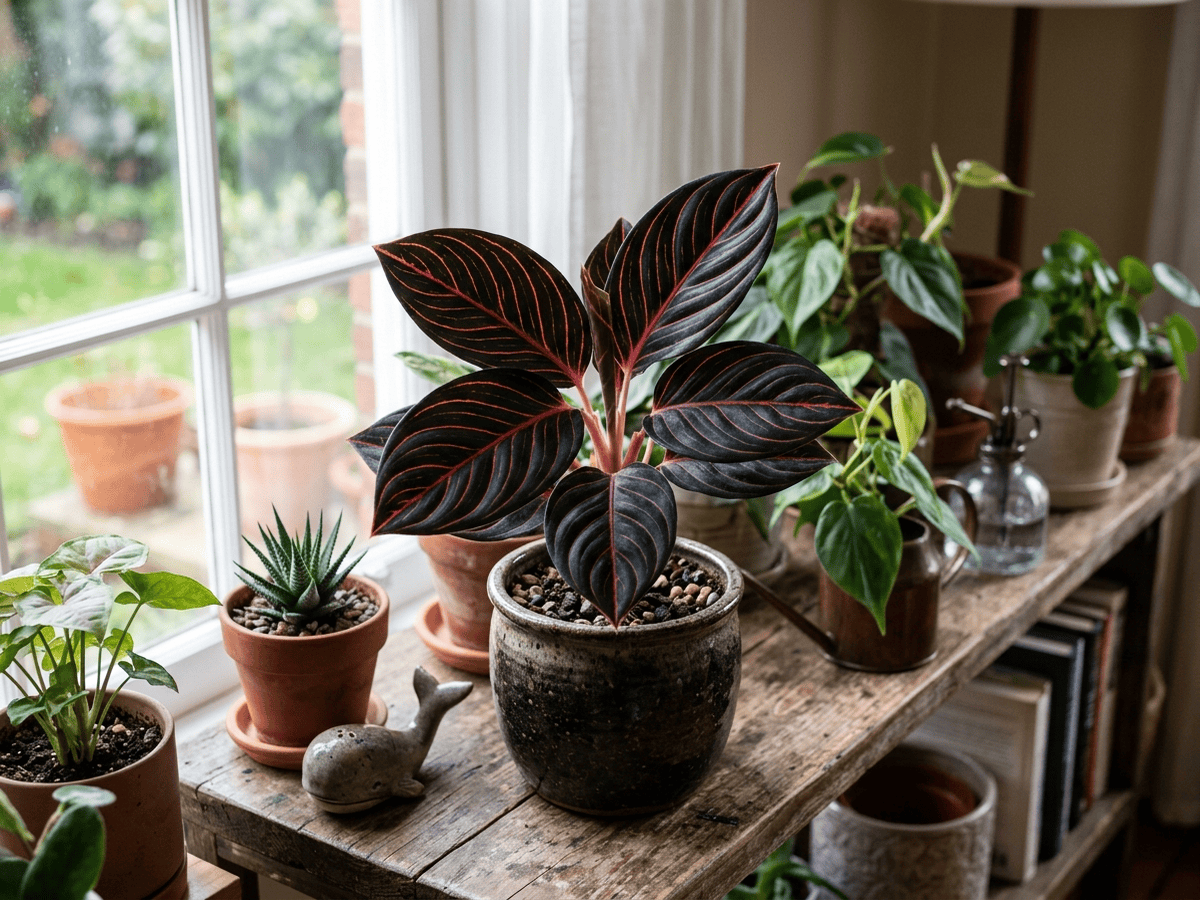
Round-Leaf Aglaonema is a striking Sumatran aroid with broad rounded dark-green to nearly black leaves boldly veined in pink or red. Forming compact rosettes 10-14 inches tall, its dark glossy foliage with vivid pink venation makes it one of the most dramatic houseplants in cultivation. Slow-growing and somewhat finicky, it is prized by serious houseplant collectors and is the parent of many modern hybrid aglaonemas.
- Compact
- Container-friendly
- Evergreen
How to care for Aglaonema rotundum
Watering
- Springevery 7 days
- Summerevery 7 days
- Fallevery 10 days
- Winterevery 14 days
Soil · Chunky & airy
- Top dressingBark chips10%
- Main mixBark + potting soil + perlite 1:1:170%
- DrainageLECA20%
Chunky pieces hold air pockets open so thick roots don't suffocate.
FERTILIZER
Balanced Feed 14-14-14
An even feed covers all three needs at once, keeping leaves, roots and blooms moving together with nothing pushed out of balance.
- Nitrogen · Leaves
- Phosphorus · Roots + Blooms
- Potassium · Strength
- Springevery 30 days
- Summerevery 30 days
- Fallevery 60 days
At a Glance
- NativeSoutheast Asia
- Height1–2 ft (0.3–0.6 m)
- Spread1–2 ft (0.3–0.6 m)
- Foliage colorDark-green, Red
- SoilLoamy, Well-drained, Rich
- LocationsIndoor
Toxicity
Humans Moderate · Pets Moderate
calcium oxalate raphides
Moderate
- Leaf
- Stem
- Ingestion
EXPOSURE Eating leaves and stems.
EFFECT Oral irritation and drooling.
NOTE Documented concern for humans: Oral irritation and drooling.
Moderate
- Leaf
- Stem
- Ingestion
EXPOSURE Eating leaves and stems.
EFFECT Oral irritation and vomiting.
NOTE ASPCA lists Aglaonema as toxic.
Moderate
- Leaf
- Stem
- Ingestion
EXPOSURE Eating leaves and stems.
EFFECT Oral irritation and vomiting.
NOTE ASPCA lists Aglaonema as toxic.
Educational information, not medical or veterinary advice. If exposure is suspected, contact a doctor or veterinarian.
DISTRIBUTION


- Native
- Southeast Asia
History

Aglaonema rotundum is a compact evergreen aroid in the family Araceae endemic to the rainforests of northern Sumatra, Indonesia, particularly around the Toba region. English botanist Nicholas Edward Brown formally described the species in 1914 based on specimens introduced to European horticulture from Dutch East Indies plant collectors. The epithet rotundum refers to the distinctively round-to-oval heart-shaped leaf form unusual among the typically elliptic-leaved Aglaonemas.
Wild plants have extraordinarily dark deep green to near-black leaves with striking contrasting pink, red, or wine-red midribs and lateral venation, creating one of the most dramatic foliage effects in the genus. The species has been a principal parent in the development of the modern red and pink Aglaonema cultivars popularized by Thai breeders from the 1980s onward ('Siam Aurora', 'Red Siam', 'Pink Dalmatian', 'Creta'), which dominate contemporary tropical foliage production.
Prefers very warm humid conditions and deep shade. The parent of many modern hybrid aglaonemas, including the popular pink and red-veined cultivars now ubiquitous in American garden centers.
Symbolism & meaning
What It Symbolizes
Aglaonema rotundum carries elegance in its dark foliage threaded with vivid pink veining, a quiet drama that needs no flower to command attention. As parent of countless modern aglaonema hybrids, it marks heritage, the original from which a whole family of houseplants descends. It is the ancestral form whose refined patterning still shapes how we imagine tropical leaves.
- Elegance — dark foliage with vivid pink veining
- Heritage — parent of countless modern aglaonema hybrids
Where the Name Comes From
'Rotundum' from Latin meaning rounded, for the leaf shape.
Uses & Fun Facts
- Pink-veined near-black foliage as houseplant accent
- Compact rosette suits collector indoor pots
Related plants
More Aglaonema plants

Plants with similar care
 AlocasiaAlocasia polly
 Black Velvet AlocasiaAlocasia reginula
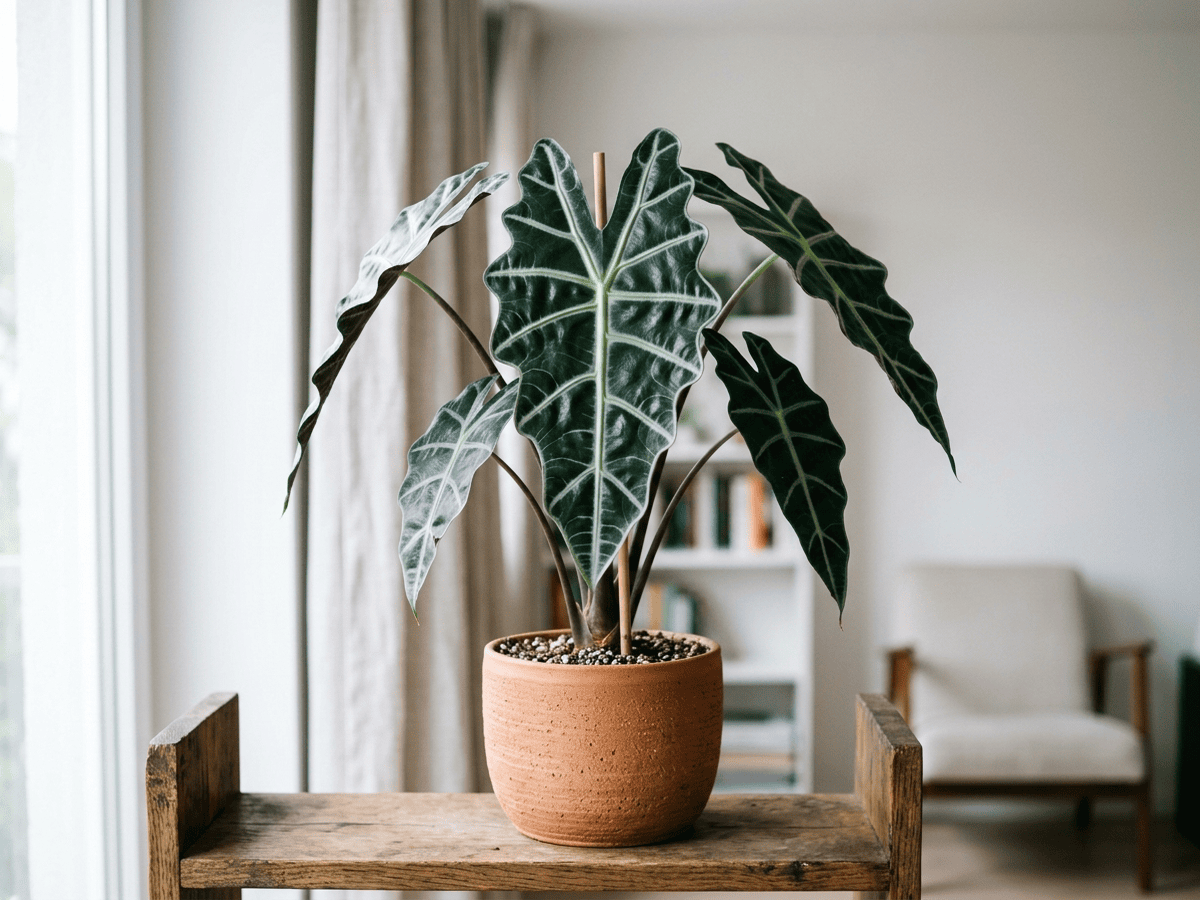 Kris-PlantAlocasia sanderiana
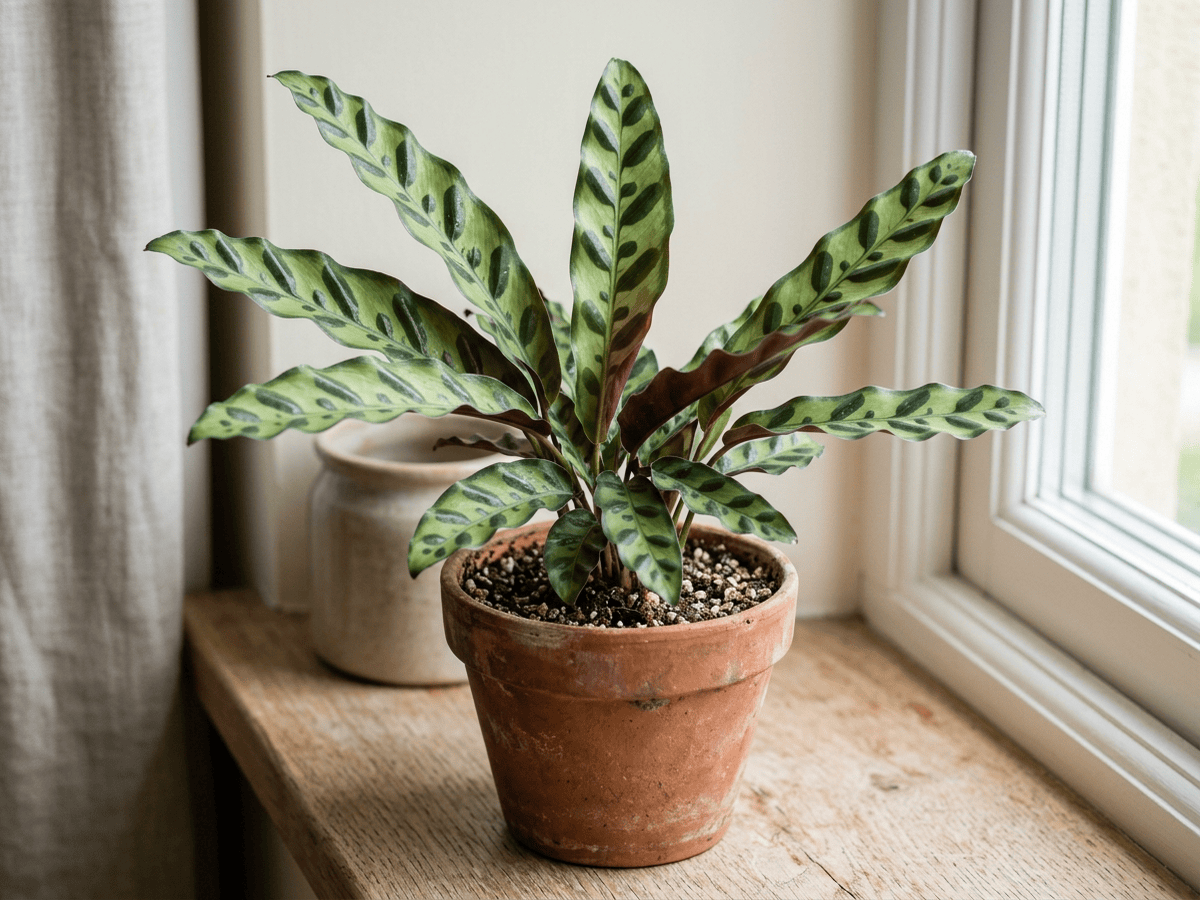 Rattlesnake-PlantCalathea lancifolia
Frequently asked questions
How often should I water Aglaonema rotundum?
In summer, water about every 7 days; in winter, about every 14 days. Adjust for heat, pot size and drainage.
How much light does Aglaonema rotundum need?
Indirect: Filtered light. Watch the leaves — scorching or stretching means the light needs adjusting.
Is Aglaonema rotundum toxic to cats or dogs?
Pets Moderate (Dogs Moderate · Cats Moderate) Educational information, not medical or veterinary advice. If exposure is suspected, contact a doctor or veterinarian.
Is Aglaonema rotundum easy to grow?
It is moderately demanding: a good choice once you have a little experience.
Can Aglaonema rotundum be grown indoors?
Yes, it adapts well to indoor growing given the right light.
YardMate
Identify any plant in seconds
Snap a photo — YardMate names the plant, diagnoses problems, and reminds you when to water.
Download on the App Store