 YardMate


Aglaonema Aroid
Aglaonema pictum
Medium · Some experienceAbout Aglaonema Aroid
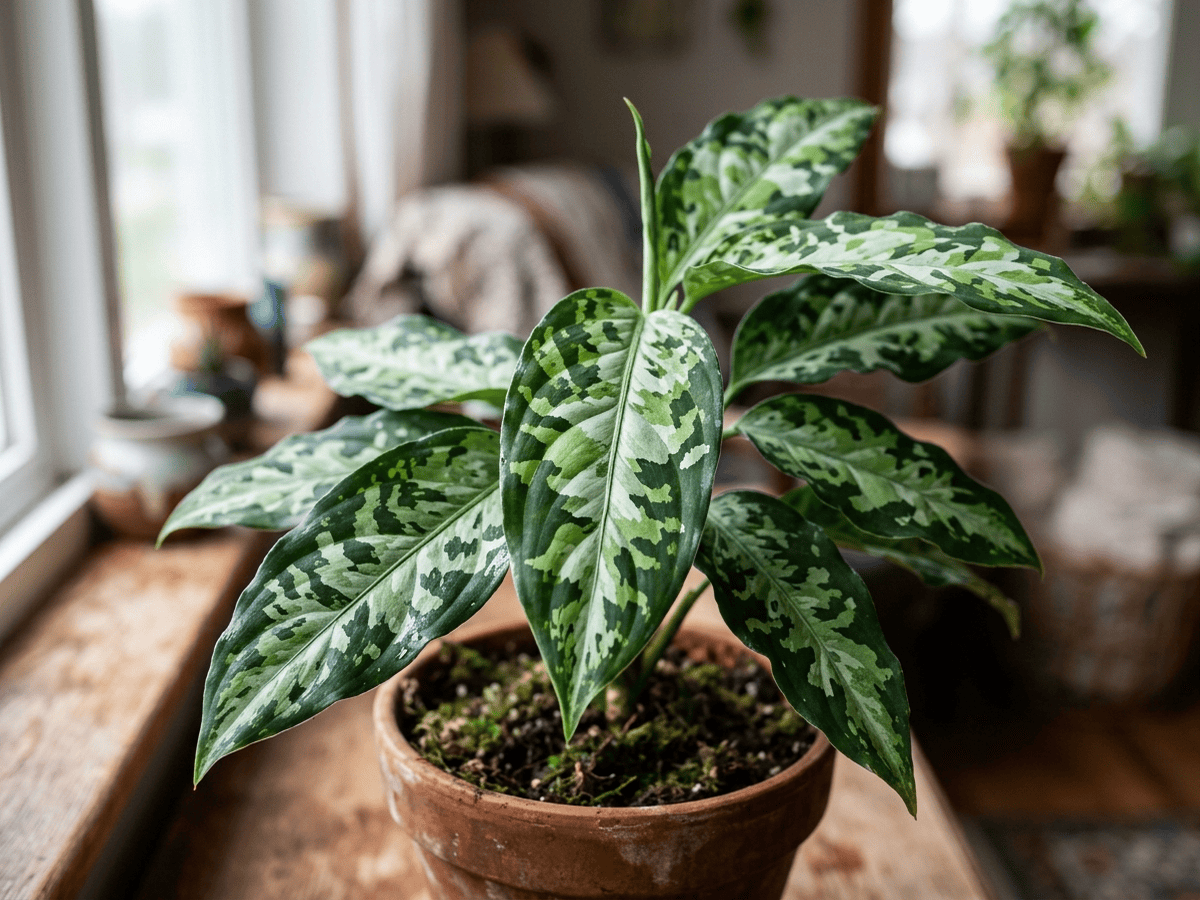
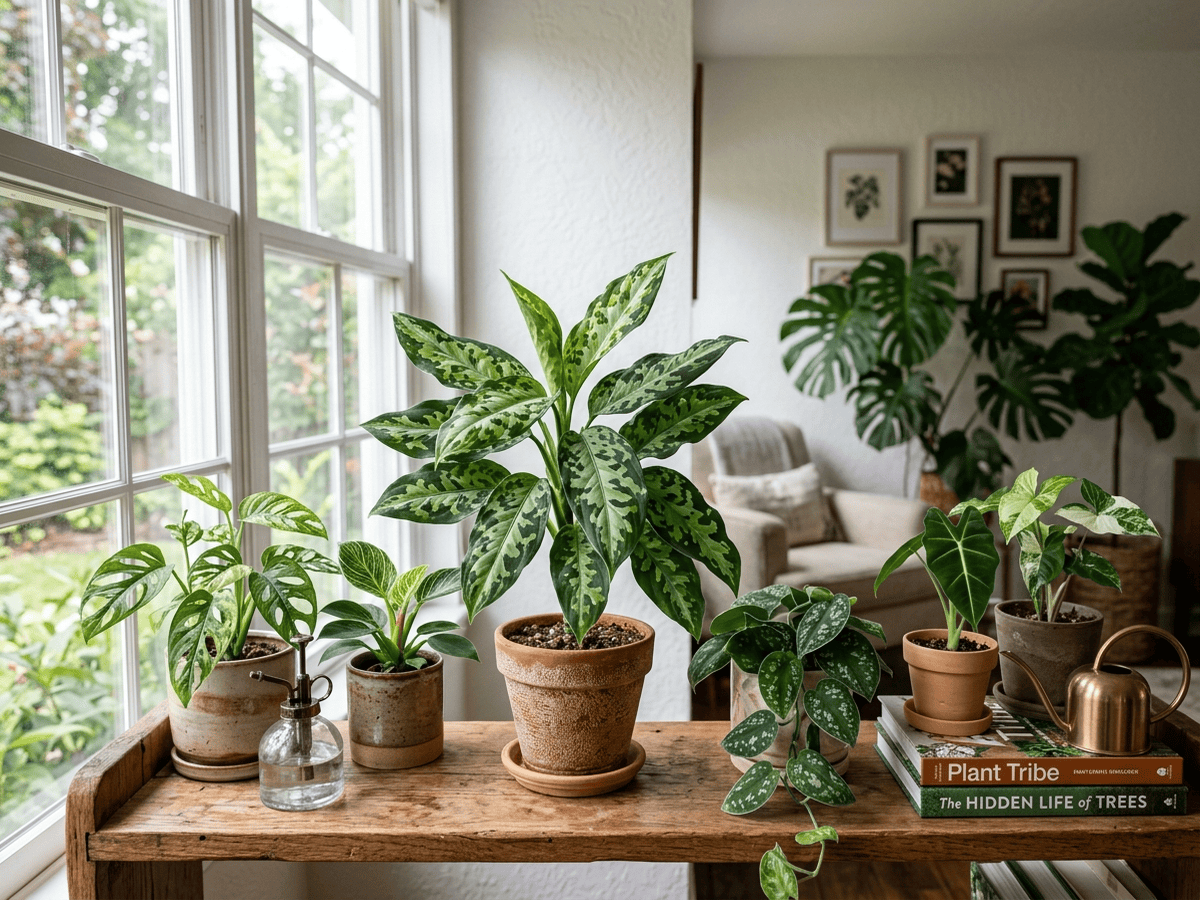
Camouflage Aglaonema is a Southeast Asian aroid with extraordinary leaves marked in three tones of green—dark forest, medium sage, and silvery-white—mimicking military camouflage patterns. Forming compact rosettes 12-18 inches tall, it is among the most striking foliage houseplants available. Tolerant of low light and irregular watering, the 'Tricolor' selection has become one of the most coveted aglaonemas in the American collector market.
- Container-friendly
- Evergreen
How to care for Aglaonema Aroid
Watering
- Springevery 7 days
- Summerevery 7 days
- Fallevery 10 days
- Winterevery 14 days
Soil · Chunky & airy
- Top dressingBark chips10%
- Main mixBark + potting soil + perlite 1:1:170%
- DrainageLECA20%
Chunky pieces hold air pockets open so thick roots don't suffocate.
FERTILIZER
Balanced Feed 14-14-14
An even feed covers all three needs at once, keeping leaves, roots and blooms moving together with nothing pushed out of balance.
- Nitrogen · Leaves
- Phosphorus · Roots + Blooms
- Potassium · Strength
- Springevery 30 days
- Summerevery 30 days
- Fallevery 60 days
At a Glance
- NativeSoutheast Asia
- Height1.5–3 ft (0.5–0.9 m)
- Spread1.5–2 ft (0.5–0.6 m)
- Flower colorWhite, Cream
- Foliage colorDark-green, Silver, Green
- SoilLoamy, Well-drained
- LocationsIndoor
Bloom time
BLOOM CYCLE
Peak bloom
Jun–Aug
White-green spathe with spadix (uncommon)
Toxicity
Humans Moderate · Pets Moderate
calcium oxalate raphides
Moderate
- Leaf
- Stem
- Ingestion
EXPOSURE Eating leaves and stems.
EFFECT Oral irritation and drooling.
NOTE Documented concern for humans: Oral irritation and drooling.
Moderate
- Leaf
- Stem
- Ingestion
EXPOSURE Eating leaves and stems.
EFFECT Oral irritation and vomiting.
NOTE ASPCA lists Aglaonema as toxic.
Moderate
- Leaf
- Stem
- Ingestion
EXPOSURE Eating leaves and stems.
EFFECT Oral irritation and vomiting.
NOTE ASPCA lists Aglaonema as toxic.
Educational information, not medical or veterinary advice. If exposure is suspected, contact a doctor or veterinarian.
DISTRIBUTION


- Native
- Introduced
- Southeast Asia
History

Aglaonema pictum, commonly called painted Chinese evergreen, is a compact clumping evergreen aroid in the family Araceae native to primary rainforests of Sumatra and Nias Island in western Indonesia, growing on the shaded forest floor. German botanist Carl Sigismund Kunth described the species in 1841 (more precisely, the binomial was published based on Walich's earlier herbarium specimens). The species is unusual among Aglaonemas for its strikingly camouflage-patterned foliage—oval 10-15 cm leaves are marked with irregular dark forest-green, medium green, and pale silver-green blotches and patches that mimic tropical leaf-litter camouflage.
The three-color 'Tricolor' form (sometimes marketed as 'Camouflage') has become one of the most collected Aglaonema forms of the 2020s, commanding premium prices in specialty houseplant markets. Plants stay compact at 30-45 cm tall and 25-35 cm wide, growing slowly and preferring high humidity and low light.
Long obscure outside Asian collectors, it gained widespread American popularity in the 2010s as the houseplant boom drove demand for unusual variegated foliage. Calcium oxalate toxicity is typical of Aglaonema.
Symbolism & meaning
What It Symbolizes
The Aglaonema Aroid is a plant of mystery, its camouflage patterning dissolving its leaves into shadow as if the foliage half-belonged to another world. Each leaf carries its own beauty too — no two patterned alike, like fingerprints painted in jade and silver. To grow one is to keep a small enigma, a living puzzle whose markings reward long, slow looking.
- Mystery — camouflage pattern obscures form in shadow
- Beauty — no two leaves show identical patterning
Where the Name Comes From
'Aglaonema' from Greek 'aglaos' (bright) and 'nema' (thread); 'pictum' means painted, for the striking leaf markings.
Uses & Fun Facts
- Camouflage-patterned foliage for low-light tabletop houseplant displays
- Velvety green leaves dappled silver and dark green for shaded interiors
Related plants
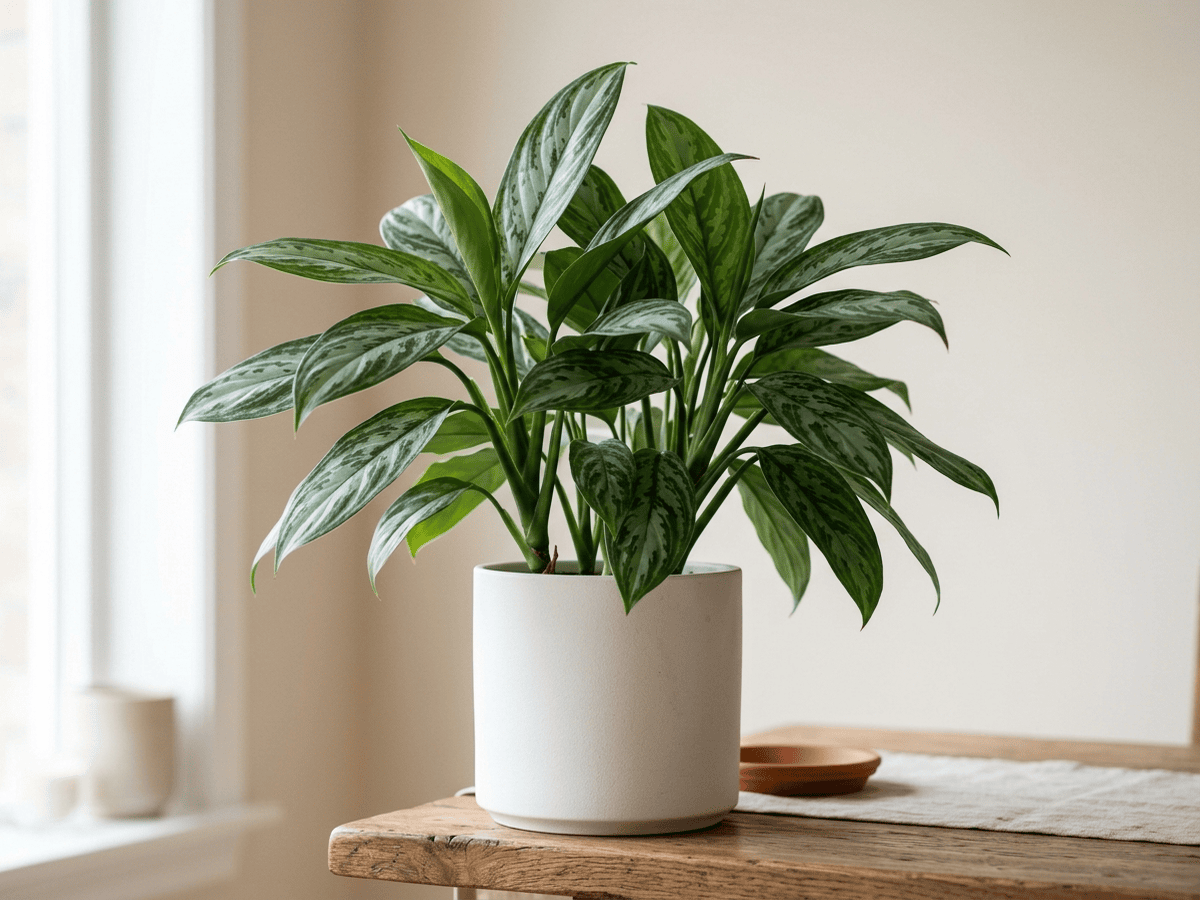
More Aglaonema plants

Plants with similar care
 AlocasiaAlocasia polly
 Black Velvet AlocasiaAlocasia reginula
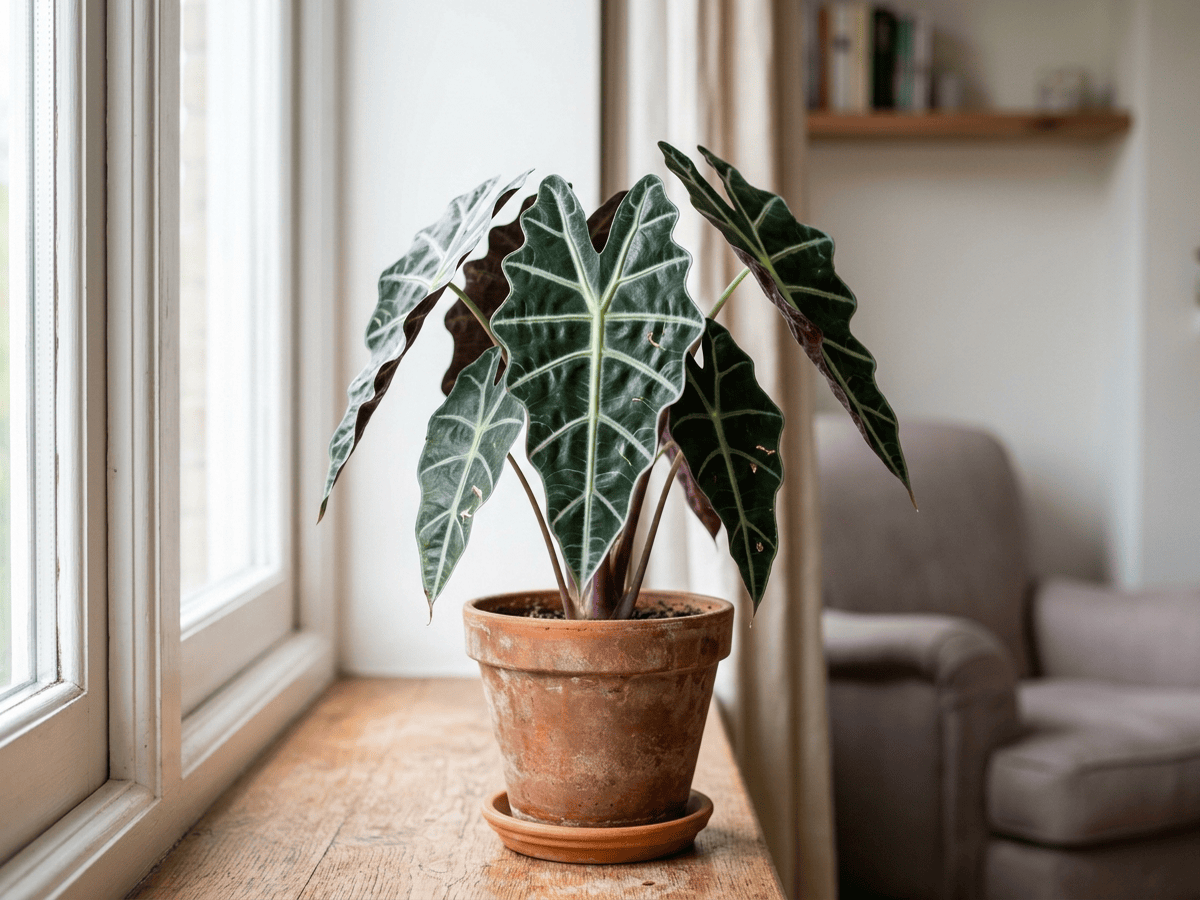
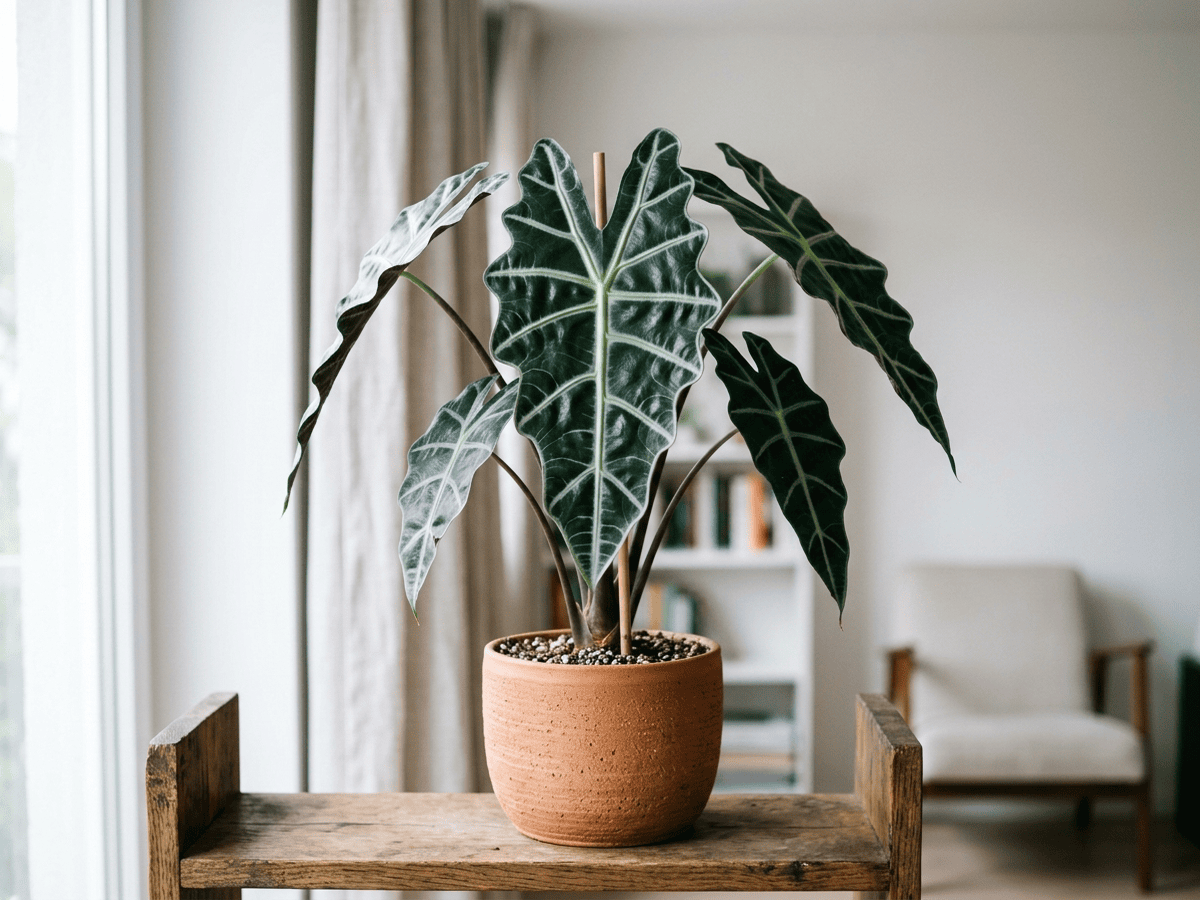 Kris-PlantAlocasia sanderiana
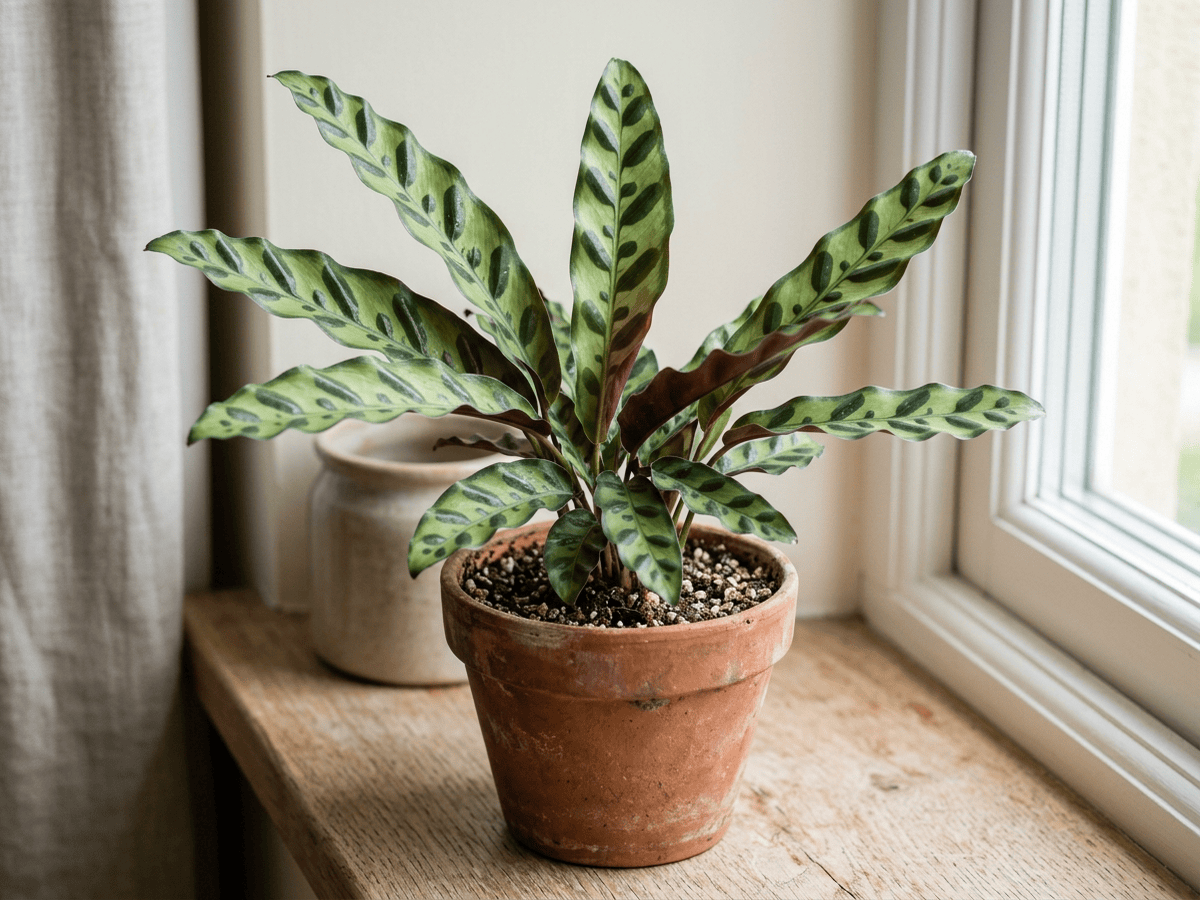 Rattlesnake-PlantCalathea lancifolia
Frequently asked questions
How often should I water Aglaonema Aroid?
In summer, water about every 7 days; in winter, about every 14 days. Adjust for heat, pot size and drainage.
How much light does Aglaonema Aroid need?
Indirect: Filtered light. Watch the leaves — scorching or stretching means the light needs adjusting.
Is Aglaonema Aroid toxic to cats or dogs?
Pets Moderate (Dogs Moderate · Cats Moderate) Educational information, not medical or veterinary advice. If exposure is suspected, contact a doctor or veterinarian.
Is Aglaonema Aroid easy to grow?
It is moderately demanding: a good choice once you have a little experience.
Can Aglaonema Aroid be grown indoors?
Yes, it adapts well to indoor growing given the right light.
When does Aglaonema Aroid bloom?
It typically blooms Jun–Aug in the Northern Hemisphere.
YardMate
Identify any plant in seconds
Snap a photo — YardMate names the plant, diagnoses problems, and reminds you when to water.
Download on the App Store