 YardMate
Velvet Calathea
Goeppertia rufibarba
Medium · Some experienceAbout Velvet Calathea
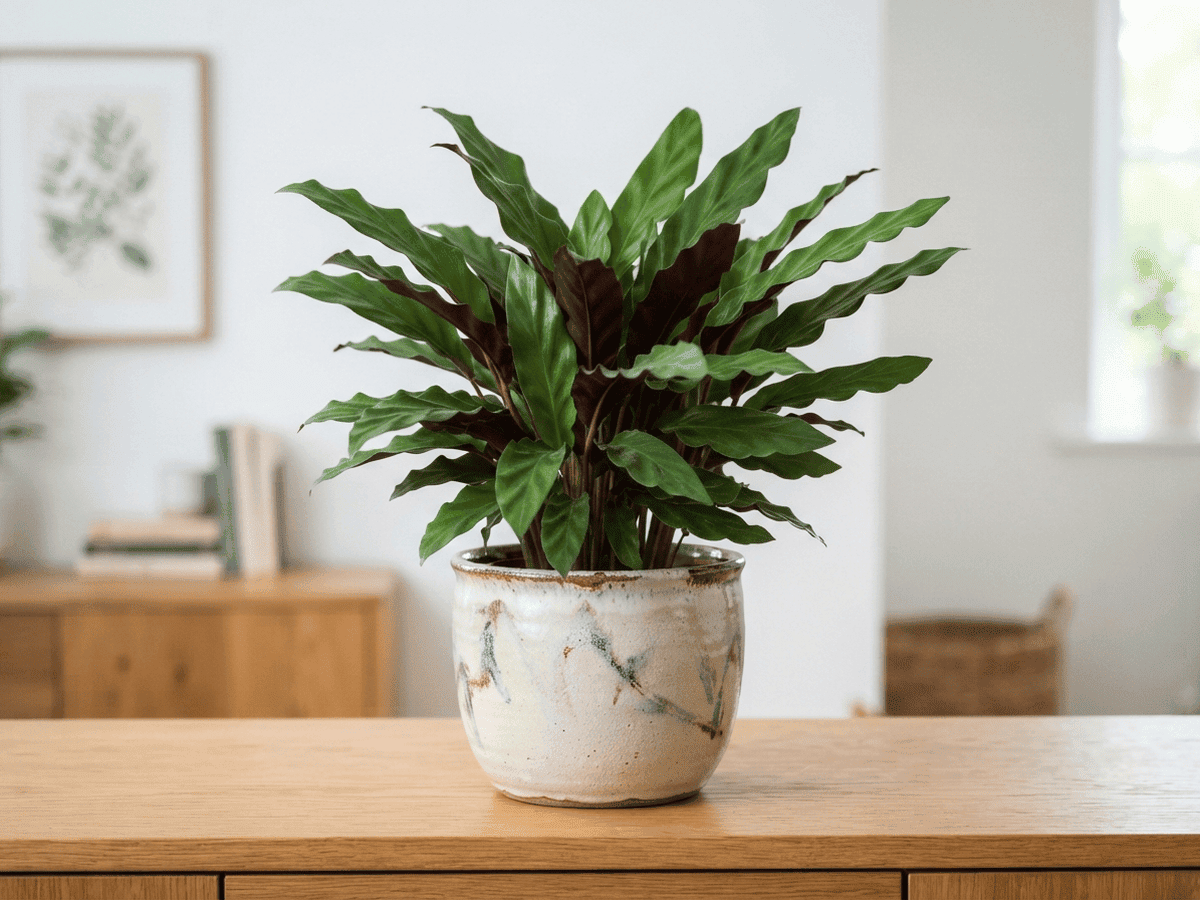
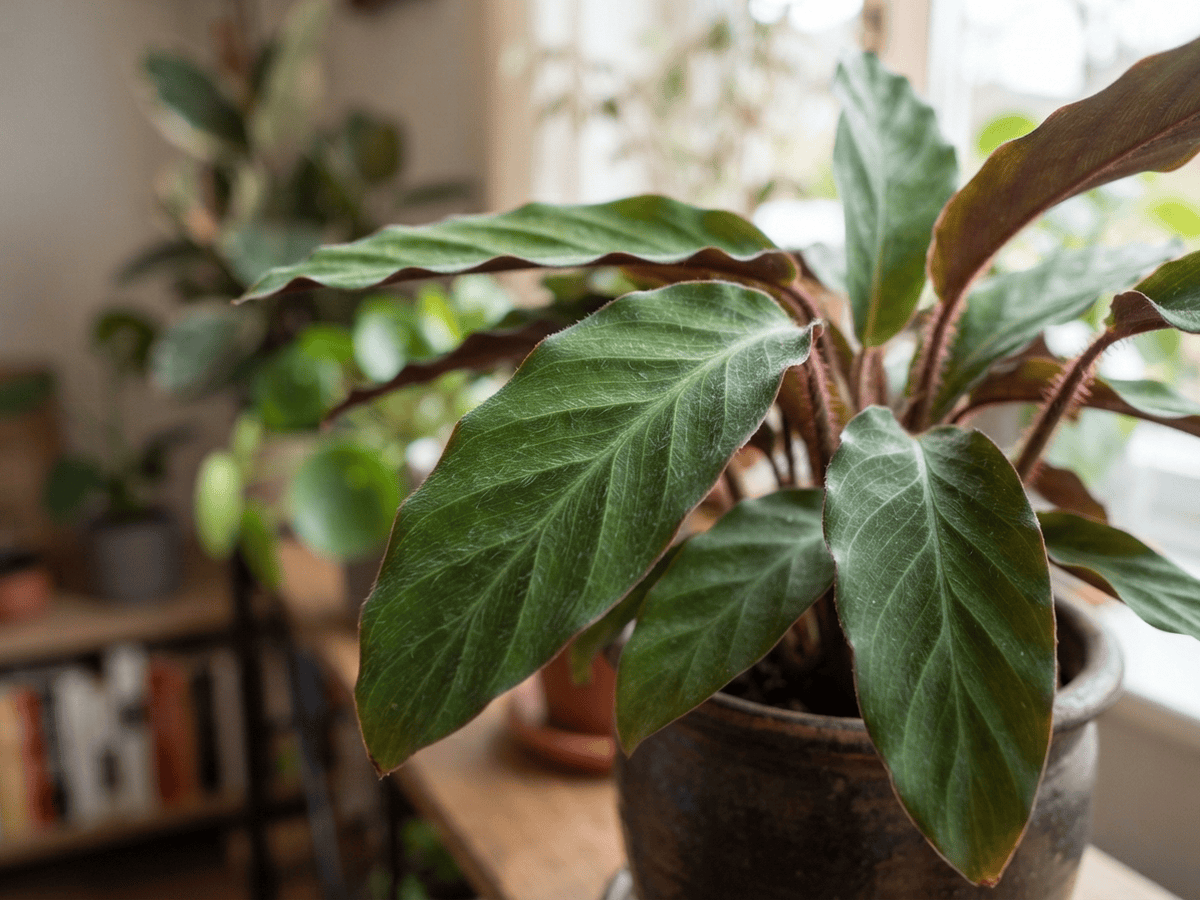
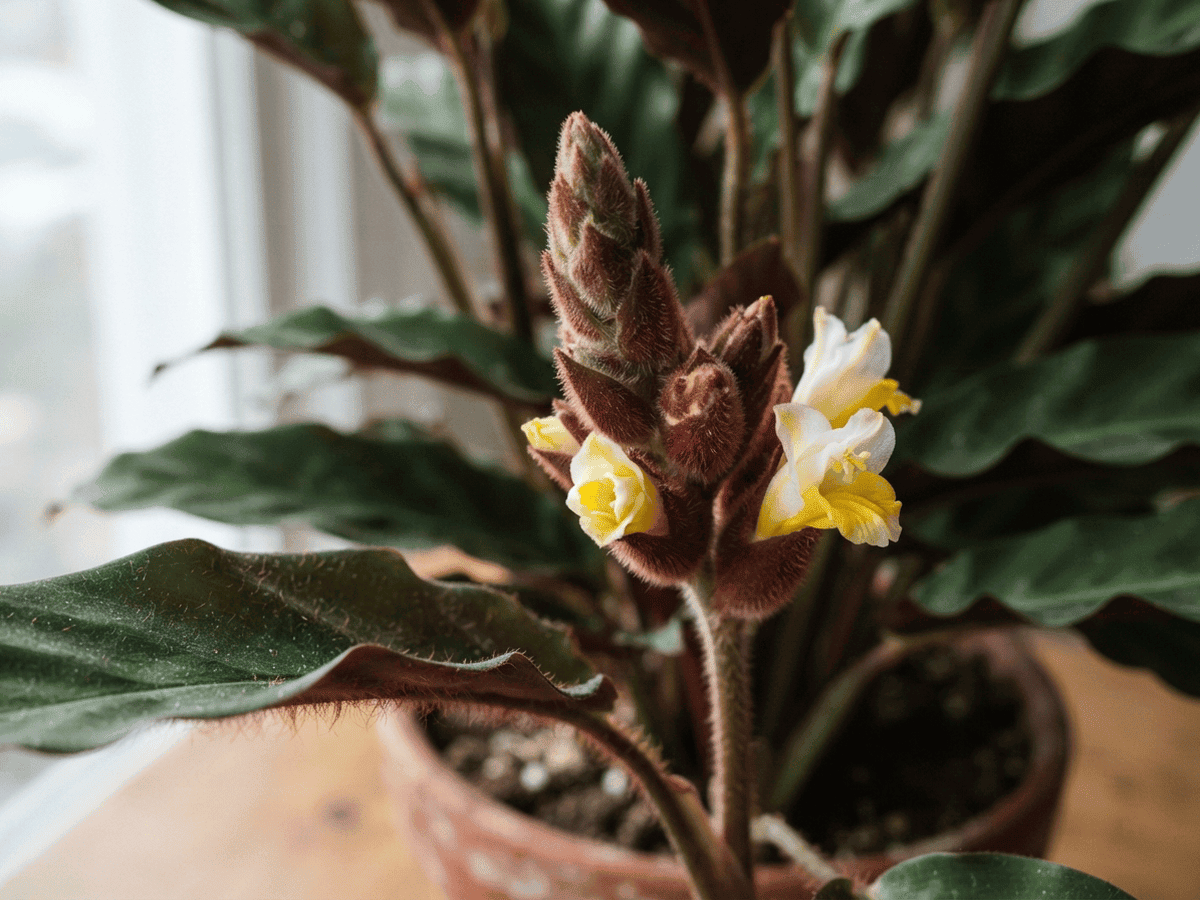
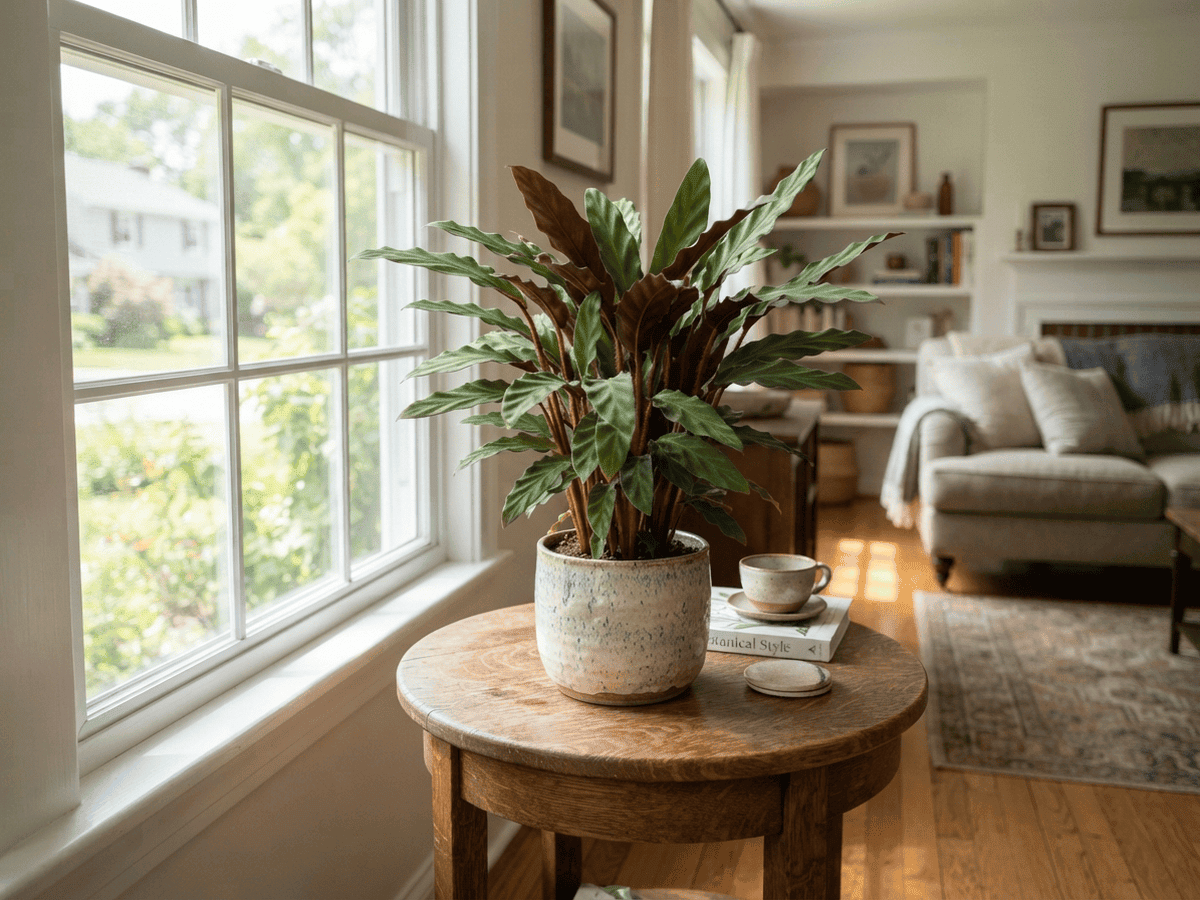
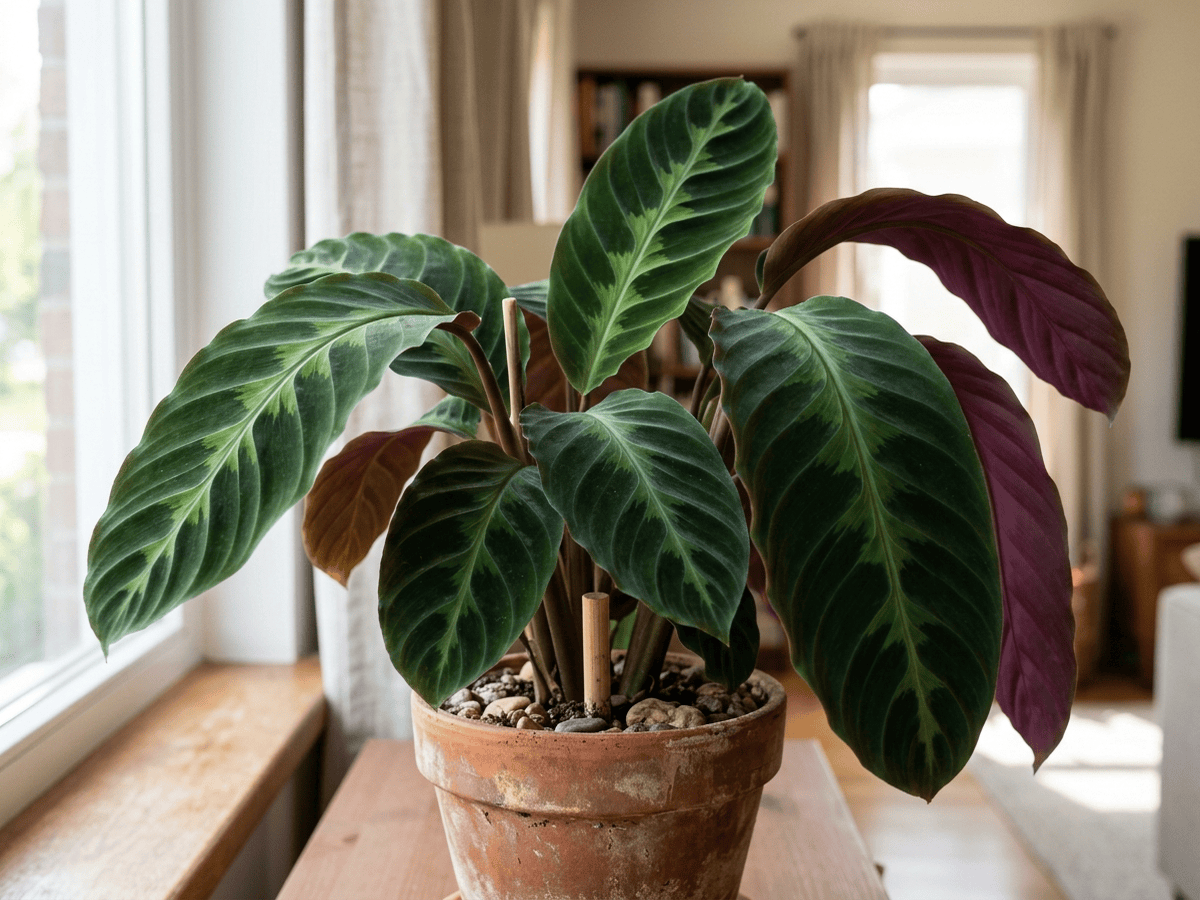
The Velvet Calathea is prized for its dramatically textured foliage: long, wavy-edged leaves rise on slender stems, their upper surfaces a deep matte green while the undersides glow burgundy-red beneath a soft coat of fine hairs, the trait that gives the species its name rufibarba, meaning "red beard." Native to the humid forest floor of eastern Brazil, it thrives in the dappled shade and high humidity of a tropical understory. Like other prayer plants, its leaves lift and fold together each night, a rhythmic movement called nyctinasty. Compact and clump-forming, it suits a shaded windowsill or a humid bathroom corner, rewarding steady moisture and filtered light with lush, ever-unfurling growth.
- Shade-tolerant
- Compact
- Evergreen
- Container-friendly
How to care for Velvet Calathea
Watering
- Springevery 10 days
- Summerevery 7 days
- Fallevery 15 days
- Winterevery 30 days
Soil · Moisture-retentive
- Top dressingSphagnum moss10%
- Main mixPeat + coco coir 1:180%
- DrainagePerlite / gravel10%
Keep it evenly moist — but the drainage layer still matters.
FERTILIZER
Foliage Feed 24-8-16
Nitrogen leads so the plant spends its energy on dense green growth. Phosphorus and potassium follow just far enough to keep roots and stems up to speed.
- Nitrogen · Leaves
- Phosphorus · Roots + Blooms
- Potassium · Strength
- Springevery 30 days
- Summerevery 30 days
At a Glance
- NativeSouth America
- Height2–3 ft (0.6–0.9 m)
- Spread2–3 ft (0.6–0.9 m)
- Foliage colorGreen, Variegated
- SoilMoist, Well-drained
- LocationsIndoor
Toxicity
Pets Safe
None reported
Not reported
EXPOSURE No exposure route is reported.
EFFECT No toxic effect is reported.
NOTE No toxicity is reported for humans in this catalog; this is not evidence that the plant is edible or harmless.
Safe
EXPOSURE No exposure route is reported.
EFFECT No toxic effect is reported.
NOTE Authoritative sources report this plant as non-toxic to dogs; this is not evidence that the plant is edible.
Safe
EXPOSURE No exposure route is reported.
EFFECT No toxic effect is reported.
NOTE Authoritative sources report this plant as non-toxic to cats; this is not evidence that the plant is edible.
Educational information, not medical or veterinary advice. If exposure is suspected, contact a doctor or veterinarian.
DISTRIBUTION


- Native
- South America
History
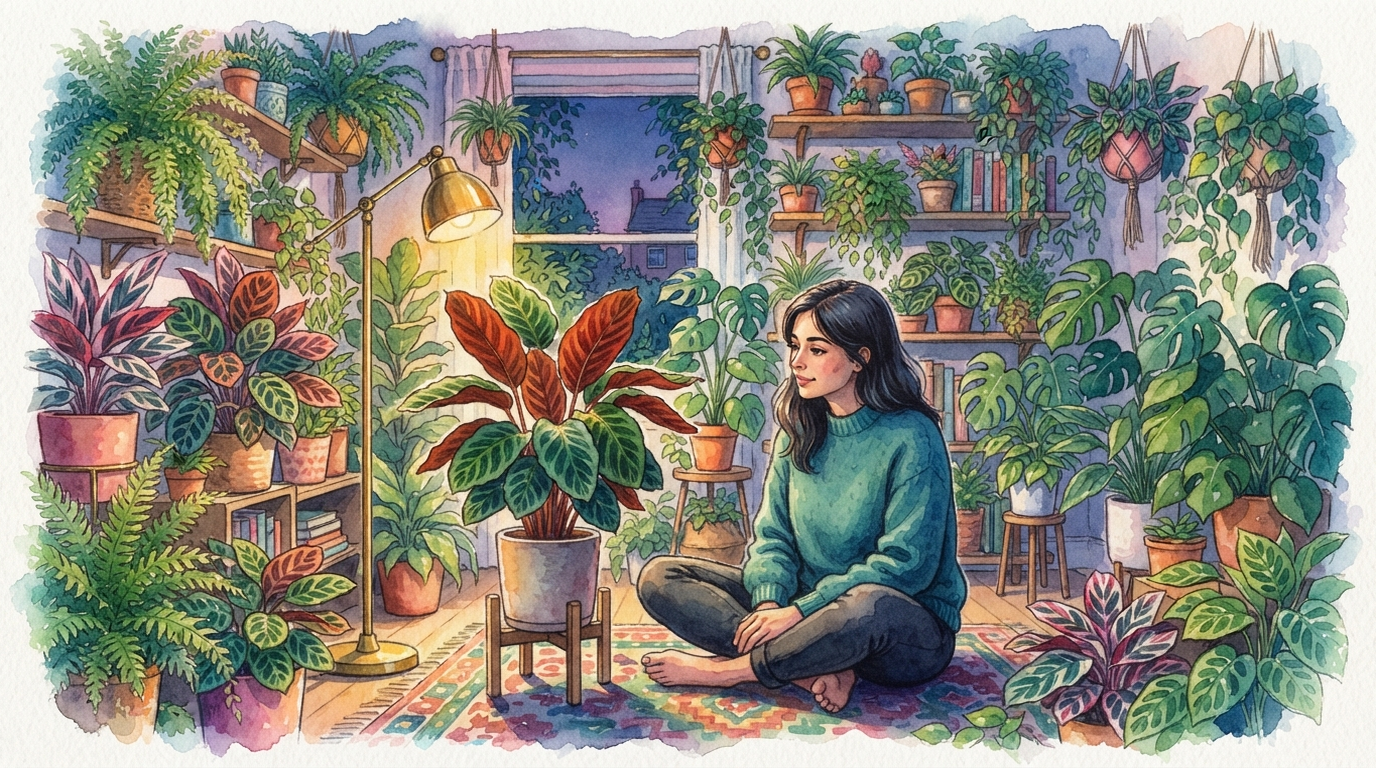
For more than a century and a half, this plant traveled the world under a name that no longer quite fit. First described from eastern Brazil's Atlantic Forest in the mid-1800s as Calathea rufibarba, it settled into greenhouses and windowsills across the globe as one of the most recognizable members of the prayer-plant family, admired for its ruffled, velvet-backed leaves. Then, in 2012, a team of botanists led by Finn Borchsenius examined DNA from hundreds of Calathea specimens and found that the genus, as traditionally defined, actually contained several distinct evolutionary lines. Species with certain flower and seed structures, including rufibarba, were moved into a revived genus, Goeppertia, honoring the nineteenth-century German botanist and paleobotanist Heinrich Robert Goeppert. Overnight, herbarium labels and plant tags needed updating, though the leaves themselves, of course, never noticed. What every grower does notice is the plant's nightly ritual: as daylight fades, the long leaves lift on their stems and fold upward, pressing together like a pair of praying hands, only to spread flat again each morning to catch the light. This movement, called nyctinasty, is powered by a hinge-like pulvinus at the base of each leaf and is thought to help the plant track available light or reduce water loss overnight. For collectors who tend these plants on a shaded sill, that quiet evening fold has become as much a part of the appeal as the leaf's rust-red underside.
Symbolism & meaning
What It Symbolizes
The nightly folding of the Velvet Calathea's leaves, rising and pressing together like hands in prayer, has long linked prayer-plant family members to devotion and quiet reflection. Houseplant keepers often describe watching this evening movement as a small, grounding ritual, a pause as the day closes, echoed in the common nickname given to this whole plant family.
- Prayer — The nightly upward fold of the leaves, echoing praying hands, symbolizes quiet devotion and daily ritual.
Where the Name Comes From
The genus name Goeppertia honors the German botanist and paleobotanist Heinrich Robert Goeppert (1800-1884), celebrated for his work on plant classification and fossil flora; the genus was carved out of the older Calathea in a 2012 molecular revision. The species name rufibarba combines the Latin rufus, "reddish," and barba, "beard," describing the fine copper-red hairs covering the underside of each leaf.
Uses & Fun Facts
- Grown indoors for its dramatically textured, velvet-backed foliage.
Related plants
More Goeppertia plants
Plants with similar care
 Aglaonema AroidAglaonema pictum
 Aglaonema rotundumAglaonema rotundum
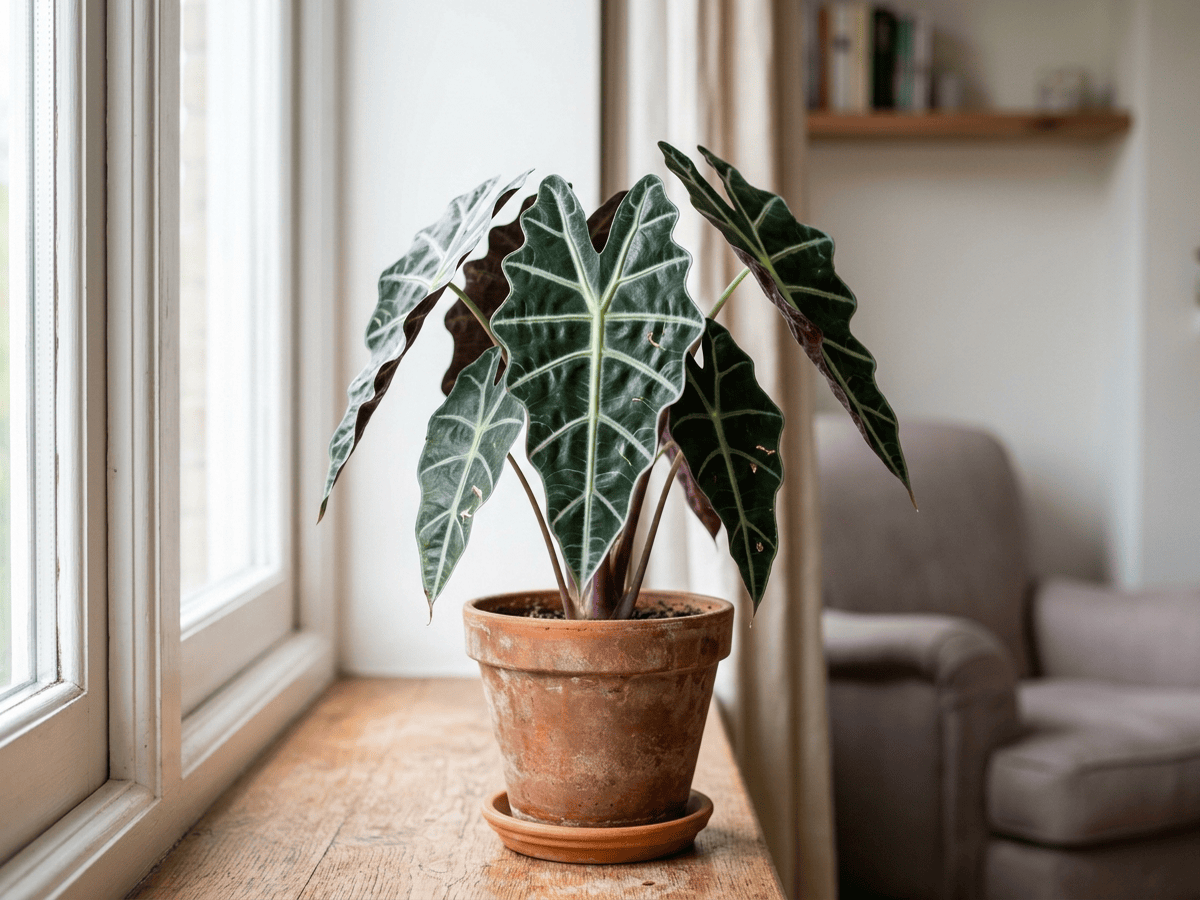 AlocasiaAlocasia polly
 Black Velvet AlocasiaAlocasia reginula
Frequently asked questions
How often should I water Velvet Calathea?
In summer, water about every 7 days; in winter, about every 30 days. Adjust for heat, pot size and drainage.
How much light does Velvet Calathea need?
Indirect: Filtered light. Watch the leaves — scorching or stretching means the light needs adjusting.
Is Velvet Calathea toxic to cats or dogs?
Pets Safe (Dogs Safe · Cats Safe) Educational information, not medical or veterinary advice. If exposure is suspected, contact a doctor or veterinarian.
Is Velvet Calathea easy to grow?
It is moderately demanding: a good choice once you have a little experience.
Can Velvet Calathea be grown indoors?
Yes, it adapts well to indoor growing given the right light.
YardMate
Identify any plant in seconds
Snap a photo — YardMate names the plant, diagnoses problems, and reminds you when to water.
Download on the App Store