 YardMate

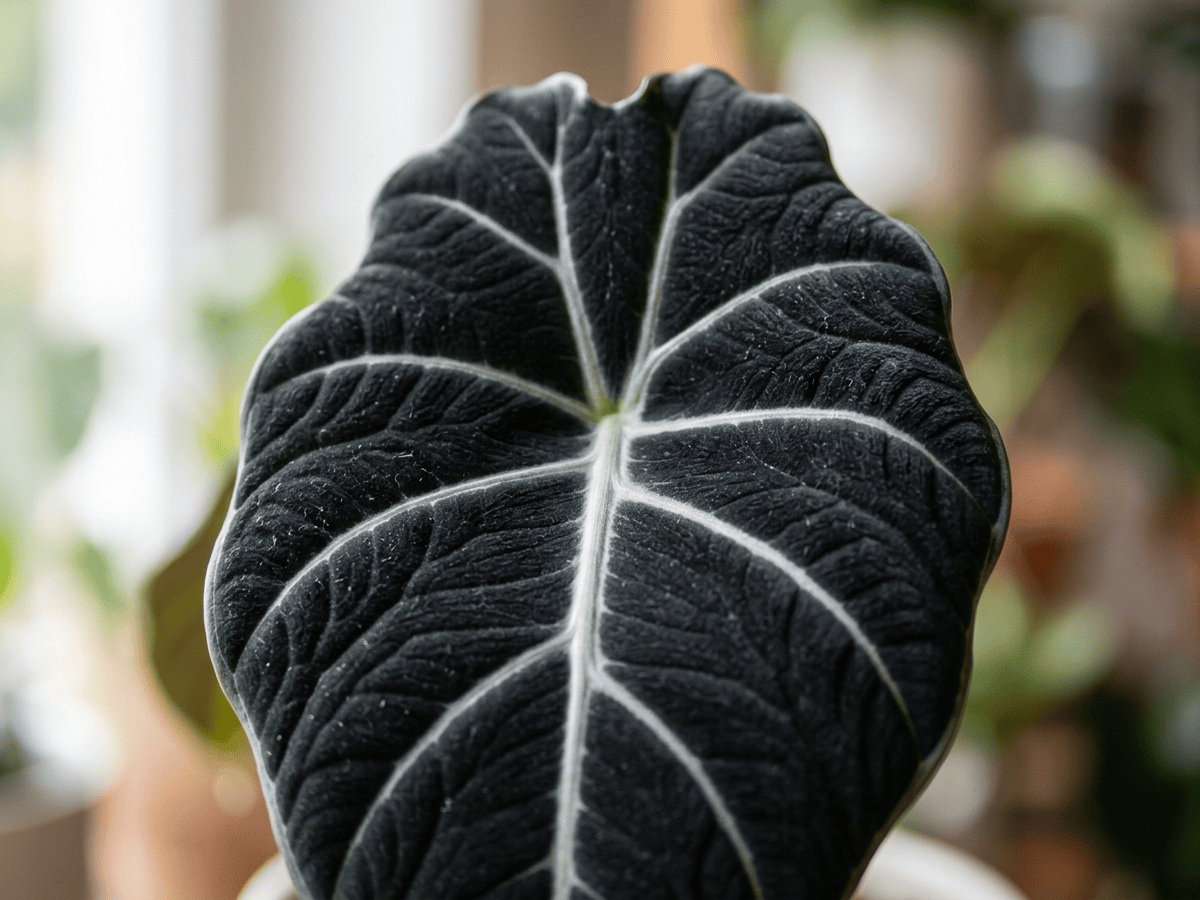


Black Velvet Alocasia
Alocasia reginula
Medium · Some experienceAbout Black Velvet Alocasia
Black Velvet Alocasia is a compact Bornean aroid with broad heart-shaped leaves of deep velvety black-green boldly veined in silvery-white. Reaching only 8-12 inches tall, it is among the smallest and most jewel-like alocasias—nicknamed 'Little Queen'. Its near-black leaves with crystalline veining make it one of the most coveted dark-foliage houseplants of the modern American collector scene. Demands consistent humidity and warmth.
- Compact
- Evergreen
How to care for Black Velvet Alocasia
Watering
- Springevery 5 days
- Summerevery 5 days
- Fallevery 10 days
- Winterevery 14 days
Soil · Chunky & airy
- Top dressingBark chips10%
- Main mixBark + potting soil + perlite 1:1:170%
- DrainageLECA20%
Chunky pieces hold air pockets open so thick roots don't suffocate.
FERTILIZER
Balanced Feed 14-14-14
An even feed covers all three needs at once, keeping leaves, roots and blooms moving together with nothing pushed out of balance.
- Nitrogen · Leaves
- Phosphorus · Roots + Blooms
- Potassium · Strength
- Springevery 30 days
- Summerevery 30 days
- Fallevery 60 days
At a Glance
- NativeSoutheast Asia
- Height0.5–1 ft (0.2–0.3 m)
- Spread0.5–1 ft (0.2–0.3 m)
- Flower colorGreen
- Foliage colorSilver, Purple
- SoilLoamy, Well-drained, Rich
- LocationsIndoor
Bloom time
BLOOM CYCLE
Greenish spathe (rare indoors)
Toxicity
Humans Moderate · Pets Moderate
calcium oxalate raphides
Moderate
- Leaf
- Stem
- Ingestion
EXPOSURE Eating leaves and stems.
EFFECT Oral irritation and drooling.
NOTE Documented concern for humans: Oral irritation and drooling.
Moderate
- Leaf
- Stem
- Ingestion
EXPOSURE Eating leaves and stems.
EFFECT Oral irritation and vomiting.
NOTE ASPCA lists Alocasia as toxic.
Moderate
- Leaf
- Stem
- Ingestion
EXPOSURE Eating leaves and stems.
EFFECT Oral irritation and vomiting.
NOTE ASPCA lists Alocasia as toxic.
Educational information, not medical or veterinary advice. If exposure is suspected, contact a doctor or veterinarian.
DISTRIBUTION


- Native
- Southeast Asia
History
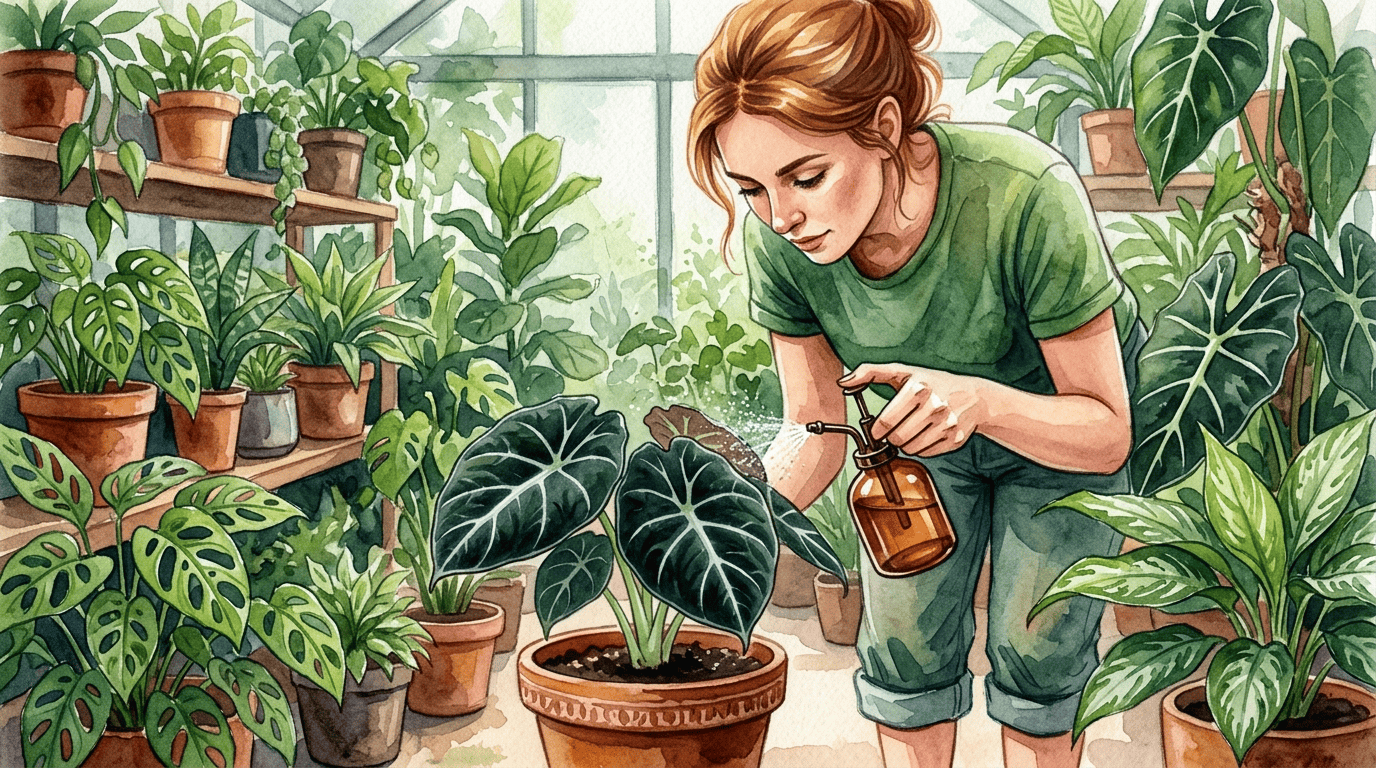
Alocasia reginula, commonly called black velvet alocasia, is a small dwarf jewel alocasia in the family Araceae endemic to primary rainforests of Sabah in northern Borneo, Malaysia, where it grows in deep shade on limestone soil. Australian aroid specialist Alistair Hay formally described the species in 1998 in a revision of the genus. The epithet reginula means little queen.
Plants stay compact at 20-30 cm tall with 3-6 small rounded heart-shaped leaves 10-20 cm long held on short stout petioles. The upper leaf surface displays extraordinarily dark, nearly black forest-green coloration with a matte velvet texture, marked with contrasting silvery-white primary venation; undersides are deep purple. This striking miniature alocasia was relatively obscure until the late 2010s when it became a highly sought-after collector plant, peaking during the 2020-2022 rare aroid market.
Now widely tissue-cultured. Demands warm humid conditions (60%+ humidity), deep shade, and very well-drained soil—prone to rot and dormancy in cooler periods. Skyrocketed in popularity during the 2018-2022 American houseplant boom as collectors sought ever-darker and more dramatic foliage.
Symbolism & meaning
What It Symbolizes
The Black Velvet Alocasia earns its meaning of royalty through leaves so darkly velvet they seem to swallow light, traced with silver veins like a queen's embroidery. In its near-black foliage there lives a deeper register of mystery, the sense that the plant withholds something just beyond the eye's reach. Among houseplants it occupies the role of the rare jewel, asking the keeper for reverence rather than haste, and rewarding patience with quiet drama.
- Royalty — regal dark velvet foliage
- Mystery — shadowy near-black leaves with silver tracing
Where the Name Comes From
The common name highlights its dark coloring. 'Reginula' from Latin meaning little queen, for its compact regal appearance.
Uses & Fun Facts
- Black Velvet leaves stand out as collector houseplant
- Compact silver-veined foliage suits shaded shelves
Related plants
More Alocasia plants
 African Mask PlantAlocasia amazonica
 Giant TaroAlocasia macrorrhizos
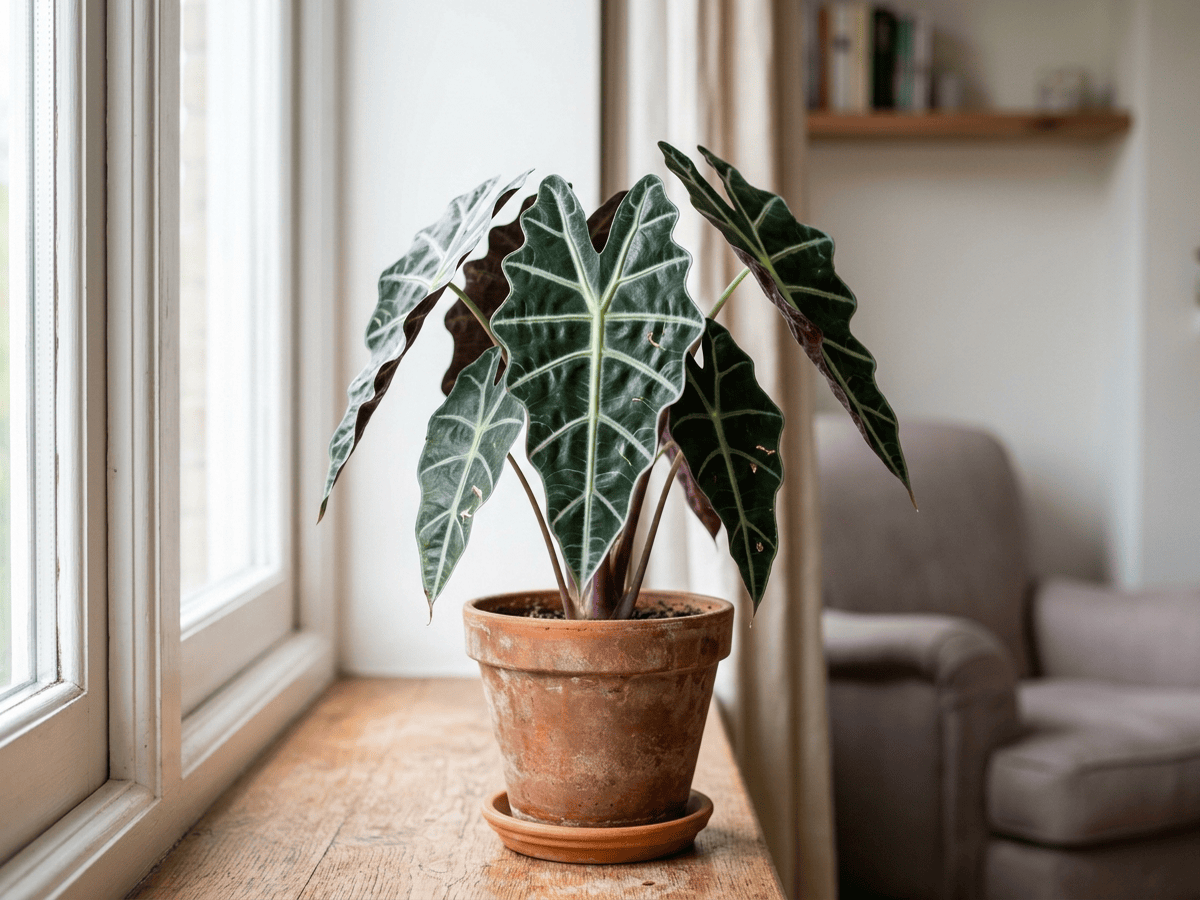 AlocasiaAlocasia polly
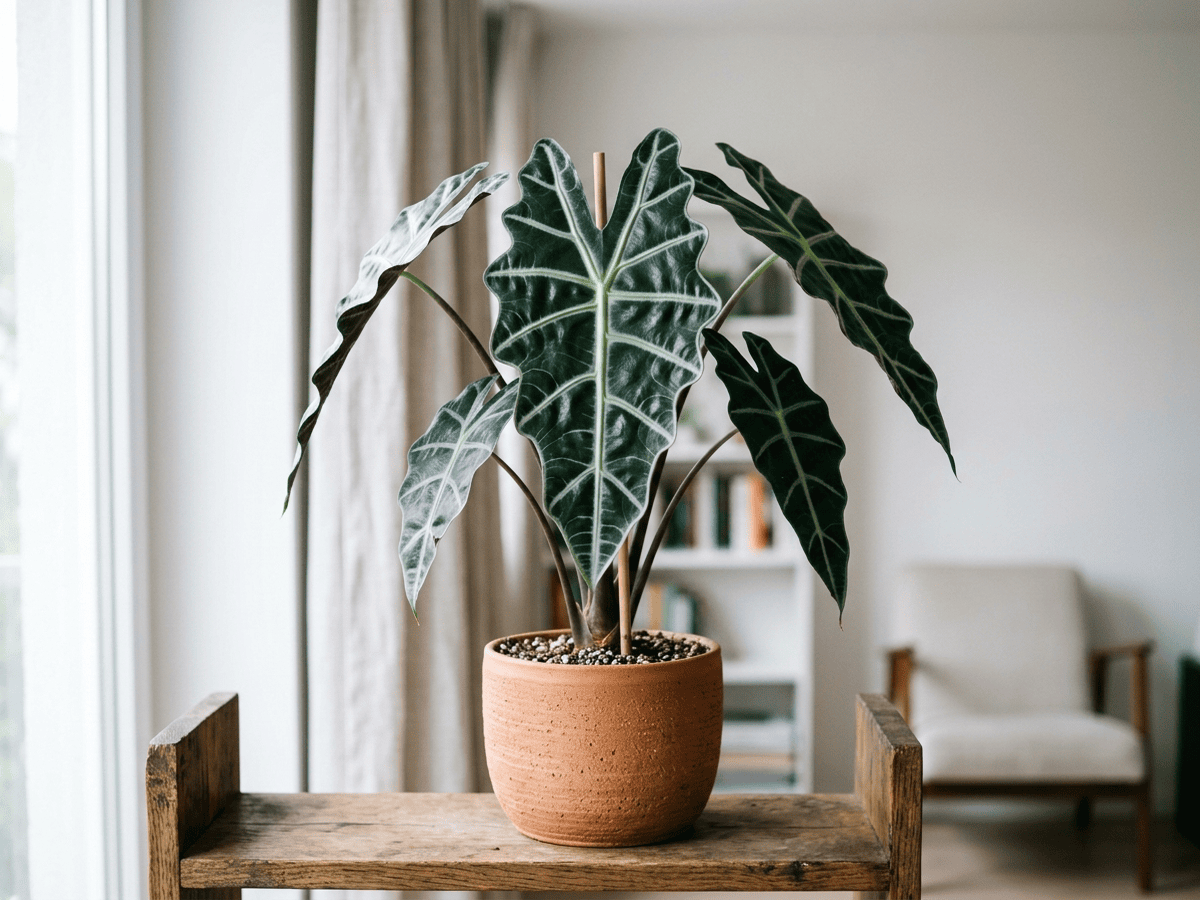 Kris-PlantAlocasia sanderiana
Plants with similar care
 Aglaonema AroidAglaonema pictum
 Aglaonema rotundumAglaonema rotundum
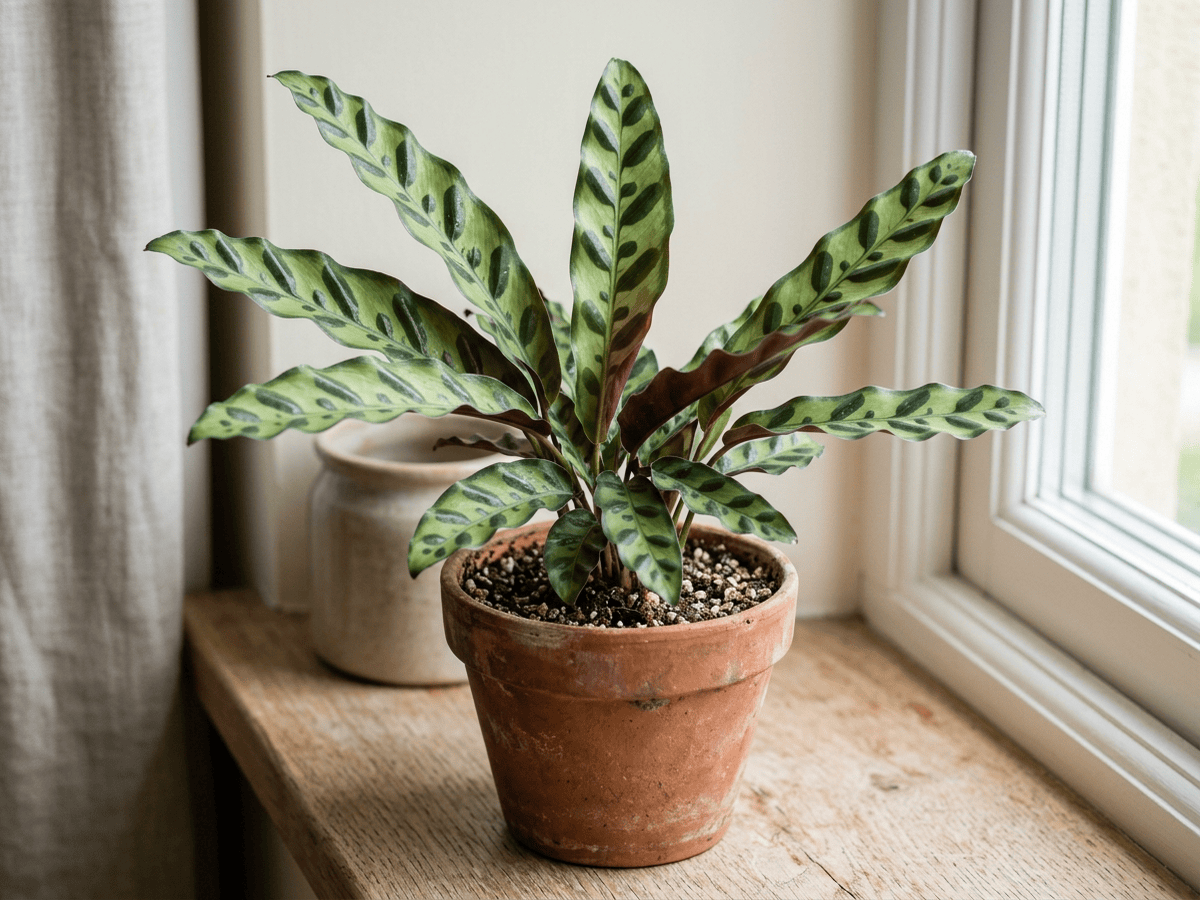 Rattlesnake-PlantCalathea lancifolia
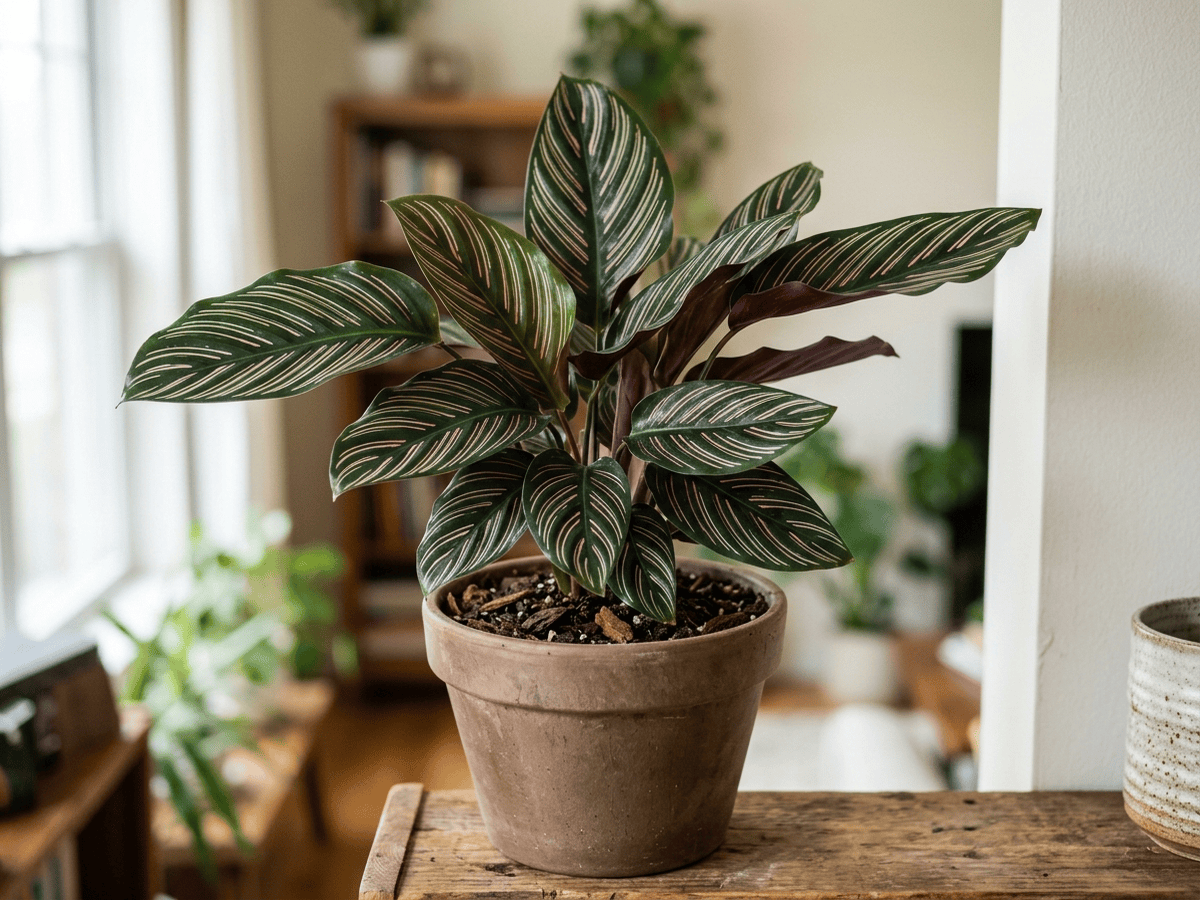 Pin-Stripe CalatheaCalathea ornata
Frequently asked questions
How often should I water Black Velvet Alocasia?
In summer, water about every 5 days; in winter, about every 14 days. Adjust for heat, pot size and drainage.
How much light does Black Velvet Alocasia need?
Indirect: Filtered light. Watch the leaves — scorching or stretching means the light needs adjusting.
Is Black Velvet Alocasia toxic to cats or dogs?
Pets Moderate (Dogs Moderate · Cats Moderate) Educational information, not medical or veterinary advice. If exposure is suspected, contact a doctor or veterinarian.
Is Black Velvet Alocasia easy to grow?
It is moderately demanding: a good choice once you have a little experience.
Can Black Velvet Alocasia be grown indoors?
Yes, it adapts well to indoor growing given the right light.
YardMate
Identify any plant in seconds
Snap a photo — YardMate names the plant, diagnoses problems, and reminds you when to water.
Download on the App Store