 YardMate


Alocasia
Alocasia polly
Medium · Some experienceAbout Alocasia
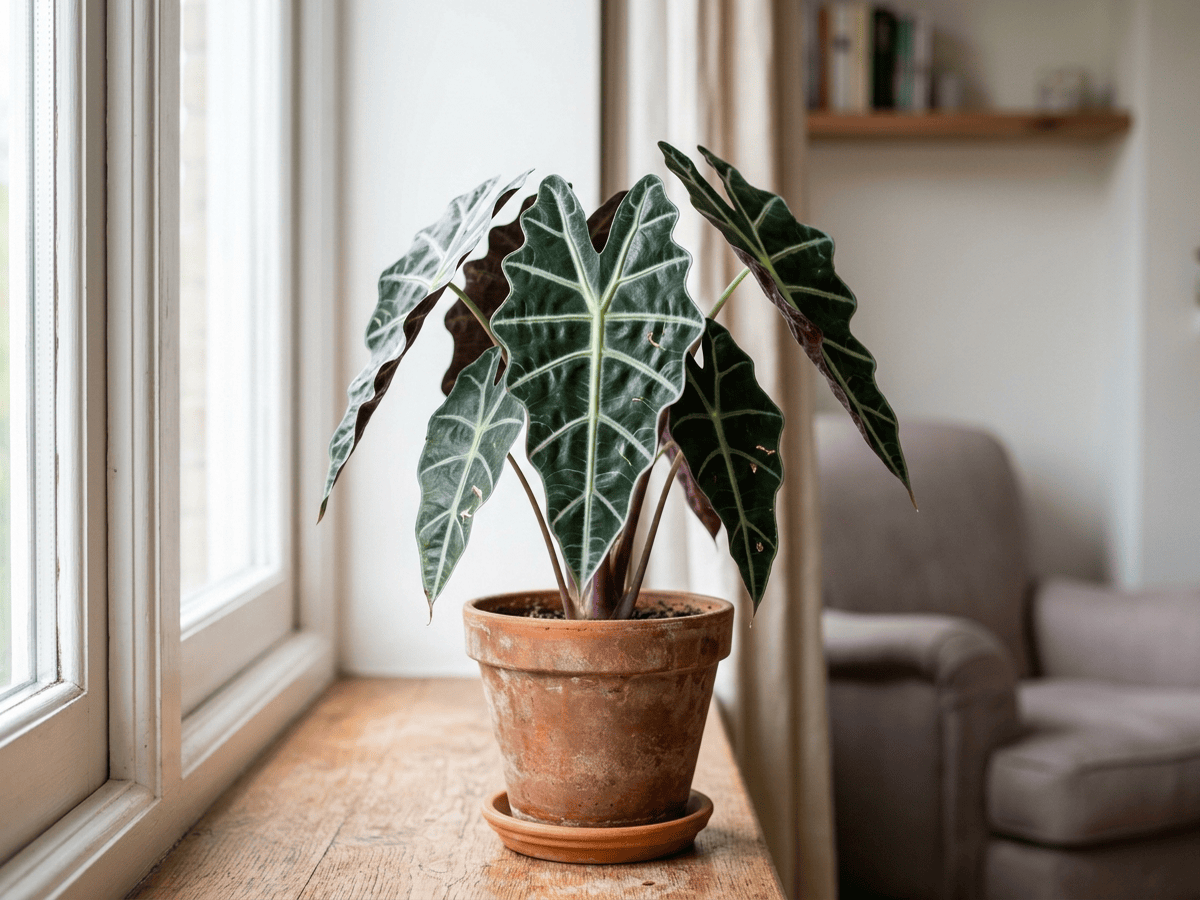
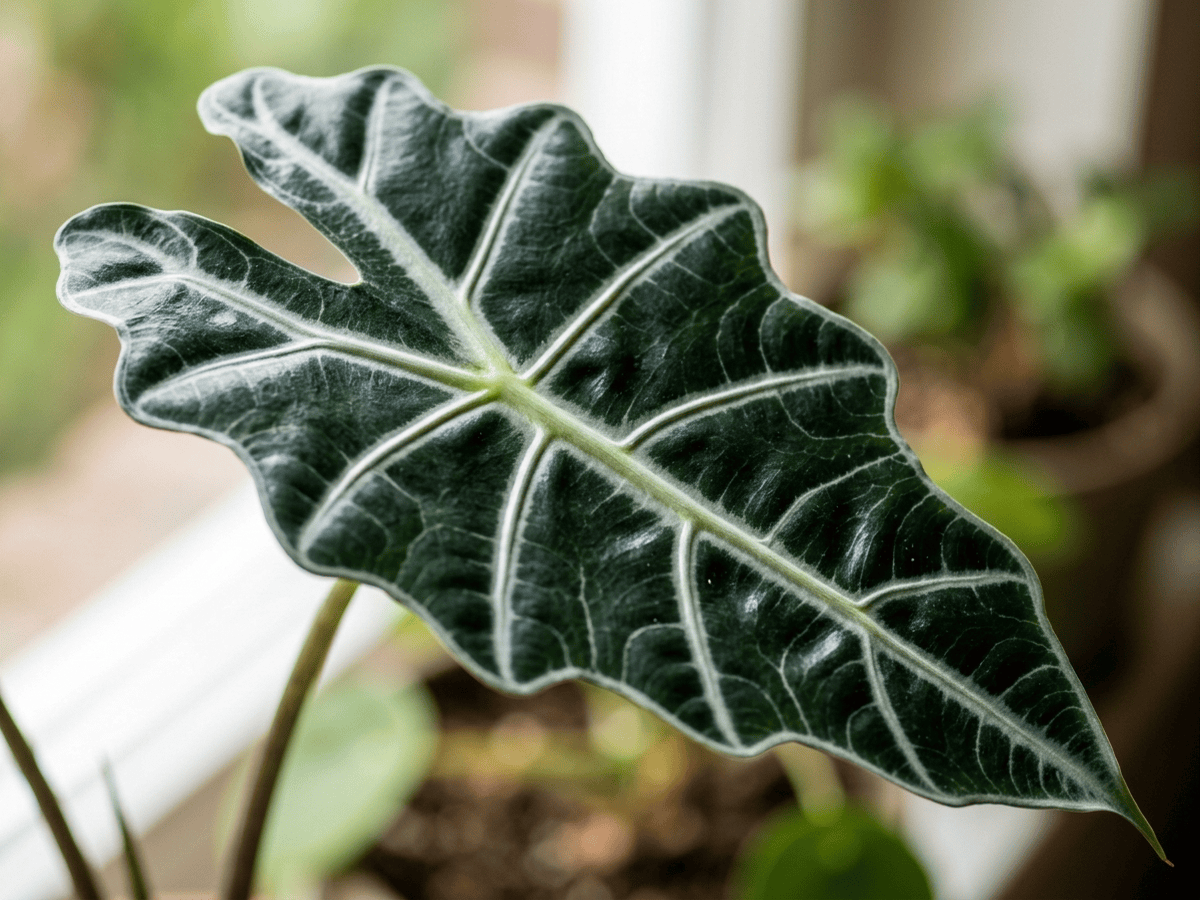
Alocasia 'Polly' or African Mask Plant is a compact hybrid aroid with arrow-shaped glossy dark-green leaves boldly outlined in cream-white veins. A more manageable cultivar derived from Alocasia × amazonica, it reaches 12-18 inches and fits beautifully on tabletops. Often confused with Alocasia sanderiana, it is among the most popular smaller alocasias in modern American homes thanks to its dramatic foliage on a compact frame.
- Compact
- Evergreen
How to care for Alocasia
Watering
- Springevery 5 days
- Summerevery 5 days
- Fallevery 7 days
- Winterevery 14 days
Soil · Chunky & airy
- Top dressingBark chips10%
- Main mixBark + potting soil + perlite 1:1:170%
- DrainageLECA20%
Chunky pieces hold air pockets open so thick roots don't suffocate.
FERTILIZER
Balanced Feed 14-14-14
An even feed covers all three needs at once, keeping leaves, roots and blooms moving together with nothing pushed out of balance.
- Nitrogen · Leaves
- Phosphorus · Roots + Blooms
- Potassium · Strength
- Springevery 30 days
- Summerevery 30 days
- Fallevery 60 days
At a Glance
- Height1–2 ft (0.3–0.6 m)
- Spread1–2 ft (0.3–0.6 m)
- Foliage colorGreen, Silver, Purple
- SoilLoamy, Well-drained, Rich
- LocationsIndoor
Toxicity
Humans Moderate · Pets Moderate
calcium oxalate raphides
Moderate
- Leaf
- Stem
- Ingestion
EXPOSURE Eating leaves and stems.
EFFECT Oral irritation and drooling.
NOTE Documented concern for humans: Oral irritation and drooling.
Moderate
- Leaf
- Stem
- Ingestion
EXPOSURE Eating leaves and stems.
EFFECT Oral irritation and vomiting.
NOTE ASPCA lists Alocasia as toxic.
Moderate
- Leaf
- Stem
- Ingestion
EXPOSURE Eating leaves and stems.
EFFECT Oral irritation and vomiting.
NOTE ASPCA lists Alocasia as toxic.
Educational information, not medical or veterinary advice. If exposure is suspected, contact a doctor or veterinarian.
History
Alocasia 'Polly' (or 'Alocasia × amazonica Polly') is a compact cultivar of the horticultural hybrid Alocasia × amazonica, a cross believed to have been made in the 1950s by Salvadore Mauro at Amazon Nursery in Miami, Florida between the Southeast Asian species Alocasia longiloba and A. sanderiana (not Amazonian in origin despite the name). 'Polly' was selected for its particularly compact growth habit, staying 30-45 cm tall versus the slightly larger typical × amazonica. Widely marketed as 'African mask plant' despite Asian parentage, the plant has become one of the most widely sold ornamental Alocasias in the Western houseplant trade since the 1990s.
Leaves are distinctive dark glossy near-black-green arrow-shaped blades 15-25 cm long with prominent silvery-white midrib and primary veins and wavy serrated-scalloped margins, undersides purple. Produces occasional pale green spathes with cream spadix but rarely flowers indoors.
Carries typical aroid calcium oxalate toxicity. The 'Polly' cultivar has been one of the top-selling alocasias in American garden centers since the 2000s for its manageable size and dramatic foliage.
Symbolism & meaning
What It Symbolizes
The Alocasia is a study in mystery, its dark, vein-traced leaves resembling tribal masks suspended on slender stems. Compact yet theatrical, it brings drama into a corner with bold contrasts of black-green and silver. To live with one is to share a room with something watchful and a little ceremonial, a small jungle deity scaled down for the windowsill.
- Mystery — has dramatic mask-like foliage patterning
- Drama — bold contrast on a compact form
Where the Name Comes From
'Polly' is a cultivar nickname; the original hybrid 'amazonica' references the Amazon nursery where it was bred.
Uses & Fun Facts
- Compact tabletop houseplant fits small pots and shelves
- Arrow-shaped leaves with cream veins add tropical indoor accent
Related plants
More Alocasia plants
 African Mask PlantAlocasia amazonica
 Giant TaroAlocasia macrorrhizos
 Black Velvet AlocasiaAlocasia reginula
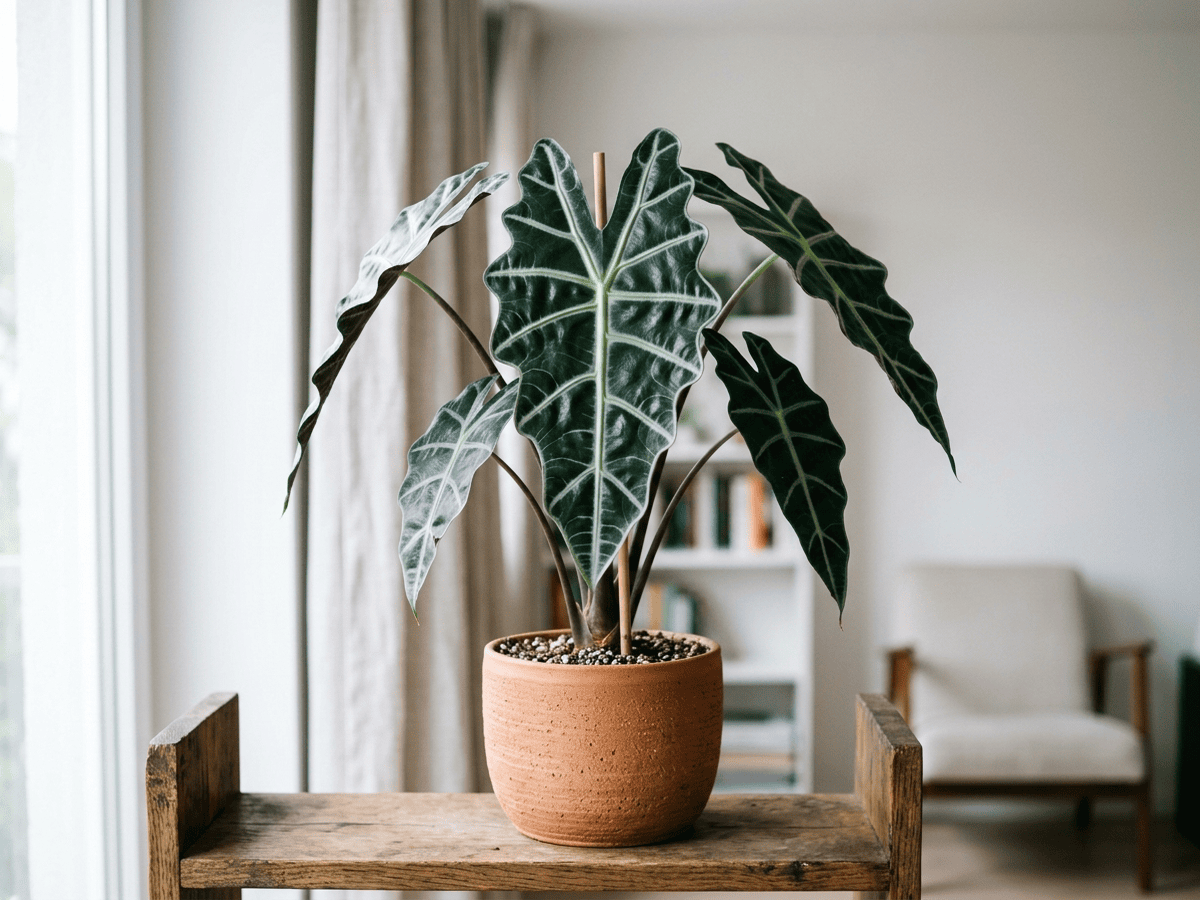 Kris-PlantAlocasia sanderiana
Plants with similar care
 Aglaonema AroidAglaonema pictum
 Aglaonema rotundumAglaonema rotundum
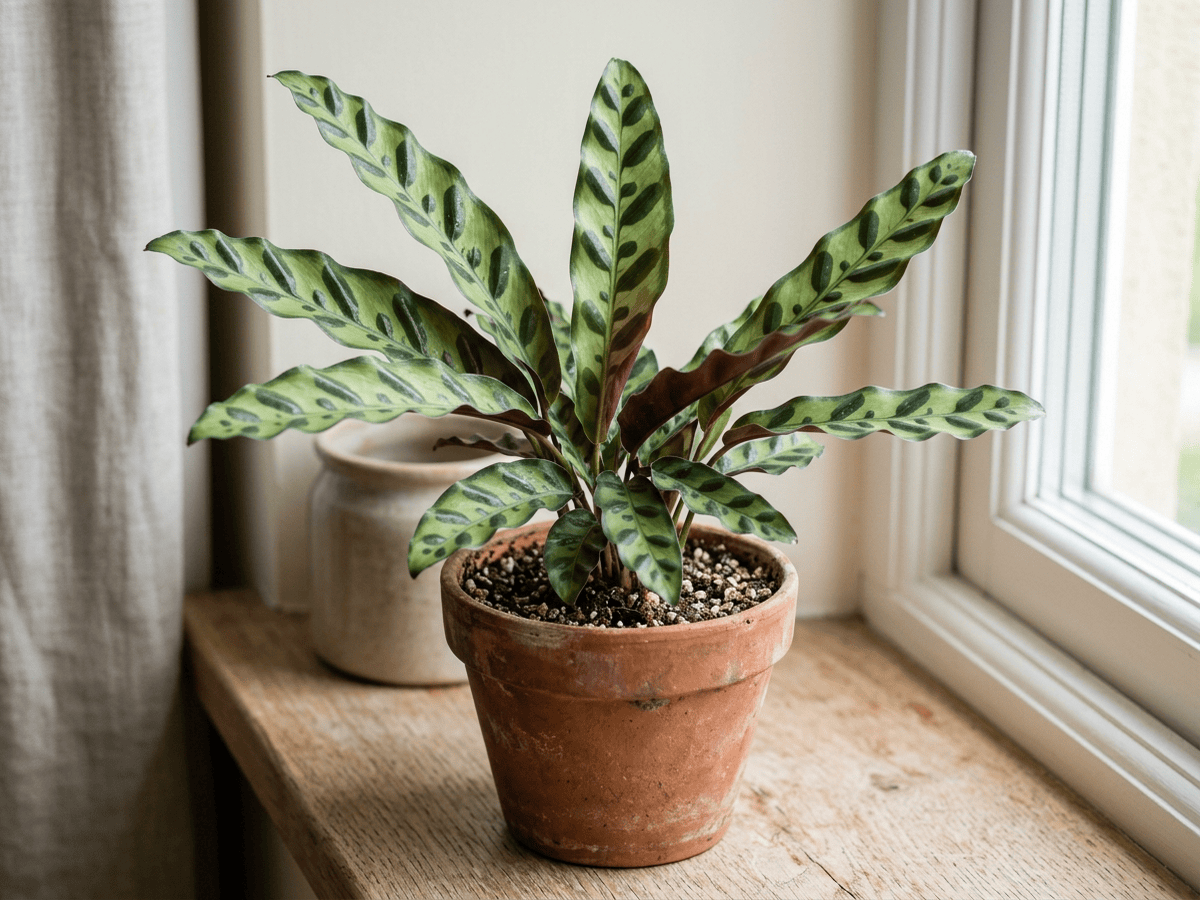 Rattlesnake-PlantCalathea lancifolia
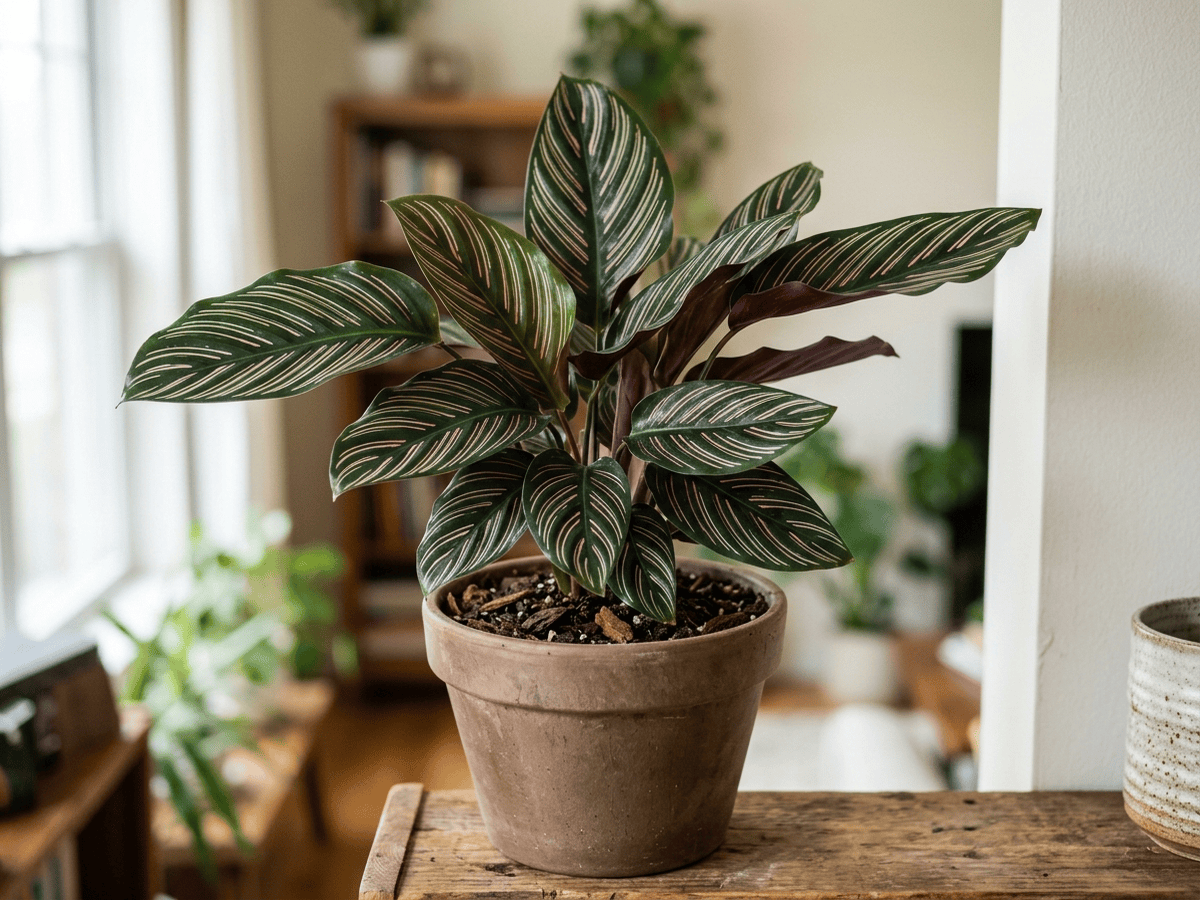 Pin-Stripe CalatheaCalathea ornata
Frequently asked questions
How often should I water Alocasia?
In summer, water about every 5 days; in winter, about every 14 days. Adjust for heat, pot size and drainage.
How much light does Alocasia need?
Indirect: Filtered light. Watch the leaves — scorching or stretching means the light needs adjusting.
Is Alocasia toxic to cats or dogs?
Pets Moderate (Dogs Moderate · Cats Moderate) Educational information, not medical or veterinary advice. If exposure is suspected, contact a doctor or veterinarian.
Is Alocasia easy to grow?
It is moderately demanding: a good choice once you have a little experience.
Can Alocasia be grown indoors?
Yes, it adapts well to indoor growing given the right light.
YardMate
Identify any plant in seconds
Snap a photo — YardMate names the plant, diagnoses problems, and reminds you when to water.
Download on the App Store