 YardMate


Globe Amaranth
Gomphrena globosa
Easy · Beginner friendlyAbout Globe Amaranth
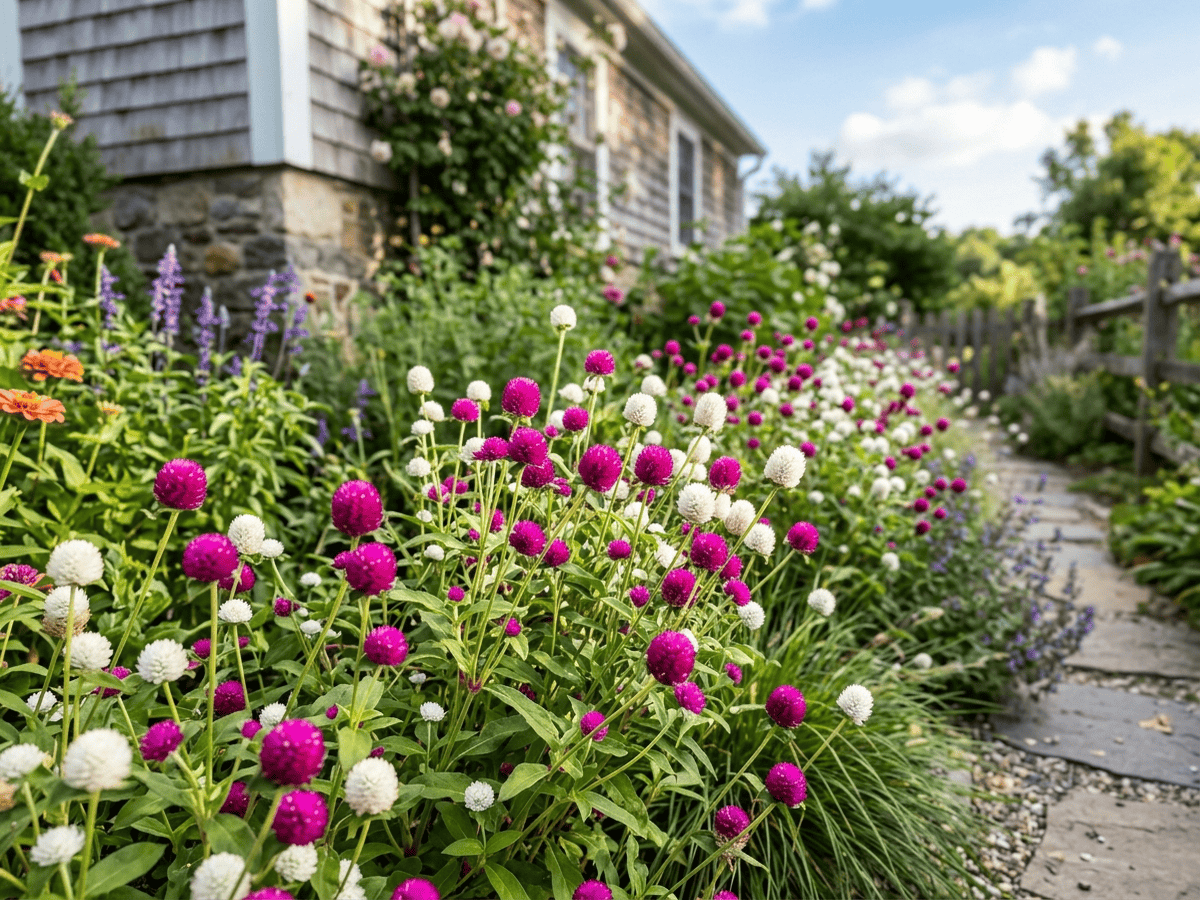
Globe Amaranth is a heat-loving annual from tropical Central America, forming bushy upright plants topped with 1-inch papery clover-like flower heads in magenta, pink, purple, red, white, or orange. Growing 12 to 24 inches tall, the everlasting flowers hold color for months fresh and years when dried, on strong stems perfect for cutting. A favorite for American summer heat gardens, pollinator plantings, and dried flower crafts.
- Cut-flower
- Drought-tolerant
- Heat-tolerant
- Pollinator-friendly
How to care for Globe Amaranth
Watering
- Springevery 5 days
- Summerevery 4 days
- Fallevery 7 days
- Winterpause watering
Soil · Well-draining
- Top dressingPine bark mulch10%
- Main mixPotting soil + perlite 2:170%
- DrainageLECA / gravel20%
Never skip the drainage layer — standing water is the top cause of root rot.
FERTILIZER
Balanced Feed 14-14-14
An even feed covers all three needs at once, keeping leaves, roots and blooms moving together with nothing pushed out of balance.
- Nitrogen · Leaves
- Phosphorus · Roots + Blooms
- Potassium · Strength
- Springevery 30 days
- Summerevery 30 days
At a Glance
- NativeCentral America
- Height1–2 ft (0.3–0.6 m)
- Spread0.5–1 ft (0.2–0.3 m)
- Flower colorPurple, Pink, White, Red
- Foliage colorGreen
- SoilLoamy, Well-drained
- LocationsYard · Balcony
Bloom time
BLOOM CYCLE
Peak bloom
Jun–Nov
Papery globe flowers June to frost, hold color dried
Toxicity
No toxicity has been reported for this plant. Still, it is wise to keep pets from chewing on any houseplant.
Educational information, not medical or veterinary advice. If exposure is suspected, contact a doctor or veterinarian.
DISTRIBUTION

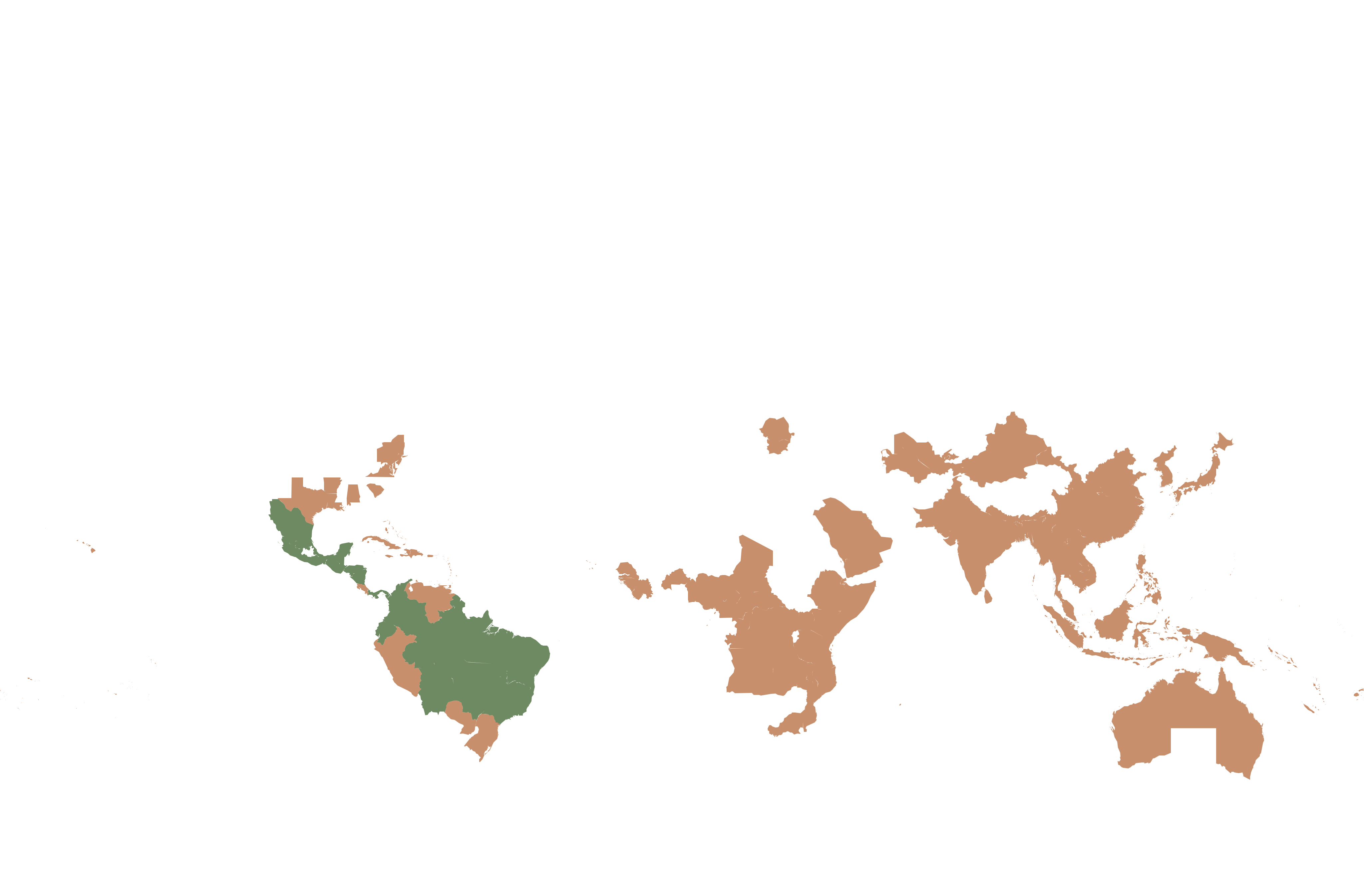
- Native
- Introduced
- Central America
History
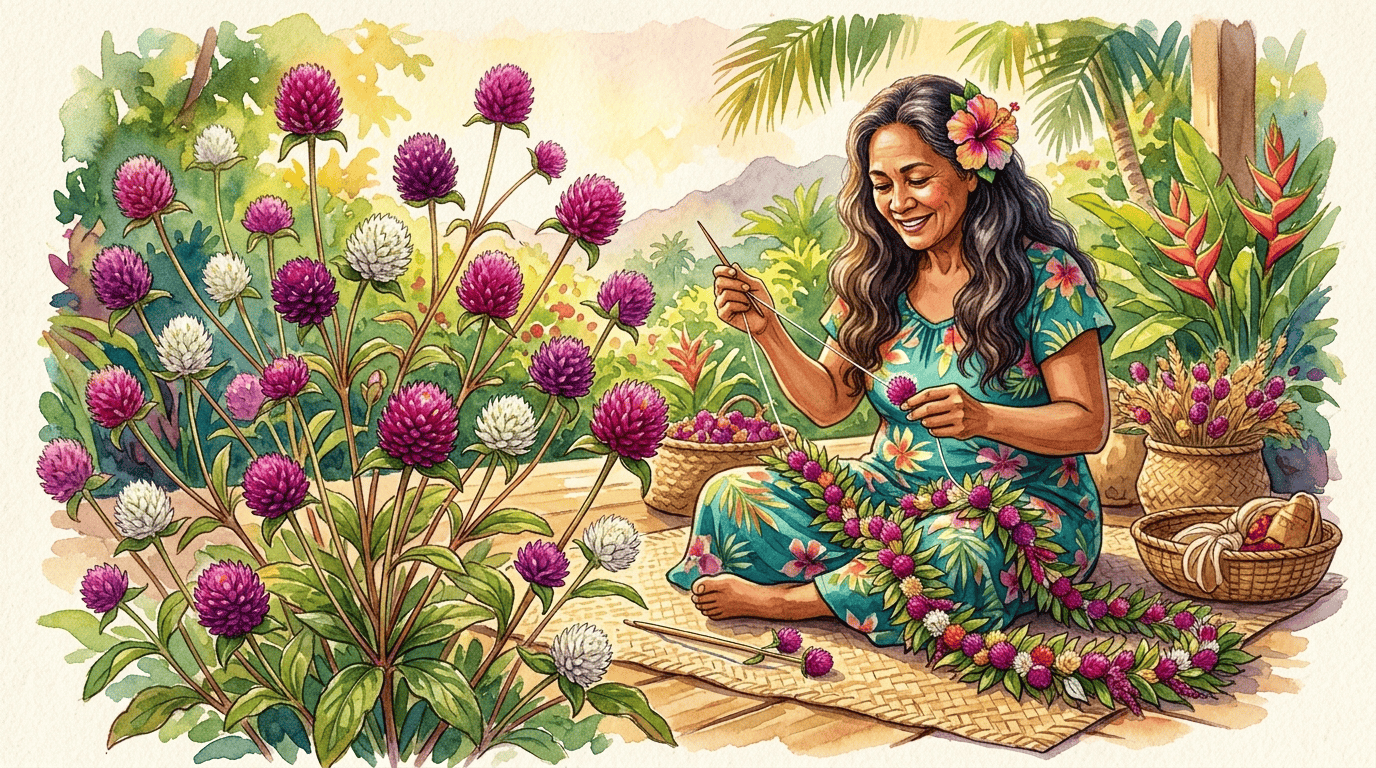
Gomphrena globosa, the globe amaranth, is an erect annual in the amaranth family native to Central America, primarily Guatemala, Panama, and surrounding regions. Indigenous Mesoamerican peoples cultivated it for ornamental and ceremonial use; in Hawaii the dried flowers adorn leis. Linnaeus described the species in 1753.
The plant produces papery clover-shaped flower heads held on wiry stems above green leaves, in magenta, red, purple, orange, pink, or white. Because the bracts retain color and form even after drying, colonial and Victorian gardeners in America and Europe embraced globe amaranth as an everlasting staple, and it remains a cornerstone of cut flower and dried flower horticulture worldwide. Proven Winners and Ball Seed have released improved All-America Selections including Fireworks and QIS series.
Introduced to American gardens by the 1700s from Central America. The 'Strawberry Fields' cultivar became a 1990s cutting-garden sensation. Traditional Hawaiian lei makers prize it for flowers that never fade, while Brazilian folk medicine uses flower tea for coughs.
Symbolism & meaning
What It Symbolizes
Globe Amaranth is unfading love made visible — its papery flowers hold their color for months in the garden and for years pressed into dried wreaths. Across Hawaii it is woven into both fresh and lasting leis, a flower that endures the journey from giver to keeper. In its small, durable globes, affection is given a form that politely refuses to wilt.
- Unfading love — flowers keep color for months, even years
- Hawaiian lei — traditional flower for fresh and dried leis
Where the Name Comes From
'Gomphrena' possibly from Greek 'gomphos' meaning nail, for flower shape; 'globosa' refers to round globe flower heads.
Uses & Fun Facts
- Papery clover-shaped heads star in fresh and dried bouquets
- Long-blooming heads attract butterflies in hot summer borders
- Heat-tolerant annual delivers months of vivid color
- Everlasting flowers retain color for years in dried crafts
Related plants
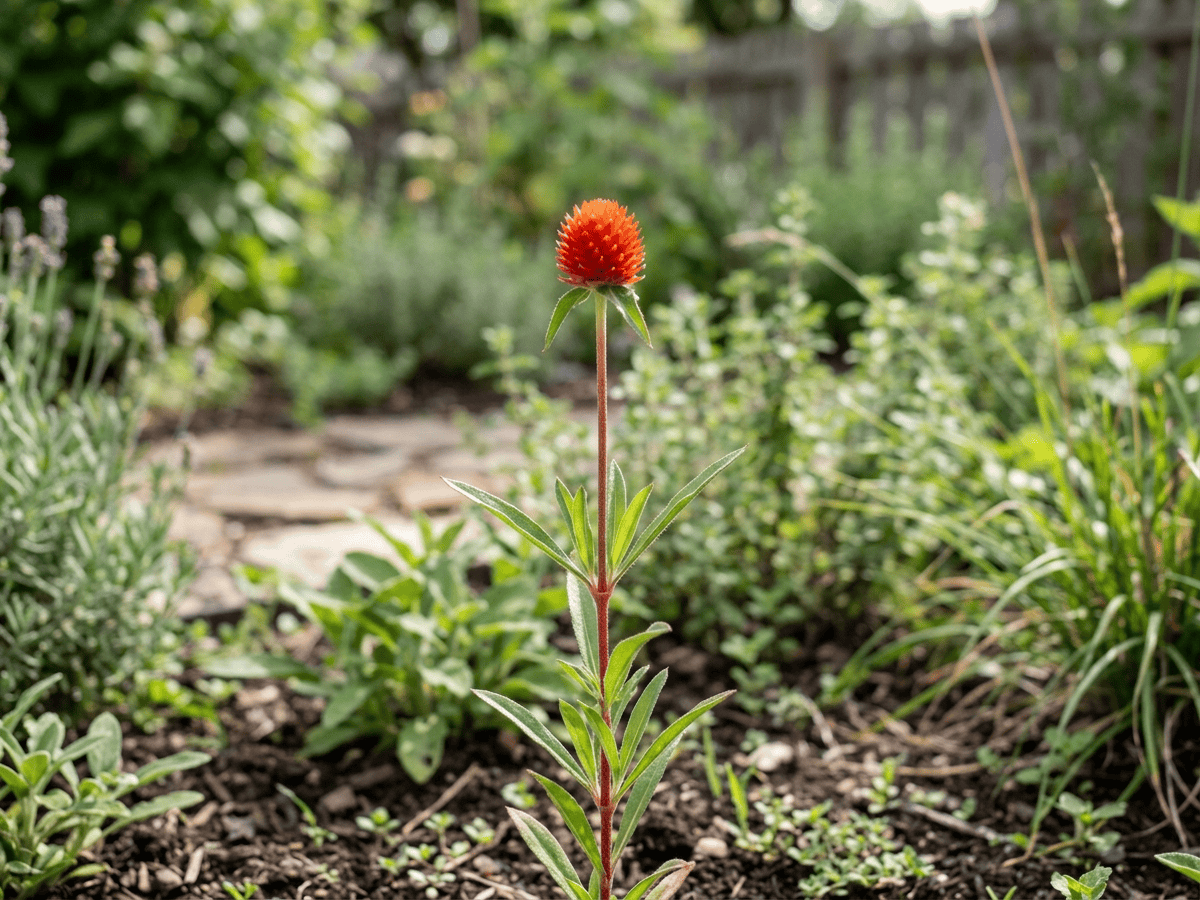
More Gomphrena plants
Plants with similar care
 Chinese AbeliaAbelia chinensis
 Fragrant AbeliaAbelia mosanensis
 Large-Flowered AbeliaAbelia uniflora
 Glossy AbeliaAbelia x grandiflora
Frequently asked questions
How often should I water Globe Amaranth?
Water about every 5 days during the growing season, and always let excess water drain away.
How much light does Globe Amaranth need?
Full sun: 6+ hrs direct. Watch the leaves — scorching or stretching means the light needs adjusting.
Is Globe Amaranth toxic to cats or dogs?
No toxicity has been reported for this plant. Still, it is wise to keep pets from chewing on any houseplant. Educational information, not medical or veterinary advice. If exposure is suspected, contact a doctor or veterinarian.
Is Globe Amaranth easy to grow?
Yes — it is considered an easy, beginner-friendly plant.
When does Globe Amaranth bloom?
It typically blooms Jun–Nov in the Northern Hemisphere.
YardMate
Identify any plant in seconds
Snap a photo — YardMate names the plant, diagnoses problems, and reminds you when to water.
Download on the App Store