 YardMate

Debbie
Graptoveria 'Debbie'
Easy · Beginner friendlyAbout Debbie
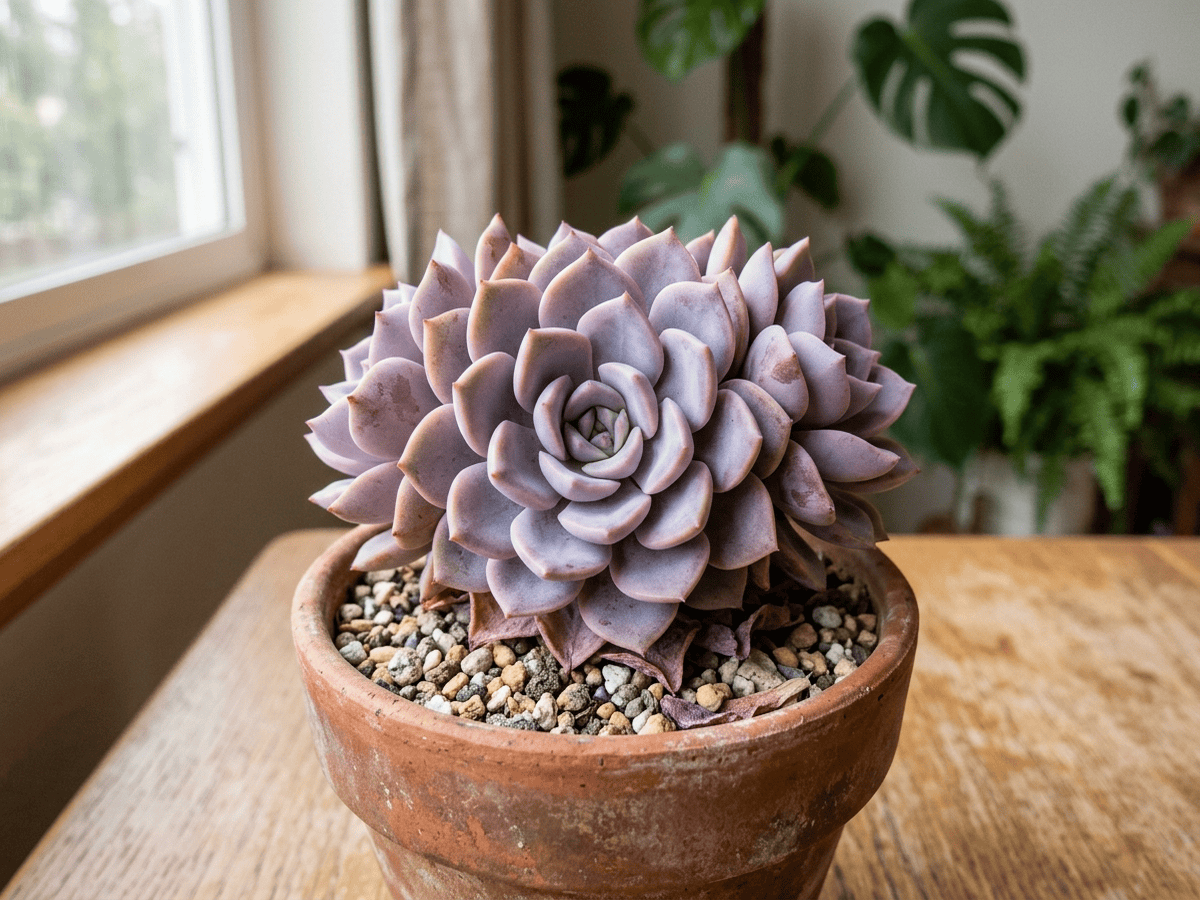
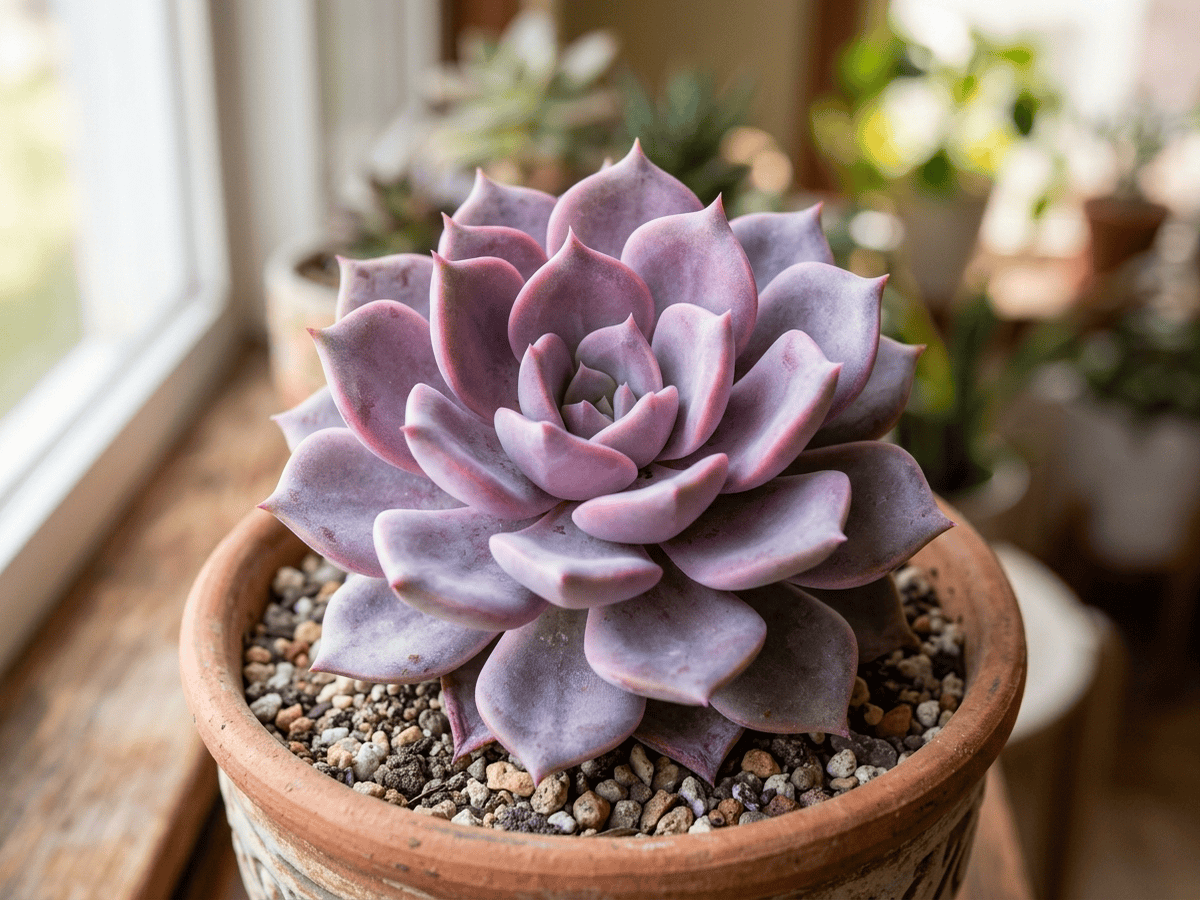
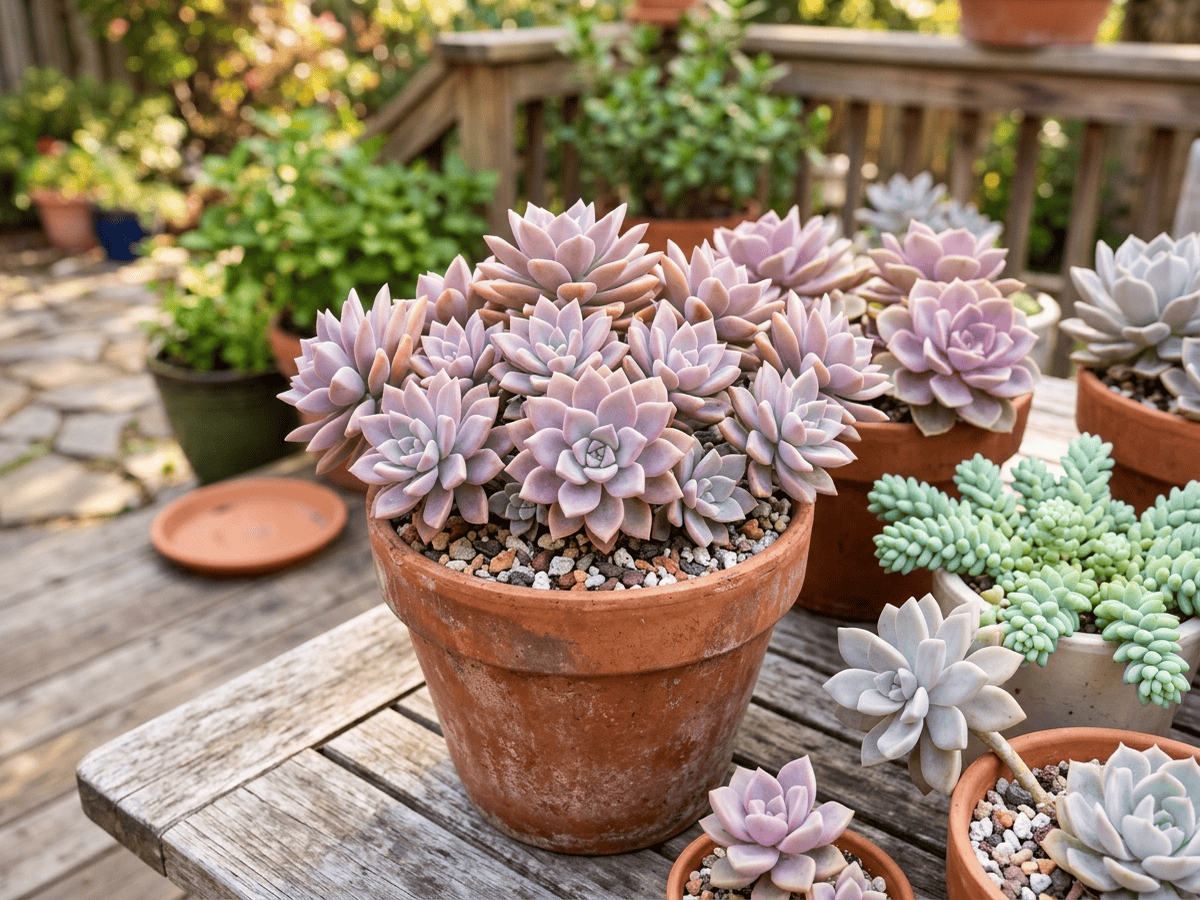
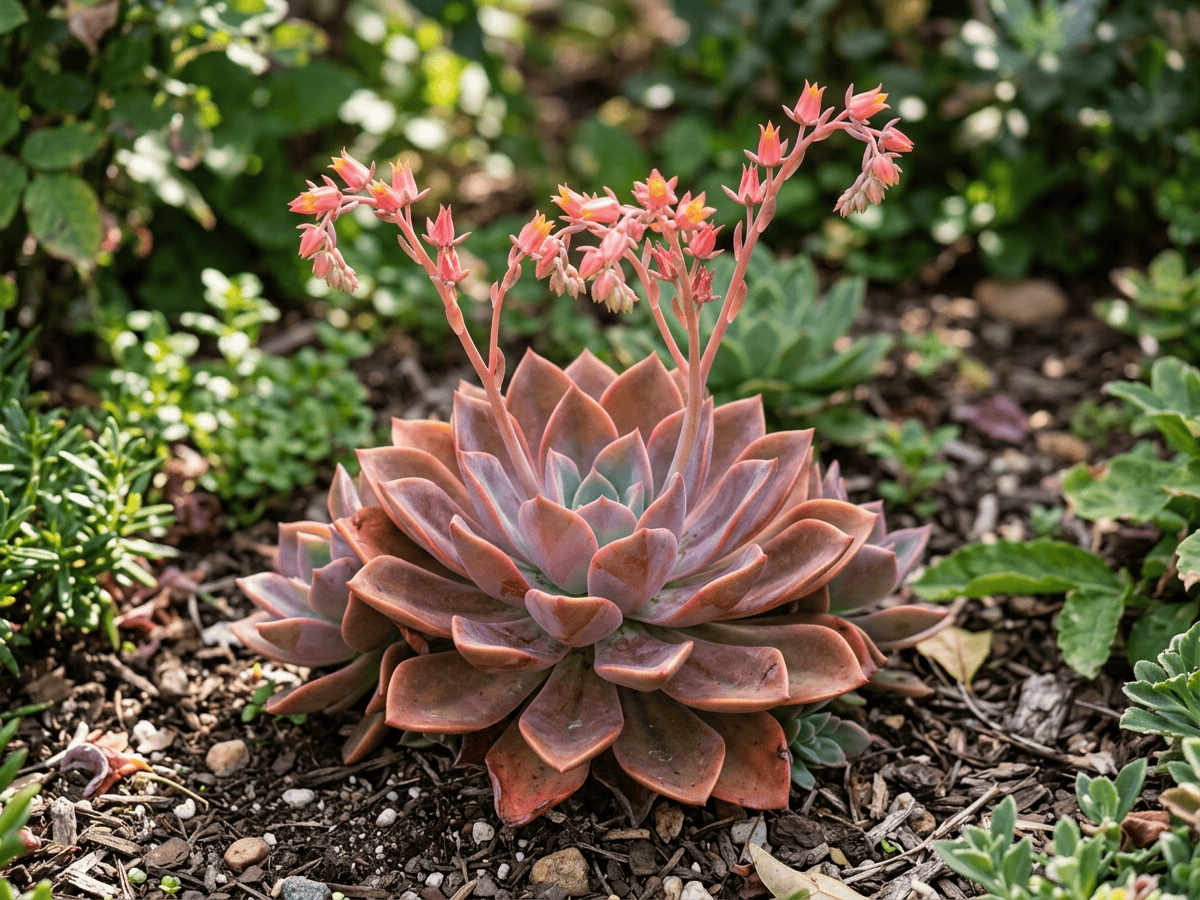
Graptoveria 'Debbie' is a popular intergeneric hybrid succulent forming compact rosettes 4-6 inches across in soft mauve-pink to lavender shades that deepen in cool weather and bright sun. A cross between Graptopetalum amethystinum and Echeveria, it offsets readily into colorful clusters perfect for containers, fairy gardens, and succulent arrangements. One of the most beloved beginner succulents in the United States, it tolerates a wide range of conditions and is easy to propagate from leaves.
- Drought-tolerant
- Container-friendly
- Evergreen
How to care for Debbie
Watering
- Springevery 14 days
- Summerevery 14 days
- Fallevery 21 days
- Winterevery 30 days
Soil · Fast-draining
- Main mixSand + pumice + soil 1:1:150%
- DrainagePumice / gravel50%
Keep grit at half the mix or more — this soil is meant to dry out fast.
FERTILIZER
- Springevery 60 days
At a Glance
- Height0.5 ft (0.2 m)
- Spread0.5–1 ft (0.2–0.3 m)
- Flower colorYellow, Orange
- Foliage colorPurple, Silver
- SoilSandy, Well-drained
- LocationsBalcony · Indoor · Yard
Bloom time
BLOOM CYCLE
Peak bloom
Mar–May
Small orange-yellow bell flowers on arching stalks in spring
Toxicity
No toxicity has been reported for this plant. Still, it is wise to keep pets from chewing on any houseplant.
Educational information, not medical or veterinary advice. If exposure is suspected, contact a doctor or veterinarian.
History
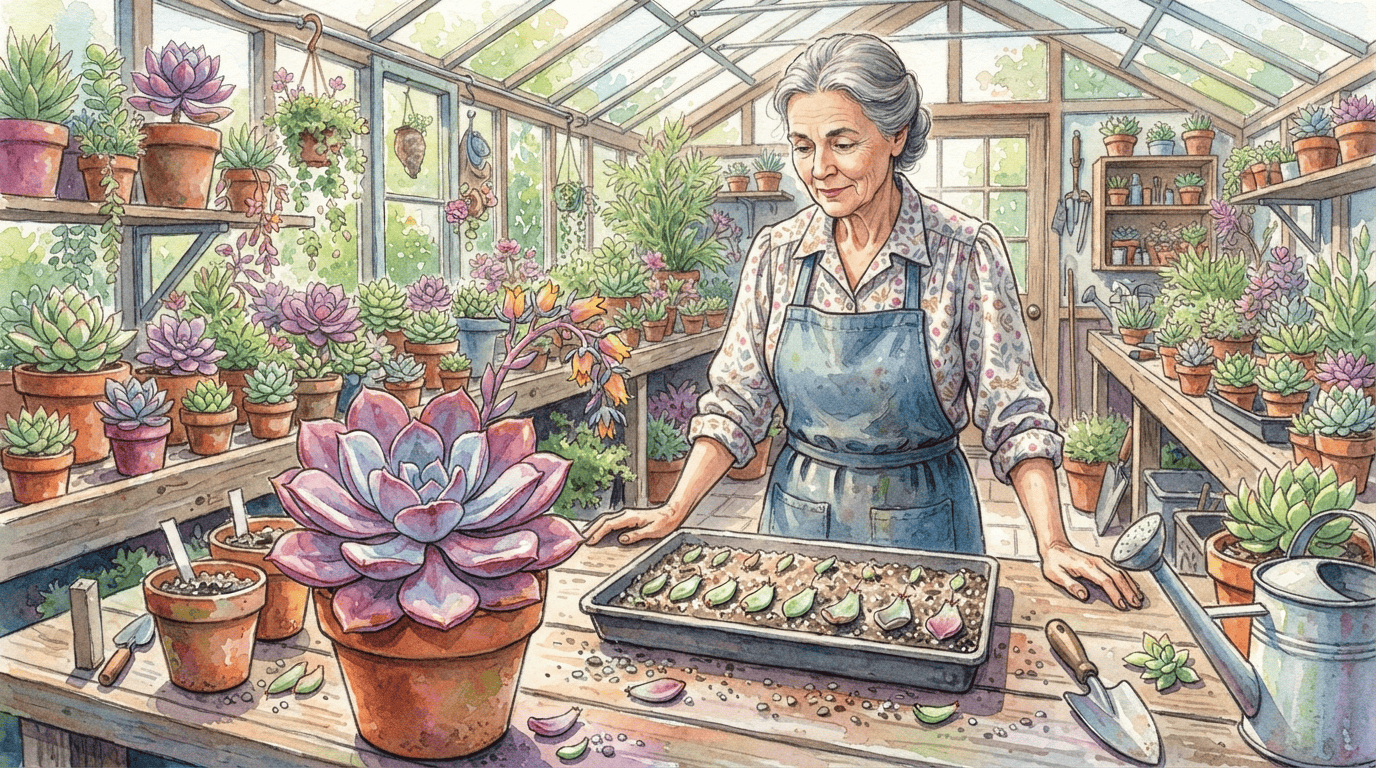
xGraptoveria 'Debbie' is a famous intergeneric succulent hybrid between the genera Graptopetalum (likely G. amethystinum) and Echeveria in the stonecrop family (Crassulaceae). The hybrid genus xGraptoveria was established by Gideon Fourie Smith and Peter Victor Bruyns in 1989 to accommodate such crosses. 'Debbie' was raised by renowned California succulent hybridizer Richard 'Dick' Wright in the mid-20th century and has become one of the most widely grown colored-foliage succulents worldwide.
Plants form 15-20 cm wide symmetrical rosettes of broad obovate leaves that range from pale lavender-pink in shade to intense pinkish-purple with silvery bloom in full sun. Short branching clusters of small yellow-orange bell-shaped flowers appear on arching stems in spring. The plant propagates very easily from leaf cuttings and offsets, making it ubiquitous in succulent collections, wedding bouquets (a craze from roughly 2010 onward), and container gardens.
Created by hybridizer Robert Grim in California in the late 20th century, 'Debbie' became one of the most propagated succulents in the world thanks to social media plant culture. Its consistent rosy color and forgiving nature made it a defining plant of the 2010s succulent boom. Not known from the wild.
Symbolism & meaning
What It Symbolizes
Debbie suggests charm — its rosy hues evoke softness and warmth, a succulent that almost blushes in good light. Paired with friendship, this hybrid is shared widely among succulent enthusiasts, passed cutting by cutting between collectors. To keep one is often to receive it from someone — making 'Debbie' as much a token of camaraderie as a plant.
- Charm — rosy hues evoke softness and warmth
- Friendship — shared widely among succulent enthusiasts
Where the Name Comes From
Graptoveria denotes the cross of Graptopetalum and Echeveria; 'Debbie' is a cultivar name.
Uses & Fun Facts
- Lavender-pink rosette ideal for shallow succulent bowls
- Frosty mauve rosette adds soft color to succulent collections
Related plants
More Graptoveria plants
Plants with similar care
 Chinese AbeliaAbelia chinensis
 Fragrant AbeliaAbelia mosanensis
 Large-Flowered AbeliaAbelia uniflora
 Glossy AbeliaAbelia x grandiflora
Frequently asked questions
How often should I water Debbie?
In summer, water about every 14 days; in winter, about every 30 days. Adjust for heat, pot size and drainage.
How much light does Debbie need?
Full sun: 6+ hrs direct. Watch the leaves — scorching or stretching means the light needs adjusting.
Is Debbie toxic to cats or dogs?
No toxicity has been reported for this plant. Still, it is wise to keep pets from chewing on any houseplant. Educational information, not medical or veterinary advice. If exposure is suspected, contact a doctor or veterinarian.
Is Debbie easy to grow?
Yes — it is considered an easy, beginner-friendly plant.
Can Debbie be grown indoors?
Yes, it adapts well to indoor growing given the right light.
When does Debbie bloom?
It typically blooms Mar–May in the Northern Hemisphere.
YardMate
Identify any plant in seconds
Snap a photo — YardMate names the plant, diagnoses problems, and reminds you when to water.
Download on the App Store