 YardMate

Aaron's Beard
Hypericum calycinum
Easy · Beginner friendlyAbout Aaron's Beard
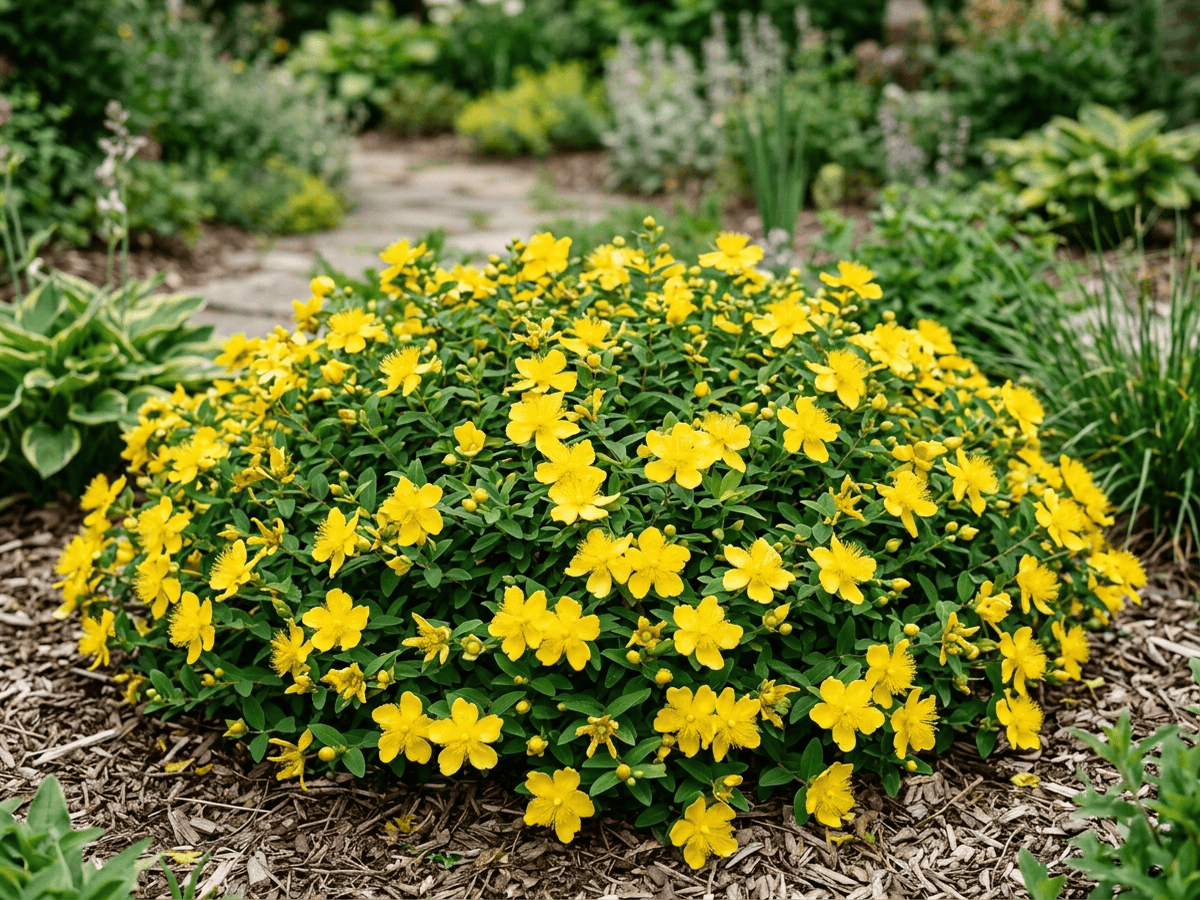
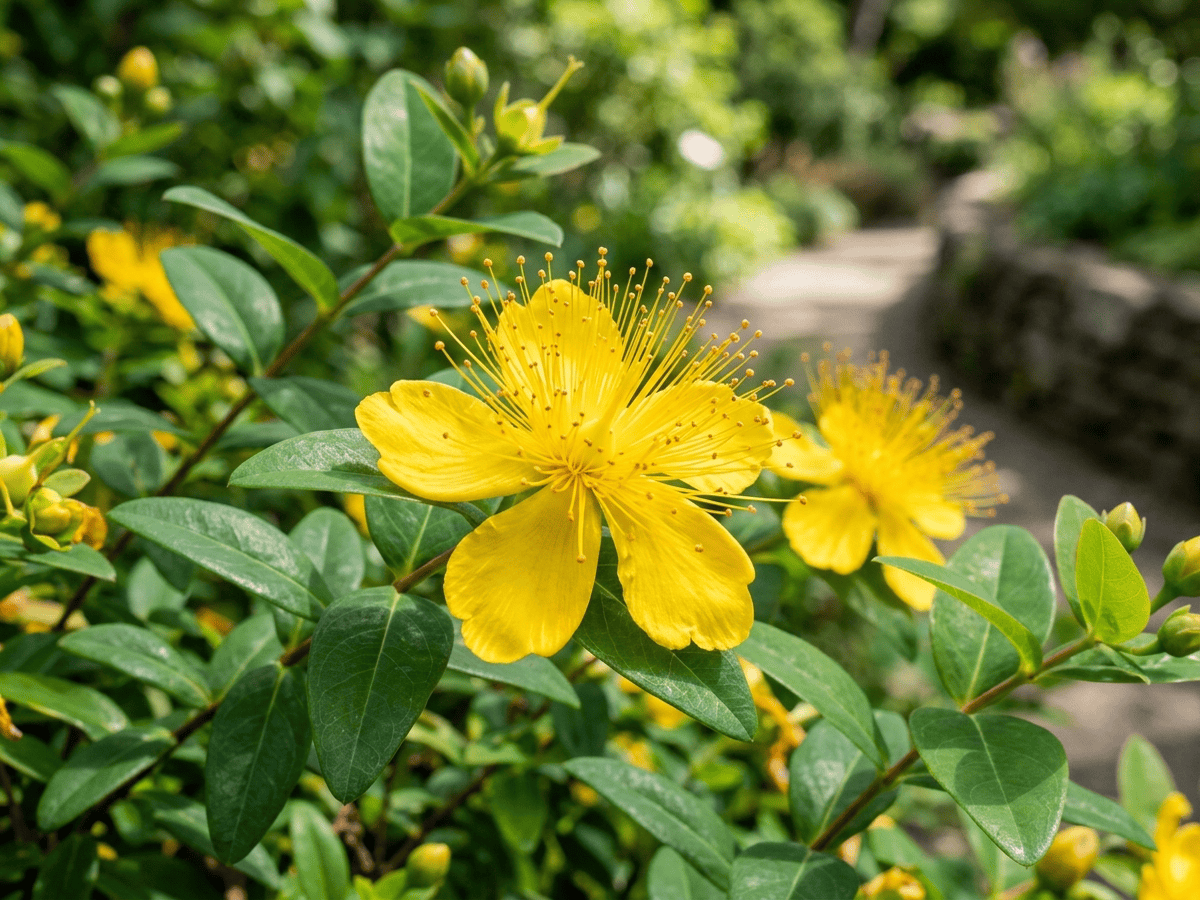
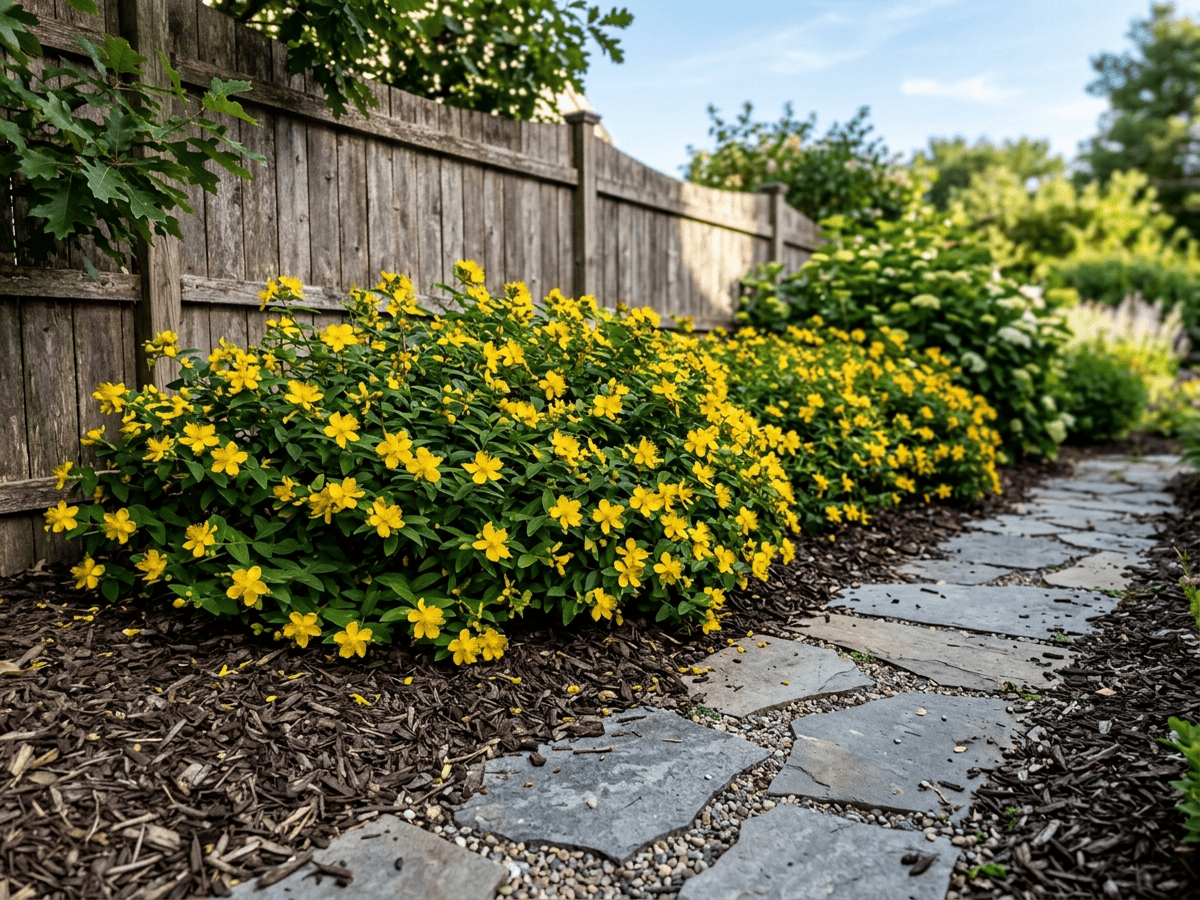
Aaron's Beard or Creeping St. John's Wort is a vigorous semi-evergreen groundcover from southeastern Europe and Turkey, growing 12-18 inches tall and spreading aggressively by stolons. Each stem is topped with a single large golden-yellow flower up to 3 inches across, studded with a dramatic sunburst of stamens. It thrives in difficult dry shade where few other flowering groundcovers succeed. One of the toughest and most reliable flowering groundcovers for challenging sites across the United States.
- Drought-tolerant
- Shade-tolerant
- Groundcover
- Evergreen
How to care for Aaron's Beard
Watering
- Springevery 7 days
- Summerevery 5 days
- Fallevery 10 days
- Winterevery 21 days
Soil · Well-draining
- Top dressingPine bark mulch10%
- Main mixPotting soil + perlite 2:170%
- DrainageLECA / gravel20%
Never skip the drainage layer — standing water is the top cause of root rot.
FERTILIZER
- Springevery 30 days
At a Glance
- NativeEurope, Western Asia
- Height1–1.5 ft (0.3–0.5 m)
- Spread1.5–2 ft (0.5–0.6 m)
- Flower colorYellow
- Foliage colorGreen, Dark-green
- SoilLoamy, Well-drained
- LocationsYard
Bloom time
BLOOM CYCLE
Peak bloom
Jun–Sep
Large golden-yellow flowers with showy stamens June to September
Fragrance
LIGHT FRAGRANCE
Mild resinous scent when leaves crushed.
Toxicity
Humans Slight · Pets Slight
hypericin and hyperforin
Slight
- Leaf
- Flower
- Ingestion
- Contact
EXPOSURE Eating leaves and flowers. Touching leaves and flowers.
EFFECT Possible photosensitivity after ingestion; contact with sap in sunlight can cause mild dermatitis.
NOTE Genus contains photosensitizing compounds; pale-skinned or light-haired animals may develop sun sensitivity after grazing.
Slight
- Leaf
- Flower
- Ingestion
EXPOSURE Eating leaves and flowers.
EFFECT Possible photosensitivity, mild GI upset.
NOTE Genus contains photosensitizing compounds; pale-skinned or light-haired animals may develop sun sensitivity after grazing.
Slight
- Leaf
- Flower
- Ingestion
EXPOSURE Eating leaves and flowers.
EFFECT Possible photosensitivity, mild GI upset.
NOTE Genus contains photosensitizing compounds; pale-skinned or light-haired animals may develop sun sensitivity after grazing.
Educational information, not medical or veterinary advice. If exposure is suspected, contact a doctor or veterinarian.
DISTRIBUTION


- Native
- Introduced
- Europe
- Western Asia
History

Hypericum calycinum is native to southeastern Europe and southwestern Asia, specifically northeastern Greece, Bulgaria, and northern Turkey (the Black Sea coast and Pontic Mountains region). Linnaeus described the species in 1767, the epithet calycinum referring to the persistent, showy calyx. In Britain the plant acquired the unusual common name rose-of-Sharon, borrowed from biblical poetic reference despite no relation to the biblical plant.
The species is a low 30-60 cm evergreen/semi-evergreen suckering groundcover with bright yellow five-petaled flowers 5-8 cm across—the largest flowers of any European Hypericum—featuring a prominent boss of fluffy stamens that makes them instantly recognizable. Bloom continues from June to October. The species was introduced to British gardens in 1676 and became widely naturalized as a tough, drought-tolerant, deer-resistant shade groundcover.
However, its aggressive rhizomatous spread has made it invasive in parts of the Pacific Northwest of North America (listed as a noxious weed in Oregon and Washington). Unlike some Hypericum species, this one is largely free of the photosensitizing hypericin. The common name Aaron's Beard references the biblical Psalm 133. John's Wort species have been used medicinally since ancient Greece—Hypericum perforatum is one of the best-selling herbal supplements worldwide.
Symbolism & meaning
What It Symbolizes
Rose-of-Sharon can symbolize protection, for sprigs of hypericum were once hung in homes across Europe to ward off evil spirits, especially around Saint John's Day. Another layer is radiance, the explosive golden flowers with their burst of long stamens lighting up shaded slopes in midsummer. Beneath the borrowed common name lives an old folk-magical plant, half ornament and half charm, whose brightness was always understood to be a kind of guardianship.
- Protection — historically hung in homes to ward off evil spirits
- Radiance — golden flowers with explosive stamen displays
Where the Name Comes From
The name Rose-Of-Sharon describes its rose-like blooms. 'Hypericum' possibly from Greek 'hyper' (above) and 'eikon' (image), as it was hung above religious icons to ward off evil; 'calycinum' means 'with a large calyx'.
Uses & Fun Facts
- Aaron's beard spreads aggressively over difficult slopes
- Bright yellow summer flowers above semi-evergreen mats
- Buttery flowers with starburst stamens attract bees
Related plants
More Hypericum plants
Plants with similar care
 Chinese AbeliaAbelia chinensis
 Fragrant AbeliaAbelia mosanensis
 Large-Flowered AbeliaAbelia uniflora
 Glossy AbeliaAbelia x grandiflora
Frequently asked questions
How often should I water Aaron's Beard?
In summer, water about every 5 days; in winter, about every 21 days. Adjust for heat, pot size and drainage.
How much light does Aaron's Beard need?
Full sun: 6+ hrs direct. Watch the leaves — scorching or stretching means the light needs adjusting.
Is Aaron's Beard toxic to cats or dogs?
Pets Slight (Dogs Slight · Cats Slight) Educational information, not medical or veterinary advice. If exposure is suspected, contact a doctor or veterinarian.
Is Aaron's Beard easy to grow?
Yes — it is considered an easy, beginner-friendly plant.
When does Aaron's Beard bloom?
It typically blooms Jun–Sep in the Northern Hemisphere.
YardMate
Identify any plant in seconds
Snap a photo — YardMate names the plant, diagnoses problems, and reminds you when to water.
Download on the App Store