 YardMate

Common St. John's Wort
Hypericum perforatum
Easy · Beginner friendlyAbout Common St. John's Wort
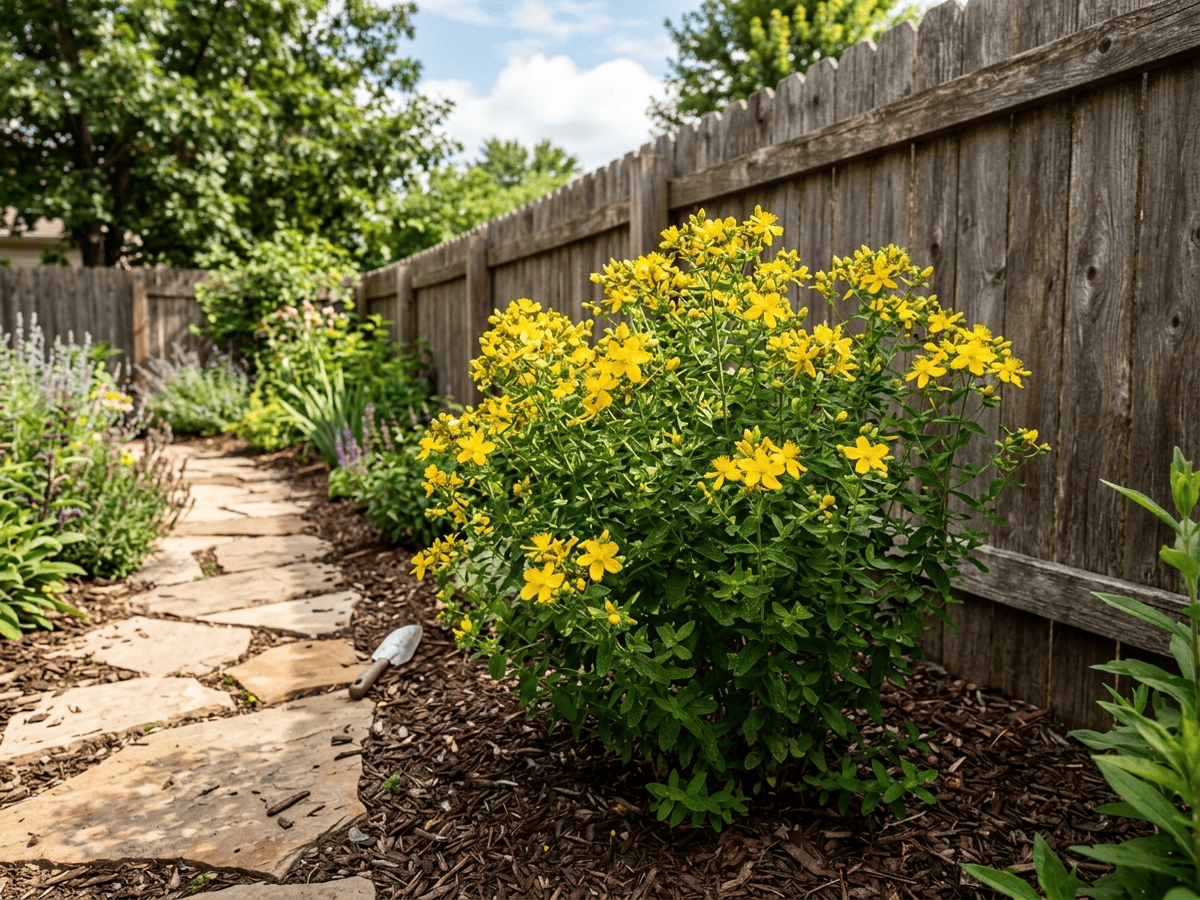
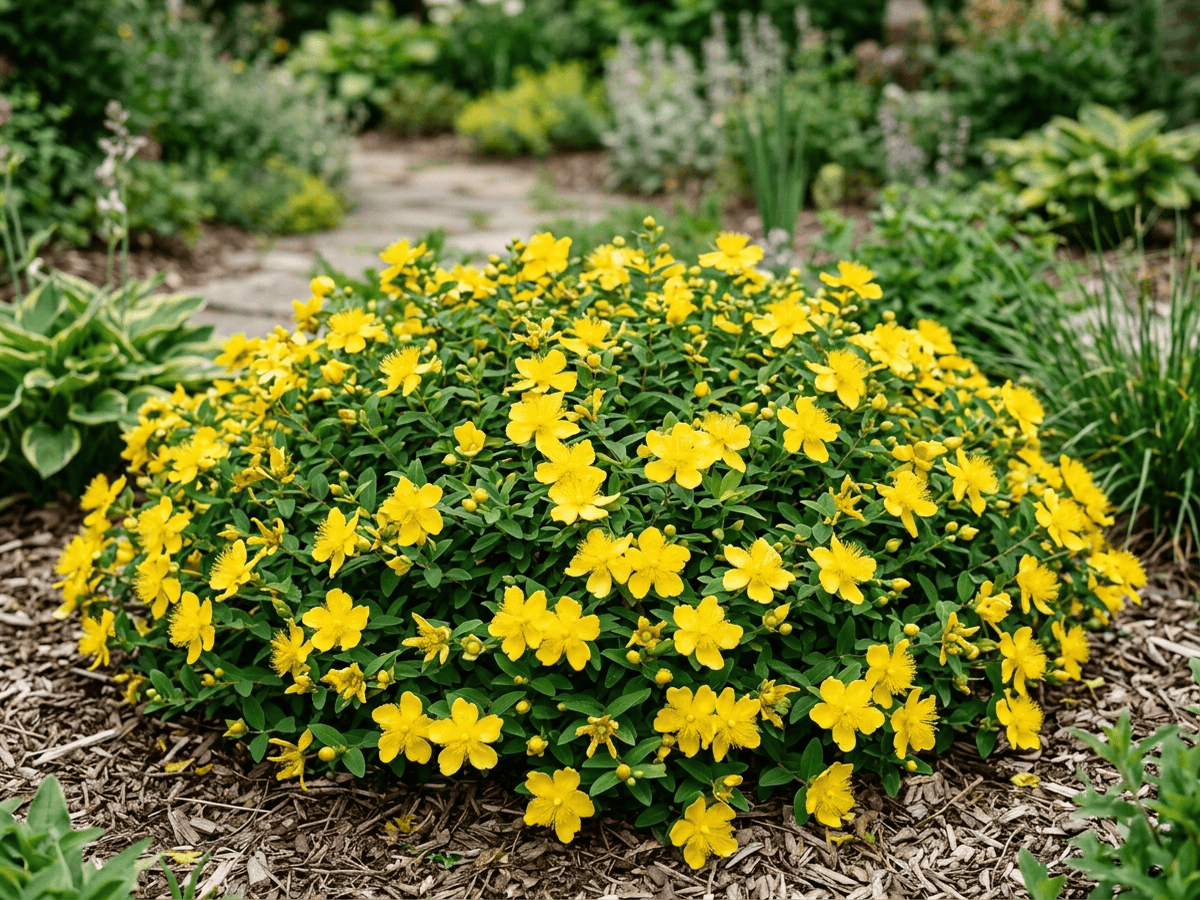
Hypericum perforatum, St. John's wort, is a sun-loving Eurasian perennial naturalized across much of North America. It carries small opposite leaves dotted with translucent oil glands and bright yellow summer flowers that stain red when crushed. The plant has a long history in European herbalism and modern supplement culture, especially around mood, which is why it deserves caution: its compounds can interact seriously with many medications by altering liver enzyme activity. In gardens and pastures it can self-seed aggressively and may be toxic to grazing livestock. As a plant it is beautiful and historically fascinating; as a supplement, it belongs in the realm of professional guidance rather than casual use.
- Medicinal
- Drought-tolerant
- Cold-hardy
- Pollinator-friendly
How to care for Common St. John's Wort
Watering
- Springevery 5 days
- Summerevery 4 days
- Fallevery 7 days
- Winterevery 14 days
Soil · Well-draining
- Top dressingPine bark mulch10%
- Main mixPotting soil + perlite 2:170%
- DrainageLECA / gravel20%
Never skip the drainage layer — standing water is the top cause of root rot.
FERTILIZER
Balanced Feed 14-14-14
An even feed covers all three needs at once, keeping leaves, roots and blooms moving together with nothing pushed out of balance.
- Nitrogen · Leaves
- Phosphorus · Roots + Blooms
- Potassium · Strength
- Springevery 45 days
- Summerevery 45 days
- Fallevery 60 days
At a Glance
- NativeEurope, Africa, Western Asia
- Height1–3 ft (0.3–0.9 m)
- Spread1–2 ft (0.3–0.6 m)
- Flower colorYellow
- Foliage colorGreen
- SoilLoamy, Well-drained
- LocationsYard
Bloom time
BLOOM CYCLE
Peak bloom
Jun–Aug
Flowers peak around the summer solstice; deadhead to prevent invasive self-sowing.
Fragrance
LIGHT FRAGRANCE
The flowers have a mild herbal scent.
Toxicity
Humans Moderate · Pets Moderate
hypericin and hyperforin
Moderate
- All
- Ingestion
EXPOSURE Eating any part of the plant.
EFFECT Photosensitivity, severe drug interactions, and serotonin syndrome risk with SSRIs.
NOTE Documented concern for humans: Photosensitivity, severe drug interactions, and serotonin syndrome risk with SSRIs.
Moderate
- All
- Ingestion
EXPOSURE Eating any part of the plant.
EFFECT Photosensitivity dermatitis and severe sunburn and depression, vomiting (per ASPCA).
NOTE ASPCA lists Hypericum as toxic to dogs, cats, horses due to hypericin photosensitization. Major drug-interaction hazard in humans.
Moderate
- All
- Ingestion
EXPOSURE Eating any part of the plant.
EFFECT Photosensitivity and depression, vomiting.
NOTE ASPCA lists Hypericum as toxic to dogs, cats, horses due to hypericin photosensitization. Major drug-interaction hazard in humans.
Educational information, not medical or veterinary advice. If exposure is suspected, contact a doctor or veterinarian.
DISTRIBUTION


- Native
- Introduced
- Europe
- Africa
- Western Asia
History
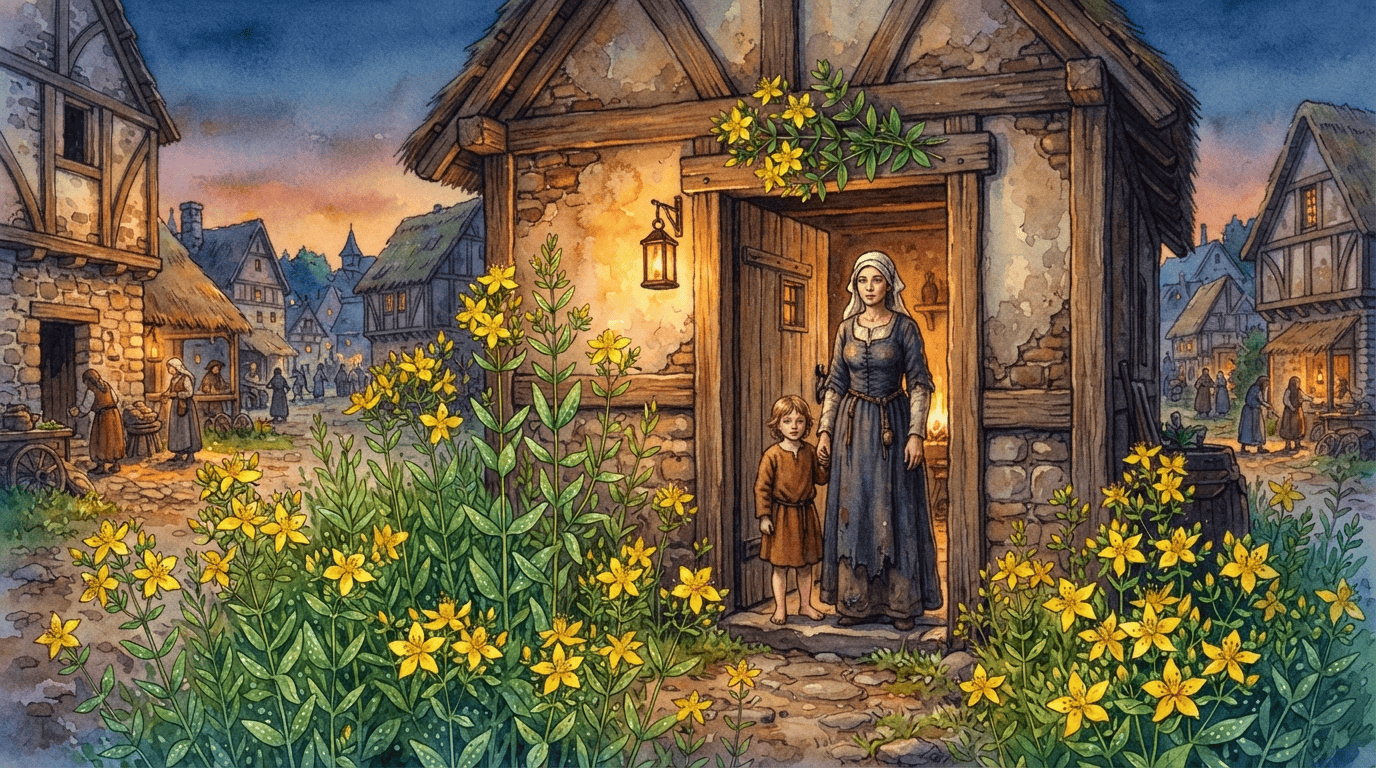
Hypericum perforatum is native to Europe, North Africa, and western Asia, and has naturalized widely across North America, Australia, and New Zealand. The common name honors St. John the Baptist — the plant typically reaches peak bloom around June 24, the saint's feast day — and in medieval Christian tradition branches were placed over doorways on St. John's Eve to ward off evil. Paracelsus and other Renaissance physicians documented its use for mental melancholy and wounds.
Modern phytochemistry identifies hypericin and hyperforin as primary active constituents; since the 1990s a substantial body of clinical trial evidence (meta-analyses including multiple Cochrane reviews) has supported efficacy comparable to SSRIs for mild-to-moderate depression, with generally fewer side effects. However, St. John's wort is a potent inducer of cytochrome P450 3A4, causing numerous significant drug interactions — notably with contraceptives, HIV medications, immunosuppressants, and warfarin — leading Ireland and some other jurisdictions to require prescription for high-dose standardized extracts. In Australia and North America it is also a serious invasive weed.
Named for St. John the Baptist because it blooms near his feast day. In 1996, the British Medical Journal published a meta-analysis confirming its antidepressant efficacy, triggering a global sales boom. Germany's Commission E approved it for depression in 1984.
Symbolism & meaning
What It Symbolizes
Common St. John's wort is often read as a flower of midsummer light. Golden blooms open near the solstice, and old villages hung the herb around doors when the year felt brightest and spirits most exposed. Its symbolism is radiance with caution: a sun-colored plant whose history is powerful enough to deserve respect.
- Light — Blooming at the summer solstice and used against melancholy, St. John's wort symbolizes the triumph of light over darkness
- Protection — Hung over doors on Midsummer's Eve to repel evil spirits and bring blessings
Where the Name Comes From
Hypericum from Greek 'hyper' (above) + 'eikon' (image/icon), as the plant was hung above religious icons to ward off evil; 'perforatum' for the perforated-looking translucent leaf glands.
Uses & Fun Facts
- Yellow flowers tinctured as traditional remedy for mild depression
- Pollen-rich blooms attract honeybees and native bee species
Related plants
More Hypericum plants
Plants with similar care
 Chinese AbeliaAbelia chinensis
 Fragrant AbeliaAbelia mosanensis
 Large-Flowered AbeliaAbelia uniflora
 Glossy AbeliaAbelia x grandiflora
Frequently asked questions
How often should I water Common St. John's Wort?
In summer, water about every 4 days; in winter, about every 14 days. Adjust for heat, pot size and drainage.
How much light does Common St. John's Wort need?
Full sun: 6+ hrs direct. Watch the leaves — scorching or stretching means the light needs adjusting.
Is Common St. John's Wort toxic to cats or dogs?
Pets Moderate (Dogs Moderate · Cats Moderate) Educational information, not medical or veterinary advice. If exposure is suspected, contact a doctor or veterinarian.
Is Common St. John's Wort easy to grow?
Yes — it is considered an easy, beginner-friendly plant.
When does Common St. John's Wort bloom?
It typically blooms Jun–Aug in the Northern Hemisphere.
YardMate
Identify any plant in seconds
Snap a photo — YardMate names the plant, diagnoses problems, and reminds you when to water.
Download on the App Store