 YardMate


Common Cat's-Ear
Hypochaeris radicata
Easy · Beginner friendlyAbout Common Cat's-Ear
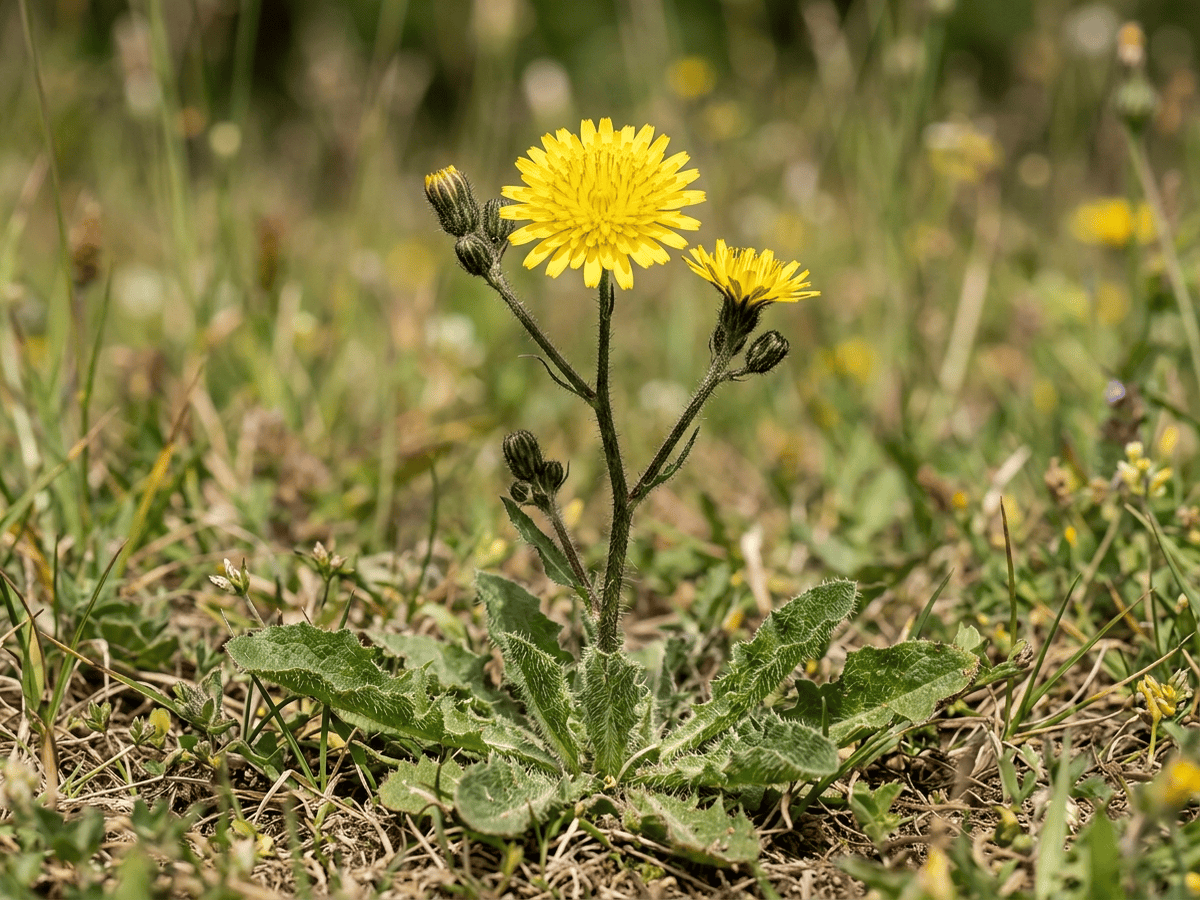
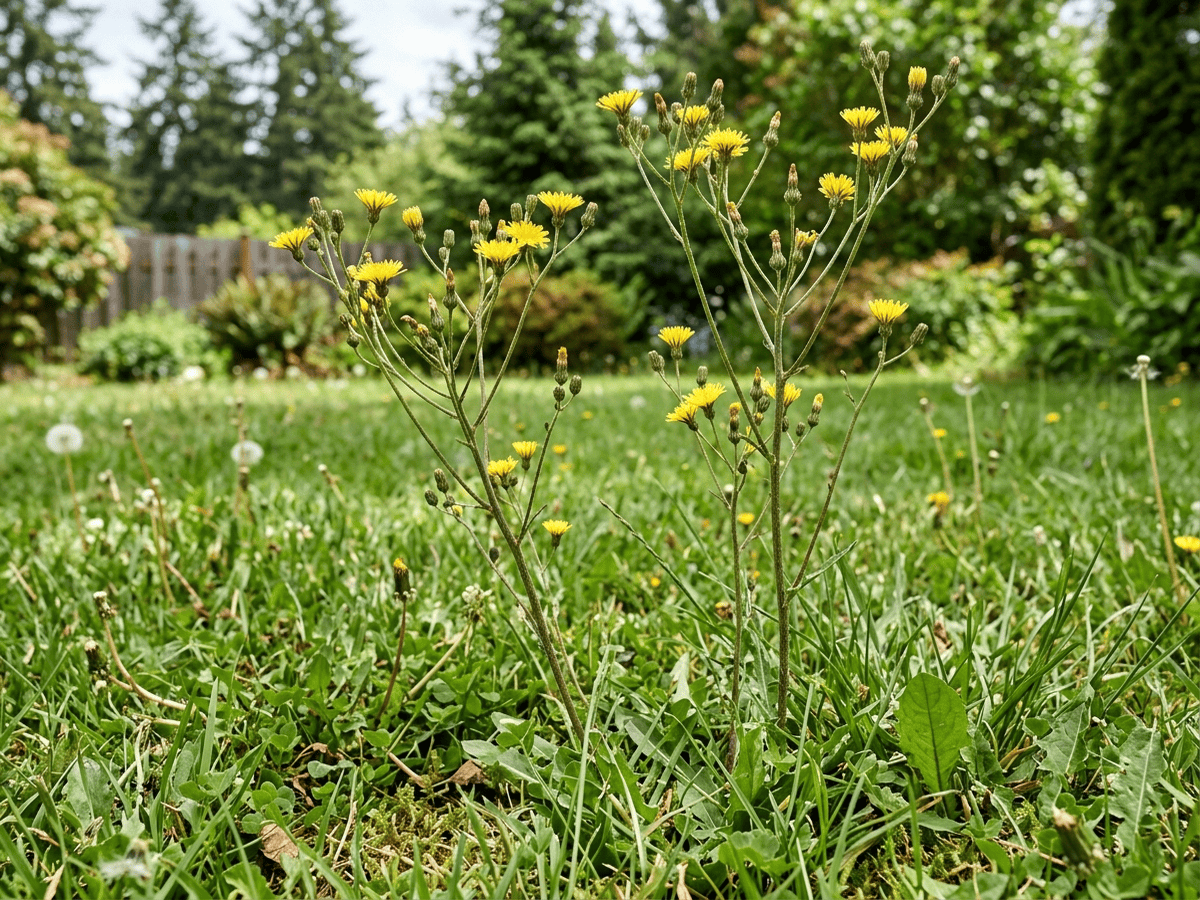
Cat's Ear or False Dandelion is a European perennial weed widely naturalized across US lawns, meadows, and pastures, often mistaken for dandelion. Forming a basal rosette of hairy lobed leaves with wiry branched flower stems 8 to 24 inches tall, it produces yellow dandelion-like flowers from spring through fall. An aggressive lawn weed especially troublesome in Pacific Northwest and coastal California turf.
- Drought-tolerant
How to care for Common Cat's-Ear
Watering
- Springevery 7 days
- Summerevery 5 days
- Fallevery 10 days
- Winterevery 21 days
Soil · Well-draining
- Top dressingPine bark mulch10%
- Main mixPotting soil + perlite 2:170%
- DrainageLECA / gravel20%
Never skip the drainage layer — standing water is the top cause of root rot.
FERTILIZER
This plant needs little to no feeding.
At a Glance
- NativeEurope, Mediterranean, Western Asia
- Height1–2 ft (0.3–0.6 m)
- Spread0.5–1 ft (0.2–0.3 m)
- Flower colorYellow
- Foliage colorGreen
- SoilSandy, Well-drained
- LocationsYard
Bloom time
BLOOM CYCLE
Peak bloom
Mar–Nov
Yellow dandelion-like flowers on wiry branched stems spring to fall
Toxicity
No toxicity has been reported for this plant. Still, it is wise to keep pets from chewing on any houseplant.
Educational information, not medical or veterinary advice. If exposure is suspected, contact a doctor or veterinarian.
DISTRIBUTION


- Native
- Introduced
- Europe
- Mediterranean
- Western Asia
History

Hypochaeris radicata is native to Europe, North Africa, and western Asia. Linnaeus described it in Species Plantarum (1753). Casually called 'false dandelion', 'flatweed', or 'cat's ear', it is distinguished from true dandelion (Taraxacum) by branched flower stems bearing multiple small yellow flower heads and by rosettes of hairy, not glabrous, leaves.
It has been eaten as a wild salad green throughout its native range — the rosette leaves and roots are edible, less bitter than dandelion. Of veterinary concern, it is implicated as the primary cause of 'Australian stringhalt', a neurological gait abnormality in horses grazing contaminated paddocks; the exact toxin is unidentified but condition affects extensor muscles of the hind legs.
Modern Australian and New Zealand horse pastures are carefully managed to control it. It is a major lawn weed in the US Pacific Northwest. Deep taproots make it highly drought tolerant and extremely difficult to eradicate once established in turf.
Symbolism & meaning
What It Symbolizes
Common Cat's-Ear is deceptive simplicity in plant form, its dandelion-like flowers fooling weekend gardeners into a false sense of familiarity. Beneath the friendly yellow surface lies an aggressive turf invader with a deep taproot, spreading across lawns more relentlessly than any true dandelion. This is the patron weed of mistaken identity — small, sunny, and far more difficult to remove than its innocent face suggests.
- False dandelion — looks like dandelion but spreads faster
- Lawn invader — aggressive turf weed with deep taproot
Where the Name Comes From
'Hypochaeris' possibly from Greek meaning 'little pig' as pigs reportedly rooted for the taproot; 'radicata' from Latin means rooted, for the persistent taproot.
Related plants
Plants with similar care
 Chinese AbeliaAbelia chinensis
 Fragrant AbeliaAbelia mosanensis
 Large-Flowered AbeliaAbelia uniflora
 Glossy AbeliaAbelia x grandiflora
Frequently asked questions
How often should I water Common Cat's-Ear?
In summer, water about every 5 days; in winter, about every 21 days. Adjust for heat, pot size and drainage.
How much light does Common Cat's-Ear need?
Full sun: 6+ hrs direct. Watch the leaves — scorching or stretching means the light needs adjusting.
Is Common Cat's-Ear toxic to cats or dogs?
No toxicity has been reported for this plant. Still, it is wise to keep pets from chewing on any houseplant. Educational information, not medical or veterinary advice. If exposure is suspected, contact a doctor or veterinarian.
Is Common Cat's-Ear easy to grow?
Yes — it is considered an easy, beginner-friendly plant.
When does Common Cat's-Ear bloom?
It typically blooms Mar–Nov in the Northern Hemisphere.
YardMate
Identify any plant in seconds
Snap a photo — YardMate names the plant, diagnoses problems, and reminds you when to water.
Download on the App Store