 YardMate


Garden Balsam
Impatiens balsamina
Easy · Beginner friendlyAbout Garden Balsam
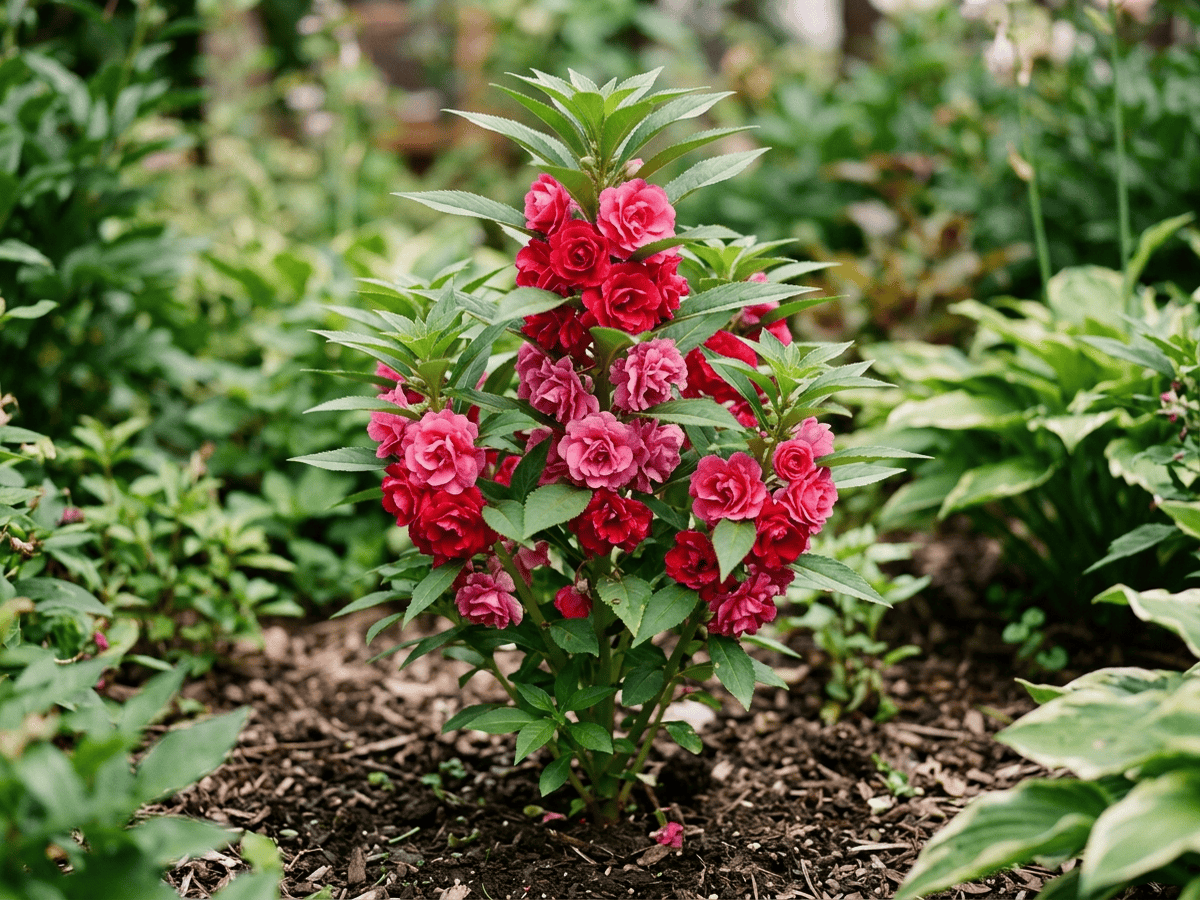
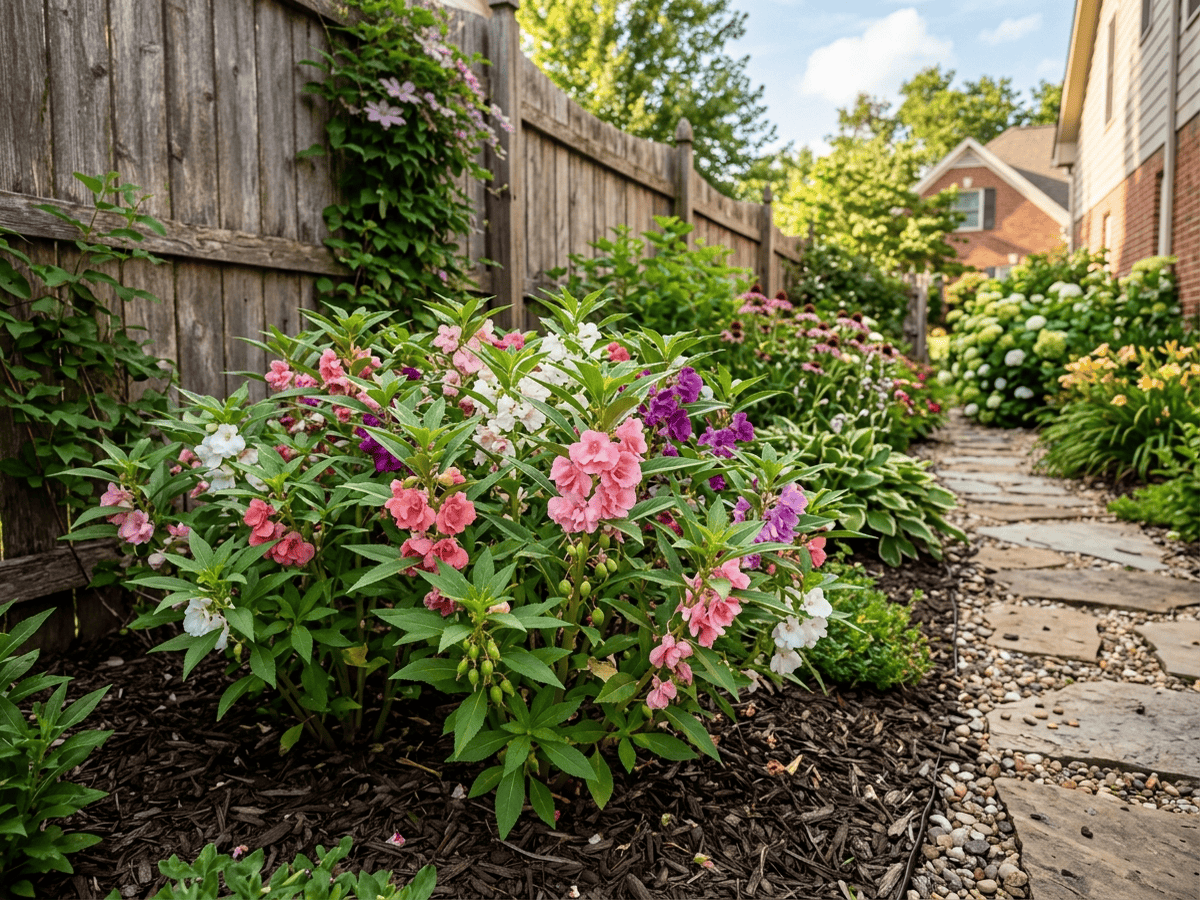
Garden Balsam or Rose Balsam is an Asian annual beloved in Victorian and southern American cottage gardens for its camellia-like double flowers nestled along upright stems. Growing 1 to 3 feet tall with lance-shaped leaves, it produces 1 to 2-inch ruffled flowers in pink, red, rose, white, purple, and bicolors from summer through frost. Self-sows freely and pops its seedpods when touched, earning the playful name touch-me-not.
- Shade-tolerant
- Long-blooming
- Pollinator-friendly
How to care for Garden Balsam
Watering
- Springevery 3 days
- Summerevery 2 days
- Fallevery 5 days
- Winterpause watering
Soil · Well-draining
- Top dressingPine bark mulch10%
- Main mixPotting soil + perlite 2:170%
- DrainageLECA / gravel20%
Never skip the drainage layer — standing water is the top cause of root rot.
FERTILIZER
Balanced Feed 14-14-14
An even feed covers all three needs at once, keeping leaves, roots and blooms moving together with nothing pushed out of balance.
- Nitrogen · Leaves
- Phosphorus · Roots + Blooms
- Potassium · Strength
- Springevery 14 days
- Summerevery 14 days
At a Glance
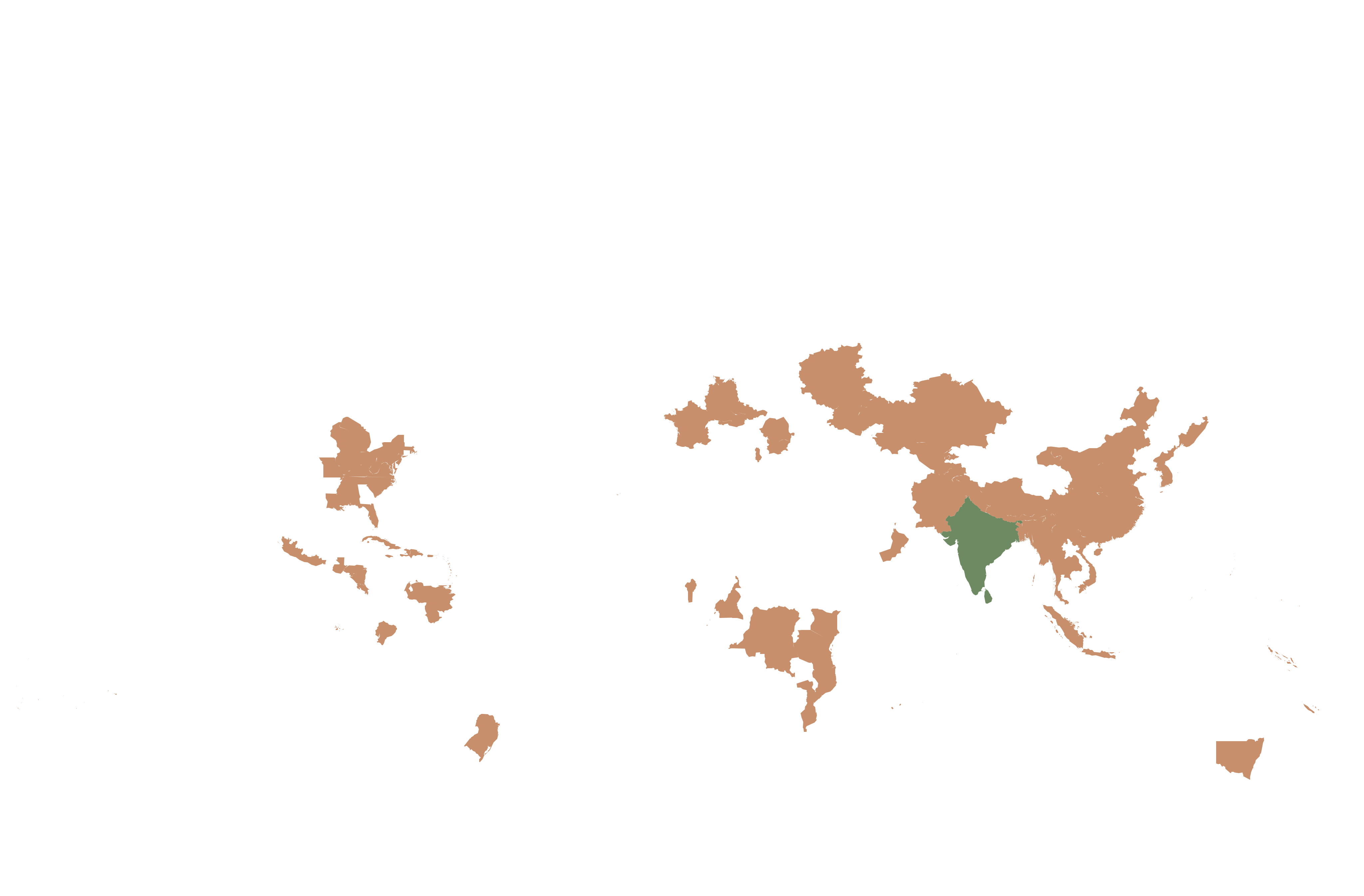
- NativeSouth Asia, East Asia
- Height1.5–2.5 ft (0.5–0.8 m)
- Spread1–1.5 ft (0.3–0.5 m)
- Flower colorPink, Red, White, Purple
- Foliage colorGreen
- SoilLoamy, Moisture-retentive
- LocationsYard
Bloom time
BLOOM CYCLE
Peak bloom
Jun–Nov
Camellia-like double flowers along stems, June to frost
Toxicity
Pets Safe
None reported
Not reported
EXPOSURE No exposure route is reported.
EFFECT No toxic effect is reported.
NOTE No human toxicity is reported in this catalog; avoid eating ornamental plants unless confirmed edible.
Safe
EXPOSURE No exposure route is reported.
EFFECT No toxic effect is reported.
NOTE Listed as non-toxic for dogs; avoid eating ornamental plants unless confirmed edible.
Safe
EXPOSURE No exposure route is reported.
EFFECT No toxic effect is reported.
NOTE Listed as non-toxic for cats; avoid eating ornamental plants unless confirmed edible.
Educational information, not medical or veterinary advice. If exposure is suspected, contact a doctor or veterinarian.
DISTRIBUTION

- Native
- Introduced
- South Asia
- East Asia
History
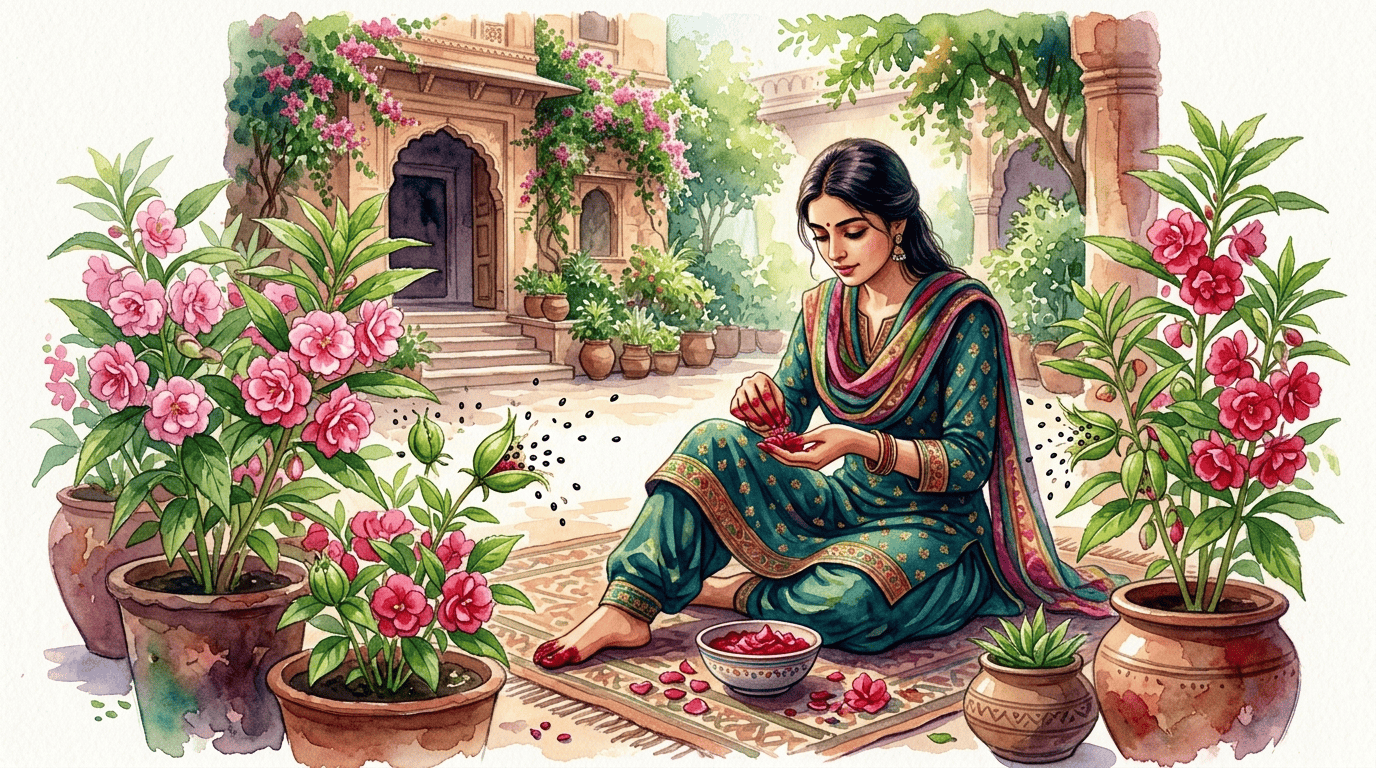
Impatiens balsamina, commonly called garden balsam, rose balsam, or Touch-me-not, is an annual herb native to India, Bangladesh, Sri Lanka, Myanmar, Thailand, and southern China, where it has been cultivated for more than 2000 years. The plant appears in ancient Sanskrit medicinal texts and Chinese herbal traditions where it served as a dye for fingernails, hair, and textiles; the name Impatiens refers to the explosive dehiscence of ripe seed capsules that fling seeds when touched. European explorers brought the species to Portugal and Holland in the 1500s, and Linnaeus described it in 1753.
Victorian and American cottage gardens embraced the plant for its camellia-like double flowers in pink, red, white, and purple. Modern breeding including the Camelia-flowered and Double Bush types continues to supply compact reliable bedding.
Symbolism & meaning
What It Symbolizes
Garden Balsam is, true to its name, the flower of impatience — its swollen seedpods bursting at the slightest touch, scattering seeds like a tiny startled animal. Paired with childhood memory, this seedpop game has delighted generations of children who couldn't resist one more tap. It is a plant that almost no one meets without smiling, even when they were only meant to walk past.
- Impatience — seedpods burst at slightest touch
- Childhood memory — classic seedpop game for generations
Where the Name Comes From
'Impatiens' from Latin means impatient, for the seedpods that explosively release seeds when touched; 'balsamina' refers to the balsam-like resinous quality.
Uses & Fun Facts
- Spurred flowers attract bees and butterflies along the stem
- Old-fashioned Garden Balsam with spurred flowers among the leaves
- Petals traditionally used as natural nail dye in East Asia
Related plants
More Impatiens plants
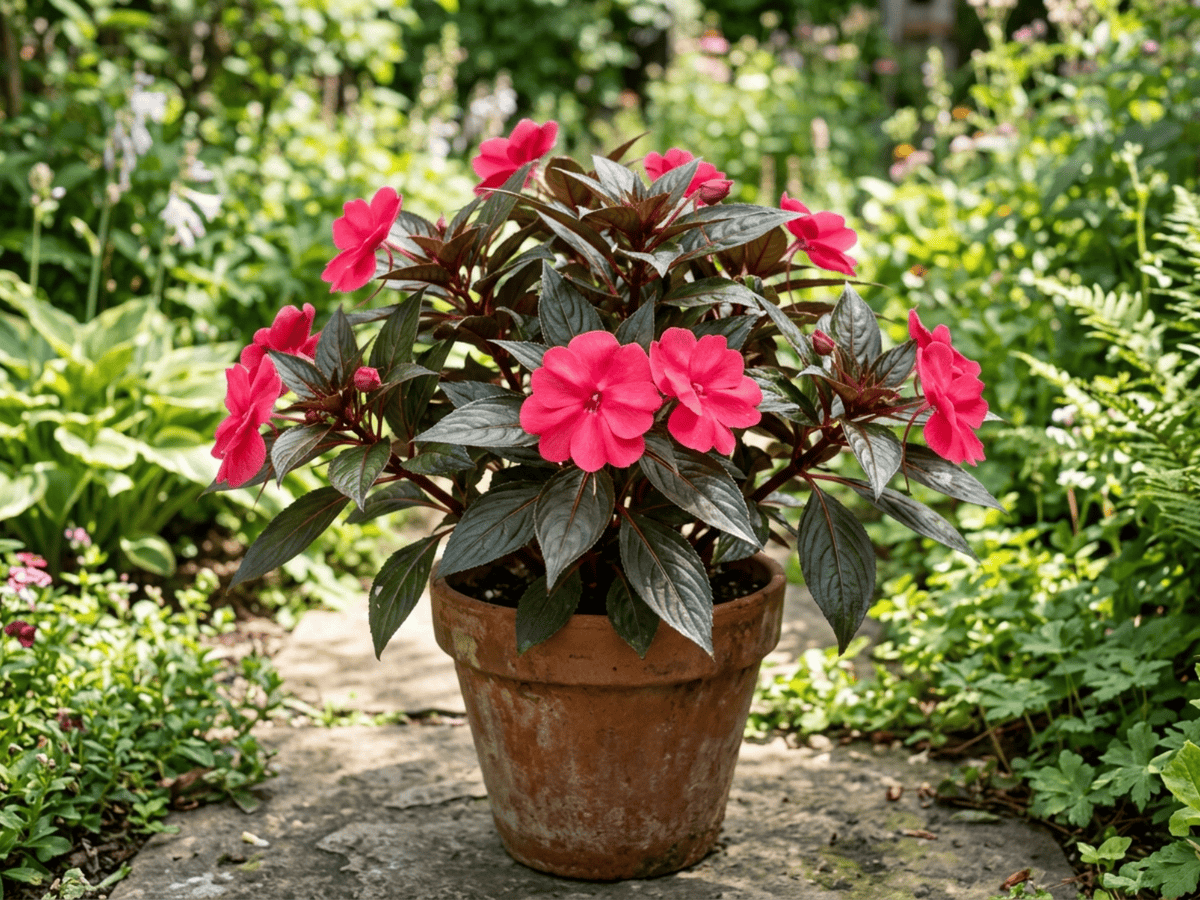
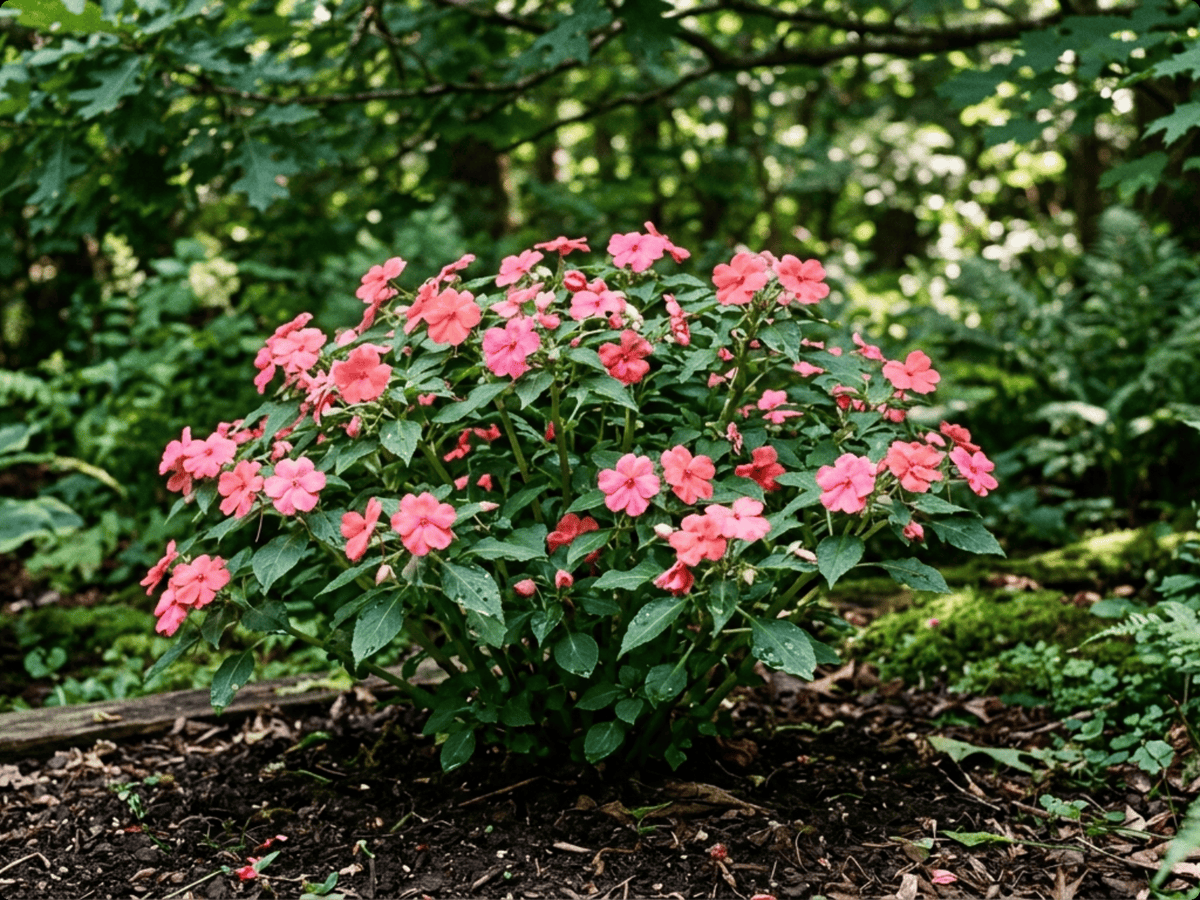
Plants with similar care
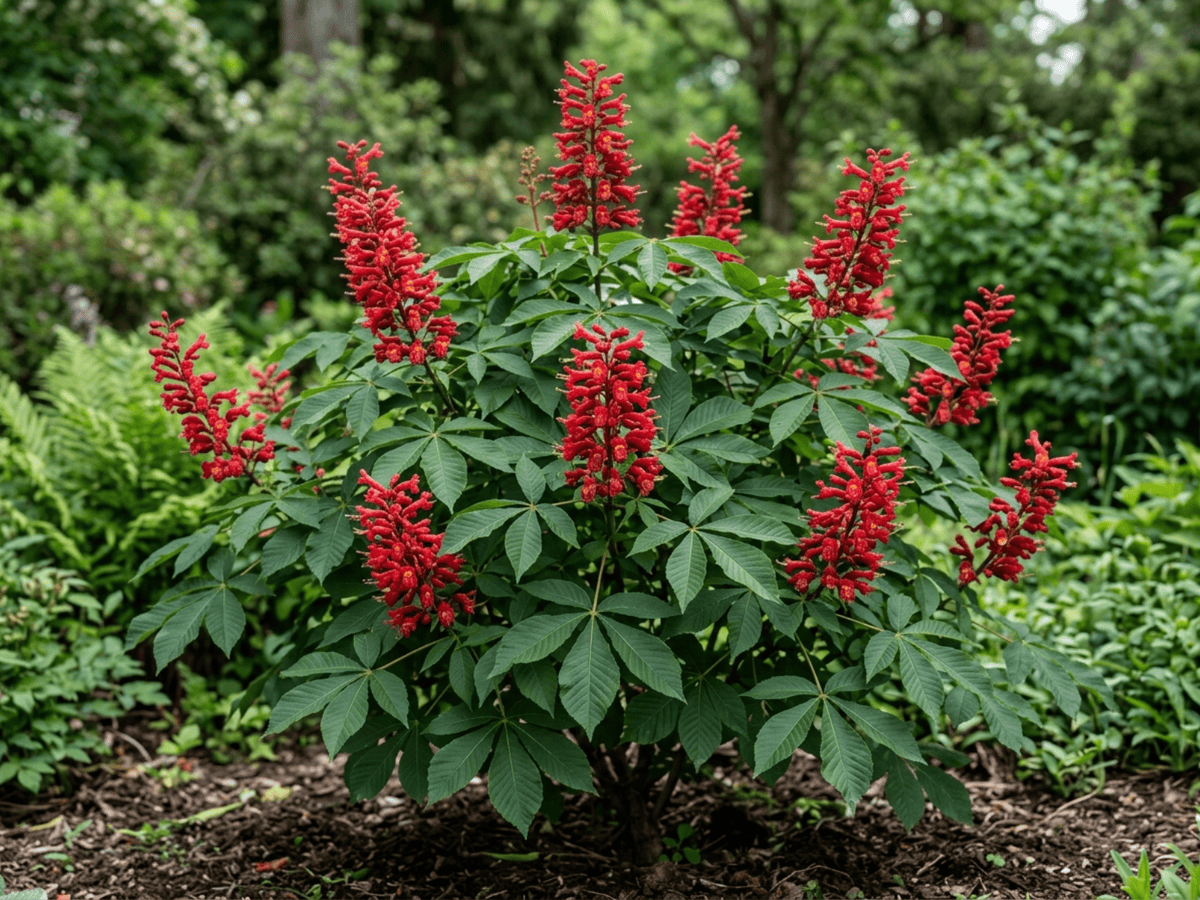 Red BuckeyeAesculus pavia
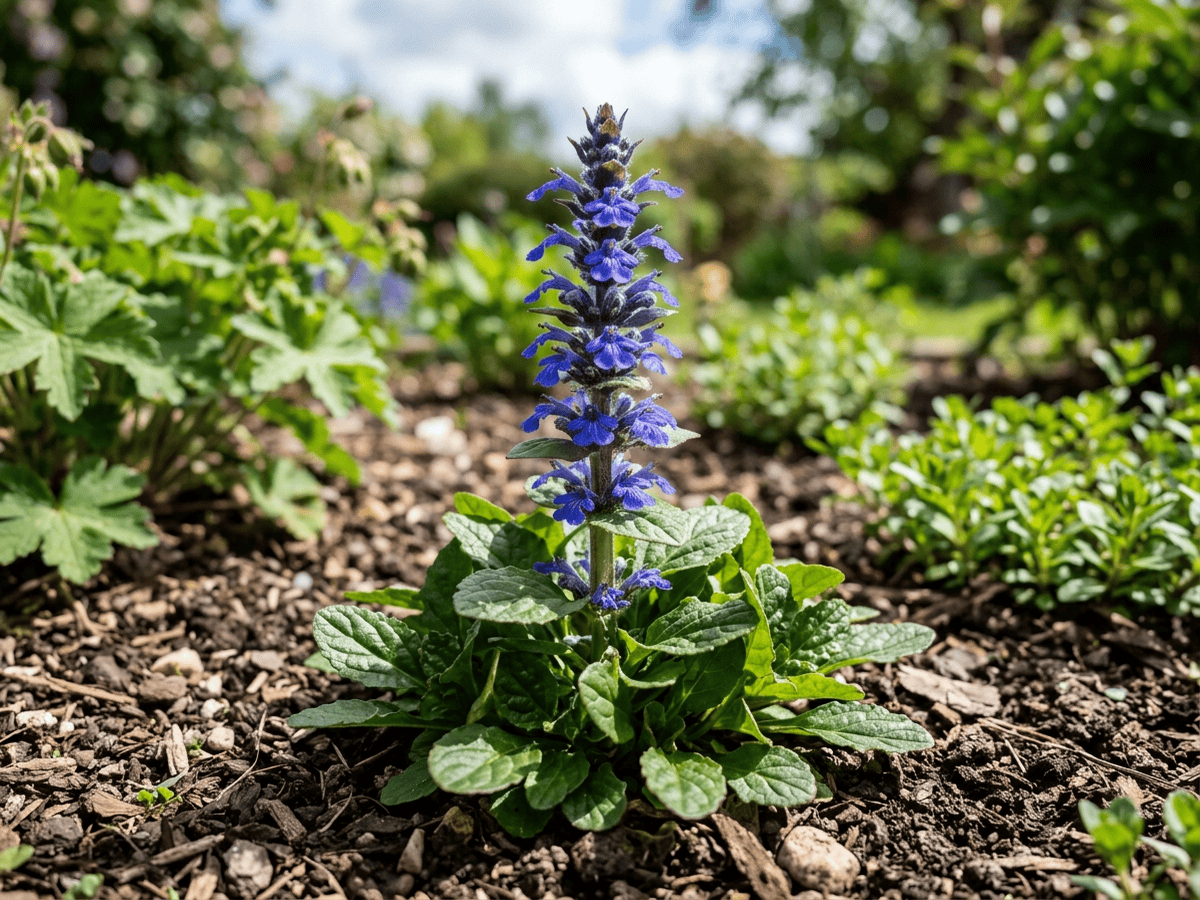 Blue BugleAjuga genevensis
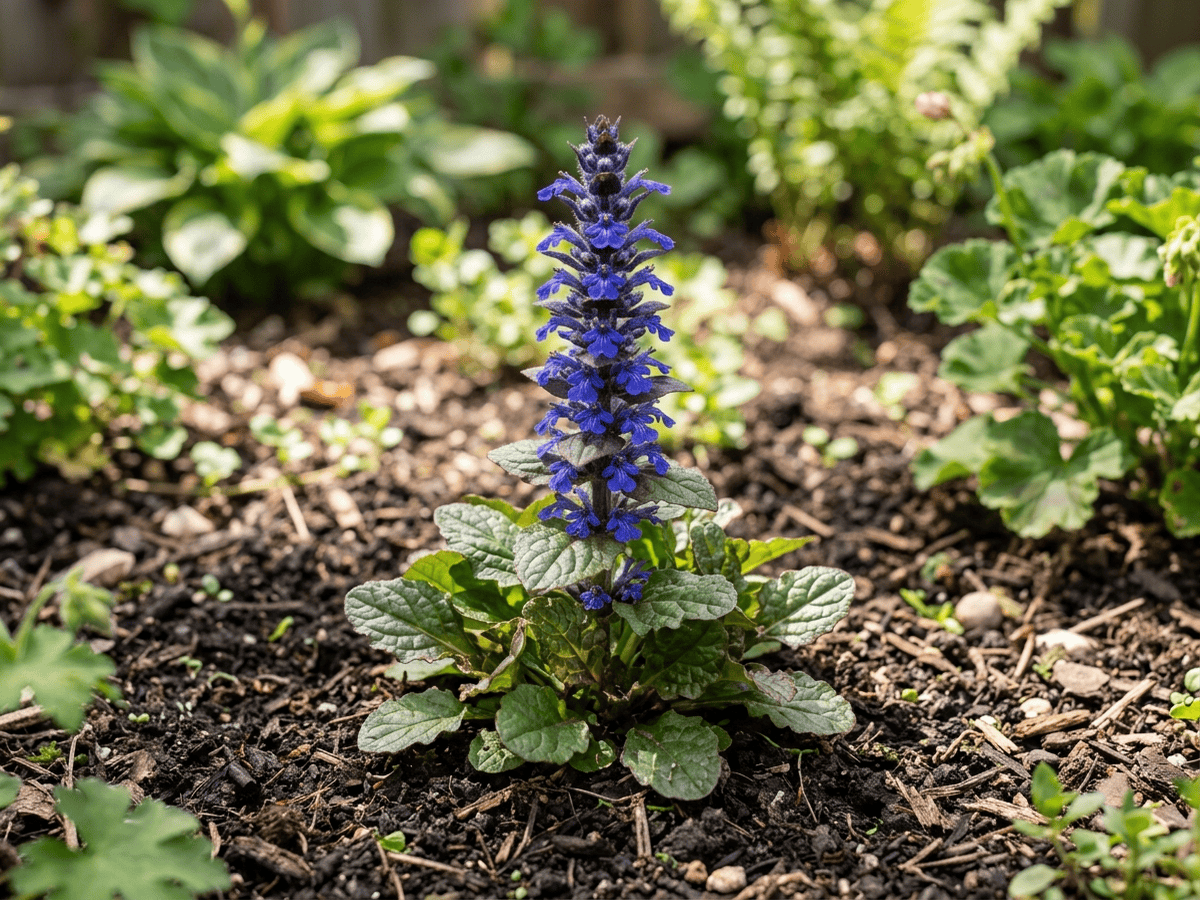 Pyramidal BugleAjuga pyramidalis
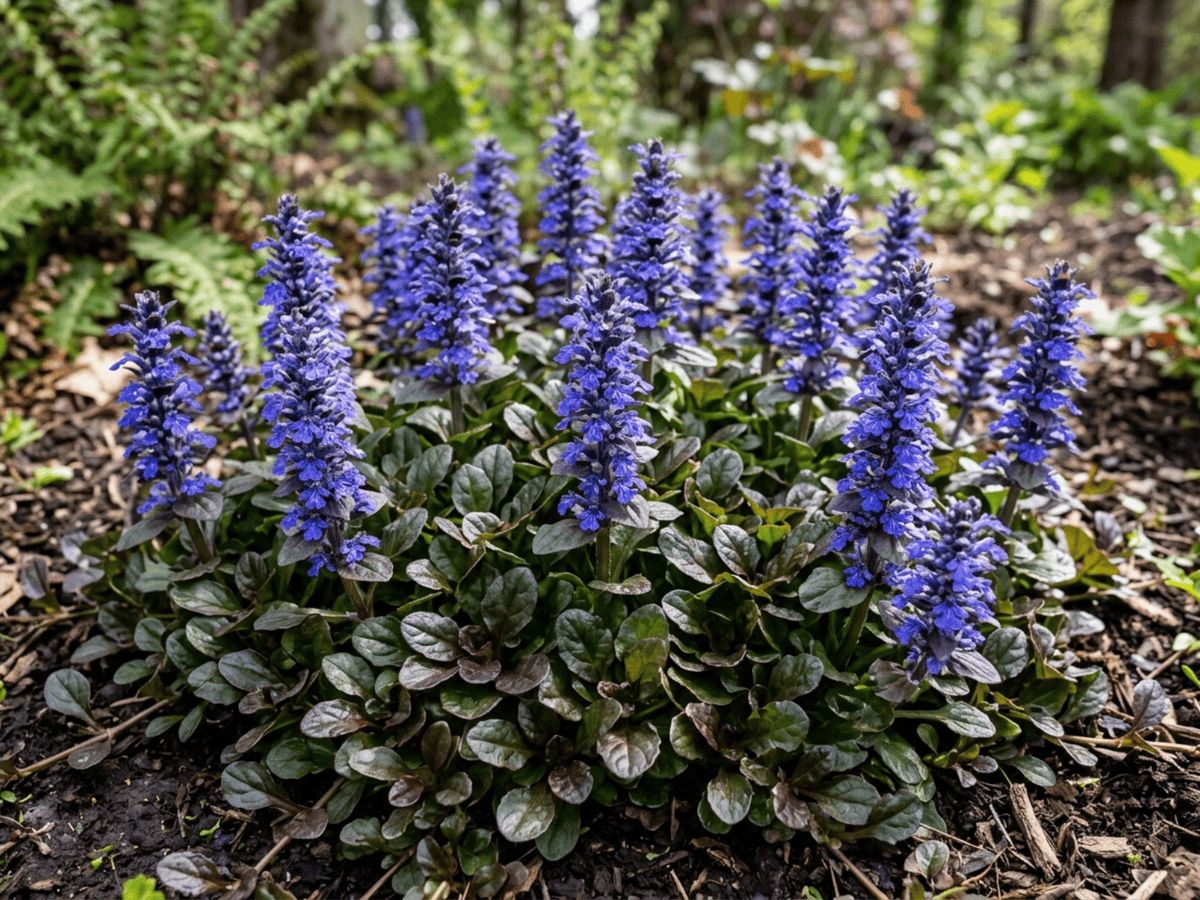 Carpet BugleAjuga reptans
Frequently asked questions
How often should I water Garden Balsam?
Water about every 3 days during the growing season, and always let excess water drain away.
How much light does Garden Balsam need?
Part shade: 2–4 hrs direct. Watch the leaves — scorching or stretching means the light needs adjusting.
Is Garden Balsam toxic to cats or dogs?
Pets Safe (Dogs Safe · Cats Safe) Educational information, not medical or veterinary advice. If exposure is suspected, contact a doctor or veterinarian.
Is Garden Balsam easy to grow?
Yes — it is considered an easy, beginner-friendly plant.
When does Garden Balsam bloom?
It typically blooms Jun–Nov in the Northern Hemisphere.
YardMate
Identify any plant in seconds
Snap a photo — YardMate names the plant, diagnoses problems, and reminds you when to water.
Download on the App Store