 YardMate

Corkscrew Rush
Juncus effusus 'Spiralis'
Easy · Beginner friendlyAbout Corkscrew Rush
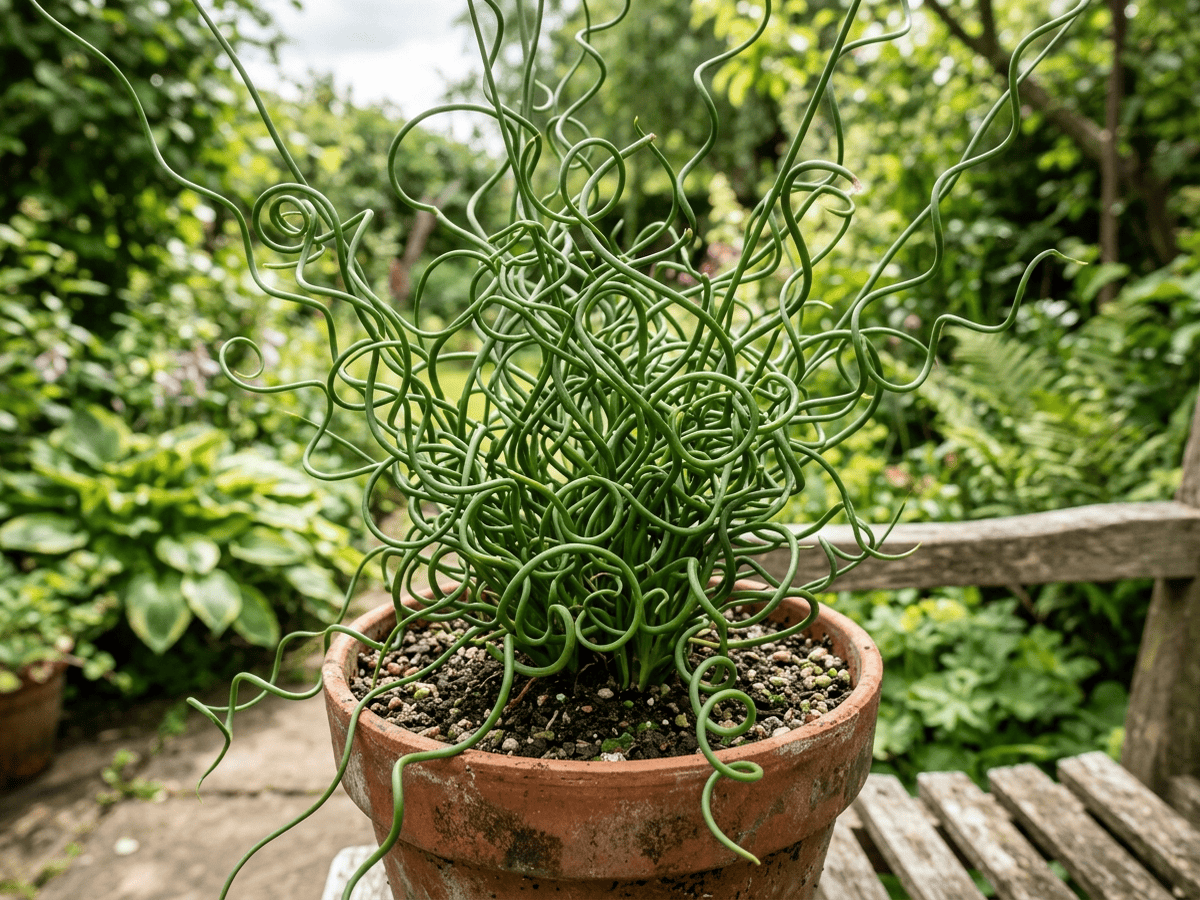
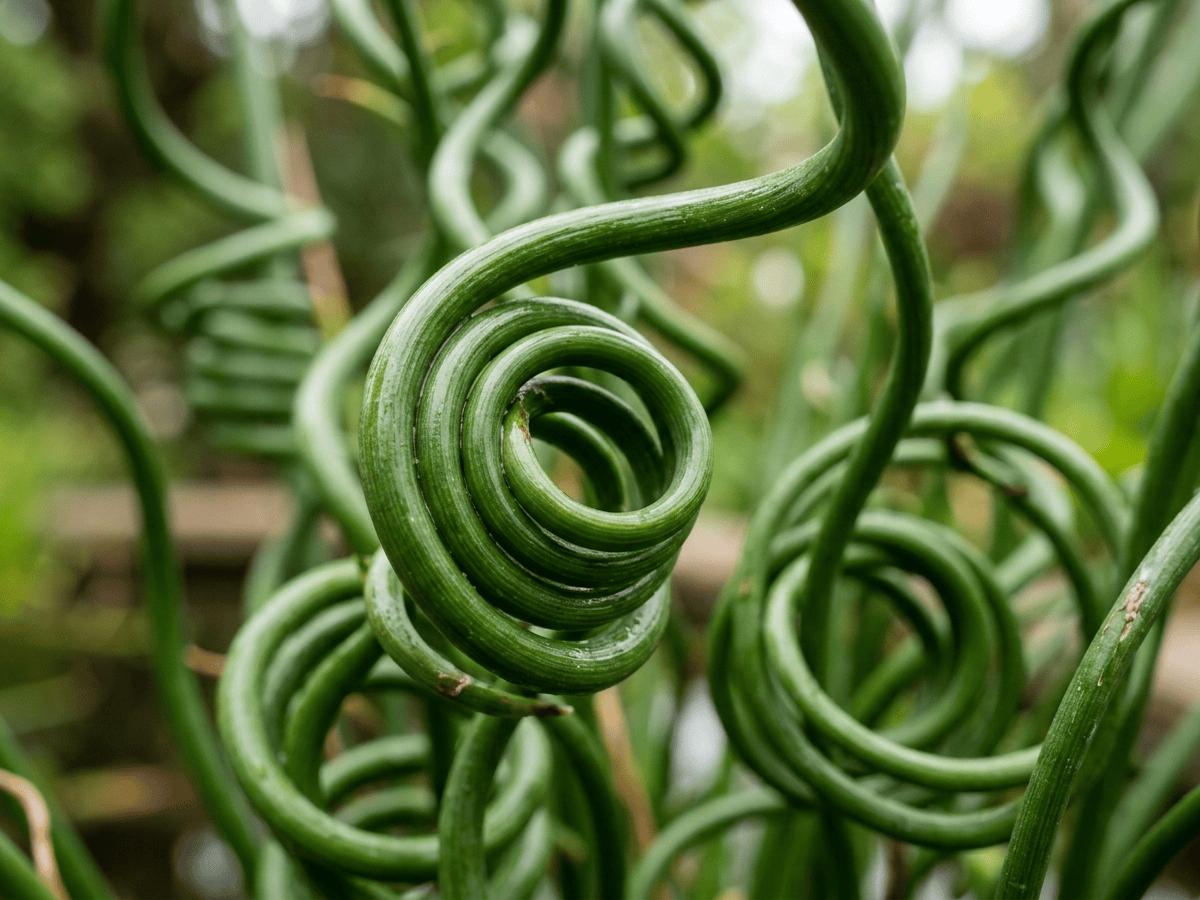
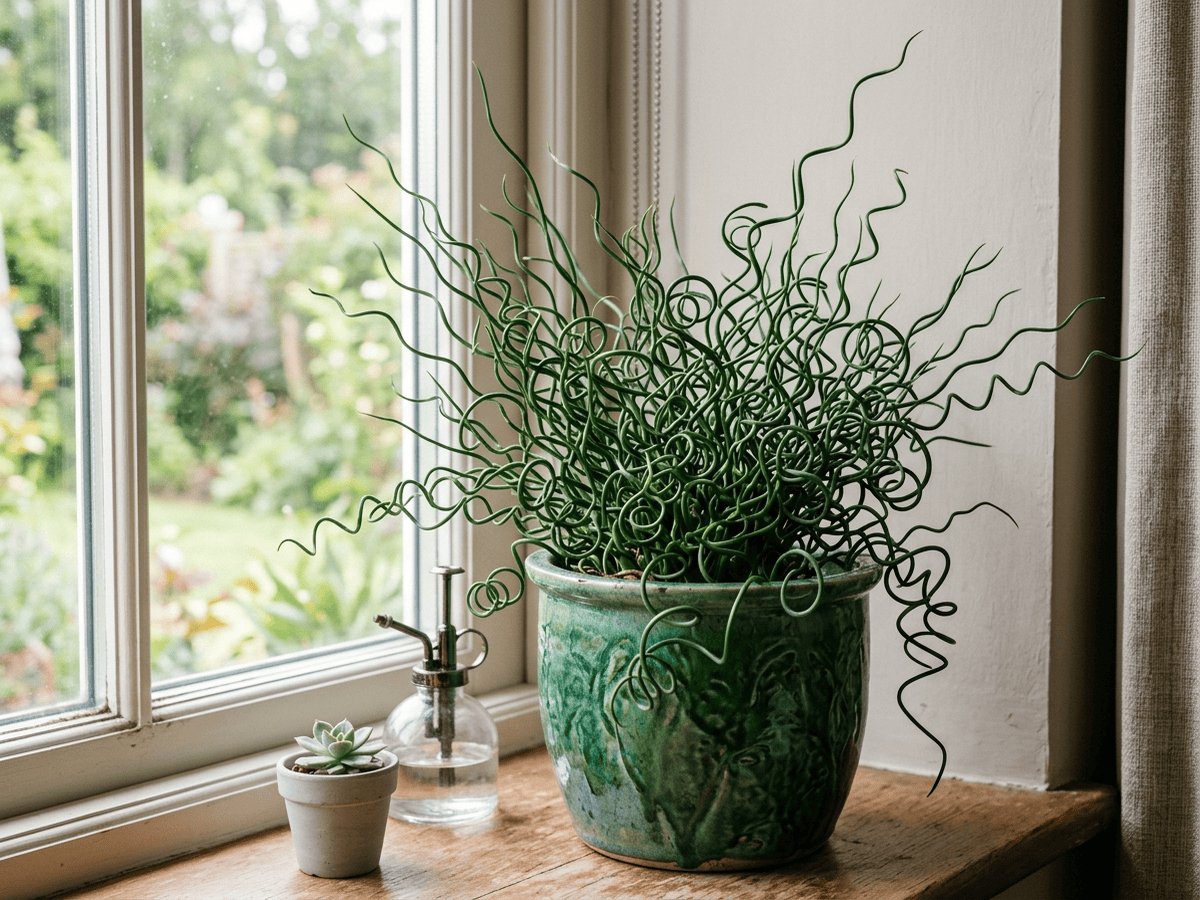
Corkscrew rush (Juncus effusus 'Spiralis') is an ornamental cultivar of the common soft rush, prized entirely for its bizarrely twisted, spiralling stems that coil and curl in every direction like green corkscrews. Reaching only 30-45 cm, it forms a tangled, cushiony clump far more compact than the straight-stemmed species. It thrives in constantly moist soil or standing water and is a favourite for pond margins, bog gardens, and glazed container water features. Grown in full sun to part shade, it stays semi-evergreen in mild winters. Because seedlings revert to straight stems, 'Spiralis' is always propagated by division. Its small brown flowers are insignificant — the whimsical foliage is the whole show.
- Compact
- Container-friendly
- Evergreen
- Cold-hardy
How to care for Corkscrew Rush
Watering
- Springevery 1 days
- Summerevery 1 days
- Fallevery 2 days
- Winterevery 7 days
Soil · Bog-wet
- WaterStanding water above soil20%
- SoilHeavy pond soil80%
No drainage layer — keep water standing above the soil.
FERTILIZER
This plant needs little to no feeding.
At a Glance
- NativeEurope, Asia, North America
- Height1–1.5 ft (0.3–0.5 m)
- Spread1–1.5 ft (0.3–0.5 m)
- Flower colorBrown
- Foliage colorGreen
- SoilMoisture-retentive
- LocationsYard · Balcony
Bloom time
BLOOM CYCLE
Peak bloom
Jun–Aug
Inconspicuous small brown flower clusters appear laterally on the twisted stems in summer; grown for foliage, not bloom
Fragrance
NO FRAGRANCE
No notable fragrance.
Toxicity
No toxicity has been reported for this plant. Still, it is wise to keep pets from chewing on any houseplant.
Educational information, not medical or veterinary advice. If exposure is suspected, contact a doctor or veterinarian.
DISTRIBUTION


- Native
- Introduced
- Europe
- Asia
- North America
History

Where the wild soft rush is a plant of pure utility — its pith once peeled for rushlight candles and its Japanese relatives woven into tatami — the corkscrew rush is its complete opposite: a plant kept for no reason but delight. 'Spiralis' arose as a spontaneous mutation, a 'sport', in which the normally straight cylindrical stems twist and coil in loose spirals, tumbling over one another into a tangled green mass.
Contorted and spiralling plants held a special fascination for Victorian gardeners, whose taste ran to the curious, the monstrose, and the frankly peculiar. Alongside corkscrew hazel and contorted willow, the spiralling rush was propagated and passed between collectors as a living oddity — a talking point for the conservatory and the parlour windowsill. Because the twisting habit does not pass reliably through seed (seedlings revert to ordinary straight stems), every corkscrew rush in cultivation is propagated vegetatively by division, each plant a clone of that original curl.
Today it remains one of the most recognisable novelty plants sold, grown at pond margins, in bog gardens, in glazed bowls of standing water, and on bright kitchen windowsills. It asks only for constant moisture and is otherwise indestructible. Gardeners either love its cheerful chaos or find it faintly unsettling — few plants provoke such a divided response from so modest a tuft of green.
Symbolism & meaning
What It Symbolizes
The corkscrew rush is the garden's little nonconformist — where every other rush stands straight and useful, it curls off in spirals, good for nothing but delight. It has become a quiet emblem of individuality and playfulness: proof that a plant, like a person, can earn its place by simply being cheerfully, stubbornly itself.
- Individuality — its stems refuse to grow straight, spiralling entirely their own way
- Playfulness — a plant kept purely for whimsy and delight rather than use
Where the Name Comes From
'Corkscrew rush' describes the wildly twisting, spiral stems that coil like a corkscrew. The cultivar name 'Spiralis' is Latin for 'spiralled' or 'coiled'. 'Juncus' derives from the Latin 'jungere', to bind, and 'effusus' means 'loosely spreading', from the parent soft rush species.
Uses & Fun Facts
- Spiralling green stems make a novelty feature in ponds, bog gardens, and water bowls
- Curled stems are prized by florists as living wire in cut arrangements
- Dense tangled clumps offer cover for frogs and insects at the water's edge
Related plants
More Juncus plants

Plants with similar care
 Chinese AbeliaAbelia chinensis
 Fragrant AbeliaAbelia mosanensis
 Large-Flowered AbeliaAbelia uniflora
 Glossy AbeliaAbelia x grandiflora
Frequently asked questions
How often should I water Corkscrew Rush?
In summer, water about every 1 days; in winter, about every 7 days. Adjust for heat, pot size and drainage.
How much light does Corkscrew Rush need?
Full sun: 6+ hrs direct. Watch the leaves — scorching or stretching means the light needs adjusting.
Is Corkscrew Rush toxic to cats or dogs?
No toxicity has been reported for this plant. Still, it is wise to keep pets from chewing on any houseplant. Educational information, not medical or veterinary advice. If exposure is suspected, contact a doctor or veterinarian.
Is Corkscrew Rush easy to grow?
Yes — it is considered an easy, beginner-friendly plant.
When does Corkscrew Rush bloom?
It typically blooms Jun–Aug in the Northern Hemisphere.
YardMate
Identify any plant in seconds
Snap a photo — YardMate names the plant, diagnoses problems, and reminds you when to water.
Download on the App Store